
Toyota Camry Tire Rotation Interval: Recommended Schedule for All Trims

You should rotate your Toyota Camry tires every 5,000 miles or 6 months, whichever comes first, unless your exact owner’s manual or tire setup says otherwise. That schedule matches Toyota’s Camry maintenance guidance and helps keep tread wear even, steering predictable, and braking more consistent. Before rotating, check the tire-pressure placard, inspect tread and sidewalls, and confirm the correct rotation pattern for your tire size and tire type.
Quick Answer
Rotate Toyota Camry tires every 5,000 miles or 6 months. Use the rotation pattern in your owner’s manual, adjust tire pressure to the door-jamb placard, and replace any tire at 2/32 inch tread depth or sooner if it has sidewall bulges, exposed cords, vibration, or severe uneven wear.
Key Takeaways
- For most U.S. Toyota Camry models from 2018 through 2026, use 5,000 miles or 6 months as the tire-rotation reminder.
- If all four tires are the same size and are not directional, a forward-cross pattern is commonly used on front-wheel-drive Camrys.
- Directional tires, staggered sizes, or unusual tread wear require a different approach, so check the tire sidewall and owner’s manual first.
- Do not rotate a damaged tire. Replace tires at 2/32 inch tread depth, and get service sooner for bulges, cracks, exposed cords, pulling, vibration, or cupping.
At a Glance
| Time Required | 30–60 minutes for a careful DIY rotation; faster at a tire shop or dealer. |
| Difficulty | Moderate DIY job if you know the safe jack points and have proper stands; use a professional if you are unsure. |
| Tools Needed | Owner’s manual, tire-pressure gauge, tread-depth gauge or penny, wheel chocks, floor jack, rated jack stands, lug wrench or breaker bar, and torque wrench. |
| Cost | $0 if you already own the tools; shop pricing varies, and tire rotation may be included with eligible ToyotaCare or tire-purchase service plans. |
What Is the Camry Tire Rotation Interval?

For most U.S. Toyota Camry models from 2018 through 2026, the safest default is to rotate the tires every 5,000 miles or 6 months, whichever comes first. Toyota’s current 2026 Camry Warranty & Maintenance Guide uses a 5,000-mile/six-month maintenance schedule and lists Rotate Tires at each 5,000-mile interval. Earlier Camry guides, including the 2018 Camry Warranty & Maintenance Guide and 2024 Camry Warranty & Maintenance Guide, also support a 5,000-mile maintenance rhythm.
The old “5,000 to 7,500 miles” rule is too loose for Camry-specific maintenance. General tire guidance may mention broader intervals, but your Camry’s manual should win. If you drive very few miles, use the six-month clock. If you drive more than 5,000 miles in less than six months, rotate at the mileage mark rather than waiting for the calendar.
Tire rotation is not just about tread life. NHTSA warns that poor tire maintenance, including underinflation and missed rotation, can lead to flats, blowouts, or tread separation.
Which Camry Tire Sizes Work for Rotation?
Camry tire rotation depends less on the trim name and more on whether all four tires are the same size, whether the tread is directional, and whether the tires are mounted on wheels with the same offset and fitment. The exact tire size is printed on the driver-side door-jamb Tire and Loading Information label, the tire sidewall, and the owner’s manual.
Common Camry wheel and tire setups across recent model years include 16-inch, 17-inch, 18-inch, and 19-inch packages. Toyota’s current Camry lineup lists 16-inch wheels on LE, 18-inch wheels on SE/XLE, and 19-inch wheels on Nightshade/XSE trims, so the right answer is always to match the tire placard on your specific car.
| Same size on all four corners | Usually OK to rotate normally, as long as the tire is not directional and there is no damage. |
| Directional tires | Rotate front-to-rear on the same side unless the tires are dismounted and remounted correctly. |
| Different front and rear sizes | Do not cross-rotate without confirming the owner’s manual, wheel fitment, and tire-shop guidance. |
| Temporary spare tire | Do not include a compact temporary spare in the normal tire rotation. |
Also check tread depth before rotating. The National Highway Traffic Safety Administration says tires are not safe and should be replaced when tread is worn to 2/32 inch. If one tire is much lower than the others, rotating it only moves the problem to another corner.
How Do You Rotate Camry Tires the Right Way?
To rotate Toyota Camry tires correctly, prepare the car, confirm the pattern, inspect each tire, and finish with proper pressure and lug-nut torque. Work slowly, because the safety setup matters as much as the tire movement.
- Park on a flat, solid surface. Shift to Park, set the parking brake, and chock the wheels that remain on the ground.
- Check the tire information label. Use the driver-side door-jamb placard for cold tire pressure, not the maximum pressure molded on the tire sidewall.
- Loosen the lug nuts slightly before lifting. Break them loose while the tire is still touching the ground, but do not remove them yet.
- Lift at the correct jack points. Use the owner’s manual for jack locations, then support the Camry with rated jack stands before removing wheels.
- Remove and inspect each tire. Look for uneven tread, nails, cracks, bulges, blisters, exposed cords, cupping, or shoulder wear.
- Move the tires using the correct pattern. For many same-size, non-directional front-wheel-drive Camrys, use the forward-cross pattern unless your manual or tire type says otherwise.
- Reinstall the wheels by hand first. Start lug nuts by hand to avoid cross-threading, then snug them in a star pattern.
- Lower the vehicle and torque the lug nuts. Use the torque value in your owner’s manual or repair information. Do not guess, and do not rely on an impact wrench for final tightening.
- Set tire pressure cold. Adjust all four tires to the placard pressure after the car has been parked long enough for the tires to cool.
- Reset the maintenance reminder if needed. Use the Camry’s settings menu or the procedure in your owner’s manual so the next service reminder stays accurate.
Warning: Never work under a Camry supported only by a jack. Use properly rated jack stands on a stable surface, keep hands clear of pinch points, and avoid orange high-voltage components on hybrid models. If you are unsure about jack points, torque specs, or tire damage, have a qualified technician do the rotation.
[Products Worth Considering]

ETENWOLF T300 is a calibrated digital tire pressure gauge designed for reliable readings across low and high pressure ranges. It includes thermal compensation for stable performance in extreme cold or heat, an LED light for visibility, and an auto shut-off to help preserve battery life. Ideal for pickups, RVs, and heavy-duty vehicles, it delivers accurate PSI measurements with sturdy durability.

The SAFELIFE dial tire tread depth gauge measures tread depth in 1/32 inch increments with clear, easy-to-read 2-inch dial face. Color zones using a traffic light system help you quickly judge whether tread is low, marginal, or ample for safer driving. Built with a durable zinc cast body and a metal detect probe for precise, comfortable use across cars, motorcycles, trucks, and buses.

ETENWOLF’s calibrated digital tire pressure gauges deliver accurate readings across a wide pressure range, from below 12 PSI to above 140 PSI. The built-in thermal compensation helps maintain performance in extreme cold and hot conditions, while the LED light improves visibility for quick checks. Includes replaceable AAA batteries for long-lasting use and convenience for everyday tire monitoring.
What Rotation Pattern Should a Camry Use?
The correct pattern depends on tire type. Use this as a practical guide, then confirm it against your owner’s manual and tire sidewall markings.
| Front-wheel drive, same-size, non-directional tires | Use a forward-cross pattern: front tires move straight to the rear; rear tires cross to the opposite front positions. |
| AWD, same-size, non-directional tires | Follow the owner’s manual. Many AWD vehicles use a cross pattern, but matched tread depth is especially important. |
| Directional tires | Move front to rear on the same side so the tire keeps rolling in the marked direction. |
| Full-size matching spare | Include it only if it matches the other tires and the manual gives a five-tire rotation pattern. |
Pro Tip: Mark each tire’s old position with chalk or tape before removing it. That makes it easier to follow the pattern and spot repeat wear on the same corner at the next rotation.
What Changes Camry Tire Rotation Intervals?

Your Camry’s baseline tire rotation interval is still 5,000 miles or 6 months, but you may need inspections sooner if your driving is hard on tires. Stop-and-go commuting, rough pavement, potholes, dirt or dusty roads, heavy loading, aggressive cornering, and frequent curb contact can all reveal wear before the next scheduled service.
Hybrid and AWD Camrys do not get a separate shorter Toyota rotation interval just because they are hybrid or AWD. The better rule is simple: follow the 5,000-mile/six-month schedule, then act sooner if tread measurements, vibration, noise, or handling tell you something is wrong.
- Rotate sooner if uneven wear appears. Do not wait for the odometer if one shoulder is wearing faster than the rest of the tread.
- Check pressure monthly. Cold weather can lower pressure, and underinflation can wear the outer shoulders quickly.
- Watch larger low-profile tires closely. 18-inch and 19-inch setups can be less forgiving of potholes, curb scuffs, and alignment changes.
- Keep AWD tread depths close. If one tire is much newer or older than the others, ask a tire professional before mixing it into service.
Note: A tire rotation will not fix bad alignment, worn suspension parts, bent wheels, or an out-of-balance tire. If the Camry pulls, shakes, cups tires, or keeps wearing one edge, schedule diagnosis instead of only rotating the tires.
[Products Worth Considering]

The OlarHike portable tire inflator delivers fast, reliable air for cars, bikes, and motorcycles with an easy-to-read digital gauge and LED light. It features an auto shutoff that stops inflation at your preset pressure to help prevent over-inflation, plus dual hose support for different valve types and uses. A built-in power bank function with USB output keeps you prepared during roadside or outdoor emergencies.

This 2-ton scissor car jack kit helps you lift vehicles quickly with a wide lifting range for low sedans and high SUVs. It includes a ratchet wrench, lug wrench, gloves, a tire pressure gauge, and a storage bag for faster flat-tire repairs. Designed for stable, secure use, it’s a universal emergency kit for cars, SUVs, and MPVs.
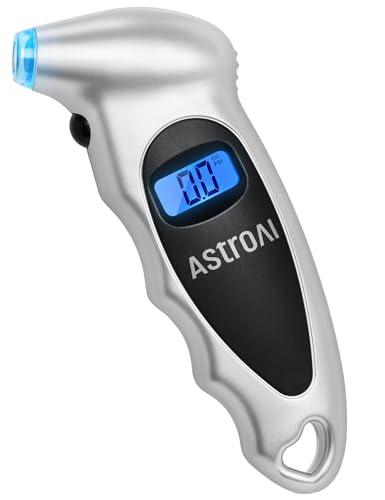
Accurate, Dependable Readings: Factory‑calibrated to ±1 PSI, so you can confidently match your vehicle’s recommended PSI (check the door jamb sticker). Ideal for monthly checks and road trips — consistent results every time, cold or warm.
What Tire Wear Signs Mean It’s Time?
Tire wear signs should be treated as service signals, not background noise. If the tread is worn to 2/32 inch, replace the tire. If wet traction matters in your area, consider replacement earlier when tread is getting low, because shallow grooves move less water and reduce grip.
- Inner or outer edge wear: often points to alignment, camber, toe, or inflation problems.
- Center wear: can point to overinflation or a tire that is not matched well to the wheel/load use.
- Both shoulder edges worn: often points to underinflation or repeated hard cornering.
- Cupping or scalloping: may point to worn shocks, struts, suspension parts, or imbalance.
- Vibration or humming after rotation: may reveal a tire balance issue, bent wheel, shifted belt, or uneven wear pattern.
- Cracks, bulges, blisters, exposed cords, or sidewall cuts: mean the tire needs professional inspection and may need immediate replacement.
Do not rotate a tire with structural damage. Moving a damaged tire from the rear to the front can make steering and braking less predictable.
What Maintenance Helps Camry Tires Last Longer?
Good tire life comes from small habits repeated on schedule. Rotate the tires every 5,000 miles or 6 months, check cold tire pressure at least monthly, and measure tread depth during each rotation. Keep the tire-pressure gauge in the glove box or trunk so the check is easy to repeat.
Also pay attention to alignment and suspension. If your Camry pulls to one side, the steering wheel is off-center, the tires squeal easily, or one edge wears faster than the other, schedule an alignment check. If the tires show cupping or the ride feels bouncy, have the suspension inspected before the wear pattern ruins another set of tires.
- Use the correct pressure. Follow the driver-side door-jamb placard when tires are cold.
- Rotate on time. Put the next tire rotation on the same schedule as Toyota’s 5,000-mile maintenance reminder.
- Balance when needed. Balance is not always required at every rotation, but it is needed when vibration appears or when tires are replaced.
- Align when symptoms appear. Rotation spreads wear; alignment corrects the angle problem that causes wear.
- Keep records. Service records help with warranty questions, tire mileage claims, and resale confidence.
[Products Worth Considering]

RUGGED DESIGN: The stainless steel components prevent rust and corrosion while the precision-crafted nozzle seamlessly seals onto the valve stems for highly accurate readings (±2% span). We also provide 4 valve stem caps for convenient replacement.

PROCESS LEVEL ACCURACY: This heavy duty tire pressure gauge is calibrated manually to ANSI B40.1 Grade A (±1% of span)

TRUSTED BY OVER 3 MILLION USERS: Based in Garden Grove, California, AstroAI serves customers in more than 15 countries worldwide. Known for professional-grade accuracy and durable construction, this digital tire inflator with gauge is a trusted choice for drivers, mechanics, and DIYers who rely on dependable tools.
Frequently Asked Questions
Does the Camry need tire rotation during the first 5,000 miles?
Yes. Rotate the tires at the first 5,000-mile or six-month service, whichever comes first. That early rotation helps even out the first wear pattern before it becomes permanent.
Can I rotate Camry tires with AWD or hybrid models differently?
Use the same 5,000-mile/six-month schedule unless your owner’s manual says otherwise. AWD models need extra attention to matched tire size and tread depth. Hybrid models do not automatically need a shorter interval, but uneven wear should be handled right away.
Should I reset the tire maintenance light after rotation?
Yes. Reset the maintenance reminder after the rotation so the next service alert matches the real schedule. Use the vehicle settings menu or the reset procedure in your owner’s manual.
Is tire rotation included in ToyotaCare for a new Camry?
ToyotaCare covers normal factory scheduled maintenance for eligible new Toyota vehicles during the plan period, and scheduled Camry maintenance includes tire rotation. Coverage details can vary by vehicle, region, and plan, so confirm your exact benefits with Toyota or your dealer through ToyotaCare & Maintenance Plans.
Can I rotate Camry tires myself without professional tools?
You should not do it with only the emergency jack and a lug wrench. A safe DIY rotation needs wheel chocks, a proper jack, rated jack stands, and a torque wrench. If you do not have those tools, use a tire shop or Toyota service center.
Do I need an alignment every time I rotate Camry tires?
No. Rotation is routine maintenance; alignment is corrective service. Get an alignment check if the Camry pulls, the steering wheel is off-center, the tires show one-edge wear, or the car recently hit a pothole or curb hard.
Can I rotate directional tires in a cross pattern?
No, not while they stay mounted on the same wheels. Directional tires have arrows showing the correct rolling direction, so they normally move front-to-rear on the same side. Cross-rotation requires proper dismounting and remounting.
Conclusion
Keep your Toyota Camry on a 5,000-mile or six-month tire rotation schedule, and you will control uneven wear before it turns into vibration, road noise, poor wet grip, or early tire replacement. Check tire pressure, tread depth, sidewalls, and the correct rotation pattern every time. If the tread is at 2/32 inch, the tire is damaged, or the car pulls or shakes, fix that problem before simply moving the tire to another corner.
Sources
- Toyota 2026 Camry Warranty & Maintenance Guide — supports the 5,000-mile/six-month maintenance schedule and tire-rotation chart.
- Toyota 2018 Camry Warranty & Maintenance Guide — supports earlier Camry maintenance timing and tire rotation at scheduled services.
- Toyota 2024 Camry Warranty & Maintenance Guide — supports recent pre-2025 Camry maintenance timing and tire rotation at scheduled services.
- NHTSA TireWise Tire Safety — supports monthly pressure checks, 2/32-inch tread replacement guidance, rotation benefits, and tire safety risks.
- ToyotaCare & Maintenance Plans — supports ToyotaCare normal factory scheduled maintenance coverage information.
- Toyota 2026 Camry Overview — supports current Camry model-year context, hybrid/AWD availability, and trim wheel-size context.

Related Articles

Toyota Camry All-Season Tires Explained: What They Can and Can’t Do
In exploring Toyota Camry all-season tires, discover their benefits and limitations—are they really the right choice for your driving needs?
Read More
Toyota Camry Tire Traction in Ice and Snow: A Practical Winter Driving Guide
Learn essential tips for maximizing tire traction on ice and snow in your Toyota Camry, ensuring your winter driving is safe and confident. Discover more now!
Read More
Do Toyota Camry Tires Need Snow Chains? When They Help and When They Don’t
How do snow chains enhance your Toyota Camry's winter driving safety, and when should you avoid using them? Discover the essential details inside!
Read More