
How to Inflate Toyota Camry Tires Correctly: Avoid Over- and Under-Inflation
Getting Toyota Camry tire pressure right is a small maintenance habit that affects safety, handling, tire life, and fuel economy. The best PSI is not a universal number for every Camry. It depends on the model year, trim, tire size, and the Tire and Loading Information Label on your driver-side door jamb.
Quick Answer
Most Toyota Camry tires use a cold inflation pressure in the mid-30 psi range, but the correct number is the PSI printed on your driver-side door-jamb tire label or in your owner’s manual. Check tires cold, adjust with a reliable gauge, and never use the tire sidewall maximum as your normal target.
Key Takeaways
- Use the Camry’s door-jamb tire label first; it is more accurate than a generic PSI range.
- Check pressure when tires are cold, meaning the car has been parked for at least 3 hours or driven no more than about 1 mile.
- Do not inflate to the number molded on the tire sidewall unless that number matches Toyota’s recommendation; the sidewall usually shows maximum pressure, not the vehicle’s recommended pressure.
- A TPMS warning light means you should check all tires with a gauge as soon as safely possible.
At a Glance
| Time Required | 5–10 minutes |
| Difficulty | Easy |
| Tools Needed | Tire pressure gauge, air compressor, valve-stem caps, optional soapy water for leak checks |
| Cost | Usually free to a few dollars for air; about $5–$25 for a basic tire gauge |
What PSI Should Toyota Camry Tires Be?
For many Toyota Camry models, the recommended cold tire pressure is in the mid-30 psi range. However, do not rely on one generic number for every year and trim. Toyota’s own Camry documentation shows that tire pressure can vary by vehicle type and tire setup. For example, the 2025 Camry Hybrid owner’s manual lists 35 psi for one tire specification and 38 psi for another.
The safest rule is simple: use the pressure printed on your Camry’s Tire and Loading Information Label on the driver-side door edge or door jamb, or confirm it in the Toyota owner’s manual for your exact model year.
Note: The PSI on the tire sidewall is usually the tire’s maximum cold inflation pressure, not the recommended pressure for your Camry. Use the vehicle label unless your Toyota manual or tire professional gives a different instruction for a specific tire setup.
Where to Find the Correct Tire Pressure on a Camry
Open the driver’s door and look for the Tire and Loading Information Label on the door edge, door jamb, or nearby pillar. The label lists the original tire size and the recommended cold inflation pressure for the front and rear tires. Some Camry models use the same PSI front and rear, while others may vary by tire package.
You can also check the owner’s manual. Toyota’s maintenance instructions explain that pressure should be checked with a tire pressure gauge and adjusted to the recommended level. If your Camry has non-original tire sizes, aftermarket wheels, or a different load rating, ask a tire professional or Toyota service department to confirm the proper pressure.
How to Check Tire Pressure Accurately
Check your Toyota Camry tire pressure when the tires are cold. A cold reading means the car has been parked for at least 3 hours or has not been driven more than about 1 mile. Driving warms the tire and raises the reading, which can make a low tire look normal.
- Find the target PSI on the driver-side door-jamb label.
- Remove the valve cap from one tire and keep it somewhere safe.
- Press the tire gauge firmly onto the valve stem until the hissing stops.
- Read the PSI on the gauge.
- Add air if the tire is low by using an air compressor in short bursts.
- Release air if the tire is high by pressing the center pin inside the valve stem.
- Recheck the pressure until it matches the recommended cold PSI.
- Replace the valve cap to help keep dirt and moisture out.
- Repeat for all tires, including the spare if your Camry has one.
Pro Tip: Keep a small digital or dial gauge in your glove box. Gas-station gauges are convenient, but they are often dropped, weathered, or inaccurate.
How Often Should You Check Your Tire Pressure for Safety?
Check your tire pressure at least once a month and before long trips. Toyota’s 2025 Camry Hybrid manual recommends checking every two weeks, or at least once a month, and not forgetting the spare. Federal TPMS language also tells drivers to check each tire monthly when cold.
Pressure changes naturally over time and with temperature swings, so a tire can be low even when it does not look flat. The Tire Pressure Monitoring System helps, but it is not a substitute for manual checks with a gauge.
Monthly Pressure Checks
A monthly pressure check helps catch slow leaks, seasonal pressure drops, and uneven tire wear before they become larger problems. Add this check to a routine you already have, such as the first fuel stop of each month.
Before Long Trips
Before a highway trip, check all four tires while cold and inspect the tread for nails, sidewall bulges, cracks, or uneven wear. If your Camry has a compact spare, check its pressure too. Compact spares often require a much higher PSI than regular tires, so use the spare-tire label or manual specification.
Cold Tire Measurements
Cold pressure is the number Toyota uses for the recommended PSI. If you already drove several miles and must add air, inflate to the door-label pressure for safety, then recheck and fine-tune the pressure the next morning when the tires are cold.
The Risks of Under-Inflating Your Tires
Under-inflated tires flex more than they should. That extra flex creates heat, increases rolling resistance, and can reduce tread life. It can also make your Camry feel less stable during braking, cornering, or quick lane changes.
Increased Tire Wear
Low pressure often wears the outer shoulders of the tread faster. Once tread wear becomes uneven, correcting the pressure helps prevent more damage, but it will not restore rubber that has already worn away.
| Problem | What It Can Cause | What to Do |
|---|---|---|
| Under-inflation | Heat buildup, poor handling, reduced tread life | Inflate to the cold PSI on the door label |
| Over-inflation | Harsher ride, reduced road contact, center tread wear | Release air slowly and recheck with a gauge |
| Repeated pressure loss | Possible nail, valve leak, bead leak, or wheel damage | Have the tire inspected before long driving |
Reduced Fuel Efficiency
Under-inflated tires increase rolling resistance, which means the engine or hybrid system has to work harder to keep the car moving. FuelEconomy.gov says proper tire inflation can improve gas mileage by 0.6% on average and up to 3% in some cases, while under-inflated tires can reduce mileage by about 0.2% for every 1 psi drop in the average pressure of all tires.
Proper tire pressure is one of the easiest no-cost maintenance checks for preserving fuel economy, tire life, and predictable handling.
Safety Hazards Increased
Low pressure can make the tire run hotter and may increase the risk of tire failure. It can also affect stopping, steering response, and emergency handling. If a tire looks visibly low, has a bulge, shows exposed cords, or loses air repeatedly, do not treat it as a normal top-off.
Warning: If a tire is visibly damaged, severely low, or losing air quickly, avoid highway driving. Install the spare if safe to do so or call roadside assistance.
Dangers of Over-Inflation and How to Avoid Them
Over-inflation can make your Camry ride harshly and may reduce the tire’s contact patch with the road. It can also contribute to faster center tread wear. The fix is simple: measure with a gauge, release air slowly through the valve stem if needed, and recheck until the pressure matches the cold PSI on the door label.
Do not “add a few extra psi” for better fuel economy. The correct pressure is already chosen to balance load capacity, handling, braking, comfort, and tire wear.
What to Do When the TPMS Light Comes On
If the tire pressure warning light comes on, stop somewhere safe and check all tires with a gauge. Inflate low tires to the recommended cold PSI on the placard. If the light stays on after adjustment, one tire may be punctured, the system may need a reset or initialization, or a TPMS sensor may need service.
On cold mornings, a marginally low tire may trigger the TPMS light and then turn off after the tire warms up. Do not ignore that pattern. Check the tires cold and adjust them to the label pressure.
[Products Worth Considering]

ETENWOLF’s calibrated digital tire pressure gauges deliver accurate readings across a wide pressure range, from below 12 PSI to above 140 PSI. The built-in thermal compensation helps maintain performance in extreme cold and hot conditions, while the LED light improves visibility for quick checks. Includes replaceable AAA batteries for long-lasting use and convenience for everyday tire monitoring.
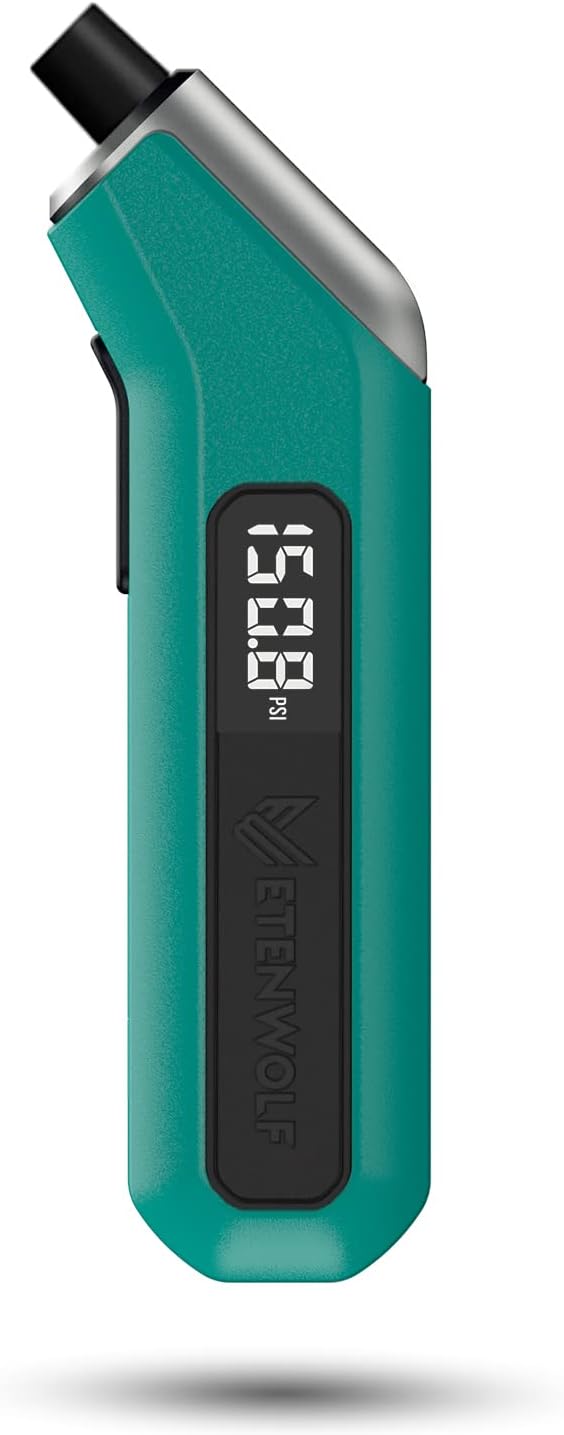
ETENWOLF T300 is a calibrated digital tire pressure gauge designed for reliable readings across low and high pressure ranges. It includes thermal compensation for stable performance in extreme cold or heat, an LED light for visibility, and an auto shut-off to help preserve battery life. Ideal for pickups, RVs, and heavy-duty vehicles, it delivers accurate PSI measurements with sturdy durability.

Check tire pressure quickly and accurately with the Accutire MS-4021B digital gauge, featuring a large backlit LCD for easy visibility. The angled head and rubber-coated handle make it comfortable to grip, while unit switching lets you read psi, bar, kPa, or kg/cm2. An automatic shutoff helps preserve battery life, and it measures 5–150 PSI in small increments for confident tire maintenance.
Benefits of Nitrogen Tire Inflation
Nitrogen tire inflation can help pressure stay more stable over time because nitrogen escapes through tire rubber more slowly than oxygen. It may also reduce moisture inside the tire. That is why nitrogen is common in racing, aviation, and some commercial tire programs.
For everyday Toyota Camry driving, regular compressed air is still safe and effective when you check pressure consistently. Nitrogen does not remove the need for pressure checks, and you should still use the same Toyota-recommended cold PSI.
[Products Worth Considering]

ETENWOLF’s tire pressure gauge helps you quickly and accurately check tire PSI across cars, trucks, motorcycles, bikes, and more. It’s manually calibrated to ANSI B40.1 Grade A for reliable readings, includes a large glow dial for easy nighttime viewing, and features a 360-degree swivel chuck for use at any valve angle. The gauge also works consistently in extreme hot or cold weather.

This calibrated digital tire pressure gauge delivers accurate readings within plus-minus 1 PSI for reliable tire maintenance. It features an illuminated nozzle and backlit LCD display to measure easily in dim areas, and offers four selectable units for versatile use. Automatic shutdown after 30 seconds helps conserve battery life for everyday convenience.
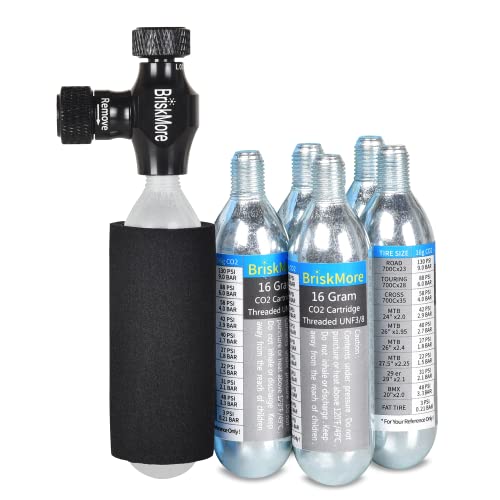
★Classic, Durable, Compact and Lightweight design.BriskMore CO2 Inflator Set has one inflator head, 5 units 16g 3/8 sized threaded CO2 cartridges and insulate sleeve for 16g cartridges only.
Busting Myths About Tire Pressure Maintenance
- Myth: The sidewall PSI is the right number. The sidewall usually shows the tire’s maximum cold pressure. Your Camry’s recommended pressure is on the vehicle label or in the manual.
- Myth: TPMS means I never need a gauge. TPMS is a warning system, not a maintenance plan. Check pressure manually.
- Myth: Tires only need air when they look low. A tire can be several psi low before it looks visibly soft.
- Myth: Hot tire pressure should be lowered after driving. Do not bleed air from hot tires just because the reading is higher after driving. Recheck when cold.
Impact of Tire Pressure on Fuel Efficiency
Correct tire pressure helps your Camry roll more efficiently. Low pressure increases rolling resistance, which can hurt fuel economy and add unnecessary heat to the tire. The difference may seem small each day, but it adds up across months of commuting.
Proper inflation also helps the tires wear evenly. Even tread wear improves comfort and can delay replacement costs when combined with regular rotation, alignment checks, and visual inspections.
Where to Get Help With Tire Inflation Services
If you do not have a gauge or air compressor, most tire shops, service stations, and Toyota service departments can check and adjust tire pressure. A professional inspection is a smart choice if one tire keeps losing air, the TPMS light stays on, the valve stem leaks, or the tire has a puncture, sidewall bubble, crack, or uneven wear.
Ask the technician to confirm the pressure against your Camry’s door-jamb label, not a generic PSI chart. This is especially important if your Camry has aftermarket wheels, replacement tires with a different size, or a compact spare.
Frequently Asked Questions
Is 40 PSI too much for a Toyota Camry?
It may be too much for many Camry models, but the correct answer depends on your door-jamb label. If your label says 35 psi, 40 psi is above the recommended cold pressure. If your label says 38 psi, 40 psi is still higher than the target but may be close after driving warms the tires. Check cold and adjust to the label.
Should you over- or under-inflate Camry tires in winter?
Do neither. Inflate to the recommended cold PSI on the door label. Cold weather can lower tire pressure, so check more often during temperature swings, but do not intentionally over-inflate beyond Toyota’s recommendation.
Is 30 PSI too low for a Toyota Camry?
For most modern Camry models, 30 psi is likely low. Check your door-jamb label and inflate the tire to the recommended cold pressure. If the tire drops back to 30 psi after being filled, have it inspected for a leak.
Do front and rear Camry tires need the same PSI?
Many Camry models use the same PSI front and rear, but you should always follow the door-jamb label. Some vehicles and tire packages use different front and rear pressures.
Can I drive with the TPMS light on?
Drive only far enough to reach a safe place where you can check the tires. If a tire is very low, visibly damaged, or losing air quickly, avoid driving and use the spare or roadside assistance.
Conclusion
The right Toyota Camry tire pressure is the cold PSI printed on your driver-side door-jamb label, not a one-size-fits-all number and not the tire sidewall maximum. Check your tires cold, use a reliable gauge, adjust pressure before long trips, and take the TPMS light seriously. A few minutes of tire-pressure maintenance can improve safety, protect tread life, and help your Camry drive the way Toyota intended.
Sources
- Toyota Owners — Camry Manuals and Warranties — official source for model-specific owner’s manuals.
- Toyota 2025 Camry Hybrid Owner’s Manual PDF — supports Toyota-specific tire-pressure, cold-pressure, and maintenance guidance.
- NHTSA TireWise Tire Safety — supports placard location, cold pressure checks, TPMS guidance, and tire safety steps.
- FuelEconomy.gov — Keeping Your Vehicle in Shape — supports tire pressure and fuel-economy impact.
- 49 CFR § 571.138 — Tire Pressure Monitoring Systems — supports federal TPMS owner-manual language and monthly cold tire checks.

Related Articles

Toyota Camry All-Season Tires Explained: What They Can and Can’t Do
In exploring Toyota Camry all-season tires, discover their benefits and limitations—are they really the right choice for your driving needs?
Read More
Toyota Camry Tire Traction in Ice and Snow: A Practical Winter Driving Guide
Learn essential tips for maximizing tire traction on ice and snow in your Toyota Camry, ensuring your winter driving is safe and confident. Discover more now!
Read More
Do Toyota Camry Tires Need Snow Chains? When They Help and When They Don’t
How do snow chains enhance your Toyota Camry's winter driving safety, and when should you avoid using them? Discover the essential details inside!
Read More