
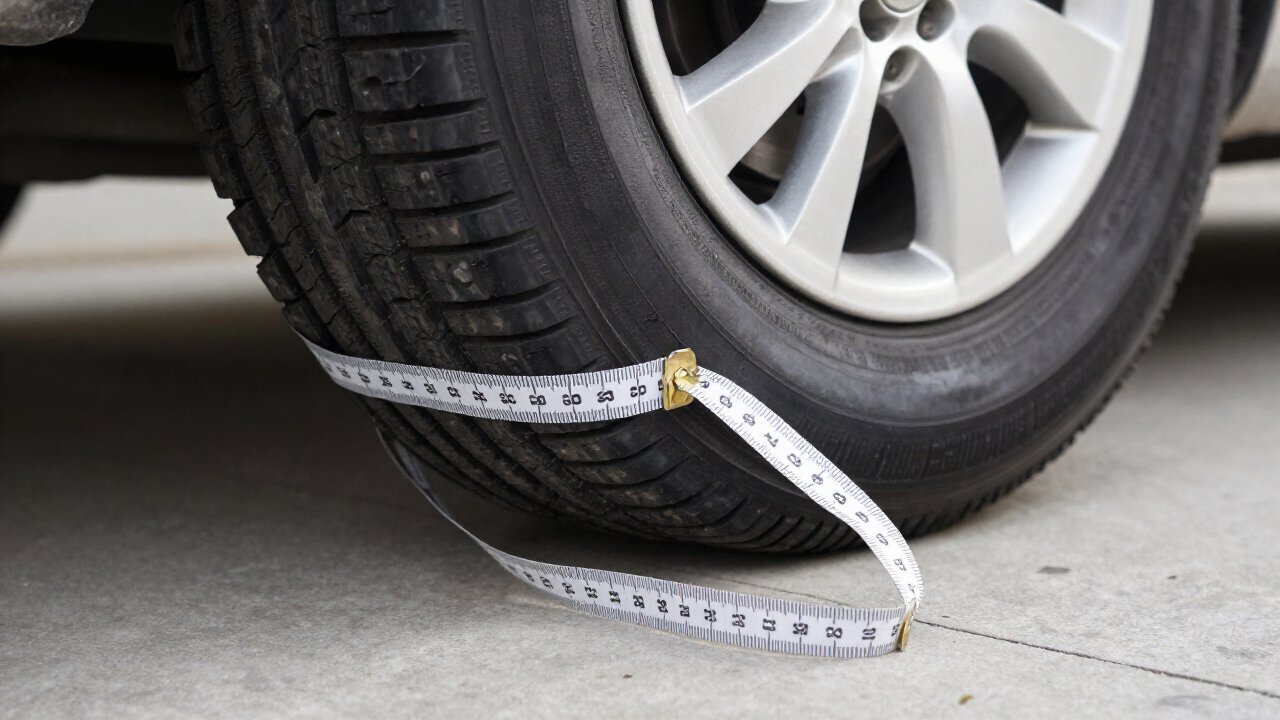
Tire circumference is the distance around the outside of a tire, which is also the distance it rolls in one full turn. To calculate it, find the tire’s overall diameter and multiply by pi: circumference = diameter × 3.1416. For a car tire, the diameter is the wheel size plus two sidewalls, and each sidewall is the tire width multiplied by the aspect ratio. A 225/60R18 tire, for example, is about 28.6 inches in diameter and about 89.9 inches (2,285 mm) around, so it turns roughly 705 times per mile. For bicycles, use the ETRTO size: add twice the tire width to the bead seat diameter, then multiply by pi.
Last updated: November 23, 2026
Quick Answer
Tire circumference = overall diameter × π. For a car tire size like 225/60R18: sidewall = 225 × 0.60 = 135 mm (5.31 in); diameter = 18 + 2 × 5.31 = 28.63 in; circumference = 28.63 × 3.1416 = 89.9 in (2,285 mm). Revolutions per mile = 63,360 ÷ circumference in inches. Real rolling circumference under load is usually a little smaller, so measure a rollout for the most accurate figure.
Key Takeaways
- Formula: circumference = π × overall diameter.
- Car tires: diameter (in) = rim size + 2 × (width × aspect ratio ÷ 100 ÷ 25.4).
- Bike tires (ETRTO): diameter (mm) = bead seat diameter + 2 × tire width.
- Revolutions per mile = 63,360 ÷ circumference in inches.
- A loaded, rolling tire covers slightly less distance than its calculated circumference, so a measured rollout is best for speedometers and bike computers.
What Is Tire Circumference?
Circumference is the length of the tire’s outer edge. Because a tire rolls without slipping under normal driving, one revolution moves the vehicle forward by about one circumference. That is why circumference matters for speedometers, odometers, bike computers, gearing and comparing tire sizes. Two tires with the same circumference will read the same on your speedometer even if their widths and wheel sizes differ.
Products Worth Considering

This portable cordless air pump inflates car, motorcycle, bike, and ball tires with up to 150 PSI and real-time LCD pressure monitoring. It features a built-in rechargeable battery, four unit modes (PSI/KPA/BAR/KG/CM²), and an auto shut-off to prevent over-inflation. An LED light and USB-C/USB-A ports make it useful for nighttime emergencies and charging devices.
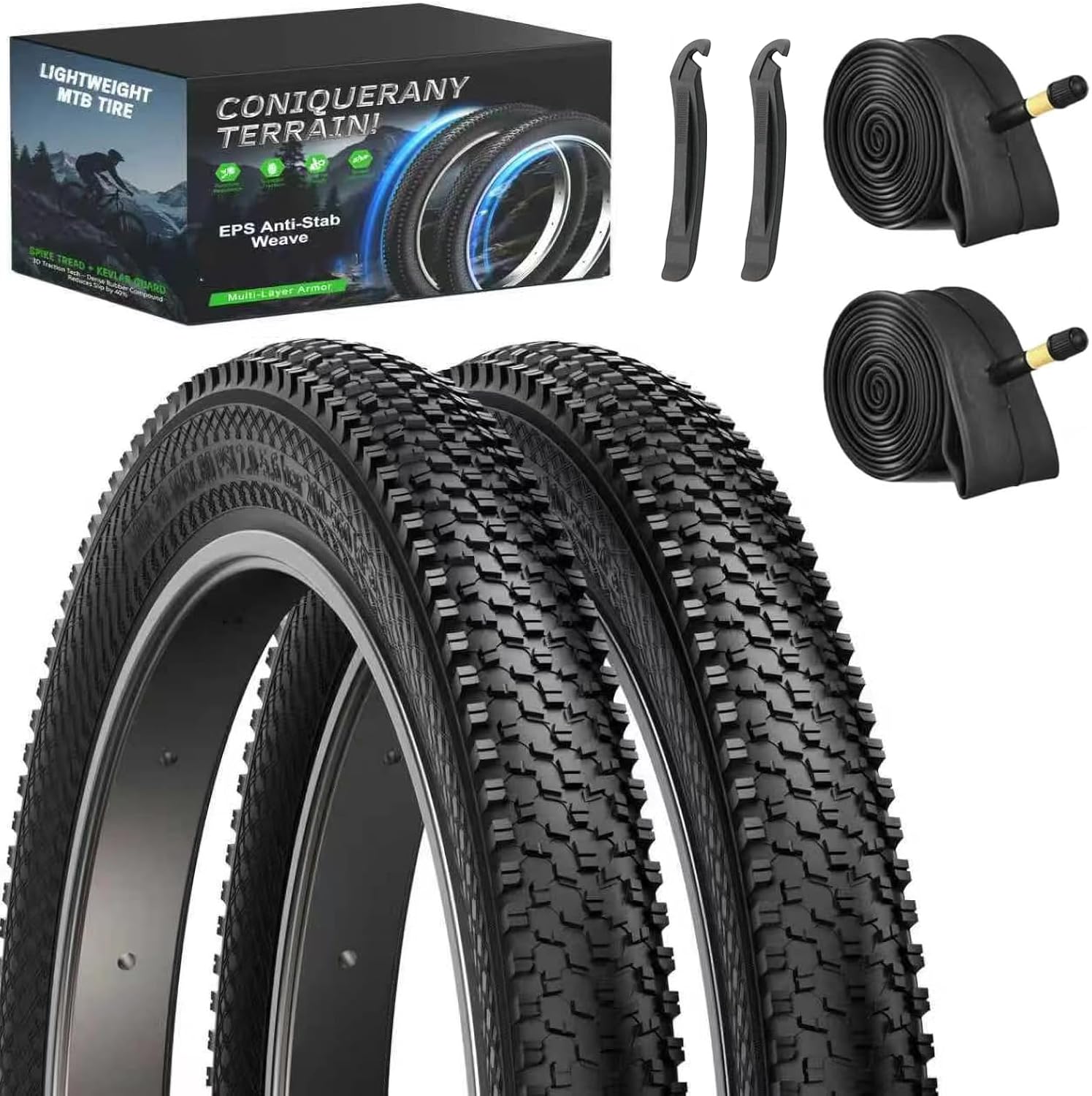
This 2-pack set includes two folding mountain bike tires, two inner tubes, and two tire levers for quick, budget-friendly replacements. The tires feature an anti-stab weave for added protection, plus strong grip and durable construction to help you stay stable across common trail and road conditions. Foldable design makes storage and travel convenient, while the included tubes provide a matched fit for smoother setup.

Upgrade your tire inflating setup with this 12-inch hose adapter featuring a brass locking quick-connect chuck for secure, leak-proof attachment. The extended, flexible design helps reach hard-to-access valve stems, while the self-locking mechanism enables hands-free inflation with no pressure loss. It’s compatible with most portable air compressors and inflators, making it ideal for cars, trucks, motorcycles, and bicycles.
The Tire Circumference Formula
For any round object, circumference equals pi (about 3.1416) multiplied by the diameter. For tires, the work is in finding the diameter from the size code.
Step 1: Read the tire size
A car tire size such as 225/60R18 gives you the section width (225 mm), the aspect ratio (60, meaning the sidewall is 60% of the width) and the wheel diameter (18 inches).
Step 2: Calculate the sidewall height
225 × 0.60 = 135 mm. Divide by 25.4 to convert to inches: 135 ÷ 25.4 = 5.31 inches.
Step 3: Calculate the overall diameter
Add the wheel diameter and two sidewalls: 18 + 5.31 + 5.31 = 28.63 inches. In millimeters, that is 457.2 + 270 = 727.2 mm.
Step 4: Multiply by pi
28.63 × 3.1416 = 89.94 inches, or 727.2 × 3.1416 = 2,284.6 mm.
Step 5: Revolutions per mile (optional)
There are 63,360 inches in a mile, so 63,360 ÷ 89.94 = about 705 revolutions per mile.
For more on the diameter step, see how to figure out tire diameter and our metric vs. inch tire size guide.
Tire Circumference Chart for Common Car and Truck Sizes
The chart below uses the size-code formula, so treat the figures as nominal. Actual tires vary slightly by brand, tread depth and wheel width.
| Tire size | Diameter | Circumference | Circumference (mm) | Revolutions per mile |
|---|---|---|---|---|
| 195/65R15 | 25.0 in | 78.5 in | 1,993 mm | 807 |
| 205/55R16 | 24.9 in | 78.2 in | 1,985 mm | 811 |
| 215/60R16 | 26.2 in | 82.2 in | 2,087 mm | 771 |
| 225/65R17 | 28.5 in | 89.6 in | 2,275 mm | 707 |
| 235/65R17 | 29.0 in | 91.2 in | 2,316 mm | 695 |
| 225/60R18 | 28.6 in | 89.9 in | 2,285 mm | 704 |
| 235/55R18 | 28.2 in | 88.5 in | 2,248 mm | 716 |
| 245/60R18 | 29.6 in | 92.9 in | 2,360 mm | 682 |
| 265/70R17 | 31.6 in | 99.3 in | 2,522 mm | 638 |
| 275/60R20 | 33.0 in | 103.6 in | 2,633 mm | 611 |
| 285/70R17 | 32.7 in | 102.8 in | 2,610 mm | 617 |
| 295/65R20 | 35.1 in | 110.3 in | 2,801 mm | 575 |
Notice how different sizes can land close together. A 225/65R17 and a 225/60R18, for example, end up within about half an inch of each other in circumference (89.58 vs. 89.94 inches), which is why both can appear as factory options on the same vehicle. Our guide to revolutions per mile by tire size shows the same effect for sedan sizes.
How to Calculate Bicycle Tire Circumference (ETRTO)
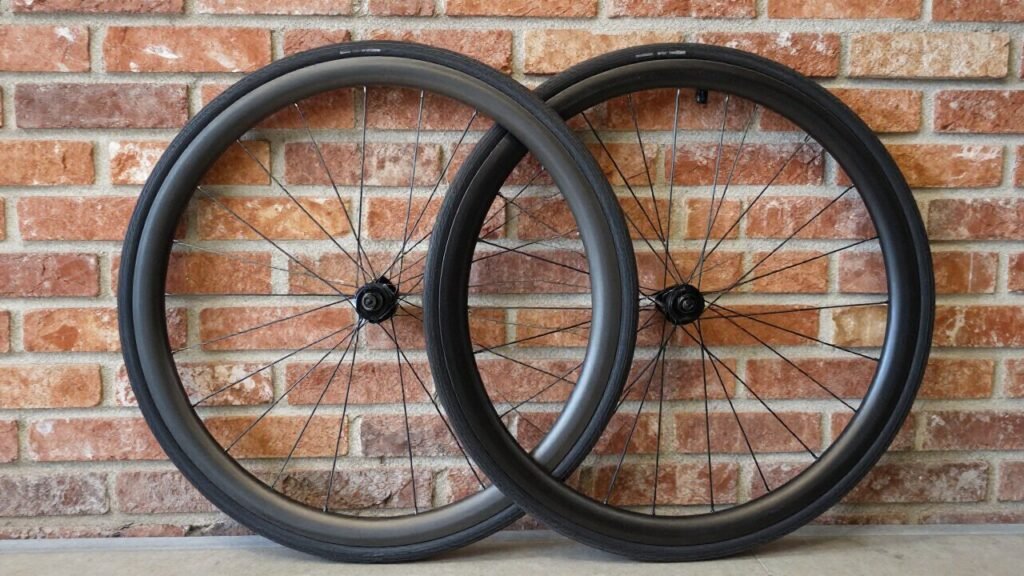
Bicycle tires are best described by their ETRTO (ISO) size, which gives the tire width and the bead seat diameter (BSD) in millimeters. A tire marked 25-622 is 25 mm wide and fits a rim with a 622 mm bead seat diameter, which is the size commonly called 700c or 29er.
The formula is: circumference ≈ π × (BSD + 2 × width). For 25-622: 622 + 50 = 672 mm diameter, and 672 × 3.1416 = about 2,111 mm.
| Common name | ETRTO | Approx. diameter | Approx. circumference |
|---|---|---|---|
| 700x25c | 25-622 | 672 mm | 2,111 mm |
| 700x28c | 28-622 | 678 mm | 2,130 mm |
| 700x32c | 32-622 | 686 mm | 2,155 mm |
| 700x40c | 40-622 | 702 mm | 2,205 mm |
| 650b x 47 | 47-584 | 678 mm | 2,130 mm |
| 27.5 x 2.2 | 56-584 | 696 mm | 2,187 mm |
| 29 x 2.4 | 61-622 | 744 mm | 2,337 mm |
| 26 x 2.1 | 54-559 | 667 mm | 2,095 mm |
| 20 x 1.75 | 47-406 | 500 mm | 1,571 mm |
These figures are unloaded estimates. Real tires vary in actual width and height by brand and rim width, and the tire compresses under the rider’s weight. For a bike computer, a measured rollout is more accurate. Learn more in our guides to ETRTO tire sizing, the bicycle tire size chart and what 700c means.
How to Measure Rolling Circumference
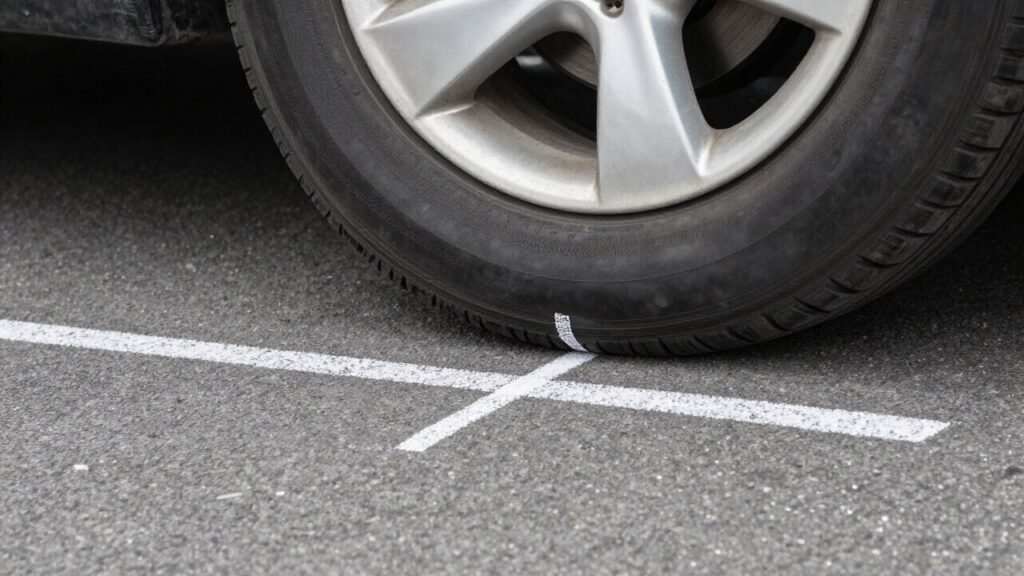
Calculated circumference assumes a perfectly round, unloaded tire. A real tire flattens slightly where it meets the road, so the distance it covers per turn, called rolling circumference or rollout, is usually a little less than the calculated number. To measure it:
- Inflate the tire to your normal running pressure.
- Mark the tire with chalk or tape at the point where it touches the ground, and mark the ground at the same spot.
- Roll the vehicle or bike forward in a straight line for exactly one revolution, with normal weight on it (sit on the bike, or keep the car loaded as usual).
- Mark the ground again where the tire mark returns to the bottom.
- Measure between the two ground marks. That distance is your rolling circumference. For better accuracy, roll three or more revolutions and divide.
Products Worth Considering

The SAFELIFE dial tire tread depth gauge measures tread depth in 1/32 inch increments with clear, easy-to-read 2-inch dial face. Color zones using a traffic light system help you quickly judge whether tread is low, marginal, or ample for safer driving. Built with a durable zinc cast body and a metal detect probe for precise, comfortable use across cars, motorcycles, trucks, and buses.

This VEVOR tire bead breaker uses a slide-hammer impact and wedge tip to separate tire beads from rims quickly and efficiently without damaging hub surfaces. The long handle and sturdy steel construction help reduce user strain while providing reliable, portable tire changing for cars, trucks, and more. Ideal for home mechanics and repair shops handling multiple vehicle tire sizes.

The ETENWOLF T600 digital tire pressure gauge delivers precise, manually calibrated readings to ANSI B40.7 Grade 2A standards with ±0.5% PSI accuracy. Its 360° rotating nozzle and display hold make it easy to check pressures from any angle, while a bleed button helps dial tires to the perfect level. With a 0–250 PSI range and support for PSI, BAR, and KPA, it’s a convenient tool for maintaining tire performance across many vehicles and seasons.
How Circumference Affects Your Speedometer
Your speedometer counts wheel revolutions and assumes a fixed circumference. If you fit a tire with a larger circumference, each revolution covers more distance, so you are traveling faster than the speedometer shows. The correction is simple:
Actual speed = indicated speed × (new circumference ÷ old circumference)
For example, moving from 225/65R17 (about 89.6 inches around) to 235/65R17 (about 91.2 inches) is a 1.8% increase. At an indicated 60 mph, you would actually be doing about 61.1 mph, and your odometer would under-record mileage by the same 1.8%. Many vehicles can be recalibrated with a dealer tool or programmer after a tire size change. When upsizing, also check the correct inflation pressure; see how to calculate tire pressure after upsizing.
| Circumference change | Actual speed at an indicated 60 mph |
|---|---|
| −3% | 58.2 mph |
| −1% | 59.4 mph |
| 0% | 60.0 mph |
| +1% | 60.6 mph |
| +3% | 61.8 mph |
| +5% | 63.0 mph |
As a guide, many tire professionals try to keep a replacement size within about 3% of the original diameter to limit speedometer error and avoid problems with stability and braking systems. Always check that the new size is approved for your vehicle.
Circumference vs. Diameter vs. Radius
- Diameter is the tire’s overall height, from the ground to the top of the tread.
- Radius is half the diameter, from the center of the wheel to the tread. A tire’s loaded radius is shorter than its unloaded radius.
- Circumference is the distance around the outside, π times the diameter, or 2π times the radius.
If you know any one of these, you can find the others. For example, a 295/65R20 tire’s 35.1-inch diameter gives a circumference of about 110.3 inches. See how tall a 295/65R20 tire is for that full calculation.
Frequently Asked Questions
How do you calculate tire circumference?
Multiply the tire’s overall diameter by pi (3.1416). For a car tire, find the diameter by adding the wheel size to two sidewall heights, where each sidewall is the width times the aspect ratio.
What is the circumference of a 225/60R18 tire?
About 89.9 inches, or roughly 2,285 mm, based on a diameter of 28.6 inches. It turns about 705 times per mile.
How do I find the rolling circumference for ETRTO sizes?
Add twice the tire width to the bead seat diameter and multiply by pi for an estimate. For the most accurate figure, measure a rollout with the rider on the bike.
What is the circumference of a 700x25c tire?
About 2,111 mm calculated from its 25-622 ETRTO size. Measured rollouts are usually a little lower because the tire compresses under load.
Does tire pressure change circumference?
Slightly. Lower pressure lets the tire squash more under load, reducing its rolling radius and effective circumference. Higher pressure has the opposite effect.
How many revolutions per mile does my tire make?
Divide 63,360 by the circumference in inches. A tire that is 89.9 inches around makes about 705 revolutions per mile.
Conclusion
To calculate tire circumference, find the overall diameter from the size code and multiply by 3.1416. Use the car formula for metric passenger and truck sizes, the ETRTO formula for bicycles, and divide 63,360 by the result to get revolutions per mile. When accuracy really matters, such as setting a bike computer or checking a speedometer after a size change, measure a rollout under normal load.
Sources
Products Worth Considering

The ETENWOLF T500 digital tire pressure gauge with inflator delivers accurate readings across a wide 0–250 PSI range, calibrated to ANSI B40.7 Grade 2A. An all-in-one tool combines gauge, air chuck, hose, inflating and controlled bleed for checking, inflating, and deflating tires on many vehicle types. It’s built for reliable use in extreme temperatures and features an illuminated backlit display with replaceable AAA batteries for convenient operation.

This locking tire air chuck adapter converts an unscrewed connection into a secure locking fit to help prevent air leakage during inflation. The brass threaded screw-in nozzle clamps firmly to the tire valve stem for fast, efficient pumping. Designed for reliable performance up to 250 PSI, it’s compatible with 8mm hose inflators and suitable for cars, trucks, motorcycles, bicycles, and more.
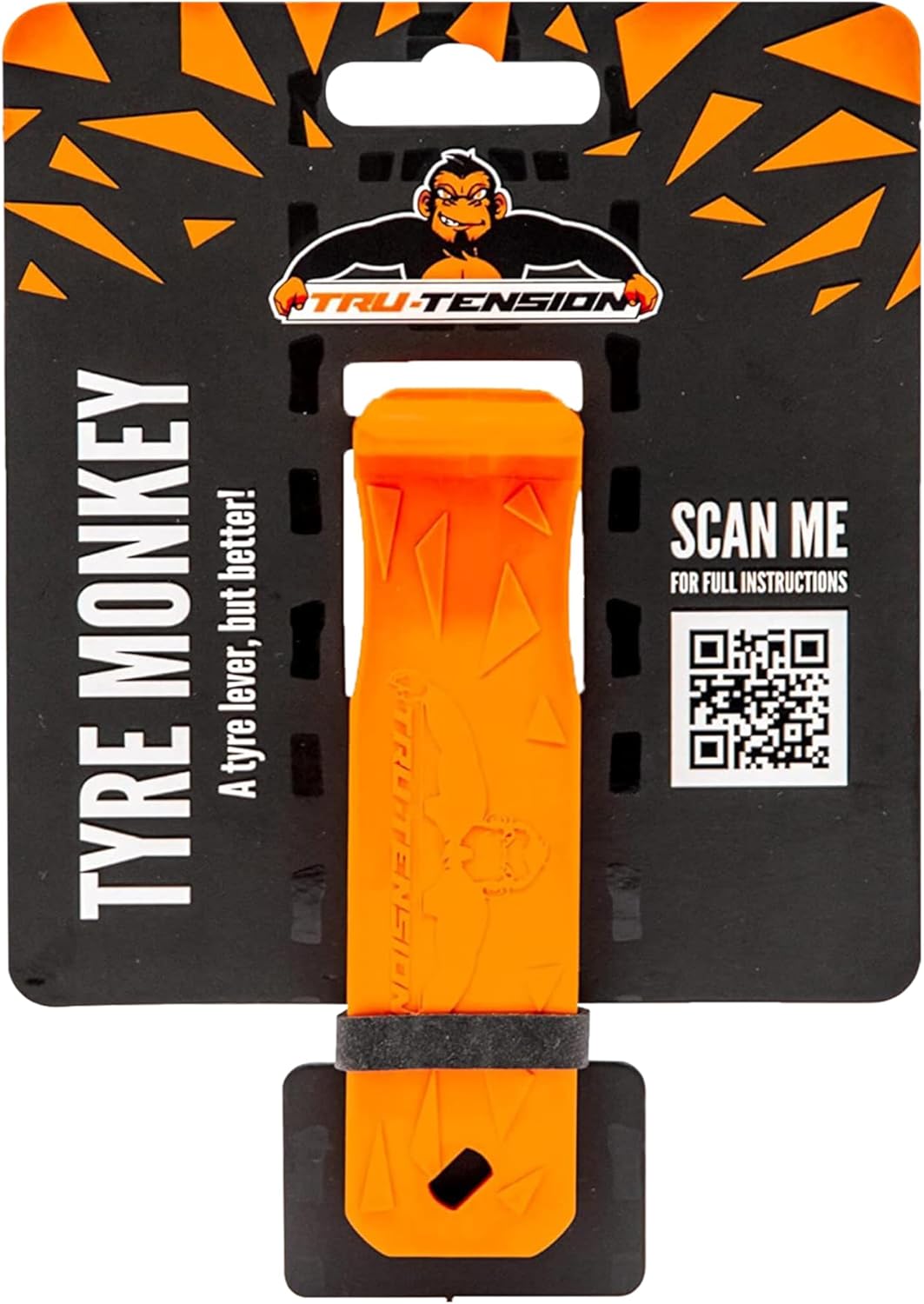
The Tru-Tension Tyre Monkey is a revolutionary bicycle tyre lever that makes removing and fitting tires fast and easy. Its innovative geometry helps keep your hand at a 90-degree angle to the wheel to reduce the risk of hitting spokes, and the design is optimized to use only one tool instead of multiple conventional levers. Compact and durable, it’s built for convenient carry and reliable tire changes on the go.