
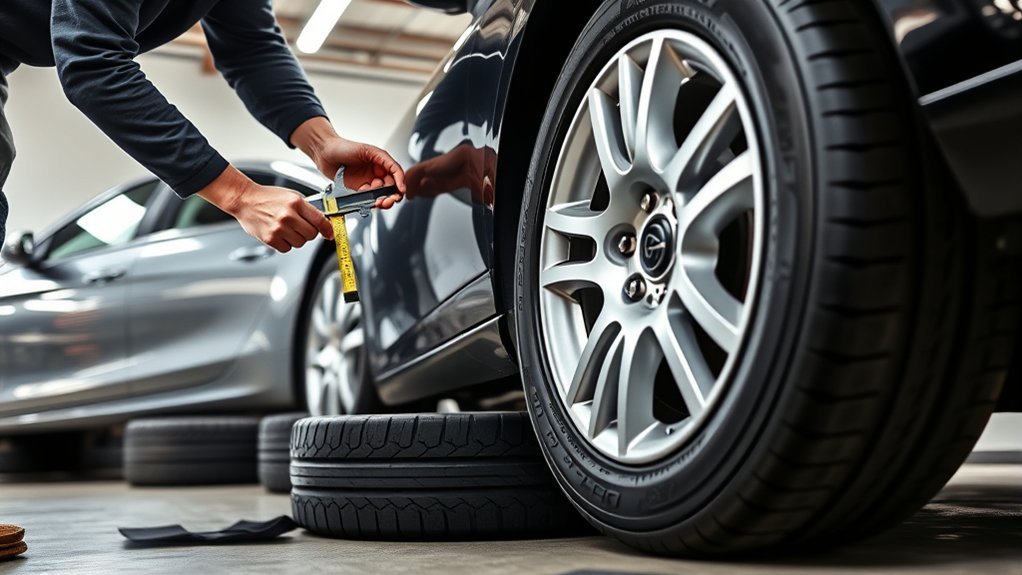
To tell if a tire fits your car, start with the tire size on the driver’s door placard or in the owner’s manual, then compare it with the tire’s sidewall code. The tire must match the wheel diameter, fit the approved rim width, meet or exceed the required load index and speed rating, and clear the fenders, suspension, brakes, and liners without rubbing.
Quick Answer
A tire fits your car if its size matches the Tire and Loading Information Label or an approved alternate size, its load index and speed rating meet or exceed factory specs, its rim diameter matches the wheel, and it has enough clearance at full steering lock and suspension compression.
Key Takeaways
- Use the driver’s door placard or owner’s manual as your first source for the correct tire size.
- Decode the sidewall code so you can compare width, aspect ratio, construction, rim diameter, load index, and speed rating.
- Keep replacement tire diameter close to the original size, commonly within about 3%, unless the vehicle manufacturer or a tire professional confirms the change.
- Check rim width, wheel offset, brake clearance, and wheel-well clearance before using a wider or taller tire.
- For AWD, staggered setups, towing, heavy loads, or modified vehicles, confirm fitment with a qualified tire dealer before buying.
At a Glance
| Time Required | 10 to 20 minutes for a basic check; longer if you are changing wheel size or suspension height. |
| Difficulty | Easy for same-size replacement tires; moderate for plus sizing, wider tires, lifted vehicles, or lowered vehicles. |
| Tools Needed | Owner’s manual, door placard, current tire sidewall, tire size calculator, flashlight, tape measure, and tire dealer confirmation if changing size. |
| Cost | Free to check yourself; professional fitment confirmation is usually included when you buy tires from a tire shop. |
How to Find Your Tire Size

To find your tire size, check the Tire and Loading Information Label on the driver’s door edge, door jamb, or B-pillar. You can also confirm the size in your owner’s manual. The National Highway Traffic Safety Administration says replacement tires should be the same size as the vehicle’s original tires or another size recommended by the vehicle manufacturer.
Next, compare that placard size with the code molded into your tire sidewall, such as 205/60R16 or P225/50R17 94V. That code tells you the tire width, sidewall height, construction type, rim diameter, load capacity, and speed rating. If you are only replacing worn tires with the exact same size, the check is simple. If you are changing width, sidewall height, wheel size, or tire type, you need a full fitment check before buying.
If you are comparing options, use a tire size calculator to estimate the new tire’s diameter, circumference, and speedometer effect. A calculator is helpful, but it does not prove physical clearance. You still need to verify the tire against the wheel, brake package, suspension, and bodywork.
Warning: Do not assume a tire fits just because the diameter is close. A wider tire, different wheel offset, lift kit, lowering spring, worn suspension, or larger brake caliper can cause rubbing or unsafe clearance even when the tire size calculator looks acceptable.
Read Tire Size Markings
A tire code like P225/50R17 94V gives you the main fitment details at a glance. Read it from left to right:
- P means passenger-vehicle tire. You may also see LT for light truck, ST for trailer, T for temporary spare, or no prefix on many metric passenger sizes.
- 225 is the section width in millimeters.
- 50 is the aspect ratio, meaning the sidewall height is 50% of the tire width.
- R means radial construction, which is standard on most modern passenger vehicles.
- 17 is the wheel diameter in inches. This number must match the wheel diameter.
- 94V is the service description: 94 is the load index, and V is the speed rating.
Tire Rack’s sidewall marking guide explains that the tire size on the sidewall includes the tire’s intended purpose, dimensions, load capacity, and high-temperature or high-speed durability information. This is why you should compare the whole code, not just the first three numbers.
For example, 225/50R17 and 225/55R17 use the same wheel diameter and width number, but the second tire has a taller sidewall and a larger overall diameter. That can affect clearance, gearing feel, speedometer reading, and stability-control calibration.
Use the Door Placard Before the Sidewall
Your current tire sidewall is useful, but it is not always proof of the correct size. A previous owner may have installed the wrong tires. The door placard is more reliable because it lists the manufacturer’s intended tire size, load information, and cold tire pressure for your vehicle.
Use this order when checking fitment:
- Check the door placard for the original tire size and pressure.
- Check the owner’s manual for optional factory sizes or special notes.
- Read the current tire sidewall and compare it with the placard.
- Use a tire size calculator only after you know the factory size.
- Ask a tire dealer to confirm any non-factory tire size before purchase.
Pro Tip: Take a photo of your door placard and current tire sidewall before shopping. That gives the tire shop the exact size, load index, speed rating, and pressure information needed to check compatibility.
Match Load Index and Speed Rating
You need to match or exceed the vehicle’s required load index and speed rating. These two markings are part of the tire’s service description, and they matter as much as the physical size. A tire that fits the wheel but has too low a load rating can overheat, wear quickly, or fail under heavy passengers, cargo, or towing loads.
Load Index Match
The load index is a number that identifies how much weight a tire can carry at its rated pressure. Tire Rack’s load index guide notes that the higher the load index number, the greater the tire’s load-carrying capacity. Passenger and light-truck tire load indexes commonly fall within published passenger/light-truck ranges, but the number you need is the one specified for your vehicle.
Always choose a replacement tire with the same load index as the original tire or a higher one approved for your vehicle. If your placard or manual calls for XL, reinforced, LT, or a specific load range, do not replace it with a standard-load passenger tire just because the size looks similar. Tire Rack’s load range guide also notes that when changing tire sizes or tire types, the replacement tire’s load index should be the same or greater than the original.
Speed Rating Match
The speed rating is the letter in the service description, such as S, T, H, V, W, or Y. It identifies the tire’s tested speed capability under controlled conditions, but it is not a suggestion to drive that fast. For fitment, the practical rule is simple: match the speed rating listed by the vehicle manufacturer or choose a higher rating if the tire maker and vehicle manufacturer allow it.
Do not install a lower speed rating without professional confirmation. A lower rating can change high-speed heat resistance, steering response, and emergency handling. This is especially important on performance cars, EVs, vehicles used for towing, and vehicles that carry heavy loads.
Check Wheel Diameter and Width
The wheel must match the tire’s required rim diameter exactly. If the tire says R17, it fits a 17-inch wheel, not a 16-inch or 18-inch wheel. Do not force a tire onto the wrong wheel diameter.
Rim width matters too. Each tire size has an approved rim-width range. A tire that is too wide for the wheel may not seat correctly and can feel unstable. A tire that is too narrow for the wheel can stretch the sidewall and reduce impact protection. For aftermarket wheels, you also need to check offset, bolt pattern, center bore, and brake-caliper clearance.
[Products Worth Considering]

AstroAI’s calibrated digital tire pressure gauge delivers precise readings across a 0–150 PSI range, with high clarity from a backlit LCD. Built for everyday road use, it features one-button operation, an anti-slip ergonomic grip, and support for multiple pressure units plus auto shutoff. Powered by AAA batteries, it’s an all-weather essential for checking tire health and TPMS warnings.

Malco tire mounting and demounting lubricant is a ready-to-use tire lube formulated to reduce friction during tire installation for passenger cars, light trucks, farm tires, and heavy-duty equipment. It provides rust-inhibiting protection to help reduce corrosion on rims and wheels, and helps support proper tire bead seating during inflation to reduce air leakage. The silicone-free, soap-free formula is whitewall safe to help prevent discoloration on whitewall tires and sensitive sidewall markings.

The 22800 wheel stud installer makes replacing wheel studs quick and secure, saving time and effort during tire service. It uses a ratchet or impact wrench to pull new studs firmly into place, helping when existing studs are too long. Compatible with most automotive wheels and light-duty truck wheel studs, it’s designed for easy, tool-assisted installation.
Confirm Wheel Diameter
The most reliable way to confirm wheel diameter is to read the tire size already mounted on the wheel or check the wheel’s stamped size. The final number in the tire code must match the wheel diameter. A tape measure across the outside lip can be misleading because tire sizing is based on the bead-seat diameter, not the decorative outer edge of the rim.
- Check the tire code’s final number, such as R16, R17, R18, or R20.
- Confirm the wheel size stamped on the wheel if you are buying tires for loose rims.
- Never mount a tire on a wheel with a different rim diameter.
- Ask a tire shop to confirm wheel size if the wheel marking is hard to read.
Match Rim Width
After confirming wheel diameter, check the rim width. For example, many 225 mm passenger tires fit wheels in the general 7 to 9 inch range, but the approved range depends on the exact tire size and tire model. Always check the tire manufacturer’s specification sheet or ask a tire dealer before assuming.
| Wheel check | Why it matters |
|---|---|
| Rim diameter | Must match the tire code exactly, such as R17 with a 17-inch wheel. |
| Rim width | Must fall within the tire maker’s approved range for safe seating and handling. |
| Offset | Changes how far the tire sits inward or outward, which affects rubbing and bearing load. |
| Bolt pattern and center bore | Must match the vehicle if you are changing wheels, not just tires. |
| Brake clearance | Aftermarket wheels can touch larger calipers even when tire diameter looks correct. |
Check Clearance Limits
Once the wheel diameter and rim width check out, confirm there is enough physical clearance in the wheel well. Check around the tire at the suspension, brake lines, strut, spring perch, fender liner, mud flap, and outer fender.
- Turn the steering from lock to lock and inspect both front tires.
- Check clearance with the vehicle loaded if you often carry passengers, cargo, or towing tongue weight.
- Look for rubbing marks on liners, control arms, sway bar links, and fender edges.
- Leave extra clearance for snow buildup, mud, tire flex, and suspension movement.
A tire can clear while parked but rub while braking, cornering, reversing, or hitting a bump. That is why professional fitment confirmation is smart when you move away from factory sizing.
Understand the 3% Tire Rule
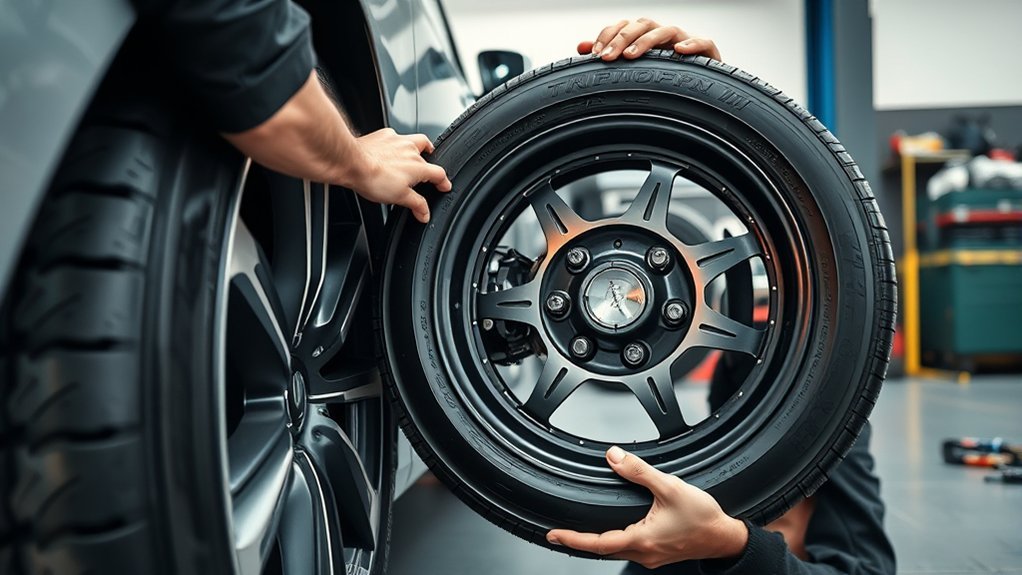
The 3% tire rule is a common fitment guideline that says the replacement tire’s overall diameter should stay within about 3% of the original tire’s diameter. This helps reduce changes to speedometer accuracy, odometer readings, anti-lock braking, traction control, gearing feel, and clearance.
Use it as a screening tool, not a guarantee. Some vehicles tolerate a small change well, while others are sensitive to rolling diameter, especially AWD vehicles and vehicles with advanced stability-control systems. If you are changing size, confirm the result against the owner’s manual, tire placard, tire manufacturer data, and a tire professional.
| Check | Rule of thumb |
|---|---|
| Same-size replacement | Best choice when you want factory fit and predictable handling. |
| Diameter change | Keep near the original size, commonly within about 3%, unless approved. |
| Width change | Check rim width, offset, suspension clearance, and fender clearance. |
| AWD or staggered setup | Keep rolling circumference closely matched according to the vehicle maker’s guidance. |
NHTSA reported 511 motor vehicle traffic fatalities in tire-related crashes in 2024. Correct tire size, inflation, load rating, tread condition, and fitment are safety checks, not just shopping details.
Compare Tire Diameter and Circumference
You should compare the new tire’s diameter and circumference with the original tire before you buy. Diameter is the tire’s overall height. Circumference is the distance the tire travels in one full revolution. When circumference changes, revolutions per mile change too, which can affect speedometer and odometer accuracy.
A basic tire diameter estimate uses this idea:
- Sidewall height = tire width × aspect ratio
- Overall diameter = wheel diameter + two sidewalls
- Circumference = diameter × 3.1416
For most shoppers, a tire size calculator is easier and less error-prone. Enter the factory size first, then compare the proposed size. Watch the percentage difference in diameter and circumference, not just the width.
Diameter Changes Matter
A taller tire covers more distance per rotation. That can make the speedometer read slower than your real road speed. A shorter tire covers less distance per rotation. That can make the speedometer read faster than your real road speed. Either change can also affect shift points, acceleration feel, braking calibration, and driver-assistance systems.
If you want a different look or more sidewall, compare the full tire size, not only the rim diameter. For example, moving from a 17-inch wheel to an 18-inch wheel does not automatically make the total tire diameter larger if the sidewall gets shorter. This is the idea behind plus sizing: the wheel gets larger while the tire sidewall gets shorter to keep overall diameter close to stock.
Circumference and Speedometer
Tire circumference tracks directly with diameter, so even a small size change can affect speedometer readings. The example below shows why a small diameter change matters.
| Measure | Original tire | New tire |
|---|---|---|
| Overall diameter | 25.0 in | 25.5 in |
| Circumference | 78.5 in | 80.1 in |
| Likely speedometer effect | Baseline | May read slightly slower than actual speed |
Use a Tire Size Calculator
A tire size calculator helps you compare the original size with a proposed replacement size. It usually shows diameter, width, sidewall height, circumference, and speedometer difference. This makes it useful when you are deciding between factory size, an optional factory size, or a mild plus-size setup.
Use the calculator this way:
- Enter the tire size from your door placard as the original size.
- Enter the tire you want to buy as the new size.
- Compare overall diameter and circumference.
- Check whether the new width works with your rim width.
- Confirm the load index and speed rating separately.
- Verify physical clearance before purchase.
Do not rely on the calculator alone if the vehicle is lifted, lowered, used off road, used for towing, equipped with aftermarket wheels, or fitted with non-factory brakes.
[Products Worth Considering]

A concentrated tire and tube mounting compound designed to help simplify mounting rubber tires and tubes on passenger, semi truck, construction, and OTR applications. Its ultra-thick formula packs beads effectively and includes rust inhibitors to help protect against corrosion during use.

This VEVOR tire bead breaker uses a slide-hammer impact and wedge tip to separate tire beads from rims quickly and efficiently without damaging hub surfaces. The long handle and sturdy steel construction help reduce user strain while providing reliable, portable tire changing for cars, trucks, and more. Ideal for home mechanics and repair shops handling multiple vehicle tire sizes.

Monitor tire tread wear with a smart, color-coded depth gauge that shows clear condition ranges at a glance. The bar is range marked for fast, easy readings, helping you maintain safer traction and performance. Each gauge is portable with a pocket clip, and the set includes 20 units for daily use and sharing.
Check for Clearance and Speedometer Issues
Once you have narrowed down a size, check that the new tire’s diameter stays close to the original and that the tread width still fits your rim’s approved range. If the tire is too wide for the wheel, it can affect bead seating, steering feel, and sidewall support. If it is too tall, it can rub the fender liner, mud flap, bumper tab, spring perch, or inner wheel well.
Turn the steering wheel lock-to-lock while the car is parked, then inspect both sides. If possible, inspect again after a short slow-speed test in a safe area. Listen for rubbing while turning, reversing, braking, and driving over small dips. Any contact means the fitment needs to be corrected.
After installation, set the tire pressure to the vehicle manufacturer’s cold inflation pressure, not the maximum pressure printed on the tire sidewall. Then check whether your vehicle requires TPMS reset, speedometer calibration, or alignment service after tire or wheel changes.
Check Staggered Tire Fitment
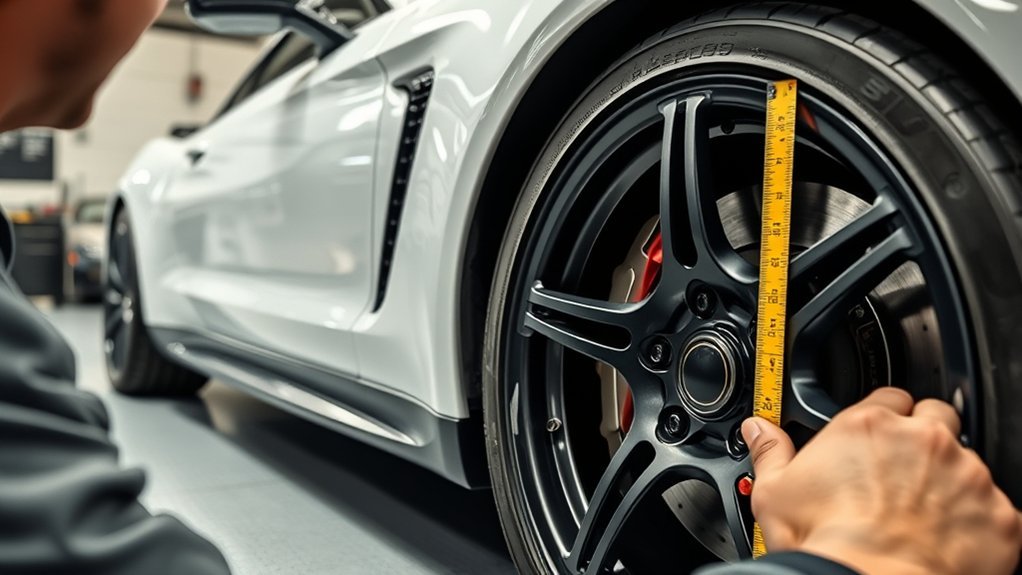
If your car uses staggered fitment, the front and rear tires are different sizes. This is common on some performance cars because wider rear tires can add grip, but it also means you must match each axle to the exact vehicle specification. Do not rotate staggered tires front-to-rear unless the owner’s manual allows it.
For staggered vehicles, compare front and rear rolling diameter carefully. A large mismatch can affect traction control, stability control, ABS behavior, and drivetrain stress. This is especially important on AWD vehicles, where tire circumference differences can damage driveline components.
- Check the placard for both front and rear sizes.
- Keep front and rear rolling circumference within the vehicle maker’s allowed range.
- Use the correct load index and speed rating for each axle.
- Replace tires in matched sets when the owner’s manual requires it.
- Ask a tire professional before changing staggered sizes.
Ask a Tire Dealer to Verify Fitment
A tire dealer can verify fitment with vehicle databases, tire manufacturer specs, and wheel-measuring tools. Bring your vehicle year, make, model, trim, current tire size, desired tire size, wheel size, and any modifications. If you tow, carry heavy loads, drive off road, or use winter tires, mention that too.
| Check | What to provide | Why it matters |
|---|---|---|
| Vehicle ID | Year, make, model, trim | Finds the correct OE and optional factory sizes. |
| Current tire | Full sidewall code | Shows what is installed now and whether it matches the placard. |
| Wheel specs | Diameter, width, offset, bolt pattern | Confirms the tire fits the wheel and clears the vehicle. |
| Driving use | Daily driving, towing, winter, off-road, performance | Helps match load rating, tire type, and durability. |
[Products Worth Considering]

This 15-inch tire spoons kit makes tire removal and installation easier with added leverage, reducing time and effort for everyday repairs. It includes tire spoons, rim protectors, a valve tool, and valve cores/caps, helping protect rims and streamline deflation and re-sealing. Built with durable hardened steel and a non-slip ergonomic grip for confident use on motorcycles, dirt bikes, ATVs, and lawn equipment.

Keep your tires properly inflated with this analog VONDIOR tire pressure gauge, designed for fast, easy readings without batteries. The swiveling, two-axis hose and large glow dial help you measure at any tire angle with instant visibility. Built with a protective rubber shield, it supports durable, low-maintenance use for cars and trucks.

The Topeak SmartGauge D2 delivers precise digital tire pressure readings for bikes, motorcycles, and sports equipment up to 250 psi (17 bar). Its rotating SmartHead works with both Presta and Schrader valves, so you can check pressure quickly without adapters. The LCD display makes it easy to read results in psi, bar, or kg/cm² with an included CR2032 battery for immediate use.
Frequently Asked Questions
How do I tell if a tire size will fit my car?
Check the tire size on the driver’s door placard or owner’s manual first. Then compare the replacement tire’s width, aspect ratio, rim diameter, load index, and speed rating. Use a tire size calculator to compare diameter and circumference, then confirm physical clearance around the fenders, suspension, brakes, and wheel liners.
What is the 3% tire rule?
The 3% tire rule is a common guideline that keeps a replacement tire’s overall diameter within about 3% of the original tire. Staying close helps protect speedometer accuracy, clearance, ABS behavior, and handling. It is only a rule of thumb, so confirm non-factory sizes with a tire professional.
Can I fit 275 tires instead of 265?
Sometimes, but you must check more than width. A 275 tire is about 10 mm wider than a 265 tire, but the final fit depends on aspect ratio, wheel width, offset, suspension clearance, fender clearance, load index, and speed rating. Check clearance at full steering lock and under load before using the wider size.
Should I get 33 or 35 inch tires?
Choose 33-inch tires if you want easier fitment, less rubbing risk, better daily drivability, and fewer gearing changes. Choose 35-inch tires only if your vehicle has enough lift, wheel offset, brake clearance, axle gearing, and fender clearance. Larger tires may require speedometer calibration and can affect fuel economy, braking, and steering.
Can I use a tire with a lower load index?
No. Use a tire with the same load index as the original tire or a higher approved rating. A lower load index may not support the vehicle safely, especially with passengers, cargo, towing, or high-speed driving. If the vehicle requires XL, reinforced, LT, or a specific load range, follow that requirement.
Do I need an alignment after changing tire size?
You may not need an alignment for a same-size tire replacement if the vehicle already tracks straight and wears tires evenly. You should get the alignment checked if you change wheel size, tire width, suspension height, offset, or notice pulling, vibration, steering wheel off-center, or uneven tire wear.
Conclusion
You can tell if a tire fits your car by checking the door placard, reading the full sidewall code, matching the load index and speed rating, confirming wheel diameter and rim width, comparing overall diameter, and checking real clearance. The safest choice is the original tire size or a manufacturer-approved alternate size. If you are changing size, width, wheel offset, suspension height, or tire type, ask a qualified tire dealer to verify fitment before you buy.
Sources
- NHTSA TireWise — supports door placard guidance, original-size replacement guidance, tire maintenance, TPMS, and tire-related crash safety data.
- Tire Rack: How Do I Read My Tire Size On My Sidewall? — supports sidewall code, section width, aspect ratio, construction, rim diameter, load index, and speed rating explanations.
- Tire Rack: What Is Load Index? — supports load index meaning and load-carrying capacity guidance.
- Tire Rack: What Are Load Ranges / Ply Ratings? — supports load range, XL, reinforced, and replacement load-rating cautions.

