
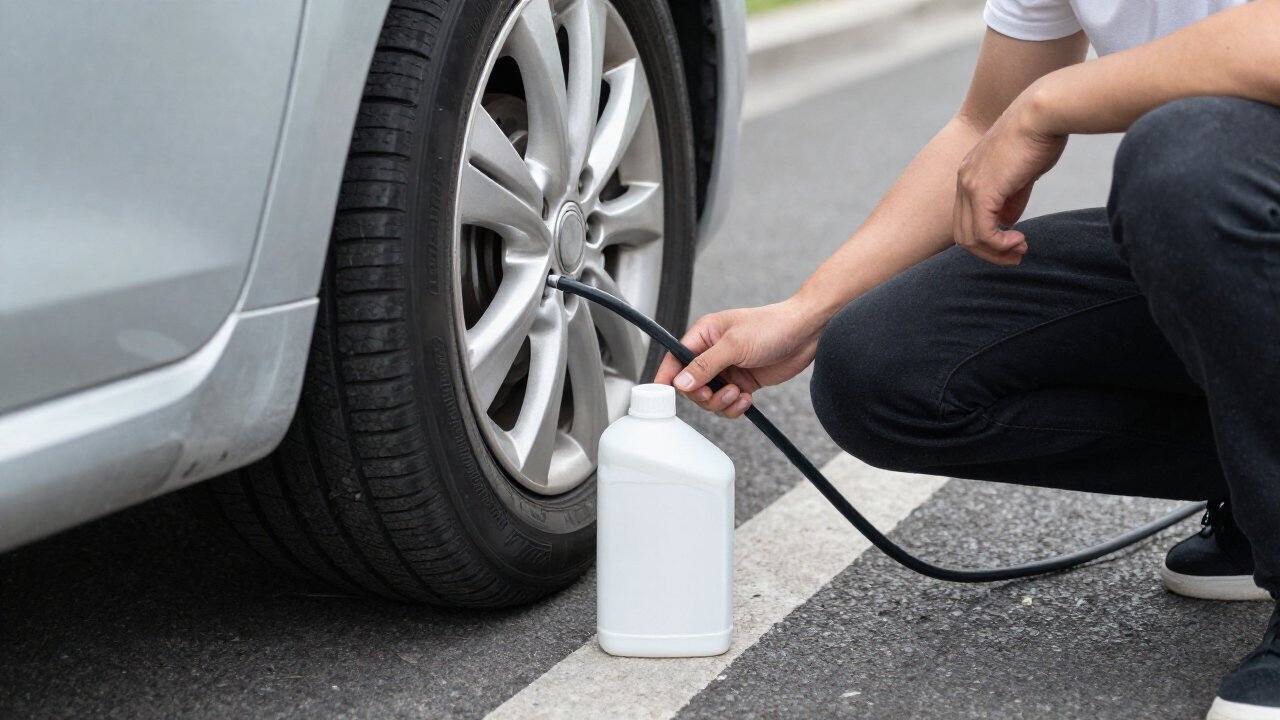
Most tire sealants start sealing a puncture within the first few minutes of driving, as long as you drive immediately after adding them. Aerosol inflator-sealers such as Fix-a-Flat tell you to drive 2 to 4 miles right away, while factory tire mobility kits on many cars ask you to drive about 4 to 6 miles, or roughly 10 minutes, at moderate speed before rechecking pressure. The sealant only works when the rotating tire spreads it across the inside of the tread and pushes it into the hole, so sitting still is the most common reason a sealant “doesn’t work.” For bicycle tubeless tires, small punctures often seal within seconds to a minute once the wheel spins.
Last updated: November 23, 2026
Quick Answer
After adding car tire sealant, drive immediately. Aerosol cans such as Fix-a-Flat call for 2 to 4 miles of driving, and many factory sealant kits call for about 4 to 6 miles (around 10 minutes) at no more than 50 mph, then a pressure check. The repair is temporary: Fix-a-Flat advises a proper repair within 3 days or 100 miles. Bike tubeless sealant usually plugs small holes within seconds to a minute of spinning the wheel.
Key Takeaways
- Sealant works only while the tire is turning, so drive right away; do not let the car sit.
- Aerosol inflator-sealers: drive 2 to 4 miles, then top up to the placard pressure.
- Factory mobility kits: commonly 4 to 6 miles or about 10 minutes, at 12 to 50 mph, then recheck pressure.
- Sealant is a temporary fix for small tread punctures, not for sidewall damage or large cuts.
- Tell the tire shop you used sealant; it must be cleaned out, and some kits ask for the TPMS sensor and wheel to be inspected.
How Long Does Tire Sealant Take to Seal a Puncture?
Liquid tire sealant contains fibers or particles suspended in a latex or glycol-based fluid. When the tire turns, centrifugal force spreads the fluid in a layer across the inside of the tread. Air escaping through the puncture drags sealant into the hole, where the particles jam together and the liquid dries into a plug. That process begins almost immediately, but it needs movement to reach the puncture and build a stable seal, which is why every manufacturer tells you to drive straight after adding it.
| Product type | What to do after adding | Distance or time | Speed | Next step |
|---|---|---|---|---|
| Aerosol inflator-sealer (for example Fix-a-Flat) | Drive immediately once the rim is off the ground | 2 to 4 miles | Moderate | Add air to placard pressure; repair within 3 days or 100 miles |
| Factory tire mobility kit (Hyundai and Kia) | Drive immediately to distribute sealant | About 4 to 6 miles, roughly 10 minutes | 12 to 50 mph | Stop and recheck pressure |
| Factory inflator and sealant kit (Ford) | Drive to distribute sealant | About 5 miles | Follow kit label | Recheck pressure and add air if needed |
| Factory sealant kit (Honda) | Drive to distribute sealant | About 10 minutes | Follow speed label | Recheck pressure |
| Bike tubeless sealant | Spin the wheel with the hole at the bottom | Seconds to a minute for small holes | — | Top up air; check sealant level regularly |
Always follow the instructions on your specific product or in your owner’s manual. The figures above come from the manufacturers’ published directions and owner’s manuals listed in the sources.
Products Worth Considering
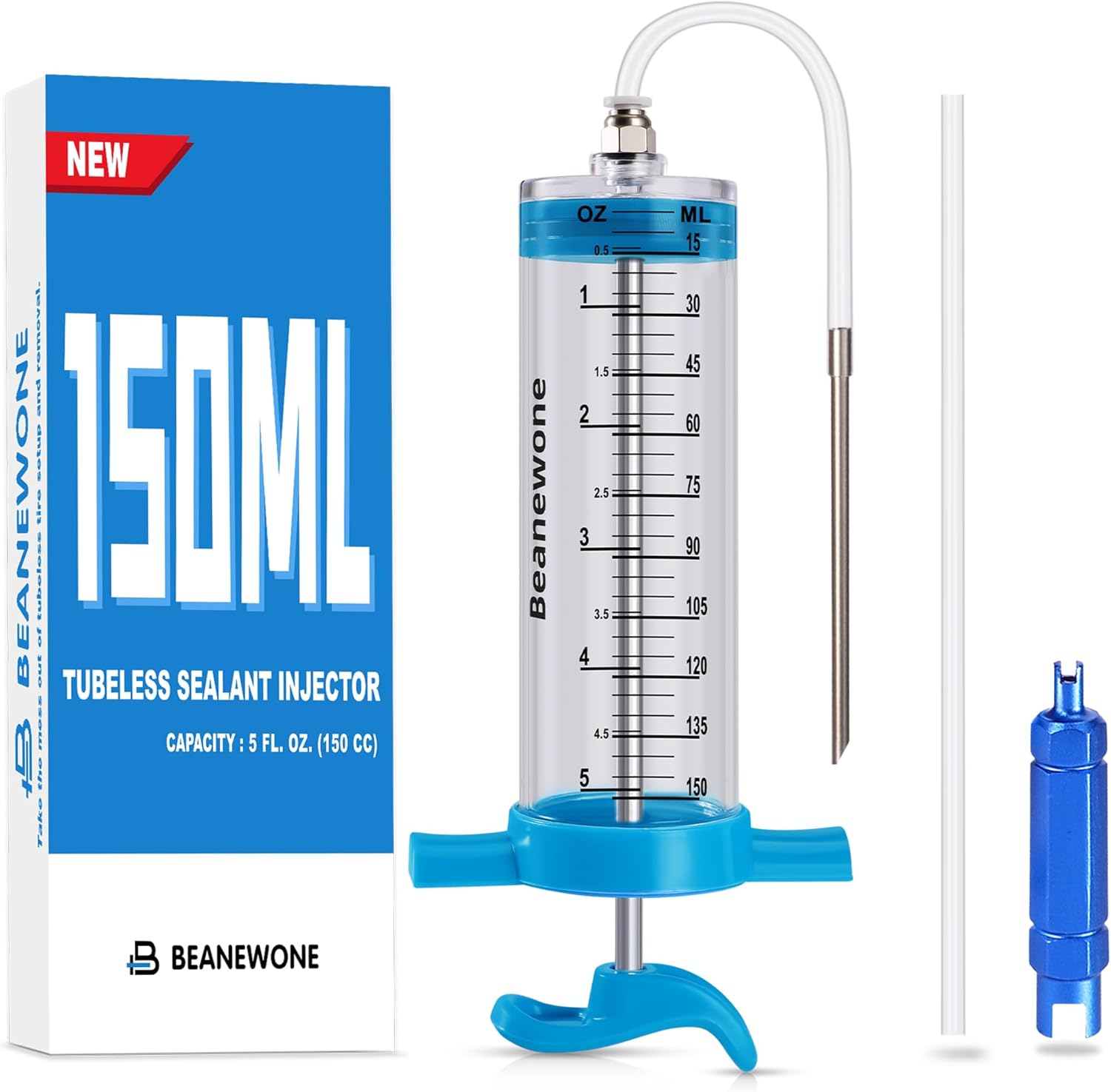
Make tubeless sealant installs faster and cleaner with this 150ml injector and clear measurement body. It connects and disconnects with a simple push-to-connector, then injects sealant directly into Schrader or Presta valve stems after removing the valve core. Includes a valve core remover tool to help you prepare and seal tires with less mess.
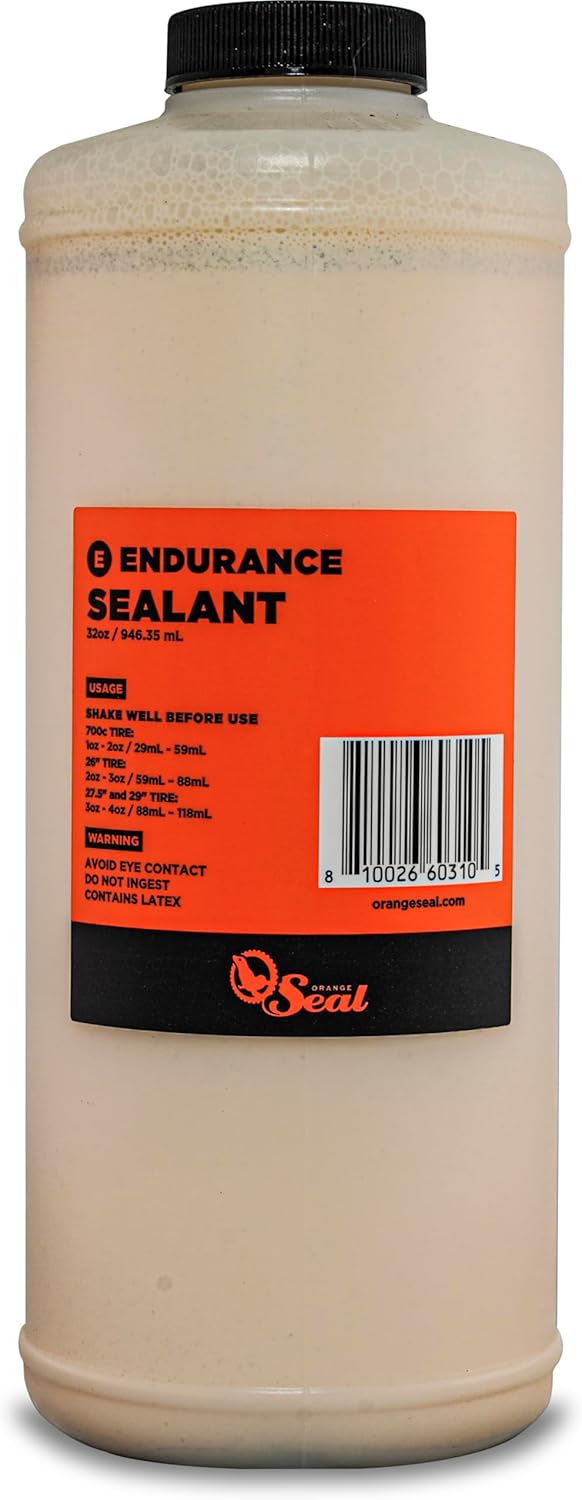
Orange Seal Endurance Formula delivers long-lasting latex protection with a durable sealant that can stay effective for 60–120 days between top-offs. It uses nanite particles to rapidly seal punctures up to 1/4" and slices up to 1/2", helping maintain reliable tubeless performance across MTB, road, CX, and gravel conditions. The biodegradable formula is engineered to work across major tubeless-ready and UST brands and a wide range of rubber compounds.

TireJect Off-Road Tire Sealant Kit provides 5-in-1 sealing to help fix tread punctures up to 3/8", sidewall punctures up to 3/8", bead leaks, slow leaks, and minor dry rot on low-speed tires. It permanently seals with liquid rubber, recycled tire particles, and Aramid fibers, making it ideal for flats caused by thorns, nails, and screws. The included dispensing cap attaches to the valve stem for a no-mess installation, along with a metal valve core remover tool and valve stem cap. This kit is for off-road use only.
How Long to Wait After Using Fix-a-Flat or an Aerosol Sealant
You don’t wait at all before driving. Aerosol inflator-sealers combine a propellant that partly reinflates the tire with a latex sealant. Fix-a-Flat’s directions say that, only if the rim is off the ground, you should drive immediately for a short distance of 2 to 4 miles so the tire pressure rises and the sealant spreads evenly. Then add air up to the vehicle manufacturer’s recommended pressure.
If the tire is still too flat for the rim to clear the ground, don’t drive on it. Use a compressor to add air first, or switch to the spare. Fix-a-Flat recommends that the treated tire be repaired properly within 3 days or 100 miles, whichever comes first, and that you tell the tire professional the product was used.
How Long to Drive After Using a Factory Tire Mobility Kit
Many cars now ship with a compressor and sealant bottle instead of a spare tire. The manuals are specific about what to do next. Hyundai and Kia, for example, instruct drivers to immediately drive about 4 to 6 miles (7 to 10 km, or about 10 minutes) to distribute the sealant, without exceeding 50 mph (80 km/h) and, if possible, without dropping below 12 mph (20 km/h). Kia’s manuals also warn not to drive if the pressure is below 26 psi after using the kit. Ford’s kit instructions say to drive about five miles and then recheck the pressure, adding air if needed, and to call roadside assistance if the tire won’t reach the proper pressure within 15 minutes.
After the distribution drive, stop somewhere safe and check the pressure with the kit’s gauge. If it has held, continue at reduced speed to a tire shop. If it has dropped significantly, the puncture is probably too large for sealant.
How Long Should a Plugged Tire Sit Before Driving?
A plug is a different repair from liquid sealant. A string plug pushed into the puncture with rubber cement can usually be driven on soon after installation once it is trimmed and the tire is inflated, but the exact wait depends on the kit, and some cements need a short time to set. Our guide to how long a tire plug takes to dry covers plug wait times in detail. If you combine a plug with sealant, follow the sealant’s instruction to drive immediately so the liquid spreads.
How Long Does Tubeless Bike Sealant Take to Seal?
On bicycles, sealant is inside the tire all the time, so it is already in place when a thorn or glass shard punctures the casing. Small holes typically seal in seconds as you keep riding. If a hole keeps hissing, stop, rotate the wheel so the hole is at the bottom where sealant pools, and hold or spin it for up to a minute. Then top up the air pressure.
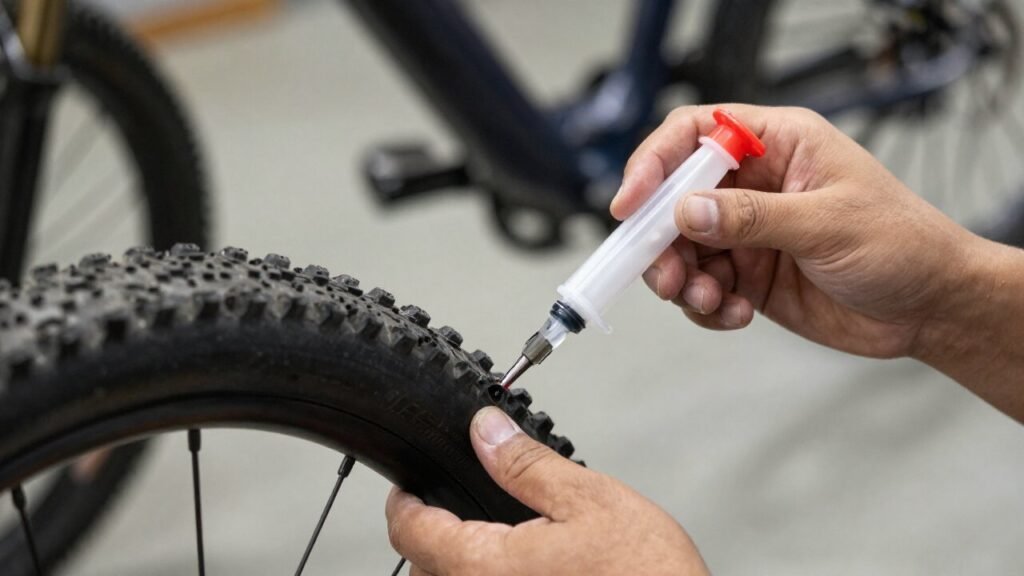
When you are setting up a tubeless tire, you can add sealant before seating the last part of the bead or inject it through the valve after removing the valve core. Afterward, spin and shake the wheel in different orientations so the sealant coats the whole casing and seals the bead. Many riders leave a new setup overnight and recheck the pressure the next day. See how to add tubeless tire sealant for the full process.
How Long Does Tire Sealant Last?
| Sealant | How long it lasts | Notes |
|---|---|---|
| Aerosol emergency sealant in a car tire | Temporary: repair within 3 days or 100 miles (Fix-a-Flat guidance) | Must be cleaned out by the tire shop |
| Factory kit sealant in a car tire | Temporary until the tire is repaired or replaced | Follow the speed and distance limit on the kit label |
| Preventive car or utility sealant (for example Slime’s longer-life formulas) | Slime says its preventive formulas protect for up to 2 years | Different from emergency formulas |
| Bike tubeless sealant | Stan’s estimates 2 to 6 months | Check or refresh about every 3 months; more often in hot, dry climates |
Tubeless sealant gradually dries out inside the tire. Stan’s suggests checking and refreshing it quarterly, and BikeRadar recommends topping up every three to six months. Our guide to when to replace tubeless sealant explains how to check the level.
Products Worth Considering

Orange Seal regular formula tubeless sealant quickly seals punctures and forms a durable bond inside your tire to help reduce flats. Made with natural latex, it adheres effectively to rubber and seals from the inside out, including the critical bead-to-rim interface for a reliable ride. It seals punctures up to 1/4 inch, slices up to 3/4 inch, and performs in temperatures as low as 11°F across MTB, road, cyclocross, gravel, and e-bike applications.

Mosconly tire repair glue and nail kit delivers an elastic, waterproof bond for quick sidewall puncture repairs. The adhesive cures securely to help prevent peeling, flaking, and tearing, while the included nails support a strong, seamless repair. Designed for easy roadside use, it works on car, motorcycle, bike, and other tire types, with full curing within 24 hours.

MetFun’s 40-piece tire repair screw plugs kit provides a fast DIY fix for tubeless punctures with two tubes of black tire sealant glue. The rubber repair screws are pre-coated and designed for a secure grip and double seal to help stop air leaks. With 2 screw sizes for small and larger punctures, it’s suitable for cars, motorcycles, trucks, tractors, lawnmowers, ATVs, and more—so you’re prepared for road trips and emergencies.
Why Tire Sealant Sometimes Doesn’t Work
- The car wasn’t driven immediately, so the sealant pooled at the bottom instead of reaching the hole.
- The puncture is too large. Car sealants are meant for small tread punctures. Our tire sealant guide covers size limits.
- The damage is in the sidewall or shoulder, where flexing breaks the seal.
- The tire came off the rim or the bead is damaged.
- The sealant is old or dried out, common with bike tubeless setups.
- Very cold temperatures can slow some sealants; use a low-temperature formula if you ride or drive in freezing weather.
When not to use sealant
Do not use sealant for sidewall cuts, large gashes, blowouts or a tire that has been driven flat. Change to the spare or call for assistance instead. Driving on a damaged tire can cause a sudden failure.
What Happens to Your TPMS Sensor and Tire Afterward?
Modern sealants are often labeled as safe for tire pressure sensors, but they still coat the inside of the wheel. Kia’s manual notes that using the mobility kit can stain the tire pressure sensor and wheel, and advises having them inspected. Tire shops need to clean the sealant out before they can patch the tire properly, and some may decline to repair a tire full of sealant. Tell the technician which product you used.
For a full walkthrough of using sealant on a car, see how to use tire sealant for car tires and how tire sealants work.
Frequently Asked Questions
How long does it take for tire sealant to work?
It starts working within the first few minutes of driving. Most car products require driving immediately for 2 to 6 miles, or about 10 minutes, so the sealant spreads and plugs the hole.
How long should I wait after putting Fix-a-Flat in my tire?
Don’t wait. Fix-a-Flat’s directions say to drive immediately for 2 to 4 miles if the rim is off the ground, then add air to the recommended pressure.
How long can I drive on a tire with sealant?
Aerosol sealants are temporary. Fix-a-Flat recommends a proper repair within 3 days or 100 miles. Factory kits also have speed and distance limits printed on their labels.
Do you add sealant to tubeless tires before or after inflating?
Either works. You can pour it in before seating the final section of bead, or inject it through the valve with the core removed after the tire is seated, then reinflate and spin the wheel.
Why is my tire still losing air after sealant?
The hole may be too large, in the sidewall, or the sealant may not have been distributed because the car wasn’t driven right away. Check the pressure and have the tire inspected.
Does cold weather affect how fast sealant works?
Yes. Many sealants thicken in the cold and seal more slowly. Some products are formulated for low temperatures; check the label if you need it for winter use.
Conclusion
Tire sealant takes only minutes to work, but only if you drive immediately after adding it: about 2 to 4 miles for aerosol cans and about 4 to 6 miles or 10 minutes for most factory kits, then a pressure check. Treat it as a way to reach a tire shop, not a permanent repair, and have the tire properly inspected and repaired within the product’s limits. On bicycles, keep tubeless sealant fresh by checking it every few months so it is ready the moment you puncture.
Sources
- NAPA Know How: How to use Fix-a-Flat
- Fix-a-Flat Large Tire directions (product listing)
- Kia owner’s manual: Distributing the sealant
- Hyundai owner’s manual: Using the tire mobility kit
- Ford: How to use the tire inflator and sealant kit
- Slime: How to install Slime tire sealant
- Stan’s NoTubes: Sealant support
- BikeRadar: How often should you change your sealant?
Products Worth Considering

Vigorder rubber cement glue delivers superior adhesion and cures quickly within about 30 seconds for seamless rubber bonding. Once cured, it helps provide a strong, durable, waterproof seal that holds up to vehicle weight, pressure, and heat. Suitable for cars, motorcycles, trucks, bicycles, and off-road tires, it’s designed for emergency patch and maintenance repairs.

This self-service tire repair nail kit includes 60 pieces (30 small + 30 large) to help seal punctures quickly without needing an auto shop visit. The nails are designed to fit different hole sizes and provide a tight connection with sealing glue to help prevent air and water intrusion. Suitable for cars, motorcycles, trucks, and other vehicles, it’s an easy, efficient way to patch roadside tire damage.

LiQuiTube Premium Heavy Duty Tire Sealant provides permanent flat tire protection to help maintain proper air pressure while sealing punctures and leaks. It seals bead, rim, and porosity weathering leaks and helps prevent flats in heavy ply industrial tires. Designed for versatile use on trailers and off-road equipment, it can be installed in tubeless tires and also inside tubes.