Tire Sealant Guide: Fix Small Punctures up to 1/4 Inch
What Is Tire Sealant?
Last updated: July 7, 2026 · Reviewed for tire-safety accuracy
What’s in This Article
- What Is Tire Sealant?
- How Tire Sealant Seals a Puncture
- Temporary, Preventive, and Hybrid Tire Sealants
- Which Tires and Punctures Are Compatible?
- How to Apply Sealant Through the Valve
- Sealant Kits vs. Pressurized Cans: Pros and Cons
- Tire Sealant Lifespan: When to Top Up or Replace
- Limits and Troubleshooting: Large Holes, Sidewalls, TPMS, Cleanup
- Choosing the Right Tire Sealant: Features, Labels, Buying Checklist
- Frequently Asked Questions
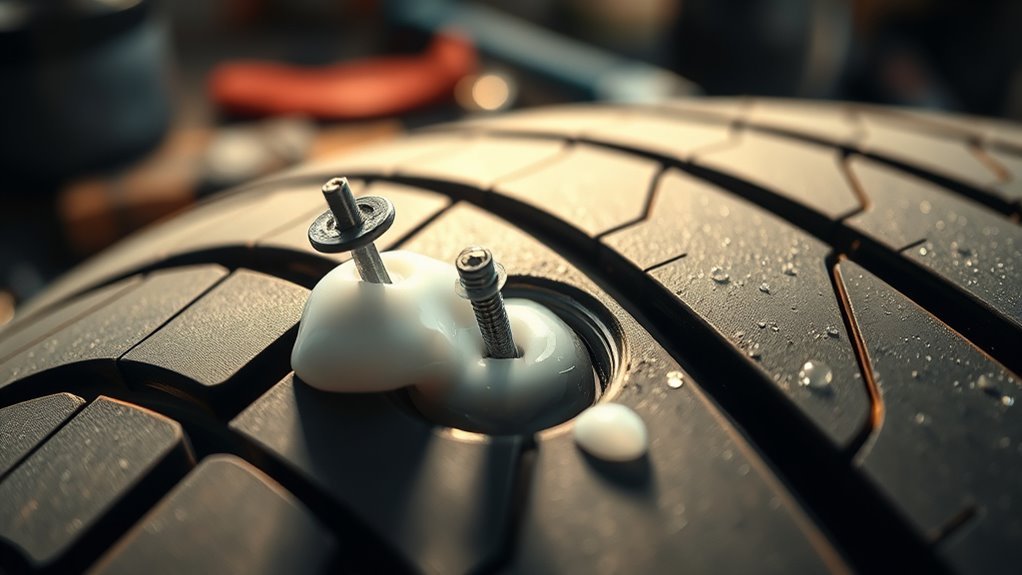
Tire sealant is a liquid repair compound that coats the inside of a tire and moves toward a leak when air escapes. It can seal many small tread punctures in compatible tubeless tires, but it is not a structural repair for sidewalls, shoulders, bead leaks, rim damage, or large cuts.
Use tire sealant as either preventive protection or a temporary emergency fix, depending on the product label. For a passenger vehicle, the safest next step after emergency sealant is still a professional inspection because the technician needs to confirm whether the tire can be repaired from the inside.
Quick Answer
Tire sealant works by carrying liquid, fibers, rubber particles, or latex-like solids to a puncture as air exits the tire. Those materials collect at the tread hole and form a temporary plug. Most products work best on small tread punctures; they do not reliably fix sidewall cuts, bead leaks, rim damage, or holes that exceed the product’s rated size.
Key Takeaways
- Use tire sealant mainly for small tread punctures in a compatible tire.
- Do not use sealant as your repair plan for sidewall cuts, shoulder damage, exposed cords, rim leaks, or repeated pressure loss.
- Choose a formula that matches your tire type, valve system, temperature range, and tire pressure monitoring system.
- After using emergency sealant, recheck pressure quickly and get the tire inspected before normal driving.
- Tell the tire shop that sealant is inside the tire so the technician can clean the wheel and sensor area safely.
| Damage or Situation | Can Sealant Help? | Safer Next Step |
|---|---|---|
| Small nail or thorn in the tread | Often, if within the product rating | Inflate, check pressure, then inspect professionally |
| Sidewall cut or bulge | No reliable structural repair | Stop driving and replace or inspect the tire |
| Bead leak, bent rim, or valve leak | Usually no | Repair the wheel, valve, or mounting issue |
| TPMS-equipped passenger vehicle | Only with compatible products | Use TPMS-safe sealant and clean the sensor during service |
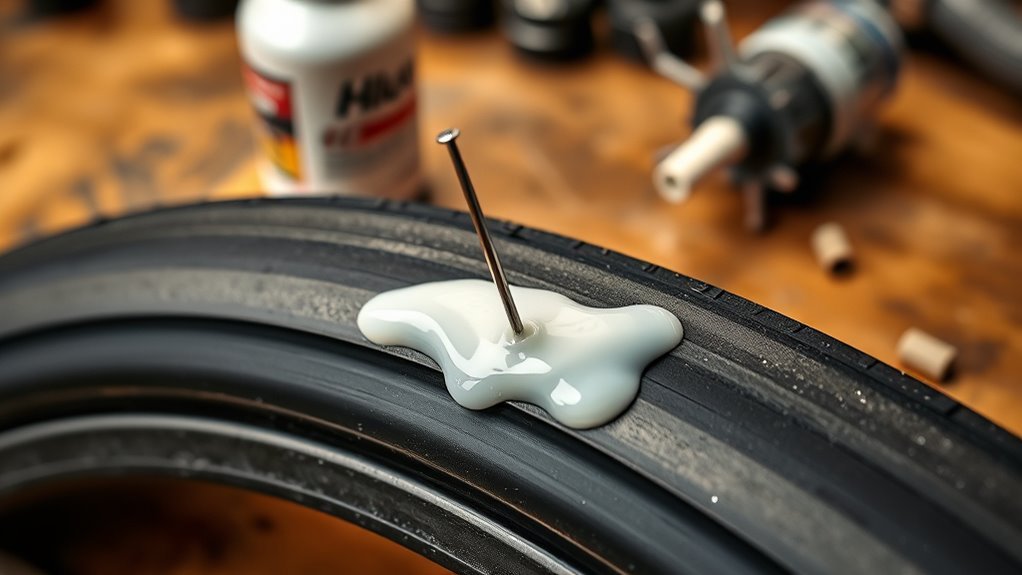
Tire sealant is a liquid compound, usually made with a carrier fluid plus sealing materials such as polymers, latex, fibers, rubber particles, or other suspended solids. You add it inside a tire so it can move toward a leak and slow or stop air loss.
Most sealants work best in tubeless tires, including many bicycle, ATV, passenger vehicle, off-road, and commercial tire setups. Some products also work in tubes, but tube use depends on the formula and can make later repairs messier.
Product labels matter because tire pressure, speed, load, valve type, and operating temperature affect performance. A sealant made for a mountain bike tire may not suit a highway vehicle, and an emergency automotive sealant may not belong in a bicycle tubeless system.
[Products Worth Considering]

This tire repair patch tool kit helps you quickly seal small punctures using upgraded mushroom plugs and a built-in roller system that presses for even penetration. The tungsten buffing wheel and HSS twist drill bits prepare the damaged surface for stronger adhesion, while the crown-angle friendly plugs are designed to keep water and debris out. Ideal for puncture repairs on many vehicle types, from cars and trucks to bikes and scooters.

This tire repair kit provides fast emergency puncture repair without removing the tire from the rim, helping you get back on the road quickly. Its screw plug system is designed for punctures in both tread and sidewall and includes a complete patch plug tool set with essential accessories. A portable storage bag makes it easy to carry for cars, trucks, SUVs, motorcycles, and heavy-duty applications.

This compact capsule-style tire repair kit helps you quickly fix punctures and plug flats with minimal effort. The rugged stainless steel shell protects the contents for reliable roadside use, while the simple plug assembly makes repairs fast and tool-free. Suitable for motorcycles, cars, ATVs, UTVs, and even mountain bikes.
How Tire Sealant Seals a Puncture
When a tire turns, sealant spreads across part of the inner tire surface. If a puncture opens in the tread, escaping air pulls liquid toward that pressure drop and carries sealing particles with it.
The fibers or particles catch on the puncture edge first. More material stacks behind that bridge, and the carrier fluid helps the solids pack into a tighter plug.
The plug can slow or stop air loss when the puncture sits in the tread area and stays within the product’s rated size. Many formulas remain fluid inside the tire so they can respond to more than one small puncture.
Sealant Movement Into the Hole
Think of sealant as a repair fluid that needs tire motion and air pressure to reach the leak. Rotation spreads the sealant, while escaping air points the liquid toward the puncture.
For many automotive emergency products, the practical range is small tread punctures only. Bicycle tubeless sealants can claim or test different puncture sizes because tire volume, pressure, casing design, and speed differ from passenger vehicles.
| Motion | Material | Outcome |
|---|---|---|
| Rotation-driven | Liquid, fibers, and particles | Spreads sealant inside the tire |
| Pressure gradient | Carrier fluid | Pulls sealant toward the leak |
| Material buildup | Fibers, latex, rubber, or particles | Builds a temporary plug at the hole |
| Remaining fluid | Unspent sealant | May handle another small tread puncture |
Fiber and Particle Plugging
The sealing action depends on the formula. Latex-based bicycle sealants often coagulate when air exposure dries the liquid carrier, while non-latex formulas may rely more on viscosity and suspended solids.
Fiber length, particle size, and concentration affect how well the sealant bridges a hole. Long strands can bridge wider gaps, while fine particles help fill the spaces between rubber and fibers.
Tire rotation keeps the mix moving and helps coat the inner casing. That movement also explains why a freshly treated tire often needs a short, slow roll before the leak slows.
Temporary, Preventive, and Hybrid Tire Sealants
Temporary, preventive, and hybrid sealants serve different jobs. Before you buy one, decide whether you need an emergency roadside fix, ongoing puncture protection, or a formula that tries to do both.
Temporary Sealant Uses
Temporary sealants help you handle a small tubeless tread puncture long enough to reach a safer location or repair shop. Most products go through the valve stem and use tire pressure or a compressor to push the compound into the leak path.
You’ll use these products when you can’t safely change a tire or wait for roadside help. Kits or pressurized cans can add sealant and restore some pressure in one process, but the tire still needs inspection.
Warning: Treat emergency sealant as a short-term mobility aid, not a permanent repair. Follow the kit’s speed and distance limits, then have a technician inspect the tire.
Preventive Vs. Hybrid
Preventive sealants go into the tire before a puncture happens and aim to keep small leaks from becoming ride-ending flats. Many tubeless bicycle, ATV, and off-road setups use this approach.
Hybrid products aim to give fast sealing plus longer coverage. They can suit riders or drivers who want both emergency response and ongoing protection, but they still require periodic checks.
- Preventive: Best for planned installation in compatible tubeless setups.
- Hybrid: Best when you want quick sealing plus extended coverage.
- Temporary: Best for emergency use until you can get proper service.
Which Tires and Punctures Are Compatible?
Sealant works best in tubeless designs, including many bicycle, ATV, passenger vehicle, off-road, and commercial truck tires. Some products also work in tubed tires, but tubes can make repairs less predictable because the sealant has to find the hole in the tube rather than the tire casing.
Most sealants target small tread punctures. Larger holes, shoulder damage, bead leaks, exposed cords, and sidewall cuts need professional inspection because sealant cannot restore the tire’s structure.
Check the product label for tire type, speed limits, load limits, temperature range, valve requirements, and TPMS compatibility. A product that works in a lawn tractor tire may not be safe for a highway vehicle.
For passenger vehicles, use the tire pressure listed on the vehicle placard or owner’s manual, not the maximum pressure printed on the tire sidewall. NHTSA also reminds drivers that TPMS is not a substitute for regular pressure checks, so inspect pressure manually even after sealant appears to work.
How to Apply Sealant Through the Valve
Follow the sealant maker’s directions first because tire size and product formula affect the dose. Many passenger tire products use several ounces per tire, while bicycle and off-road tires often need different amounts.
- Park safely and inspect the tire. Look for sidewall cuts, shoulder damage, bulges, exposed cords, large gashes, or visible rim damage before you add sealant.
- Find and remove the cause only if safe. If the object is still in the tread, follow the kit instructions. Some products work better when the object stays in place until sealant reaches the hole.
- Remove the valve cap and position the valve. Keep the valve in the upper half of the wheel to reduce the chance of flooding the valve core.
- Deflate or remove the valve core if required. Do this only when the product directions call for it.
- Inject the recommended amount. Use the supplied hose, injector, or funnel, and avoid spilling sealant into the valve threads.
- Reinstall the valve core and cap. Make sure the valve closes cleanly and does not leak.
- Inflate the tire to the recommended pressure. Use the pressure listed by the tire or vehicle maker, then check it with a gauge.
- Rotate or drive slowly. Let the sealant coat the tire interior and reach the puncture.
- Recheck pressure. Stop after a short distance and check for air loss, vibration, or a TPMS warning.
Pro tip: Keep a tire-pressure gauge with the kit. Sealant can slow a leak, but pressure tells you whether the tire is safe enough to keep moving.
Monitor pressure weekly after preventive application and immediately after emergency use. If the tire keeps losing air, schedule a tire inspection instead of adding more sealant.
Sealant Kits vs. Pressurized Cans: Pros and Cons
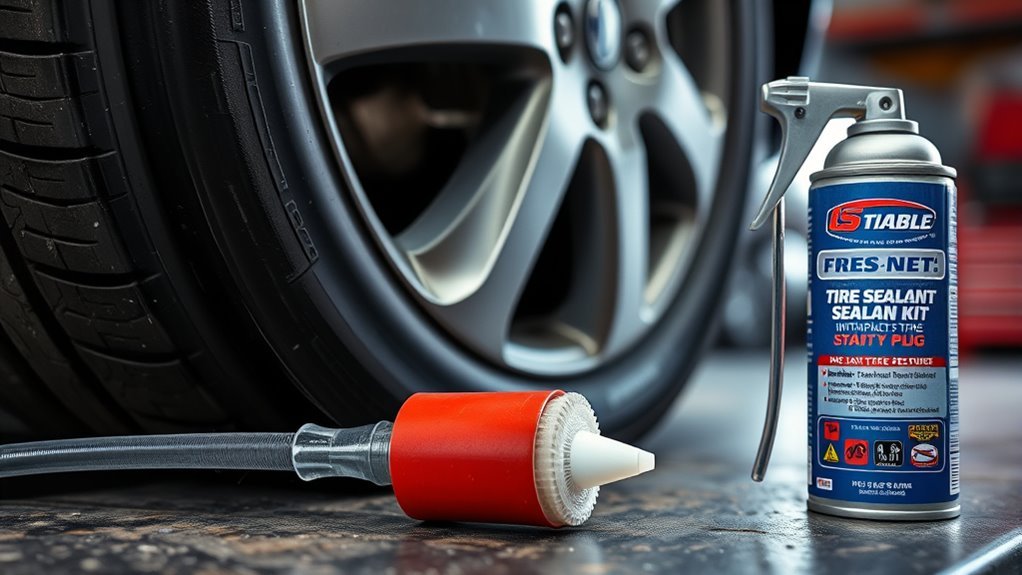
Sealant kits and pressurized cans solve the same basic problem, but they work in different ways. Kits usually include a compressor and a separate sealant bottle, while pressurized cans combine sealant with a propellant.
| Option | Best For | Main Limits |
|---|---|---|
| Sealant kit | More controlled roadside repairs | Costs more and takes more space |
| Pressurized can | Compact emergency use | Limited pressure control, single-use design, and heat-storage risk |
| Pre-installed sealant | Ongoing puncture protection | Needs routine checks and top-ups |
Choose a kit if you want better pressure control and a reusable compressor. Choose a can if you need a compact emergency option and accept its limits.
Avoid storing pressurized cans in high heat, and inspect old kits before a long trip. A faulty or improperly connected tire repair kit can become a safety hazard if pressure builds in the bottle.
[Products Worth Considering]
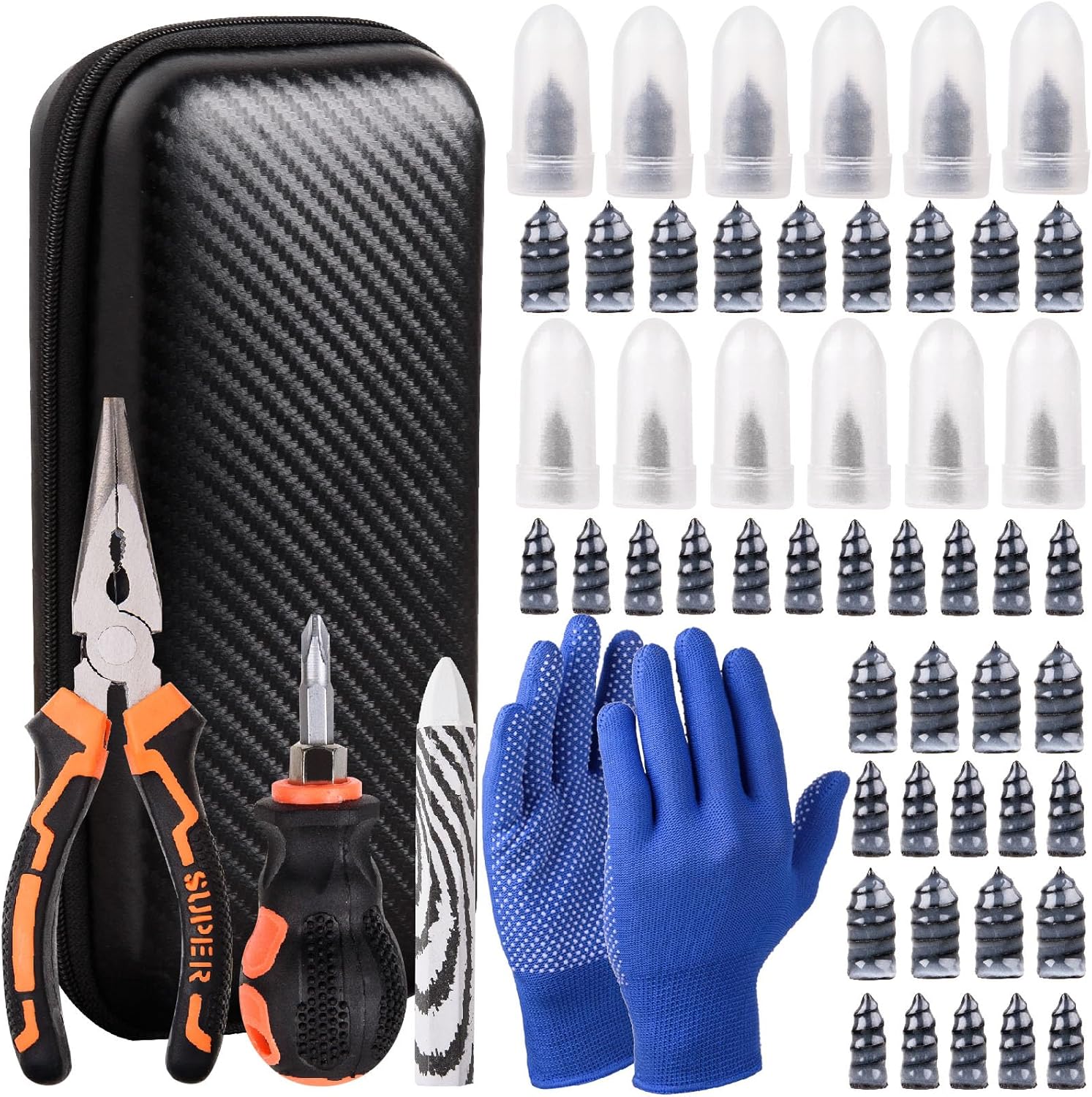
This tire sidewall puncture repair kit fixes flats fast without removing the tire, helping you get back on the road in minutes. It includes self-tapping repair nails, essential tools, gloves, and a portable storage bag for convenient roadside use. Designed for tubeless tires, it helps create a tight, leak-resistant seal for cars, motorcycles, trucks, SUVs, and ATVs.

Wykodra tire plugs provide quick vulcanizing repairs for tubeless tires, helping you seal punctures and get back on the road. The industrial-strength rubber creates a long-lasting, leak-resistant bond and is designed for emergency fixes without removing the tire. Choose between two standard plug sizes with color-matched options for small to larger damage across many vehicles and off-road uses.
Tire Sealant Lifespan: When to Top Up or Replace
Sealant does not last forever inside a tire. Heat, air exposure, heavy use, high pressure, and repeated punctures can make it dry, clump, or lose flow.
Check sealant on a set schedule because dried or clumped sealant can’t flow into a new puncture.
- Check preventive sealant every 3 to 6 months, or sooner in hot, dry, or high-puncture conditions.
- Top up after heavy off-road use, hot storage, pressure loss, or multiple small punctures.
- Replace sealant when it passes the product’s service interval or stops flowing.
- Clean out emergency automotive sealant during professional tire repair or replacement.
Use the maker’s instructions for exact timing. Some formulas last only a few weeks in hot, dry conditions, while others can last several months under mild storage and use.
Limits and Troubleshooting: Large Holes, Sidewalls, TPMS, Cleanup
Tire sealant has clear limits. It may help with a small tread puncture, but it won’t reliably fix large holes, rim leaks, bead damage, exposed cords, shoulder damage, or sidewall tears.
Some sealants can clog valve cores or affect tire pressure monitoring system sensors. If your vehicle has TPMS, check the product label and your owner’s manual before use.
Use water-soluble formulas when possible because they make cleanup easier during inspection. Tell the tire shop that you used sealant so the technician can clean the tire, wheel, valve, and sensor area before repair.
Note: Sealant may hide a puncture for a while, but it does not replace a proper tire inspection.
| Symptom After Sealant | Likely Cause | What To Do |
|---|---|---|
| Pressure keeps dropping | Hole too large, wrong product, bead leak, valve leak, or rim damage | Stop adding sealant and get the tire inspected |
| New vibration | Sealant pooled, clumped, or dried unevenly | Clean the tire and rebalance the wheel |
| TPMS light flashes | Possible TPMS malfunction or sensor contamination | Inspect the sensor, valve, and tire pressure |
| Sealant leaks from the sidewall | Structural damage beyond sealant limits | Do not drive normally; replace or inspect the tire |
Choosing the Right Tire Sealant: Features, Labels, Buying Checklist
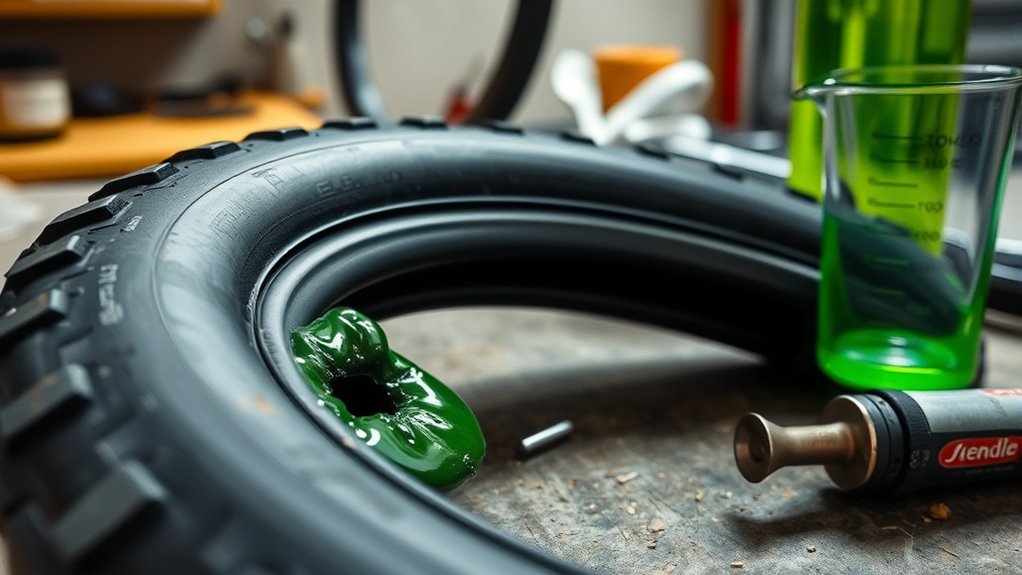
Pick a sealant based on tire type, road use, puncture rating, pressure range, temperature range, and cleanup needs. Match the product to your tire before you compare price or bottle size.
- Confirm the sealant works with tubeless, tubed, highway, bicycle, ATV, or off-road tires as needed.
- Check the maximum puncture size the product claims to seal and the pressure range for that claim.
- Look for TPMS-safe wording if your vehicle uses pressure sensors.
- Choose a water-based or water-soluble formula if you want easier cleanup.
- Check whether the product requires valve-core removal or a specific injector.
- Review the service interval so you know when to top up, replace, or clean it out.
- Read speed and distance limits for emergency sealants before you drive.
Some brands use label colors to show intended tire type or use case. Always verify the current product label because brands can change packaging, formulas, and compatibility claims.
For safety background, review NHTSA’s tire-pressure and TPMS guidance before relying on sealant for a passenger vehicle: NHTSA TireWise tire safety guidance. For the U.S. TPMS warning standard, see 49 CFR 571.138.
Frequently Asked Questions
Is Tire Sealant a Permanent Fix?
No. For passenger vehicles, treat emergency tire sealant as a temporary way to slow air loss and reach a safe inspection point. A technician still needs to inspect the tire, clean out the sealant, and decide whether the puncture can be repaired from inside the tire.
Can Tire Sealant Fix a Sidewall Puncture?
No. Tire sealant may slow a small leak for a short time, but it cannot restore the strength of a damaged sidewall, shoulder, bead, rim, or tire casing. Replace or professionally inspect the tire instead of driving on structural damage.
Will Tire Sealant Damage TPMS Sensors?
Some products are labeled TPMS-safe, while others can clog valve cores, coat sensors, or trigger a TPMS malfunction until the parts are cleaned or replaced. Check the sealant label and your vehicle manual before use.
How Long Can You Drive After Using Tire Sealant?
Follow the sealant kit instructions first. Many emergency kits limit speed and distance because the repair is temporary. Recheck pressure quickly, avoid aggressive driving, and get the tire inspected as soon as possible.
How Long Does Tubeless Tire Sealant Last Inside a Tire?
It depends on the formula, temperature, humidity, tire pressure, and puncture history. Many bicycle and preventive sealants need inspection or top-up every few months, while emergency automotive sealants should be cleaned out during professional repair.
Can Sealant Throw Off Tire Balance?
Yes. Liquid sealant can cause vibration if it pools, clumps, dries unevenly, or leaves residue inside the tire. If the vehicle shakes after sealant use, have the tire cleaned, inspected, repaired if safe, and rebalanced.
Conclusion
Tire sealant helps most when you use it for the right problem: a small tread puncture in a compatible tire. Choose the correct formula, apply the recommended amount, inflate to the right pressure, and recheck the tire before you keep driving.
Don’t use sealant as your only answer for sidewall cuts, large holes, bead leaks, rim damage, or repeated pressure loss. Get the tire inspected so you know whether it needs repair or replacement. Keep the right sealant or repair kit with your road gear, and you’ll handle small punctures with more confidence.

Related Articles

Are Premium Tires Worth the Extra Money?
Worth the extra money? Premium tires promise more grip, comfort, and longevity—but the real tradeoff may surprise you.
Read More
What Are OE Tires? Original Equipment Explained
Discover what OE tires really mean and why choosing the right replacement could change everything for your car’s ride, handling, and safety.
Read More
305 Tire Size Explained: How Big Is It?
I explain how big a 305 tire really is—and why the exact fit can surprise you.
Read More