
Tire sealant can help when a small nail, screw, or thorn causes a slow leak in the tread area. It works by letting air pressure carry a liquid mix of fibers, rubber particles, latex, or polymers toward the puncture. The material clumps at the leak, slows air loss, and helps you keep moving long enough to inspect the tire or reach a service location.
Quick Answer
Tire sealant works when escaping air pulls liquid sealant toward a small tread puncture. Fibers and rubber particles gather in the hole, form a plug, and slow or stop the leak. It is best for small tread-area punctures, not sidewall damage, large cuts, exposed cords, or badly worn tires.
Key Takeaways
- Tire sealants use air pressure to move liquid fibers, rubber particles, latex, or polymers into a leak.
- Most sealants work best on small tread punctures, often around 1/4 inch or 6 mm, depending on the product and tire type.
- Sealant is usually a temporary mobility aid, not a proper tire repair.
- Do not rely on sealant for sidewall damage, shoulder damage, large holes, bulges, exposed cords, or severe tread wear.
- After using sealant, check pressure with a gauge and have the tire inspected from the inside by a tire professional.
At a Glance
| Time Required | 10–20 minutes for a basic roadside sealant application, plus time to recheck pressure. |
| Difficulty | Easy for small tread punctures if you can safely park and reach the valve stem. |
| Tools Needed | Tire sealant, air compressor or inflator, tire pressure gauge, valve core remover if required, gloves, and a safe work area. |
| Cost | Varies by sealant type, kit size, tire size, and whether you need a compressor or professional repair afterward. |
Warning: Do not use tire sealant as a fix for sidewall damage, shoulder damage, deep cuts, exposed cords, bulges, cracked rubber, or a tire that was driven flat. Install the spare, call roadside help, or have the tire replaced.
What Is Tire Sealant
Tire sealant is a liquid compound designed to slow or stop air loss from small punctures. Depending on the formula, it may contain latex, synthetic polymers, fibers, rubber particles, and other suspended solids. When the tire loses air, the sealant moves toward the leak and gathers at the opening.
You will see several formats. Some products are emergency sealants that you inject after a puncture. Some come in temporary mobility kits with a small compressor. Some are preventive sealants used in tubeless bicycles, ATVs, lawn equipment, and some off-road setups. Some passenger tires also come from the manufacturer with a built-in sealant layer inside the tread area.
The main benefit is simple: sealant can help you avoid being stranded by a small tread puncture. It can also support faster field recovery than a manual tire change. But it does not make every tire safe. A sealed tire still needs pressure checks, tread checks, and professional inspection when the damage affects a road vehicle.
Some products, such as the ones in repair kits, can be useful for small punctures when you need a quick way to get moving. Treat them as part of your emergency plan, not as a reason to ignore tire damage.
How Tire Sealant Works
When you add sealant through the valve stem, the liquid spreads across the inside of the tire as the wheel rotates. If the tire has a small puncture, escaping air creates a pressure path. The sealant follows that path because the air is rushing out through the opening.
As the liquid reaches the puncture, fibers and particles collect at the hole. Latex-based formulas can also thicken as they meet air. The result is a small plug that slows or stops the leak from the inside. This is why tire sealant often works best after you rotate the tire and reinflate it to the vehicle’s recommended pressure.
The process sounds simple, but results vary. Tire pressure, puncture size, tire construction, temperature, sealant age, and product formula all matter. A small nail hole in the center tread has a much better chance than a slash, sidewall tear, or shoulder puncture.
Proper usage tips also matter. Too little sealant may not reach the leak. Too much sealant can leave heavy residue, create balance issues, and make later service messier.
Tire sealant may stop a small leak, but it does not replace regular tire pressure checks, tread checks, or a proper inspection after damage.
Types of Tire Sealants
You will usually compare three broad categories: temporary emergency sealants, preventive or manufacturer-built sealant systems, and tubeless sealants. Each works differently, so the safest choice depends on your tire type and the damage you see.
[Products Worth Considering]
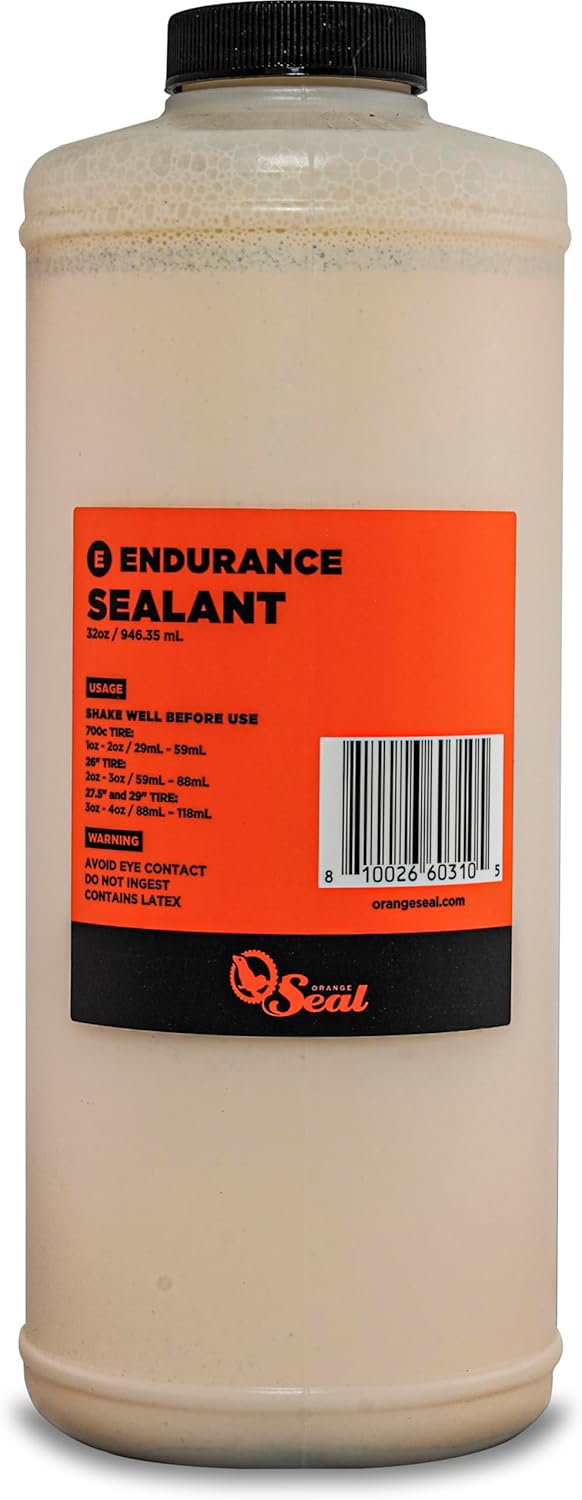
Orange Seal Endurance Formula delivers long-lasting latex protection with a durable sealant that can stay effective for 60–120 days between top-offs. It uses nanite particles to rapidly seal punctures up to 1/4" and slices up to 1/2", helping maintain reliable tubeless performance across MTB, road, CX, and gravel conditions. The biodegradable formula is engineered to work across major tubeless-ready and UST brands and a wide range of rubber compounds.
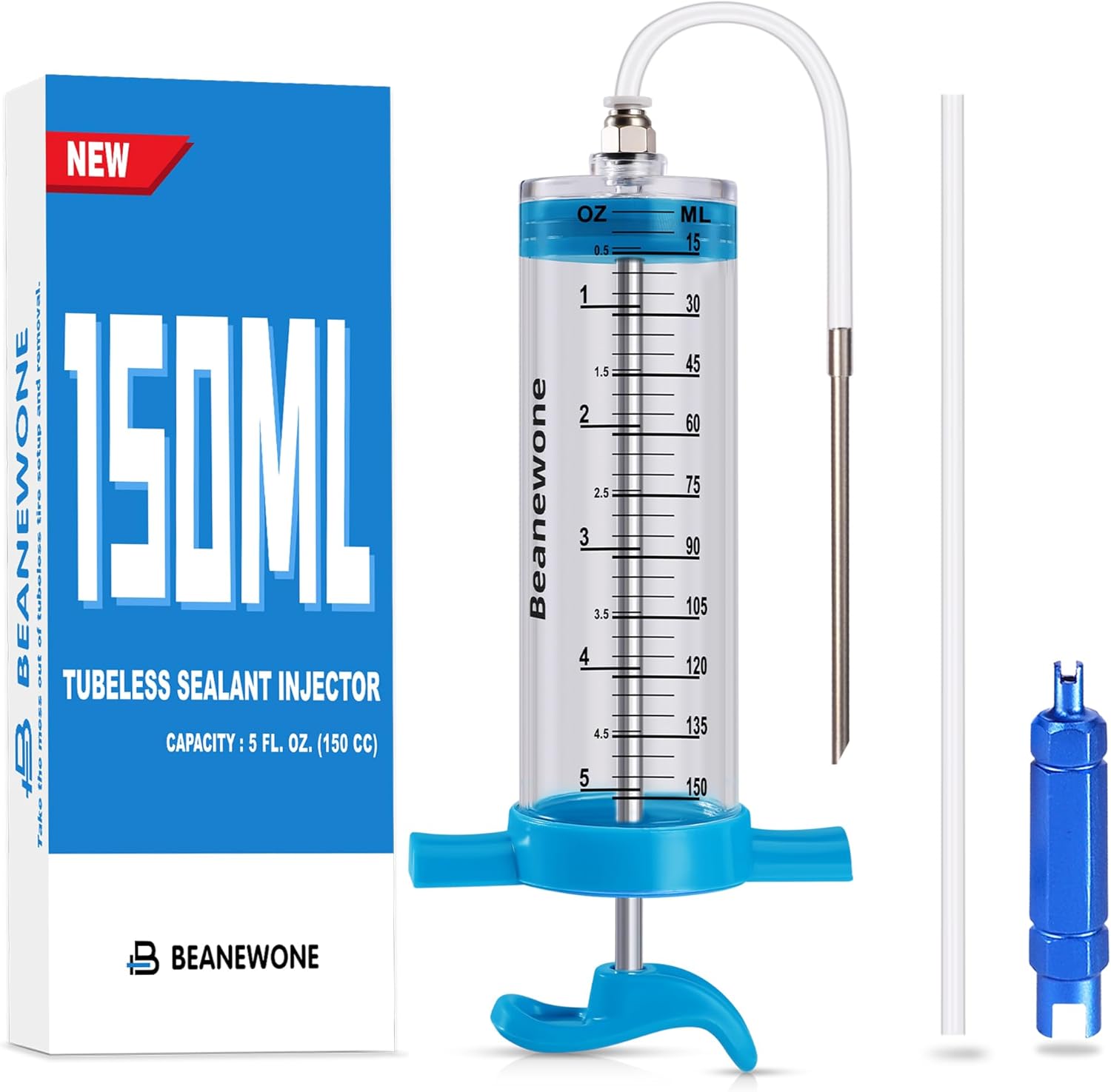
Make tubeless sealant installs faster and cleaner with this 150ml injector and clear measurement body. It connects and disconnects with a simple push-to-connector, then injects sealant directly into Schrader or Presta valve stems after removing the valve core. Includes a valve core remover tool to help you prepare and seal tires with less mess.

TireJect Off-Road Tire Sealant Kit provides 5-in-1 sealing to help fix tread punctures up to 3/8", sidewall punctures up to 3/8", bead leaks, slow leaks, and minor dry rot on low-speed tires. It permanently seals with liquid rubber, recycled tire particles, and Aramid fibers, making it ideal for flats caused by thorns, nails, and screws. The included dispensing cap attaches to the valve stem for a no-mess installation, along with a metal valve core remover tool and valve stem cap. This kit is for off-road use only.
Temporary Sealants
Temporary sealants are made for quick roadside use after a puncture. They often come in pressurized cans, bottles, or mobility kits with a compressor. You connect the product to the valve stem, inject the sealant, inflate the tire, and drive only as far as the product label and vehicle manual allow.
- Best for small tread punctures.
- Not safe for sidewall damage or large cuts.
- May leave residue inside the tire and wheel.
- May require tire service soon after use.
This design gives you short-term mobility. It does not count as a permanent repair for a passenger or light-truck tire. After using it, have the tire removed from the rim so a technician can inspect the inner liner and check whether a proper repair is allowed.
Permanent and Preventive Sealants
The phrase “permanent sealant” can confuse readers because many products are not permanent repairs. A better way to think about them is preventive sealants or sealant tire systems. Preventive liquids are added before a puncture happens, while some manufacturer-built tires include a sticky sealant layer inside the crown, or tread, area.
These systems can temporarily seal small tread punctures and extend mobility, but they still have limits. They do not remove the need for monthly tire pressure checks, tread inspections, and professional service when a puncture is found.
| Feature | What It Means |
|---|---|
| Preventive liquid | Added before a leak to help seal small punctures later |
| Sealant tire layer | Built into some tires by the manufacturer in the tread area |
| Professional inspection | Still needed when damage is found |
If your vehicle came with sealant tires instead of a spare, replace them with the same type unless your vehicle or tire manufacturer says otherwise. That keeps the original extended-mobility design intact.
Tubeless Sealant Types
Tubeless bicycle and off-road sealants often use latex or other liquid carriers with suspended particles. You inject the sealant through the valve, seat the tire, and let the liquid coat the inner surface. When a thorn, wire, or small object makes a hole, air pulls sealant toward the leak.
- Latex-based sealants: common, fast-acting, and flexible.
- Particle-loaded blends: useful when a formula needs extra gap-filling material.
- Maintenance-focused formulas: require regular top-offs because sealant can dry out over time.
For bicycles, the correct amount depends on tire volume and riding conditions. Road tires often need less sealant than gravel or mountain bike tires. If you ride off-road, carry a plug tool or spare tube because sealant will not fix every cut. Many tubeless tire repair kits can help when a puncture is too large for sealant alone.
How Slime’s Fibro-Seal Formula Works
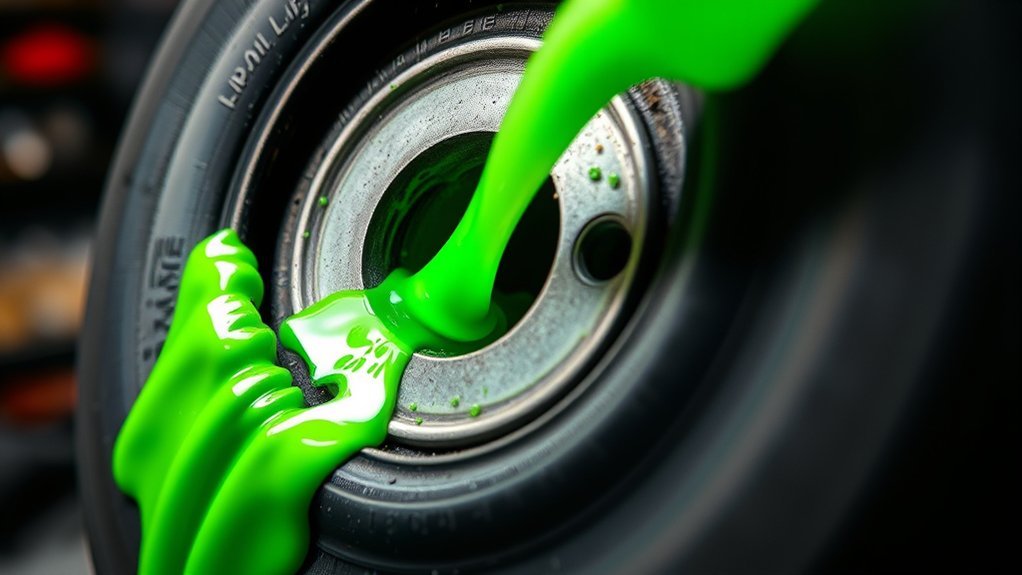
Slime’s Fibro-Seal style formula is commonly described as a blend of fibers and sealing particles carried in liquid. When air starts escaping, those fibers and particles move toward the leak and pack into the opening. The goal is a mechanical plug that reduces air loss before the tire goes fully flat.
This type of formula is best suited to minor punctures in the tread area. It is not a fix for major tire damage. You should also check the product label for the correct tire type, safe driving limits, operating temperature range, and whether the formula is compatible with your wheel and TPMS setup.
Because products vary, avoid assuming one sealant works for every tire. Some are made for tubeless tires, some for tubes, some for small utility tires, and some for emergency automotive use. The tubeless and traditional tires you use may need different formulas.
[Products Worth Considering]

This tire repair screw plug kit includes 60 pieces in two sizes to help you fix punctures quickly on the road. Choose the right screw by puncture size, then drive it in with a screwdriver for an effective seal without needing a flaring tool. The coated screws help prevent leaks and are designed for convenient emergency use across cars, trucks, ATVs, motorcycles, and bicycles.

This Dr.Roc tire valve stem puller tools set helps install or remove snap-in tubeless valve stems safely and efficiently. It includes ozone-resistant EPDM snap-in valve stems, a valve stem installer, and a valve core remover for quick core removal or installation during tire service. Designed for reliable tubeless tire repair on motorcycles, ATVs, lawn equipment, cars, and trucks.
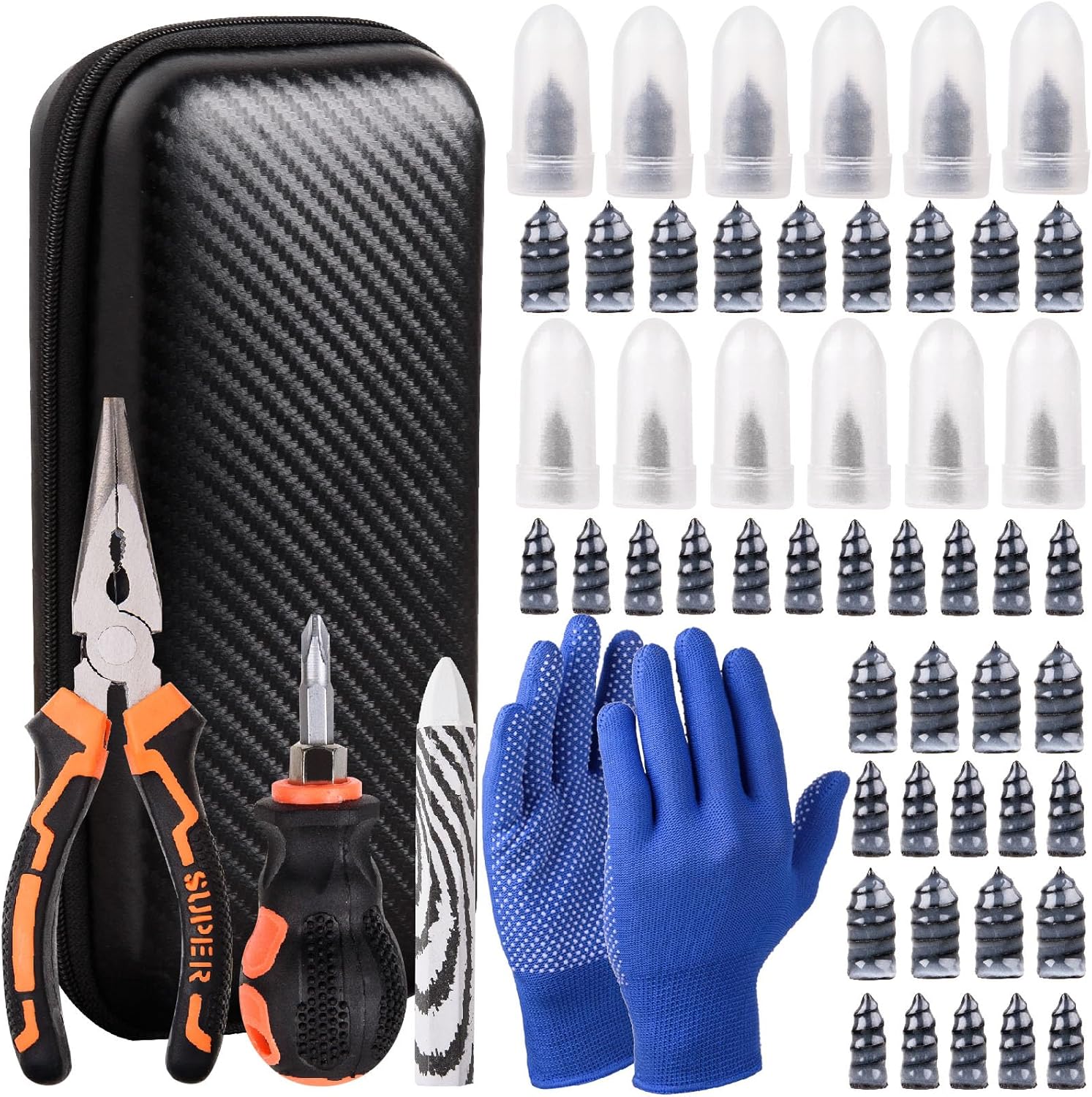
This tire sidewall puncture repair kit fixes flats fast without removing the tire, helping you get back on the road in minutes. It includes self-tapping repair nails, essential tools, gloves, and a portable storage bag for convenient roadside use. Designed for tubeless tires, it helps create a tight, leak-resistant seal for cars, motorcycles, trucks, SUVs, and ATVs.
Fibro-Seal Particles at Work
As air leaves the tire, the leak creates a flow path. Fibers can bridge the opening, while rubber-like particles and thicker liquid fill the smaller spaces around them. This creates a flexible plug from the inside of the tire.
- Fibers help span the puncture.
- Particles help pack the void.
- The liquid carrier moves the material to the leak.
This is a physical sealing action. It helps you keep pressure long enough to move the vehicle or finish a ride, but it does not prove the tire casing is safe. That is why inspection still matters.
How It Plugs Punctures
When a nail or small screw leaves a hole in the tread, tire pressure pushes air outward. Sealant follows that escaping air and gathers at the puncture. As the tire rotates, more sealant can reach the area and reinforce the plug.
After you inject sealant, you usually need to rotate the wheel or drive a short distance at low speed if the product instructions allow it. Then you recheck pressure. If pressure keeps dropping, the puncture is too large, the sealant did not reach it, or the tire has damage that sealant cannot handle.
Limits and Best Uses
Use sealant when the damage is small, in the tread area, and caused by a puncturing object that left a clean hole. A small nail hole is a typical use case. A sidewall tear is not.
- Best use: small tread punctures.
- Poor use: shoulder damage, sidewall damage, or slashes.
- Unsafe use: bulges, exposed cords, cracked tires, or tires driven flat.
Use sealant to buy time, not to skip service. If the tire continues losing pressure, if the steering feels unstable, or if the TPMS light comes back on, stop driving when safe and get help.
Which Punctures Tire Sealant Can Fix
Tire sealant can usually help with small punctures in the tread area. Many products target holes up to about 1/4 inch, or 6 mm, but you should always follow the product label and tire manufacturer guidance. The safer rule is this: sealant may help with small tread punctures, but it should not be trusted for structural damage.
Good candidates include small holes from nails, screws, thorns, or fine road debris. The puncture should sit in the main tread area, away from the sidewall and shoulder. The tire should still look round, stable, and free of bulges or exposed cords.
| Damage Type | Can Sealant Help? | Next Step |
|---|---|---|
| Small nail hole in tread | Often, depending on size and product | Inflate, recheck pressure, and get inspection |
| Slow leak from tread puncture | Often | Use label instructions and schedule service |
| Sidewall tear | No | Replace tire |
| Large cut or slash | No | Replace tire or use spare |
| Bulge or exposed cords | No | Stop driving and replace tire |
If the puncture is larger than the sealant can handle, a spare tire kit or roadside assistance is safer than repeated sealant attempts.
[Products Worth Considering]

LiQuiTube Premium Heavy Duty Tire Sealant provides permanent flat tire protection to help maintain proper air pressure while sealing punctures and leaks. It seals bead, rim, and porosity weathering leaks and helps prevent flats in heavy ply industrial tires. Designed for versatile use on trailers and off-road equipment, it can be installed in tubeless tires and also inside tubes.

ATQYZLM’s screw-in tire plug kit provides quick self-service emergency puncture repair for tubeless tires without removing the tire. Choose a suitable plug nail, align it to the puncture, and tighten with the included screwdriver for minute-level roadside use. The rubber and metal plugs help form a durable airtight seal to reduce air loss and water seepage for reliable short-term travel.

Rhino USA’s 86-piece tire repair kit provides everything you need for quick, emergency flat repairs, including a reamer and plug insertion tool plus 60 reusable tire plugs. The heavy-duty, metal-handled design helps you fix punctures from nails and screws on tubeless tires for cars, trucks, motorcycles, ATVs, UTVs, and more. A high-visibility compact case stores easily for on-the-go use, with illustrated instructions to help you complete repairs with confidence.
When Tire Sealant Won’t Work
Tire sealant will not work when the damage is too large, too close to the sidewall, or too severe for the tire casing to hold pressure. It also cannot restore strength to a tire that has internal damage.
- Sidewall or shoulder damage needs replacement, not sealant.
- Large punctures and long cuts usually will not hold a seal.
- Multiple close punctures can weaken the tread area.
- Heavy tread wear reduces safe traction and repair options.
- A tire driven flat may have hidden inner-liner or sidewall damage.
Sealant can also create service issues. Some aftermarket products may affect TPMS sensors, leave residue, or complicate later repair. Tell the tire shop that you used sealant before the technician removes the tire.
Understanding treadwear ratings can help you judge tire age and wear, but ratings do not replace a physical inspection. If the tread is down to the wear bars or the tire is at 2/32 inch tread depth, replace it.
How to Use Tire Sealant
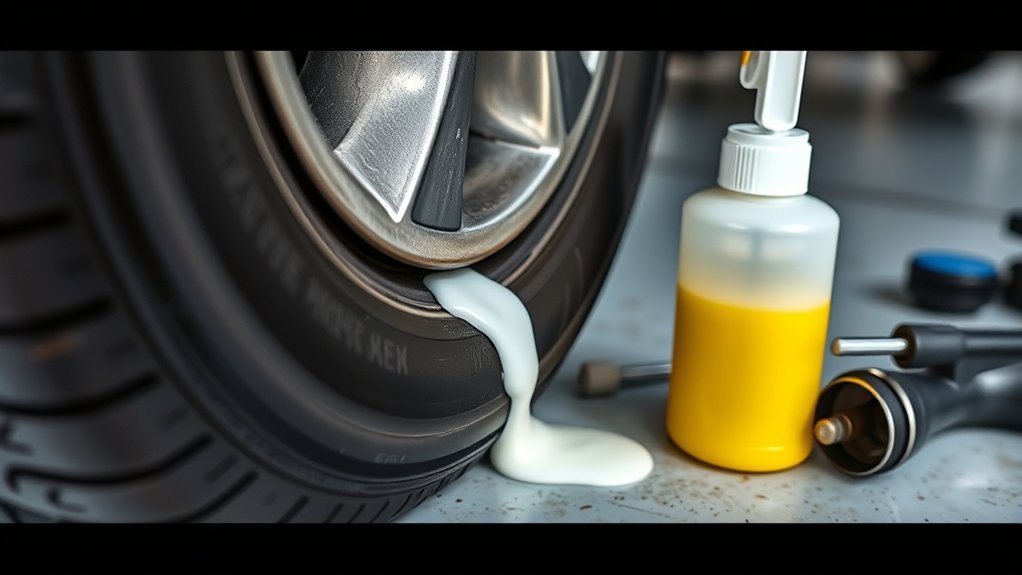
Before you start, pull over somewhere safe, turn on your hazard lights, and read the sealant label. Do not work beside traffic if you cannot do it safely. If the tire has a sidewall cut, bulge, exposed cords, or major damage, skip the sealant and use a spare or call for help.
Pro Tip: Keep a tire pressure gauge with your sealant kit. TPMS can warn you about low pressure, but a gauge tells you whether the tire actually reached the recommended cold inflation pressure.
| Step | Action |
|---|---|
| 1 | Inspect the tire for unsafe damage |
| 2 | Position the valve stem as the product directs |
| 3 | Remove the valve core if required |
| 4 | Inject the measured sealant |
| 5 | Reinstall the valve core |
| 6 | Inflate to the recommended pressure |
| 7 | Rotate or drive only as directed |
| 8 | Recheck pressure and inspect for leaks |
Use the sealant volume listed for your tire size. Too little may not seal. Too much can leave extra residue and may affect balance. If your kit includes an air compressor, use it to bring the tire to the pressure shown on the driver-side door placard or in the owner’s manual, not the maximum pressure molded on the tire sidewall.
A temporary repair solution can help in an emergency, but only when the tire damage matches the tool. If the tire will not hold pressure after one proper attempt, do not keep adding sealant.
What to Do After Using Tire Sealant
After using sealant, drive carefully and follow the product’s speed and distance limits. Some kits are designed only to help you reach a service location. Avoid hard braking, fast cornering, heavy loads, and highway speeds unless the product and vehicle instructions clearly allow it.
- Recheck tire pressure after the sealant spreads.
- Stop if the tire loses pressure again.
- Tell the tire technician you used sealant.
- Ask for an inside inspection of the tire.
- Replace the tire if the damage is outside the repairable tread area.
Note: Sealant can hide a puncture because the tire may stop leaking for a while. That does not prove the casing is safe. A tire professional needs to inspect the tire from the inside before deciding whether repair is allowed.
When It’s Time to Repair or Replace the Tire
Repair may be possible when the puncture is small, straight, and limited to the tread area. For a passenger or light-truck tire, many industry repair guidelines use a maximum puncture size of 1/4 inch, or 6 mm. The tire must also be removed from the rim so the inside can be checked.
- Repair may be possible for a small tread puncture.
- Repair is not recommended for sidewall or shoulder damage.
- Repair is not safe for deep cuts, bulges, or exposed cords.
- Repair may not be allowed if previous repairs overlap.
- Replacement is safer if the tire was driven flat or has internal damage.
A proper tire repair usually uses a stem or plug to fill the injury and a patch to seal the inner liner. A plug alone is not the same as a full professional repair. If a shop says the tire is not repairable, replace it instead of trying to force another temporary fix.
You also need replacement when tread depth reaches 2/32 inch, when wear bars are flush with the tread, or when the tire shows cracking, separation, bulges, or repeated pressure loss. If the TPMS light stays on after inflation, treat the problem as more than a simple leak.
Run-flat tires and sealant tires may have special repair rules. Check your tire manufacturer’s instructions before relying on a repair kit. Understanding run-flat tire features can help you decide whether your vehicle’s original tire setup needs a different roadside plan.
Frequently Asked Questions
What are the drawbacks of using tire sealant?
Tire sealant has limits. It may not seal holes larger than the product rating, and it will not fix sidewall damage, shoulder damage, large cuts, bulges, or exposed cords. It can also leave residue inside the tire, affect balance, complicate service, and interfere with TPMS sensors in some cases.
How long does tire sealant last in a tire?
It depends on the sealant type, tire type, temperature, storage, and driving conditions. Some emergency products are meant only for short-term use after a puncture. Preventive tubeless sealants can dry out and may need regular top-offs. Always follow the product label and inspect tire pressure often.
Do tire sealants really work?
Yes, tire sealants can work well on many small tread punctures. They work best when the hole is small, the tire casing is still healthy, and you apply the correct amount. They do not work reliably on sidewalls, large tears, worn-out tires, or tires with internal damage.
Is tire sealant one-time use?
Emergency tire sealant is usually a one-time application for one puncture event. After you use it, check pressure, drive only within the label limits, and arrange inspection. Preventive tubeless sealants are different because they remain inside the tire and need periodic maintenance.
Can tire sealant damage TPMS sensors?
Some aftermarket sealants may interfere with or damage TPMS sensors, depending on the formula and sensor design. Check the sealant label before use. If your vehicle has TPMS, tell the repair shop that sealant was used so the sensor can be cleaned and inspected.
Do I still need a tire repair after sealant stops the leak?
For passenger and light-truck tires, yes. Sealant can help you reach a safer place, but a tire professional should remove the tire, inspect the inside, and decide whether a proper repair is allowed. A sealed leak can still hide casing damage.
Conclusion
Tire sealant gives you a practical first response when a small tread puncture causes air loss. It works by using tire pressure to move fibers, rubber particles, latex, or polymers into the leak so the material can form a temporary plug.
Use it with clear limits. It is not a fix for sidewall damage, large cuts, bulges, exposed cords, or worn-out tread. After any sealant use, check pressure with a gauge and have the tire inspected. That way, you get the short-term help sealant can provide without treating a temporary seal as a permanent repair.
Sources
- U.S. Tire Manufacturers Association — Tire Repair Basics — supports tread-area-only repair limits, 1/4 inch / 6 mm puncture guidance, and plug-patch repair requirements.
- USTMA TISB 41: Tire Sealants and Temporary Tire Mobility Kits — supports the warning that temporary mobility kits are not proper repairs and that aftermarket sealants may affect tires, warranties, and TPMS sensors.
- USTMA TISB 57: Sealant Tires — supports the explanation of manufacturer-built sealant tires and their inspection needs.
- National Highway Traffic Safety Administration — TireWise — supports monthly tire pressure checks, tread-depth guidance, TPMS limitations, and tire safety context.
- USTMA Tire Care Essentials — supports cold pressure checks, 2/32 inch tread replacement guidance, tire rotation, and alignment basics.
