
If you have just installed a tire plug, you may be wondering how long it needs to dry before you can drive. The important point is that there is no universal 15- or 30-minute drying time for every tire plug. Outside-in string plugs commonly used in emergency kits rely mainly on a compression seal, and any cement or bonding material must be used according to that specific kit’s instructions. More importantly, a string plug by itself is generally considered a temporary emergency repair for a passenger or light-truck tire, not the same as an industry-standard professional puncture repair.
Quick Answer
A tire plug does not have one universal drying time. Some string plugs do not depend on glue curing at all, while other repair products have manufacturer-specific setting instructions. If you used an emergency outside-in plug, follow the kit directions, confirm the tire holds air, and arrange a proper professional inspection and repair as soon as practical.
Key Takeaways
- There is no industry-wide rule saying every tire plug needs 15, 30, 60, or 120 minutes to dry.
- Follow the instructions supplied with the exact plug, cement, or repair system you used.
- An outside-in string plug on a passenger or light-truck tire should be treated as an emergency or temporary repair, not a substitute for professional inspection.
- A proper industry-standard puncture repair involves removing the tire, inspecting the inside, filling the puncture channel, and sealing the innerliner with a patch.
- Standard passenger/light-truck puncture repairs are generally limited to the repairable tread area and injuries no larger than 1/4 inch (6 mm).
- Checking pressure and using soapy water can reveal an active leak, but passing those checks does not prove that the tire has no hidden internal damage.
Warning: Do not assume a string plug becomes a permanent repair simply because it holds air. The U.S. Tire Manufacturers Association says a plug alone is an unacceptable repair, and the tire should be removed from the wheel so its interior can be inspected.
How Long Does a Tire Plug Take to Dry?
The safest answer is: it depends on the repair product, and some string plugs do not have a meaningful “drying time” at all.
Traditional outside-in tire strings are pushed into a prepared puncture channel. According to Slime’s technical guidance on tire plugs, the plug primarily seals because the tire squeezes around it. The rubber cement supplied with some kits may help installation, but it is not necessarily what creates the seal.
That means you should not rely on a generic statement such as “wait 30 minutes” or “wait two hours.” Read the exact instructions supplied with your kit. If the product specifies a setting or curing period, follow it before putting the tire back into service.
A professional combination repair is different. Repair materials may use chemical vulcanizing cement or other bonding systems, and the technician follows the repair-material manufacturer’s procedures. Those preparation and drying steps should not be confused with a universal wait time for a roadside string plug.
A plug that holds air has passed a leak check; it has not automatically passed the internal inspection required for a proper tire repair.
Safe Wait Time After a Tire Plug
There is no single safe waiting period that applies to every tire plug. Use the instructions supplied with the product you installed. If those instructions specify a cure or set time for cement or another bonding material, follow that requirement.
Before moving the vehicle after an emergency repair:
- Inflate the tire to the vehicle manufacturer’s recommended pressure shown on the driver’s-door placard or in the owner’s manual.
- Check the repair area for an obvious leak. Soapy water can help reveal escaping air because a continuing leak forms bubbles.
- Confirm that the tire is not visibly damaged, bulged, cracked, or deformed.
- If the tire will not hold pressure, do not continue driving on it. Use a suitable spare or roadside assistance instead.
- Arrange professional inspection even if the temporary plug appears to be holding.
The goal is not to wait for an arbitrary number of minutes and then assume the tire is safe. A tire may have damage inside the casing that cannot be seen while it remains mounted on the wheel.
Pro Tip: Use the pressure printed on your vehicle’s tire-information placard, not the maximum pressure molded into the tire sidewall. NHTSA recommends checking tire pressure when the tires are cold for the most accurate reading.
What Affects Tire Plug Drying or Setting Time?
The answer depends first on what kind of repair material you are using. A string plug, a separate rubber stem, a combination patch-plug unit, and a chemical-vulcanizing repair system do not all work the same way.
| Factor | Why It Matters | What to Do |
|---|---|---|
| Repair type | String plugs and professional combination repairs use different sealing methods. | Identify the exact product before applying a wait time. |
| Cement or adhesive | Some repair materials require cement to dry or become tacky before assembly. | Follow the repair-material manufacturer’s instructions. |
| Temperature and moisture | Environmental conditions can affect products that depend on chemical bonding. | Observe any temperature or humidity limits stated by the manufacturer. |
| Preparation | A dirty, incorrectly prepared, or damaged puncture channel can prevent a reliable repair. | Do not substitute a longer wait for correct repair preparation. |
For that reason, statements such as “warm weather always makes a plug safe sooner” are too broad. Temperature can matter to particular adhesives, but it does not turn an improper plug-only repair into an accepted permanent repair.
How to Let the Plug Cure or Set Correctly
If the plug system you used includes a cement, adhesive, or bonding compound, follow the product directions exactly. Do not invent a 15-minute, 30-minute, or 24-hour curing period when the manufacturer specifies something different.
Once the emergency plug is installed and any required product-specific setting time has passed, check for obvious air loss before moving the vehicle. Then arrange a complete inspection rather than using the absence of bubbles as proof that the tire is permanently repaired.
[Products Worth Considering]
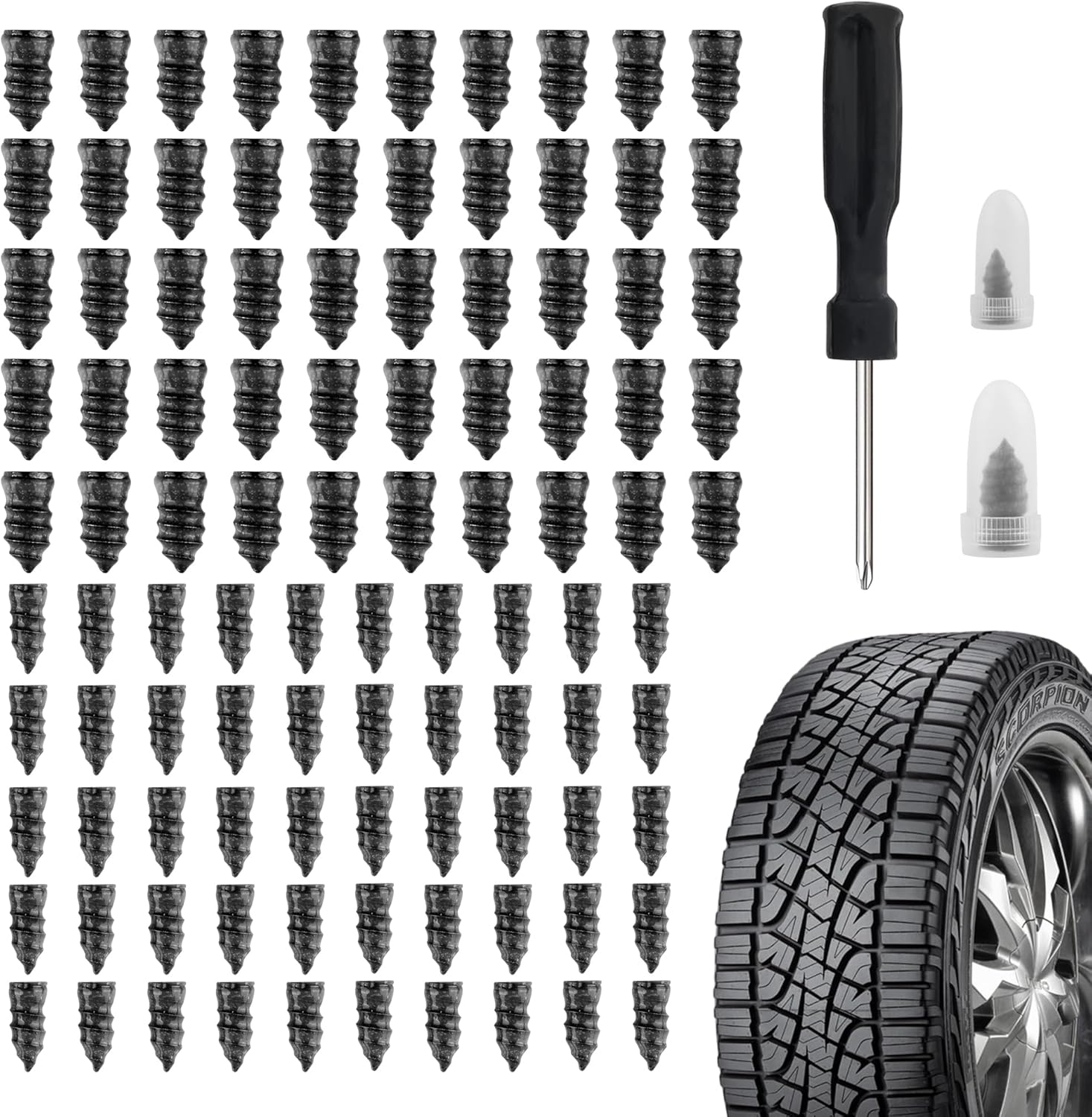
Salior’s tire plug kit provides a fast, reliable self-service fix for punctured or leaking tires without the need for flaring tools. Choose the correct plug size, then screw the nail into the puncture using the included screwdriver for an enhanced seal. The set is durable and convenient for on-the-go maintenance across multiple vehicle types.

This chemical vulcanizing cement cures rubber at room temperature, creating a strong bond for reliable tire patch and plug repairs. The fast-drying formula helps reduce vulcanization time, while the built-in brush makes application quick and even. Suitable for car, motorcycle, and bicycle tires, it supports repairs for tubeless tires, outer tires, and inner tubes.

Wykodra tire plugs provide quick vulcanizing repairs for tubeless tires, helping you seal punctures and get back on the road. The industrial-strength rubber creates a long-lasting, leak-resistant bond and is designed for emergency fixes without removing the tire. Choose between two standard plug sizes with color-matched options for small to larger damage across many vehicles and off-road uses.
Cure Time Basics
There are two different ideas that are often confused:
- A string plug forming a compression seal: the plug material is compressed by the puncture channel. Some products use cement mainly as an installation aid.
- A professional repair material bonding to the innerliner: cement or other vulcanizing material may have product-specific preparation and drying requirements before the patch or repair unit is installed.
For professional passenger and light-truck repairs, the USTMA puncture-repair procedure requires the tire to be removed from the wheel, inspected, the puncture injury filled with an appropriate rubber stem or vulcanizing material, and the innerliner sealed with a patch.
That is fundamentally different from inserting a string from the outside and waiting for it to “dry.”
Safe Waiting Steps
Use these steps after an emergency plug:
- Complete any setting period required by the exact repair-kit instructions.
- Inflate to the vehicle manufacturer’s specified pressure.
- Check the plugged area and valve for obvious leakage.
- Watch the tire-pressure warning system, if equipped, but do not rely on TPMS as your only pressure check.
- Use the temporary repair only within the limitations given by its manufacturer.
- Have a qualified tire professional inspect the tire and determine whether it qualifies for a proper repair.
Do not rely on an invented rule such as “50 to 100 miles of easy driving lets the plug stabilize.” A temporary plug remains temporary because of the repair method, not because it has not accumulated enough miles.
Signs Your Tire Plug Is Sealing Well
A temporary plug appears to be sealing if the tire holds pressure and you cannot detect active leakage around the repair. Those checks are useful, but they answer only one question: is air escaping right now?
They do not establish that the puncture is in the approved repair area, that the belts and innerliner are undamaged, or that the tire was not harmed while underinflated. Those questions require a proper assessment.
Steady Air Pressure
Check the pressure after inflation and again if you suspect continuing air loss. A repeated pressure drop indicates that the temporary repair, valve, bead, wheel, or another part of the tire assembly may still be leaking.
For routine maintenance, NHTSA recommends checking tire pressure at least monthly when the tires are cold. After a puncture, however, do not wait for the next monthly check if the tire is losing pressure or behaving abnormally.
- Set pressure according to the vehicle placard.
- Record the reading if you need to monitor a suspected leak.
- Recheck if the TPMS light returns or the tire looks low.
- Stop using the tire if pressure falls rapidly.
A steady reading is encouraging, but it does not replace the internal inspection required to determine whether the tire is suitable for a permanent repair.
No Visible Leaks
Soapy water is a practical way to check for an obvious leak. Apply it around the plugged puncture and watch for bubbles that continue to grow. You can also inspect the valve area if the source of the leak is uncertain.
No bubbles mean you did not detect active leakage at that moment. They do not prove that the tire’s internal structure is undamaged.
Pay attention to other warning signs as well, including:
- a returning TPMS warning,
- rapid pressure loss,
- a bulge or bubble,
- visible cords or deep cuts,
- new vibration, or
- changes in steering or handling.
If any of these appears, stop using the tire and have it evaluated.
When a Tire Plug Needs More Time
A plug or repair material needs additional setting time only when the manufacturer of that specific product requires it. Temperature, humidity, surface preparation, and the chemical system involved may affect bonding materials, but there is no universal rule that cold or humid weather automatically changes every plug’s wait time from 30 minutes to one or two hours.
Check three things:
- Product instructions: follow the stated temperature range, preparation steps, and setting requirements.
- Repair type: do not apply professional patch-cement assumptions to a roadside string plug.
- Tire condition: waiting longer cannot make a sidewall puncture, oversized puncture, or structurally damaged tire repairable.
Note: Time is not a substitute for repair eligibility. A plug in the wrong part of the tire does not become safe because it has been left overnight.
How Long Tire Plugs Usually Last
There is no responsible universal mileage or month limit for an emergency string plug because its purpose is not to establish a new long-term service life for the tire. For passenger and light-truck tires, the safer approach is to treat an outside-in string plug as a temporary measure and have the tire professionally inspected.
A properly completed industry-standard repair is different. The Tire Industry Association explains that when a puncture is within approved limits and is repaired correctly, the tire can continue to provide reliable service. There is no need to invent an arbitrary “few months” limit for a proper repair.
Serviceability still depends on the condition of the entire tire, including:
- puncture size and location,
- remaining tread depth,
- whether the tire was driven underinflated or flat,
- previous repair locations,
- internal structural condition, and
- the tire manufacturer’s own repair policy.
A repair that begins leaking, overlaps another repair, or is accompanied by structural damage requires professional reassessment and may require tire replacement.
Should You Use a Tire Plug or Patch?
For a passenger or light-truck tire, the safest comparison is not simply “plug versus patch.” Under USTMA guidance, plug-only and patch-only repairs are both incomplete for a normal puncture repair.
A proper repair fills the puncture channel with an appropriate rubber stem or vulcanizing material and seals the innerliner with a patch. Many repair systems combine both parts into one unit.
[Products Worth Considering]

This tire repair screw plug kit includes 60 pieces in two sizes to help you fix punctures quickly on the road. Choose the right screw by puncture size, then drive it in with a screwdriver for an effective seal without needing a flaring tool. The coated screws help prevent leaks and are designed for convenient emergency use across cars, trucks, ATVs, motorcycles, and bicycles.

Vigorder rubber cement glue delivers superior adhesion and cures quickly within about 30 seconds for seamless rubber bonding. Once cured, it helps provide a strong, durable, waterproof seal that holds up to vehicle weight, pressure, and heat. Suitable for cars, motorcycles, trucks, bicycles, and off-road tires, it’s designed for emergency patch and maintenance repairs.

AUTOWN’s 68-piece tire repair kit helps you fix punctures and plug flats quickly and effectively. It includes a T-handle and spiral probe tool for easy insertion, while the steel patch and plug materials are designed for strong adhesion and long-lasting airtight performance. The compact case makes it convenient for roadside repairs across a wide range of vehicles.
Plug Vs Patch
| Repair Method | Typical Role | Industry-Standard Permanent Puncture Repair? |
|---|---|---|
| Outside-in string plug | Emergency/temporary sealing | No |
| Patch only | Seals the innerliner but does not properly fill the puncture channel | No |
| Plug/stem plus internal patch | Fills the injury and seals the innerliner after inspection | Yes, when the tire and puncture meet repair criteria |
The reason both parts matter is that the stem fills the injury channel and helps keep contamination away from the tire’s internal structure, while the patch seals the innerliner against inflation loss.
Safety And Durability
A repair can be considered for many small tread punctures, but several conditions must be satisfied first. Under USTMA guidance, passenger and light-truck puncture injuries must generally be no larger than 1/4 inch (6 mm) and confined to the designated tread repair area.
The tire must also be removed from the wheel for inspection. A nail or screw that looks minor from the outside may be associated with innerliner damage or damage caused by driving while the tire was severely underinflated.
The Michelin repair guidance likewise states that its tires must be removed from the wheel before repair and that on-the-wheel plug-type repairs are improper.
Do not repair a sidewall puncture, shoulder damage, an oversized puncture, or a tire with structural damage merely because a plug or patch will physically cover the hole.
Cost And Convenience
An emergency plug kit is convenient because it may allow you to restore enough pressure to deal with a puncture without immediately removing the tire. Professional repair costs more than using a string from a kit because the tire must be demounted, inspected, repaired correctly, remounted, and checked.
Prices vary by shop, location, tire type, and service policy, so a single national dollar range can become misleading quickly.
More importantly, cost and convenience should not determine which repair method is technically acceptable. The puncture’s size, location, tire condition, previous repairs, and tire-manufacturer policy come first.
Warning: A larger puncture is not a reason to use a larger patch. USTMA limits standard passenger/light-truck puncture repairs to injuries no larger than 1/4 inch (6 mm), and damage outside the repairable tread area should not receive a standard puncture repair.
What to Do If the Plug Fails
If a temporary tire plug begins leaking, do not keep driving simply to see whether it will reseal. Monitor the pressure and move to a safe stopping location as soon as conditions allow.
If pressure is dropping rapidly, the TPMS warning returns, the tire becomes visibly low, or handling changes noticeably, stop using the tire. Continuing to drive on a severely underinflated tire can create additional internal damage and may eliminate the possibility of repair.
- Move away from traffic to a safe location.
- Do not remove or reinstall the plug while exposed to moving traffic.
- Use a suitable spare if your vehicle has one and you can install it safely.
- Otherwise, use roadside assistance or have the vehicle transported.
- Have the tire removed and inspected by a qualified tire technician.
The technician can determine whether the puncture still falls within repair limits or whether the tire must be replaced.
[Products Worth Considering]

Use this tire repair rubber screw kit for fast, self-service flat fixes on the road. Choose the matching short or long nail size and twist it into the puncture without removing the tire from the rim. Compact storage keeps the emergency set organized for cars, motorcycles, electric bikes, and bicycles, helping you seal tubeless leaks quickly and reliably.

TP-M13W combination repair unit kit includes wrapped stems with matching patches for fast, reliable tire repairs. It’s suitable for both radial and bias ply tires and is designed for chemical or heat vulcanization. Gray vulcanizing gum with blue backing helps create a strong bond, with the stem portion wrapped for added effectiveness.

ZEHXI’s 60 pack screw-in tire plug kit uses high-grade rubber plugs with sealing threads to help repair minor punctures quickly without removing the tire. The set includes two plug sizes, so you can match different puncture openings and keep repairs organized in a transparent case. A handy screwdriver is included for fast installation, helping drivers get more mileage from existing tires while being ready for flat-tire emergencies.
When to Replace the Tire Instead
Some punctures should not be repaired at all. The tire may need replacement if the damage falls outside accepted repair limits or if an internal inspection finds structural damage.
Common replacement conditions include:
- Sidewall or shoulder damage: standard puncture repairs are restricted to the approved tread repair area.
- Puncture larger than 1/4 inch (6 mm): this exceeds USTMA’s standard passenger/light-truck puncture-repair limit.
- Run-flat or underinflation damage: driving with too little air can damage the sidewall and casing internally.
- Bulges, exposed cords, cracking, or structural separation: these are not problems a puncture plug can correct.
- Overlapping repairs: USTMA does not permit puncture repairs that overlap.
- Insufficient tread: a tire worn to its treadwear indicators or around 2/32 inch remaining tread should be replaced rather than repaired.
- Manufacturer restrictions: some tires, including certain speed-rated or specialty designs, may have additional repair limitations.
NHTSA’s tire-safety guidance says tires should be replaced when tread reaches 2/32 inch and recommends regular checks for punctures, cracks, bulges, and other physical damage.
If there is any doubt about whether the puncture reaches the shoulder or whether the tire suffered internal damage, professional inspection is the appropriate next step.
Frequently Asked Questions
How long should you wait for a tire plug to dry?
There is no universal wait time for every tire plug. Some string plugs rely mainly on compression rather than adhesive curing. If your kit uses cement or another bonding product, follow its exact instructions. An outside-in string plug on a passenger or light-truck tire should still be treated as an emergency or temporary repair pending professional inspection.
How long can I drive on a tire that’s been plugged?
Do not use an arbitrary mileage or time limit to turn an emergency string plug into a permanent repair. Follow the temporary-repair kit’s operating limits and arrange professional inspection as soon as practical. A qualified technician can determine whether the tire is eligible for a proper plug/stem-and-patch repair.
Is plugging a tire a permanent fix?
An outside-in string plug by itself is not considered a proper permanent passenger/light-truck tire repair under USTMA and TIA guidance. A proper puncture repair requires removing the tire for inspection, filling the puncture channel with suitable material or a stem, and sealing the innerliner with a patch.
Can I drive two hours with a nail in my tire?
There is no safe universal two-hour rule. A nail may cause a slow leak, a rapid leak, or hidden damage. If the tire is losing pressure, visibly low, damaged, or triggering a TPMS warning, continuing a long trip can make the situation worse. Move to a safe location and have the tire inspected rather than planning to drive for a fixed amount of time.
Does tire plug cement need to dry before driving?
It depends on the specific product. Some string-plug cements mainly assist installation, while other professional repair systems use chemical vulcanizing cement with defined preparation and drying instructions. Use the manufacturer’s directions for the exact material instead of applying a generic 15- or 30-minute rule.
Can a sidewall puncture be plugged?
A sidewall puncture is outside the standard passenger/light-truck puncture-repair area and should not receive a normal plug-and-patch repair. The same concern applies to shoulder damage or a puncture that extends into the shoulder or belt-edge area.
What is the largest tire puncture that can normally be repaired?
USTMA guidance limits standard passenger and light-truck puncture repairs to injuries no larger than 1/4 inch, or 6 mm, and only within the approved tread repair area. The tire manufacturer may impose additional restrictions.
Conclusion
A tire plug does not have one universal drying time. If your emergency plug kit uses cement or another bonding product, follow the exact manufacturer’s instructions rather than assuming it needs 15, 30, or 120 minutes. Some tire strings seal mainly through compression and do not depend on a conventional adhesive cure.
The more important safety question is what happens after the temporary plug holds air. For passenger and light-truck tires, USTMA and TIA guidance calls for removing the tire, inspecting it internally, filling an eligible puncture channel, and sealing the innerliner with a patch. Standard repairs are generally limited to punctures no larger than 1/4 inch (6 mm) in the approved tread area.
Check for obvious leakage and monitor pressure, but remember that a successful leak check cannot reveal every form of internal damage. If the puncture is in the shoulder or sidewall, is too large, overlaps another repair, or the tire was damaged while driven flat, replacement may be the safer outcome.
Sources
- U.S. Tire Manufacturers Association — Puncture Repair Procedures for Passenger and Light Truck Tires — repairable area, 1/4-inch limit, internal inspection, and combination repair requirements.
- Tire Industry Association — Tire Repair — explains why on-the-wheel string plugs are temporary and why plug-only or patch-only repairs are incomplete.
- Michelin USA — Can My Tire Be Repaired? — professional inspection, tread-area requirements, puncture-size limit, and combined plug-and-patch repair guidance.
- National Highway Traffic Safety Administration — TireWise — correct inflation-pressure checks, tire inspection, and 2/32-inch tread guidance.
- Slime — Tire Repair Q&A: Vulcanizing Patches and Plugs — explains how tire strings primarily create a compression seal rather than relying on rubber cement to seal the puncture.

