A tire plug can stop a small tread puncture from leaking, but how long you should drive on it depends on what you mean by “plug.” An outside-in string plug from a roadside kit is an emergency measure, not a mileage-based permanent repair. Industry guidance does not give it a universal 100-, 500-, or 1,000-mile safe limit. Have the tire professionally inspected as soon as possible.
Quick Answer
If you used an outside-in string plug, drive only as far as necessary to reach qualified tire service, provided the tire holds pressure and feels normal. USTMA and TIA do not consider plug-only repairs proper permanent repairs. A repairable puncture requires internal inspection plus a repair that fills the injury and seals the inner liner.
Key Takeaways
- There is no authoritative universal mileage limit such as 100 or 1,000 miles for a plug-only tire repair.
- An outside-in string plug should be treated as a temporary emergency measure, not a permanent repair.
- Industry guidance allows repair only for qualifying tread-area punctures no larger than 1/4 inch (6 mm), after the tire is removed and inspected internally.
- A proper puncture repair fills the injury with a rubber stem or suitable material and seals the inner liner with a patch; a plug alone or patch alone is incomplete.
- Stop using the tire if it loses pressure, develops a bulge, vibrates, has sidewall or shoulder damage, or was damaged by being driven flat.
How Long Can You Drive on a Tire Plug?
There is no reliable industry rule saying that you can safely drive a fixed number of miles on an outside-in tire plug. The U.S. Tire Manufacturers Association (USTMA) says an on-the-wheel repair should not be treated as a proper puncture repair and specifically states that a plug alone is unacceptable.
The Tire Industry Association (TIA) similarly describes outside string plugs as temporary because the tire remains on the wheel and its internal condition cannot be inspected.
Do not judge a temporary tire plug by miles alone. The important question is whether the tire has received a complete internal inspection and an industry-standard puncture repair.
If an emergency plug is holding pressure and the vehicle feels normal, use it only to help you reach qualified tire service. Avoid treating a successful plug as proof that the tire is undamaged inside.
A properly repaired tire is a different situation. If the puncture qualifies for repair, the tire is removed from the wheel, inspected internally, the injury channel is filled, and the inner liner is sealed. The tire can then remain in normal service subject to the tire manufacturer’s repair policy, condition, tread depth, load requirements, and any special restrictions.
Warning: If the tire is losing pressure quickly, visibly flat, bulging, separating, badly cut, or causing strong vibration or handling changes, do not keep driving just because a plug is installed. Move to a safe stopping location and use a spare tire or roadside assistance.
What Makes a Tire Plug Safe?
A plug by itself does not make a punctured tire a fully repaired tire. The safety of the tire depends first on whether the original injury is repairable and whether hidden internal damage is present.
For typical passenger and light-truck tires, USTMA guidance limits puncture repairs to qualifying injuries in the repairable tread area that are no greater than 1/4 inch (6 mm) in diameter. Damage that extends into the shoulder or belt-edge area is not considered repairable under its procedure.
The tire must also be removed from the wheel so a technician can examine the inner liner, sidewalls, cords, and surrounding structure. A nail hole that looks harmless from outside may have caused internal damage if the tire was driven while severely underinflated or flat.
Michelin’s current repair guidance likewise says qualifying punctures must be confined to the tread, no greater than 1/4 inch, and evaluated with the tire removed from the wheel.
Other factors can also make a tire unsuitable for repair. Repairs must not overlap, severely worn tires should not be repaired, and the tire manufacturer may place additional restrictions on run-flat, speed-rated, high-performance, or other specialized tires.
Note: Tell the technician if the tire already has a string plug or another previous repair. USTMA’s repair procedure says a tire with an existing improper repair should not simply receive another repair under that procedure, so replacement may be required.
How Do Tire Plugs Differ From Patches?
A tire plug and a tire patch address different parts of a puncture. A plug or rubber stem fills the puncture channel through the tread. A patch seals the damaged inner liner from inside the tire.
That does not mean you should choose one or the other for a permanent repair. Current USTMA and TIA guidance says that a plug alone and a patch alone are both incomplete puncture repairs.
A proper repair combines the two functions: the injury is filled to help block moisture from entering the tire structure, and the inner liner is sealed to prevent inflation-pressure loss. Some repair units combine the stem and patch into one component.
[Products Worth Considering]

This AUTOWN flat tire repair kit is designed for quick, reliable puncture repairs using a plug kit and spiral probe tool to simplify installation. Built for durability and safe handling, it offers strong adhesion and flexibility to help maintain tire air tightness. With a portable storage case and a multi-vehicle approach, it’s suitable for cars, motorcycles, ATVs, tractors, lawn mowers, RVs, jeeps, and trucks.
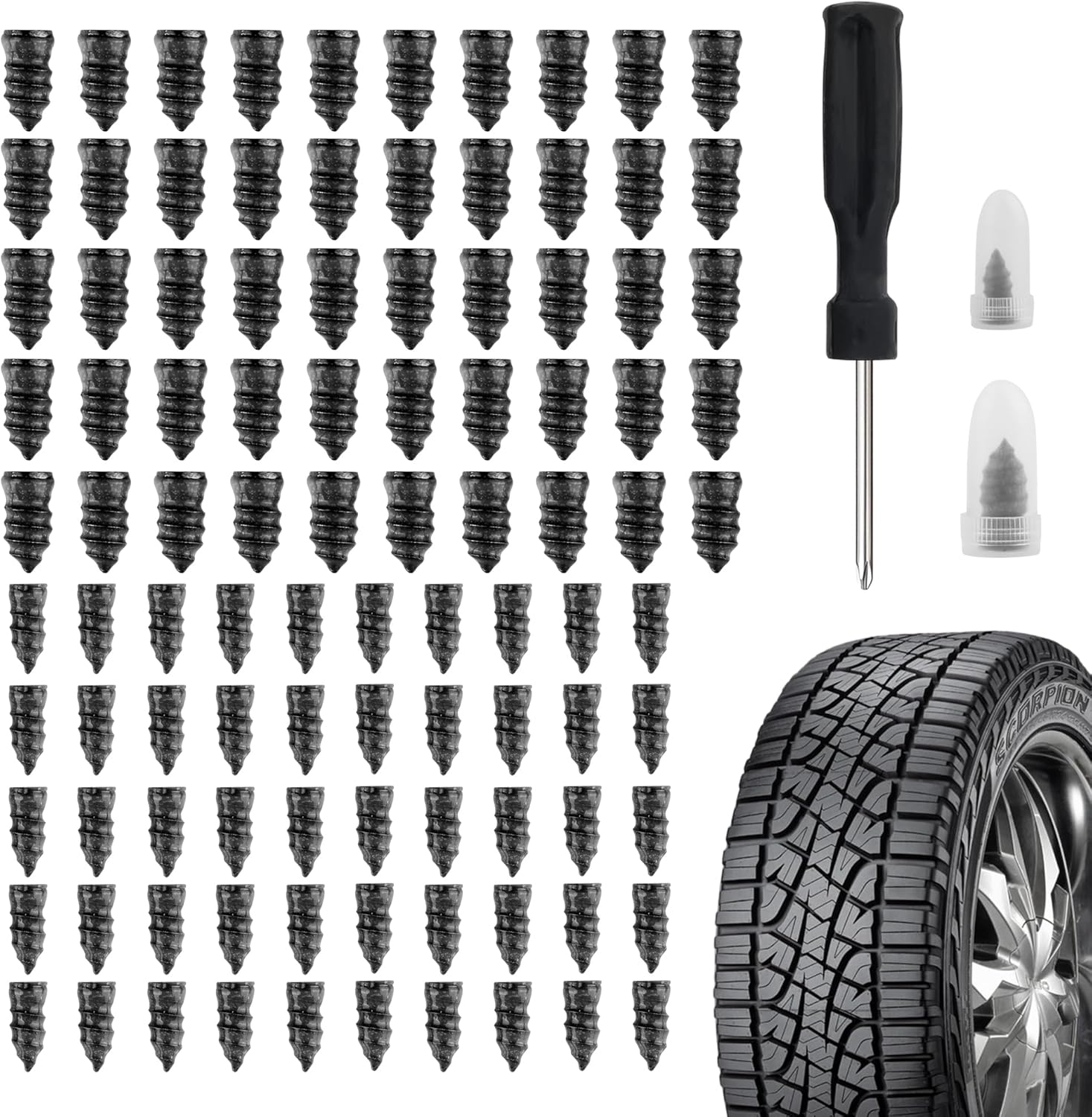
Salior’s tire plug kit provides a fast, reliable self-service fix for punctured or leaking tires without the need for flaring tools. Choose the correct plug size, then screw the nail into the puncture using the included screwdriver for an enhanced seal. The set is durable and convenient for on-the-go maintenance across multiple vehicle types.

Rhino USA’s 86-piece tire repair kit provides everything you need for quick, emergency flat repairs, including a reamer and plug insertion tool plus 60 reusable tire plugs. The heavy-duty, metal-handled design helps you fix punctures from nails and screws on tubeless tires for cars, trucks, motorcycles, ATVs, UTVs, and more. A high-visibility compact case stores easily for on-the-go use, with illustrated instructions to help you complete repairs with confidence.
Plug Repair Basics
A typical roadside string plug is inserted from the outside of the tire without removing the tire from the wheel. Its advantage is speed and convenience during an emergency.
Its major limitation is that you cannot see the inside of the tire. The puncturing object may have damaged the inner liner or cords, and driving on low pressure may have weakened the sidewall without leaving obvious external evidence.
That is why a roadside plug should be treated as a way to regain mobility long enough to obtain professional service rather than as a reason to forget about the puncture.
Patch Repair Strength
An internal patch seals the inner liner more effectively than an outside string plug can, but a patch by itself still leaves the puncture channel unfilled. Water can enter that channel and reach steel belts or other tire components.
For that reason, the proper comparison is not “plug versus patch.” The safer comparison is temporary plug-only repair versus a complete professional combination repair.
A qualified technician can also determine whether the tire is repairable at all before installing the repair. That inspection is an important part of the repair, not an optional extra.
When Is a Plugged Tire Safe to Drive On?
If the tire only has a temporary outside plug, consider driving only when the tire is holding its recommended pressure, the puncture appears to be in the tread rather than the shoulder or sidewall, and there are no bulges, cuts, vibration, thumping, or handling problems.
Even then, the goal should be to reach a tire professional rather than accumulate a particular number of miles.
Safe Puncture Conditions
A puncture is a potential candidate for professional repair when all relevant conditions are satisfied:
- The injury is confined to the repairable tread area.
- The puncture is no greater than 1/4 inch (6 mm) for the applicable passenger/light-truck repair procedure.
- The injury does not extend into the shoulder or belt-edge area.
- The tire has not suffered internal structural damage from being run flat or severely underinflated.
- The proposed repair will not overlap another repair.
- The tire still has adequate usable tread and is otherwise serviceable.
- The tire manufacturer’s repair policy permits the repair.
You cannot confirm every one of these conditions by looking at the tire from the outside. That is why the tire must be removed from the wheel before a permanent repair decision is made.
Temporary Drive Limits
Do not rely on a 100-mile, 500-mile, or 1,000-mile rule for a plug-only repair. Those figures are not a substitute for inspection.
If you have used an emergency plug and the tire is holding pressure, keep the trip as short as practical and go directly to tire service. Use moderate speed, avoid unnecessary heavy loads and hard cornering, and follow any limitations supplied with the emergency repair kit or in your vehicle and tire documentation.
If reaching a repair shop would require a long highway trip, using a suitable spare tire or roadside assistance is the safer option.
Pro Tip: Check the tire against the vehicle manufacturer’s recommended cold pressure on the driver’s-door placard or owner’s manual. Do not use the maximum pressure molded on the tire sidewall as your normal inflation target.
Warning Signs To Watch
Watch closely for signs that the temporary seal or the tire itself is deteriorating:
- Repeated or rapid pressure loss
- A TPMS warning that returns after inflation
- Hissing from the puncture area
- Bubbles during a soapy-water leak check
- New vibration, thumping, pulling, or instability
- Visible movement or deterioration around the plugged area
- A sidewall bulge, bubble, deep cut, crack, or exposed cord
A soapy-water test can help locate an external air leak, but it cannot prove that the tire is structurally sound inside.
How Do You Know a Tire Plug Is Failing?
A temporary plug may be failing if the tire repeatedly loses air, the repair starts hissing, or bubbles form around the puncture when you apply soapy water.
Pressure loss is especially important. According to NHTSA TireWise, proper inflation is central to tire safety, and underinflation increases heat and tire stress. NHTSA recommends checking tire pressure when the tires are cold and using the vehicle manufacturer’s specified pressure.
While driving, pay attention to vibration, thumping, pulling, or a sudden change in steering feel. These symptoms do not necessarily prove that the plug itself has moved; they can also indicate more serious tire damage.
If you notice a significant pressure drop or handling change while moving, reduce speed smoothly, avoid abrupt steering or hard braking, and move to a safe location away from traffic before checking the tire.
Do not continue on a visibly flat tire. Driving even a short distance while flat can damage the casing and wheel and may turn an otherwise repairable tread puncture into a tire that must be replaced.
How Long Do Tire Plugs Usually Last?
There is no dependable lifespan you should assign to a temporary outside-in tire plug. Some plugs may continue holding air for a long time, while another may leak soon after installation. That variability is exactly why industry guidance does not treat plug-only repair as a permanent solution.
The more useful distinction is between a temporary emergency plug and a properly repaired tire.
A qualifying puncture that has been professionally inspected and repaired using an accepted combination method may remain in service afterward, subject to tire condition and the manufacturer’s repair policy. That is very different from assuming an outside string plug is safe for the rest of the tire’s life.
- Small qualifying tread punctures are more likely to be repairable than large injuries.
- Shoulder and sidewall injuries fall outside the normal puncture-repair area.
- Hidden damage from running underinflated can make an apparently small puncture unrepairable.
- Previous repairs, tread wear, tire type, and manufacturer policy can change the decision.
Use pressure retention as a warning indicator, not as proof that an uninspected tire is permanently safe.
When Should You Repair or Replace a Plugged Tire?
A technician should make the final repair decision after removing the tire from the wheel and examining its interior. The following comparison shows the general industry approach.
| Potential repair candidate | Small qualifying puncture in the repairable tread area, no greater than 1/4 inch (6 mm), with no disqualifying internal damage and repair permitted by the tire manufacturer. |
| Replace or remove from service | Sidewall or shoulder/belt-edge injury, oversized puncture, structural damage, bulge, severe run-flat damage, overlapping repair, inadequate tread, or another condition prohibited by the tire manufacturer’s policy. |
A tire that has been driven flat deserves particular caution. Loss of pressure allows the sidewall to flex far beyond its normal operating range, and internal damage may be invisible until the tire is removed.
Previous repair history also matters. If the tire already contains an outside string plug or another repair that does not meet the applicable industry procedure, tell the technician before service. Do not assume that another patch can simply be installed over it.
[Products Worth Considering]

Vigorder rubber cement glue delivers superior adhesion and cures quickly within about 30 seconds for seamless rubber bonding. Once cured, it helps provide a strong, durable, waterproof seal that holds up to vehicle weight, pressure, and heat. Suitable for cars, motorcycles, trucks, bicycles, and off-road tires, it’s designed for emergency patch and maintenance repairs.

Wykodra tire plugs provide quick vulcanizing repairs for tubeless tires, helping you seal punctures and get back on the road. The industrial-strength rubber creates a long-lasting, leak-resistant bond and is designed for emergency fixes without removing the tire. Choose between two standard plug sizes with color-matched options for small to larger damage across many vehicles and off-road uses.
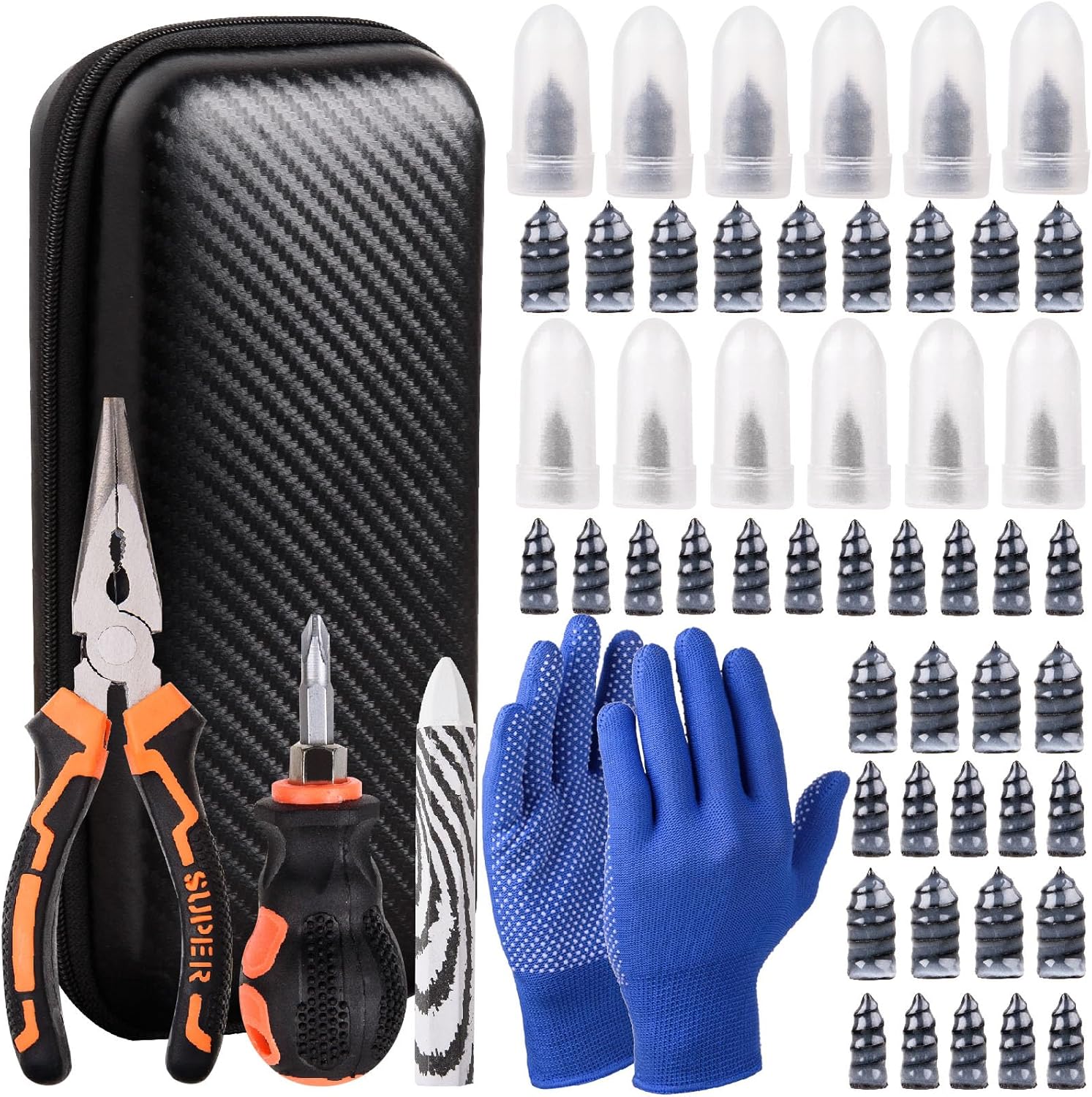
This tire sidewall puncture repair kit fixes flats fast without removing the tire, helping you get back on the road in minutes. It includes self-tapping repair nails, essential tools, gloves, and a portable storage bag for convenient roadside use. Designed for tubeless tires, it helps create a tight, leak-resistant seal for cars, motorcycles, trucks, SUVs, and ATVs.
Why Does Highway Driving Raise the Risk?
Highway use matters most when you are relying on a temporary repair or losing pressure. Sustained speed produces continuous tire flex and heat, while a leak can gradually reduce inflation and increase sidewall deflection.
NHTSA notes that sustained high temperature can contribute to tire deterioration and that proper inflation is essential to tire safety. Those concerns make a long, fast trip a poor time to depend on an uninspected plug-only repair.
There is no credible universal figure showing that highway use places exactly 30% more stress on a plugged tire than city driving. The actual forces depend on speed, load, inflation, tire design, road conditions, ambient temperature, and the nature of the damage.
Heat And Pressure Build-Up
Tires naturally warm while driving. A healthy tire is designed for this operating cycle, but underinflation creates extra sidewall flex and additional heat.
If a temporary plug is leaking slowly, a long trip gives that leak more time to reduce pressure. Continued driving at low pressure can then cause damage separate from the original puncture.
That is a stronger reason to monitor pressure than the unsupported idea that normal pressure rise automatically pushes a properly seated repair out of the tire.
- Start with the vehicle manufacturer’s recommended pressure.
- Do not deliberately bleed air from a warm tire simply because its reading is higher than the cold specification.
- Investigate repeated pressure loss instead of repeatedly adding air and continuing the trip.
- Use a spare or roadside assistance if the tire cannot maintain pressure.
Higher Speed Stress
Higher road speed increases the rate of tire flexing and can increase heat generation. If the tire is underinflated or structurally damaged, that combination reduces your safety margin.
For a temporary plug, avoid unnecessary sustained high-speed travel and arrange professional inspection promptly. For a tire that has already received a complete approved repair, follow the tire manufacturer’s instructions because some tire types or speed ratings may carry additional repair restrictions.
Long-Distance Leak Risk
The main long-distance concern is not that a plug automatically fails after a certain number of miles. It is that a weak seal has more time to lose pressure and an unrecognized internal injury has more time to worsen.
Before a necessary trip on any recently punctured tire, verify pressure and inspect for visible damage. If a temporary plug is the only repair, do not turn a long road trip into an experiment to see how long it lasts.
- Check the pressure before leaving.
- Watch the TPMS warning system.
- Stop safely if handling changes.
- Do not continue if the tire becomes visibly underinflated or develops a bulge.
How Can You Make a Tire Plug Last Longer?
The safest goal is not to make an outside string plug last indefinitely. Your goal should be to keep the tire stable long enough to obtain the correct inspection and repair decision.
If you use an emergency repair kit, follow that kit’s instructions exactly. After inflation, verify that the tire is holding pressure before driving. Keep the tire at the vehicle manufacturer’s recommended pressure and avoid unnecessary high speed, heavy loading, hard cornering, rough terrain, and long-distance travel.
You can use soapy water around the injury to look for bubbling, but remember that a leak-free surface does not reveal hidden inner-liner or carcass damage.
Do not keep extending the service life of an emergency plug simply because it has not leaked yet. Have the tire inspected professionally as soon as practical.
Why Is Professional Tire Repair Better?
The biggest advantage of professional tire repair is not simply stronger adhesive. It is the ability to remove the tire, inspect the complete interior, decide whether the tire qualifies for repair, and then address both parts of the puncture correctly.
- The technician can identify internal sidewall or liner damage that is invisible from outside.
- The injury channel can be cleaned and filled instead of being left open to moisture.
- The inner liner can be sealed to prevent inflation loss.
- The repair location, size, tread depth, and previous repairs can be checked against industry and manufacturer limits.
- The tire can be replaced instead of repaired if its structure is unsafe.
For a qualifying tread puncture, that complete process offers a much stronger basis for continued service than simply confirming that an emergency string plug still holds air.
[Products Worth Considering]

Get back on the road fast with this compact tire plug repair kit for tubeless tires. It includes self-vulcanizing rubber plugs, T-handle rasp and insert tools, and a storage box that fits in your glove compartment for easy access. Also included are a 4-way valve steam tool set with valve cores and caps for added roadside convenience.

This versatile 35-piece tire repair kit quickly fixes punctures in most tubeless tires without removing the tire from the rim. It features a durable hardened steel spiral rasp and insert tool for reliable plug insertion in roadside and garage use. The set includes string plugs, hex keys, and a storage blow mold case to keep tools organized for emergency flat repairs.

Use this tire repair rubber screw kit for fast, self-service flat fixes on the road. Choose the matching short or long nail size and twist it into the puncture without removing the tire from the rim. Compact storage keeps the emergency set organized for cars, motorcycles, electric bikes, and bicycles, helping you seal tubeless leaks quickly and reliably.
Sources
- U.S. Tire Manufacturers Association — Tire Repair Basics — repairable tread area, 1/4-inch injury limit, internal inspection, and combination-repair requirements.
- Tire Industry Association — Tire Repair — proper tire-repair procedure, temporary outside plugs, repair location, tread depth, and overlapping repairs.
- National Highway Traffic Safety Administration — TireWise — correct tire pressure, cold-pressure checks, TPMS, heat, and underinflation safety.
- Michelin USA — Can My Tire Be Repaired? — current manufacturer repair criteria, internal inspection, tread-area limits, and flat-running damage.
Frequently Asked Questions
How long can I drive on a tire that’s been plugged?
There is no universal safe mileage number for an outside-in plug. Treat a roadside string plug as a temporary emergency measure and drive only as far as necessary to obtain qualified tire service, provided the tire holds pressure and has no dangerous symptoms. A proper repair requires removing and inspecting the tire and addressing both the puncture channel and inner liner.
Can I drive 200 miles on a patched tire?
If “patched” means a professionally inspected tire that received a complete combination repair and the tire manufacturer permits continued service, 200 miles by itself is not an industry repair limit. If the tire only has a patch by itself or a temporary outside plug, do not treat 200 miles as an approved safe allowance.
Can I drive 500 feet on a flat tire?
Avoid driving on a completely flat conventional tire. Even a short distance can damage the sidewall, carcass, or wheel and may make the tire unrepairable. Use a suitable spare or roadside assistance when possible. If your vehicle is stopped in an immediately dangerous traffic position, personal safety comes first; move only as needed to reach a safer location.
Is it safe to drive on a tire with a plug in it?
An outside string plug can provide temporary mobility when it is holding pressure and the tire shows no dangerous symptoms, but it is not considered a proper permanent repair by USTMA or TIA. Have the tire removed from the wheel and professionally inspected before relying on it for normal long-term service.
Can a shop permanently repair a tire after I used a string plug?
Do not assume it can. Tell the technician about the previous plug before service. USTMA’s procedure says a tire with an existing improper repair should not simply be repaired again under that procedure. The shop must inspect the tire and follow the applicable tire-manufacturer policy, and replacement may be required.
Can I drive on the highway with a plugged tire?
Avoid unnecessary highway travel when an outside plug is your only repair. Sustained speed and a developing leak can increase heat and underinflation risk. If the tire has received a complete professional repair, follow the tire manufacturer’s service and speed-rating guidance because restrictions can vary by tire type.
Conclusion
If you have an outside-in tire plug, do not count miles and assume you are safe until a particular number appears on the odometer. Treat the plug as temporary, confirm that the tire is holding the correct pressure, and arrange professional inspection as soon as possible.
A qualifying tread puncture no larger than 1/4 inch (6 mm) may be repairable, but the tire must be removed so hidden damage can be checked. A proper repair fills the puncture injury and seals the inner liner; a plug alone or patch alone is not the complete industry-standard repair. If you see pressure loss, a bulge, sidewall or shoulder damage, strong vibration, or evidence that the tire was damaged while flat, stop relying on the plug and have the tire inspected or replaced.