
Fixing a tire can be quick, but the safe answer depends on what caused the flat. A small nail in the center tread may be repairable in under an hour. A sidewall cut, large puncture, worn-out tread, or tire driven while flat usually means replacement instead of repair.
Quick Answer
Most tire repairs take 15 to 60 minutes after the vehicle is in the bay. A temporary plug or sealant fix may take 10 to 20 minutes, while a proper internal patch-plug repair often takes 30 to 60 minutes. A spare tire change usually takes 10 to 30 minutes.
Key Takeaways
- Most repairable tread punctures are handled in about 30 to 60 minutes at a shop, not counting wait time.
- A plug-only repair is fast, but it should be treated as a temporary roadside fix, not the best long-term repair.
- A proper tire repair usually means removing the tire, inspecting the inside, filling the injury channel, and sealing the inner liner.
- Sidewall or shoulder damage, punctures larger than 1/4 inch, overlapping repairs, or very worn tread usually require tire replacement.
- Do not drive on a flat tire if you can avoid it. Use a spare, roadside assistance, or a tow to protect the wheel and suspension.
At a Glance
| Time Required | 10–20 minutes for temporary sealant or plug; 30–60 minutes for a proper shop repair; 10–30 minutes to install a spare. |
| Difficulty | Easy for inflating or changing to a spare; moderate to professional for internal tire repair. |
| Tools Needed | Pressure gauge, inflator, spare tire, jack, lug wrench, wheel wedges, flashlight, and reflective warning triangles. |
| Cost | Often about $20–$50 for a basic repair, but prices vary by shop, tire type, vehicle, and whether replacement is needed. |
How Long Does Tire Repair Take?

Tire repair usually takes 15 to 60 minutes, depending on the damage, repair method, tire size, and shop workload. If the damage is a small puncture in the repairable tread area, many shops can inspect and repair it in about 30 to 60 minutes once work starts.
A quick roadside plug or sealant fix may take 10 to 20 minutes, but that is not the same as a permanent repair. A safer shop repair takes longer because the technician should remove the tire from the wheel, inspect the inside, repair the injury, reinflate the tire, and check for leaks.
If you only need to switch to a spare tire, the job often takes 10 to 30 minutes. A professional may finish faster, while a first-time DIY tire change can take longer, especially in rain, darkness, or an unsafe roadside location.
Warning: Do not keep driving on a flat tire unless you must move a very short distance to reach safety. Driving flat can damage the wheel, suspension, braking, and steering parts, and it can make a repairable tire impossible to save.
Can Your Tire Be Repaired?
A tire can usually be repaired only when the puncture is small, straight, and located in the main tread area. The U.S. Tire Manufacturers Association says repair should be considered only when the damage is in the tread area and the puncture is no larger than 1/4 inch, or 6 mm. The tire should also be removed from the wheel so the inside can be inspected.
Use this quick rule: tread puncture, maybe repair; sidewall or shoulder damage, replace. The Tire Industry Association also advises against repairing shoulder or sidewall damage, tread punctures larger than 1/4 inch, overlapping repairs, and tires worn down to 2/32 inch of tread depth.
| Tire Condition | Repair Or Replace? |
|---|---|
| Small nail or screw in center tread | Usually repairable after inspection |
| Puncture larger than 1/4 inch / 6 mm | Replace |
| Sidewall or shoulder damage | Replace |
| Tire driven while flat | Needs internal inspection; often replace |
| Tread at wear bars or 2/32 inch | Replace |
| Old, cracked, bulging, or separated tire | Replace |
What Changes Tire Repair Time
Repair time is not fixed because the technician has to diagnose the problem before choosing a repair. A clean tread puncture is faster than a slow leak near the shoulder, a damaged valve stem, a bent wheel, or a tire with hidden inner-liner damage.
Your tire type also matters. Standard passenger tires are usually quicker to remove, inspect, and reinstall than large all-terrain tires, low-profile performance tires, or specialty tires. Damage severity changes everything too; a small puncture often gets resolved faster than a torn sidewall or a tire that was driven while flat.
Shop workload can add more time than the repair itself. If you arrive during peak hours, you may wait longer even if the repair only takes 30 minutes once the vehicle reaches a service bay. Tools and technician experience matter as well; a shop with a lift, tire machine, air supply, balancing equipment, and trained staff can work faster and more safely.
Good tire maintenance helps you avoid repeat visits. Check tire pressure, look for nails before long trips, and keep a reliable spare tire kit in the vehicle so a small problem does not become a roadside delay.
How Long Tire Puncture Repairs Take
For a repairable puncture, expect about 30 to 60 minutes at a professional shop. A temporary plug may take about 15 minutes, and tire sealant may take 10 to 20 minutes, but those are get-you-to-help solutions rather than the best long-term fix.
A proper puncture repair usually takes longer because the tire must be removed and inspected. That extra time matters. Internal damage, sidewall cracking, rubber dust, or a cut inner liner can make the tire unsafe even if the hole looks small from the outside.
Having a reliable tool for routine tire maintenance, like a digital tire inflator, can help you add air long enough to reach a safe place, but it should not replace a proper inspection when the tire is losing pressure.
Puncture Repair Methods
There are three common ways drivers talk about puncture repair, but they are not equal in safety or durability.
- Plug-only repair: Often takes about 10 to 20 minutes. Treat it as a temporary roadside fix so you can reach a tire shop.
- Patch-only repair: Seals the inner liner, but by itself it may not fill the injury channel through the tread.
- Patch-plug repair: Fills the puncture channel and seals the inside of the tire. This is the better long-term repair when the puncture qualifies.
Note: The safest repair choice is not just the fastest one. AAA describes a standalone plug as a temporary emergency measure, while a combination patch-plug is the better method for a safe, permanent repair when the tire qualifies.
Repair Time Factors
How long a tire puncture repair takes depends on the repair method, the damage itself, and the shop’s workload. Use the table below as a practical timing guide.
| Method | Typical Time | Best Use |
|---|---|---|
| Temporary sealant | 10–20 minutes | Small emergency leak when you need to reach service |
| Temporary plug | 10–20 minutes | Short emergency drive to a shop |
| Internal patch-plug | 30–60 minutes | Proper repair for qualifying tread punctures |
| Tire replacement | 30–90 minutes or more | Sidewall damage, large punctures, severe wear, or hidden damage |
Patch, Plug, Or Patch-Plug?
Choosing between a patch, plug, or patch-plug depends on the puncture’s location and size. For tire repairs, match the fix to the damage and respect the repair limits.
- Patch method: The tire is removed, cleaned, and sealed from the inside. This helps seal the inner liner but should be part of a complete repair process.
- Plug method: A plug fills the hole from the outside. It is fast, but it should be used only as a temporary emergency fix when a proper repair is not available.
- Patch-plug combination: This fills the puncture channel and seals the tire from inside. For a qualifying tread puncture, this is the better long-term repair.
You should not expect every puncture to qualify. Sidewall damage, shoulder damage, large holes, worn tread, and tires driven while flat can all push you toward replacement instead of repair. Additionally, consider that a tire like the Fullway PC369 offers budget-friendly all-season performance for everyday driving needs.
[Products Worth Considering]
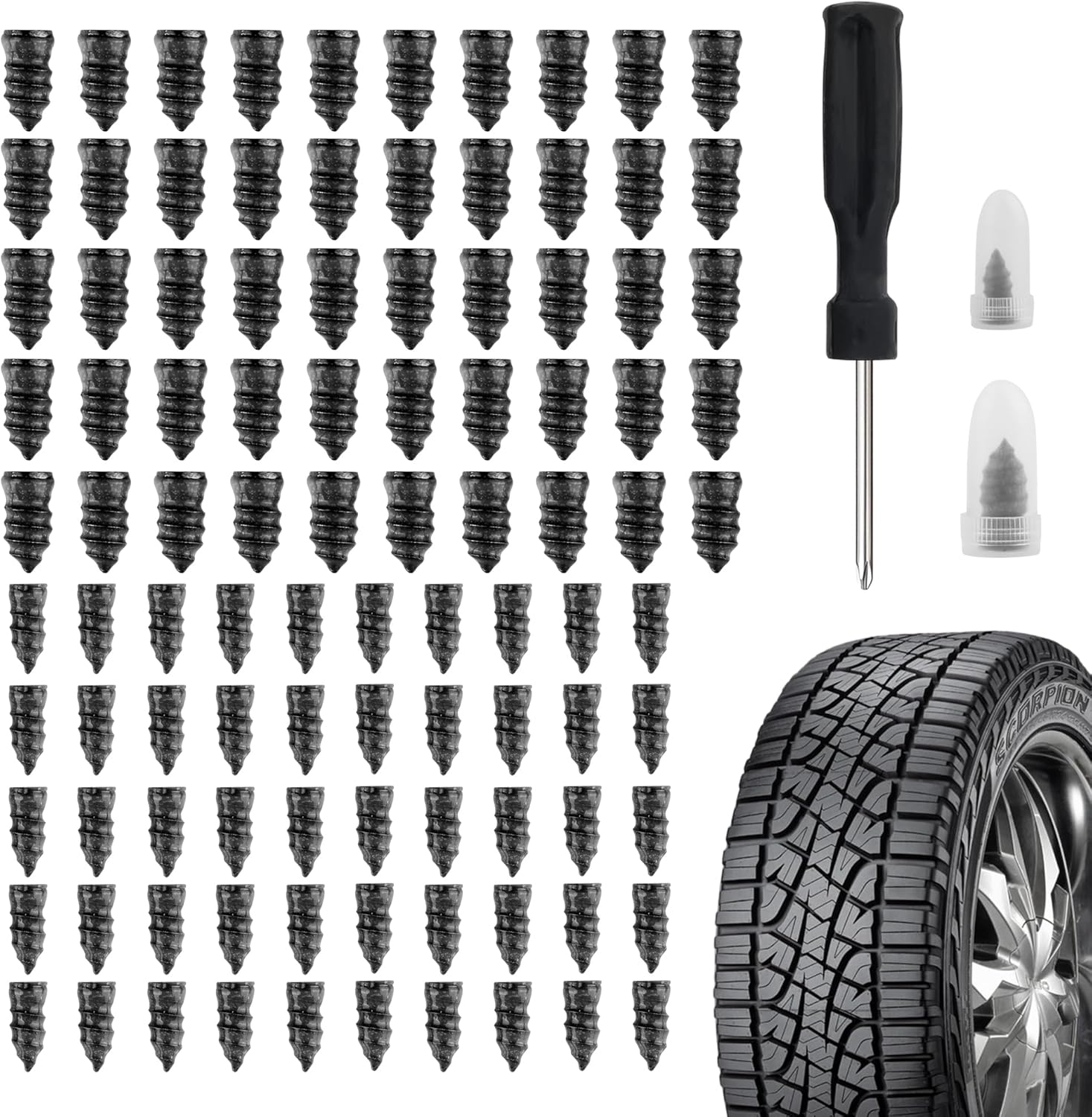
Salior’s tire plug kit provides a fast, reliable self-service fix for punctured or leaking tires without the need for flaring tools. Choose the correct plug size, then screw the nail into the puncture using the included screwdriver for an enhanced seal. The set is durable and convenient for on-the-go maintenance across multiple vehicle types.

This self-service tire repair nail kit includes 60 pieces (30 small + 30 large) to help seal punctures quickly without needing an auto shop visit. The nails are designed to fit different hole sizes and provide a tight connection with sealing glue to help prevent air and water intrusion. Suitable for cars, motorcycles, trucks, and other vehicles, it’s an easy, efficient way to patch roadside tire damage.

Wykodra tire plugs provide quick vulcanizing repairs for tubeless tires, helping you seal punctures and get back on the road. The industrial-strength rubber creates a long-lasting, leak-resistant bond and is designed for emergency fixes without removing the tire. Choose between two standard plug sizes with color-matched options for small to larger damage across many vehicles and off-road uses.
What Happens At A Tire Shop?
A good shop does more than look at the nail and push in a plug. The technician should inspect the tire, confirm the puncture location, remove the tire from the wheel, check the inside for hidden damage, prepare the injury, install the repair, reinflate the tire, and test for leaks.
- Find the leak: The technician checks the tread, valve stem, bead area, and wheel.
- Remove the tire: The tire comes off the wheel so the inner liner can be inspected.
- Check for hidden damage: Rubber dust, liner cuts, sidewall damage, or heat damage may mean replacement.
- Repair the puncture: A proper repair fills the injury channel and seals the inside.
- Reinflate and leak-test: The tire is inflated to the vehicle’s recommended pressure and checked for air loss.
- Reinstall and verify: The wheel is reinstalled, and the shop may reset or confirm the tire pressure monitoring system.
When You Need A New Tire Instead
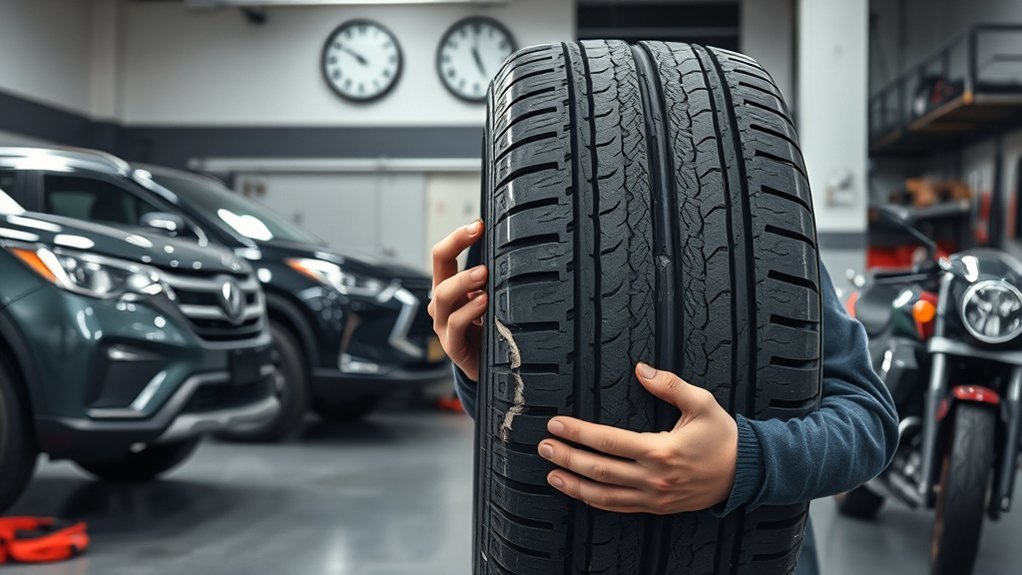
A repair is not the right answer if the tire has sidewall damage. That area flexes constantly, so a patch or plug cannot restore the tire’s structure. At a repair shop, treat a damaged tire as a safety decision, not a quick fix.
You will usually need a new tire if the puncture is larger than 1/4 inch, the injury is in the shoulder or sidewall, the tread is at the wear bars, the tire has been repaired too many times, or the tire was driven while flat. Multiple repairs, flat-driving scars, bulges, cracks, and older rubber can also signal deeper problems. Additionally, choosing tires with manufacturer treadlife can help you avoid premature replacements.
| Check | Replace? |
|---|---|
| Sidewall damage | Yes |
| Shoulder damage | Yes |
| Puncture over 1/4 inch / 6 mm | Yes |
| Tread at 2/32 inch or wear bars | Yes |
| Bulge, cracking, separation, or flat-driving damage | Yes |
| Over six years old | Have it inspected; replace if damaged, cracked, or manufacturer guidance says so |
You reduce repeat failures when you replace a tire before hidden damage becomes a roadside problem. Ask for a close inspection, compare remaining tread depth, and choose replacement when the repair would be outside accepted limits.
[Products Worth Considering]

This tire repair screw plug kit includes 60 pieces in two sizes to help you fix punctures quickly on the road. Choose the right screw by puncture size, then drive it in with a screwdriver for an effective seal without needing a flaring tool. The coated screws help prevent leaks and are designed for convenient emergency use across cars, trucks, ATVs, motorcycles, and bicycles.

Mosconly tire repair glue and nail kit delivers an elastic, waterproof bond for quick sidewall puncture repairs. The adhesive cures securely to help prevent peeling, flaking, and tearing, while the included nails support a strong, seamless repair. Designed for easy roadside use, it works on car, motorcycle, bike, and other tire types, with full curing within 24 hours.

The Gurduenon scissor car jack tire changing kit is designed for quick flat-tire replacement with a lifting capacity of 2.5 tons and a scissor-lift range sized for many vehicles. The complete emergency set includes a ratchet wrench, lug wrench, gloves, a pencil tire pressure gauge, and a storage bag for convenient trunk or garage use. Universal compatibility makes it suitable for cars, SUVs, and other vehicles roadside assistance needs.
How Long A Spare Tire Change Takes
You can usually change a flat to a spare in 10 to 30 minutes. A professional may finish in 10 to 15 minutes, while a first DIY change often takes 15 to 30 minutes or longer. You’ll loosen the lug nuts, jack up the vehicle, remove the damaged tire, and install the spare with a tire iron and jack.
Set your hazard lights, park on level ground, and make sure your spare and tools are ready before you start. Choosing the right tire size is crucial for ensuring a proper fit and safe driving.
Spare Tire Change Time
Changing a flat tire to a spare usually takes about 10 to 15 minutes for a professional, while a DIY change often takes 15 to 30 minutes depending on your experience and tools. Your time drops when you’ve got the right spare tire, jack, and tire iron ready, and when you can reach the lug nuts fast.
Follow your owner’s manual to find the proper jacking points. A flat, stable surface speeds the change, while rain, darkness, soft ground, traffic, or stuck lug nuts can add time.
DIY Change Steps
- Pull over in a safe, level place away from traffic.
- Turn on the hazard lights and set the parking brake.
- Place wheel wedges if you have them.
- Loosen the lug nuts slightly before lifting the car.
- Jack up the vehicle at the approved jacking point in the owner’s manual.
- Remove the lug nuts and damaged tire.
- Mount the spare tire and hand-tighten the lug nuts.
- Lower the vehicle until the tire touches the ground, then tighten the lug nuts in a star pattern.
- Lower the vehicle fully and check the spare’s pressure as soon as possible.
Tools And Safety
Once the wheel is off and the spare is ready, the pace of the job depends on your tools and how safely you set up the scene. With a spare tire, tire iron, and car jack, you can move faster, but wheel wedges, gloves, a flashlight, and the owner’s manual make the job safer and cleaner.
Most compact spare tires are temporary. Check the speed and distance limit printed on the spare or listed in your owner’s manual. Many compact spares are meant only to get you to a repair shop, not to replace a full-size tire for normal driving.
Pro Tip: Check your spare tire pressure every few months. A flat spare turns a simple tire change into a tow call.
Should You Fix It Yourself Or Go To A Shop?
For a simple emergency, DIY tire help can save time. You can add air, use sealant, install a spare, or use a temporary plug kit if the puncture is in the main tread and you only need to reach a shop. Those fixes can take 10 to 30 minutes when you have the right tools.
For a real repair, a shop is the safer choice. Professional technicians can remove the tire, inspect the inside, find hidden damage, and decide whether the tire is safe to repair. Their equipment and training improve safety and reliability.
For sidewall punctures, shoulder damage, gashes, bulges, repeated repairs, or pressure loss that keeps coming back, skip the gamble and go straight to a professional. Your goal is not just speed; it is getting back on the road with a tire that can safely hold air. Additionally, tires like the Evoluxx Capricorn HP can enhance handling and wet grip, making it crucial to choose the right tire for your vehicle.
[Products Worth Considering]

ZEHXI’s 60 pack screw-in tire plug kit uses high-grade rubber plugs with sealing threads to help repair minor punctures quickly without removing the tire. The set includes two plug sizes, so you can match different puncture openings and keep repairs organized in a transparent case. A handy screwdriver is included for fast installation, helping drivers get more mileage from existing tires while being ready for flat-tire emergencies.

KEVWR self-service tire repair nails are made to firmly fix punctures with strong bite and reliable sealing, helping prevent water from entering the wound. The spiral rubber screws are easy to insert without removing the tire, providing a simple DIY repair for many vehicle and tire types. Suitable for cars, motorcycles, trucks, bikes, buses, and agricultural tires with two size options for different puncture nails.

This tire repair kit provides fast emergency puncture repair without removing the tire from the rim, helping you get back on the road quickly. Its screw plug system is designed for punctures in both tread and sidewall and includes a complete patch plug tool set with essential accessories. A portable storage bag makes it easy to carry for cars, trucks, SUVs, motorcycles, and heavy-duty applications.
Temporary Fixes Vs. Permanent Repairs
Temporary fixes are useful when you are stuck, but they are not a reason to delay proper service. Sealant, inflators, and plug kits are best for getting off the shoulder and reaching a repair shop.
Fix-a-Flat’s official guidance says the tire should be inspected and repaired within 3 days or 100 miles, whichever comes first. Tell the tire technician if you used sealant so the inside of the tire can be cleaned and inspected.
A permanent repair is different. For a qualifying tread puncture, the repair should address both the puncture channel and the inner liner. That is why a patch-plug repair takes longer than a quick plug, but it gives the technician a chance to inspect the tire properly.
How Much Does Tire Repair Cost?
A basic tire puncture repair often costs about $20 to $50, but prices vary by location, shop policy, tire size, and vehicle type. Some tire shops repair tires free if you bought the tire there or purchased a road-hazard plan.
Replacement costs more because you may need a new tire, mounting, balancing, valve stem or TPMS service, disposal fees, and sometimes an alignment check if the tire failed after impact damage. Ask the shop whether the tire is repairable before approving replacement.
What To Do If Your Tire Is Losing Air Now
- Slow down gently. Do not brake hard or jerk the steering wheel.
- Pull over somewhere safe. Choose level ground away from traffic if possible.
- Check the tire visually. Look for a nail, sidewall cut, bulge, shredded rubber, or wheel damage.
- Check pressure if safe. Use a tire pressure gauge or your vehicle’s tire pressure display.
- Decide between air, spare, tow, or roadside help. If the tire is flat, shredded, or sidewall-damaged, do not try to drive on it.
- Visit a tire shop. Even if the tire holds air after inflating, have it inspected before a long drive.
After The Repair
After a tire repair, check that the tire holds pressure. Look at it again the next morning or after your next drive. If the tire pressure warning light comes back on, the repair may not be holding, another leak may exist, or the TPMS may need attention.
Also listen for vibration, pulling, or thumping. Those symptoms may point to wheel damage, imbalance, or a tire that was damaged while flat. When in doubt, return to the shop and ask for another leak check.
Ways To Speed Up Tire Repair

A few simple habits can cut tire repair time. Keep repair tools, a patch kit, a tire pressure gauge, and an air compressor in your vehicle so you can respond quickly to a slow leak. Routine tire inspections let you catch nails, slow leaks, and sidewall damage early.
The fastest tire repair is the one you prepare for before the tire goes flat: check pressure, inspect tread, and keep your spare and tools ready.
- Inspect your tires before every long drive.
- Keep a pressure gauge, inflator, flashlight, gloves, and warning triangles in the vehicle.
- Know whether your vehicle has a spare, run-flat tires, or only a sealant kit.
- Visit a shop during off-peak hours when possible.
- Use professional service when damage is complex or the tire has been driven flat.
Learn basic repair steps so you can act without delay, but do not guess on structural damage. Fast decisions, prepared tools, and timely service keep you mobile and safer. Additionally, having knowledge about tire durability ratings can help you choose the right tires for your needs, reducing future repair requirements.
Frequently Asked Questions
Can I drive 200 miles with Fix-a-Flat?
No. Fix-a-Flat is a temporary emergency product, not a permanent tire repair. The tire should be inspected and repaired within 3 days or 100 miles, whichever comes first. Tell the technician you used sealant so it can be cleaned out during inspection.
Can I drive 2 hours with a nail in my tire?
You should not count on it. A nail can cause a slow leak or sudden pressure loss. Check tire pressure right away. If the pressure is dropping, install the spare, use roadside assistance, or drive only the shortest safe distance to a tire shop.
Can I drive 2 miles with a flat tire?
No, not if you can avoid it. Driving on a flat can destroy the tire and damage the wheel, suspension, braking, and steering systems. Move to safety if needed, then use a spare, tire service, or a tow.
How fast can a tire be patched?
A proper internal repair often takes 30 to 60 minutes once the shop starts work. A quick plug can be faster, but it should be treated as temporary. A qualifying tread puncture should be inspected from inside and repaired correctly.
Is a tire plug permanent?
A plug by itself should not be treated as the best permanent repair. It can help in an emergency, but a tire professional should inspect the tire and use an approved internal repair when the puncture qualifies.
How long does it take to replace a tire instead of repairing it?
Replacing one tire often takes 30 to 90 minutes, depending on shop workload, tire availability, mounting, balancing, and TPMS service. It may take longer if the shop has to order the tire or if more than one tire should be replaced.
Conclusion
So, how long does it take to fix a tire? In most cases, a repairable puncture takes under an hour once the shop starts. A spare tire change may take 10 to 30 minutes, and a temporary sealant or plug may take 10 to 20 minutes. The safest answer depends on the tire’s condition.
If the puncture is small and in the main tread area, a proper patch-plug repair may get you back on the road the same day. If the sidewall is damaged, the puncture is too large, the tread is worn out, or the tire was driven while flat, replacement is usually the safer choice.
Sources
- U.S. Tire Manufacturers Association — Tire Repair Basics — repairable tread area, 1/4-inch limit, tire removal, and internal inspection guidance.
- Tire Industry Association — Tire Repair — sidewall/shoulder damage, tread depth, overlapping repair, and puncture-size limits.
- AAA — Tire Plug vs. Patch — temporary plug guidance and patch-plug repair explanation.
- AAA — How To Change a Tire — roadside safety steps and warning against driving on a flat tire.
- NHTSA TireWise — tire pressure, tread, maintenance, and tire-safety education.
- Fix-a-Flat FAQ — temporary sealant guidance and 3 days/100 miles inspection recommendation.