
A flat tire on your Toyota RAV4 is stressful, but the safest response is simple: get out of traffic, make the vehicle visible, and use the spare tire or a temporary sealant only to reach a safe repair location. A roadside fix is not the same as a permanent tire repair. For long-term safety, the tire must be inspected by a trained tire technician.
Quick Answer
If your RAV4 gets a flat tire, pull over safely, turn on your hazard lights, set the parking brake, and inspect the tire from a safe distance. Use the compact spare, Toyota Roadside Assistance, or temporary sealant only to get to a tire shop. Do not drive on a damaged sidewall, a shredded tire, or a tire that will not hold air.
Key Takeaways
- A RAV4 spare tire, tire plug, or sealant is a temporary solution, not a permanent repair.
- A puncture is generally repairable only when it is in the tread area, no larger than 1/4 inch, and the tire has no internal, shoulder, or sidewall damage.
- If the tire was driven flat, has sidewall damage, has a large cut, or will not hold air, use the spare or call for towing.
- After using Fix-a-Flat or another sealant, tell the tire shop so the technician can clean and inspect the tire properly.
At a Glance
| Time Required | 15–30 minutes for a spare tire change if conditions are safe; longer if you need roadside assistance or towing |
| Difficulty | Moderate for a spare tire change; easy for sealant; call for help if the shoulder, weather, or traffic makes the job unsafe |
| Tools Needed | Spare tire or sealant kit, jack, lug wrench, tire pressure gauge, portable inflator, flashlight, gloves, reflective vest, and warning triangles |
| Cost | $0 if you already have the tools and spare; usually low cost for a proper patch-plug repair; higher cost if the tire must be replaced or towed |
Immediate Actions for Flat Tires: What You Should Do First

When you notice a flat tire, slow down gently and avoid sudden steering or hard braking. Pull as far away from traffic as you safely can, choose a flat and firm surface, shift into Park, set the parking brake, and turn on your hazard lights. If the shoulder is narrow, the road is busy, or the vehicle is not stable, stay away from the traffic side and call for help.
Warning: Do not change a tire on a soft shoulder, steep hill, blind curve, or traffic-side lane. A safe tow is better than a dangerous roadside repair.
Before touching the tire, look for obvious damage. A nail in the tread may be repairable later, but a torn sidewall, shredded tread, bent wheel, or tire that was driven flat usually means the tire needs professional inspection and may need replacement. If your RAV4 has a compact spare, use it only as a temporary emergency tire and follow the speed, distance, and pressure limits printed on the spare tire and in your owner’s manual.
Essential Tools for Tire Repair Emergencies
The best time to check your tire tools is before you need them. Your RAV4 may have a spare tire, jack, and lug wrench, but equipment can vary by model year, trim, market, and previous-owner changes. Confirm what is in your cargo area and read the flat-tire section of your Toyota owner’s manual before a road trip.
[Products Worth Considering]

Get back on the road fast with this compact tire plug repair kit for tubeless tires. It includes self-vulcanizing rubber plugs, T-handle rasp and insert tools, and a storage box that fits in your glove compartment for easy access. Also included are a 4-way valve steam tool set with valve cores and caps for added roadside convenience.

TireJect Off-Road Tire Sealant Kit provides 5-in-1 sealing to help fix tread punctures up to 3/8", sidewall punctures up to 3/8", bead leaks, slow leaks, and minor dry rot on low-speed tires. It permanently seals with liquid rubber, recycled tire particles, and Aramid fibers, making it ideal for flats caused by thorns, nails, and screws. The included dispensing cap attaches to the valve stem for a no-mess installation, along with a metal valve core remover tool and valve stem cap. This kit is for off-road use only.

ZEHXI’s 60 pack screw-in tire plug kit uses high-grade rubber plugs with sealing threads to help repair minor punctures quickly without removing the tire. The set includes two plug sizes, so you can match different puncture openings and keep repairs organized in a transparent case. A handy screwdriver is included for fast installation, helping drivers get more mileage from existing tires while being ready for flat-tire emergencies.
Recommended Emergency Kit
A practical RAV4 flat tire kit should include:
- Factory jack and lug wrench that fit your RAV4
- Inflated spare tire or approved mobility kit
- Tire pressure gauge
- Portable 12-volt or battery-powered inflator
- Reflective vest and warning triangles
- Flashlight or headlamp
- Gloves and a small kneeling pad
- Wheel chocks or sturdy blocks, if available
- Tire sealant only for small tread punctures when the tire is not shredded or off the rim
Essential Repair Tools
A tire plug kit can help in a remote emergency, but it should not be described as a permanent repair for a highway tire. Industry repair guidance calls for the tire to be removed from the wheel, inspected from the inside, filled through the injury, and sealed with a patch-plug repair. A string plug installed from the outside can help you reach a repair shop, but it should be treated as temporary.
Note: Keep a tire pressure gauge in the vehicle even if your RAV4 has a tire pressure monitoring system. TPMS is helpful, but a gauge lets you confirm exact cold pressure after using a spare, inflator, or sealant.
Choose the Right Option: Spare, Sealant, Plug Kit, or Tow
Not every flat tire should be handled the same way. Use this decision guide before you start.
| Situation | Best Choice |
| Small puncture in the tread and tire still holds some air | Use the spare, or use temporary sealant only to reach a tire shop |
| Sidewall cut, shoulder puncture, blowout, shredded tread, or bent wheel | Install the spare if safe; otherwise call for towing |
| No spare, sealant will not inflate the tire, or damage is large | Call Toyota Roadside Assistance, your insurance roadside service, AAA, or a local tow provider |
| Remote-area tread puncture with no service nearby | A plug kit may be a temporary emergency option, but have the tire demounted and inspected as soon as possible |
[Products Worth Considering]

This AUTOWN flat tire repair kit is designed for quick, reliable puncture repairs using a plug kit and spiral probe tool to simplify installation. Built for durability and safe handling, it offers strong adhesion and flexibility to help maintain tire air tightness. With a portable storage case and a multi-vehicle approach, it’s suitable for cars, motorcycles, ATVs, tractors, lawn mowers, RVs, jeeps, and trucks.

Vigorder rubber cement glue delivers superior adhesion and cures quickly within about 30 seconds for seamless rubber bonding. Once cured, it helps provide a strong, durable, waterproof seal that holds up to vehicle weight, pressure, and heat. Suitable for cars, motorcycles, trucks, bicycles, and off-road tires, it’s designed for emergency patch and maintenance repairs.

Rhino USA’s 86-piece tire repair kit provides everything you need for quick, emergency flat repairs, including a reamer and plug insertion tool plus 60 reusable tire plugs. The heavy-duty, metal-handled design helps you fix punctures from nails and screws on tubeless tires for cars, trucks, motorcycles, ATVs, UTVs, and more. A high-visibility compact case stores easily for on-the-go use, with illustrated instructions to help you complete repairs with confidence.
How to Identify the Puncture Location
Finding the puncture helps you decide whether to use sealant, install the spare, or call for a tow. Do not pull out a nail or screw unless you are ready to install the spare or use a temporary repair method, because removing the object can make the tire lose air faster.
Visual Inspection Techniques
Start with a careful visual inspection. Look across the tread for nails, screws, glass, or a clean puncture hole. Check the sidewall for cuts, bulges, cracks, or rubbed areas. Also inspect the valve stem for cracks or looseness. A puncture in the center tread area may be repairable by a professional, but sidewall and shoulder damage are not safe candidates for standard passenger-tire repair.
Soapy Water Method
If the tire still has air, mix dish soap and water in a spray bottle and spray the tread, valve stem, and bead area where the tire meets the wheel. Escaping air usually creates bubbles. Mark the area with chalk or tape so the tire shop can inspect it later.
- Use this only when the vehicle is parked safely.
- Do not crawl under the vehicle while it is supported only by a jack.
- Do not assume a bubble means the tire is permanently repairable.
- Have the inside of the tire inspected before returning it to normal service.
Immersion Test Procedure
An immersion test can find slow leaks, but it is not a practical roadside method for most drivers. It usually requires removing the wheel and partially submerging the tire in water. If you are not equipped to do that safely, skip it and let a tire shop inspect the tire.
How to Install the Spare Tire Safely
If your RAV4 has a spare tire and the location is safe, follow the jack instructions in your owner’s manual. The basic process is to park on a firm, level surface, set the parking brake, place warning triangles if you have them, loosen the lug nuts slightly before lifting the vehicle, lift only at the approved jack point, remove the flat tire, install the spare, and tighten the lug nuts in a crisscross pattern.
After lowering the RAV4, tighten the lug nuts again in a crisscross pattern. Check the spare tire pressure as soon as possible. Drive gently, avoid hard braking and sharp turns, and go directly to a tire shop for repair or replacement of the damaged tire.
Pro Tip: Practice locating the spare, jack points, and lug wrench at home in daylight. That five-minute check can save a lot of stress during a dark or rainy roadside emergency.
[Products Worth Considering]

This tire repair screw set includes self-tapping plugs and a screwdriver to help you quickly complete tubeless tire repairs for many vehicle types. The set provides two rubber screw diameters for different puncture needs and uses a sealant-coated screw tip to help prevent air leakage and water entry. It’s designed for secure fixing with wear-resistant metal-and-rubber construction.

This ecocstm ratchet wrench is designed to make emergency and routine tire changes faster with a 360° rotating head and quick forward/reverse switching. The extended handle provides extra leverage to reduce effort and hand fatigue, while the adapter helps fit many scissor jacks on cars, SUVs, trucks, and vans. Built for reliable performance with durable construction, it’s a practical travel essential for on-the-road preparedness.

Steelman white tire marking crayons provide high-contrast, semi-permanent marks for repairing and inspecting tires and equipment. They write on wet or dry, smooth or coarse surfaces including rubber, metal, glass, and wood, making them ideal for puncture location and damage outlining. The lead- and zinc-free crayons resist weather and fading yet wipe away when you no longer need the marks.
Quick Fixes: Using Fix-a-Flat
Fix-a-Flat and similar aerosol sealants are designed for small tread-area punctures. They inject sealant and enough air to help lift the rim off the ground, but they are not meant for sidewall cuts, large punctures, blowouts, damaged wheels, or tires that have come off the rim.
To use it, follow the instructions on the exact can size you have. In general, you remove the valve cap, attach the hose to the valve stem, dispense the product, drive a short distance so the sealant spreads, and then adjust the tire to the vehicle manufacturer’s recommended pressure. After that, go to a tire professional promptly.
Fix-a-Flat says the affected tire should be inspected and repaired within 3 days or 100 miles, whichever comes first.
Tell the tire technician that sealant was used. The shop may need to clean sealant from the tire and wheel before deciding whether a proper patch-plug repair is possible.
Temporary Fixes vs. Long-Term Repairs
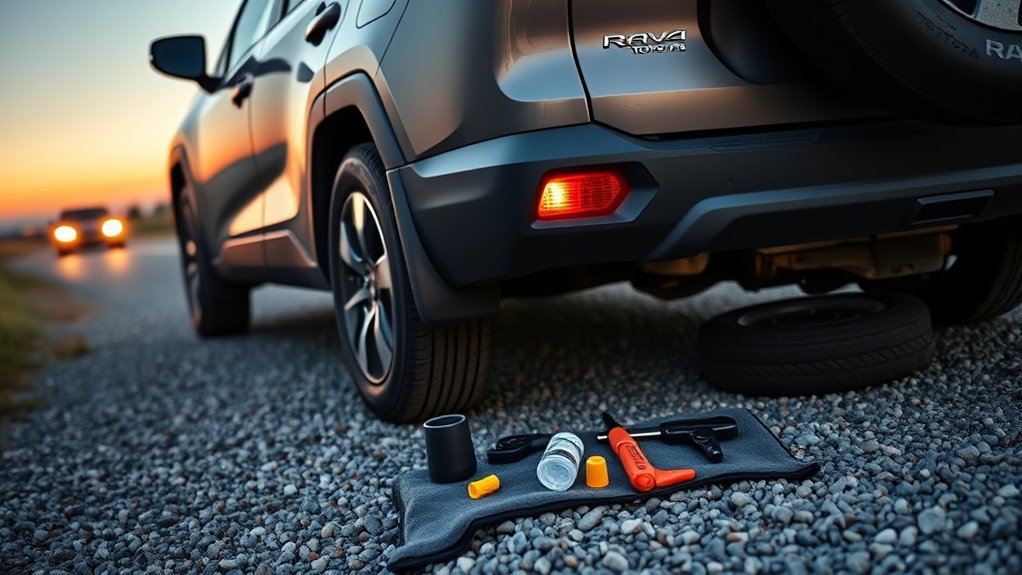
The most important difference is simple: temporary fixes help you move the vehicle; permanent repairs restore the tire only when the damage meets repair standards. A spare tire, tire sealant, and outside-in plug are all temporary ways to reach a safer place or a tire shop.
Temporary Solutions Overview
Temporary tire solutions can be useful in emergencies, but they have limits:
- Sealant can help with small tread punctures, but it should not stay in the tire long term.
- A compact spare is for temporary use and must follow the spare tire label and owner’s manual limits.
- A plug kit may slow a leak in the tread, but an outside-in plug is not the same as a proper internal repair.
- Driving on a flat tire can damage the sidewall and inner liner, making the tire unsafe even if the puncture looks small.
Permanent Repair Considerations
A tire is generally a candidate for professional repair only when all of these are true:
| Repair Factor | Safe Standard |
| Location | Tread area only, not the shoulder or sidewall |
| Size | No larger than 1/4 inch, or 6 mm, in diameter |
| Condition | No internal damage, no exposed cords, no sidewall damage, and not driven flat |
| Repair method | Tire removed from the wheel, inspected internally, and repaired with a stem-and-patch or one-piece combination repair |
If any of those conditions are not met, replacing the tire is usually the safer choice.
When to Opt for a Spare Tire Over Repairs?

Use the spare tire instead of trying a roadside repair when the puncture is in the sidewall or shoulder, the tire has multiple punctures, the damage is larger than 1/4 inch, the tire was driven while flat, or the wheel is damaged. Also choose the spare if you are not comfortable using sealant or a plug kit.
If your RAV4 is under an eligible Toyota roadside plan, roadside assistance may be able to change the flat tire with your inflated spare or tow the vehicle to a Toyota dealer or repair facility if necessary. Coverage varies, so check your Toyota plan documents.
Safety Precautions During Tire Repairs
Safety comes before saving the tire. Wear a reflective vest if you have one, keep passengers away from traffic, and set warning triangles behind the vehicle when conditions allow. Never place any part of your body under a vehicle supported only by the factory jack.
Use the jack only on the manufacturer-approved lift points. Keep the jack straight and stable. If the vehicle shifts, the ground is soft, or the jack begins to lean, stop and call for help.
Warning: Do not continue driving on a flat RAV4 tire to “make it to the next exit” unless moving a very short distance is the only way to escape immediate danger. Driving flat can destroy the tire and damage the wheel.
Mistakes People Make When Repairing Tires
Most flat-tire mistakes happen because drivers are rushing. Avoid these common problems:
- Using a plug as a permanent repair: A plug-only repair can leave the inner liner unsealed and may hide internal damage.
- Ignoring sidewall damage: Sidewall cuts, bulges, and shoulder punctures are not safe standard repairs.
- Forgetting tire pressure: Check the repaired tire, spare, and other tires with a gauge as soon as possible.
- Using sealant on the wrong damage: Sealant is for small tread punctures, not blowouts, cracked sidewalls, or bent wheels.
- Failing to tell the tire shop: If you used Fix-a-Flat, tell the technician before service begins.
- Skipping the manual: Jack points, spare storage, and compact-spare limits can vary by RAV4 year and trim.
Professional Help: When Is It Necessary?
Call a professional or roadside assistance if the tire has sidewall damage, a large puncture, exposed cords, repeated rapid air loss, a damaged wheel, or damage near the shoulder of the tire. You should also call for help if the vehicle is in an unsafe location or you do not have the right tools.
A trained tire technician can remove the tire from the wheel, inspect the inner liner, check whether the damage is inside the repairable tread area, and decide whether a proper patch-plug repair is safe. If the tire is worn to 2/32 inch tread depth, has overlapping repairs, or has hidden internal damage, replacement is the safer answer.
Regular Maintenance for Tire Longevity
Regular tire maintenance lowers the chance of a roadside emergency. Check the pressure of all tires, including the spare, at least once a month and before long trips. Use the cold PSI listed on the driver’s door placard or in your owner’s manual, not the maximum PSI molded on the tire sidewall.
- Inspect tire tread and sidewalls monthly for cuts, bulges, cracks, nails, and uneven wear.
- Rotate tires at the interval recommended in your Toyota maintenance schedule.
- Replace tires when tread depth reaches 2/32 inch, and consider earlier replacement if wet-weather traction is poor.
- Have alignment and balance checked if the RAV4 pulls, vibrates, or wears tires unevenly.
- Check the spare tire pressure and condition before road trips.
Frequently Asked Questions
Does GlueTread really work on a RAV4 tire?
GlueTread is mainly marketed for off-road tire damage, such as ATV, UTV, tractor, overland, and trail use. It should not be treated as a permanent highway repair for a Toyota RAV4 passenger tire. For on-road driving, sidewall damage generally means the tire should be replaced, not patched from the outside.
Can Toyota Roadside Assistance fix a flat tire?
Toyota Roadside Assistance may help with a tire change if you have an inflated spare, and it may tow the vehicle to a Toyota dealer or repair facility when necessary. It should not be described as a guaranteed permanent tire repair service. Check your ToyotaCare or roadside plan details for coverage.
What do I do if my RAV4 tire goes flat and I do not have roadside assistance?
Pull over safely, turn on your hazards, and check whether you have a spare tire, jack, lug wrench, inflator, or sealant kit. If the tire has sidewall damage, a blowout, or will not hold air, do not keep driving. Call a local tow provider, mobile tire service, insurance roadside service, or a trusted repair shop.
Can I plug a RAV4 tire myself?
You can use a plug kit only as a temporary emergency measure for a small tread puncture when conditions are safe. It is not a proper permanent repair. A tire shop should demount the tire, inspect the inside, and repair it with an approved patch-plug method if the damage qualifies.
Can I use Fix-a-Flat with a tire pressure sensor?
Fix-a-Flat says its modern formula is tire-sensor safe when used as directed, but the tire still needs prompt professional service. Tell the technician that sealant was used so the tire, wheel, valve stem, and TPMS area can be inspected and cleaned correctly.
How long can I drive on a RAV4 spare tire?
Follow the limit printed on the spare tire and in your Toyota owner’s manual. Compact spares are temporary emergency tires, so drive gently, avoid high speeds, and go directly to a tire shop to repair or replace the damaged tire.
Conclusion
A RAV4 flat tire is manageable when you treat every roadside fix as temporary. Move to a safe place, make the vehicle visible, inspect the damage, and choose the spare, sealant, or roadside assistance based on the tire’s condition. For long-term driving, rely on a professional tire inspection and an approved repair method. When the damage is in the sidewall, shoulder, or tire structure, replacement is the safer choice.
Sources
- Toyota Owners — RAV4 flat tire manual section — RAV4 spare-tire and flat-tire procedure reference.
- Toyota Support — Roadside Assistance — tire change and towing roadside service reference.
- NHTSA TireWise — tire safety, inflation, maintenance, and consumer tire-care guidance.
- U.S. Tire Manufacturers Association — Tire Repair Basics — repairable tread-area limits, 1/4-inch puncture limit, and patch-plug repair guidance.
- Tire Industry Association — Tire Repair — professional repair standards and warnings against plug-only or sealant-only long-term repairs.
- Fix-a-Flat FAQ — How Long Does Fix-a-Flat Work? — 3-day or 100-mile temporary-use guidance.