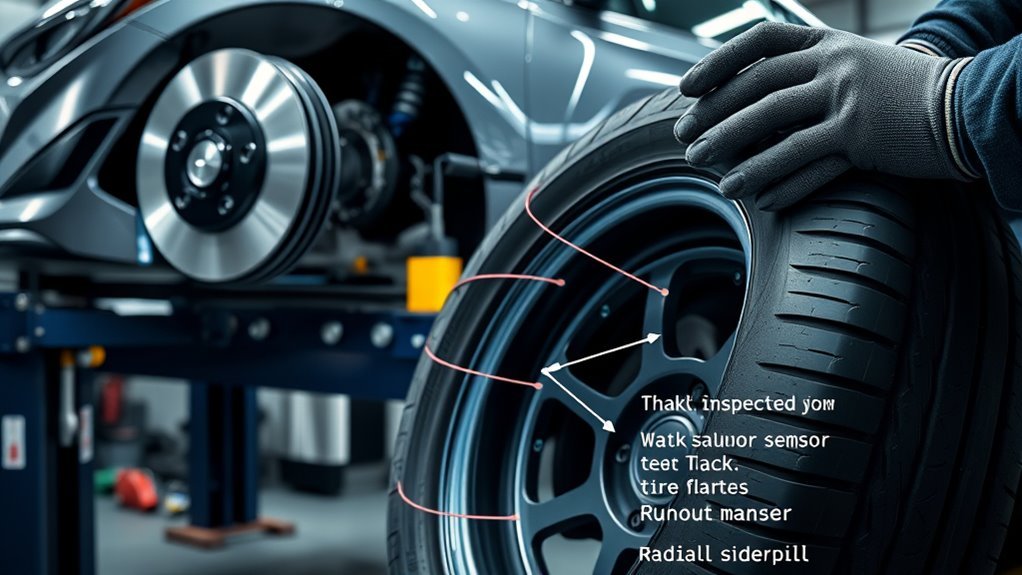
If your Hyundai Sonata drifts or pulls to one side while you are trying to drive straight, do not assume it is only an alignment problem. A tire-related pull, often called tire radial pull or tire conicity, can make the car steer left or right even when the wheel alignment is within specification. The safest way to diagnose it is to check the simple causes first, road-test the car on a flat road, and then have the front tires switched side-to-side for a controlled comparison.
Quick Answer
Tire radial pull happens when a tire creates sideways force that makes your Hyundai Sonata drift left or right. Check cold tire pressure, visible tire damage, road crown, brakes, and alignment first. If the pull reverses after switching the front tires side-to-side, a tire is likely causing the pull.
Key Takeaways
- A Sonata pull can come from tire conicity, uneven pressure, road crown, alignment, brake drag, wheel damage, or worn suspension parts.
- The most useful tire-pull test is switching the two front tires side-to-side, then checking whether the pull direction changes.
- Check tire pressure when the tires are cold and use the pressure shown on your Sonata’s tire placard, not the maximum pressure on the tire sidewall.
- If the pull is severe, sudden, paired with vibration, or connected to visible tire damage, stop driving and have the car inspected.
At a Glance
| Time Required | 15–45 minutes for basic checks; longer if a shop performs tire swapping, alignment, or suspension inspection. |
| Difficulty | Easy for pressure and visual checks; moderate to professional for tire switching, alignment, brake, or suspension diagnosis. |
| Tools Needed | Tire pressure gauge, tread-depth gauge or penny, flashlight, safe flat road, and a qualified tire shop if tires must be switched or inspected on a lift. |
| Cost | Usually free for basic checks; about $10–$30 for a gauge; shop diagnosis, alignment, or tire replacement varies by location and tire size. |
Warning: Do not continue driving normally if the pull is severe, appears suddenly, comes with vibration, follows a curb or pothole impact, triggers a TPMS warning, or you see a bulge, exposed cord, crack, or separated tread. Have the Sonata inspected before driving farther.
What Is Tire Radial Pull and How Does It Affect Your Sonata?
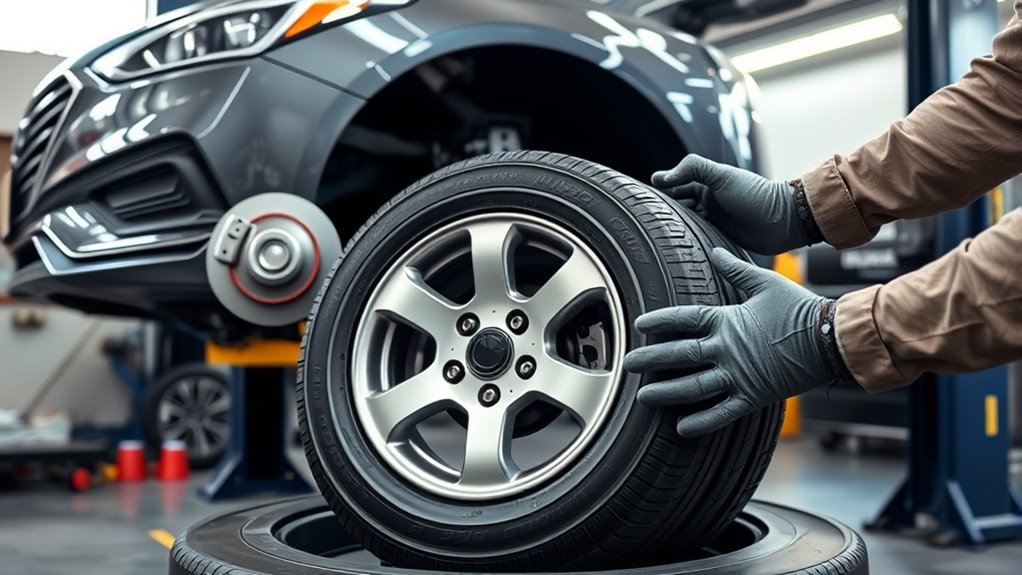
Tire radial pull is a tire-related steering pull caused by lateral force from the tire. One common cause is conicity, where the tire behaves slightly like a cone and creates a fixed side force as it rolls. Radial tires can also generate side force from ply steer. When that force is strong enough, your Sonata may drift left or right even when the steering wheel is centered.
This is why radial pull can feel like an alignment issue. The difference is that an alignment problem is caused by the vehicle’s suspension geometry, while a true tire pull follows the tire when tire positions are changed. A manufacturer technical bulletin hosted by the National Highway Traffic Safety Administration explains that lateral tire forces, including ply steer and conicity, can cause vehicle pulling and that changing tire location can change the amount or direction of drift. Toyota TSB hosted by NHTSA
Note: Radial pull is not unique to the Hyundai Sonata. The same tire-force problem can happen on many vehicles, but the checks below are written for Sonata owners and include Hyundai maintenance guidance.
Key Symptoms of Tire Radial Pull in Your Hyundai Sonata
If your Hyundai Sonata keeps drifting to one side on a flat, level road, tire radial pull is one possible cause. The key is to compare the pull against other common causes instead of guessing.
Common Pulling Symptoms
- Steady drift on a flat road: The car moves left or right when you relax your grip slightly, even when the road is not crowned.
- Constant steering correction: You have to hold light pressure on the wheel to keep the Sonata centered in the lane.
- No obvious brake connection: The pull is present while cruising, not only when braking.
- Pull direction changes after a tire swap: If the two front tires are switched side-to-side and the pull reverses, tire conicity is likely.
- Uneven tread wear: Feathering, one-edge wear, center wear, or shoulder wear can point to pressure, alignment, balance, or suspension issues that may feel like tire pull.
Steering Wheel Correction Needed
A Sonata with tire radial pull may not feel dangerous at first. It may simply require small steering corrections every few seconds. That still matters because the driver has to work harder to keep the car straight, and the real cause may be a tire, alignment, brake, wheel, or suspension problem that can get worse.
| What You Notice | Most Likely Direction to Check |
|---|---|
| Pull reverses after switching the front tires side-to-side | Tire radial pull / conicity |
| Pull stays the same after tire positions are changed | Alignment, suspension, brake drag, wheel damage, road crown, or a rear tire |
| Pull is strongest while braking | Brake drag, caliper issue, rotor issue, or suspension movement |
| Pull changes by lane or road | Road crown or pavement slope |
| Pull comes with vibration or shaking | Balance, separated tire, bent wheel, suspension wear, or tire damage |
First Checks Before You Blame Radial Pull
Before switching tires or paying for an alignment, rule out the simple causes. Hyundai says each tire, including the spare if provided, should be checked monthly when cold and inflated to the pressure on the vehicle placard or tire inflation label. Hyundai TPMS guidance
- Check cold tire pressure: Hyundai defines cold tires as tires that have not been driven for at least three hours or have been driven less than 1 mile. Do not bleed air from warm tires just because the reading is higher. Hyundai cold tire pressure guidance
- Use the Sonata’s tire placard: Check the driver-side door jamb or owner’s manual for the correct pressure, tire size, load rating, and speed rating for your exact year, trim, and wheel package.
- Inspect all four tires: Look for bulges, cuts, cracks, exposed cord, uneven tread, nails, tread separation, or a tire that looks lower than the others.
- Confirm matching tires: Mismatched sizes, different tread depths, or mixed tire types can create a pull or unstable feel.
- Think about road crown: A sloped road can make a car drift. Test on a safe, flat road and compare different lanes only where legal and safe.
- Watch for brake signs: Burning smell, one hot wheel, scraping, or pull only during braking points away from simple tire radial pull.
- Consider driver-assist systems: Lane Keeping Assist or steering assistance can affect how the pull feels. Follow the owner’s manual and only adjust settings where safe and legal.
Pro Tip: Record the tire pressures, tread depths, tire positions, and pull direction before changing anything. A simple note like “before: pulls right, LF 34 psi, RF 31 psi” makes the diagnosis much easier.
[Products Worth Considering]

Measure tire tread depth quickly and accurately with this LUMITECO dial gauge that reads in 1/32" increments up to 14/32". The color-coded green/yellow/red zones make it easy to judge tire wear and know when replacement is needed. A rugged, compact design with a protective pouch helps keep the gauge ready for use on cars, trucks, motorcycles, and more.

Monitor tire tread wear with a smart, color-coded depth gauge that shows clear condition ranges at a glance. The bar is range marked for fast, easy readings, helping you maintain safer traction and performance. Each gauge is portable with a pocket clip, and the set includes 20 units for daily use and sharing.

This universal wheel alignment tool helps you accurately restore tire tilt angles after tire or suspension repairs using an adjustable camber gauge. It features a powerful magnetic base that firmly attaches to brake rotors for stationary, slip-free readings, improving consistency during measurement. Built from durable PC plastic, it resists wear and corrosion and is compact enough for car, truck, RV, and motorcycle alignment tasks.
Diagnosing Tire Radial Pull: A Safe Tire-Swap Guide
Diagnosing tire radial pull requires a controlled comparison. The goal is not just to rotate the tires for maintenance. The goal is to see whether the pull follows a tire.
[Products Worth Considering]

Replace or upgrade your zero-turn lawn mower tires with a universal fit flat-free tire and wheel assembly in a convenient 2-pack. Smooth tread front-caster style helps turning with reduced turf damage, while flat-free design eliminates the maintenance and downtime of air-filled flats. The included adapter kit supports 5/8-inch axles and hub lengths from 3.4 to 5 inches for compatibility across most ZTR mowers.
The Tymate TM12 RV TPMS delivers real-time tire pressure and temperature monitoring with a stable 433Hz display for safer long-distance driving. It supports simultaneous monitoring across vehicle and trailer zones, includes six alarm modes for pressure, temperature, leakage, battery, and signal loss, and features easy DIY installation with auto calibration. Power is supplied via USB-C charging or solar recharging, with a wide 0–144 PSI range and up to 50 ft signal coverage for RVs and towable trailers.

The SAFELIFE dial tire tread depth gauge measures tread depth in 1/32 inch increments with clear, easy-to-read 2-inch dial face. Color zones using a traffic light system help you quickly judge whether tread is low, marginal, or ample for safer driving. Built with a durable zinc cast body and a metal detect probe for precise, comfortable use across cars, motorcycles, trucks, and buses.
Step 1: Road-Test on a Flat, Safe Road
Choose a flat, low-traffic road where you can drive straight at a steady speed without sudden steering inputs. Do not perform this test in heavy traffic, rain, snow, or near pedestrians. If the Sonata drifts consistently in one direction on a flat road, continue with the checks below.
Step 2: Correct Pressure and Inspect Tires
Set all tires to the correct cold pressure from the tire placard. Then inspect tread wear and visible tire damage. If one tire is damaged, badly worn, bulging, or showing cord, replace or inspect that tire before doing any pull diagnosis.
Step 3: Switch the Front Tires Side-to-Side
For a radial-pull diagnosis, the key test is switching the left front and right front tires side-to-side, then road-testing again. A manufacturer service bulletin hosted by NHTSA explains that if the pulling direction changes after the front tires are switched, the pull can be concluded to be caused by tire conicity. Toyota TSB hosted by NHTSA
Warning: Do not switch tires yourself unless you can lift and support the vehicle safely. Directional, asymmetric, staggered, or damaged tires may require a tire shop. A temporary diagnostic swap is different from a normal rotation pattern.
| After Front Tires Are Switched | What It Usually Means | Next Step |
|---|---|---|
| Pull reverses direction | One of the front tires is likely creating radial pull. | Have a tire shop isolate the tire and evaluate replacement or warranty coverage. |
| Pull disappears or becomes much weaker | Tire position was contributing to the pull. | Have tire balance, wear, and tire condition checked before deciding whether to keep that position. |
| Pull stays the same | The cause may not be front tire conicity. | Check rear tires, alignment, brakes, suspension, wheel damage, and road crown. |
What Causes Radial Pull in Tires?
Tire radial pull is usually discussed as a tire-force issue, but the driver feels it as a vehicle pull. That means you need to separate true radial pull from other problems that create the same symptom.
| Cause | Description | How It Feels |
|---|---|---|
| Tire conicity | The tire creates a fixed sideways force as it rolls. | Pull may reverse when front tires are switched side-to-side. |
| Ply steer | Radial tire construction can create lateral force related to belt angle and rotation. | May contribute to drift or pull depending on tire position. |
| Incorrect tire pressure | One tire being low or high changes rolling resistance and contact patch. | Pull may improve after cold pressures are corrected. |
| Uneven tire wear | Wear caused by pressure, alignment, balance, braking, or suspension issues can make a tire pull. | Pull may appear after many miles or after a rotation. |
| Wheel alignment | Caster, camber, toe, or thrust-angle problems can make the Sonata drift. | Pull often stays the same even after tire positions are changed. |
| Brake drag | A sticking caliper or brake issue can pull the car toward one side. | May come with heat, smell, noise, or pull during braking. |
| Road crown | Roads slope for drainage, and the slope can pull the car left or right. | Pull changes by lane, road, or direction of travel. |
How to Fix Radial Pull in Your Hyundai Sonata: Step-by-Step Solutions
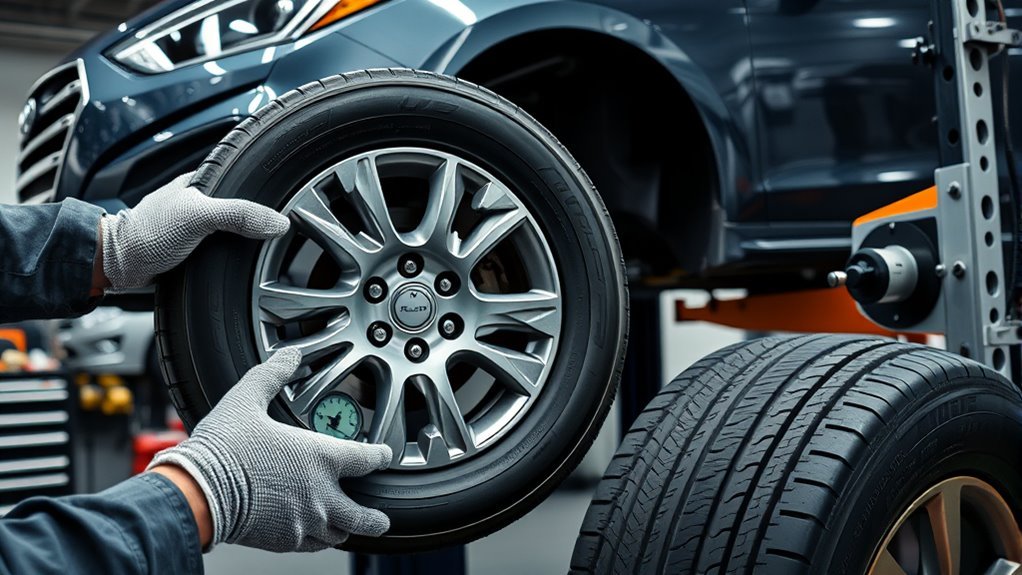
Fixing a Sonata pull depends on what the diagnosis shows. Start with the least invasive checks, then move to tire isolation and professional inspection.
- Correct the cold tire pressure: Inflate all tires to the pressure shown on the vehicle placard or tire inflation label. Recheck after the car has been parked long enough for the tires to cool.
- Inspect tire condition: Replace any tire with bulges, exposed cord, severe cracking, tread separation, or unsafe tread depth. Do not try to “rotate away” a damaged tire.
- Switch front tires side-to-side for diagnosis: If the pull reverses, the tire is likely the cause. Have a tire shop identify the exact tire and check whether a tire manufacturer warranty applies.
- Move the suspect tire away from the steering axle only if safe: Sometimes moving a pulling tire to the rear reduces the steering effect, but it does not repair a defective or damaged tire.
- Perform an alignment check if the pull does not follow the tire: Ask the technician to check caster, camber, toe, and thrust angle against Hyundai specifications for your model year.
- Check brakes, wheels, and suspension: A bent wheel, worn control-arm bushing, damaged strut, sticking brake caliper, or collision damage can all mimic tire pull.
- Replace the tire if conicity is confirmed: A tire that creates a strong pull may need replacement, especially if it is new or recently installed. Keep tire size, load index, speed rating, and axle matching in mind.
The key diagnostic clue is simple: if the pull reverses after the front tires are switched side-to-side, the tire is probably creating the pull. If the pull stays the same, look beyond the front tires.
[Products Worth Considering]

Steelman white tire marking crayons provide high-contrast, semi-permanent marks for repairing and inspecting tires and equipment. They write on wet or dry, smooth or coarse surfaces including rubber, metal, glass, and wood, making them ideal for puncture location and damage outlining. The lead- and zinc-free crayons resist weather and fading yet wipe away when you no longer need the marks.

The TYAMATE TM8 solar-powered wireless TPMS delivers real-time tire pressure and temperature monitoring with six alarm modes for safer driving. A vibrant color LCD display shows readings clearly while windshield mounting keeps it hands-free and easy to read. With a wide 0–87 PSI range, strong 433.92 MHz signal transmission, and quick sensor pairing, it’s ideal for RV, sedan, SUV, MPV, and truck use.
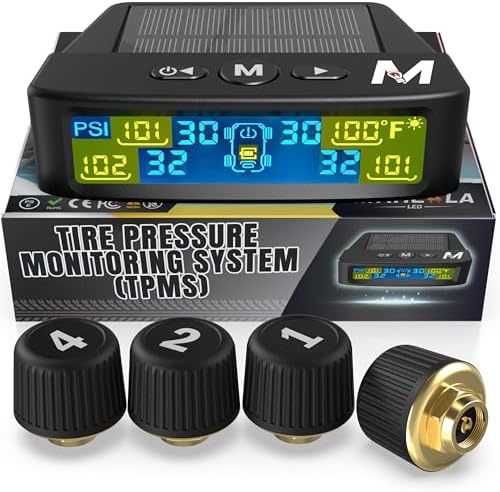
Marcala’s TPMS set of four sensors helps you monitor tire pressure and temperature in real time while driving, with updates every second. The bright color LCD uses auto-dimming for easy viewing, powered by dual solar and USB charging, and offers six alarm modes. Built for trailers, RVs, campers, trucks, and towing setups, the sensors support monitoring 1-4 wheels up to 98 PSI with IP67 waterproof protection.
When to Consult a Professional for Radial Pull
Consult a tire shop, Hyundai dealer, or qualified technician if the pull is strong, sudden, or still present after tire pressure has been corrected. You should also get help if you do not have the equipment to safely lift the car or if your Sonata has directional, asymmetric, staggered, or damaged tires.
Signs of Severe Pulling
- You cannot keep the car straight without firm steering input: This is a safety concern, not just a comfort issue.
- The pull started after impact: A pothole, curb strike, or road debris can bend a wheel or damage suspension parts.
- The tire looks damaged: Bulges, cuts, cracks, exposed cord, or tread separation mean the tire needs inspection before more driving.
- One wheel feels hotter than the others: That can point to brake drag or bearing problems.
- The steering wheel is off-center after the pull is repaired: The car may need alignment correction after the tire issue is addressed.
Tire Wear Patterns Analysis
Uneven tire wear can reveal why your Hyundai Sonata pulls and whether the tire is still safe to use. Hyundai advises checking for uneven wear and damage during tire rotation, and replacing tires if bumps, bulges, fabric, or cord are visible. Hyundai tire rotation guidance
| Tire Wear Pattern | Possible Cause | Action Needed |
|---|---|---|
| Inner or outer edge wear | Alignment issue, suspension wear, or hard cornering | Have alignment and suspension checked |
| Both shoulders worn | Under-inflation or overloading | Set cold pressure to placard value and inspect load habits |
| Center wear | Over-inflation | Adjust pressure when tires are cold |
| Feathering | Toe alignment problem | Get alignment checked before the new wear pattern worsens |
| Cupping or scalloping | Worn shocks/struts, imbalance, or suspension looseness | Inspect suspension and balance the tire/wheel assembly |
| One tire much more worn than the opposite side | Pressure, alignment, tire defect, brake drag, or suspension issue | Compare tire positions and have a shop diagnose the cause |
Maintaining Your Tires to Prevent Tire Radial Pull
You cannot prevent every tire defect, but you can reduce the chances of pull caused by pressure, wear, and neglected maintenance. NHTSA recommends monthly tire inspections that include pressure, treadwear, and tire damage, plus recurring rotation, balancing, and alignment services. NHTSA tire safety guidance
- Check pressure monthly: Use a reliable gauge and check when tires are cold. Do not rely only on the TPMS light, because TPMS is not a substitute for proper maintenance.
- Rotate on Hyundai’s schedule: Hyundai recommends tire rotation every 12,000 km or 7,500 miles, or sooner if irregular wear develops. Hyundai tire rotation guidance
- Inspect tread and sidewalls: Look for uneven wear, cracks, cuts, bulges, punctures, embedded objects, and exposed cord.
- Balance tires when needed: Vibration after tire work or at highway speed can point to imbalance or wheel/tire damage.
- Align after impacts or uneven wear: If the Sonata hits a pothole, curb, or road debris, alignment and suspension checks can prevent tire wear from turning into a pull.
- Use the right tire type: Do not mix bias-ply and radial-ply tires. Match the tire size, load index, speed rating, and tire type recommended for your Sonata.
Frequently Asked Questions
How do I diagnose radial pull on a Hyundai Sonata?
Start with cold tire pressure, tire condition, matching tire size, and a safe road test on a flat road. If the pull remains, have the two front tires switched side-to-side. If the pull reverses direction, a front tire is likely causing radial pull.
How do you fix a tire pull?
Fix the confirmed cause. Correct tire pressure, replace damaged tires, isolate a tire that creates conicity, and then check alignment, brakes, wheels, and suspension if the pull does not follow a tire. A defective pulling tire may need replacement.
Can a bad alignment feel like tire radial pull?
Yes. Alignment problems can make a Sonata drift, and tire radial pull can mimic alignment trouble. That is why tire position testing is useful. If the pull reverses after the front tires are switched, suspect the tire. If it stays the same, inspect alignment and other vehicle causes.
Can tire rotation cause a Sonata to start pulling?
A rotation can reveal an existing tire problem because a tire that was less noticeable on the rear axle may create a stronger steering pull when moved to the front. It can also reveal uneven wear from pressure, alignment, or suspension issues.
What can cause a tire to pull to one side?
A tire can pull because of conicity, ply steer, uneven wear, low pressure, mismatched tires, internal tire damage, or a separated belt. The vehicle can also pull because of road crown, alignment, brake drag, a bent wheel, or worn suspension parts.
Is tire radial pull dangerous?
A mild pull may simply make the car tiring to drive, but it should still be diagnosed. A severe pull, vibration, visible tire damage, TPMS warning, hot wheel, or sudden change in steering can signal a safety issue. In those cases, stop driving and get a professional inspection.
Conclusion
Tire radial pull in a Hyundai Sonata is best diagnosed by process, not guesswork. Start with cold tire pressure and a visual tire inspection, then road-test on a flat road and compare what happens when the front tires are switched side-to-side. If the pull changes direction, the tire is likely the cause. If it does not, look at alignment, brakes, suspension, wheels, rear tires, and road crown. With careful testing and regular tire maintenance, you can protect tire life, steering stability, and driving safety.
Sources
- Hyundai Owner’s Manual — Tire Pressure Monitoring System — supports monthly cold-pressure checks, placard pressure guidance, and TPMS limitations.
- Hyundai Owner’s Manual — Recommended Cold Tire Inflation Pressures — supports cold-tire definition and warm-tire pressure caution.
- Hyundai Owner’s Manual — Tire Rotation — supports the 7,500-mile rotation interval and tire inspection guidance.
- NHTSA — Tire Safety Month Guidance — supports monthly inspection, pressure, tread, rotation, balance, and alignment maintenance.
- Vehicle Pull, Steering Wheel Off Center, and Alignment Best Practices — TSB hosted by NHTSA — supports conicity, ply steer, road crown, brake-drag checks, and front tire side-to-side diagnosis.