
For most Hyundai Sonata owners, the best tire rotation schedule is simple: rotate the tires about every 7,500 miles, or sooner if you see uneven wear, vibration, or pulling. This helps the front and rear tires wear more evenly, keeps handling predictable, and gives you a chance to catch tire-pressure, tread, balance, or alignment problems before they become expensive.
Quick Answer
Hyundai recommends rotating Sonata tires every 12,000 km, or 7,500 miles, or sooner if irregular wear develops. Check tire pressure cold at least monthly, inspect tread and sidewalls, and use the rotation pattern that matches your drivetrain and tire type.
Key Takeaways
- Use 7,500 miles as the main Hyundai Sonata tire rotation interval unless your owner’s manual for your exact year says otherwise.
- Rotate sooner if you see uneven tread wear, cupping, vibration, road noise, or the vehicle pulling to one side.
- In hot climates such as Texas, check tire pressure cold at least monthly because temperature changes affect PSI.
- A rotation is also a good time to check tread depth, tire damage, balance, brake pads, and lug-nut torque.
- Directional, asymmetrical, staggered, or AWD setups may need a different rotation pattern, so check the sidewall and owner’s manual first.
At a Glance
| Time Required | About 30–60 minutes at a service center; longer if combined with inspection, balancing, or alignment checks. |
| Difficulty | Easy for a shop; moderate for DIY because safe lifting, jack stands, and torque checks are required. |
| Tools Needed | Tire pressure gauge, tread-depth gauge or penny, torque wrench, vehicle jack, jack stands, and your owner’s manual. |
| Cost | Often free or discounted with a tire purchase, maintenance plan, or oil-change package; paid rotations commonly vary by shop and location. |
The Essential Benefits of Regular Tire Rotations for Your Hyundai Sonata

Tire rotations matter because the four tires on your Sonata do not do the same job. Front tires handle steering and a large share of braking force. On front-wheel-drive models, they also handle drive force, which can make them wear faster than the rear tires.
When you rotate the tires on schedule, each tire gets a turn in a different position. That helps reduce irregular wear, keeps tread depth more balanced, and gives the car more predictable traction and braking feel. The Tire Industry Association also notes that a proper rotation is a chance for a technician to check tread depth, inflation pressure, and visible tire hazards.
Pro Tip: If your oil-change interval lands close to 7,500 miles, schedule the tire rotation at the same visit. It is easier to remember, and the tires, brakes, pressure, and tread can be inspected while the car is already in the bay.
How Texas Heat Affects Your Tires and What to Do About It
Hot weather does not mean your Sonata automatically needs a different factory rotation schedule, but it does make tire checks more important. Heat, highway speed, heavy loads, underinflation, and old or damaged rubber can all increase tire stress.
Tire pressure also changes with temperature. Bridgestone explains that tire pressure changes by about 1 PSI for every 10°F change in ambient temperature, which is why pressure should be checked when the tires are cold, before a long drive or after the car has been parked for at least three hours.
| Texas Heat Factor | What It Can Do | Smart Action |
|---|---|---|
| High ambient temperature | Raises tire pressure readings and can increase heat stress on worn tires. | Check pressure cold and use the PSI on the driver-side door placard, not the tire sidewall maximum. |
| Long highway drives | Builds extra heat inside the tire, especially if the tire is underinflated or overloaded. | Inspect tires before road trips and avoid exceeding the vehicle’s load rating. |
| Sun exposure and age | Can contribute to cracking, drying, and tire aging over time. | Look for cracks, bulges, cuts, and exposed cord during monthly checks. |
| Uneven tread wear | Reduces wet grip and can make vibration, road noise, or pulling worse. | Rotate early and ask for an alignment or balance check if the wear pattern is abnormal. |
Note: Do not bleed air from a hot tire just because the reading is higher after driving. Set pressure when the tire is cold, using the Sonata’s door-jamb tire placard or the owner’s manual.
Recommended Tire Rotation Frequency for Optimal Performance
The best Hyundai Sonata tire rotation frequency is every 7,500 miles, or sooner if irregular wear develops. That matches Hyundai’s owner-manual guidance for rotating tires every 12,000 km, or 7,500 miles.
General tire-safety guidance from NHTSA TireWise also supports rotating tires every 5,000 to 8,000 miles if the manufacturer recommends it. For the Sonata, treat the Hyundai interval as your main schedule and use the broader range only for special cases such as rough roads, frequent potholes, aggressive driving, or visible uneven wear.
Tire rotation is not just about tire life. NHTSA reported 511 deaths in tire-related crashes in 2024, which is a strong reminder that tire pressure, tread, rotation, and inspection are safety items, not cosmetic maintenance.
Signs Your Tires Need a Rotation Now
You do not have to wait until the next mileage interval if your tires are already showing signs of uneven wear. Rotate early and have the tires inspected if you notice any of the following:
- Uneven tread wear: One tire, one edge, or one axle is wearing faster than the others.
- Cupping or scalloping: The tread has a wavy or chopped look, often paired with noise or vibration.
- Vibration at highway speed: This may point to balance issues, uneven wear, bent wheels, or tire damage.
- The Sonata pulls to one side: Rotation may help if wear is uneven, but alignment may also be needed.
- More road noise than usual: Irregular tread patterns can make tires louder as they roll.
- Visible damage: Bulges, cracks, cuts, exposed cord, or fabric mean the tire needs professional inspection, not just rotation.
Uneven Tread Wear
Uneven tread wear is one of the clearest signs that your Sonata’s tires are not wearing as a set. The front tires may show faster shoulder wear, while the rear tires may look flatter across the tread. That difference can affect traction, wet braking, steering feel, and ride comfort.
Check tread depth monthly. NHTSA says tires should be replaced when tread is worn down to 2/32 of an inch. You can use a tread-depth gauge, built-in treadwear bars, or the penny test as a quick screen.
Vehicle Pulls to One Side
A Sonata that pulls left or right may have uneven tire wear, low tire pressure, a tire defect, brake drag, or an alignment problem. Rotation can help even out normal wear, but it does not fix a true alignment issue. If the car still pulls after the rotation and pressure adjustment, ask for an alignment inspection.
Aligning Tire Rotations With Oil Changes
Pairing tire rotations with oil changes is a smart reminder system, but the mileage must still make sense. If your Sonata’s oil-change interval is close to 7,500 miles, rotate the tires at that visit. If your oil changes are more frequent, rotate at every other oil change. If your driving is severe or your tires show abnormal wear, rotate sooner.
- Write the rotation mileage on your service receipt or in your maintenance app.
- Ask the shop to record tread depth for all four tires.
- Ask for cold tire pressures to be set to the door-jamb placard value.
- Request a balance or alignment check if the tires are wearing unevenly.
- Keep receipts for tire warranty and vehicle maintenance records.
The Benefits of Regular Tire Rotations for Safety

Regular tire rotations help keep tread depth more even across all four tires. That matters because tire tread provides the grip that helps the car accelerate, steer, brake, and resist slipping on wet roads.
Enhanced Tread Longevity
Rotation helps each tire share the workload. Instead of letting the front tires wear out much faster, a proper rotation pattern moves tires through different positions. This can delay premature replacement and help you get better value from a full set of tires.
Improved Vehicle Stability
Even tread wear helps the Sonata feel more stable during braking, lane changes, and wet-weather driving. If one tire is much more worn than the others, the car may feel less predictable, especially during emergency maneuvers or heavy rain.
Debunking Myths: What You Should Know About Tire Rotations
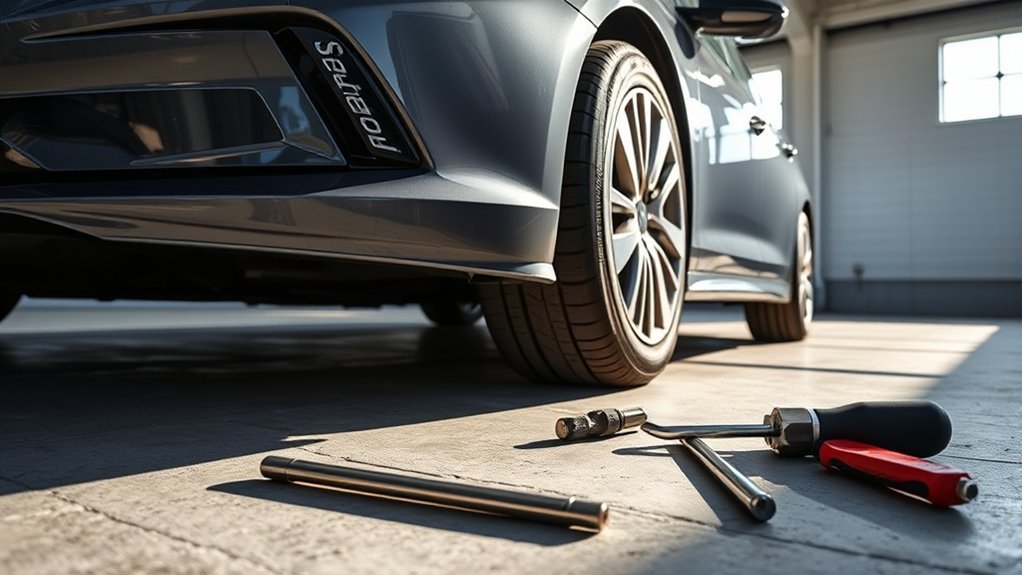
Bad tire-rotation advice can create more problems than it solves. Here are the myths to avoid:
- Myth: You can wait until the tread looks bad. By the time tread wear is obvious, the tire may already be damaged or too uneven to recover fully.
- Myth: Rotation fixes alignment. Rotation changes tire position. Alignment adjusts suspension angles. You may need both if the car pulls or the tread is wearing on one edge.
- Myth: Directional tires can be crossed like normal tires. Directional tires must keep rolling in the correct direction unless they are professionally dismounted and remounted.
- Myth: The compact spare should join the rotation. Hyundai warns not to use the compact spare tire for tire rotation.
- Myth: TPMS means you do not need a pressure gauge. TPMS usually warns only when a tire is significantly underinflated. NHTSA still recommends monthly pressure checks.
Different Tire Rotation Patterns Explained
The correct tire rotation pattern depends on your Sonata’s drivetrain, tire size, and tire design. Before rotating, check whether the tires are directional, asymmetrical, staggered, or the same size on all four corners.
| Setup | Common Rotation Pattern | Important Note |
|---|---|---|
| Front-wheel drive, non-directional tires | Front tires move straight back; rear tires cross to the front. | This is a common pattern for FWD cars because the front tires do more work. |
| Rear-wheel drive, non-directional tires | Rear tires move straight forward; front tires cross to the rear. | Use only if it matches your exact vehicle and tire setup. |
| AWD or 4WD, same-size non-directional tires | Often an X-pattern or double-X pattern. | Follow the owner’s manual because AWD systems can be sensitive to tire differences. |
| Directional tires | Front-to-back on the same side only. | Do not cross sides unless a tire professional remounts the tires correctly. |
| Asymmetrical tires | Can often be rotated normally if all four tires are the same size. | The side marked “outside” must face outward after installation. |
| Staggered tire sizes | May be limited or not rotatable front-to-rear. | Check tire sizes before rotation. |
Warning: Never work under a vehicle supported only by a jack. If you rotate tires yourself, use the factory jack points, support the car with properly rated jack stands, and tighten lug nuts with a torque wrench.
[Products Worth Considering]

Measure tire tread depth quickly and accurately with this LUMITECO dial gauge that reads in 1/32" increments up to 14/32". The color-coded green/yellow/red zones make it easy to judge tire wear and know when replacement is needed. A rugged, compact design with a protective pouch helps keep the gauge ready for use on cars, trucks, motorcycles, and more.

Monitor tire tread wear with a smart, color-coded depth gauge that shows clear condition ranges at a glance. The bar is range marked for fast, easy readings, helping you maintain safer traction and performance. Each gauge is portable with a pocket clip, and the set includes 20 units for daily use and sharing.

The SAFELIFE dial tire tread depth gauge measures tread depth in 1/32 inch increments with clear, easy-to-read 2-inch dial face. Color zones using a traffic light system help you quickly judge whether tread is low, marginal, or ample for safer driving. Built with a durable zinc cast body and a metal detect probe for precise, comfortable use across cars, motorcycles, trucks, and buses.
What Happens During a Tire Rotation? Here’s What to Expect
During a Hyundai Sonata tire rotation, the wheels and tires are moved to new positions based on the correct pattern. A good service visit should include more than simply swapping tire locations.
- Tire position changes: The tires are moved according to the drivetrain and tire type.
- Tire pressure adjustment: Front and rear tire pressures are set to the Sonata’s specification.
- Tread inspection: The technician checks tread depth and looks for uneven wear.
- Damage inspection: The tire tread and sidewalls are checked for cuts, cracks, bulges, exposed cord, or embedded objects.
- Balance check: If vibration or uneven wear is present, the tires may need balancing.
- Brake pad look-over: Hyundai notes that disc brake pads should be inspected for wear whenever tires are rotated.
- Lug-nut torque: The manual-listed torque should be checked after rotation; one Hyundai manual reference lists 79–94 lbf-ft, but you should confirm the exact spec for your model year.
If the shop finds feathering, cupping, one-sided wear, or vibration, a rotation alone may not be enough. You may also need balancing, alignment, suspension inspection, or tire replacement.
[Products Worth Considering]

Accurately measure tire tread depth with a calibrated gauge marked from 0 to 1 inch in 1/32 inch increments. The color-coded bar helps you quickly identify tread condition ranges, supporting safe driving for trucks, motorcycles, automobiles, and passenger vehicles.

Yieokei Tesla jack pads are molded rubber lifting pucks designed for 2016-2026 Model 3/Y/S/X, including Juniper, to fit securely in the jack hole. They cushion the underframe and help position the jack precisely at the factory jack points to reduce risk of battery, paint, or chassis damage. The set also includes a tire repair tool kit for emergency roadside fixes and comes with a portable storage case to keep everything organized.

The VEHLIVE SU-50448 II TPMS relearn tool provides a fast activation reset to restore accurate tire pressure monitoring after sensor replacement or tire rotation. It supports 315 MHz and 433 MHz GM series sensors and helps clear dashboard pressure warnings. With simple two-button operation and horn-confirmed relearning order, you can reprogram sensors conveniently at home.
How to Schedule Your Tire Rotation Easily
The easiest way to schedule a Sonata tire rotation is to use an authorized Hyundai service tool or call a trusted tire shop. Hyundai owners can use MyHyundai Schedule Service or the official Hyundai Service dealer search to find nearby service options.
When booking, ask for a tire rotation, cold pressure adjustment, tread-depth reading, and visual tire inspection. If you have vibration, pulling, or uneven wear, mention that before the appointment so the shop can check balance and alignment while the vehicle is there.
When Rotation Is Not Enough
Sometimes the right fix is not another rotation. Replace or professionally inspect the tire if you see any of these problems:
- Tread depth at or below 2/32 inch.
- Visible cord or fabric.
- Sidewall bulges or bubbles.
- Deep cuts, cracking, or punctures near the sidewall.
- Severe vibration that remains after rotation and balancing.
- A tire that repeatedly loses pressure.
Also remember that rotation cannot correct bent wheels, worn suspension parts, or poor alignment. If the same tire position keeps wearing badly after each rotation, ask for a deeper inspection.
[Products Worth Considering]

Steelman white tire marking crayons provide high-contrast, semi-permanent marks for repairing and inspecting tires and equipment. They write on wet or dry, smooth or coarse surfaces including rubber, metal, glass, and wood, making them ideal for puncture location and damage outlining. The lead- and zinc-free crayons resist weather and fading yet wipe away when you no longer need the marks.

Universal magnetic jack pad with aluminum grooved design to protect vehicle pinch welds during lifting. Durable nylon pad inserts are upgraded and secured with screws to resist damage and keep in place. Designed to fit most single vehicle pinpoint welds for safer, stable jacking when changing tires, repairs, or performing oil changes.

The Airmoto portable tire inflator quickly and accurately fills car, truck, SUV, motorcycle, and bicycle tires up to 120 PSI with auto shut-off when your target pressure is reached. Its large LCD, multi-unit pressure display, and digital gauge make it easy to dial in settings and verify readings, while the built-in LED flashlight helps in low light. The included polyurethane hard carrying case and storage mesh pocket keep the inflator and accessories protected and organized.
Frequently Asked Questions
How often do I actually need a Hyundai Sonata tire rotation?
Rotate your Hyundai Sonata tires every 7,500 miles, or sooner if irregular wear develops. If your owner’s manual for your exact model year lists a different interval, follow that manual.
Can I rotate my Sonata tires every 6,000 miles instead?
Yes. Rotating at 6,000 miles is generally not harmful if the correct pattern is used and the lug nuts are torqued properly. It can make sense in hot climates, on rough roads, or if the tires show early uneven wear.
Should I rotate tires every oil change?
Only if the mileage lines up. If your oil changes are about 7,500 miles apart, rotate tires at the same visit. If you change oil more often, rotate at every other oil change or at the mileage in your owner’s manual.
Does tire rotation fix vibration?
Not always. Rotation may move a worn tire to a less noticeable position, but vibration often needs wheel balancing, alignment, tire replacement, or wheel/suspension inspection.
Do directional tires change the rotation pattern?
Yes. Directional tires usually move only front-to-back on the same side of the car. Crossing them side-to-side can make the tread run the wrong way unless a tire professional dismounts and remounts them correctly.
Do I need an alignment every time I rotate tires?
No. You do not need alignment every time. Get an alignment check if the Sonata pulls, the steering wheel is off-center, tires show one-sided wear, or the car recently hit a curb or pothole hard.
Can I include the compact spare in the rotation?
No. Hyundai says not to use the compact spare tire for tire rotation. Compact spares are temporary-use tires and should not be treated like a matching full-size tire.
Conclusion
Keeping up with Hyundai Sonata tire rotations is one of the simplest ways to protect your tires, handling, and safety. Use 7,500 miles as your main interval, rotate sooner if uneven wear appears, and check tire pressure cold at least monthly. Pair the rotation with tread checks, pressure adjustment, balance inspection, brake pad inspection, and lug-nut torque verification. That routine keeps your Sonata smoother, safer, and more predictable on every drive.
Sources
- Hyundai Owner’s Manual: Tire Rotation — supports the 7,500-mile rotation interval, tire inspection, pressure adjustment, torque guidance, and compact spare warning.
- NHTSA TireWise — supports tire pressure, tread, rotation, blowout, TPMS, and tire safety guidance.
- Tire Industry Association: Tire Rotation — supports general rotation patterns and inspection practices.
- Bridgestone: Tire Inflation — supports monthly pressure checks and the approximate 1 PSI per 10°F temperature relationship.
- MyHyundai Schedule Service — official Hyundai service scheduling resource.
- Hyundai Service Dealer Search — official Hyundai dealer/service locator.