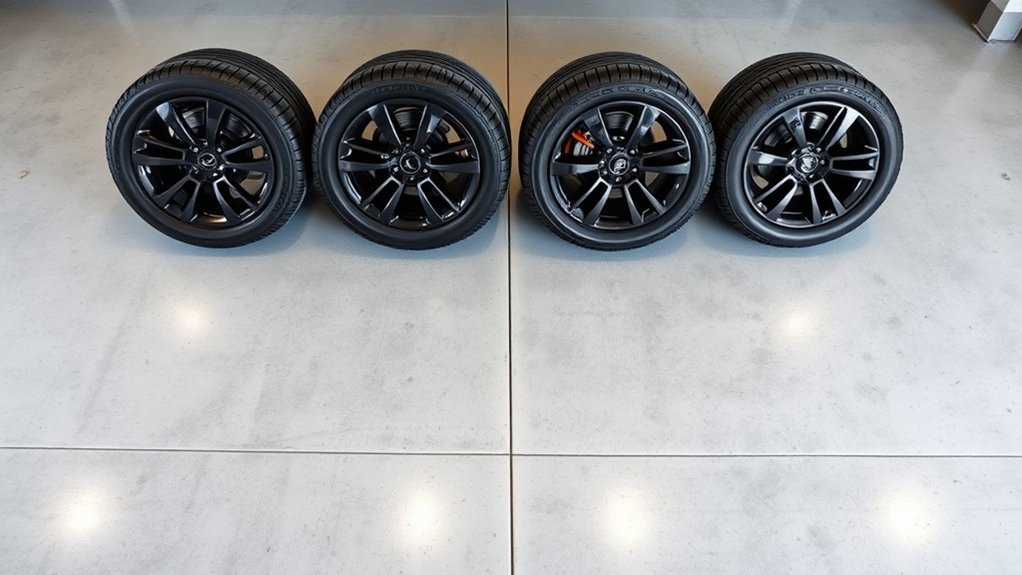
Rotating the tires on a front-wheel-drive Hyundai Sonata is simple when the tires are the same size and are not directional. The usual pattern is the forward-cross pattern: the front tires move straight back, and the rear tires cross to the opposite front positions. This helps the front tires share the extra work caused by steering, braking, and driving the car.
Quick Answer
For most front-wheel-drive Hyundai Sonata models with same-size, non-directional tires, use the forward-cross pattern: move the left front tire to left rear, right front to right rear, left rear to right front, and right rear to left front. Rotate about every 8,000 miles or sooner if uneven wear appears.
Key Takeaways
- The standard FWD Sonata tire rotation pattern is front tires straight back, rear tires crossed to the front.
- Hyundai recommends rotating tires every 8,000 miles, or sooner if irregular wear develops.
- Do not cross directional tires; move them front-to-rear on the same side unless they are remounted.
- Never include a compact temporary spare in tire rotation. Only a full-size matching spare may be rotated in.
- After rotating, check tire pressure, inspect tread, and tighten lug nuts to the correct torque for your Sonata model year.
At a Glance
| Time Required | 30–60 minutes for a careful DIY tire rotation |
| Difficulty | Beginner to moderate, depending on your lifting equipment |
| Tools Needed | Floor jack, jack stands, wheel chocks, lug wrench or breaker bar, torque wrench, tire-pressure gauge, tread-depth gauge |
| Cost | Usually free if you have the tools; commonly a low-cost service at a tire shop or Hyundai service center |
How Tire Rotation Benefits Your Hyundai Sonata
On a front-wheel-drive Sonata, the front tires usually wear faster because they steer, handle much of the braking load, and help drive the vehicle. Rotating the tires spreads that workload across all four positions, which helps maintain even tread depth and more predictable handling.
Hyundai’s owner information says tire rotation helps equalize tread wear and recommends rotating tires every 8,000 miles, or sooner if irregular wear develops. Tire-industry guidance also commonly recommends shorter 5,000–7,000-mile intervals depending on the vehicle and driving conditions, especially when front tires wear quickly.
Regular tire rotation is not just about longer tire life. It is also a chance to check tread depth, tire pressure, sidewall damage, balance problems, and alignment wear before they become safety issues.
Best Tire Rotation Pattern for Your Hyundai Sonata
For most FWD Hyundai Sonata models with the same tire size on all four wheels and non-directional tires, use the forward-cross tire rotation pattern:
- Left front (LF) moves straight back to left rear (LR).
- Right front (RF) moves straight back to right rear (RR).
- Left rear (LR) crosses forward to right front (RF).
- Right rear (RR) crosses forward to left front (LF).
This matches the general front-wheel-drive guidance from the Tire Industry Association: on FWD vehicles, the front tires rotate straight back and the rear tires cross to the front.
Note: This pattern applies only when all four tires are the same size and the tires are not directional. Always check the tire sidewall and your owner’s manual before crossing tires from one side of the car to the other.
[Products Worth Considering]

These M14x1.5 closed-end chrome lug nuts are a one-piece replacement designed for secure fitment on compatible GM, Ford, and select Chrysler/Dodge models. Featuring a 60-degree conical seat and anti-rust chrome plating, they help resist corrosion and maintain a bright look for everyday driving. Built for long-term durability, they include OEM-style part references and are backed by 12 months of support.

Monitor tire tread wear with a smart, color-coded depth gauge that shows clear condition ranges at a glance. The bar is range marked for fast, easy readings, helping you maintain safer traction and performance. Each gauge is portable with a pocket clip, and the set includes 20 units for daily use and sharing.

Upgrade your wheels with MIKKUPPA closed-end lug nuts designed for reliable fit and corrosion resistance. The one-piece, cold-forged and heat-treated steel construction helps resist rust and stripping, while the integrated finish delivers a durable black appearance. Built to OEM standards with a conical 60-degree seat, these nuts provide a secure solution for compatible Ford, Honda, Jeep, and Chevrolet models.
When Not to Use the Forward-Cross Pattern
The forward-cross pattern is the common FWD pattern, but it is not right for every Sonata tire setup. Use these exceptions before you move the wheels:
- Directional tires: If the sidewall has an arrow or says “rotation,” keep each tire on the same side and move it front-to-rear only unless a tire shop remounts it.
- Asymmetric tires: These may be rotated normally if mounted correctly, but the side marked “outside” must face outward after installation.
- Staggered wheels or tires: If front and rear tire sizes differ, do not rotate front-to-rear unless your owner’s manual or tire shop confirms it is allowed.
- Compact spare tire: Do not include a compact temporary spare in the rotation.
- Full-size matching spare: Include it only if it matches the other four tires in size, type, load rating, and wheel fitment.
Warning: Never rotate a compact temporary spare into regular service. Hyundai owner information specifically warns not to use the compact spare tire for tire rotation.
[Products Worth Considering]

The Dr.Roc spare tire tool kit helps you release, lower, or raise your spare tire with reliable extension tools and a lug nut wrench. It is made from rustproof automotive-grade steel and includes an organized carry case for convenient storage. Designed for compatibility with select GM models from the late 1990s through 2019, it uses upgraded extension components to install and remove spare tires with less hassle.

This 1/2-inch drive breaker bar delivers powerful leverage for loosening and tightening stubborn lug nuts and automotive fasteners. The 180-degree flex head helps you reach tight spaces at the angle you need, making tire and brake jobs easier. A spring-loaded ball detent design holds 1/2-inch sockets securely while the chrome-moly head provides durable strength for everyday use.

The Trivd Frol 1/2" air impact wrench delivers high performance torque up to 1500 ft-lbs with a twin hammer impact mechanism for strong, balanced blows. It features an ergonomic grip, compact lightweight design, and quick-stop control with 3 forward speeds up to 8000 RPM plus a reverse speed. Built for demanding automotive repair and tire shop work, the rear exhaust helps keep debris away from the surface.
How to Rotate Tires on a FWD Hyundai Sonata
Use this process if your Sonata has same-size, non-directional tires and you have safe lifting equipment. If you are not comfortable lifting the car, have the tire rotation done by a qualified technician.
- Park safely. Choose a flat, solid surface. Shift to Park, set the parking brake, and place wheel chocks around the wheels that stay on the ground.
- Check the tire type first. Look for directional arrows, “outside” markings, or different tire sizes before choosing a pattern.
- Loosen the lug nuts slightly. Break them loose before lifting the vehicle, but do not remove them yet.
- Lift the Sonata correctly. Use the approved jacking points from your owner’s manual. Support the vehicle with jack stands before removing any wheel.
- Remove and inspect each wheel. Check tread depth, sidewall cracks, bulges, punctures, exposed cord, and uneven wear.
- Move the tires in the FWD pattern. Front tires go straight back; rear tires cross to the opposite front positions.
- Hand-start the lug nuts. Thread each lug nut by hand first to avoid cross-threading.
- Snug the nuts in a star pattern. Tighten lightly while the vehicle is still raised, then lower the vehicle until the tires touch the ground.
- Torque the lug nuts. Use a torque wrench. Many Hyundai Sonata manuals list wheel lug nut torque at 79–94 lbf·ft, but confirm the exact value for your model year.
- Set tire pressure. Adjust front and rear pressures to the cold tire pressure listed on the driver-side tire placard or in the owner’s manual.
- Test drive carefully. Listen for vibration, pulling, rubbing, or a loose-wheel feeling. Stop and recheck the work if anything feels wrong.
Pro Tip: Mark each tire position with chalk before removing the wheels. Labels like LF, RF, LR, and RR make the forward-cross pattern much harder to mix up.
[Products Worth Considering]

Measure tire tread depth quickly and accurately with this LUMITECO dial gauge that reads in 1/32" increments up to 14/32". The color-coded green/yellow/red zones make it easy to judge tire wear and know when replacement is needed. A rugged, compact design with a protective pouch helps keep the gauge ready for use on cars, trucks, motorcycles, and more.

This spare tire tool kit is designed for the 2004 to 2018 Ford F-150 to help you loosen and tighten wheel lug nuts and manage the spare tire and provided jack functions from underneath the vehicle. It includes the lug nut wrench and extension pieces plus a convenient storage carrying case for organized transport. The jack itself is not included.

The SAFELIFE dial tire tread depth gauge measures tread depth in 1/32 inch increments with clear, easy-to-read 2-inch dial face. Color zones using a traffic light system help you quickly judge whether tread is low, marginal, or ample for safer driving. Built with a durable zinc cast body and a metal detect probe for precise, comfortable use across cars, motorcycles, trucks, and buses.
How to Identify When Your Tires Need Rotation
Regular mileage is the easiest guide, but tire wear can tell you to rotate sooner. Check your Sonata’s tires during oil changes, before road trips, and anytime the steering or ride changes.
- Uneven tread wear: If the front tires are noticeably more worn than the rear tires, rotation is due.
- Shoulder wear: Heavy wear on the inner or outer edge may point to alignment, camber, or pressure problems.
- Vibration: A shaking steering wheel or seat can point to imbalance, tire damage, or uneven wear.
- Pulling to one side: If the Sonata drifts left or right, check tire pressure first, then inspect alignment and tread wear.
- Visible tire damage: Bulges, cracks, exposed cord, or sidewall damage mean the tire needs professional inspection or replacement, not just rotation.
The National Highway Traffic Safety Administration recommends checking tire pressure, rotating tires, and checking tread as part of tire safety. A TPMS warning is helpful, but it does not replace monthly pressure checks with a gauge.
How to Check Tire Wear and Alignment Issues
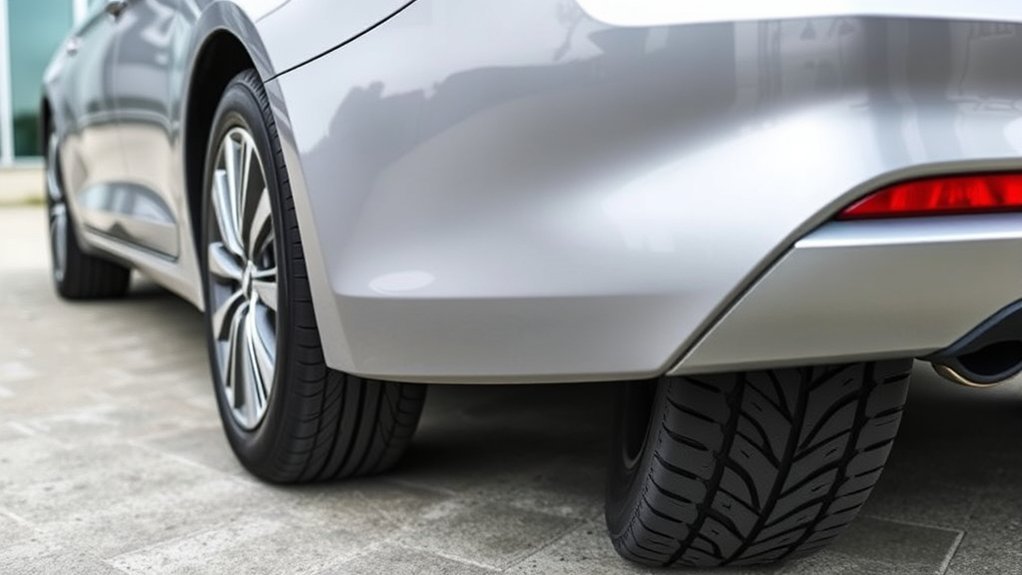
Checking tire wear before rotation helps you catch problems early. A simple tread-depth gauge gives the best reading, but the penny test can help you spot tires near the minimum tread depth.
- Measure tread depth across the tire. Check the inner, center, and outer grooves. If one side is lower than the other, alignment or suspension wear may be involved.
- Use the 2/32-inch rule. In the U.S., a tire at 2/32 inch tread depth is at the common legal replacement minimum. Bridgestone’s tire safety guidance also uses 2/32 inch as the minimum replacement threshold.
- Use a penny for a quick check. Insert a penny into the tread with Lincoln’s head facing down. If the top of his head is visible, the tire is around 2/32 inch and should be replaced.
- Look for feathering or cupping. Feathered tread can point to alignment issues. Cupping can point to worn suspension parts or imbalance.
- Check tire pressure cold. Hyundai says cold tires are tires that have been parked at least three hours or driven less than one mile. Do not bleed air from hot tires just because the reading looks higher.
Hyundai owner information says the tire label on the driver-side center pillar or door area gives the recommended cold tire pressure for your vehicle. Use that placard first because pressure can vary by tire size and model year.
Note: If your tires show severe inner-edge wear, outer-edge wear, cupping, exposed cord, or repeated pressure loss, fix the cause before rotating. Rotation can spread wear, but it cannot repair a damaged tire or bad alignment.
Top Tips for Sonata Tire Health and Performance
Good tire maintenance is more than moving tires around the car. Use these habits to get safer handling and more even tread wear from your Hyundai Sonata:
- Rotate on schedule. Use Hyundai’s 8,000-mile guidance, or rotate sooner if you see irregular wear.
- Check pressure monthly. Use the cold tire pressure on the driver-side placard, not the maximum pressure printed on the tire sidewall.
- Inspect tread before long trips. Measure multiple grooves on each tire because one edge can wear faster than the rest.
- Balance when needed. If vibration appears after rotation, ask for wheel balancing and a tire inspection.
- Align when wear patterns show it. A rotation will not solve feathering, one-sided shoulder wear, or a constant pull.
- Keep lug torque correct. Over-tightening can damage studs or rotors; under-tightening can be dangerous.
- Replace damaged tires. Do not rotate tires with bulges, exposed cord, tread separation, or sidewall cuts.
Frequently Asked Questions
How do you rotate tires on a Hyundai Sonata?
For most FWD Hyundai Sonata models with same-size, non-directional tires, move the front tires straight back to the rear on the same sides. Then cross the rear tires to the opposite front positions. That means left rear goes to right front, and right rear goes to left front.
What is the tire rotation pattern for a front-wheel-drive Sonata?
The standard pattern is the forward-cross pattern. The front tires move straight back, and the rear tires cross to the opposite front positions. Use this only when all four tires are the same size and are not directional.
How often should Hyundai Sonata tires be rotated?
Hyundai recommends rotating tires every 8,000 miles or sooner if irregular wear develops. If you drive aggressively, carry heavy loads, drive on rough roads, or notice fast front-tire wear, a shorter interval may be smart.
Does a front-wheel-drive car really need tire rotation?
Yes. FWD vehicles usually wear the front tires faster because the front tires steer, brake, and drive the vehicle. Rotation helps equalize tread wear and gives you a chance to inspect tire pressure, tread depth, and damage.
Can I include the spare tire in a Sonata tire rotation?
Only include the spare if it is a full-size matching tire and wheel that is safe for regular use. Do not include a compact temporary spare in the rotation. Compact spares are for temporary emergency use only.
Should I rotate tires if one tire is badly worn or damaged?
No. A badly worn, bulging, cracked, separated, or cord-exposed tire should be inspected and replaced if needed. Rotating a damaged tire can move the problem to another position but will not make the tire safe.
Conclusion
For most front-wheel-drive Hyundai Sonata models, the right tire rotation pattern is simple: front tires straight back and rear tires crossed to the front. Rotate around Hyundai’s 8,000-mile interval, check sooner if wear is uneven, and always confirm tire type before crossing sides. A careful rotation, pressure check, tread inspection, and proper lug-nut torque can help your Sonata ride smoothly, wear tires evenly, and stay safer on the road.
Sources
- Hyundai Owner’s Manual — Tire Rotation — supports the 8,000-mile interval, uneven-wear inspection, pressure check, lug-nut torque, and compact-spare warning.
- Hyundai Owner’s Manual — Tire Specification and Pressure Label — supports using the driver-side tire label for recommended tire pressure.
- Tire Industry Association — Tire Rotation — supports FWD forward-cross rotation guidance and directional-tire exceptions.
- NHTSA TireWise — supports tire-pressure, tread, rotation, TPMS, and tire-safety checks.
- Bridgestone Americas — Tire Replacement Guidance — supports the 2/32-inch tread-depth replacement threshold.
- Tire Rack — Tire Rotation Instructions — supports directional, staggered, and full-size matching spare rotation guidance.