Can You Mix Nitrogen and Air in Hyundai Sonata Tires? Answered
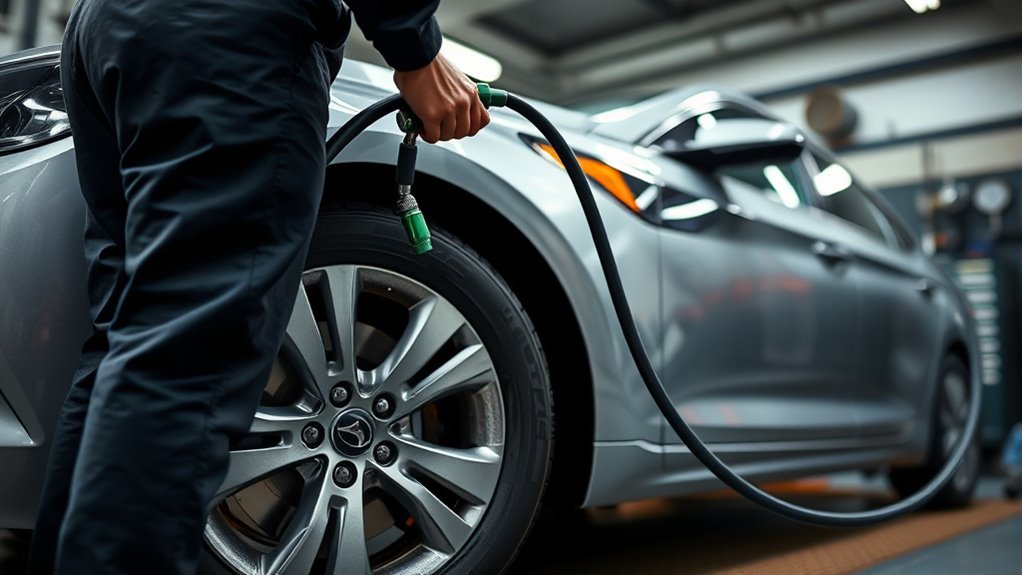
If your Hyundai Sonata has nitrogen-filled tires and one tire is low, you do not need to hunt for a nitrogen pump before adding pressure. Regular compressed air can be used to top off the tire safely. The important part is keeping every tire at the cold PSI listed on your Sonata’s door placard or owner’s manual.
Quick Answer
Yes, you can mix nitrogen and regular air in Hyundai Sonata tires. It will not damage the tire, wheel, valve stem, or TPMS. Mixing simply lowers the nitrogen purity, so any small pressure-retention benefit from nitrogen may be reduced. If a tire is low, adding air is safer than driving underinflated.
Key Takeaways
- Nitrogen and air can be mixed; the U.S. Tire Manufacturers Association says they can be mixed in any proportion.
- Your Sonata’s TPMS monitors low tire pressure, not whether the tire contains nitrogen or regular air.
- Use the cold PSI on the driver’s door jamb tire label or in the owner’s manual, not the maximum PSI printed on the tire sidewall.
- Check tire pressure monthly, before long trips, and after big temperature swings, even if the tires are filled with nitrogen.
- For everyday Sonata driving, regular air maintained at the correct PSI is usually the most convenient and cost-effective choice.
At a Glance
| Time Required | About 5 minutes to check and top off all four tires |
| Difficulty | Easy |
| Tools Needed | Tire pressure gauge, air pump or compressor, valve caps, and your Sonata tire placard or owner’s manual |
| Cost | Regular air is often free or low-cost; nitrogen service varies by shop and may be included with some tire packages |
Can You Safely Mix Air and Nitrogen in Your Hyundai Sonata Tires?
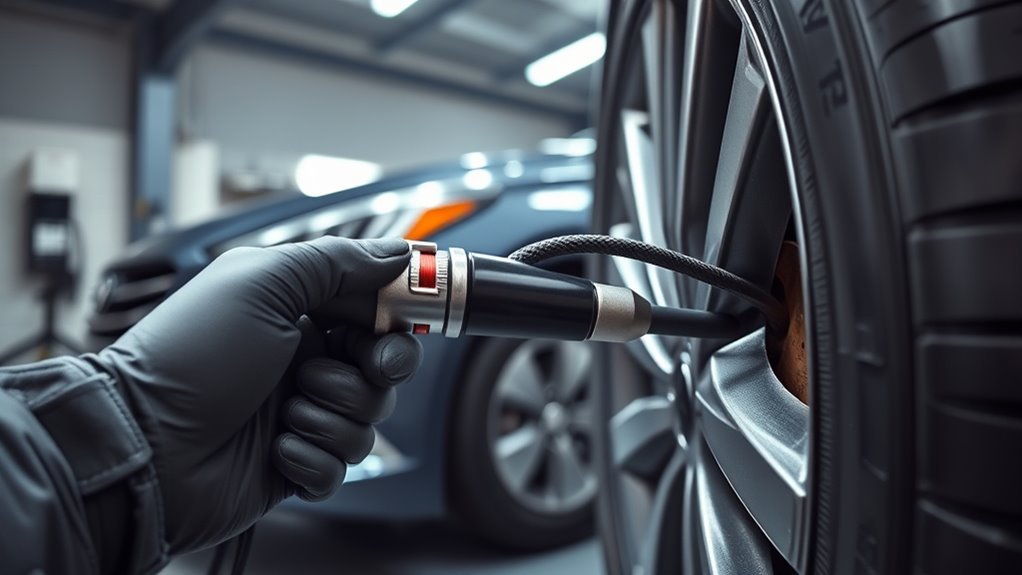
Yes. It is safe to add regular air to nitrogen-filled Hyundai Sonata tires. Nitrogen and air do not react in a way that harms the tire. Regular air already contains about 78% nitrogen, and the U.S. Tire Manufacturers Association says nitrogen and air can be mixed in any and all proportions.
The only downside is dilution. If the tire was filled with a higher-nitrogen mix, adding regular air lowers the nitrogen percentage and reduces the small benefits of dry nitrogen, such as slightly slower pressure loss and less internal moisture. The tire remains safe as long as it is inflated to the correct pressure.
Warning: Do not drive far on a significantly underinflated tire just to find nitrogen. Add regular air to the proper PSI, then recheck the tire when it is cold. If the tire will not hold pressure, install the spare if equipped or call roadside assistance.
[Products Worth Considering]

The JACO FlowPro Tire Inflator measures, inflates, and airs down tires up to 100 PSI with battery-free operation and ±2% accuracy after calibration. It features a glowing pressure dial for night visibility, a heavy-duty steel build with a hybrid hose, and a precision push-to-inflate thumb trigger. The patented Lightning Air Chuck locks on for a secure seal, and the kit includes quick-connect hardware for easy inline use with your air compressor.

This portable cordless tire inflator delivers up to 160 PSI with fast 17 L/min airflow to help you quickly top up tires and get back on the road. It features dual power mode, running on a 21V rechargeable battery or a 12V DC adapter for convenient roadside use. An automatic shut-off with digital pressure gauge helps prevent overinflation, and a built-in LED light improves visibility in low-light conditions.

EVOULTES heavy duty tire inflator with an integrated gauge delivers accurate pressure readings from 10–120 PSI, helping you inflate, deflate, and check tires in one tool. The 16.5-inch extended dual-head air chuck with swivel base reaches hard-to-access dual wheel valves on trucks and RVs. A brass trigger core and side-mounted air release valve make operation smooth, with standard 1/4" NPT threading and quick-connect compatibility for easy setup.
What Are the Benefits of Nitrogen-Filled Tires vs. Air?
Nitrogen can have small advantages, but they are often less dramatic than tire shops or green valve caps make them sound. The biggest benefit is that nitrogen is dry and contains less oxygen than regular compressed air. That can reduce internal moisture and may slightly reduce pressure loss over time.
For normal passenger-car use, the USTMA says nitrogen inflation is permissible but not necessary. Correct tire pressure matters more than the gas itself. A Sonata with regular air at the correct cold PSI is safer and more efficient than a nitrogen-filled Sonata running low.
| Factor | Nitrogen | Regular Air |
|---|---|---|
| Safety when properly inflated | Safe | Safe |
| Pressure retention | May be slightly better | Works well with regular checks |
| Moisture content | Lower when filled correctly | Depends on compressor quality |
| Availability | Limited to shops with nitrogen equipment | Widely available |
| Best for | Drivers who already have nitrogen service included or want a dry fill | Most everyday Sonata drivers |
How Does Mixing Air With Nitrogen Affect Tire Performance?
Mixing air with nitrogen mainly changes the gas blend inside the tire. It does not create a chemical problem, damage the tire, or confuse the tire pressure sensor. What it can do is reduce the purity of the nitrogen fill, which means the tire behaves more like a regular air-filled tire over time.
Pressure Consistency Impact
Nitrogen may reduce pressure loss slightly, but it does not eliminate pressure changes. Tire pressure still drops from leaks, punctures, valve-stem problems, bead leaks, and temperature changes. This is why the USTMA says nitrogen is not a replacement for regular pressure maintenance.
After mixing air and nitrogen, treat the tire like any other tire: check it cold every month, before long trips, and whenever the weather changes sharply.
The safest tire is not the one with the purest nitrogen; it is the one inflated to the correct cold PSI.
Performance Benefits Assessment
For everyday Hyundai Sonata driving, you are unlikely to feel a handling, braking, or ride-quality difference from mixing air and nitrogen. The real performance issue is underinflation. Underinflated tires can wear faster, reduce fuel economy, increase heat, and affect stopping distance.
FuelEconomy.gov notes that properly inflated tires can improve gas mileage by 0.6% on average, and underinflated tires can lower gas mileage by about 0.2% for every 1 PSI drop in the average pressure of all tires. That benefit comes from maintaining correct pressure, not from nitrogen alone.
How Does the Tire Pressure Monitoring System (TPMS) Work?
Your Sonata’s Tire Pressure Monitoring System is designed to warn you when tire pressure is significantly low. It does not measure nitrogen purity, oxygen content, or moisture content. Whether the tire contains air, nitrogen, or a mixture, the system is concerned with pressure-related tire behavior.
How TPMS Functions
TPMS systems vary by vehicle and model year. Some systems use pressure sensors in the wheels, while others estimate pressure problems through wheel-speed and tire-behavior changes. Hyundai’s owner information explains that the system may detect low pressure through sensors that monitor changes in tire radius and vibration while driving.
Federal TPMS rules require the warning system to alert drivers when a tire is significantly underinflated, but TPMS is not a substitute for checking tire pressure with a gauge. A tire can be low enough to hurt fuel economy or tread wear before the warning light appears.
What to Do if the TPMS Light Comes On
- Slow down, avoid hard cornering, and find a safe place to stop.
- Check all four tires with a gauge, not just the tire shown on the display.
- Inflate each tire to the cold PSI listed on the driver’s door jamb tire label or in the owner’s manual.
- If you checked the tires while warm, recheck them later when the car has been parked long enough for a cold reading.
- If one tire keeps losing pressure, have it inspected for a puncture, valve leak, bead leak, or wheel damage.
Importance of Regular Maintenance
Check the pressure of all tires at least once a month when they are cold. NHTSA also recommends checking tire pressure before long trips and using the vehicle manufacturer’s recommended PSI from the tire label or owner’s manual, not the maximum pressure molded into the tire sidewall.
Pro Tip: Keep a small digital or dial tire pressure gauge in the glove box. Gas-station gauges can be inaccurate or damaged, and your Sonata’s TPMS should be treated as a warning system, not your only pressure-checking tool.
How Often Should You Check Tire Pressure With Mixed Gases?

Check mixed nitrogen-and-air tires the same way you check any other tires: at least once a month when cold, before long trips, and after major temperature changes. You do not need a special schedule just because the tire contains both gases.
Hyundai defines cold tires as tires that have not been driven for at least three hours or have been driven less than 1 mile. Warm tires often read 4 to 6 PSI higher than the recommended cold pressure, so do not bleed air from a warm tire just because the reading looks high.
Note: If you top off a low tire while it is warm, add enough air to make the tire safe, then recheck and fine-tune the pressure the next morning or after the car has been parked for several hours.
How Does Temperature Affect Your Tire Pressure?
Temperature affects tire pressure whether the tire is filled with air, nitrogen, or a mixture. As temperatures drop, pressure drops. As temperatures rise or the tire heats up during driving, pressure rises.
A common rule of thumb is that tire pressure changes by about 1 PSI for every 10°F change in temperature. This is why a Sonata’s TPMS light may appear on cold mornings even if the tire was properly inflated during warmer weather.
When the weather shifts from warm to cold, check all four tires and adjust them to the recommended cold PSI. If the pressure warning keeps returning after adjustment, do not assume it is only the weather; inspect for leaks or tire damage.
How to Top Off a Nitrogen-Filled Hyundai Sonata Tire With Regular Air
- Find the correct PSI. Open the driver’s door and read the Tire and Loading Information label on the door jamb or check the owner’s manual.
- Check pressure when cold if possible. For the most accurate reading, check after the car has been parked for at least three hours.
- Remove the valve cap. Keep it somewhere clean so dirt does not get into the valve stem.
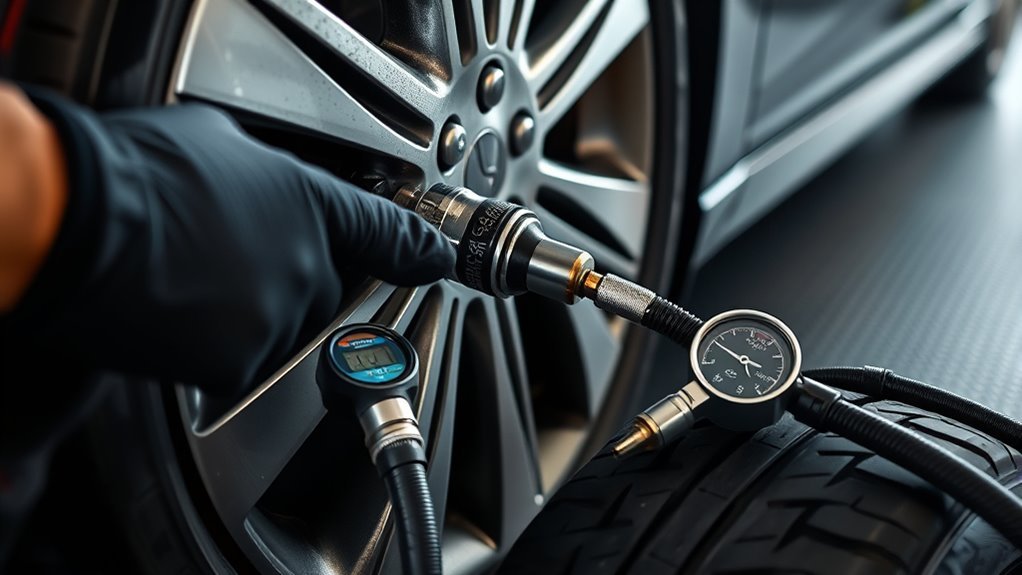
- Measure the pressure with a gauge. Press the gauge straight onto the valve stem to avoid air leakage.
- Add regular air if the tire is low. Add small bursts, then recheck the pressure until it matches the recommended cold PSI.
- Reinstall the valve cap. A missing cap can allow dirt and moisture into the valve area.
- Recheck later. If the tire was warm during filling, recheck cold pressure later. If it keeps losing pressure, have the tire inspected.
[Products Worth Considering]

The Fanttik X10 Pro is a cordless portable tire inflator that reaches up to 150 PSI and can inflate an R15 tire in about 35 seconds for quick roadside or home top-ups. With AccuInFlate auto-stop and smart start/stop controls, it helps maintain accurate pressure and frees your hands once the target is reached. A high-visibility digital display and preset modes make it easy to set and monitor inflation for cars, motorcycles, bikes, and balls.

The AstroAI L7 Air Tire Inflator refills car tires quickly with up to 150PSI max pressure and a fast 1-minute inflation claim. It includes 5 preset modes for car, motorcycle, bicycle, balls, and manual use, along with an auto shutoff to help prevent overinflation. Designed for convenience, it features a digital gauge with unit switching, a top LED light with multiple modes, and USB-C/USB ports for backup power.
How to Transition From Air to Nitrogen in Your Tires
If you want the highest practical nitrogen concentration, do not fully deflate your mounted tires at home. Instead, ask a tire shop with nitrogen equipment to purge and refill the tires. Shops that offer nitrogen service can remove much of the regular air and refill the tire to the correct pressure with nitrogen.
After the nitrogen fill, check each tire against your Sonata’s cold PSI. Then keep the same monthly pressure-check habit. Nitrogen may reduce pressure loss slightly, but it does not prevent punctures, valve leaks, bead leaks, seasonal pressure changes, or normal maintenance needs.
Debunking Myths About Nitrogen in Tires
Nitrogen can be useful, but several common claims are exaggerated. Here is what Sonata drivers should know:
- Myth: You can never add air to nitrogen tires. False. Add air whenever nitrogen is not available and the tire is low.
- Myth: Nitrogen means you can stop checking pressure. False. Regular pressure maintenance is still required.
- Myth: TPMS can tell whether a tire has nitrogen. False. TPMS warns about pressure problems, not gas purity.
- Myth: Nitrogen-filled tires never lose pressure. False. Tires can still lose pressure through punctures, valves, beads, wheels, and temperature changes.
- Myth: Nitrogen automatically improves fuel economy. Misleading. Correct tire pressure supports fuel economy; nitrogen only helps if it helps you maintain correct pressure.
When to Choose Regular Air Over Nitrogen for Tires
Choose regular air when the tire is low and nitrogen is not nearby, when you want the fastest and least expensive top-off, or when you drive under normal everyday conditions. For most Hyundai Sonata owners, regular air plus monthly cold-pressure checks is the practical choice.
Nitrogen may still make sense if it is included free with your tire purchase, if your tire shop routinely maintains it, or if you prefer a drier tire fill. But it should never stop you from adding regular air when pressure is low.
Frequently Asked Questions
Can I add regular air to nitrogen-filled Hyundai Sonata tires in an emergency?
Yes. Add regular air if the tire is low and nitrogen is not available. Driving on an underinflated tire is the bigger risk. You can return to a tire shop later if you want the tire purged and refilled with nitrogen.
Will mixing air and nitrogen damage my TPMS?
No. TPMS is designed to monitor tire pressure, not the type of gas inside the tire. Mixing air and nitrogen will not damage the TPMS sensors or make the system unable to warn you about low pressure.
Do I need to remove all the air before switching to nitrogen?
Only if you want the highest practical nitrogen purity. Have a tire shop purge and refill the tires instead of fully deflating them yourself. For normal driving, topping off with air is safe and acceptable.
How much does it cost to refill nitrogen tires?
Nitrogen pricing varies by shop. Some tire retailers include nitrogen refills with a tire package, while others charge per tire or per visit. Regular compressed air is usually easier to find and often free or low-cost.
Is nitrogen better than air for everyday Sonata driving?
Nitrogen may offer small benefits, mainly reduced moisture and slightly slower pressure loss. For everyday driving, those benefits are usually less important than checking pressure monthly and keeping the tires at the correct cold PSI.
Should I use the PSI on the tire sidewall?
No. Use the recommended cold tire pressure on your Hyundai Sonata’s driver-side door jamb label or in the owner’s manual. The tire sidewall usually shows maximum pressure, not the correct pressure for your vehicle.
Conclusion
You can safely mix nitrogen and regular air in your Hyundai Sonata tires. The mixture will reduce nitrogen purity, but it will not damage the tire or TPMS. If a tire is low, top it off with regular air rather than driving underinflated. For the best safety, ride quality, tread life, and fuel economy, check all tires monthly when cold and inflate them to the PSI listed on your Sonata’s tire placard or owner’s manual.
Sources
- U.S. Tire Manufacturers Association — Using Nitrogen to Inflate Passenger and Light Truck Tires — supports nitrogen/air mixing, nitrogen’s limited normal-service benefits, and regular pressure maintenance.
- Hyundai Owner’s Manual — Recommended Cold Tire Inflation Pressures — supports cold tire checks, warm tire pressure differences, and underinflation warnings.
- Hyundai Owner’s Manual — Low Tire Pressure Telltale — supports TPMS warning response and low-pressure safety concerns.
- NHTSA TireWise — Tire Safety Ratings and Awareness — supports monthly cold-pressure checks, door-jamb placard guidance, and TPMS basics.
- FuelEconomy.gov — Keeping Your Vehicle in Shape — supports the fuel-economy impact of proper tire inflation.
- eCFR — 49 CFR 571.138 Tire Pressure Monitoring Systems — supports federal TPMS detection and owner-manual maintenance language.

Related Articles

7 Winter Tires to Keep Your Hyundai Sonata Safe This Season
You rely on your Hyundai Sonata every day, and winter roads can turn routine drives into risky trips. Choosing the right tires improves safety,…
Read More
7 Snow Tires That Will Transform Your Hyundai Sonata This Season
You rely on your Hyundai Sonata for daily drives, and winter changes everything about traction and stopping distance. Choosing the right tire is one…
Read More
10 Must-Have Summer Tires for Your Hyundai Sonata This Spring
You want a safe, quiet and predictable ride when the temperatures rise, and choosing the right set of summer or touring tires makes a…
Read More