Do TPMS Sensors Reset After Tire Rotation on Hyundai Sonata?
If you just rotated the tires on a Hyundai Sonata and the tire pressure warning is still on, do not assume the sensors failed. Some Sonata TPMS systems update after driving, while others need you to save/reset the tire pressures through the cluster menu. The safest answer depends on your model year, trim, and the TPMS type your Sonata uses.
Quick Answer
Hyundai Sonata TPMS sensors do not reset the same way on every model. Some systems update after you set the correct cold tire pressure and drive for a few minutes. Other Hyundai TPMS systems should be reset after tire rotation, tire replacement, or pressure adjustment using the cluster’s Tire Pressure/Set menu if your Sonata has it.
Key Takeaways
- Always set all four tires to the cold PSI listed on the driver-side door placard before judging the TPMS.
- If your Sonata has a Tire Pressure reset option in the cluster, reset it after rotating tires or adjusting pressure.
- If your Sonata has direct TPMS sensors and no reset menu, drive for a few minutes after inflation so the display can update.
- A TPMS light that flashes for about one minute and then stays on usually points to a system fault, not simple low pressure.
- If the light stays on after correct pressure, reset, and a short drive, have the sensors and TPMS module checked.
At a Glance
| Time Required | 5–20 minutes, depending on whether your Sonata needs only a pressure check, a cluster reset, or a short drive cycle. |
| Difficulty | Easy for pressure checks and menu resets; moderate if a TPMS tool or sensor diagnosis is needed. |
| Tools Needed | Accurate tire pressure gauge, air compressor, your Sonata owner’s manual, and a TPMS scan tool if the warning does not clear. |
| Cost | Usually free if pressure is the issue; diagnostic or sensor replacement costs vary by shop, sensor type, and model year. |
Do TPMS Sensors Reset Automatically After Tire Rotation?
Sometimes they do, but not always. A Hyundai Sonata may use a system that updates tire pressure readings after you drive, or it may use a reset procedure that stores the current tire pressures after tire rotation. That is why one owner may see the warning clear automatically, while another may need to use the Tire Pressure menu.
The most accurate rule is simple: check your exact Sonata owner’s manual first. Hyundai’s owner manual resources explain that TPMS details vary by vehicle, and Hyundai’s digital manual reset procedure says TPMS should be reset after rotating the position of a tire or wheel, after adjusting tire pressure, and after replacing or repairing a tire or wheel.
For model-specific instructions, start with the official Hyundai manuals and warranties page or the Hyundai digital owner’s manual.
Note: Do not rely only on internet advice that says “all 2016 and newer Sonatas reset automatically.” TPMS procedures can vary by year, trim, market, wheel type, and whether the vehicle uses a direct sensor system or a reset-based system.
[Products Worth Considering]

EVOULTES heavy duty tire inflator with an integrated gauge delivers accurate pressure readings from 10–120 PSI, helping you inflate, deflate, and check tires in one tool. The 16.5-inch extended dual-head air chuck with swivel base reaches hard-to-access dual wheel valves on trucks and RVs. A brass trigger core and side-mounted air release valve make operation smooth, with standard 1/4" NPT threading and quick-connect compatibility for easy setup.
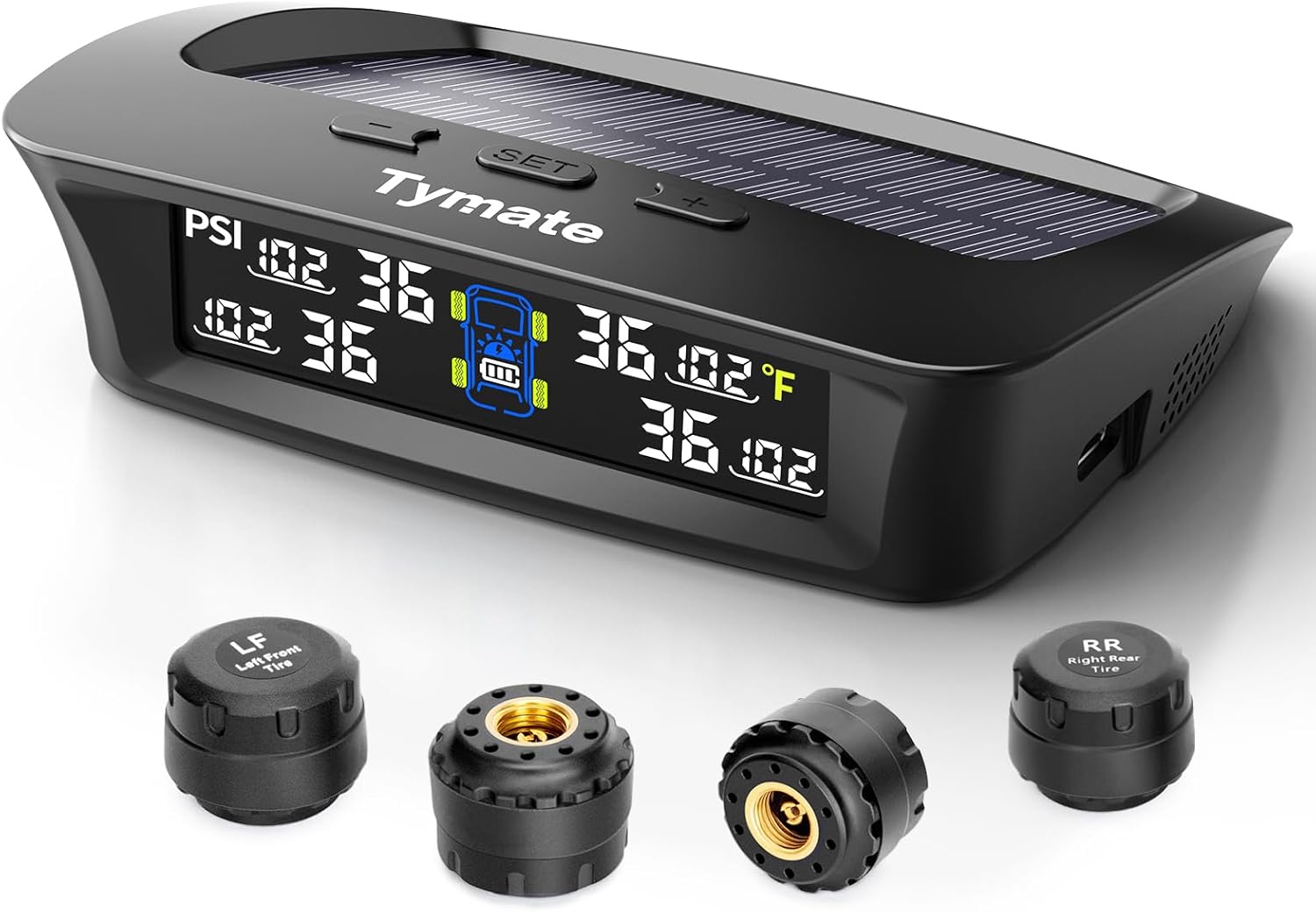
The Tymate TM3 RV TPMS delivers real-time tire pressure monitoring from 0 to 144 PSI with accurate readings and dependable wireless communication. It includes four external sensors with pre-pairing, six alarm modes for rapid leak, pressure extremes, temperature, and signal loss, plus an easy-reference setup for alert thresholds. Solar and USB-C charging help keep the display powered, while the color LCD and adaptive backlight improve visibility for safer driving and towing.

The Fanttik X10 Pro is a cordless portable tire inflator that reaches up to 150 PSI and can inflate an R15 tire in about 35 seconds for quick roadside or home top-ups. With AccuInFlate auto-stop and smart start/stop controls, it helps maintain accurate pressure and frees your hands once the target is reached. A high-visibility digital display and preset modes make it easy to set and monitor inflation for cars, motorcycles, bikes, and balls.
Check Tire Pressures Before You Reset Anything
Before you try to reset the TPMS, check all four tires with a good tire pressure gauge. Use the cold tire pressure listed on the driver-side door placard, not the maximum PSI printed on the tire sidewall.
- Park the Sonata on a level surface and let the tires cool. A cold tire usually means the vehicle has been parked for several hours or driven less than about 1 mile.
- Open the driver door and find the tire information placard on the door jamb or center pillar.
- Check all four tires with a gauge.
- Inflate or release air until each tire matches the placard pressure.
- Reinstall all valve caps tightly to keep dirt and moisture out of the valve stems.
Warning: If one tire is very low, will not hold air, or the car feels unstable, do not keep driving just to “clear the TPMS light.” Pull over safely, inspect the tire, and use roadside assistance or professional tire service if needed.
How to Reset Hyundai Sonata TPMS After Tire Rotation
After the pressure is correct, the next step depends on what your Sonata shows in the instrument cluster.
If Your Sonata Has a Tire Pressure Reset Menu
Some Hyundai TPMS systems let you save the current tire pressures through the steering-wheel controls and cluster menu. If your Sonata has this feature, use it after a tire rotation.
- Set all four tires to the recommended cold tire pressure.
- Park the vehicle safely.
- Use the steering-wheel controls to open the cluster menu.
- Select Tire Pressure.
- Press and hold OK, then choose Set if prompted.
- Confirm that the warning light blinks or that the cluster stores the tire pressures.
- Drive normally and recheck the warning light and pressure display.
Hyundai’s digital owner manual reset procedure explains this type of reset and says it should be done after rotating tire or wheel positions, repairing or replacing a tire or wheel, adjusting tire pressure, or when the low tire pressure warning light is on.
If Your Sonata Does Not Have a TPMS Reset Menu
Many direct TPMS systems do not give the driver a simple reset button. Instead, each wheel has a pressure sensor, and the display updates after the vehicle is driven. In that case, set the tire pressure correctly, drive for a few minutes, and then check whether the tire pressure display and warning light update.
If the light stays on after correct pressure and normal driving, do not keep repeating random reset tricks. The system may need sensor registration, a TPMS scan tool, a sensor battery diagnosis, or inspection by a Hyundai-trained technician.
Pro Tip: After rotating tires, write down the cold PSI for each tire before and after the rotation. If one corner keeps dropping, you may have a slow leak rather than a TPMS reset problem.
What the TPMS Light Means After Tire Rotation
The TPMS warning pattern gives you a clue about what to check next.
| What You See | Most Likely Meaning | What to Do |
|---|---|---|
| Solid low tire pressure light | One or more tires may be below the stored or recommended pressure. | Check all four tires cold, inflate to the door placard, reset if your Sonata has a reset menu, then drive. |
| Light flashes for about one minute, then stays on | TPMS malfunction, sensor communication issue, weak sensor battery, interference, incompatible wheel, or missing sensor. | Check pressure first, then have the TPMS scanned if the warning returns. |
| Pressure values do not appear right away | Some systems show pressure only after a short drive. | Drive normally for a few minutes, then check the display again. |
| Light stays on after installing a spare | The spare may not have a TPMS sensor. | Repair and reinstall the original sensor-equipped wheel, then check whether the light clears after driving. |
The Importance of Tire Pressure Monitoring for Safety and Performance

TPMS is a safety backup, not a replacement for checking tire pressure. Federal TPMS rules define the system as a warning system for significant under-inflation, which means a tire can still be low before the warning appears. That is why Hyundai and federal safety guidance still recommend regular manual pressure checks.
Correct pressure helps your tires wear evenly, keeps handling predictable, and reduces heat buildup. Under-inflated tires can overheat and fail, and they may also reduce fuel economy. FuelEconomy.gov says under-inflated tires can lower gas mileage by about 0.2% for every 1 PSI drop in the average pressure of all tires, while proper inflation can improve gas mileage by 0.6% on average and up to 3% in some cases.
A TPMS light is not just a dashboard nuisance. It is a warning to stop guessing, check the tires cold, and confirm whether the system needs a reset or diagnosis.
Common Issues With TPMS Sensors
If the TPMS light stays on after a tire rotation, the cause is usually one of these issues:
- Pressure was checked while the tires were hot. Warm tires read higher, so a tire that looks correct after driving may be low the next morning.
- Only one tire was checked. Always check all four tires. The display may not update immediately after a rotation.
- The system was not reset when required. If your Sonata has a reset menu, use it after rotation or pressure adjustment.
- A sensor is weak or damaged. TPMS sensor batteries are sealed inside the sensor and eventually wear out.
- A wheel or tire is incompatible. Replacement wheels should support the correct TPMS sensors.
- A spare tire is installed. Some spare tires do not include a TPMS sensor, so the light may remain on until the original wheel is repaired and reinstalled.
- Unapproved tire sealant was used. Some sealants can damage tire pressure sensors.
Tire Rotation Tips for Accurate TPMS
A clean tire rotation helps the TPMS update correctly and makes troubleshooting easier.
- Before rotation, record each tire’s pressure and visible condition.
- Rotate tires using the pattern recommended for your tire type and drivetrain.
- Set all four tires to the door-placard cold PSI after the rotation.
- Reset TPMS if your cluster provides a Tire Pressure/Set option.
- Drive normally and watch for pressure readings to update.
- Recheck pressure the next morning when the tires are cold.
Note: If your Sonata shows individual tire positions, a rotation can make the display confusing until the system relearns or is serviced. If the displayed corner does not match the actual low tire after rotation, ask a tire shop or Hyundai dealer to check sensor position learning.
[Products Worth Considering]
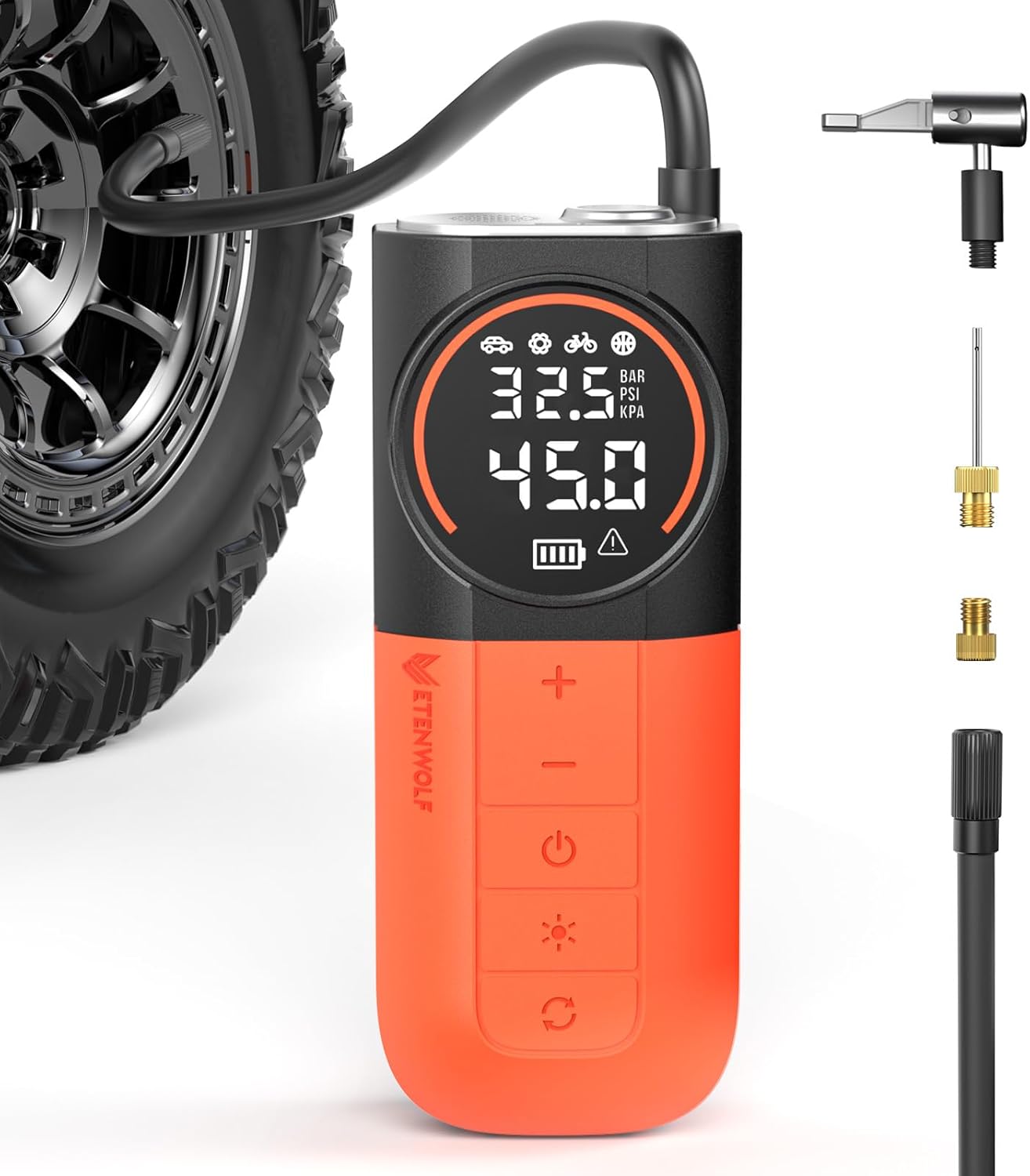
The ETENWOLF S1 cordless tire inflator delivers ultra-fast inflation with up to 160 PSI and a 20 L/min airflow for quicker tire top-offs. Its 5200mAh battery and cooling system support inflating many tires and sports balls on a single charge, while the digital pressure gauge and multi-unit display help you reach the right pressure accurately. With preset modes, pressure memory, an auto-stop feature, and an LED flashlight, it’s built for easy roadside and everyday use.

The JACO FlowPro Tire Inflator measures, inflates, and airs down tires up to 100 PSI with battery-free operation and ±2% accuracy after calibration. It features a glowing pressure dial for night visibility, a heavy-duty steel build with a hybrid hose, and a precision push-to-inflate thumb trigger. The patented Lightning Air Chuck locks on for a secure seal, and the kit includes quick-connect hardware for easy inline use with your air compressor.
Real User Experiences With Hyundai’s TPMS
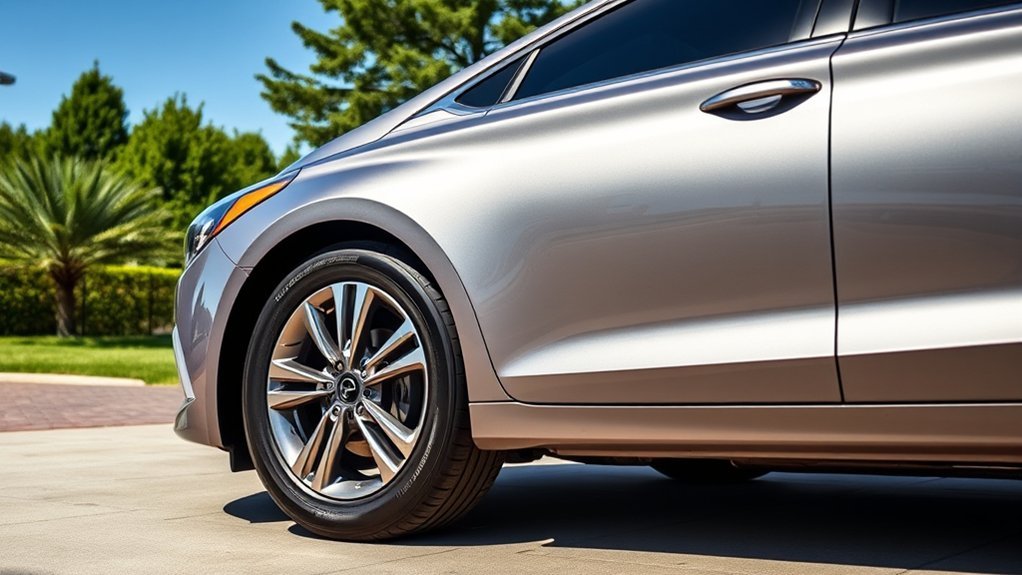
Sonata owners commonly describe two different experiences after tire rotation. Some see the tire pressure readings update after driving, especially when all four tires were set correctly. Others find that the light remains on until the pressure is saved through the cluster menu or the system is checked with a TPMS tool.
| Owner Experience | Likely Explanation | Best Response |
|---|---|---|
| Light clears after a short drive | The system received updated pressure readings. | Recheck cold pressure the next day. |
| Light stays on after rotation | Pressure is still low, reset was not performed, or a sensor issue exists. | Check all four tires cold, reset if available, then diagnose if needed. |
| Displayed tire position seems wrong | Sensor position may not have relearned after rotation. | Drive, then ask a shop to verify sensor locations if it remains incorrect. |
Understanding Your TPMS: Key Features and Benefits
Hyundai Sonata TPMS systems are designed to warn you when tire pressure is significantly low or when the monitoring system has a problem. The exact behavior depends on the system installed in your vehicle.
Direct TPMS vs Reset-Based TPMS
A direct TPMS uses sensors mounted inside the wheels, usually behind the valve stems, to send tire pressure data to the vehicle. A reset-based system may use wheel-speed and driving data to compare tire behavior after the driver saves the current pressure. Both systems require the correct tire pressure before they can work properly.
Unique Sensor Identification
On direct TPMS systems, each wheel sensor has an ID that the vehicle uses to recognize pressure signals. If a sensor is replaced, missing, damaged, or not registered correctly, the TPMS light may flash and stay on.
Automatic Learning Process
Some systems can update readings after driving. That does not mean every Sonata automatically resets perfectly after every tire rotation. If the owner’s manual says to reset TPMS after rotation, follow that instruction. If there is no driver reset menu and the light remains on, a TPMS scan tool may be needed.
Best Practices for Maintaining TPMS Functionality
- Check tire pressure at least monthly and before long trips.
- Check pressure when tires are cold for the most accurate reading.
- Use the PSI on the Sonata’s door placard.
- Replace missing valve caps.
- Do not ignore slow leaks, nails, bulges, cracks, or uneven wear.
- Use TPMS-compatible wheels and valve stems.
- Avoid tire sealants unless they are approved for your vehicle and situation.
- Have sensors tested when replacing tires, especially if the sensors are several years old.
When to Call in the Pros for TPMS Help?
Call a Hyundai dealer, tire shop, or qualified technician if the TPMS light will not clear after you complete the basic steps. Professional help is especially important when:
- The warning light flashes for about one minute and then stays on.
- The light remains on after all four tires are set to the correct cold pressure.
- The display does not show one or more tire pressures after driving.
- You recently replaced a wheel, tire, valve stem, or TPMS sensor.
- You installed a spare tire and the warning will not clear after reinstalling the repaired original wheel.
- The tire loses pressure again within a day or two.
- The TPMS display shows a different corner than the tire that is actually low.
A technician can scan each sensor, confirm sensor IDs, check battery status, test signal reception, and verify whether the vehicle needs a relearn procedure.
Frequently Asked Questions
Do I need to relearn TPMS sensors after tire rotation on a Hyundai Sonata?
Maybe. If your Sonata has a Tire Pressure reset or Set option, use it after tire rotation. If your Sonata uses direct TPMS with no driver reset menu, set the tire pressures correctly and drive for a few minutes. If the warning remains, a shop may need to perform a TPMS relearn or sensor diagnosis.
How do I reset a Hyundai Sonata TPMS sensor?
First, adjust all four tires to the recommended cold PSI on the driver-side door placard. If your cluster has a Tire Pressure menu, select Tire Pressure, press and hold OK, and choose Set if prompted. Then drive normally and check whether the warning clears. If your Sonata has no reset menu, drive after correcting pressure and seek service if the light stays on.
Why is my TPMS light still on after rotating tires?
The tire pressure may still be low, the tires may have been checked while warm, the system may need a reset, or a sensor may not be communicating. Check all four tires cold first. If the light flashes for about a minute before staying on, treat it as a TPMS malfunction and have the system scanned.
Can I drive with the Hyundai Sonata TPMS light on?
Drive only long enough to reach a safe place to check the tires. If pressure is correct and the car feels normal, you can usually drive to a tire shop for diagnosis. If a tire is very low, damaged, or the vehicle feels unstable, stop driving and get roadside or tire service.
Does the spare tire have a TPMS sensor?
Often, no. Many compact spare tires do not include a TPMS sensor. If a spare is installed, the TPMS warning may remain on until the original sensor-equipped wheel is repaired, inflated correctly, and reinstalled.
Should I inflate the tires to the number on the tire sidewall?
No. The tire sidewall usually shows the tire’s maximum pressure, not the recommended pressure for your Sonata. Use the cold tire pressure listed on the driver-side door placard or in the owner’s manual.
Conclusion
Hyundai Sonata TPMS sensors may update after a tire rotation, but you should not count on one automatic reset rule for every model year. Start with the basics: set all four tires to the correct cold PSI, use the Tire Pressure reset menu if your Sonata has one, and drive long enough for the display to update. If the TPMS light stays on, flashes, or shows the wrong tire position, have the system checked before assuming the sensors are bad.
Sources
- Hyundai Digital Owner’s Manual: Resetting TPMS — backs up the reset-menu steps and the situations when TPMS should be reset.
- Hyundai Digital Owner’s Manual: Tire Pressure Monitoring System — explains TPMS warnings and the need to save/reset current tire pressure for that system.
- Hyundai Service: Tires and TPMS — supports tire pressure monitoring, monthly pressure checks, and Hyundai service guidance.
- eCFR: 49 CFR § 571.138 Tire Pressure Monitoring Systems — defines federal TPMS performance requirements.
- FuelEconomy.gov: Keeping Your Vehicle in Shape — supports the fuel-economy impact of proper tire inflation.
- Hyundai Manuals and Warranties — official source for model-specific Hyundai owner manuals.

Related Articles

7 Winter Tires to Keep Your Hyundai Sonata Safe This Season
You rely on your Hyundai Sonata every day, and winter roads can turn routine drives into risky trips. Choosing the right tires improves safety,…
Read More
7 Snow Tires That Will Transform Your Hyundai Sonata This Season
You rely on your Hyundai Sonata for daily drives, and winter changes everything about traction and stopping distance. Choosing the right tire is one…
Read More
10 Must-Have Summer Tires for Your Hyundai Sonata This Spring
You want a safe, quiet and predictable ride when the temperatures rise, and choosing the right set of summer or touring tires makes a…
Read More