Nitrogen vs Air in Hyundai Sonata Tires: Is It Worth It?
Using nitrogen in your Hyundai Sonata tires can make sense in some situations, but it is not a must-have upgrade for most daily drivers. Nitrogen may slow pressure loss slightly compared with regular compressed air, yet the biggest factor for safety, fuel economy, tread life, and handling is still simple: keep all tires inflated to the cold PSI listed on your Sonata’s driver-door placard.
Quick Answer
Nitrogen can help Hyundai Sonata tires lose pressure a little more slowly, but it is usually not worth paying much extra for everyday driving. Regular air is already about 78% nitrogen and works well when you check cold tire pressure monthly, use the door-jamb PSI, and fix leaks promptly.
Key Takeaways
- Nitrogen has a modest pressure-retention advantage, but it does not remove the need for monthly tire-pressure checks.
- The correct Hyundai Sonata tire pressure is the cold PSI on the driver-door placard or owner’s manual, not the number molded into the tire sidewall.
- Regular air is the practical choice for most Sonata owners because it is easy to find, inexpensive, and safe when maintained properly.
- You can add regular air to a nitrogen-filled tire if the tire is low; correct pressure matters more than preserving nitrogen purity.
At a Glance
| Time Required | 5–10 minutes for a tire-pressure check |
| Difficulty | Easy |
| Tools Needed | Accurate tire-pressure gauge, air compressor or nitrogen fill source, valve caps |
| Cost | Regular air is often free or low-cost; nitrogen may be free, bundled with tire service, or fee-based depending on the shop |
Is Using Nitrogen in Tires Worth the Cost?
For most Hyundai Sonata owners, nitrogen is only worth it if it is included free or costs very little. The benefit is real, but small. In a long-term Consumer Reports nitrogen tire test, air-filled tires lost an average of 3.5 psi over one year, while nitrogen-filled tires lost 2.2 psi. That is a 1.3 psi difference over a full year.
That small improvement can help pressure stay stable a little longer, but it does not replace routine checks. Your Sonata’s tires can still lose pressure through the valve stem, bead seal, punctures, wheel damage, temperature swings, or normal seepage. A tire filled with nitrogen can still be unsafe if it is ignored.
Note: Regular compressed air is already mostly nitrogen. Nitrogen service mainly increases the nitrogen concentration and reduces oxygen and moisture inside the tire.
If you drive normally, check your tire pressure monthly, and have easy access to compressed air, regular air is usually the smarter value. If your shop includes nitrogen at no extra charge, there is no harm in using it as long as you still maintain the tires properly.
[Products Worth Considering]

The AstroAI 2 pack air chucks provide a heavy-duty, closed-flow locking design that helps keep air flowing during inflation while securely attaching to the valve stem. Built with 250 PSI rated brass components and compatible with Schrader valves, they feature 1/4" female NPT threads for a wide fit with common inflators. The straight tip and locking clip make filling tires and monitoring pressure more convenient.

The JACO FlowPro Tire Inflator measures, inflates, and airs down tires up to 100 PSI with battery-free operation and ±2% accuracy after calibration. It features a glowing pressure dial for night visibility, a heavy-duty steel build with a hybrid hose, and a precision push-to-inflate thumb trigger. The patented Lightning Air Chuck locks on for a secure seal, and the kit includes quick-connect hardware for easy inline use with your air compressor.
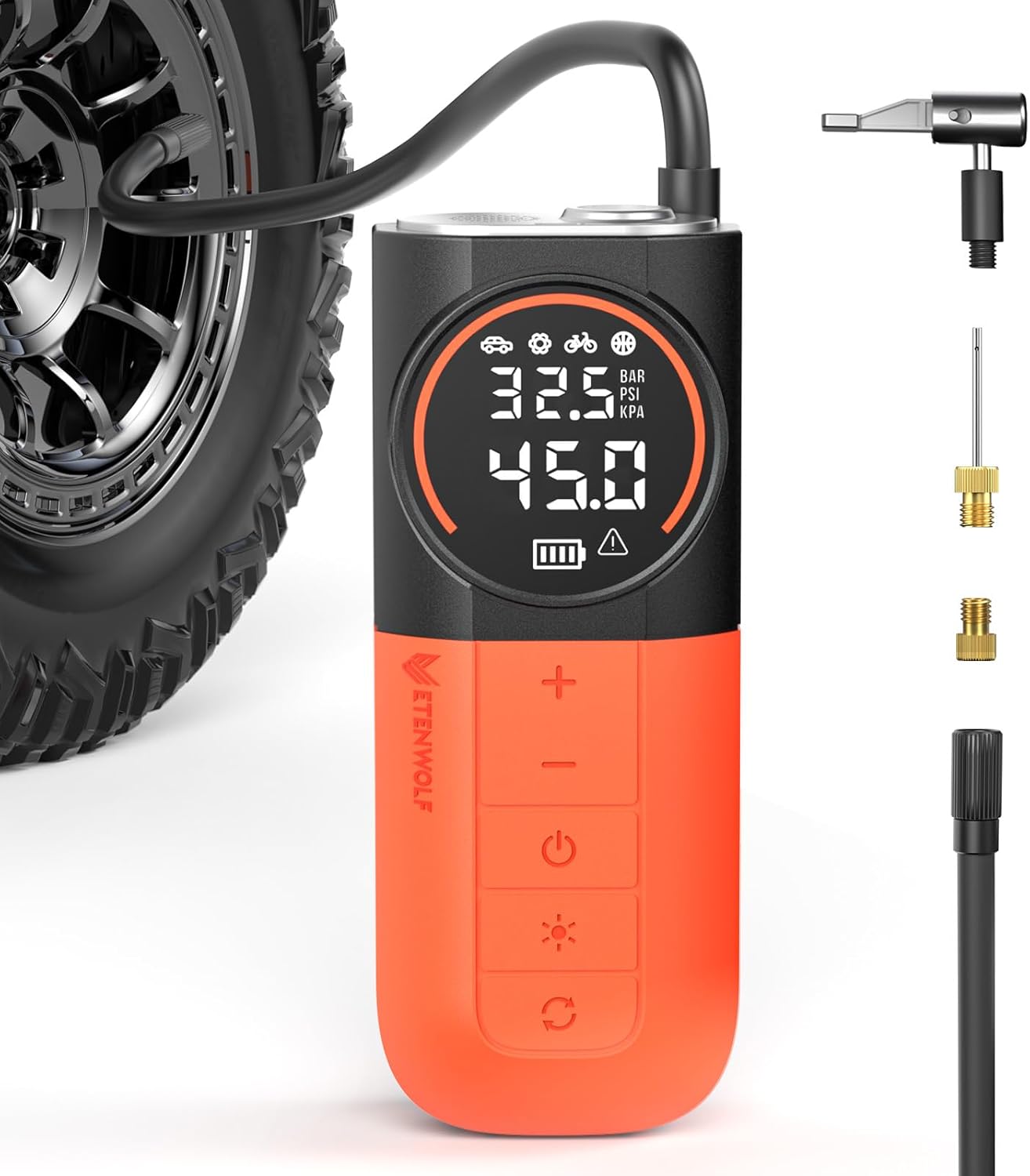
The ETENWOLF S1 cordless tire inflator delivers ultra-fast inflation with up to 160 PSI and a 20 L/min airflow for quicker tire top-offs. Its 5200mAh battery and cooling system support inflating many tires and sports balls on a single charge, while the digital pressure gauge and multi-unit display help you reach the right pressure accurately. With preset modes, pressure memory, an auto-stop feature, and an LED flashlight, it’s built for easy roadside and everyday use.
Benefits of Using Nitrogen in Your Hyundai Sonata Tires
Nitrogen has a few practical advantages, but they are best understood as small maintenance benefits rather than major performance upgrades.
- Slower pressure loss: Nitrogen can pass through tire rubber more slowly than oxygen, so pressure may drop a little more gradually.
- Less internal moisture: Proper nitrogen service uses dry nitrogen, which can reduce moisture inside the tire compared with damp shop air.
- More stable maintenance routine: If nitrogen helps your tires stay closer to the recommended PSI between checks, it may support even wear and predictable handling.
- Useful for some special uses: Nitrogen is more valuable for vehicles that sit for long periods, fleet maintenance, track use, or drivers who already have free access to nitrogen.
The key word is “support.” Nitrogen does not automatically improve traction, braking, fuel economy, or ride comfort. Proper pressure does. A Sonata with regular air at the correct cold PSI is safer than a Sonata with nitrogen-filled tires that are underinflated.
The real win is not the gas itself; it is keeping each tire at the correct cold inflation pressure.
Debunking Myths About Nitrogen for Tires
Nitrogen is often marketed like a premium upgrade, but several claims need context. Here is what matters before you pay for it.
Common Misconceptions Explained
Myth: Nitrogen means you do not have to check tire pressure.
False. Hyundai’s tire-pressure guidance says each tire should be checked monthly when cold and inflated to the pressure recommended on the vehicle placard or tire inflation label. That applies whether the tires contain air or nitrogen.
Myth: Nitrogen makes a Sonata handle better by itself.
Not exactly. Correct pressure helps handling. Nitrogen may help pressure drop a little more slowly, but it will not create a noticeable handling upgrade if both sets of tires are already inflated correctly.
Myth: You cannot mix nitrogen and regular air.
False. Michelin notes that nitrogen and compressed air can be mixed if needed. Adding air will reduce nitrogen purity, but it is safer to correct low pressure than to drive underinflated while looking for a nitrogen source.
Maintenance Still Required
Even nitrogen-filled tires need the same basic maintenance as air-filled tires. Check pressure monthly, check before long trips, inspect tread depth, look for sidewall cuts or bulges, and rotate tires according to the Sonata owner’s manual or service schedule.
The National Highway Traffic Safety Administration also warns that TPMS is not a replacement for regular tire maintenance. TPMS usually warns only after a tire is already significantly underinflated, so a manual gauge check is still important.
Warning: Do not wait for the TPMS light before checking pressure. Underinflation can increase heat, reduce tread life, hurt fuel economy, and affect handling and stopping ability.
Cost vs. Benefits Analysis
The best way to judge nitrogen is to compare the price with your real driving needs.
| Choose Nitrogen If | It is free or inexpensive, included with tire service, convenient to refill, or you want slightly slower pressure loss between checks. |
| Choose Regular Air If | You drive normally, check PSI monthly, want the lowest cost, or need easy refills anywhere. |
| Do Not Pay Extra If | The shop presents nitrogen as a fuel-economy miracle, a substitute for pressure checks, or a required safety upgrade for normal driving. |
How to Maintain Optimal Tire Pressure With Nitrogen
Maintaining nitrogen-filled tires is almost the same as maintaining air-filled tires. The goal is to keep each tire at the correct cold PSI for your Sonata.
Regular Pressure Checks
- Find the correct PSI. Open the driver’s door and read the tire and loading information label on the door jamb. Use that number, not the maximum PSI on the tire sidewall.
- Check pressure cold. For the most accurate reading, check after the car has been parked for at least three hours or before you drive far.
- Use a reliable gauge. Press the gauge squarely onto the valve stem and compare the reading with the placard PSI.
- Add nitrogen or air as needed. If nitrogen is available, use it. If the tire is low and nitrogen is not available, add regular air to reach the correct pressure.
- Recheck after filling. Confirm the final pressure and reinstall the valve cap.
Pro Tip: Keep a tire-pressure gauge in your glove box. A quick manual check is more useful than guessing from tire appearance because underinflation is often hard to see.
Seasonal Adjustments Needed
Temperature changes affect nitrogen and air. According to the U.S. Tire Manufacturers Association, tire pressure can increase in warm weather or decrease in cold weather by about 1–2 psi for every 10°F temperature change. That means your Sonata may need pressure adjustments when seasons change.
| Temperature Change | Typical PSI Effect | What to Do |
|---|---|---|
| 10°F drop | About 1–2 psi lower | Check cold PSI and add pressure if needed |
| 10°F rise | About 1–2 psi higher | Recheck cold before releasing pressure |
| Large seasonal swing | Several psi possible | Check monthly and before long trips |
Monitoring Temperature Effects
If your TPMS light comes on during a cold morning, do not ignore it. Cold weather can lower tire pressure enough to trigger the warning. Check all four tires with a gauge and inflate them to the Sonata’s recommended cold PSI. If one tire is repeatedly low, inspect for a nail, valve leak, damaged wheel, or bead-seal issue.
Do not bleed pressure from warm tires just because the reading is slightly above the placard number after driving. Tire pressure rises naturally as tires warm up. If you need the most accurate adjustment, wait until the tires are cold and check again.
Cost Considerations: Is Nitrogen Inflation Justified?
Nitrogen inflation is justified when the price is low and the service is convenient. It is harder to justify when a dealer or tire shop charges a high add-on fee and presents nitrogen as a major upgrade.
Ask these questions before paying:
- Is nitrogen included for free with tire installation? If yes, using it is fine.
- Are refills free? Nitrogen is less useful if you cannot conveniently top off the tires later.
- Do you check pressure monthly anyway? If yes, regular air will usually serve you well.
- Is the car stored for long periods? Nitrogen may be more attractive for vehicles that sit unused.
- Is the shop making exaggerated claims? Be cautious if nitrogen is sold as a cure for poor fuel economy, worn tires, or skipped maintenance.
For daily commuting, highway driving, errands, and normal family use, the practical difference between nitrogen and air is usually smaller than the difference between properly inflated and underinflated tires.
[Products Worth Considering]

This portable cordless tire inflator delivers up to 160 PSI with fast 17 L/min airflow to help you quickly top up tires and get back on the road. It features dual power mode, running on a 21V rechargeable battery or a 12V DC adapter for convenient roadside use. An automatic shut-off with digital pressure gauge helps prevent overinflation, and a built-in LED light improves visibility in low-light conditions.

This cordless portable tire inflator delivers fast, safe inflation with an automatic shutoff when the target pressure is reached, helping prevent overinflation. The built-in LED lighting and real-time digital display make it easier to check pressure and handle roadside tire changes at night. It includes multiple nozzles for use on cars, motorcycles, bicycles, and inflatables like balls and swimming rings.
Key Tire Maintenance Tips for Any Inflation Type
Whether your Hyundai Sonata tires are filled with nitrogen or regular air, these habits matter most:
- Check tire pressure monthly. Use a gauge and check when the tires are cold.
- Use the door-jamb placard PSI. The tire sidewall shows maximum tire pressure, not the vehicle’s recommended inflation pressure.
- Inspect tread and sidewalls. Look for uneven wear, cracks, bulges, punctures, exposed cords, or embedded objects.
- Rotate tires on schedule. Follow your Sonata owner’s manual. If no specific interval is listed, many tire-safety sources recommend about every 5,000–8,000 miles.
- Check before long trips. Include the spare if your Sonata has one.
- Fix repeated pressure loss. A tire that keeps losing PSI needs inspection even if it is filled with nitrogen.
Good tire maintenance protects more than the tires. It also supports steering feel, braking performance, fuel economy, and a smoother ride.
Making the Right Choice for Your Vehicle’s Tires
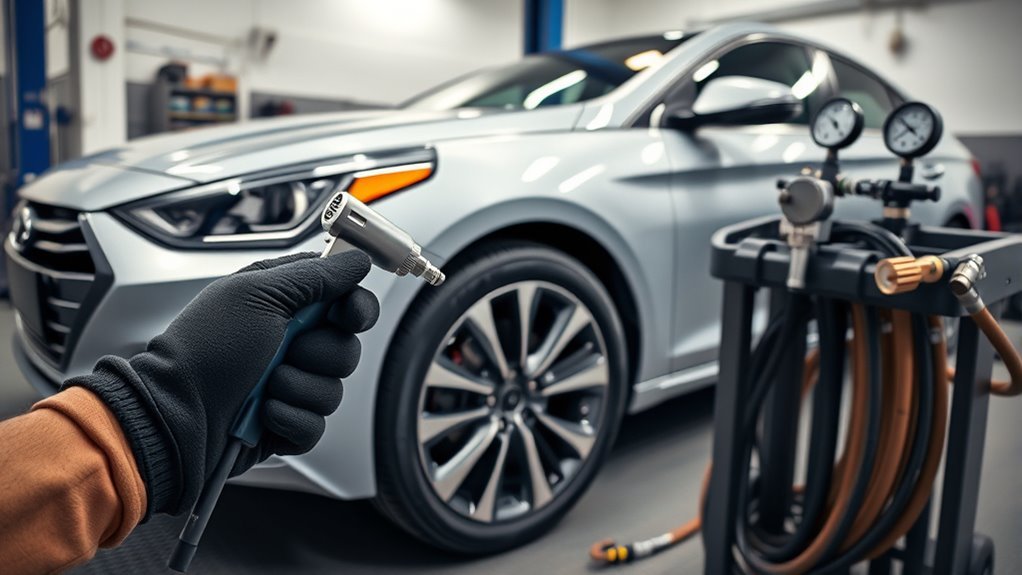
The right choice depends on cost, convenience, and how closely you maintain your tires.
Choose nitrogen if it is included with your tire purchase, you have easy refill access, or you like the small pressure-retention advantage. Nitrogen is also reasonable for drivers who store a vehicle for extended periods or want dry inflation gas.
Choose regular air if you want the simplest, most cost-effective option. Regular air is widely available and safe for your Hyundai Sonata when you maintain the correct cold PSI.
Avoid overpaying if nitrogen is marketed as a replacement for tire checks or a guaranteed fuel-economy boost. The more honest view is simple: nitrogen can help a little, but tire pressure maintenance helps a lot.
Frequently Asked Questions
Is it better to fill Hyundai Sonata tires with air or nitrogen?
For most Sonata owners, regular air is the better value because it is easy to find and works well when pressure is checked monthly. Nitrogen can slow pressure loss slightly, but the correct cold PSI matters more than the inflation gas.
Are there any downsides to using nitrogen in tires?
The main downsides are cost and convenience. Nitrogen may not be available everywhere, and paying a high fee is hard to justify for normal driving. It also does not eliminate leaks, tread wear, tire rotation, or monthly pressure checks.
Do dealers actually put nitrogen in tires?
Many dealers and tire shops do offer nitrogen inflation, but practices vary. If you are paying for nitrogen, ask whether the shop purges the tire first, what nitrogen purity they use, whether green valve caps are installed, and whether future top-offs are included.
Can I put regular air in a nitrogen-filled tire?
Yes. You can add regular air to a nitrogen-filled tire if the tire is low. The nitrogen concentration will drop, but driving at the correct pressure is safer than driving underinflated while searching for nitrogen.
How often should I check nitrogen-filled Sonata tires?
Check them at least once a month when cold and before long trips. Nitrogen may reduce pressure loss slightly, but it does not prevent leaks or pressure changes from temperature swings.
Where do I find the correct tire pressure for my Hyundai Sonata?
Look at the tire and loading information label on the driver’s door jamb or check the owner’s manual. Do not use the maximum PSI printed on the tire sidewall as your target pressure.
Conclusion
Nitrogen in Hyundai Sonata tires is not a scam, but it is often oversold. It can reduce pressure loss slightly and may help keep tires closer to the recommended PSI between checks. Still, the everyday benefit is modest, and nitrogen does not replace regular maintenance.
If nitrogen is free or bundled with your tire service, use it with confidence. If it costs extra, regular air is usually the better value. Either way, check your Sonata’s tire pressure monthly when cold, follow the driver-door placard PSI, inspect your tires, and respond quickly to TPMS warnings or repeated pressure loss.
Sources
- Consumer Reports — Should You Use Nitrogen in Your Car Tires? — pressure-loss comparison between nitrogen-filled and air-filled tires.
- Hyundai Owner’s Manual — Tire Pressure Monitoring System — monthly cold-pressure checks, TPMS warnings, and underinflation safety guidance.
- NHTSA TireWise — Tire Safety Ratings and Awareness — tire pressure, tread, rotation, TPMS, and cold-inflation guidance.
- Michelin — How to Check Tire Pressure — tire-pressure checking, placard PSI, and mixing nitrogen with compressed air.
- U.S. Tire Manufacturers Association — Tire Care Essentials — monthly checks, cold pressure, temperature effects, TPMS limits, and rotation guidance.
- Goodyear — Using Nitrogen in Tires — tire-industry overview of nitrogen inflation benefits and limitations.

Related Articles

7 Winter Tires to Keep Your Hyundai Sonata Safe This Season
You rely on your Hyundai Sonata every day, and winter roads can turn routine drives into risky trips. Choosing the right tires improves safety,…
Read More
7 Snow Tires That Will Transform Your Hyundai Sonata This Season
You rely on your Hyundai Sonata for daily drives, and winter changes everything about traction and stopping distance. Choosing the right tire is one…
Read More
10 Must-Have Summer Tires for Your Hyundai Sonata This Spring
You want a safe, quiet and predictable ride when the temperatures rise, and choosing the right set of summer or touring tires makes a…
Read More