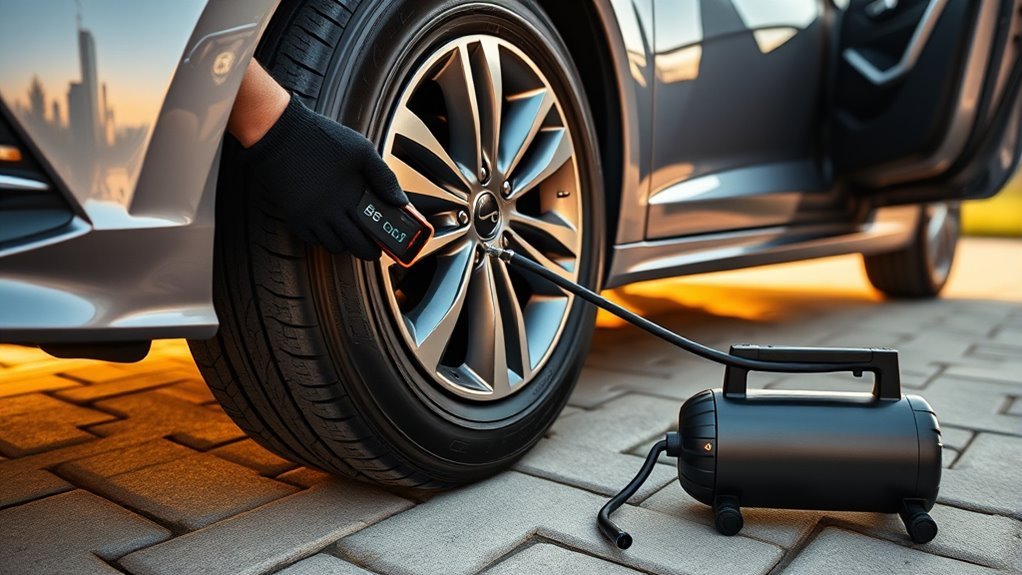
Inflating Hyundai Sonata tires is simple, but the safe target is not a universal number. Use the cold tire pressure printed on your Sonata’s driver-side tire placard or listed in the owner’s manual, then check each tire with a reliable gauge before adding air. This guide shows the safe order to follow, how to avoid overinflating warm tires, what to do when the TPMS light is on, and when repeated pressure loss needs repair.
Quick Answer
Inflate Hyundai Sonata tires to the cold PSI listed on the driver’s door-jamb placard or in the owner’s manual. Many Sonata models fall in the low-to-mid 30 PSI range, but your placard is the final authority. Check cold tires with a gauge, add air slowly, and recheck before replacing the valve caps.
Key Takeaways
- Use the Sonata’s driver’s door-jamb placard or owner’s manual for the correct PSI; do not use the tire sidewall maximum as the target.
- Check pressure when tires are cold: not driven for at least 3 hours or driven less than 1 mile.
- Warm tires can read higher after driving, so do not bleed warm tires down to the cold placard PSI.
- Add air in short bursts, recheck with your own gauge, and release a little air if you overshoot.
- Do not rely only on TPMS. It warns when pressure is significantly low, but monthly manual checks still matter.
At a Glance
| Time Required | 5–10 minutes for all four tires; add a few more minutes if checking the spare |
| Difficulty | Easy beginner maintenance |
| Tools Needed | Accurate tire-pressure gauge, air compressor or tire pump, valve caps, and a phone or notebook for logging PSI |
| Cost | Usually $0 if you already have a gauge and air; gauge and portable pump prices vary by retailer |
Find the Recommended PSI for Your Hyundai Sonata
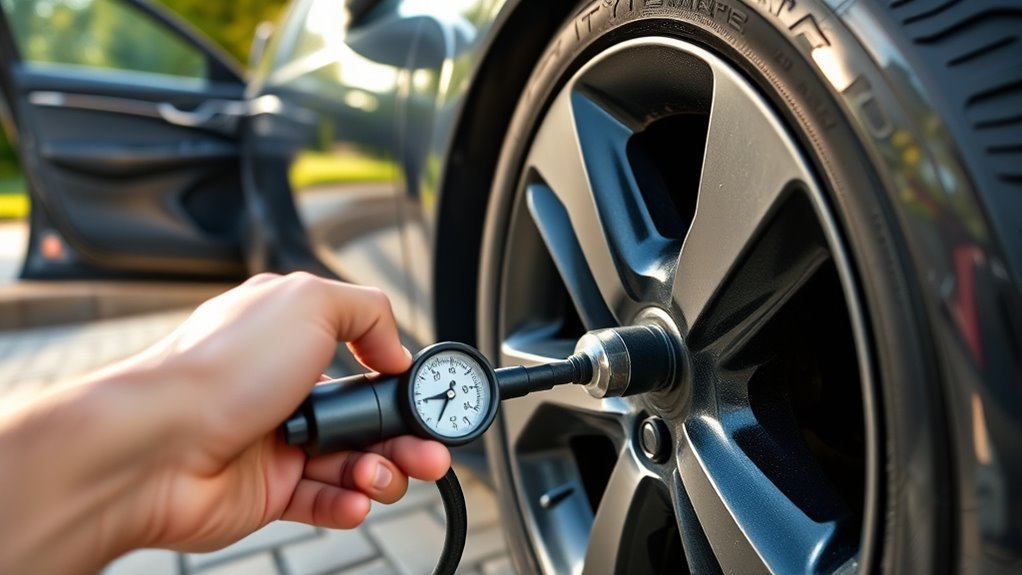
Before inflating your Sonata’s tires, find the manufacturer’s recommended cold tire pressure. Open the driver’s door and look for the tire and loading information placard on the door edge, door jamb, or center pillar area. That placard is the best source because it matches your vehicle’s original tire size and load rating. If the label is missing or damaged, use the Hyundai owner’s manual lookup for your model year.
Do not use the tire sidewall’s maximum PSI as your normal inflation target. The sidewall number is the tire’s maximum pressure limit under specified conditions, while the door-jamb placard gives the vehicle manufacturer’s recommended operating pressure. The National Highway Traffic Safety Administration gives the same guidance: use the vehicle label or owner’s manual, not the maximum number printed on the tire itself.
If your Sonata has replacement tires that are a different size than the tire size shown on the placard, do not guess. Use the owner’s manual, tire manufacturer guidance, or a qualified tire technician to confirm the correct inflation pressure for that tire and vehicle setup.
Warning: Check and set pressure when the tires are cold whenever possible. Hyundai defines a cold tire as one that has not been driven for at least 3 hours or has been driven less than 1 mile. Warm tires may read about 4–6 PSI higher after driving, so do not bleed warm tires down to the cold placard PSI.
Gather the Right Tools: Tire Gauge and Tire Pump
Use an accurate tire-pressure gauge and a reliable air source. A digital tire gauge is easy to read and helps avoid guessing, but the most important point is accuracy. A portable compressor works well at home, while a gas-station air pump can work if the chuck seals tightly on the valve stem.
- Tire-pressure gauge: Use a digital or high-quality analog gauge. Do not rely only on a pump’s built-in gauge if it seems inconsistent.
- Air compressor or tire pump: Choose one with a secure chuck that does not leak continuously while attached.
- Valve caps: Replace missing caps to help keep dirt and moisture away from the valve core.
- Pressure log: Record date, mileage, and PSI for each tire so slow leaks are easier to spot.
- Optional tread-depth gauge: Keep one in the glove box so you can check tread wear while you are already at each tire.
Note: Your Sonata’s Tire Pressure Monitoring System can help alert you to low pressure, but it is not a substitute for regular checks with a gauge. Hyundai and NHTSA both advise drivers to maintain correct tire pressure even when TPMS has not triggered a warning.
[Products Worth Considering]

The Powools cordless tire inflator delivers fast inflation up to 150 PSI with a built-in digital display and auto shut-off to prevent over-inflation. Powered by rechargeable batteries, it works without an external power source and includes multiple preset modes plus a custom mode for different inflatables. A set of interchangeable nozzles and a multi-mode LED light (lighting, alarm, SOS) make it useful for cars, motorcycles, bicycles, and sports balls.
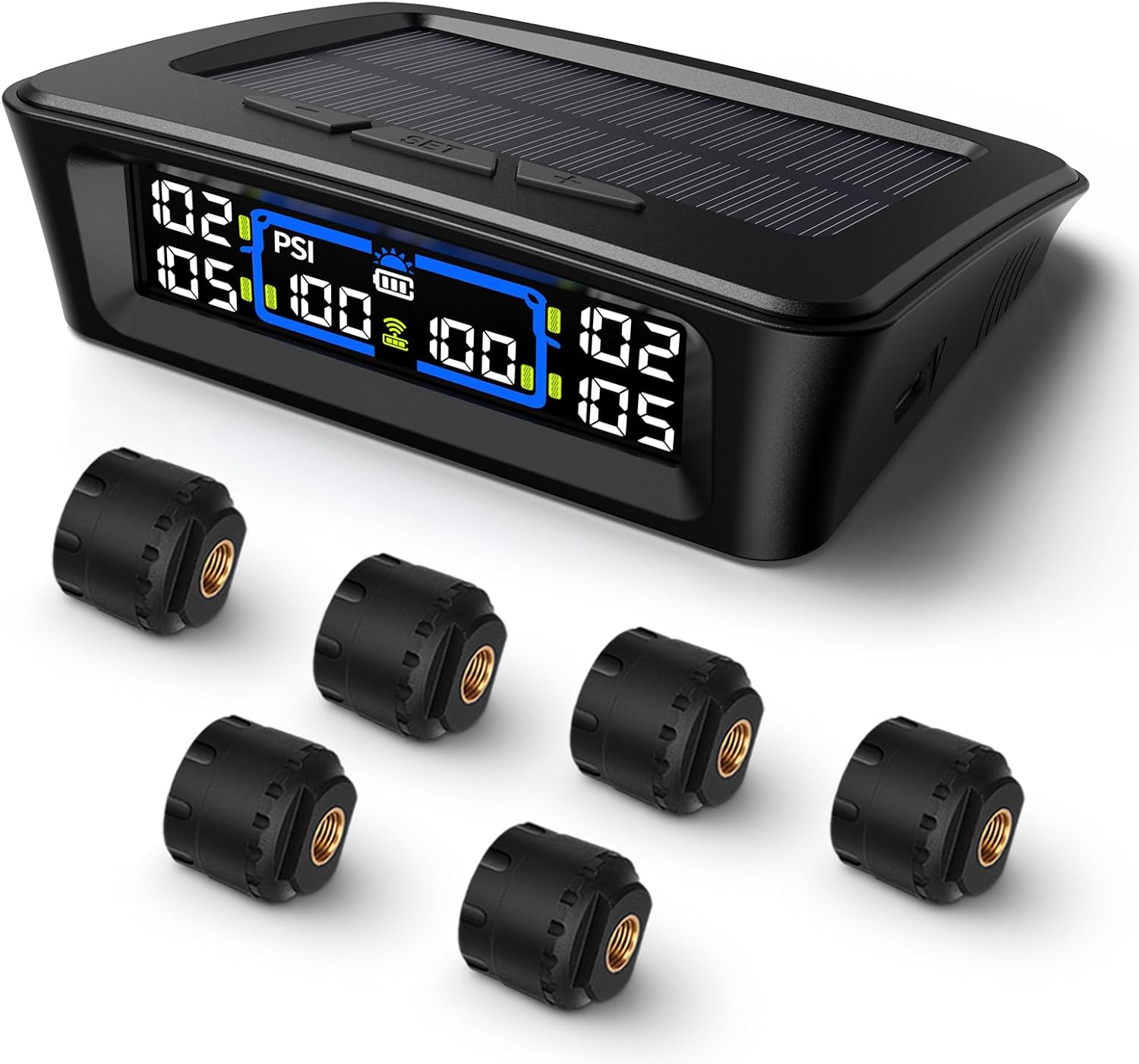
The Tymate TM12 RV TPMS delivers real-time tire pressure and temperature monitoring with a stable 433Hz display for safer long-distance driving. It supports simultaneous monitoring across vehicle and trailer zones, includes six alarm modes for pressure, temperature, leakage, battery, and signal loss, and features easy DIY installation with auto calibration. Power is supplied via USB-C charging or solar recharging, with a wide 0–144 PSI range and up to 50 ft signal coverage for RVs and towable trailers.

Keep your tires properly inflated with this analog VONDIOR tire pressure gauge, designed for fast, easy readings without batteries. The swiveling, two-axis hose and large glow dial help you measure at any tire angle with instant visibility. Built with a protective rubber shield, it supports durable, low-maintenance use for cars and trucks.
Quick Steps to Check and Record Tire Pressure
Park your Sonata on level ground and let the tires cool before checking pressure. Set your gauge to PSI, then work around the car in the same order each time so no tire gets missed.
- Confirm the target: Read the cold PSI on the driver’s door-jamb placard or in the owner’s manual.
- Remove the valve cap: Put the cap in your pocket or a small tray so it does not roll away.
- Press the gauge squarely onto the valve stem: A short burst of air is normal; a steady hiss means the gauge is not seated correctly.
- Record the reading: Write down front driver, front passenger, rear driver, and rear passenger PSI.
- Check the spare if equipped: If your Sonata has a spare tire, check it separately because spare-tire pressure may not appear on the TPMS display.
Compare each reading with the placard. If a tire is only slightly low, add air in short bursts. If one tire is far lower than the others, inspect it for a nail, screw, sidewall damage, bead leak, or valve-stem problem before driving far.
When to Check Pressure
Check your Sonata’s tire pressure at least once a month and before long highway trips. Recheck after major weather swings, too. Hyundai notes that tires can lose about 1 PSI for every 12°F temperature drop, so the first cold morning of the season can trigger a low-pressure warning even if the tire is not punctured.
How to Add Air and Set Hyundai Sonata Tires to the Correct PSI
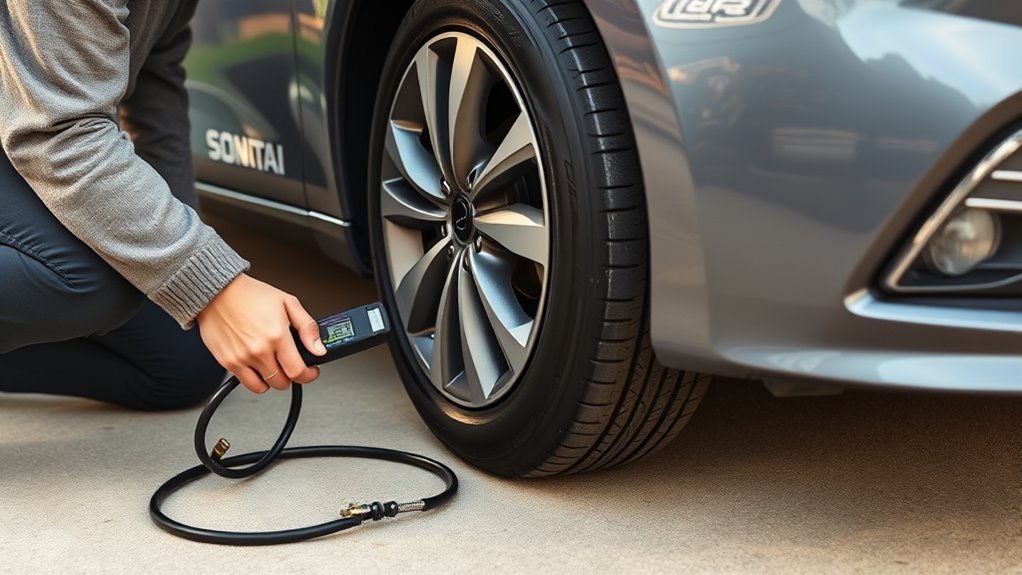
With your recorded readings in hand, add air only to the tires that are below the placard PSI. Attach the pump chuck firmly to the valve stem. You may hear a brief sound as it seats, but a continuous hiss means air is leaking around the connection and you should reseat the chuck.
- Add air in short bursts: Run the compressor for a few seconds at a time so you do not overshoot the target.
- Stop and recheck: Remove the chuck and measure with your tire-pressure gauge, not only the pump gauge.
- Adjust as needed: If the tire is still low, add a little more air. If it is too high, press the valve core briefly to release air, then recheck.
- Replace the valve cap: Tighten it by hand. It should be snug, not forced.
- Log the final PSI: Note the date, mileage, and final pressure for each tire.
At a gas-station pump, set the machine to the target PSI if the pump has a preset option, then still confirm the final reading with your own gauge. Some public pumps are used heavily, and their built-in gauges can be inaccurate or hard to read.
Pro Tip: If you must add air after driving, inflate a clearly low tire enough to drive safely, then recheck and fine-tune the pressure after the tires cool. This avoids setting a warm tire too low.
FuelEconomy.gov reports that keeping tires properly inflated can improve gas mileage by 0.6% on average, and underinflated tires can lower gas mileage by about 0.2% for every 1 PSI drop in the average pressure of all tires.
[Products Worth Considering]

The JACO FlowPro Tire Inflator measures, inflates, and airs down tires up to 100 PSI with battery-free operation and ±2% accuracy after calibration. It features a glowing pressure dial for night visibility, a heavy-duty steel build with a hybrid hose, and a precision push-to-inflate thumb trigger. The patented Lightning Air Chuck locks on for a secure seal, and the kit includes quick-connect hardware for easy inline use with your air compressor.

Milton S-921 pencil tire pressure gauge helps you maintain optimal tire pressure for passenger cars with accurate readings in PSI and kPa. It features a built-in deflator valve for convenient pressure adjustments, plus a single chuck head and nylon indicator bar for easy use on the go. Built from durable plated brass and designed for reliable performance, it’s a practical road trip and cold-weather maintenance tool.

This tire inflator with pressure gauge delivers long-lasting performance with a durable rubber-protected gauge and sturdy build. The longer hose and 360 swivel air chuck help you seal the valve securely and keep your hands free while measuring, inflating, or deflating. It’s battery-free for reliable use and provides ±2 PSI accuracy in the mid-range for most typical tires, with universal compatibility for 1/4 NPT compressor outputs.
Fix Common PSI Problems and Routine Checks to Maintain Pressure
Routine pressure checks help your Sonata handle predictably, wear tires evenly, and avoid preventable TPMS warnings. If pressure changes quickly, one tire keeps losing air, or the car pulls or vibrates, treat it as a tire problem rather than a normal maintenance issue.
[Products Worth Considering]
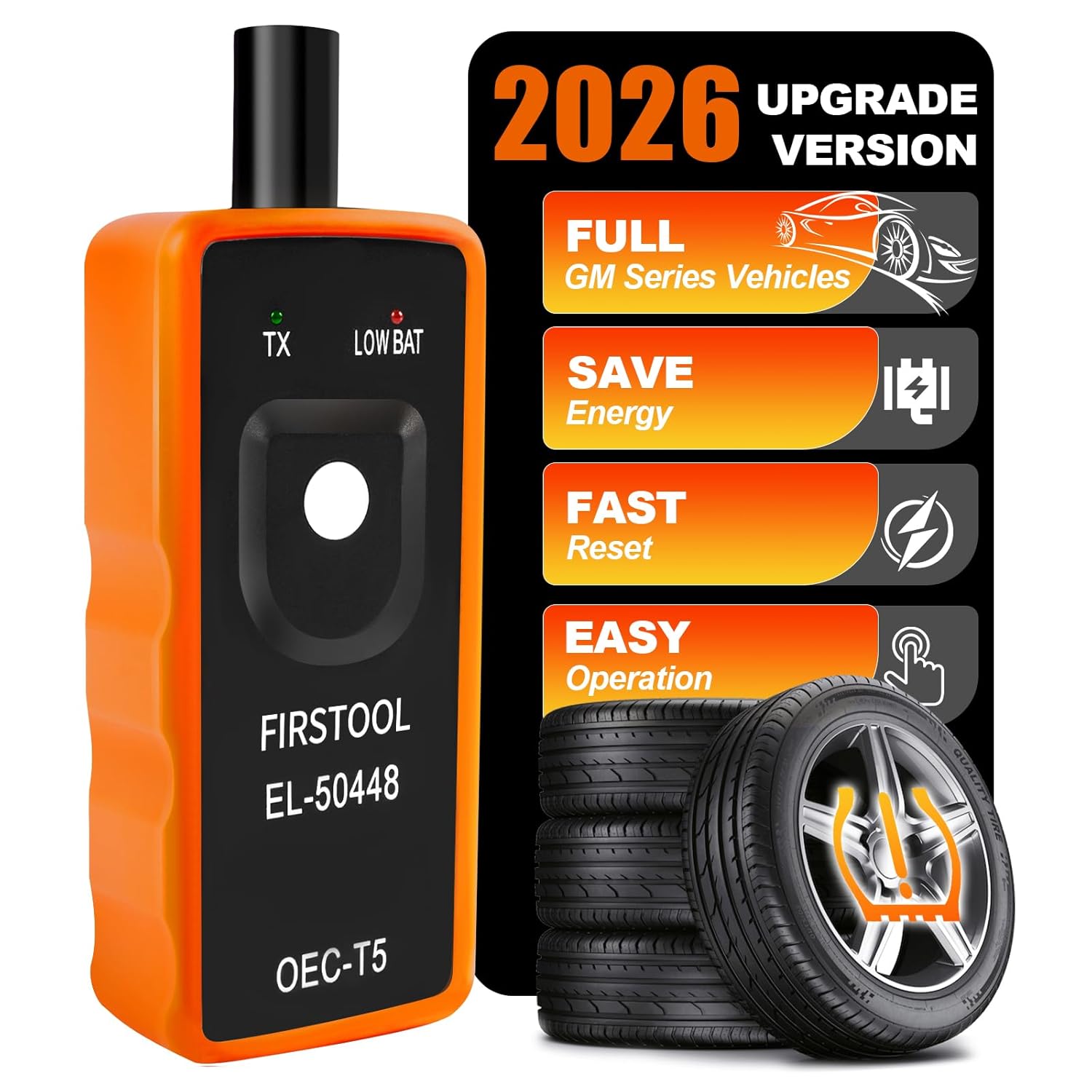
This TPMS relearn tool helps you quickly activate, match, and reset GM tire pressure sensors to keep the vehicle monitoring system working properly. It clears tire pressure alarms and dashboard warning lights after sensor replacement or tire rotation, and supports learning for common 315/433 MHz TPMS sensors. Designed for simple one-button operation, it can help you avoid unnecessary trips to repair shops.

The TYAMATE TM8 solar-powered wireless TPMS delivers real-time tire pressure and temperature monitoring with six alarm modes for safer driving. A vibrant color LCD display shows readings clearly while windshield mounting keeps it hands-free and easy to read. With a wide 0–87 PSI range, strong 433.92 MHz signal transmission, and quick sensor pairing, it’s ideal for RV, sedan, SUV, MPV, and truck use.

The Milton S-693 straight foot dual head air chuck is designed for accurate tire pressure checks and quick, secure valve-core engagement with lock-on threads on both ends. With a 1/4" FNPT connection and a maximum 150 PSI rating, it’s built for use on inner duals and common vehicle tires, including trucks and RVs.
If One Tire Keeps Losing Air
A single tire that loses pressure faster than the others usually has a specific problem. Look for a puncture, damaged valve stem, cracked valve core, rim corrosion, bead leak, or sidewall damage. If pressure drops quickly, you hear an air leak, the sidewall is cut or bulging, cords are visible, or the tire looks damaged, do not keep driving on it. Install the spare if it is safe to do so, use roadside assistance, or have the tire inspected and repaired or replaced.
If the TPMS Light Comes On
If the TPMS warning light comes on, check all four tires with a gauge as soon as it is safe. Inflate any low tire to the placard PSI when cold. After correcting the pressure, some Hyundai TPMS systems need a short drive before the display updates. If the warning light blinks for about 1 minute and then stays on, that can indicate a TPMS malfunction rather than simple low pressure, so the system should be inspected.
Check the Spare Tire If Equipped
If your Sonata has a spare tire, check it when you check the four road tires. A spare may not have a TPMS sensor, and its pressure may not appear on the instrument cluster. Use the spare-tire pressure listed on the vehicle placard or in the owner’s manual.
Check Tread and Rotate on Schedule
While checking pressure, inspect tread and sidewalls. Look for cuts, bulges, cords, uneven wear, or embedded objects. NHTSA says tires rapidly lose traction characteristics when tread is worn to 2/32 inch. Hyundai’s tire-rotation guidance says tires should be rotated every 7,500 miles or sooner if irregular wear develops, but your Sonata owner’s manual should be the final source for the exact interval and rotation pattern.
- Both outer edges worn: Often points to underinflation or hard cornering; check pressure and alignment.
- Center tread worn: Often points to overinflation; reset to placard PSI when cold.
- One shoulder worn: May point to alignment or suspension issues.
- Vibration or pulling: Have balance, alignment, and tire condition checked by a technician.
Frequently Asked Questions
What PSI should my Hyundai Sonata tires be at?
Use the cold PSI listed on your Sonata’s driver’s door-jamb placard or in the owner’s manual. Many Sonata models are in the low-to-mid 30 PSI range, and some recent trims may list a value near the mid-30s, but the placard for your exact model year, tire size, and trim is the number to follow.
How do I inflate Hyundai Sonata tires to the right PSI?
Check the placard PSI, measure each cold tire with a gauge, attach the air chuck securely, add air in short bursts, then recheck. If you add too much air, press the valve core briefly to release a little pressure and measure again.
Should I inflate my Sonata tires when they are warm?
Cold checks are best. If you must add air after driving, add enough air to make the tire safe, then recheck after the tire has cooled for several hours. Do not bleed warm tires down to the cold placard PSI because warm pressure normally rises after driving.
Why did my TPMS light come on after cold weather?
Cold air lowers tire pressure. Hyundai notes that tire pressure can drop about 1 PSI for every 12°F temperature decrease. Check all tires cold, inflate them to the placard PSI, and watch for one tire that keeps losing air faster than the others.
Can I use the PSI printed on the tire sidewall?
No. The sidewall PSI is the tire’s maximum inflation limit under specified conditions, not the recommended pressure for your Sonata. Use the vehicle placard or owner’s manual as the operating target.
What should I do if one Sonata tire keeps losing air?
Inspect the tire for a nail, screw, valve-stem leak, bead leak, rim damage, or sidewall damage. If it loses pressure quickly, has a bulge or cut, shows cords, or will not hold air, avoid driving on it and have it repaired or replaced.
Sources
- Hyundai Owner’s Manual — Recommended Cold Tire Inflation Pressures — cold tire definition, warm tire pressure, and cold-pressure precautions
- Hyundai Owner’s Manual — Check Tire Inflation Pressure — monthly checks, spare tire checks, and gauge use
- Hyundai Owner’s Manual — Tire Pressure Monitoring System — TPMS maintenance responsibility and malfunction indicator behavior
- Hyundai Owner’s Manual — Tire Rotation — 7,500-mile rotation guidance and irregular wear checks
- NHTSA TireWise — vehicle placard guidance, cold tire pressure, and tire safety basics
- FuelEconomy.gov — Keeping Your Vehicle in Shape — tire inflation and fuel economy statistics