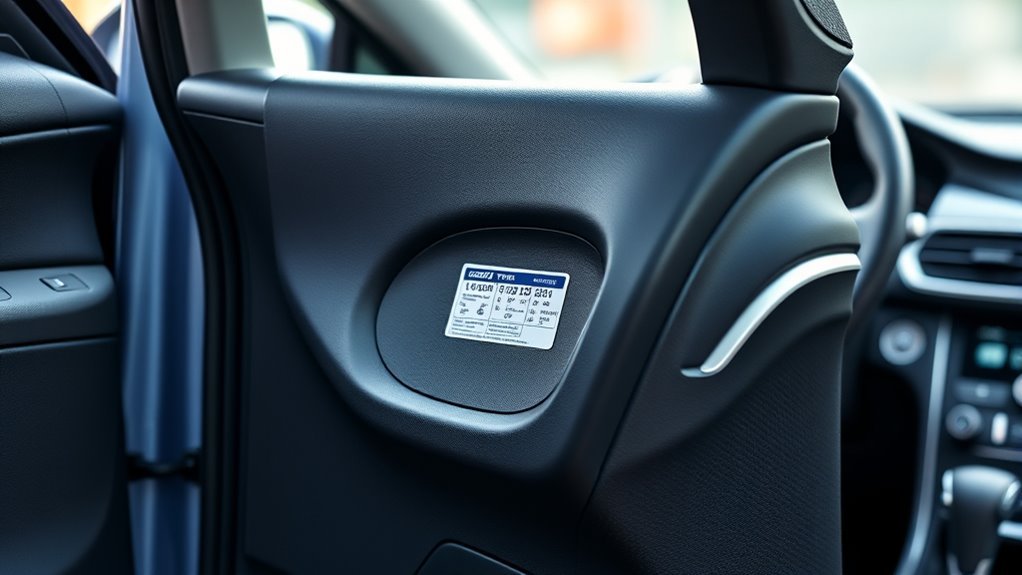
For a Hyundai Sonata, the correct tire pressure is the cold PSI printed on the driver-side door-jamb tire label, sometimes called the tire placard or center-pillar label. Use that number before using the Sonata’s TPMS display, because the placard and owner’s manual are the authoritative sources for your model year, trim, tire size, and load condition.
Quick Answer
For a Hyundai Sonata, use the cold PSI printed on the driver-side door-jamb/center-pillar tire label, not the tire sidewall maximum. Check tires after the car has sat at least three hours or driven less than 1 mile, set front/rear pressures with a gauge, then use TPMS only to monitor and confirm.
Key Takeaways
- The correct Sonata tire pressure is on the driver-side door-jamb label and in the owner’s manual.
- Check pressure when tires are cold: parked at least three hours or driven less than 1 mile.
- Do not use the tire sidewall maximum as your normal inflation pressure.
- Use a handheld gauge to set PSI; use TPMS as a warning and monitoring system.
- After rotating tires or adjusting pressure, reset/relearn TPMS only if your Sonata’s manual or display prompts you to do so.
At a Glance
| Time Required | 5–10 minutes |
| Difficulty | Easy |
| Tools Needed | Tire pressure gauge, air compressor or inflator, valve caps |
| Cost | Usually free at home or a service station; about $5–$30 for a basic gauge if needed |
Where to Look First: Driver-Side Door Jamb Sticker
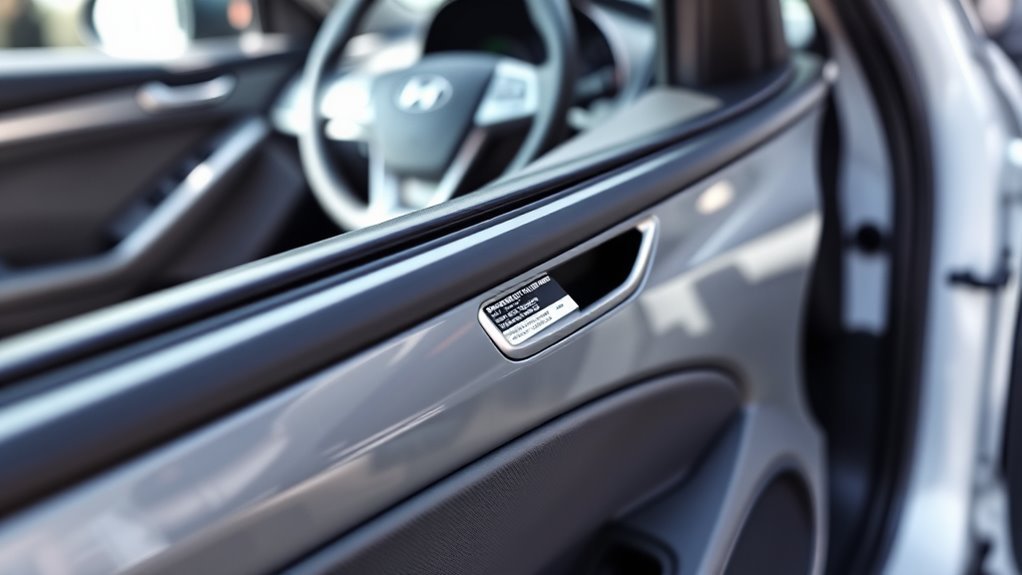
Open the driver’s door and look on the door jamb or center pillar for the tire and loading information label. This label lists the recommended cold tire inflation pressure for your Sonata’s original tire size and load rating. Hyundai also states that the recommended cold pressure can be found in the owner’s manual and on the tire label, and that you should use a tire pressure gauge to measure pressure accurately.
If your label lists different values for front and rear tires, follow those values exactly. If it lists separate normal-load and maximum-load values, use the value that matches how the car is being used. Do not guess or add pressure just because the car is carrying passengers; use the tire label and manual as your guide.
Warning: Do not inflate your Sonata’s tires to the number printed on the tire sidewall unless that number also matches the vehicle placard. The sidewall number is a maximum tire limit, not the vehicle’s recommended everyday PSI. The National Highway Traffic Safety Administration explains that the vehicle manufacturer determines the correct pressure for the vehicle.
How to Read the Sticker: Front vs Rear Cold PSI
The sticker may show one PSI for all four tires, or it may show separate front and rear values. It may also list the tire size, vehicle capacity weight, and load information. Always match the pressure to the exact tire size and load condition listed on the label.
Driver Door Placard Location
With the driver’s door open, check the vertical pillar area near the latch or the edge of the door opening. The placard is usually a white or metallic label and may include tire size, seating capacity, load limit, and recommended cold PSI.
If the label is damaged, painted over, or missing, use Hyundai’s official digital owner’s manual and select your Sonata model year. The owner’s manual is the next-best source because exact PSI can vary by year, trim, tire size, and market.
Front Vs Rear PSI
Read the front and rear values separately. Some vehicles use the same pressure at all four corners; others use a different rear pressure for load or handling. If your Sonata’s label shows different front and rear values, set each axle to its own number.
- Use the front PSI shown on the label for both front tires.
- Use the rear PSI shown on the label for both rear tires.
- Use maximum-load pressure only if your label/manual provides it and your vehicle is loaded as described.
- Recheck the pressure if the tire size has changed from the original equipment size.
What Cold PSI Means and Why It Matters
“Cold” does not mean winter weather. For tire pressure, cold means the vehicle has been parked for at least three hours or has been driven less than 1 mile. Hyundai’s manual uses this same cold-tire definition and warns that warm tires normally read about 4–6 psi higher than cold tires.
If you check pressure after driving, the tires may read higher because heat raises air pressure. Do not bleed air out of warm tires just to force the reading down to the cold PSI. Instead, check again when the tires are cold, or add only enough air to avoid driving on a clearly low tire until you can recheck properly.
Proper tire pressure also affects fuel economy. FuelEconomy.gov says underinflated tires can lower gas mileage by about 0.2% for every 1 psi drop in the average pressure of all tires.
How to Check and Set Your Sonata’s Tire Pressure (Quick Steps)
- Park safely and let the tires cool. Check them first thing in the morning or after the car has sat for at least three hours.
- Find the correct PSI. Read the driver-side door-jamb label or your Hyundai owner’s manual.
- Remove the valve cap. Put it in a safe place so it does not roll away.
- Press the tire gauge firmly onto the valve stem. A brief hiss is normal, but a long hiss means the gauge is not sealed correctly.
- Compare the reading to the placard. Check all four tires, and check the spare if your Sonata has one.
- Add air if low. Use an air compressor or portable inflator and add pressure slowly.
- Release air if high. Press the valve stem briefly and recheck with the gauge.
- Reinstall the valve caps. Caps help keep dirt and moisture out of the valve.
- Verify after driving. Use the TPMS display as a backup check once the system shows readings.
Pro Tip: If you use a compressor, switch the compressor off before reading its gauge. Hyundai notes that a compressor gauge can show higher than the actual tire pressure while the compressor is running.
[Products Worth Considering]

The VEHLIVE SU-50448 II TPMS relearn tool provides a fast activation reset to restore accurate tire pressure monitoring after sensor replacement or tire rotation. It supports 315 MHz and 433 MHz GM series sensors and helps clear dashboard pressure warnings. With simple two-button operation and horn-confirmed relearning order, you can reprogram sensors conveniently at home.
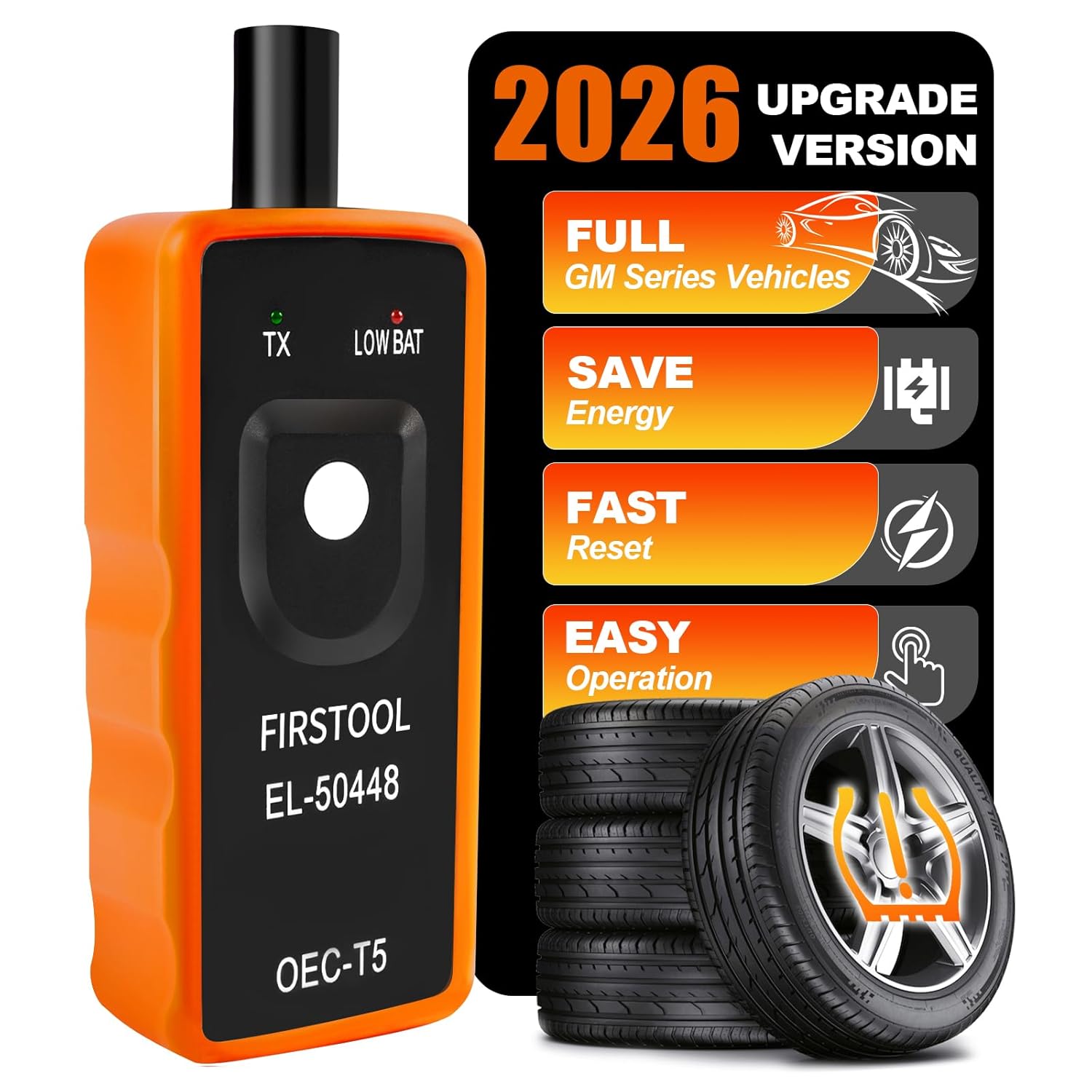
This TPMS relearn tool helps you quickly activate, match, and reset GM tire pressure sensors to keep the vehicle monitoring system working properly. It clears tire pressure alarms and dashboard warning lights after sensor replacement or tire rotation, and supports learning for common 315/433 MHz TPMS sensors. Designed for simple one-button operation, it can help you avoid unnecessary trips to repair shops.
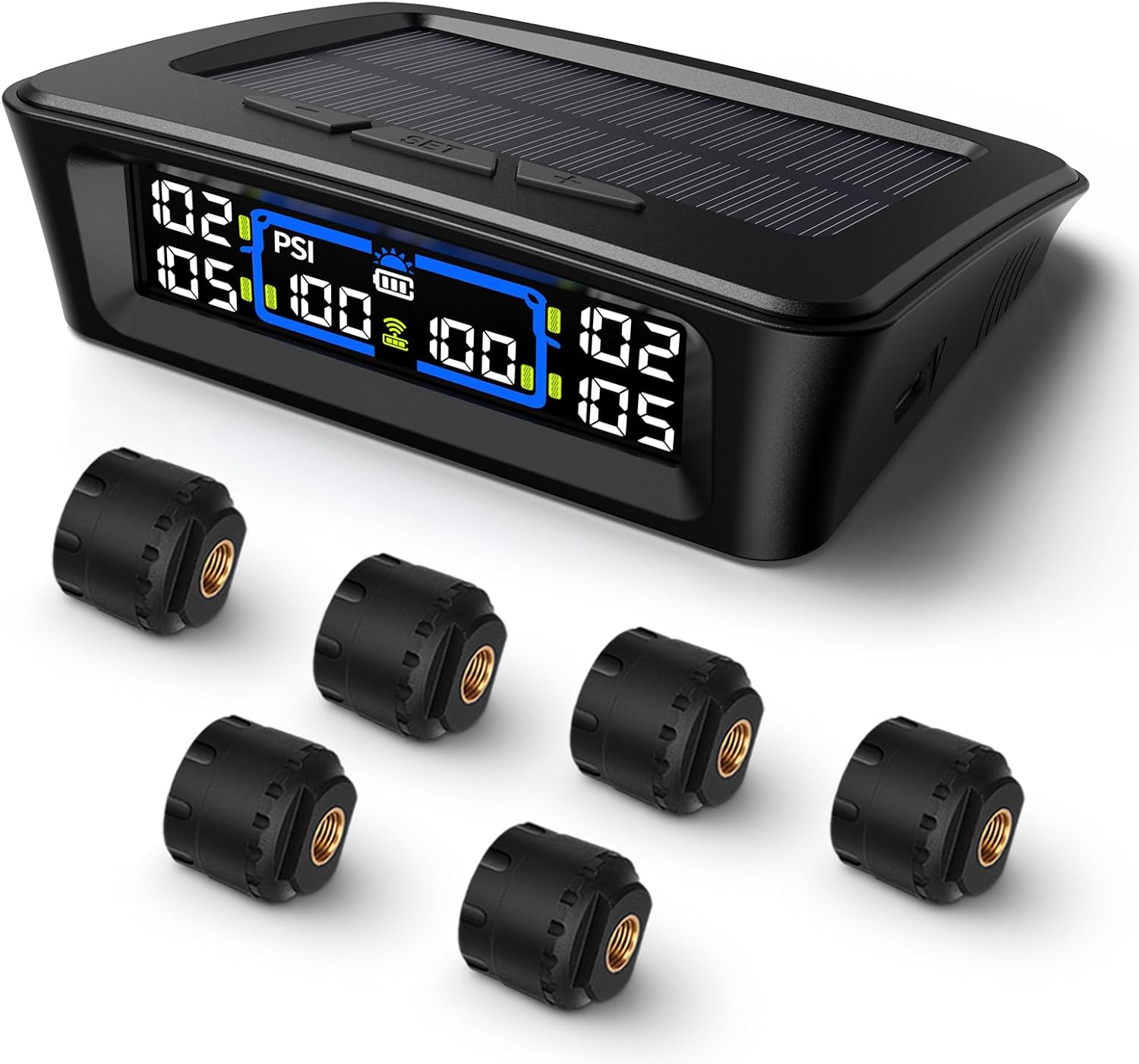
The Tymate TM12 RV TPMS delivers real-time tire pressure and temperature monitoring with a stable 433Hz display for safer long-distance driving. It supports simultaneous monitoring across vehicle and trailer zones, includes six alarm modes for pressure, temperature, leakage, battery, and signal loss, and features easy DIY installation with auto calibration. Power is supplied via USB-C charging or solar recharging, with a wide 0–144 PSI range and up to 50 ft signal coverage for RVs and towable trailers.
View Hyundai Sonata Tire Pressure With the TPMS Display
The Sonata’s TPMS can help you monitor tire pressure from the driver’s seat, but it should not replace a handheld gauge. Hyundai’s digital manual says tire pressure can be checked in the instrument cluster’s utility view mode, and that the values appear after a few minutes of driving. It also notes that displayed TPMS values may differ from gauge readings.
Use the steering-wheel display controls to reach the tire pressure screen if your Sonata is equipped with that view. On many Hyundai displays, tire pressure is reached through the cluster’s utility or information view. Menu names can change by model year, trim, and software version, so check your owner’s manual if the screen layout is different.
- Use TPMS to spot a tire that is losing air.
- Use a handheld gauge to set the exact cold PSI.
- Do not ignore the TPMS warning light; stop safely and inspect the tire.
- Remember that TPMS readings may not appear until the vehicle has been driven.
Note: If the tire pressure screen says “Drive to display” or does not show values while parked, drive normally for a few minutes in a safe area. If readings still do not appear, check pressures manually and inspect for a TPMS warning or sensor fault.
TPMS Not Showing Cold Readings? Quick Fixes & Why Driving Helps
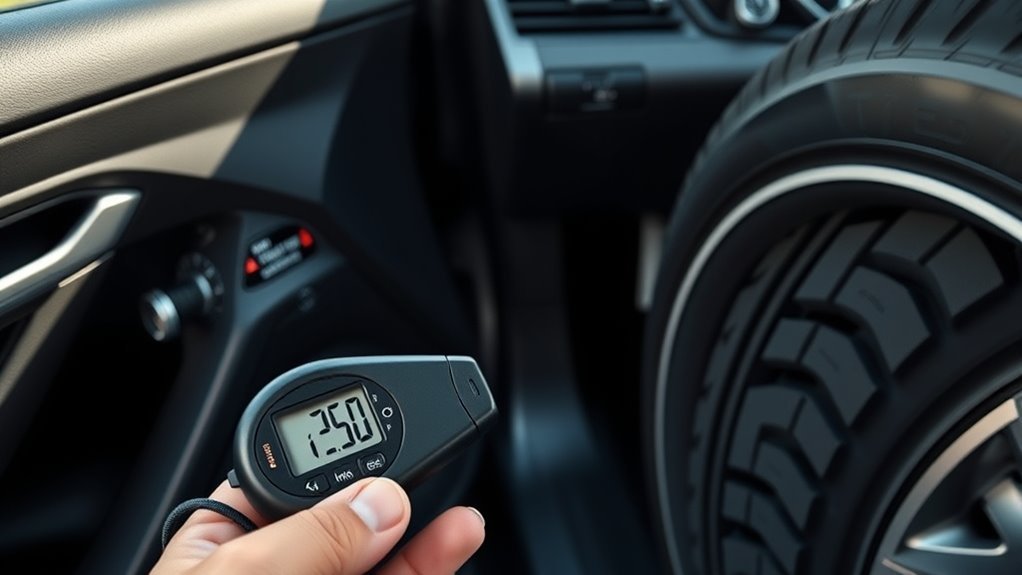
If your Sonata’s TPMS does not show individual readings right away, start with the basics. Check the tire pressure manually, confirm there is no visibly flat or damaged tire, and then drive for a few minutes so the system can update. Hyundai states that tire pressure appears after a few minutes of driving and that a “Drive to display” message may appear when the vehicle is stopped.
If the TPMS warning light stays on after you correct the pressures, one tire may still be low, the system may need a reset, or a sensor may have a fault. Do not keep driving on a tire that looks low, has sidewall damage, or repeatedly loses air.
[Products Worth Considering]

Keep your tires properly inflated with this analog VONDIOR tire pressure gauge, designed for fast, easy readings without batteries. The swiveling, two-axis hose and large glow dial help you measure at any tire angle with instant visibility. Built with a protective rubber shield, it supports durable, low-maintenance use for cars and trucks.
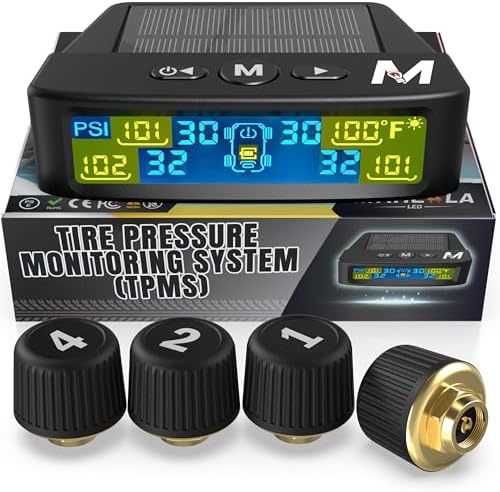
Marcala’s TPMS set of four sensors helps you monitor tire pressure and temperature in real time while driving, with updates every second. The bright color LCD uses auto-dimming for easy viewing, powered by dual solar and USB charging, and offers six alarm modes. Built for trailers, RVs, campers, trucks, and towing setups, the sensors support monitoring 1-4 wheels up to 98 PSI with IP67 waterproof protection.

This TPMS sensor training and relearn reset tool is customized for Ford, Lincoln, and Mercury vehicles to help activate tire pressure programming after sensor replacement or tire rotation. It can activate individual tire pressure sensors with one-button operation, helping prevent TPMS warning light illumination. It is not a sensor programming tool and cannot program replacement sensors—use it to trigger/activate sensors only.
After Rotating Tires: Check Sensor Positions & Readings
After tire rotation, set all four tires to the correct cold PSI first. Then check whether the TPMS display shows each wheel in the correct position. Some Sonata systems relearn automatically after driving; others may require a reset through the cluster menu or a service tool.
[Products Worth Considering]

The Tymate TM2 RV tire pressure monitoring system keeps you informed with a color LCD display, automatic backlight, and solar charging for dependable operation. It supports up to 10 tire positions with four pre-paired sensors, while offering multiple alarm modes for fast leak detection, pressure extremes, temperature alerts, and low-signal warnings. Built-in monitoring uses accurate readings and reliable 433.92MHz communication to help protect your RV, trailer, truck, or SUV.

Milton S-921 pencil tire pressure gauge helps you maintain optimal tire pressure for passenger cars with accurate readings in PSI and kPa. It features a built-in deflator valve for convenient pressure adjustments, plus a single chuck head and nylon indicator bar for easy use on the go. Built from durable plated brass and designed for reliable performance, it’s a practical road trip and cold-weather maintenance tool.

Replace worn or malfunctioning GM TPMS sensors with this 433MHz pre-programmed sensor set designed for compatibility with many Chevrolet, Buick, GMC, and Cadillac models. It includes guidance for proper OBDII relearning/pairing after installation and supports reliable long-term operation with a high-performance CR2032 battery. Quality tested for durability and performance to help restore accurate tire pressure monitoring.
Confirm Sensor Positions
Use the TPMS display and a handheld tire gauge together. If the display says the front-left tire is low, confirm that the front-left tire is actually the low one. If the display does not match the real wheel positions after rotation, follow the manual’s reset/relearn steps or ask a tire shop or Hyundai dealer to relearn the sensors.
- Set all four tires to the placard PSI before resetting TPMS.
- Compare TPMS readings with a handheld gauge.
- Watch for a persistent TPMS warning light or missing wheel reading.
Relearn TPMS Procedure
Hyundai’s TPMS reset procedure varies by model and equipment, but the common rule is simple: correct the tire pressure first, then reset the system only if your Sonata requires it. Hyundai’s TPMS reset instructions say to adjust all tires to the recommended pressure, select the tire pressure screen, press and hold OK, and confirm the warning light/message as directed on equipped vehicles.
| Step 1 | Set all tires to the recommended cold PSI. |
| Step 2 | Open the tire pressure screen if your Sonata has one. |
| Step 3 | Use the reset/relearn option only if the manual or cluster prompts you. |
| Step 4 | Drive for a few minutes so the system can update. |
| Step 5 | Recheck the display and confirm readings with a gauge if anything looks wrong. |
Verify Cold Pressure Readings
After rotation, verify cold pressure again before judging the TPMS. If the car has been driven, let it sit and recheck later. If one tire repeatedly drops below the recommended PSI, inspect for a puncture, valve leak, wheel damage, or bead leak.
Can’t Find the Sticker? Use the Owner’s Manual or Digital Copy
If the tire pressure sticker is missing, use your Sonata owner’s manual or Hyundai’s digital manual. Select the correct model year and, when possible, match the manual to your exact tire size and trim. The manual may include tire size, wheel size, recommended PSI, spare tire pressure if equipped, and TPMS procedures.
Do not rely on generic internet charts unless they match your exact year, trim, tire size, and load condition. A chart can be useful for cross-checking, but the door label and Hyundai manual should win if there is a conflict.
Special Situations That Change How You Check PSI
Winter Temperature Drops
Cold weather lowers tire pressure. Hyundai notes that tires typically lose about 1 psi for every 12°F / 7°C temperature drop and that it may be permissible to add up to 3 psi if colder temperatures are expected soon. Recheck pressure after major temperature swings instead of waiting for the TPMS light.
Heavy Loads
If you are carrying several passengers or cargo, check the load limit and pressure information on the door label and owner’s manual. If a maximum-load pressure is listed, use it only when the vehicle is loaded as described. Do not add a random 2–5 psi without a manual or placard value.
Aftermarket Wheels and Tires
If the tires and wheels are the same size, load rating, and type as the original equipment, the placard PSI is usually still the starting point. If you change tire size, load index, wheel diameter, or tire type, ask a qualified tire professional to confirm the correct pressure using load/inflation data. Hyundai warns that using tires and wheels other than recommended sizes can affect handling and vehicle systems.
Frequently Asked Questions
What tire pressure should I use for heavy loads or towing?
Use the pressure and load information on your Sonata’s door label and owner’s manual. If a maximum-load PSI is listed, use that value only when the car is loaded as described. Do not add a random amount of pressure. For towing, check your exact owner’s manual first, because some Hyundai manuals state that the vehicle is not recommended for trailer towing or has no towing capacity.
Can I use nitrogen instead of regular air in Sonata tires?
Yes. Nitrogen is permissible, but it is not necessary for normal tire service. The U.S. Tire Manufacturers Association says nitrogen and air can be mixed in any proportion, and nitrogen does not replace regular pressure checks. If nitrogen is not available and a tire is low, add regular air to reach the correct PSI.
How often should I replace worn tire pressure sensors?
Do not replace TPMS sensors on a fixed schedule unless a technician recommends it. Replace a sensor if it is damaged, will not relearn, gives inconsistent readings, has a dead battery, or causes a TPMS malfunction warning after the tires are correctly inflated. Many drivers first replace sensors during tire service when an old sensor fails or the battery is weak.
Do winter temperatures require different tire pressures?
Winter does not change the official placard PSI, but it changes the pressure inside the tire. Check cold pressure more often when temperatures drop. Hyundai notes that tire pressure can drop about 1 psi for every 12°F / 7°C decrease, so a tire that was correct in warm weather may become low in cold weather.
Will aftermarket wheels change recommended tire pressure?
Aftermarket wheels do not automatically change the correct PSI. If the tire size, load index, and tire type match the original equipment, start with the door placard. If the tire size or load rating changes, do not guess. Have a tire professional confirm the correct pressure from load/inflation data.
Can I rely on TPMS instead of a tire pressure gauge?
No. TPMS is a warning and monitoring system, not a precision setup tool. Use a handheld gauge to set the tires to the correct cold PSI. Then use the TPMS screen to watch for pressure loss or a warning light while driving.
Why is the TPMS light still on after I filled the tires?
The pressure may still be low, the tires may have been adjusted while warm, the system may need a reset, or a sensor may have a fault. Recheck all tires with a gauge when cold. If the pressures are correct and the light stays on after driving, follow the manual’s reset steps or have the system inspected.
Conclusion
For the correct Hyundai Sonata tire pressure, start with the driver-side door-jamb tire label. Check pressure when the tires are cold, use a reliable gauge, and set the front and rear tires to the listed PSI. Use TPMS as a helpful backup, but do not use it as your only pressure check. After tire rotation, pressure adjustment, or sensor service, verify the readings and reset or relearn TPMS only if your Sonata’s manual requires it.
Sources
- Hyundai Official Digital Owner’s Manual — source for model-specific Hyundai owner’s manuals and tire pressure procedures.
- Hyundai: Recommended Cold Tire Inflation Pressures — cold-tire definition, warm-tire warning, and inflation safety guidance.
- Hyundai: Check Tire Pressure — TPMS display behavior, “Drive to display,” and gauge comparison note.
- NHTSA Tire Safety Brochure — tire placard, cold inflation pressure, sidewall maximum, and load-limit guidance.
- FuelEconomy.gov: Keeping Your Vehicle in Shape — fuel-economy effect of underinflated tires.
- U.S. Tire Manufacturers Association: Using Nitrogen to Inflate Passenger and Light Truck Tires — nitrogen vs. air maintenance guidance.