

If one tire on your Hyundai Sonata loses air faster than the other three, do not blame cold weather alone. Temperature changes can lower tire pressure, but they usually affect all four tires. A single tire that keeps dropping faster often has a slow leak, valve stem issue, bead leak, rim corrosion, small puncture, or tire damage that needs attention.
Quick Answer
One Hyundai Sonata tire usually loses air faster because of a localized problem: a nail or screw in the tread, leaking valve stem, bead leak, corroded or bent rim, or tire damage. Cold weather can make the pressure drop more noticeable, but it should not make only one tire lose air repeatedly.
Key Takeaways
- A temperature drop can lower tire pressure, but one tire dropping faster usually points to a leak or wheel/valve problem.
- Use the Hyundai owner’s manual or driver-door placard for the correct cold PSI, not the number printed on the tire sidewall.
- Check pressure when the tires are cold, meaning the car has been parked at least three hours or driven less than 1 mile.
- A soapy-water test can help locate bubbles at the tread, valve stem, bead, or rim.
- Sidewall and shoulder damage should not be repaired; have the tire inspected by a qualified tire shop.
At a Glance
| Time Required | 10–20 minutes for a pressure check and leak test; longer if a shop needs to dismount the tire |
| Difficulty | Easy for inspection and inflation; professional service recommended for bead leaks, rim issues, and puncture repairs |
| Tools Needed | Tire pressure gauge, air compressor or inflator, spray bottle, water, dish soap, flashlight, and paper or phone notes for pressure tracking |
| Cost | Pressure checks are often free; repair cost varies by leak location, tire condition, wheel condition, and shop labor |
How Temperature Changes Affect Tire Pressure
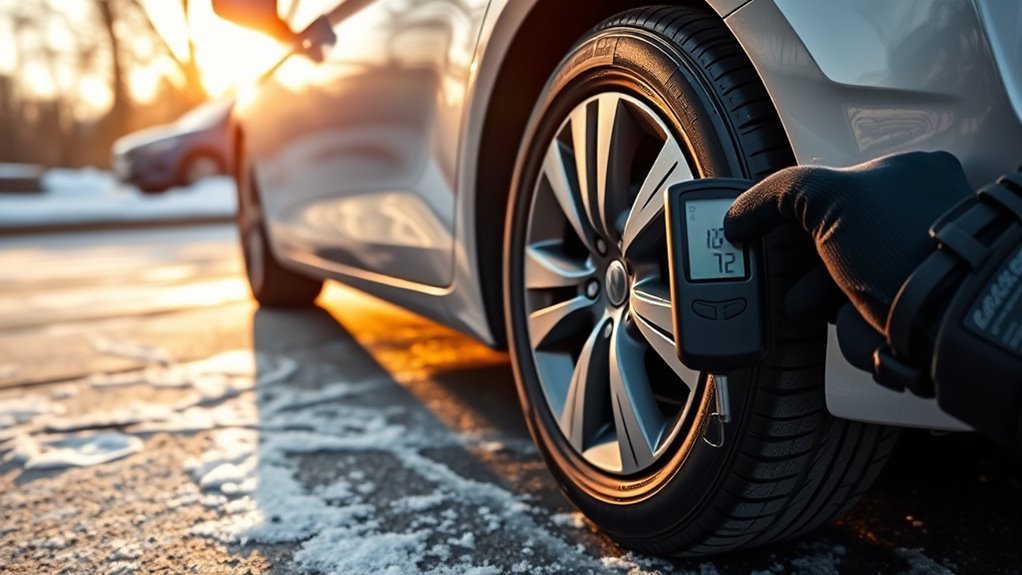
Temperature changes affect tire pressure because the air inside the tire expands when warm and contracts when cold. Hyundai’s current Sonata owner’s manual states that tires typically lose about 1 psi for every 12°F temperature drop. That pressure change can be enough to trigger a Tire Pressure Monitoring System (TPMS) warning when the pressure was already close to the warning threshold.
A cold snap should lower pressure in all four tires. If only one tire keeps dropping faster, treat it as a possible leak until you prove otherwise.
Cold weather can also expose weak spots. A small puncture, aging valve stem, dirty bead seat, or corroded rim may leak more noticeably after the tire pressure drops. That is why the same tire may look fine in warm weather but need air every few days when temperatures fall.
Note: Do not release air from a warm tire just because the gauge reads higher after driving. Hyundai notes that warm tires can read several psi higher than cold tires, and pressure should be checked against the cold specification.
Normal Pressure Drop vs. a One-Tire Problem
A normal temperature-related pressure drop usually affects all four tires in a similar way. For example, after a strong cold front, you may see every tire drop by 2–4 psi. That is annoying, but it is not usually a sign that one tire is damaged.
A one-tire problem looks different. Be suspicious when:
- One tire is 3 psi or more lower than the others after sitting overnight.
- The same tire needs air every few days or every week.
- The TPMS keeps naming the same tire as low.
- You hear a hiss, see a nail or screw, or notice bubbles during a leak test.
- The tire loses pressure again soon after being inflated to the correct cold PSI.
If the same tire keeps dropping, inspect it instead of repeatedly adding air and driving on it. Low pressure increases heat, can reduce fuel economy, and can damage the tire internally.
What PSI Should a Hyundai Sonata Tire Be?
The correct Hyundai Sonata tire pressure depends on the model year, tire size, trim, and original equipment. Do not use a universal number for every Sonata, and do not use the maximum pressure printed on the tire sidewall as your target pressure.
Use the tire and loading information label on the driver’s door edge or door jamb, or confirm the specification in the Hyundai owner’s manual. As one current example, Hyundai’s 2026 Sonata manual lists 36 psi for the 215/60R17 tire and 33 psi for the 215/55R18 and 235/45R19 tires, while other model years may list different values. The National Highway Traffic Safety Administration also advises using the vehicle manufacturer’s placard or owner’s manual, not the tire sidewall maximum.
Warning: If a tire is visibly flat, cannot hold newly added air, has a sidewall cut, has a bulge, or drops pressure rapidly while driving, do not keep driving on it. Pull over safely and use roadside assistance, the spare tire if equipped, or a tow.
Common Causes of Tire Air Loss in Hyundai Sonata Models
In your Hyundai Sonata, tire air loss often comes from one of several problem areas. The tire may have a small tread puncture, the valve stem may be leaking, the tire bead may not be sealing tightly against the wheel, or the rim may be bent or corroded. Temperature changes can make these issues show up faster, but they are not usually the only cause when one tire is consistently lower than the rest.
[Products Worth Considering]
The Tymate TM12 RV TPMS delivers real-time tire pressure and temperature monitoring with a stable 433Hz display for safer long-distance driving. It supports simultaneous monitoring across vehicle and trailer zones, includes six alarm modes for pressure, temperature, leakage, battery, and signal loss, and features easy DIY installation with auto calibration. Power is supplied via USB-C charging or solar recharging, with a wide 0–144 PSI range and up to 50 ft signal coverage for RVs and towable trailers.

Malco tire mounting and demounting lubricant is a ready-to-use tire lube formulated to reduce friction during tire installation for passenger cars, light trucks, farm tires, and heavy-duty equipment. It provides rust-inhibiting protection to help reduce corrosion on rims and wheels, and helps support proper tire bead seating during inflation to reduce air leakage. The silicone-free, soap-free formula is whitewall safe to help prevent discoloration on whitewall tires and sensitive sidewall markings.

Keep your tires properly inflated with this analog VONDIOR tire pressure gauge, designed for fast, easy readings without batteries. The swiveling, two-axis hose and large glow dial help you measure at any tire angle with instant visibility. Built with a protective rubber shield, it supports durable, low-maintenance use for cars and trucks.
Common Tire Issues
- Tread puncture: A nail, screw, glass shard, or small metal fragment can create a slow leak that is hard to see at first.
- Damaged valve stem or valve core: Rubber valve stems age, crack, loosen, or leak where they meet the wheel.
- Bead leak: Dirt, corrosion, old mounting residue, or poor seating can break the seal where the tire bead meets the rim.
- Bent or corroded rim: Pothole impacts, curb hits, corrosion, or peeling wheel finish can create tiny gaps where air escapes.
- Tire age or damage: Cracks, dry rot, sidewall cuts, bubbles, and previous improper repairs can allow air loss and may make the tire unsafe.
Regular pressure checks help you catch these issues early. According to FuelEconomy.gov, underinflated tires can reduce gas mileage, and properly inflated tires are safer and last longer.
Valve Stem Problems
Valve stem problems are a common reason one tire loses air while the other three stay close to normal. A cracked stem, loose valve core, damaged seal, or debris in the valve can cause a slow leak. Sometimes the tire looks perfect from the outside, but bubbles appear at the valve when you spray it with soapy water.
If bubbles form at the valve core, the core may need tightening or replacement. If bubbles form at the base of the valve stem where it meets the wheel, the tire usually needs to be deflated and the valve stem replaced by a tire shop. On Sonata wheels with TPMS sensors, valve service should be handled carefully so the sensor is not damaged.
Temperature Fluctuations Impact
Temperature fluctuations can make a weak tire leak more obvious. A tire that was barely holding pressure in mild weather may drop enough in cold weather to trigger the TPMS light. Hyundai also notes that a low tire pressure warning may illuminate in winter when pressure was adjusted in warmer weather and then dropped with the temperature.
To get the most accurate reading, check the tire pressure when the tires are cold. Hyundai defines cold tires as tires that have not been driven for at least three hours or have been driven less than 1 mile.
How to Identify Potential Tire Leaks
You can identify many tire leaks with a simple inspection and soapy-water test. Work in a safe, level area, keep the vehicle parked, and avoid putting your body under the car unless it is properly lifted and supported.
- Check all four cold tire pressures: Write down each tire’s PSI before adding air.
- Inflate the low tire to the placard PSI: Use the driver-door label or owner’s manual specification.
- Inspect the tread: Look slowly for nails, screws, glass, cuts, or embedded objects.
- Inspect the sidewall: Look for bulges, cuts, cracks, or cords showing. Do not try to repair sidewall damage.
- Spray soapy water on the tire: Focus on the tread, valve stem, valve core, bead area, and rim edges.
- Watch for bubbles: Growing bubbles show where air is escaping.
- Recheck pressure after 24 hours: If the same tire drops again, have it inspected even if you cannot find bubbles.
Pro Tip: Track the pressure of all four tires for three mornings in a row before driving. A repeated drop in the same tire makes the diagnosis much easier for a tire shop.
How Rim and Valve Stem Problems Can Cause Tire Air Loss
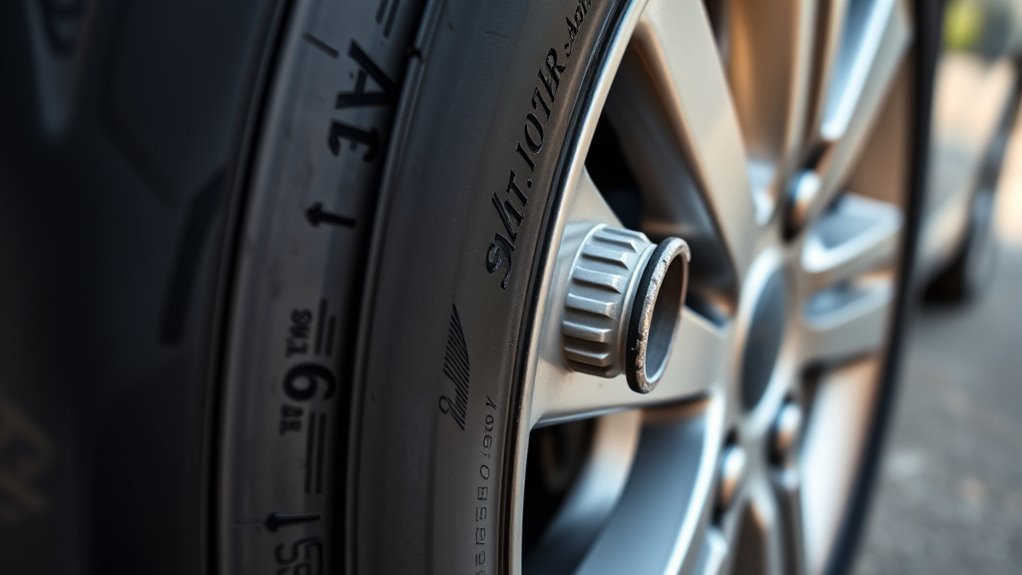
Rim and valve stem problems can cause slow tire air loss even when there is no visible puncture. This is especially common after a pothole impact, curb strike, wheel corrosion, or tire service where the bead did not seal perfectly.
Rim and valve stem issues are important to check when one Hyundai Sonata tire repeatedly loses pressure but the tread looks clean.
- Rim damage: A bent wheel lip or small crack can prevent the tire from sealing correctly.
- Corrosion: Rust, oxidation, or peeling finish near the bead seat can create an uneven sealing surface.
- Valve stem condition: Cracks, looseness, missing caps, damaged cores, or aging rubber can cause slow leaks.
- Bead seating issues: Dirt, old sealant, or improper mounting can prevent the tire bead from sitting flush against the rim.
If bubbles appear around the bead or rim edge, the tire often needs to be dismounted so the wheel can be cleaned, inspected, and resealed. If the wheel is bent or cracked, resealing alone may not solve the problem.
[Products Worth Considering]

TireJect Off-Road Tire Sealant Kit provides 5-in-1 sealing to help fix tread punctures up to 3/8", sidewall punctures up to 3/8", bead leaks, slow leaks, and minor dry rot on low-speed tires. It permanently seals with liquid rubber, recycled tire particles, and Aramid fibers, making it ideal for flats caused by thorns, nails, and screws. The included dispensing cap attaches to the valve stem for a no-mess installation, along with a metal valve core remover tool and valve stem cap. This kit is for off-road use only.

Vigorder rubber cement glue delivers superior adhesion and cures quickly within about 30 seconds for seamless rubber bonding. Once cured, it helps provide a strong, durable, waterproof seal that holds up to vehicle weight, pressure, and heat. Suitable for cars, motorcycles, trucks, bicycles, and off-road tires, it’s designed for emergency patch and maintenance repairs.

Replace worn or malfunctioning GM TPMS sensors with this 433MHz pre-programmed sensor set designed for compatibility with many Chevrolet, Buick, GMC, and Cadillac models. It includes guidance for proper OBDII relearning/pairing after installation and supports reliable long-term operation with a high-performance CR2032 battery. Quality tested for durability and performance to help restore accurate tire pressure monitoring.
Steps to Repair Tire Air Loss
The correct repair depends on where the leak is. Do not assume every leak can be fixed with a plug or sealant. Tire repairs affect safety, handling, and the tire’s ability to stay intact at highway speed.
- Valve core leak: A shop may tighten or replace the valve core, then confirm the leak is gone.
- Valve stem leak: The valve stem may need replacement. On TPMS-equipped wheels, the technician should inspect the sensor and sealing hardware.
- Small tread puncture: A repair may be possible if the puncture is in the repairable tread area and within industry size limits.
- Bead leak: The tire may need to be dismounted, the bead seat cleaned, the rim inspected, and the tire reseated.
- Bent or corroded rim: The wheel may need repair, refinishing, or replacement before it can hold air reliably.
- Sidewall, shoulder, bubble, or severe damage: Replace the tire rather than repairing it.
The U.S. Tire Manufacturers Association explains that a proper puncture repair requires the tire to be removed from the wheel and inspected from the inside. A plug alone is not considered an acceptable permanent repair. The Tire Industry Association also notes that puncture repairs are limited to the center tread area, and shoulder or sidewall damage is not repairable.
[Products Worth Considering]

The JACO FlowPro Tire Inflator measures, inflates, and airs down tires up to 100 PSI with battery-free operation and ±2% accuracy after calibration. It features a glowing pressure dial for night visibility, a heavy-duty steel build with a hybrid hose, and a precision push-to-inflate thumb trigger. The patented Lightning Air Chuck locks on for a secure seal, and the kit includes quick-connect hardware for easy inline use with your air compressor.
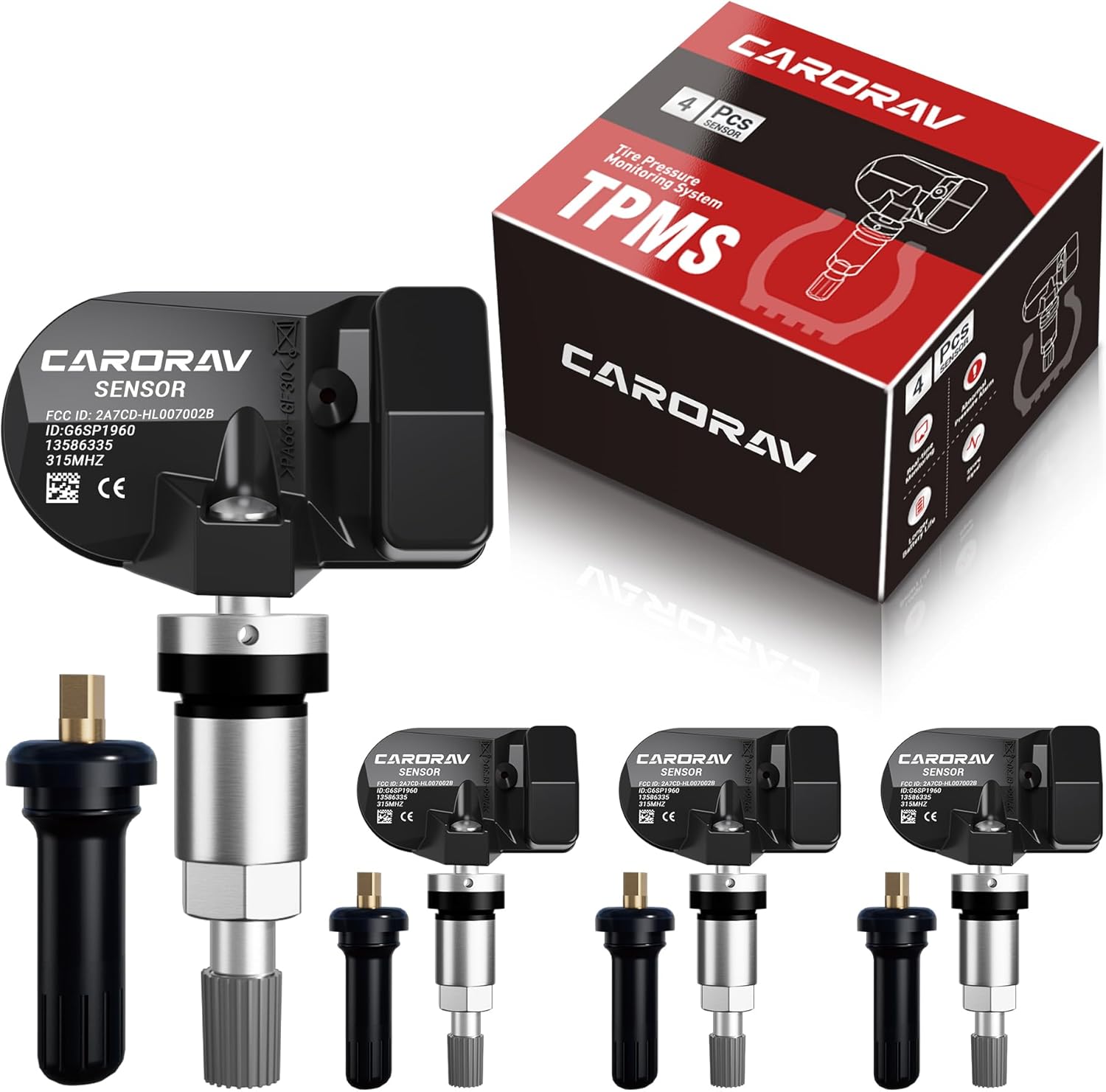
Replace worn or missing TPMS sensors with CARORAV pre-programmed GM-compatible sensors for a smoother installation experience. These 315MHz replacement sensors help monitor tire pressure in real time with long battery life, and they are designed to withstand harsh temperatures. Manual or OBDII relearn may be required to reset the system for proper recognition.

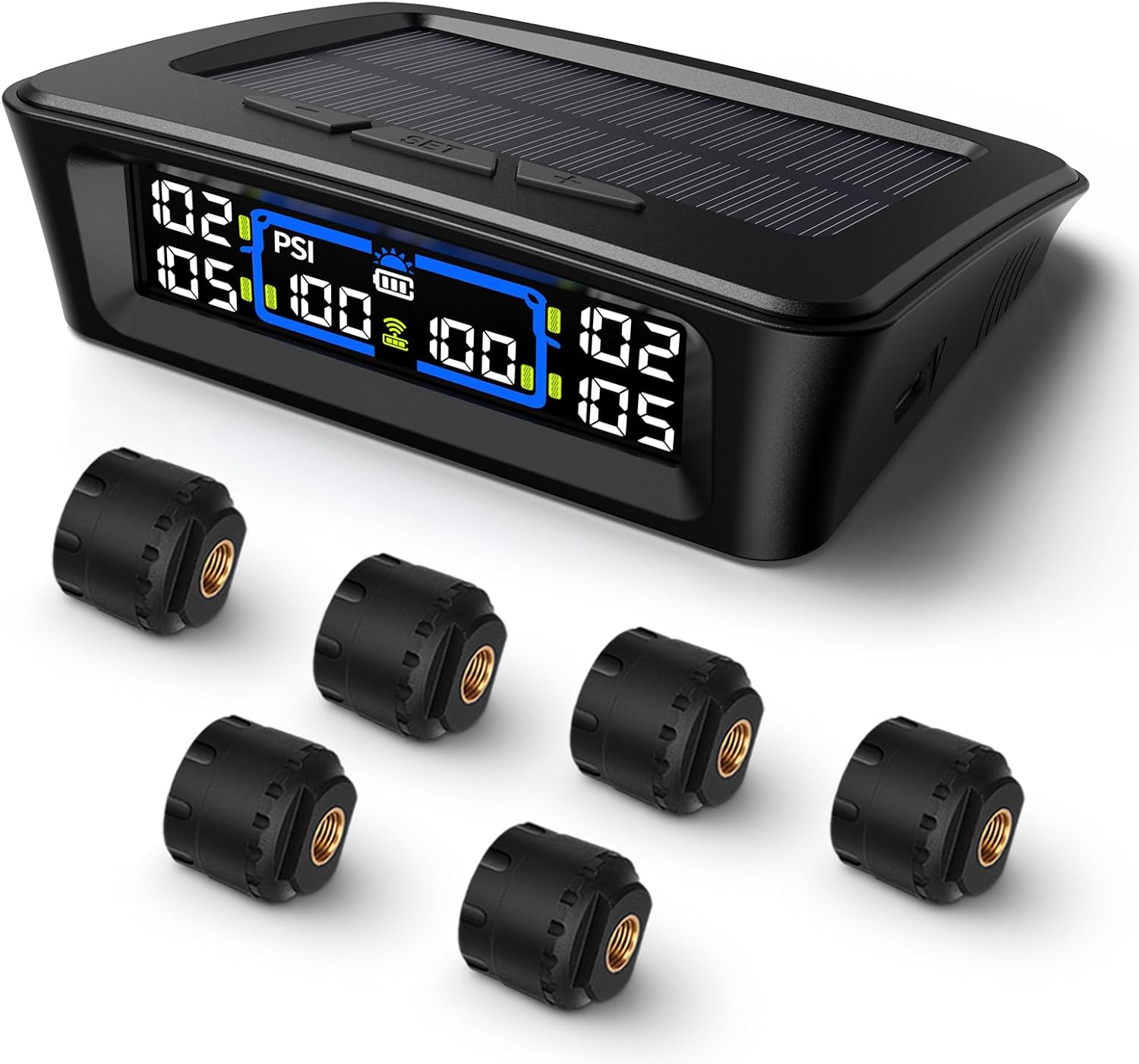
The TYAMATE TM8 solar-powered wireless TPMS delivers real-time tire pressure and temperature monitoring with six alarm modes for safer driving. A vibrant color LCD display shows readings clearly while windshield mounting keeps it hands-free and easy to read. With a wide 0–87 PSI range, strong 433.92 MHz signal transmission, and quick sensor pairing, it’s ideal for RV, sedan, SUV, MPV, and truck use.
Tips for Keeping Your Tires Properly Inflated
Good tire pressure habits help your Sonata handle better, wear tires more evenly, and avoid repeat low-pressure warnings. The most important rule is simple: check pressure cold and inflate to the Hyundai placard value.
Regular Pressure Checks
- Check monthly at minimum: NHTSA recommends monthly pressure checks even on vehicles with TPMS.
- Check cold: For the most accurate reading, check before driving or after the car has been parked for at least three hours.
- Use the placard: The correct PSI is on the driver-door tire label or in the owner’s manual.
- Check all tires: Compare all four tires and the spare if your Sonata has one.
- Recheck after big weather swings: A strong cold front can make a marginal tire low enough to trigger the TPMS.
TPMS is helpful, but it is not a substitute for maintenance. NHTSA says TPMS warns when a tire is significantly underinflated, so a tire can be low before the warning appears.
Proper Valve Maintenance
Valve maintenance is simple but easy to overlook. Keep valve caps installed, check for cracks or looseness, and include the valve stem in every soapy-water leak test. A cap does not seal the tire by itself, but it helps keep dirt and moisture away from the valve core.
| Maintenance Task | Frequency | What to Look For |
|---|---|---|
| Pressure Check | Monthly minimum; weekly if one tire is suspicious | One tire consistently lower than the others |
| Valve Inspection | Monthly | Cracks, looseness, missing caps, bubbles during leak test |
| Tread Inspection | Monthly and after pothole impacts | Nails, screws, cuts, uneven wear, embedded debris |
| Leak Test | As needed | Bubbles at tread, valve stem, bead, or rim edge |
Frequently Asked Questions
Why is one of my tires losing air faster than the rest?
One tire usually loses air faster because of a localized problem such as a tread puncture, valve stem leak, bead leak, bent rim, rim corrosion, or tire damage. Cold weather may make the loss easier to notice, but it should not affect only one tire repeatedly.
What PSI should my Hyundai Sonata tires be at?
Use the cold tire pressure listed on your driver-door placard or in your Hyundai owner’s manual. Do not rely on a universal number or the maximum pressure printed on the tire sidewall. Sonata pressure can vary by model year, trim, tire size, and wheel size.
Is it normal for one tire to lose air in the cold?
It is normal for tire pressure to drop in cold weather, but all four tires should drop in a similar pattern. If one tire drops more than the others or needs repeated refills, inspect it for a slow leak, valve issue, bead leak, or wheel problem.
Can I drive my Sonata if one tire keeps losing air?
You can drive only if the tire is inflated to the correct cold PSI and is not visibly damaged, but you should have the leak inspected soon. Do not continue driving on a tire that is visibly flat, rapidly losing pressure, bulging, cut, or unable to hold air.
How do I find a tire leak if I do not see a nail?
Inflate the tire to the placard PSI, then spray soapy water over the tread, valve stem, valve core, bead area, and rim edge. Growing bubbles show escaping air. If you still cannot find the leak but the same tire keeps dropping, have a tire shop inspect it.
Can a slow tire leak be repaired?
Sometimes. A small puncture in the repairable tread area may be repairable with a proper internal plug-patch after the tire is removed and inspected. Sidewall damage, shoulder damage, large punctures, bubbles, severe wear, and some previous improper repairs usually require tire replacement.
Conclusion
If one tire on your Hyundai Sonata loses air faster, treat it as a warning sign rather than a routine cold-weather annoyance. Temperature changes can lower pressure in every tire, but a single repeat offender usually points to a puncture, valve stem leak, bead leak, rim corrosion, or tire damage. Check the cold PSI, test for bubbles with soapy water, and have the tire professionally inspected if the pressure keeps dropping. Fixing the cause early protects the tire, wheel, fuel economy, handling, and your safety.
Sources
- Hyundai Owner’s Manual — Tires and wheels — Sonata tire pressure examples, cold-weather pressure loss, and tire-size guidance
- Hyundai Owner’s Manual — Recommended cold tire inflation pressures — cold tire definition, warm tire warning, and underinflation risks
- NHTSA TireWise — tire pressure checks, placard guidance, TPMS limitations, and tire safety basics
- FuelEconomy.gov — Gas Mileage Tips — fuel economy impact of underinflated tires
- U.S. Tire Manufacturers Association — Tire Repair Basics — proper puncture repair requirements and plug-patch guidance
- Tire Industry Association — Tire Repair — repair limits, sidewall/shoulder restrictions, and professional inspection guidance

