Your Hyundai Sonata tires can be unsafe even when the tread still looks decent. Age, heat, sunlight, storage, air loss, cracks, and vibration can weaken the rubber and internal structure long before the tire looks “bald.” The safest first step is to check the DOT date code, then inspect the sidewalls, tread, pressure, and how the car feels on the road.
Quick Answer
Check the DOT code on each Hyundai Sonata tire. The last four digits show the week and year it was made. As a conservative Hyundai-focused rule, replace tires after about six years of service, or sooner if you see cracks, bulges, hard rubber, vibration, uneven wear, or repeated air loss.
Key Takeaways
- The DOT date code is the fastest way to confirm tire age, but age is only one part of the safety check.
- Hyundai service guidance treats six years of service as a maximum tire service period; other tire makers may use six-to-10-year guidance, so follow the most conservative recommendation for your tire and vehicle.
- Replace or professionally inspect tires with sidewall cracks, bulges, exposed cord, repeated pressure loss, new vibration, or noise.
- Do not ignore the spare tire. It ages even if it has never been used.
At a Glance
| Time Required | 5–10 minutes for a basic driveway check; longer if the DOT code is on the inner sidewall. |
| Difficulty | Easy for a visual check; moderate if you need to inspect the inner sidewall or spare tire. |
| Tools Needed | Flashlight, tire pressure gauge, tread depth gauge or penny, phone camera, and your Sonata tire placard or owner’s manual. |
| Cost | Free for a DIY inspection; replacement cost depends on tire size, brand, installation, balancing, and local labor. |
Warning: If a tire has a bulge, exposed cord, deep sidewall crack, rapid air loss, or severe vibration, do not keep driving on it as if it is normal. Use the spare only as directed by your owner’s manual, slow down, and have the tire inspected or replaced as soon as possible.
How to Check the Age of Your Hyundai Sonata Tires
To check your Hyundai Sonata tire age, start with the DOT Tire Identification Number on the sidewall. The last four digits show the tire’s manufacture date. The first two digits are the week, and the last two digits are the year. For example, 2319 means the tire was made in the 23rd week of 2019.
- Park safely on level ground and let the tires cool if you also plan to check pressure.
- Find the letters “DOT” on the sidewall. Use a flashlight because the code may be shallow or dirty.
- Look for the final four numbers in the full DOT code. Those four numbers are the date code.
- Check all four tires and the spare. Tires are often replaced in pairs, so one tire can be older than the others.
- Look on both sides of the tire. The full date code may appear only on one side, which can be the inner sidewall.
Pro Tip: Take a photo of each tire’s DOT code and save it with the tire position, such as “front left” or “rear right.” It makes future checks faster and helps a technician confirm whether all four tires are the same age.
For Hyundai vehicles, service guidance treats tire age as an important replacement factor and recommends a maximum tire service period of six years from the date of new vehicle purchase. Tire manufacturers may also publish their own service-life rules, so follow the most conservative guidance from Hyundai, your tire maker, and your tire’s visible condition.
Key Symptoms of Aging Tires Beyond Tread Wear
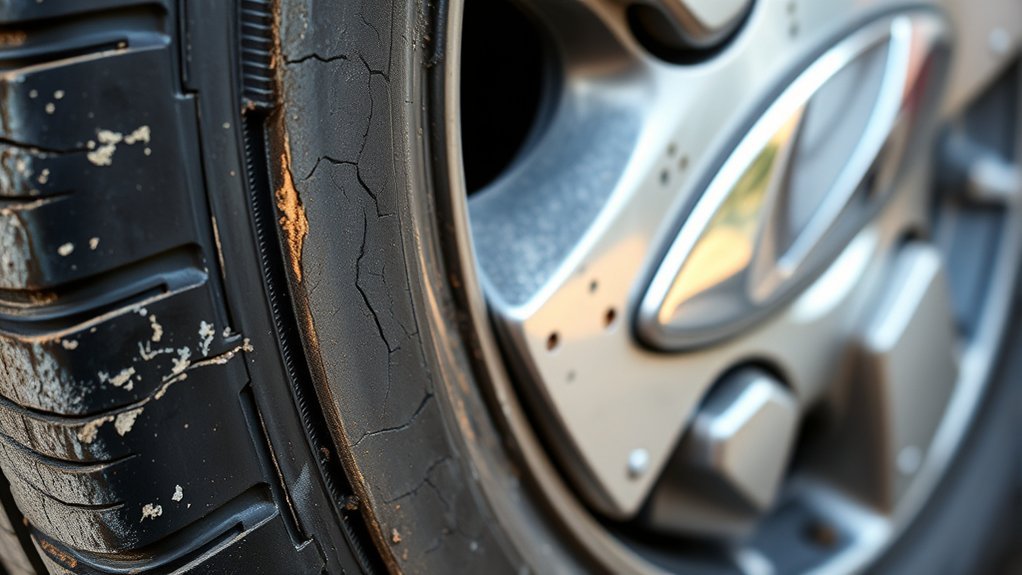
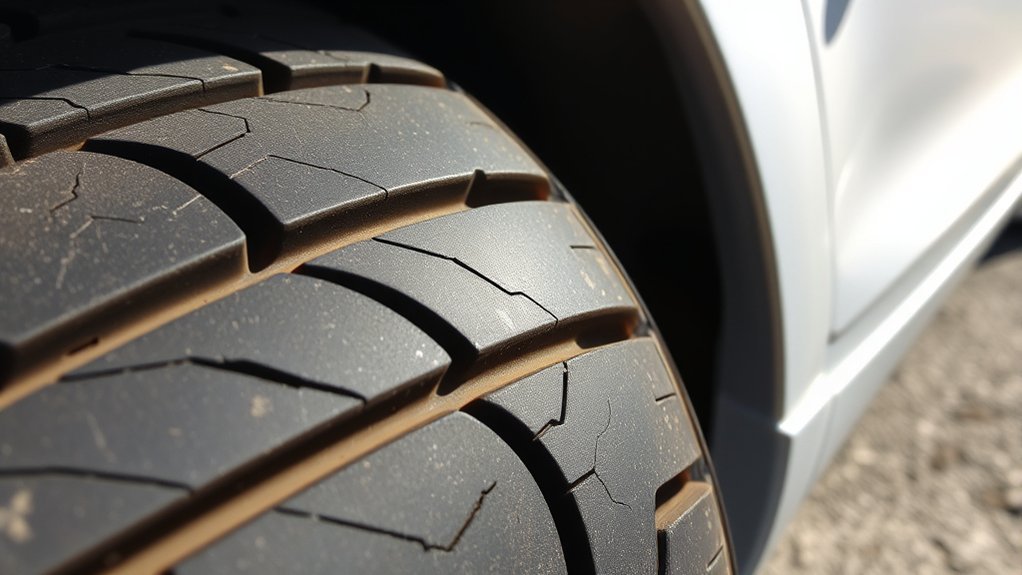
Tread depth matters, but old tires can become unsafe before the tread looks worn out. Rubber changes with time, heat, sunlight, ozone, storage conditions, and poor inflation. Look for these age-related warning signs:
- Fine sidewall cracks that look like spiderwebs.
- Deeper cracks or splits in the sidewall, shoulder, or tread grooves.
- Bulges, bubbles, or lumps on the sidewall or tread area.
- Hard, shiny, or plasticky rubber instead of flexible rubber.
- Repeated air loss even after the valve stem and punctures have been checked.
- New vibration, thumping, wandering, or noise that remains after pressure is corrected.
Use tire age as a safety trigger, not as the only test. A five-year-old tire with cracks may be more urgent than a newer tire with even tread and no damage. A nine-year-old tire may look clean but still need replacement because internal materials can degrade with age.
Why Tire Age Is Crucial for Safety
Tire age matters because the rubber and internal materials change over time. The National Highway Traffic Safety Administration warns that tire aging can be overlooked and can increase crash risk. NHTSA also reported that 511 people died in tire-related crashes in 2024, which makes regular tire checks more than routine maintenance.
Tire Aging Risks
Aging can reduce a tire’s ability to handle heat, flex properly, hold air, and keep the tread bonded to the tire structure. That risk rises when the Sonata is parked for long periods, stored in heat, exposed to direct sunlight, driven underinflated, overloaded, or used on damaged roads.
Hyundai service guidance says that after six years of service, tires should be replaced regardless of the amount of tread wear. NHTSA gives broader consumer guidance that some vehicle and tire manufacturers recommend replacing tires that are six to 10 years old regardless of treadwear. Michelin recommends replacing tires 10 years after the manufacture date as a precaution, including spare tires.
Signs of Deterioration
Physical damage is the clearest sign that a tire needs attention. Replace or professionally inspect a tire if you notice sidewall cracking, cuts, bulges, exposed cord, irregular wear, or damage from driving while flat. Also pay attention to how the Sonata drives. Noise, vibration, pulling, or pressure that will not stay stable can point to tire damage that is not obvious from a quick glance.
Tread depth is not the whole story. An old tire with decent tread can still be unsafe if the rubber has cracked, hardened, lost air repeatedly, or developed internal damage.
What Signs Indicate Cracks and Damage on Your Tires?
Walk around your Sonata and inspect each tire slowly. Turn the steering wheel left and right to expose more of the front tire sidewalls. Use a flashlight to check the shoulder area, inner tread grooves, and sidewall lettering.
| Sign | What It May Mean | What to Do |
|---|---|---|
| Fine spiderweb cracks | Early dry rot or weather checking | Have the tire inspected, especially if it is near six years old. |
| Deep cracks or open splits | Rubber separation or structural weakness | Replace the tire; do not rely on tread depth. |
| Bulge or bubble | Possible internal cord damage | Stop normal use and replace the tire. |
| Exposed fabric or cord | Severe tire damage | Replace immediately. |
| Uneven or cupped wear | Possible alignment, balance, suspension, or inflation problem | Get tire and suspension inspection before replacing tires. |
Also check tread depth. NHTSA says tires are not safe and should be replaced when tread is worn to 2/32 inch. That is the minimum replacement point, not a reason to keep an old or cracked tire in service.
How Flexible Should Your Tire Rubber Be?
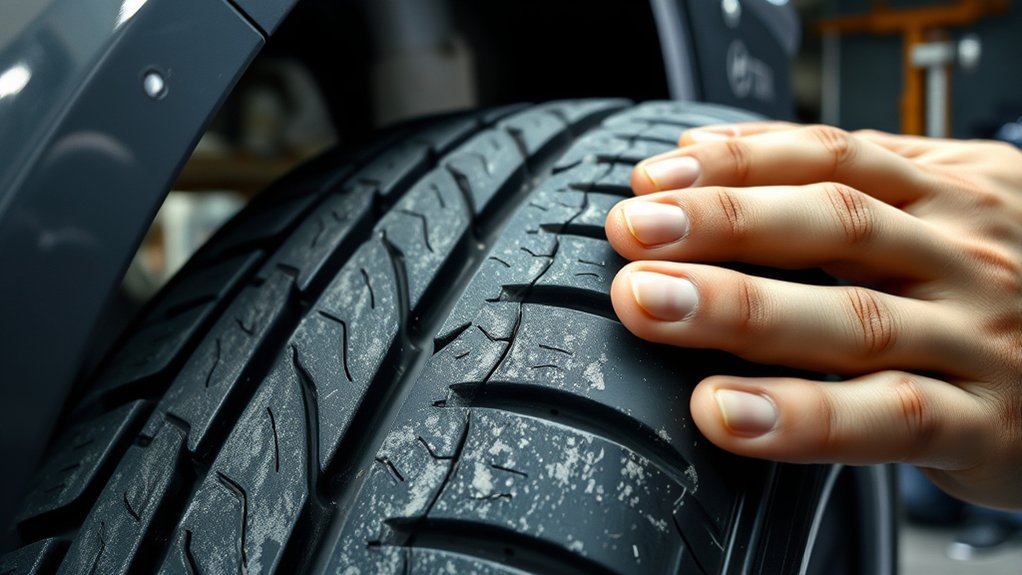
Healthy tire rubber should not feel brittle, glassy, or chalky. You cannot fully judge tire safety by touch, but a hard and shiny surface can be a warning sign when paired with age, cracking, noise, vibration, or poor wet traction.
Do not scrape, cut, or bend the tire to test it. Instead, use a visual and driving-symptom check. If the tire looks dry, faded, cracked, or unusually hard, ask a tire professional to inspect it. This is especially important for a Sonata that is driven mostly short trips, parked outside, or driven in a hot climate.
Note: Tire age cannot always be detected by appearance alone. A tire can look acceptable from the outside and still be near the end of its recommended service life.
What Vibrations and Noises Signal Tire Problems?
New vibration, thumping, humming, or a steering-wheel shake should not be ignored. These symptoms can come from balance or alignment issues, but they can also point to tire separation, internal damage, flat spotting, uneven wear, or a bent wheel.
Check pressure first when the tires are cold. If the vibration remains after pressure is corrected, schedule an inspection. A technician can check balance, runout, tread separation, bent wheels, alignment, and suspension wear. If the tire is older, the inspection should include age and sidewall condition, not just tread depth.
Why Does Persistent Air Loss Matter for Tire Safety?
Persistent air loss matters because underinflated tires run hotter, wear faster, and are more likely to fail. Repeated low-pressure warnings may come from a puncture, leaking valve stem, damaged wheel, temperature swings, TPMS sensor issue, bead leak, or age-related tire damage.
Use the cold tire pressure listed on your Sonata’s driver-side tire placard or owner’s manual. Do not use the maximum pressure molded into the tire sidewall as your normal inflation target. NHTSA recommends checking all tires, including the spare, at least once a month when they are cold.
Warning: TPMS is not a substitute for regular tire maintenance. If the light keeps returning after you inflate the tires correctly, have the tire and TPMS system checked.
How Long-Term Parking Affects Your Tires
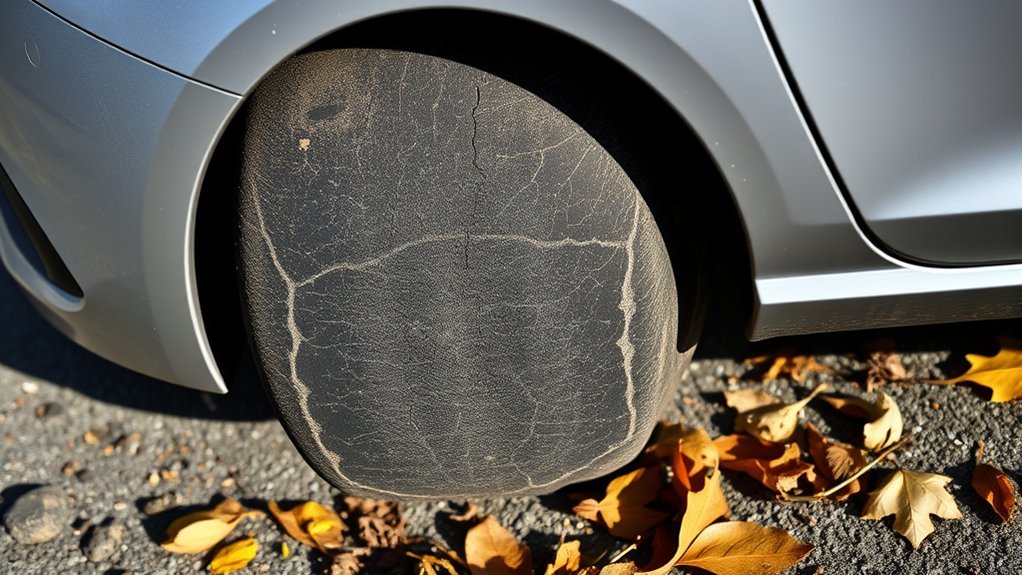
Long-term parking can age or deform tires even when the car is not being driven. A Sonata that sits for weeks can develop flat spots, sidewall stress, pressure loss, and faster weathering from heat, sunlight, and ozone.
Hyundai tire storage guidance recommends reducing the load on the tires when possible, storing tires in a cool and dry place, keeping them away from direct sunlight, and keeping them away from ozone sources such as furnaces and electric motors with contact brushes. If the vehicle cannot be lifted, driving it at least once a week for a proper warm-up can help reduce flat spotting.
- Inflate tires to the Sonata’s recommended cold pressure before storage.
- Park on a clean, dry surface away from standing water and oil.
- Use shade or indoor parking when possible.
- Move the vehicle periodically if it is safe and legal to do so.
- Check pressure and inspect cracks before returning the car to regular driving.
When to Replace Tires, Regardless of Their Appearance
Replace Hyundai Sonata tires based on age, condition, tread, pressure behavior, and performance. Do not wait for every warning sign to appear. Use this decision table as a practical guide:
| Condition | Decision |
|---|---|
| Six years of service on original Sonata tires | Plan replacement based on Hyundai’s conservative service guidance, even if tread remains. |
| Six to 10 years from manufacture on replacement tires | Check the tire maker’s service-life recommendation and get a professional inspection. |
| 10 years from manufacture | Replace as a precaution, including spare tires. |
| Tread at 2/32 inch | Replace. This is the minimum unsafe tread threshold. |
| Deep cracks, bulges, exposed cord, or sidewall puncture | Replace immediately; do not rely on repair for sidewall damage. |
| Repeated air loss, noise, vibration, or pulling | Inspect promptly; replace if the tire is damaged or aged out. |
When replacing tires, use the size, load rating, speed rating, and cold inflation pressure specified on the Sonata’s tire placard and owner’s manual. If replacing only two tires, many tire makers and service guides recommend placing the newer tires on the rear axle for better wet-road stability, unless your specific tire setup or owner guidance says otherwise.
[Products Worth Considering]

Measure tire tread depth quickly and accurately with this LUMITECO dial gauge that reads in 1/32" increments up to 14/32". The color-coded green/yellow/red zones make it easy to judge tire wear and know when replacement is needed. A rugged, compact design with a protective pouch helps keep the gauge ready for use on cars, trucks, motorcycles, and more.

The SAFELIFE dial tire tread depth gauge measures tread depth in 1/32 inch increments with clear, easy-to-read 2-inch dial face. Color zones using a traffic light system help you quickly judge whether tread is low, marginal, or ample for safer driving. Built with a durable zinc cast body and a metal detect probe for precise, comfortable use across cars, motorcycles, trucks, and buses.

Monitor tire tread wear with a smart, color-coded depth gauge that shows clear condition ranges at a glance. The bar is range marked for fast, easy readings, helping you maintain safer traction and performance. Each gauge is portable with a pocket clip, and the set includes 20 units for daily use and sharing.
What to Do When You Need New Sonata Tires
Before buying replacement tires, confirm the correct tire size on the driver-side door placard. Sonata tire sizes vary by model year, trim, wheel size, and market, so do not buy only by memory or by what another Sonata uses.
- Write down the tire size, such as 215/55R17 or 235/45R18, from your placard or current approved fitment.
- Match the load rating and speed rating recommended for your vehicle.
- Choose tires that match your climate: all-season, winter, summer, or touring tires.
- Replace tires in pairs or a full set when possible to avoid uneven braking and handling.
- Have new tires balanced and ask for an alignment check if the old tires wore unevenly.
[Products Worth Considering]

Accurately measure tire tread depth with a calibrated gauge marked from 0 to 1 inch in 1/32 inch increments. The color-coded bar helps you quickly identify tread condition ranges, supporting safe driving for trucks, motorcycles, automobiles, and passenger vehicles.

Milton S-921 pencil tire pressure gauge helps you maintain optimal tire pressure for passenger cars with accurate readings in PSI and kPa. It features a built-in deflator valve for convenient pressure adjustments, plus a single chuck head and nylon indicator bar for easy use on the go. Built from durable plated brass and designed for reliable performance, it’s a practical road trip and cold-weather maintenance tool.

TireJect Off-Road Tire Sealant Kit provides 5-in-1 sealing to help fix tread punctures up to 3/8", sidewall punctures up to 3/8", bead leaks, slow leaks, and minor dry rot on low-speed tires. It permanently seals with liquid rubber, recycled tire particles, and Aramid fibers, making it ideal for flats caused by thorns, nails, and screws. The included dispensing cap attaches to the valve stem for a no-mess installation, along with a metal valve core remover tool and valve stem cap. This kit is for off-road use only.
Where to Get Professional Tire Inspections in Oklahoma City
If you are in Oklahoma City, use the Hyundai dealer locator or the Hyundai tire service page to find a Hyundai-authorized service center near your ZIP code. A local tire shop can also inspect tire age, damage, pressure loss, tread depth, balance, and alignment, but Hyundai-authorized service is helpful when you want Sonata-specific tire placard, TPMS, and maintenance guidance.
[Products Worth Considering]

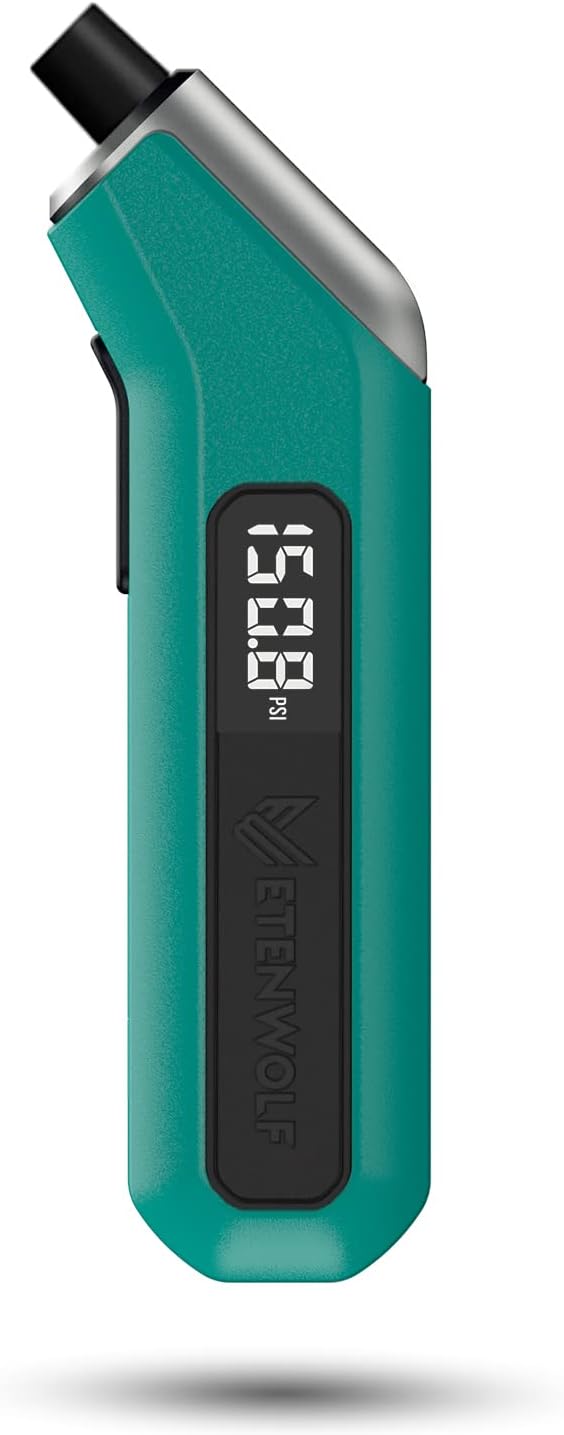
ETENWOLF T300 is a calibrated digital tire pressure gauge for accurate readings from 3 to 200 PSI across light and heavy-duty vehicles. It includes thermal compensation for reliable performance in extreme cold or heat, with an auto shut-off to extend battery life and an LED for easier reading. The sturdy design supports rugged everyday use, making it ideal for pickups, RVs, and industrial applications.

ETENWOLF’s calibrated digital tire pressure gauges deliver accurate readings across a wide pressure range, from below 12 PSI to above 140 PSI. The built-in thermal compensation helps maintain performance in extreme cold and hot conditions, while the LED light improves visibility for quick checks. Includes replaceable AAA batteries for long-lasting use and convenience for everyday tire monitoring.

Measure tyre tread depth precisely with a digital gauge that reads in both MM and inches, helping you monitor safe driving conditions. The large LCD screen is easy to operate, and the compact tool fits for cars, trucks, and motorcycles. It provides high accuracy with a 0-25.4mm range and includes a 1-year warranty for added peace of mind.
Qualified Tire Technicians Available
A qualified technician should check more than tread depth. Ask for the DOT date on each tire, sidewall inspection, tread depth measurement, pressure check, valve-stem inspection, wheel inspection, and a look for uneven wear patterns. If the tire is old, cracked, bulging, or losing air, replacement is usually safer than trying to stretch its remaining life.
Comprehensive Tire Inspection Services
A complete inspection should include:
- DOT date code on all four tires and the spare.
- Cold tire pressure compared with the Sonata placard.
- Tread depth across the inner, center, and outer grooves.
- Sidewall cracks, cuts, bubbles, bulges, and impact damage.
- Signs of alignment, balance, suspension, or wheel problems.
- TPMS warning history if the light keeps returning.
Convenient Location and Accessibility
For Oklahoma City drivers, the most reliable location is the one that can inspect the tires soon and provide the correct replacement size for your Sonata. If you notice rapid pressure loss, a sidewall bulge, or severe vibration, do not wait for a routine appointment. Call ahead, explain the symptom, and ask whether the shop recommends towing or using the spare for a short emergency trip.
Frequently Asked Questions
Are 20 year old tires safe to drive on?
No. A 20-year-old tire is far beyond normal passenger tire service-life guidance, even if the tread looks unused. Replace it before driving. This includes spare tires, collector-car tires, and tires on vehicles that sit for long periods.
Is a tire from 2017 still good?
As of 2026, a tire made in 2017 is about nine years old. Even with good tread, it should be professionally inspected and likely replaced soon. Replace it immediately if it has cracks, bulges, hard rubber, repeated air loss, vibration, or any visible damage.
Where is the DOT date code on a Hyundai Sonata tire?
Look for the letters “DOT” on the tire sidewall. The full code may be on the outer or inner sidewall, so check both sides if you cannot find the final four digits. Those four digits show the week and year the tire was made.
Do Hyundai Sonata spare tires age out?
Yes. Spare tires age even when they are not used. Check the spare’s DOT date code, pressure, cracks, and tread condition. Do not use an old spare as a normal replacement for worn tires except in a short emergency, and follow the speed and distance limits in your owner’s manual.
Can I keep driving if the tread is good but the tires are old?
Do not rely on tread alone. If the tire is near or beyond Hyundai’s service-life guidance, or if it has cracks, air loss, noise, vibration, bulges, or hardened rubber, have it inspected and replaced if needed. Age and condition matter as much as tread depth.
Should I replace one old Sonata tire or all four?
If only one tire is damaged, ask a tire professional whether one, two, or four tires are needed. For best handling and braking, tires on the same axle should closely match in size, type, tread depth, and condition. If two tires are replaced, the newer pair is commonly placed on the rear axle for wet-road stability.
Conclusion
Old Hyundai Sonata tires are not safe just because they still have tread. Check the DOT date code, inspect for cracks and bulges, monitor pressure, listen for vibration or noise, and do not forget the spare. If your tires are around six years in service, beyond the tire maker’s age guidance, or showing signs of deterioration, replacement is the safer choice. A few minutes of inspection can prevent a blowout, poor wet traction, or a roadside emergency.
Sources
- NHTSA TireWise — tire maintenance, tire aging, tread depth, TPMS, pressure, and tire-related crash safety information.
- NHTSA Tire Buyers’ FAQ — DOT Tire Identification Number and tire date-code explanation.
- Hyundai Tire Maintenance Best Practices TSB — Hyundai tire replacement, six-year service guidance, and storage recommendations.
- Michelin: When to Replace Tires — manufacturer guidance on tire age, damage, inspections, and 10-year maximum service life.
- Hyundai Tire Service — Hyundai tire service and dealer service resources.
- Hyundai Dealer Locator — locating Hyundai-authorized service centers by ZIP code.