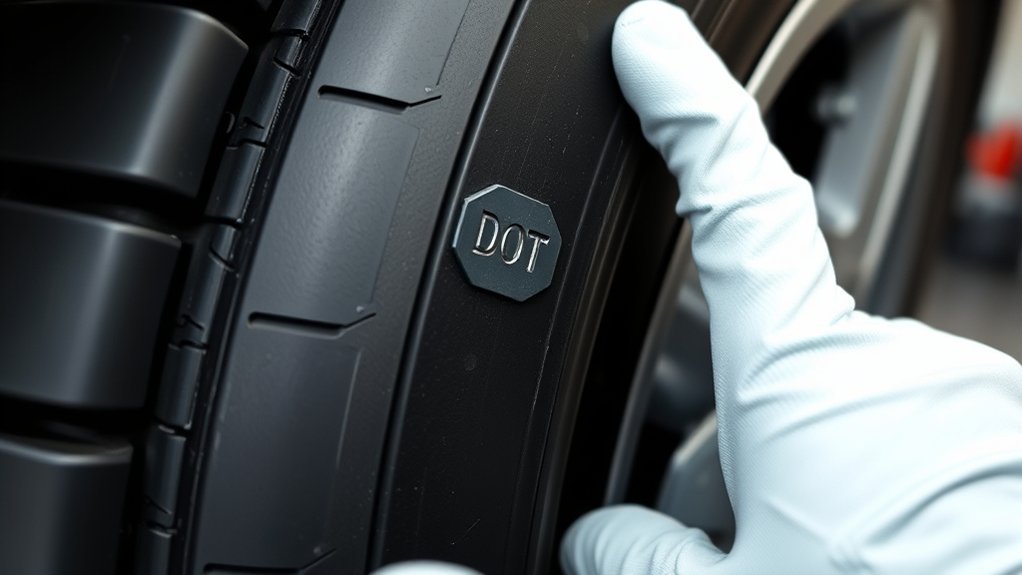
You can read a tire’s year code by finding the DOT Tire Identification Number on the sidewall and checking the final date-code digits. On modern tires, the last four numbers show the week and year of manufacture, so 2319 means the tire was made in the 23rd week of 2019.
Quick Answer
To read a tire year code, find the DOT/TIN on the tire sidewall and look at the final four digits. The first two digits are the production week, and the last two digits are the production year. A code ending in 1023 means the 10th week of 2023.
Key Takeaways
- The tire date code is the final four digits of the DOT Tire Identification Number on most modern tires.
- The first two date-code digits show the production week, and the last two show the production year.
- Current U.S. new-tire TINs use a 13-symbol structure, while retreaded tires use a 7-symbol TIN.
- Older pre-2000 tires may have a three-digit date code, which is not precise enough for modern safety decisions.
- Treat tire age as a safety factor, especially after six years, and replace tires with cracks, bulges, air-loss problems, vibration, or other damage.
At a Glance
| Time Required | 2 to 5 minutes per tire |
| Difficulty | Easy |
| Tools Needed | Flashlight, cloth, tire pressure gauge, phone camera or notepad |
| Cost | Free unless the tire needs inspection or replacement |
What Is a Tire Date Code?

A tire date code is the part of the Tire Identification Number, or TIN, that tells you when the tire was made. It is molded into the tire sidewall as part of the DOT marking. On modern tires, the date code uses four numbers. The first two numbers identify the week of manufacture, and the final two numbers identify the year.
For example, a tire with a date code ending in 1023 was made in the 10th week of 2023. A tire ending in 2319 was made in the 23rd week of 2019. This date does not tell you tread depth, storage history, or condition, but it gives you the tire’s age, which is a key safety clue.
The current U.S. tire identification requirements are listed in 49 CFR 574.5. That rule explains the TIN structure and states that the date code is the final group of four numerical symbols.
Warning: Do not judge tire safety by tread depth alone. Rubber and internal tire materials age over time, and an old tire can become risky even when the tread still looks usable.
Where to Find the DOT Number
You’ll find the DOT number on the tire sidewall. Look for the letters DOT, then read the full Tire Identification Number that follows. On some tires, part of the code may be easier to see on the outer sidewall, while the full date code may appear only on one side. If you cannot find the final four digits, check the inner sidewall or ask a tire shop to rotate or lift the vehicle safely.
Sidewall Code Location
Start by cleaning the sidewall with a cloth so the molded letters stand out. Use a flashlight and scan the sidewall slowly. The date code may be inside a small oval or may appear at the end of the TIN without a clear border.
| What to Check | What It Tells You |
|---|---|
| DOT letters | Shows you found the tire identification marking |
| Full TIN | Identifies the tire for manufacturing and recall purposes |
| Final four digits | Shows the week and year the tire was made |
| Both sidewalls | Helps you find the complete code if one side shows only partial information |
Pro Tip: Take a clear photo of the full DOT/TIN before buying used tires, mounting seasonal tires, or checking for recalls. The last four digits show age, but the complete TIN can matter for recall identification.
Full DOT Marking
The DOT symbol tells you the tire is certified by the manufacturer as meeting applicable Federal Motor Vehicle Safety Standards. The TIN that follows includes manufacturing information, and the final four numerical symbols identify the manufacturing week and year.
Do not stop at the first numbers you see. Tire sidewalls also include size, load index, speed rating, traction grade, temperature grade, and other markings. For age, you need the final date-code group within the DOT/TIN marking.
How to Read a Tire Year Code
To read a tire year code, focus on the last four digits of the DOT/TIN date code. The first two digits are the week of manufacture, and the last two digits are the year of manufacture.
| Date Code | How to Read It | Meaning |
|---|---|---|
| 1023 | 10 = week, 23 = year | 10th week of 2023 |
| 2319 | 23 = week, 19 = year | 23rd week of 2019 |
| 0109 | 01 = week, 09 = year | First full calendar week of 2009 |
| 0000 | Invalid example | Recheck the sidewall or ask a tire professional |
Under the U.S. rule, the week code starts with 01 for the first full calendar week of the year. The year code uses the final two digits of the manufacturing year. This is why 0109 means the first full calendar week of 2009.
Step-by-Step Tire Date Code Check
- Park safely. Use a flat surface, set the parking brake, and avoid crawling under a vehicle that is not properly supported.
- Find the DOT marking. Look on the tire sidewall for the letters “DOT.”
- Read the full TIN. Scan to the end of the DOT/TIN marking. The date code is the final numerical group.
- Decode the final four digits. First two digits = week. Last two digits = year.
- Calculate tire age. Compare the date code with the current date and note the tire’s approximate age.
- Inspect condition. Look for cracks, bulges, cuts, exposed cords, hard rubber, vibration, or repeated pressure loss.
- Check all tires, including the spare. Tires on the same vehicle may have different manufacturing dates.
Note: The date code tells you when the tire was made, not how it was stored or maintained. A newer tire can still be unsafe if it is damaged, underinflated, overloaded, or stored poorly.
How Current 13-Symbol TINs Work
For current new tires under U.S. requirements, the Tire Identification Number uses 13 symbols. The structure is:
- Plant code: the first three symbols, assigned by NHTSA.
- Manufacturer’s code: the next six symbols, used to identify tire characteristics or brand-owner details.
- Date code: the final four numerical symbols, showing week and year of manufacture.
This means the last four digits are still the part most drivers need for tire age, but the complete 13-symbol TIN is useful for registration, warranty records, and recall checks.
Older and Retread TIN Formats
Not every tire you inspect will have the same TIN structure. Older tires and retreaded tires can look different, so it helps to know which format you are reading.
| TIN Type | Typical Structure | What to Do |
|---|---|---|
| Current new tire | 13 symbols: 3-symbol plant code, 6-symbol manufacturer code, 4-digit date code | Read the final four digits for age |
| Retreaded tire | 7-symbol TIN, with the “R” retread mark separate from the TIN | Check the final four digits and ask a tire professional if unsure |
| Older pre-phase-out format | Older two-symbol plant-code format with date code at the end | Use the final four digits for post-2000 tire age |
| Pre-2000 tire | Often a three-digit date code | Treat as very old and unsuitable for normal road use |
What Pre-2000 Tire Codes Mean
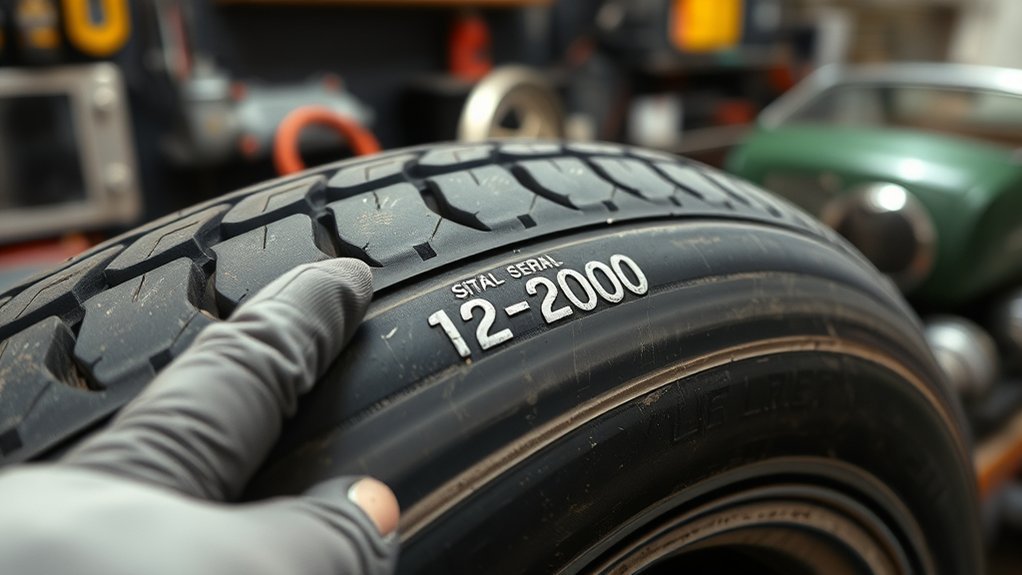
Many pre-2000 tires used a three-digit date code. The first two digits identified the production week, and the last digit identified the year within a decade. For example, 439 could mean the 43rd week of a year ending in 9, such as 1999.
The problem is that a three-digit code does not clearly show the full year or century. It is not precise enough for modern safety decisions. If you find a tire with a three-digit date code, treat it as old and do not use it for normal road driving. Keep it only as a display or collector item if appropriate, not as a working tire.
Why the DOT Code Matters for Safety
The DOT code matters because it gives you more than a manufacturing date. It helps identify the tire, supports recall tracking, and confirms that the tire carries the required DOT certification mark for applicable federal tire standards. The NHTSA TireWise guidance also explains that tire aging can raise failure risk and that you should consider both age and condition.
A tire can have usable tread and still be too old, damaged, or poorly maintained for safe service.
Use the DOT/TIN when you:
- Check tire age before buying used tires.
- Decide whether seasonal tires are still safe to mount.
- Track the age of a spare tire.
- Search for tire recalls.
- Document tire information for warranty or service records.
How to Calculate Tire Age From the DOT Date
After you decode the date code, compare it with today’s date. For example, if the tire code ends in 2319, the tire was made in the 23rd week of 2019. In 2026, that tire is about seven years old. That does not automatically prove it has failed, but it does mean you should inspect it carefully and follow the tire maker’s and vehicle maker’s age guidance.
Check all four road tires and the spare. Tires on the same vehicle may not be the same age, especially if one tire was replaced after a puncture or if the spare has never been rotated into service.
When to Replace an Aged Tire
There is no single age number that proves every tire is safe or unsafe, but age matters. NHTSA says some vehicle and tire manufacturers recommend replacing tires that are six to 10 years old, regardless of treadwear. Treat six years as a serious inspection point, and do not push an old tire beyond the tire maker’s or vehicle maker’s recommendation.
Replace the tire sooner if you see any of these warning signs:
- Sidewall cracking or weather checking
- Bulges, bubbles, or separated areas
- Cuts, exposed cords, puncture damage, or bead damage
- Hard, brittle, or severely dry rubber
- Vibration, thumping, pulling, or noise that was not there before
- Repeated air-pressure loss
- Uneven wear caused by underinflation, overloading, or alignment issues
If the tire is close to 10 years old, has an unreadable date code, or shows any damage, have it inspected by a qualified tire professional before driving on it.
[Products Worth Considering]

This spare tire tool kit is designed for the 2004 to 2018 Ford F-150 to help you loosen and tighten wheel lug nuts and manage the spare tire and provided jack functions from underneath the vehicle. It includes the lug nut wrench and extension pieces plus a convenient storage carrying case for organized transport. The jack itself is not included.

Monitor tire tread wear with a smart, color-coded depth gauge that shows clear condition ranges at a glance. The bar is range marked for fast, easy readings, helping you maintain safer traction and performance. Each gauge is portable with a pocket clip, and the set includes 20 units for daily use and sharing.

The SAFELIFE dial tire tread depth gauge measures tread depth in 1/32 inch increments with clear, easy-to-read 2-inch dial face. Color zones using a traffic light system help you quickly judge whether tread is low, marginal, or ample for safer driving. Built with a durable zinc cast body and a metal detect probe for precise, comfortable use across cars, motorcycles, trucks, and buses.
Spare Tires and Low-Mileage Vehicles
Spare tires, collector-car tires, RV tires, trailer tires, and low-mileage vehicle tires can age before they wear out. A spare may look new because it has little tread wear, but heat, time, storage conditions, and lack of use can still affect the rubber and internal structure.
Check the spare tire’s DOT date code at least twice a year and before long trips. Also confirm its air pressure, inspect the valve stem, and make sure the jack and lug wrench are present and usable.
[Products Worth Considering]

Measure tire tread depth quickly and accurately with this LUMITECO dial gauge that reads in 1/32" increments up to 14/32". The color-coded green/yellow/red zones make it easy to judge tire wear and know when replacement is needed. A rugged, compact design with a protective pouch helps keep the gauge ready for use on cars, trucks, motorcycles, and more.

Accurately measure tire tread depth with a calibrated gauge marked from 0 to 1 inch in 1/32 inch increments. The color-coded bar helps you quickly identify tread condition ranges, supporting safe driving for trucks, motorcycles, automobiles, and passenger vehicles.

The Dr.Roc spare tire tool kit helps you release, lower, or raise your spare tire with reliable extension tools and a lug nut wrench. It is made from rustproof automotive-grade steel and includes an organized carry case for convenient storage. Designed for compatibility with select GM models from the late 1990s through 2019, it uses upgraded extension components to install and remove spare tires with less hassle.
How to Check Tire Recalls With the DOT/TIN
The DOT/TIN can help you check whether a tire is part of a safety recall. Use the complete tire brand, model, size, and DOT/TIN when searching. NHTSA provides a recall search tool for vehicles, tires, car seats, and other equipment.
If you bought replacement tires, register them with the tire manufacturer or retailer when possible. Registration helps manufacturers contact you if a tire recall affects your exact tire line or production range.
[Products Worth Considering]

Steelman white tire marking crayons provide high-contrast, semi-permanent marks for repairing and inspecting tires and equipment. They write on wet or dry, smooth or coarse surfaces including rubber, metal, glass, and wood, making them ideal for puncture location and damage outlining. The lead- and zinc-free crayons resist weather and fading yet wipe away when you no longer need the marks.

ETENWOLF T300 is a calibrated digital tire pressure gauge for accurate readings from 3 to 200 PSI across light and heavy-duty vehicles. It includes thermal compensation for reliable performance in extreme cold or heat, with an auto shut-off to extend battery life and an LED for easier reading. The sturdy design supports rugged everyday use, making it ideal for pickups, RVs, and industrial applications.

The Trivd Frol 1/2" air impact wrench delivers high performance torque up to 1500 ft-lbs with a twin hammer impact mechanism for strong, balanced blows. It features an ergonomic grip, compact lightweight design, and quick-stop control with 3 forward speeds up to 8000 RPM plus a reverse speed. Built for demanding automotive repair and tire shop work, the rear exhaust helps keep debris away from the surface.
Getting Help With Tire DOT Codes

If you cannot find or read the DOT date code, ask a tire shop, vehicle service center, or tire manufacturer support team to inspect it. This is especially important if the code is on the inner sidewall, the tire is mounted in a tight wheel well, or the tire shows cracks, bulges, or other damage.
A tire professional can confirm the date code, check the tire’s condition, measure tread depth, inspect the sidewall, check air pressure, and advise whether the tire should stay in service. That extra check is worth it when the tire is old, unknown, or used.
Frequently Asked Questions
How do you read a 3-digit DOT code?
A three-digit tire date code usually means the tire was made before 2000. The first two digits show the production week, and the last digit shows the year within a decade. Because it does not show the full year, treat any tire with a three-digit code as too old for normal road use.
How long are tires good after the DOT date?
Many vehicle and tire manufacturers recommend replacing tires somewhere in the six- to 10-year range, even if tread remains. Check your tire maker’s guidance, inspect the tire often after six years, and replace it sooner if it has cracks, bulges, vibration, air-loss problems, or other damage.
What is the difference between 3-digit and 4-digit tire date codes?
A 3-digit date code is an older pre-2000 format. It shows the week and only one digit for the year. A 4-digit date code is the modern format. It shows the week with the first two digits and the year with the final two digits, such as 2319 for the 23rd week of 2019.
How do you check tire age by DOT number?
Find the DOT/TIN on the tire sidewall and read the final four digits. The first two digits are the week, and the last two digits are the year. Then compare that date with the current date to estimate tire age.
Why can’t I find the tire date code on the outside sidewall?
Some tires show the complete DOT/TIN date code on only one sidewall. If the outer sidewall does not show the final four digits, check the inner sidewall or ask a tire shop to inspect it safely.
Does good tread mean an old tire is safe?
No. Tread depth is only one safety factor. Tire age, rubber condition, storage history, inflation, loading, damage, and vibration also matter. An old tire with good tread can still be unsafe if the rubber or internal structure has degraded.
Conclusion
Reading a tire’s DOT date code takes only a few minutes, but it can help you avoid driving on an old or questionable tire. Find the DOT/TIN on the sidewall, read the final four digits, decode the week and year, then compare that age with the tire’s condition and the manufacturer’s guidance.
If the tire is old, damaged, hard to identify, or part of a recall, do not guess. Have it checked by a qualified tire professional before you drive.
Sources
- 49 CFR 574.5 – Tire identification requirements — current TIN structure, DOT symbol, date-code format, and retread requirements.
- NHTSA TireWise: Tire Safety Ratings and Awareness — tire aging, DOT/TIN age reading, and maintenance guidance.
- NHTSA Recalls Search — tire and equipment recall search, recall process, and registration reminders.