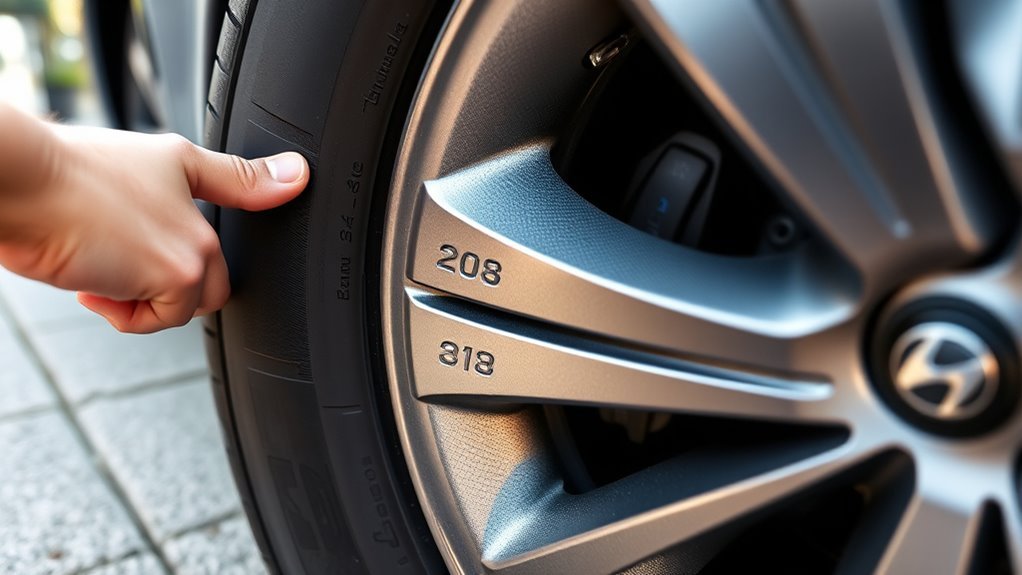
Checking the tire date code on your Hyundai Sonata tells you when each tire was made, not when it was installed. That matters because tires can age even when the tread still looks usable. Use the DOT Tire Identification Number, inspect all four tires and the spare if equipped, then combine the date with tread depth, visible damage, pressure loss, and driving feel before deciding whether to keep, inspect, or replace a tire.
Quick Answer
Find the sidewall marking that begins with DOT. The full tire identification number ends with a four-digit date code: the first two digits are the manufacturing week and the last two are the year. For example, 2421 means the tire was made in week 24 of 2021.
Key Takeaways
- The date code is the last four numbers of the full DOT Tire Identification Number.
- Read the code as WWYY: week first, year second. Example: 2519 = week 25 of 2019.
- The full TIN may be on the inner sidewall, so check both sides of each tire.
- Age is only one safety factor. Also check tread depth, cracks, bulges, cuts, uneven wear, pressure loss, and vibration.
- Many vehicle and tire manufacturers recommend replacing tires at about six to 10 years, regardless of treadwear. Follow your Sonata owner’s manual and your tire manufacturer’s guidance.
At a Glance
| Time Required | 5–10 minutes for all four tires; longer if the full code is on an inner sidewall. |
| Difficulty | Easy for visible sidewalls; moderate if you need a shop to view inner-side markings. |
| Tools Needed | Flashlight, phone camera, rag, mild cleaner, tire pressure gauge, and tread depth gauge or penny. |
| Cost | Free to inspect yourself; professional inspection or tire replacement costs vary by shop, tire size, and brand. |
How to Read the DOT Date Code on a Hyundai Sonata Tire
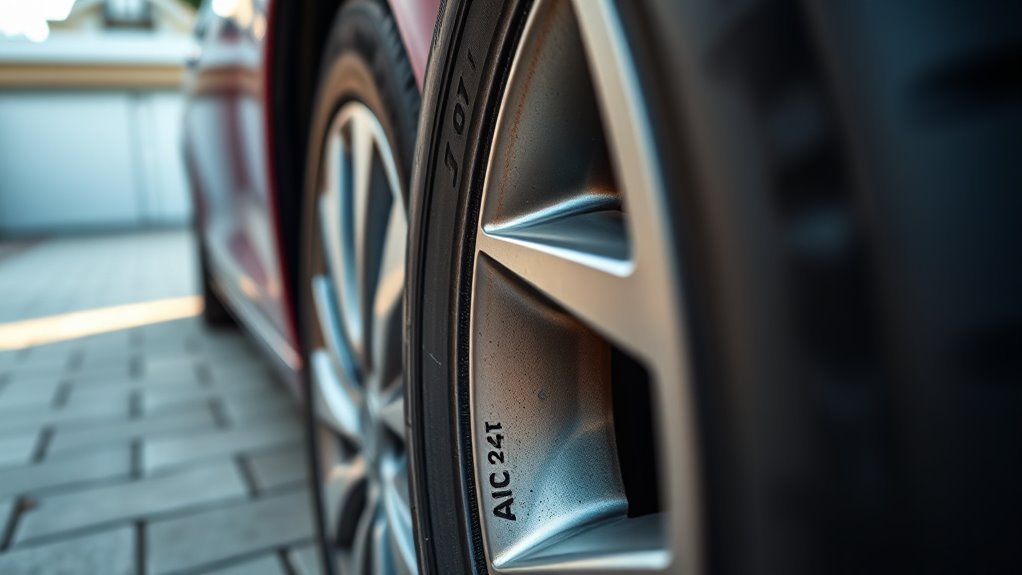
Look for the letters DOT on the tire sidewall. The full code is the tire’s Tire Identification Number, often shortened to TIN. The date code is the final four numbers in the full TIN.
Read those four numbers as WWYY:
- First two digits: manufacturing week.
- Last two digits: manufacturing year.
For example, a tire ending in 2519 was made in week 25 of 2019. A tire ending in 3520 was made in week 35 of 2020. The date is a manufacturing date, not an installation date, so a “new-looking” tire may still be older than expected if it sat in storage.
Note: The full DOT/TIN may appear on only one side of the tire. If the outside sidewall shows “DOT” but does not end with four date digits, check the inner sidewall or ask a tire shop to inspect it safely.
Find the DOT Code on Your Sonata Tires
On most Hyundai Sonata tires, the DOT code is molded into the sidewall near the rim or bead area. It can be shallow, dirty, or facing inward, so use a flashlight and clean the sidewall gently before reading it.
- Park safely first. Use a flat surface, shift to Park, set the parking brake, and keep clear of traffic.
- Start with the outer sidewall. Look near the rim for “DOT,” then follow the characters to the end of the sequence.
- Turn the front wheels if needed. Turning the steering wheel can make the front tire sidewalls easier to see.
- Check the inner sidewall. If the date digits are not visible outside, the full code may face inward.
- Repeat for all four tires. Tires on the same Sonata can have different manufacturing dates, especially if one or two were replaced later.
- Check the spare if equipped. Spare tires age too, even when they are rarely used.
Warning: Do not crawl under a vehicle supported only by a jack. If the full TIN is hidden on the inner sidewall and you cannot see it safely, have a tire shop read it during a rotation or inspection.
Read the Last Four Digits: Week + Year = Tire Age
Federal tire identification rules define the date code as four numerical symbols at the end of the TIN. The first two symbols identify the manufacturing week, and the last two identify the year. Under the federal method, the calendar week runs from Sunday through the following Saturday.
| Date Code | How to Read It | Meaning |
|---|---|---|
| 2519 | 25 = week, 19 = year | Made in week 25 of 2019. |
| 3520 | 35 = week, 20 = year | Made in week 35 of 2020. |
| 2421 | 24 = week, 21 = year | Made in week 24 of 2021. Under the federal Sunday–Saturday week method, that is mid-June 2021. |
| 0109 | 01 = first full calendar week, 09 = year | Made in the first full calendar week of 2009. |
What the DOT Code Looks Like
A modern new-tire TIN begins after the letters DOT. Current federal rules use a 13-symbol TIN for new tires, excluding the “DOT” prefix. In simple terms, the code identifies the plant, manufacturer-specific tire information, and the final four-digit manufacturing date.
You do not need to decode the full plant and manufacturer code just to find tire age. For age, focus on the final four numbers of the full TIN.
Calculate the Tire’s Age
After you read the date code, compare the manufacturing year and week with the current date. You do not need an exact day count for most decisions. A practical age range is enough:
- 0–5 years old: Still inspect monthly for pressure, tread, damage, and uneven wear.
- 5–6 years old: Begin paying closer attention to aging signs and consider a professional inspection, especially in hot climates or low-mileage vehicles.
- 6–10 years old: Follow your tire manufacturer and vehicle guidance closely. Many manufacturers recommend replacement somewhere in this range regardless of treadwear.
- 10+ years old: Replace the tire unless the tire manufacturer gives different written guidance and a qualified professional confirms it is safe. Many manufacturers, including Michelin, recommend replacement by 10 years from the manufacture date.
Pro Tip: Take a clear photo of the full DOT/TIN on each tire and save it with the tire position: left front, right front, left rear, right rear, and spare. That makes future age checks, warranty claims, and recall checks easier.
Older Tires and Shorter DOT Codes: What to Watch For
If you see only part of a DOT code, do not assume you have the full TIN. One sidewall may show a partial code, while the complete code with the date may be on the opposite side. That is common enough that checking both sidewalls is the safest approach.
Here is how to handle unusual or older markings:
- Modern four-digit date code: This is the normal format for tires made in 2000 or later. Read it as week and year.
- Three-digit date code: This points to a pre-2000 tire. A tire that old is far beyond normal service life and should not be used on your Sonata.
- Partial TIN with no date at the end: Check the other sidewall or have a tire shop read the full code.
- Unreadable or damaged code: Treat it as a reason for professional inspection, especially if the tire also has cracks, bulges, cuts, or pressure loss.
Do not rely on tread depth alone with older tires. NHTSA TireWise explains that tire aging happens as rubber and internal components change over time because of service, storage, and environmental conditions.
[Products Worth Considering]

This tire inflator with pressure gauge delivers long-lasting performance with a durable rubber-protected gauge and sturdy build. The longer hose and 360 swivel air chuck help you seal the valve securely and keep your hands free while measuring, inflating, or deflating. It’s battery-free for reliable use and provides ±2 PSI accuracy in the mid-range for most typical tires, with universal compatibility for 1/4 NPT compressor outputs.

Monitor tire tread wear with a smart, color-coded depth gauge that shows clear condition ranges at a glance. The bar is range marked for fast, easy readings, helping you maintain safer traction and performance. Each gauge is portable with a pocket clip, and the set includes 20 units for daily use and sharing.

Measure tyre tread depth precisely with a digital gauge that reads in both MM and inches, helping you monitor safe driving conditions. The large LCD screen is easy to operate, and the compact tool fits for cars, trucks, and motorcycles. It provides high accuracy with a 0-25.4mm range and includes a 1-year warranty for added peace of mind.
When to Replace Sonata Tires: Date Code Plus Inspection Signs
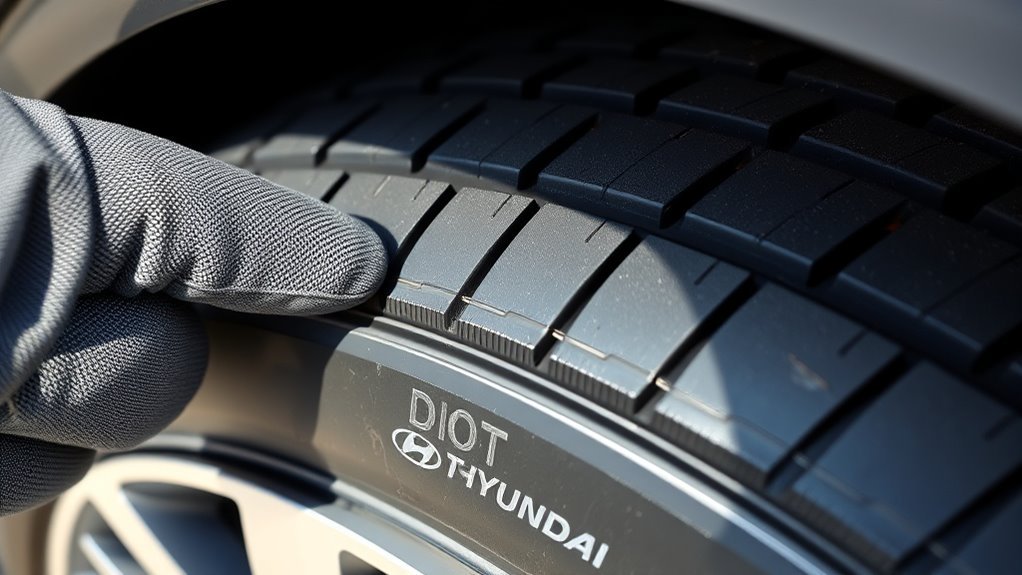
The DOT date code tells you tire age, but age is only one part of the replacement decision. Check your Hyundai Sonata tires monthly when cold, keep them inflated to the pressure listed on the driver-door placard or in the owner’s manual, and inspect for wear or damage. Hyundai’s owner manual guidance also notes that TPMS is not a substitute for regular tire maintenance.
[Products Worth Considering]

The SAFELIFE dial tire tread depth gauge measures tread depth in 1/32 inch increments with clear, easy-to-read 2-inch dial face. Color zones using a traffic light system help you quickly judge whether tread is low, marginal, or ample for safer driving. Built with a durable zinc cast body and a metal detect probe for precise, comfortable use across cars, motorcycles, trucks, and buses.

Accurately measure tire tread depth with a calibrated gauge marked from 0 to 1 inch in 1/32 inch increments. The color-coded bar helps you quickly identify tread condition ranges, supporting safe driving for trucks, motorcycles, automobiles, and passenger vehicles.

Measure tire tread depth quickly and accurately with this LUMITECO dial gauge that reads in 1/32" increments up to 14/32". The color-coded green/yellow/red zones make it easy to judge tire wear and know when replacement is needed. A rugged, compact design with a protective pouch helps keep the gauge ready for use on cars, trucks, motorcycles, and more.
Tire Age Limits
Use the date code to decide when the tire deserves closer attention. NHTSA notes that some vehicle and tire manufacturers recommend replacing tires that are six to 10 years old, regardless of treadwear. Michelin advises professional inspection after five years of use and replacement by 10 years from the manufacture date, even if tread remains.
For a Sonata owner, the safest practical rule is simple: if a tire is approaching the older end of that range, ask a qualified tire professional to inspect it. If it is 10 years old or older, plan replacement rather than relying on appearance.
Visible Damage Signs
Replace or professionally inspect a tire immediately if you find any of these signs:
- Sidewall bulges, bubbles, or blisters.
- Deep cracks in the sidewall or tread grooves.
- Cuts, punctures, or exposed cords.
- Tread worn to 2/32 inch or the built-in wear bars.
- Uneven wear across the tire face.
- Repeated pressure loss after inflation.
- Damage from driving while flat or severely underinflated.
Warning: Do not keep driving on a tire with a bulge, exposed cords, severe cracking, or sudden vibration. These can point to structural damage that may lead to tire failure.
Performance and Handling
Pay attention to how your Sonata drives. Tire aging or internal damage can show up as vibration, pulling, thumping, instability, longer stopping distance, or reduced grip in wet weather. These symptoms deserve a professional inspection even if the tire date code looks acceptable.
Also check inflation pressure when the tires are cold. Underinflation can cause heat buildup, poor handling, faster wear, and tire failure. Use the recommended cold pressure on your Sonata’s tire placard, not the maximum pressure molded into the tire sidewall.
Next Steps: Register, Check Recalls, and Get Help
After you record the DOT/TIN codes, use them for registration and recall checks. Tire registration helps manufacturers contact you if a safety recall affects your tires. When you buy new tires, ask the retailer whether they registered them for you or gave you the registration information.
- Record the full TIN for each tire. The full code is best for recall matching.
- Register new tires. Use the tire manufacturer’s registration page or the registration form provided at purchase.
- Check official recalls. Use NHTSA’s recalls page for vehicles, tires, car seats, and equipment.
- Use a tire recall lookup. The USTMA Tire Recall Lookup can help identify recalled tires from participating manufacturers.
- Get a documented inspection. If the code is unreadable, the tire is older, or you see damage, ask a tire shop for a written inspection result.
If a tire is recalled, follow the manufacturer’s instructions and contact the tire maker, retailer, or an authorized service center for the remedy. Do not ignore a recall notice, even if the tire looks normal.
[Products Worth Considering]

Get precise tire readings with the ETENWOLF T300 Plus digital gauge, calibrated to ANSI B40.7 Grade 2A for reliable accuracy. It measures across a wide 3–200 PSI range and includes thermal compensation for dependable performance from extreme cold to heat. The bright LED display, LED illumination, and replaceable AAA batteries make it easy to check pressures quickly, even in low light.

The Milton S-693 straight foot dual head air chuck is designed for accurate tire pressure checks and quick, secure valve-core engagement with lock-on threads on both ends. With a 1/4" FNPT connection and a maximum 150 PSI rating, it’s built for use on inner duals and common vehicle tires, including trucks and RVs.

Replace worn or malfunctioning GM TPMS sensors with this 433MHz pre-programmed sensor set designed for compatibility with many Chevrolet, Buick, GMC, and Cadillac models. It includes guidance for proper OBDII relearning/pairing after installation and supports reliable long-term operation with a high-performance CR2032 battery. Quality tested for durability and performance to help restore accurate tire pressure monitoring.
Frequently Asked Questions
What is the date code 2421 on a tire?
The code 2421 means the tire was made in the 24th week of 2021. Under the federal Sunday-through-Saturday week method, that falls in mid-June 2021. Use it as the manufacturing date when judging age, registration, and replacement timing.
Where is the DOT date code on a Hyundai Sonata tire?
It is molded into the tire sidewall after the letters DOT. Check the outer sidewall first. If the visible code does not end in four date digits, the full TIN is probably on the inner sidewall.
Does the DOT date code tell me when the tire was installed?
No. The DOT date code tells you when the tire was manufactured. A tire may be installed weeks, months, or longer after it was made, so keep your receipt or service record if you also want the installation date.
Should I replace Sonata tires after six years?
Not always automatically, but tires in the six-to-10-year range deserve closer inspection. Follow your tire manufacturer’s guidance, your Sonata owner’s manual, and a qualified tire professional’s inspection. Replace sooner if you see cracks, bulges, low tread, uneven wear, or performance changes.
What if my tire has a three-digit date code?
A three-digit tire date code indicates a pre-2000 tire. That tire is far beyond normal service life and should not be used on your Hyundai Sonata. Replace it instead of trying to keep it in service.
Do I need to check the spare tire date code too?
Yes. Spare tires age even if they are rarely used. If your Sonata has a spare, check its DOT date code, inflation pressure, and sidewall condition before long trips.
Conclusion
To read your Hyundai Sonata tire date code, find the full DOT/TIN on the sidewall and read the last four digits as week and year. Then use that date with a full tire inspection: tread depth, cracks, bulges, cuts, pressure loss, vibration, and recall status. If the code is missing, unreadable, three digits long, or the tire is near 10 years old, have it inspected and plan replacement. Tire age is not cosmetic trivia; it is one of the simplest safety checks you can do before trusting your Sonata on the road.
Sources
- NHTSA TireWise — tire aging, maintenance, DOT/TIN date-code guidance, and replacement considerations.
- 49 CFR Part 574 — federal Tire Identification Number structure, date-code format, and tire registration rules.
- NHTSA Recalls — official recall lookup for vehicles, tires, car seats, and equipment.
- Michelin: When to Replace Tires — manufacturer guidance on DOT date codes, aging, inspection, and 10-year replacement guidance.
- Hyundai Owner Manual: Tire Pressure Monitoring System — monthly cold tire-pressure checks, placard pressure, and TPMS limitations.
- USTMA Tire Recall Lookup — tire recall lookup by Tire Identification Number.