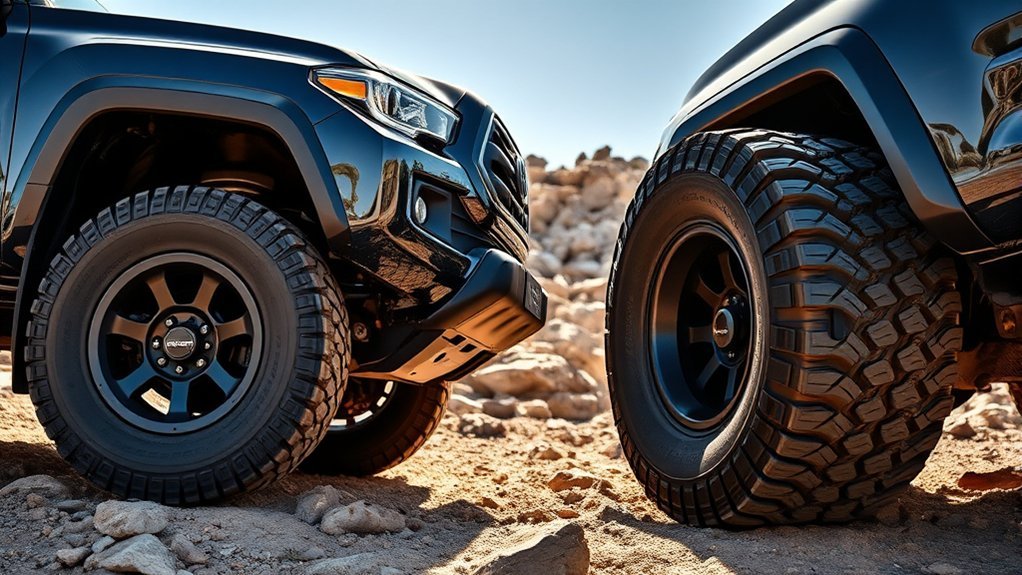
Metric and high-flotation tire sizes can describe similar Toyota Tacoma tires, but they present the measurements differently. A metric size such as 265/70R17 lists its width in millimeters, sidewall ratio, construction, and wheel diameter. A high-flotation size such as 33×12.50R17LT uses nominal diameter and width in inches. The best choice depends on your exact Tacoma, wheel specifications, load requirements, clearance, and driving conditions.
Quick Answer
Metric sizing is usually easier to match with your Tacoma’s factory specifications, while high-flotation sizing makes approximate tire diameter and width easier to recognize. Neither format guarantees better performance or fitment. Verify your door placard, wheel dimensions, load capacity, actual tire measurements, steering clearance, suspension clearance, and required inflation pressure before changing sizes.
Key Takeaways
- A metric size such as 265/70R17 gives width in millimeters, sidewall height as a percentage, and wheel diameter in inches.
- A high-flotation size such as 33×12.50R17LT gives nominal diameter and width in inches.
- Sizing format does not determine tread quality, sidewall stiffness, load capacity, ride comfort, or off-road traction.
- The same nominal tire size can have different actual dimensions depending on the manufacturer, model, load range, and measuring rim.
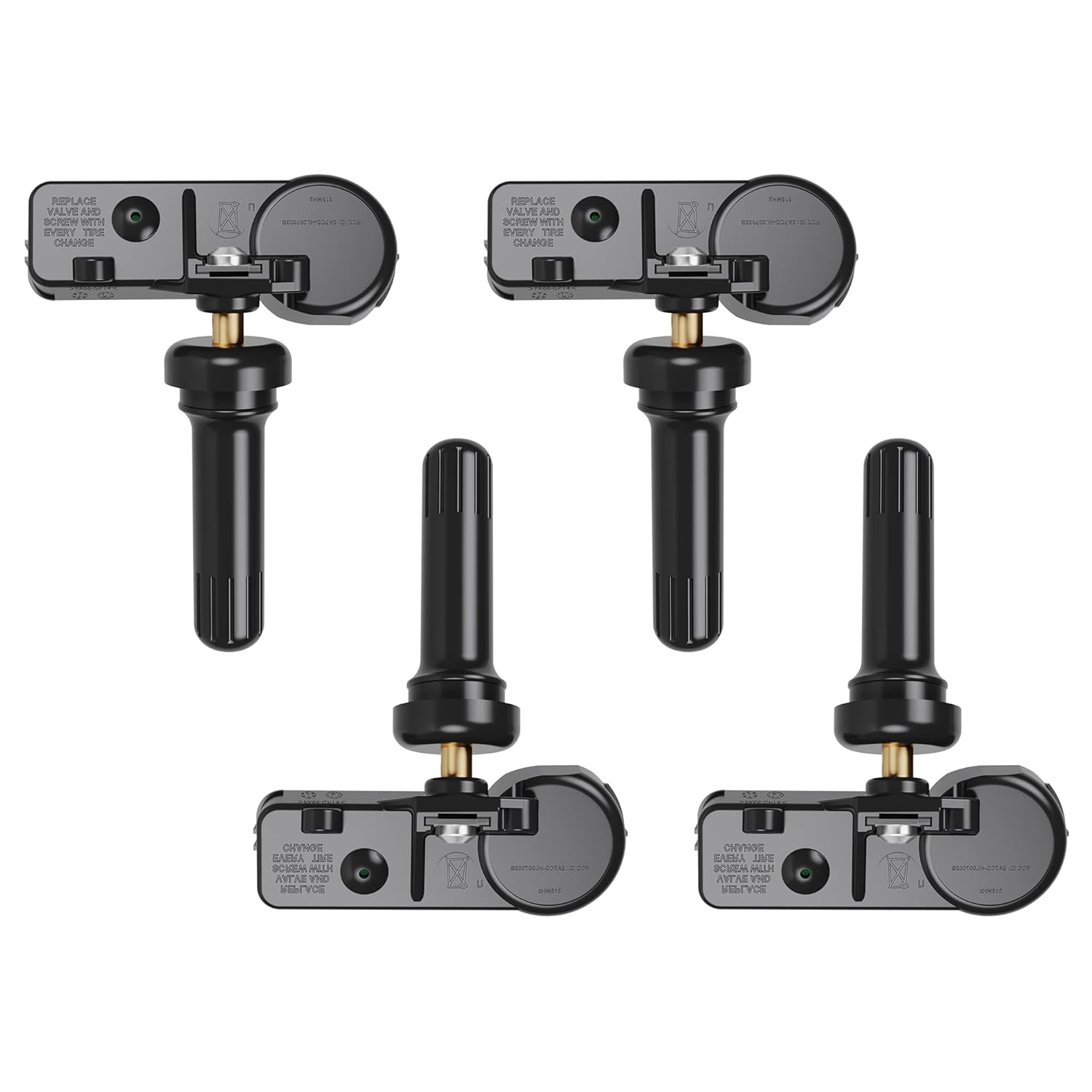
- A larger tire may affect clearance, braking, acceleration, effective gearing, speedometer accuracy, fuel use, TPMS operation, and spare-tire compatibility.
- Never assume that a 33-inch or 35-inch tire fits based only on lift height.
How Metric Tire Sizing Works on a Toyota Tacoma
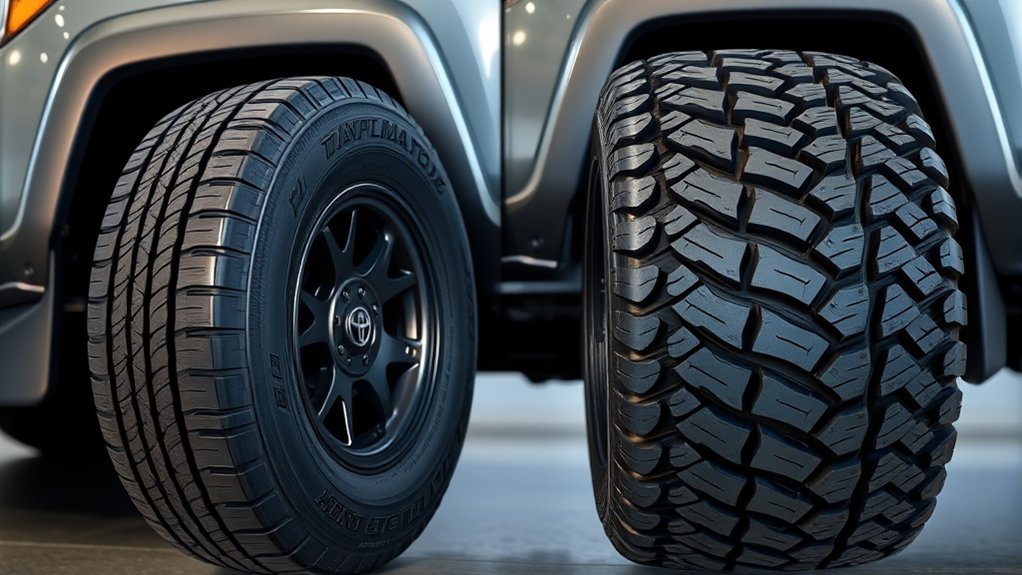
A metric tire code contains several measurements and performance identifiers. For example, you can read 265/70R17 115T as follows:
- 265: The nominal section width is 265 millimeters.
- 70: The sidewall height is approximately 70% of the section width.
- R: The tire has radial construction.
- 17: The tire fits a 17-inch-diameter wheel.
- 115: The load index identifies the tire’s rated load capacity at the applicable pressure.
- T: The speed rating identifies the tire’s standardized maximum-speed category.
Bridgestone’s tire-size guide explains the same basic width, aspect-ratio, construction, and wheel-diameter system. However, those numbers do not tell you everything about a tire. You must also check its service description, load range, approved rim-width range, actual measured diameter, tread type, and maximum load.
A lower aspect ratio creates a shorter sidewall when the width stays the same. That can sharpen steering response, but it can also make impacts feel firmer. A higher aspect ratio provides more sidewall between the wheel and road, which can help protect the wheel and allow more sidewall flex. The final ride still depends on the tire’s casing, load range, tread, pressure, wheel weight, and suspension.
P-Metric and LT-Metric Are Not the Same
A tire with a P prefix is designed under passenger-tire standards. An LT prefix identifies a light-truck tire. Some metric sizes appear without a visible P prefix, so you should check the full specification rather than judging the tire from the three size numbers alone.
LT tires are commonly available in higher load ranges and may use a heavier casing than a comparable passenger tire. That can benefit towing, hauling, puncture resistance, or off-road use, but it may also add weight and create a firmer ride. Do not replace an original LT tire with a lower-capacity passenger tire.
Flotation Tire Sizing: What It Means
High-flotation sizing presents the tire’s nominal measurements in inches. A size such as 33×12.50R17LT can be read as follows:
- 33: Nominal overall tire diameter in inches.
- 12.50: Nominal section width in inches.
- R: Radial construction.
- 17: Required wheel diameter in inches.
- LT: Light-truck tire designation.
The labeled 33-inch diameter is nominal. One 33×12.50 tire may measure closer to 32.5 inches, while another may be slightly taller or shorter. Actual dimensions depend on the tire model, tread depth, load range, approved rim width, measuring rim, pressure, and load.
BFGoodrich’s tire-selection guide distinguishes LT-metric sizes from high-flotation sizes and warns that increasing tire size beyond factory specifications can require additional vehicle modifications.
Flotation Does Not Automatically Mean Better Off-Road Performance
High-flotation tires are popular in off-road sizes because the diameter and width are easy to recognize. However, the sizing format does not create traction by itself. Mud, sand, rock, snow, and highway performance depend on the tire’s tread pattern, compound, casing, siping, load range, pressure, and condition.
A wider tire can spread the load over a larger contact area in some soft-surface conditions, but it can also increase weight, steering effort, hydroplaning sensitivity, or rubbing. A narrower tire may cut through loose material differently and can be easier to fit. Select the tread and construction for the terrain rather than selecting a tire only because it uses flotation sizing.
Metric vs. Flotation Tire Sizes
| Feature | Metric Example: 265/70R17 | Flotation Example: 33×12.50R17LT |
| Width | 265 millimeters | 12.50 inches nominal |
| Sidewall | 70% of section width | Not listed as an aspect ratio |
| Overall diameter | Calculated from width, ratio, and wheel diameter | Shown nominally as the first number |
| Wheel diameter | 17 inches | 17 inches |
| Typical advantage | Easy comparison with many factory specifications | Easy recognition of nominal diameter and width |
| Fitment guarantee | No | No |
How to Convert a Metric Tire Size to Inches
You can estimate the nominal dimensions of a metric tire with two calculations:
- Width in inches: section width in millimeters ÷ 25.4
- Overall diameter: wheel diameter + [(section width × aspect ratio ÷ 100 × 2) ÷ 25.4]
For a 265/70R17 tire:
- Width: 265 ÷ 25.4 = approximately 10.4 inches.
- One sidewall: 265 × 0.70 = 185.5 millimeters.
- Two sidewalls: 371 millimeters, or approximately 14.6 inches.
- Nominal diameter: 17 + 14.6 = approximately 31.6 inches.
Note: Calculated dimensions are estimates. Always use the tire manufacturer’s published overall diameter, section width, approved rim-width range, and revolutions-per-mile specification when checking fitment or speedometer changes.
| Metric Size | Calculated Diameter | Calculated Width |
| 265/75R16 | About 31.6 inches | About 10.4 inches |
| 265/70R17 | About 31.6 inches | About 10.4 inches |
| 275/70R17 | About 32.2 inches | About 10.8 inches |
| 285/70R17 | About 32.7 inches | About 11.2 inches |
| 285/75R16 | About 32.8 inches | About 11.2 inches |
A metric tire with a calculated diameter near 33 inches is not automatically interchangeable with a 33×12.50 flotation tire. The flotation tire may be wider, require a different wheel-width range, have a different load specification, and create different clearance problems.
Choosing the Right Tire Size for Your Tacoma
Begin with your Tacoma’s tire and loading placard and owner’s manual. Toyota has used different tire sizes, wheel sizes, pressures, and load specifications across Tacoma years, trims, and configurations. For example, the 2024 Tacoma owner’s manual lists configurations using 245/70R17, 265/70R17, and 265/65R18 tires. Those examples should not be applied automatically to another model year.
Before ordering tires or wheels, verify all of the following:
- Vehicle details: Model year, generation, trim, drivetrain, suspension package, and installed modifications.
- Original specification: Tire size, cold pressure, wheel size, and load information on the door placard and in the manual.
- Tire load capacity: The replacement tire must support the vehicle’s axle loads, passengers, cargo, accessories, and towing demands.
- Wheel compatibility: Diameter, width, bolt pattern, center bore, offset, backspacing, load rating, and lug-seat style.
- Static clearance: Space around the upper control arm, suspension, brake components, fender liner, mud flaps, cab mount, and bodywork.
- Dynamic clearance: Clearance at full steering lock, during braking, and through suspension compression and articulation.
- Spare tire: Diameter, storage clearance, and suitability for temporary use with the new tires.
- Electronic systems: TPMS registration or initialization and any required speedometer calibration.
Warning: A lift kit does not guarantee tire clearance. A larger tire can still contact the body, cab mount, suspension, or fender liner while turning or when the suspension compresses. Contact can damage the tire and reduce steering control.
[Products Worth Considering]

These aluminum alloy tire valve stem caps with an O-ring seal help protect valve stems from corrosion while adding a clean, stylish look to your vehicle. The universal fit works across cars, trucks, motorcycles, bicycles, and more, making them an easy upgrade for everyday driving and off-road use. Installation is quick, and the included four-pack keeps all your tires dressed and protected.

This manual duck head tire changer kit makes tire installation and removal simpler by letting you embed the duck head into the tire with applied pressure. The integrated design and durable steel construction help reduce friction and improve efficiency and safety during use. Suitable for 16–21 inch wheels, it’s convenient for cars, trucks, SUVs, and ATV tires, with 24-hour after-sales support.
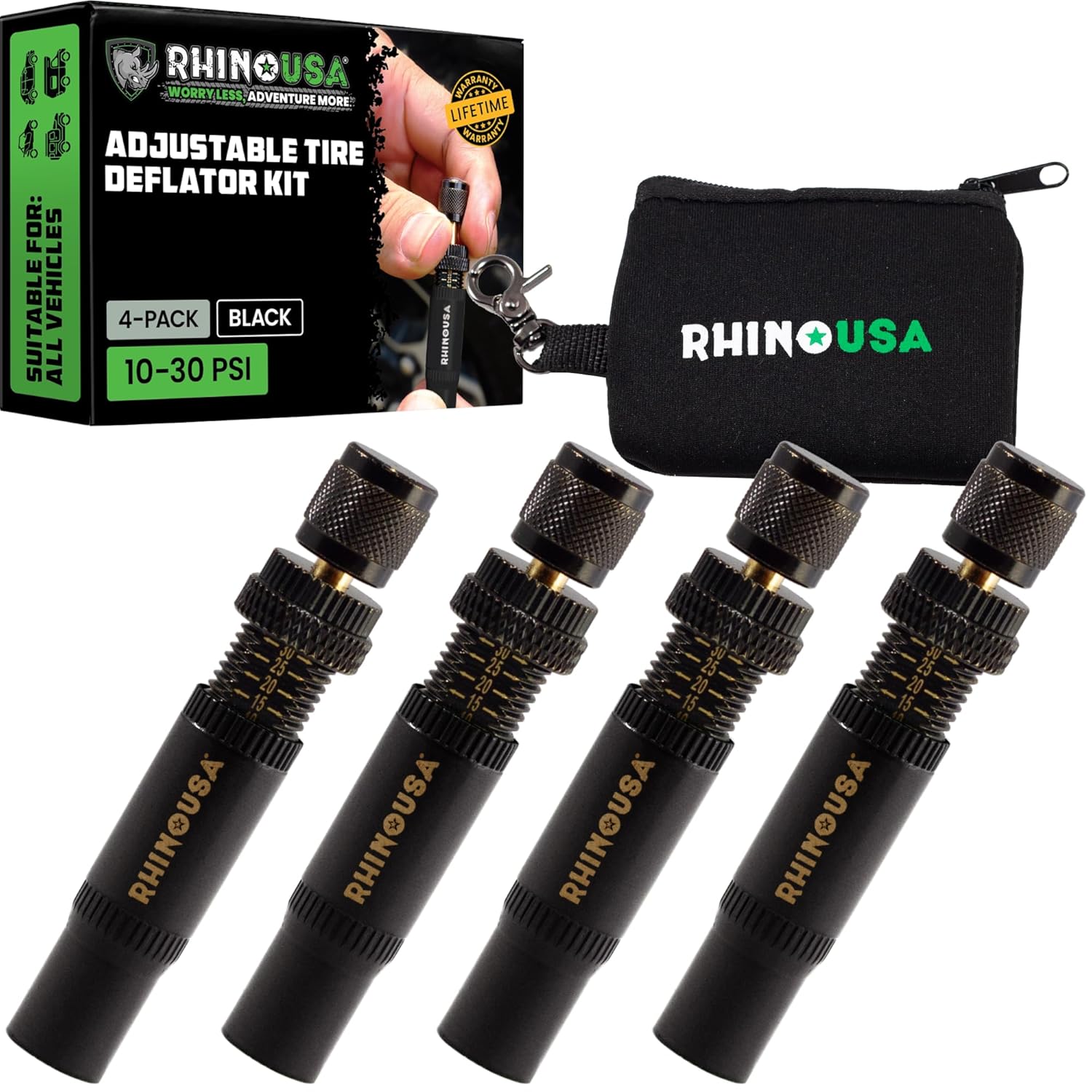
Use the Rhino USA adjustable tire deflators to air down all four tires at once by screwing one deflator onto each valve stem, letting you step away while the tires reach your preset pressure. Each deflator independently adjusts across a 10–30 PSI range with laser-etched indicators for quick setup and verification, making it ideal for beach, sand, and rocky off-road trails.
Tire Sizes for Stock and Modified Tacomas
Sizes such as 265/75R16 and 265/70R17 have a calculated diameter near 31.6 inches, but that does not mean they are factory-approved for every Tacoma. Match the size to your exact model-year placard and wheel specifications.
Larger metric sizes such as 275/70R17, 285/70R17, or 285/75R16 are common comparison points for modified trucks. High-flotation sizes such as 33×10.50, 33×12.50, 35×11.50, and 35×12.50 are also available in some wheel diameters. None should be treated as guaranteed Tacoma fitments.
[Products Worth Considering]

These universal tire valve stem caps help protect valve cores from dust, debris, and moisture while helping maintain stable tire pressure. The corrosion-resistant metal construction and sealed design provide reliable protection in road grime, mud, and winter conditions. Twist-on installation makes them quick to fit on cars, SUVs, trucks, and motorcycles.

Monitor tire tread wear with a smart, color-coded depth gauge that shows clear condition ranges at a glance. The bar is range marked for fast, easy readings, helping you maintain safer traction and performance. Each gauge is portable with a pocket clip, and the set includes 20 units for daily use and sharing.

This professional wheel and rim brush kit makes it easy to lift brake dust, grime, and dirt from wheels and tires without scratching finishes. The brushes feature soft, metal-free wool heads and a flexible 360-degree rim brush design for reaching hard-to-clean areas. Includes multiple brush types plus accessories for thorough car, motorcycle, and general vehicle detailing.
Can a Stock Tacoma Fit 33-Inch Tires?
Some Tacoma configurations may accept certain tires marketed as approximately 33 inches with little or no permanent modification. Others may rub immediately. A narrower 33-inch-class tire on a suitable wheel can behave differently from a 33×12.50 tire with an aggressive offset.
Check the manufacturer’s actual dimensions and arrange a professional test fit. The inspection should cover:
- Full left and right steering lock.
- Forward and reverse movement while turning.
- Clearance at normal ride height.
- Clearance during suspension compression.
- Clearance near the upper control arm and cab mount.
- Brake-line, ABS-wire, and fender-liner clearance.
- Alignment settings, including caster.
What About 35-Inch Tires?
A 35-inch-class tire is a major change for most Tacoma configurations. Installation may involve suspension changes, wheel changes, alignment work, trimming, liner adjustment, cab-mount work, gearing changes, spare-tire planning, and speedometer calibration. The exact work depends on the tire’s real dimensions and the truck’s configuration.
Do not select a lift height first and assume the tire will fit. Build the package around verified wheel position, steering clearance, suspension travel, load capacity, and intended use.
Pro Tip: Test one mounted front wheel and tire before buying or mounting the full set. Front clearance is usually the most difficult because the tire moves through steering and suspension travel.
How Tire Size and Construction Affect Tacoma Performance
The metric or flotation label does not determine performance. Overall diameter, tread, construction, load range, tire mass, width, pressure, wheel specifications, and vehicle setup create the real differences.
Ride and Steering
A heavier LT or off-road tire can transmit more impact and require more steering effort than a lighter passenger-oriented tire. A taller sidewall may absorb sharp impacts better, while a shorter sidewall may feel more responsive. Inflation pressure can change both results significantly.
Acceleration, Braking, and Effective Gearing
A taller and heavier tire increases rotational mass and changes the effective gearing. The truck may accelerate more slowly, downshift more often, or require more braking effort. The effect becomes more noticeable as the difference from the original tire grows.
A substantially larger tire may justify a gearing review, especially when the truck carries heavy accessories, tows, or operates on steep trails. Regearing is not automatically required for every increase, but it should be considered as part of the full setup.
Speedometer and Odometer
A larger overall diameter travels farther per wheel revolution. Without recalibration, the truck may be moving faster than the indicated speed. A smaller diameter creates the opposite effect. Compare the manufacturer’s revolutions-per-mile data rather than relying only on the advertised size.
Fuel Use
Larger tires can affect fuel use through added weight, greater aerodynamic drag, rolling resistance, changed gearing, and altered driving behavior. Tire pressure and tread design also matter. No single fuel-economy percentage applies to every Tacoma or tire change.
Off-Road Traction
Diameter can increase ground clearance under the axles, while suitable tread and sidewall construction can improve performance on trails. Width may help on some soft surfaces, but tread design and pressure remain important. A wider tire is not automatically better on every terrain.
Tire Pressure, Load Capacity, and Towing
For original-size tires, use the recommended cold pressure on the vehicle placard or in the owner’s manual. NHTSA’s TireWise guidance explains that the correct target is the vehicle manufacturer’s cold-pressure recommendation, not the maximum pressure molded on the tire sidewall.
Changing from a passenger tire to an LT-metric or high-flotation LT tire can change the pressure required to carry the same load. The original placard pressure may not provide equivalent capacity in the new construction. Ask a qualified tire professional to use the applicable load-inflation data for the exact tire.
Never exceed the tire, wheel, axle, or vehicle load limit. Larger tires and wheels also add weight to the truck, which can reduce the payload available for passengers, cargo, accessories, and tongue weight.
Warning: Airing down is an off-road technique, not a normal highway-pressure setting. Low pressure can create heat, poor handling, sidewall damage, bead unseating, or tire failure when used at road speed. Reinflate before returning to paved-road speeds.
Installing and Maintaining Your Tacoma Tires
Correct installation matters as much as choosing the size. Have the wheels and tires installed by a qualified shop that can confirm wheel compatibility, inspect clearance, balance the assemblies, and align the truck when needed.
- Use the correct wheel hardware: Confirm the bolt pattern, center bore, stud size, lug-seat type, and wheel-nut specifications for your exact Tacoma.
- Use the correct torque: Follow the owner’s manual or official service information for your model year and wheel type. Do not apply one Tacoma torque figure universally.
- Check pressure cold: Check all road tires and the spare at least monthly and before towing or long trips.
- Inspect for damage: Look for cuts, bulges, exposed cords, cracking, punctures, irregular wear, and repeated pressure loss.
- Follow the rotation schedule: Use the interval and pattern in your Tacoma maintenance guide. Tire type, directional tread, staggered sizing, and spare configuration can affect the pattern.
- Monitor tread depth: NHTSA says tires are not safe and should be replaced when tread reaches 2/32 inch.
- Recheck wheel torque: Follow the installer’s and wheel manufacturer’s guidance after installation.
- Watch for rubbing: Inspect fresh contact marks after the first drives and after off-road suspension articulation.
TPMS After Changing Tires or Wheels
New wheels may require compatible tire-pressure sensors, ID registration, or system initialization. Toyota’s 2024 Tacoma initialization guidance identifies tire-size changes and tire rotation as situations that can require tire-pressure warning-system initialization. Procedures vary by model year, so follow the manual for your truck.
Choosing Aftermarket Wheels for a Tacoma
Wheel diameter is only one part of aftermarket fitment. Wheel width and offset determine where the tire sits relative to the suspension and body.
- More positive offset: Moves the wheel farther inward and may reduce upper-control-arm or suspension clearance.
- Less positive or negative offset: Moves the wheel outward and may increase fender, liner, mud-flap, or cab-mount contact.
- Wider wheel: Can change the tire’s installed width and sidewall shape.
- Wheel load rating: Must support the vehicle and intended cargo or towing load.
- Center bore: Must fit correctly or use an approved centering solution.
- Brake clearance: The wheel must clear the calipers and other brake components.
A more aggressive offset does not lift the truck. It changes wheel position and scrub radius, which can affect steering feel, kickback, rubbing, bearing loads, and how far the tire extends beyond the body.
[Products Worth Considering]

Upgrade your Toyota’s wheels with durable aluminum alloy valve stem caps that help protect valve cores from corrosion and direct exposure to road grime, clay, water, and snow. Rubber rings improve sealing to help prevent air leakage and maintain stable tire pressure for safer driving. These caps are easy to install or remove without tools and add a unique, stylish look to your car.

Upgrade your 2024-2026 Tesla Model 3 Highland with REEVAA all-weather mud flaps designed for seamless fit along the original body lines. The set of four delivers strong splash protection against mud, gravel, and road debris while using OEM-grade durable materials. Installation is non-destructive with original hole positions and snap-in clips, and the aerodynamic design helps minimize impact on efficiency.

Measure tire tread depth quickly and accurately with this LUMITECO dial gauge that reads in 1/32" increments up to 14/32". The color-coded green/yellow/red zones make it easy to judge tire wear and know when replacement is needed. A rugged, compact design with a protective pouch helps keep the gauge ready for use on cars, trucks, motorcycles, and more.
Metric or Flotation: Which Is Better for Your Tacoma?
Choose metric sizing when it provides the tire construction, dimensions, load capacity, tread, and wheel compatibility you need. It is often convenient when comparing a replacement with an original metric specification.
Choose high-flotation sizing when a suitable tire is available in the diameter, width, load specification, tread, and wheel diameter required for your build. The inch-based label can make the approximate dimensions easier to understand, but it does not make the tire safer, stronger, or more capable by itself.
For daily driving, prioritize predictable handling, braking, road noise, wet traction, load capacity, and easy replacement. For off-road use, also consider casing durability, tread design, sidewall protection, terrain, airing-down requirements, and the ability to carry a compatible spare.
Frequently Asked Questions
What is the difference between metric and flotation tire sizes?
Metric sizing lists width in millimeters, sidewall height as a percentage, construction, and wheel diameter. High-flotation sizing lists nominal overall diameter and width in inches, followed by construction, wheel diameter, and usually an LT designation.
What is the difference between flotation and LT tires?
They are not opposite categories. Flotation describes the inch-based sizing format, while LT identifies a light-truck tire. Many high-flotation tires are LT tires. LT tires are also available in metric sizes such as LT285/70R17.
What metric tire size is close to 33 inches?
Common calculated examples include 285/70R17 at approximately 32.7 inches and 285/75R16 at approximately 32.8 inches. Actual dimensions vary by tire model, so compare the manufacturer’s published specifications before treating either as a 33-inch equivalent.
Will 33-inch tires fit a stock Toyota Tacoma?
Possibly, but not universally. Fitment depends on model year, trim, suspension, alignment, wheel width, offset, actual tire dimensions, and steering and suspension clearance. A professional test fit is the safest way to confirm compatibility.
Do larger Tacoma tires require speedometer calibration or regearing?
A meaningful diameter change can affect indicated speed, odometer readings, and effective gearing. Calibration or regearing may be appropriate depending on the size difference, added tire weight, engine and transmission behavior, towing load, and intended use.
What tire pressure should I use after changing sizes?
Use the door placard for the original tire size and construction. After changing size or moving between passenger and LT construction, have a qualified tire professional determine an appropriate cold pressure using the exact tire’s load-inflation data and your Tacoma’s axle and operating loads.
Conclusion
Metric and high-flotation sizing are two ways of describing tire dimensions. Neither format is automatically better for a Toyota Tacoma. Start with your exact truck’s placard and owner’s manual, then compare actual tire dimensions, construction, load capacity, wheel requirements, pressure needs, and full-range clearance.
Metric sizes usually make factory comparisons easier. High-flotation sizes make nominal diameter and width easier to recognize. Your safest choice is the tire and wheel package that meets the truck’s load requirements, clears the vehicle throughout steering and suspension travel, preserves dependable road behavior, and matches how you actually use the Tacoma.
Sources
- Toyota 2024 Tacoma Owner’s Manual: Tires and Wheels — factory tire, wheel, pressure, and torque examples by configuration.
- Toyota 2024 Tacoma Owner’s Manual: Items to Initialize — TPMS initialization after tire-size changes and rotation.
- NHTSA TireWise — tire pressure, replacement sizing, rotation, inspection, and tread-depth guidance.
- Bridgestone: Determining Tire Size — explanation of metric tire-size markings.
- BFGoodrich Tire Selection Guide — LT-metric, high-flotation, pressure, and larger-tire modification guidance.