
How Tall Is a 265 75R16 Tire? Exact Height, Width & Dimensions
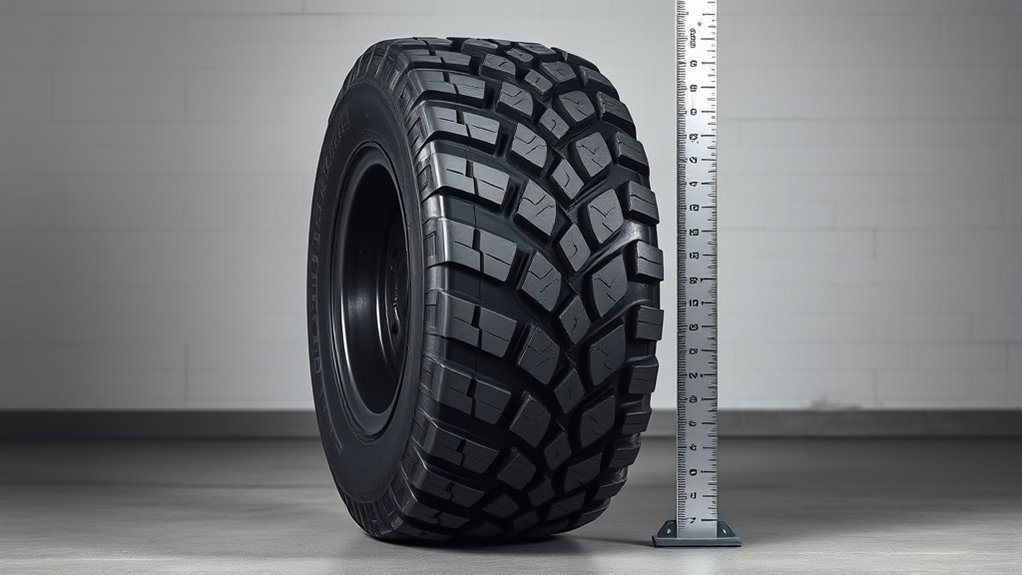
A 265/75R16 tire is about 31.6 inches tall, 10.4 inches wide, and has a sidewall height of roughly 7.8 inches. It is a radial tire size for a 16-inch wheel, with a nominal overall diameter near 804 mm, a circumference around 99.4 inches, and about 637 to 638 unloaded revolutions per mile. For many LT265/75R16 tires, a 7.0- to 8.0-inch rim is common, but the correct rim width depends on the exact tire model.
Quick Answer
A 265/75R16 tire is about 31.6 inches tall, 10.4 inches wide, and has a 7.8-inch sidewall. The “265” is the section width in millimeters, “75” is the sidewall height as a percentage of width, “R” means radial, and “16” means it fits a 16-inch wheel.
Key Takeaways
- A 265/75R16 tire is roughly 31.6 inches tall overall.
- Its section width is 265 mm, or about 10.4 inches.
- Its sidewall height is about 198.8 mm, or 7.8 inches.
- It fits a 16-inch wheel; many LT versions use a 7.0- to 8.0-inch rim-width range, but the tire maker’s spec sheet is the final authority.
- Compared with a 265/70R16, a 265/75R16 is about 1 inch taller, which can affect clearance, gearing, speedometer reading, and spare-tire fit.
265/75R16 Size Explained
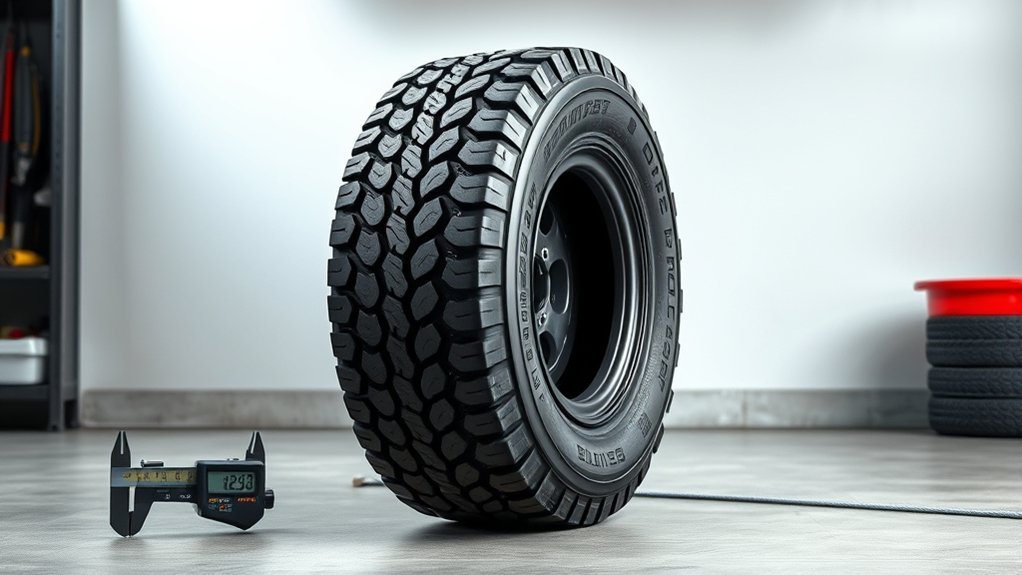
The tire size 265/75R16 is a compact code that describes the tire’s width, sidewall height, construction, and wheel diameter. The first number, 265, is the nominal section width in millimeters. The second number, 75, is the aspect ratio, meaning the sidewall height is 75% of the tire’s width. The letter R means radial construction, and 16 means the tire fits a 16-inch wheel.
Using the standard tire-size formula, the sidewall height is 265 × 0.75 = 198.75 mm. Converted to inches, that is about 7.8 inches. Add two sidewalls to the 16-inch wheel diameter, and the nominal overall diameter is about 31.6 inches.
Note: These are nominal sizing numbers. Actual measured diameter, tread width, overall width, and revolutions per mile can vary by tire brand, tread design, load range, rim width, inflation pressure, and whether the tire is measured mounted or loaded on a vehicle.
[Products Worth Considering]

RVMATE dual-axle RV tire covers help shield your tires from sunlight, snow, rust, and dirt to keep them in better condition in harsh weather. Made with heavy-duty waterproof, UV-resistant 420D Oxford fabric, they provide strong shading and help reduce wear. They install easily by placing the cover on the wheel and fastening the rope for a stable fit.

Keep RV, trailer, or truck dual-axle tires protected with waterproof, UV-resistant covers that help guard against sunlight, snow, rust, and dirt. The dual tire covers are easy to install with a rope/bungee fastener for a stable fit that won’t easily slip. Designed for 27–30 inch diameter wheels, they help maintain tire condition through harsh weather.
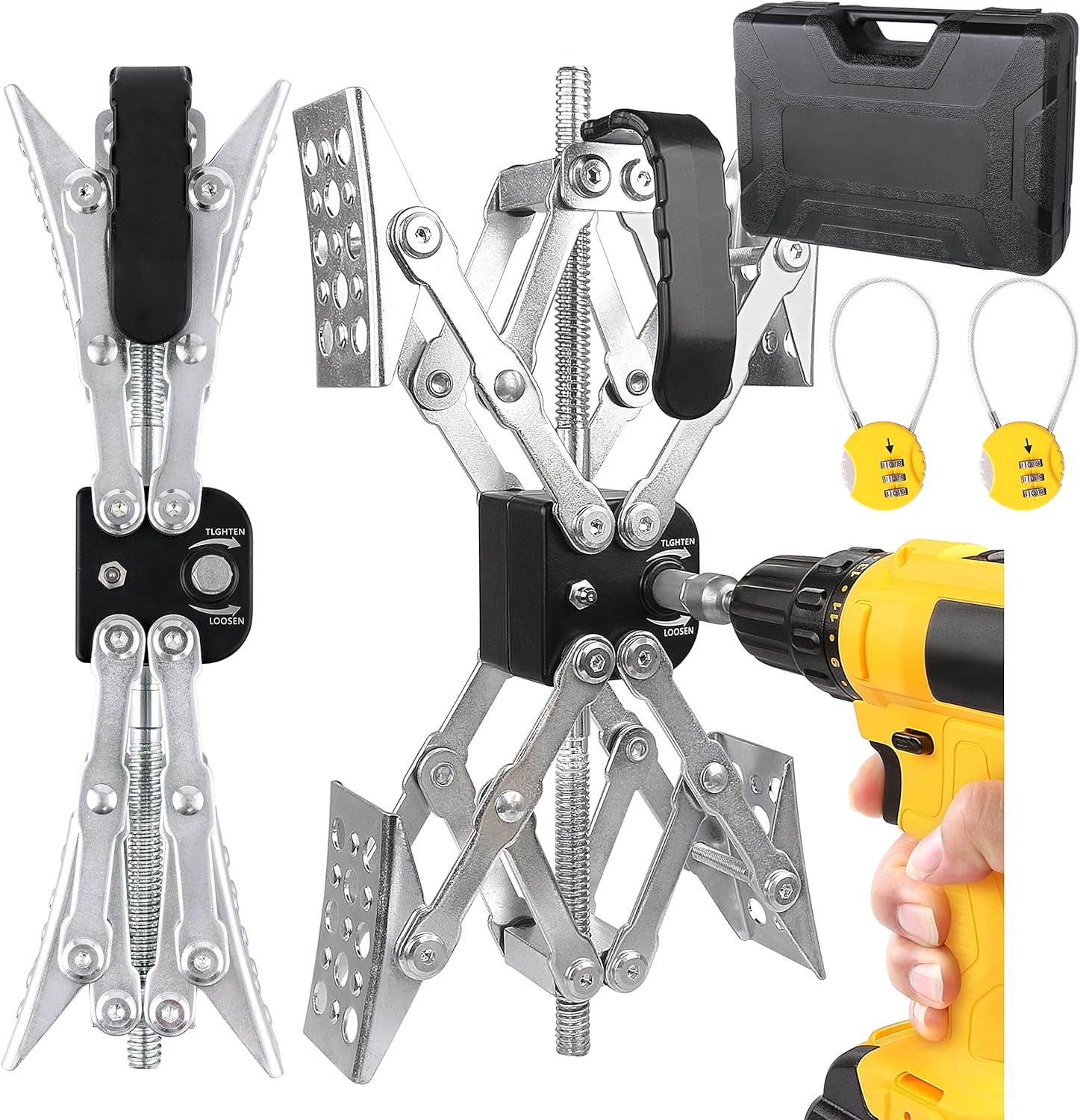
Lock the Maxchock X-style wheel stabilizers between tandem tires to reduce sway and keep your RV travel trailer secure while camping. The adjustable design fits a wide range of wheel gaps, and included hardware lets you install quickly with a power drill. Built from heavy-gauge steel with zinc plating, the chocks include locks and an organizer case for safer, more convenient use.
265/75R16 Specs at a Glance
| Nominal overall diameter | 31.6 inches / about 804 mm |
| Nominal section width | 265 mm / about 10.4 inches |
| Sidewall height | 198.75 mm / about 7.8 inches |
| Wheel diameter | 16 inches |
| Nominal circumference | About 99.4 inches |
| Nominal revolutions per mile | About 637 to 638 unloaded revs/mile |
| Common rim-width range | Often 7.0–8.0 inches for many LT tires; verify the exact tire model |
How Tall Is a 265/75R16 Tire?
A 265/75R16 tire is about 31.6 inches tall, or about 804 mm, when calculated from its nominal size. That height is the overall tire diameter from tread to tread before accounting for real-world differences such as tread design, wear, pressure, and vehicle load.
Exact Tire Height
The nominal height comes from a simple calculation:
- Sidewall height: 265 mm × 0.75 = 198.75 mm
- Sidewall in inches: 198.75 ÷ 25.4 = 7.82 inches
- Overall diameter: 7.82 + 7.82 + 16 = 31.65 inches
Rounded for everyday use, that makes a 265/75R16 a 31.6-inch tire. It is not a true 33-inch tire.
A 265/75R16 is best described as a 31.6-inch tire, not a 33-inch tire.
Width and Sidewall
The 265 in 265/75R16 means the tire’s nominal section width is 265 mm, or about 10.4 inches. The 75 aspect ratio means the sidewall height is 75% of that width, which works out to about 7.8 inches.
That relatively tall sidewall can help ride comfort and sidewall flex on rough surfaces compared with a shorter-sidewall tire in the same width. However, traction and handling still depend heavily on tread pattern, tire compound, inflation pressure, load rating, and vehicle setup.
Fitment and Clearance
Because a 265/75R16 is about 31.6 inches tall, it may be taller than the factory tire on some trucks and SUVs. Before installing it, check clearance at full steering lock, during suspension compression, and around the fender liner, mud flap, bumper, control arms, brake components, and spare-tire location.
Warning: Do not choose a tire size based only on diameter. Confirm the tire’s load index, speed rating, load range, rim-width range, and vehicle clearance. Your owner’s manual, tire placard, and tire manufacturer’s specifications should override generic size advice.
How Wide Is a 265/75R16 Tire?
A 265/75R16 tire is about 10.4 inches wide, because 265 mm converts to approximately 10.43 inches. This is the nominal section width, not always the exact tread width. The tread that touches the road may be narrower than the sidewall-to-sidewall section width.
Width can also change slightly depending on rim width. A tire mounted on a narrower rim can measure slightly narrower, while the same tire on a wider rim can measure slightly wider. That is why the tire maker’s product page or spec sheet matters when you are checking tight fender or suspension clearance.
265/75R16 Dimensions in Inches and Millimeters
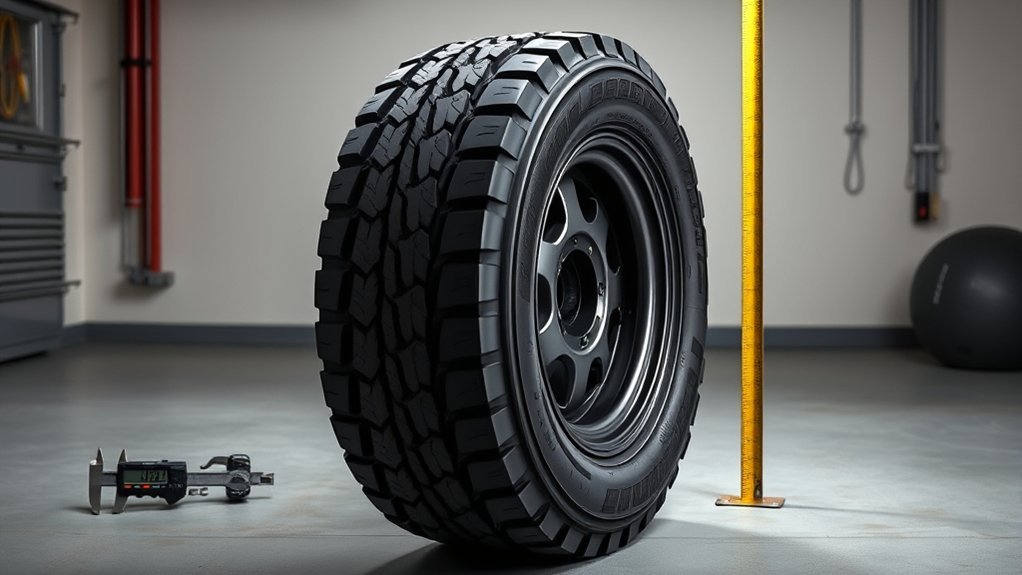
You can treat a 265/75R16 tire as having a nominal overall diameter of about 31.6 inches, or 804 mm, with a nominal section width of 10.4 inches, or 265 mm. Its sidewall height is about 7.8 inches, or 198.75 mm, and the 16-inch wheel diameter equals 406.4 mm.
Exact Tire Dimensions
| Measurement | Approx. Inches | Approx. Millimeters |
|---|---|---|
| Overall diameter | 31.6 in | 804 mm |
| Section width | 10.4 in | 265 mm |
| Sidewall height | 7.8 in | 198.75 mm |
| Wheel diameter | 16 in | 406.4 mm |
| Circumference | 99.4 in | 2,526 mm |
Metric-to-Inch Conversion
To convert 265/75R16 to inches, use this formula:
Overall diameter = 16 + 2 × ((265 × 0.75) ÷ 25.4)
That gives you about 31.65 inches, usually rounded to 31.6 inches. This formula is useful when comparing tire sizes, but it does not replace the measured specs from the tire manufacturer.
Will 265/75R16 Fit Your Wheels?
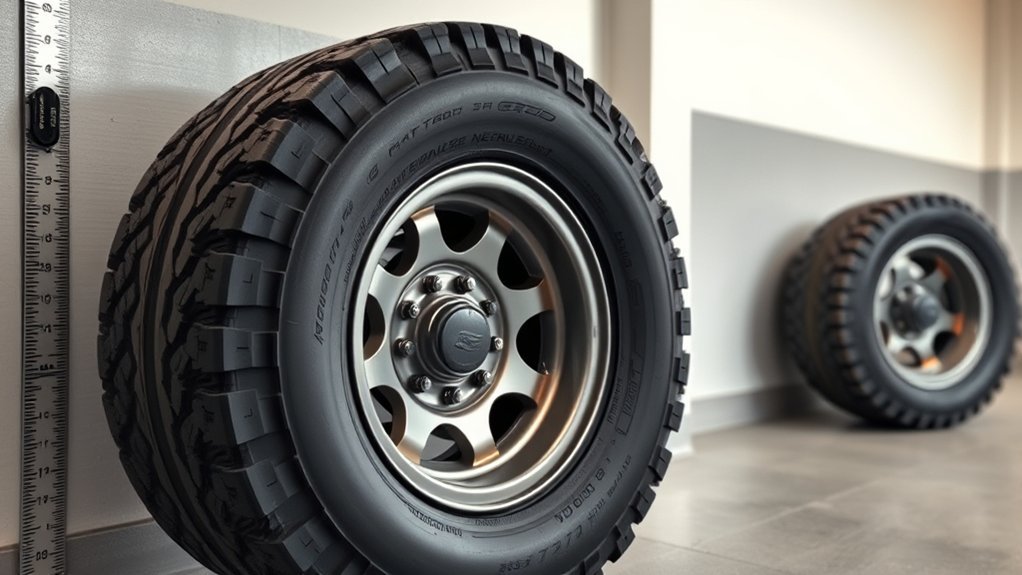
A 265/75R16 tire needs a 16-inch wheel diameter. The wheel diameter must match exactly; a 16-inch tire cannot be safely mounted on a 15-inch or 17-inch wheel.
For rim width, many LT265/75R16 tires are commonly listed for 7.0- to 8.0-inch-wide rims. Some non-LT or model-specific listings may allow a wider range, so check the actual tire model before buying.
Fitment Checklist Before You Buy
- Wheel diameter: Confirm your wheels are 16 inches.
- Rim width: Check the wheel width against the tire maker’s approved range.
- Load rating: Match or exceed the vehicle’s required load index and load range.
- Speed rating: Use a tire with a suitable speed rating for the vehicle and use case.
- Fender clearance: Check the tire at ride height and under compression.
- Steering clearance: Turn fully left and right and check for rubbing.
- Brake and suspension clearance: Inspect the control arms, sway bar, brake lines, and inner wheel well.
- Spare tire fit: Make sure the spare location can hold the taller tire if you plan to carry a matching spare.
- Speedometer: Expect a speedometer and odometer change if you are moving from a smaller stock size.
Pro Tip: If you are upgrading from 265/70R16 to 265/75R16, the diameter increase is about 3.4%. When your speedometer reads 60 mph, your actual speed may be roughly 62 mph if the vehicle is not recalibrated.
265/75R16 vs. 265/70R16
The main difference between 265/75R16 and 265/70R16 is height, not width. Both sizes have the same nominal 265 mm section width, but the 75-series tire has a taller sidewall.
| Size | Diameter | Width | Sidewall | Difference vs. 265/75R16 |
|---|---|---|---|---|
| 265/75R16 | 31.6 in | 10.4 in | 7.8 in | Baseline |
| 265/70R16 | 30.6 in | 10.4 in | 7.3 in | About 1.0 in shorter |
Choosing 265/75R16 instead of 265/70R16 adds about 0.5 inch of ground clearance, because only half of the total diameter increase lifts the axle. It can also make the effective gearing slightly taller, which may soften acceleration a little and affect speedometer accuracy unless recalibrated.
Speedometer and Gearing Impact
A taller tire travels farther with each revolution. If your vehicle was calibrated for a smaller tire, a 265/75R16 can make the speedometer read slightly low and the odometer record fewer miles than actually traveled.
For example, moving from a 265/70R16 tire at about 30.6 inches tall to a 265/75R16 tire at about 31.6 inches tall is roughly a 3.4% increase in diameter. That means:
- At an indicated 30 mph, actual speed may be about 31 mph.
- At an indicated 60 mph, actual speed may be about 62 mph.
- At an indicated 70 mph, actual speed may be about 72 mph.
The exact result depends on your original tire size, actual measured tire diameter, tread wear, and the vehicle’s calibration.
[Products Worth Considering]

Camco Trailer Aid Plus tandem tire ramp lifts your trailer for quick, safe tire changes with ample clearance from its 5 1/2-inch lift. It helps you change a flat tire without unloading cargo, making roadside and routine maintenance more efficient. The heavy-duty, waterproof and rustproof polymer design supports up to 15,000 lb and is built for easy portability and storage.

Secure your trailer or RV tires with a scissor-style wheel chock stabilizer that applies opposing force to help prevent wheel shift. It fits tight wheel gaps from 3.5 inches up to 12 inches and works for travel trailers, campers, fifth wheels, toy haulers, and heavy-duty trucks. The surface uses new electrophoretic technology to help prevent rust for reliable travel use.
Load Range, Speed Rating, and LT vs. P-Metric
Many 265/75R16 tires are sold as LT tires for light trucks and SUVs, but not every tire in this size has the same load rating, speed rating, sidewall construction, or maximum inflation pressure. A tire marked LT265/75R16 Load Range E is not the same as a lighter-duty passenger-style tire in the same nominal size.
Before choosing this size, compare the tire’s service description with your vehicle’s requirements. That is especially important if you tow, haul, drive off-road, or run a vehicle that originally came with LT tires.
When 265/75R16 Tires Make Sense
A 265/75R16 tire makes sense when you want a taller tire on a 16-inch wheel without moving to a much wider section width. It can be a practical choice for trucks and SUVs when the vehicle has enough clearance and the tire’s load rating matches the vehicle’s needs.
- More clearance than 265/70R16: The diameter is about 1 inch taller, adding roughly 0.5 inch of axle clearance.
- Taller sidewall: The 7.8-inch sidewall can help ride comfort and impact absorption compared with a shorter sidewall.
- Same nominal width as 265/70R16: You gain height without increasing the 265 mm section width.
- Common truck/SUV size: Many all-terrain, highway-terrain, mud-terrain, and winter LT tires are available in this size.
This size is not automatically better for every vehicle. If the tire rubs, exceeds the recommended size range, changes braking feel, or does not meet the required load rating, it is the wrong choice for that setup.
Similar Tire Sizes to 265/75R16
If you are comparing alternatives to a 265/75R16, look at both diameter and width. A close diameter does not always mean the same fit, because a wider tire may rub where a narrower tire clears.
| Tire Size | Approx. Diameter | Approx. Width | How It Compares |
|---|---|---|---|
| 235/80R16 | 30.8 in | 9.3 in | Narrower and slightly shorter |
| 275/70R16 | 31.2 in | 10.8 in | Slightly shorter and wider |
| 285/70R16 | 31.7 in | 11.2 in | Very close height, wider footprint |
| 285/75R16 | 32.8 in | 11.2 in | Taller and wider; often needs more clearance |
Before You Buy 265/75R16 Tires
Before you buy 265/75R16 tires, check how the 31.6-inch overall diameter and 10.4-inch width fit your vehicle’s wheel wells, suspension, gearing, brakes, and spare-tire storage. The size can add useful clearance, but it can also change acceleration feel, braking feel, fuel economy, and speedometer accuracy.
- Verify the factory tire size: Check the driver-door tire placard and owner’s manual.
- Check the tire model specs: Confirm approved rim width, load index, speed rating, and maximum inflation pressure.
- Measure clearance: Check full steering lock and suspension compression, not just parked clearance.
- Plan for calibration: If the new tire is much taller than stock, speedometer recalibration may be needed.
- Use a matching spare: A smaller spare can create drivetrain problems on some 4WD/AWD vehicles if used for more than a short emergency distance.
If your vehicle supports the size, 265/75R16 can be a practical upgrade for mixed highway, work, and off-road use. If your vehicle does not have the clearance or load-rating match, choose a closer factory-approved size instead.
Frequently Asked Questions
Is a 265/75R16 a 33-inch tire?
No. A 265/75R16 tire is about 31.6 inches tall by nominal calculation. It is closer to a 32-inch tire than a 33-inch tire, but it is not a true 33.
Is a 265 or 285 tire taller?
If the aspect ratio and wheel diameter are the same, a 285 tire is taller than a 265 tire because the sidewall is calculated as a percentage of a wider section width. For example, a 265/75R16 is about 31.6 inches tall, while a 285/75R16 is about 32.8 inches tall.
How much taller is a 75-series tire than a 70-series tire?
At the same width and wheel diameter, a 75-series tire is taller than a 70-series tire. For 265-width tires on a 16-inch wheel, a 265/75R16 is about 31.6 inches tall and a 265/70R16 is about 30.6 inches tall, so the difference is about 1 inch in total diameter.
Is a 31-inch tire the same as a 265?
No. “31-inch” describes approximate tire diameter, while “265” describes section width in millimeters. A 265/75R16 is about 31.6 inches tall and 10.4 inches wide, but other 265 tires can be shorter or taller depending on aspect ratio and wheel diameter.
What rim width do I need for 265/75R16 tires?
Many LT265/75R16 tires are approved for 7.0- to 8.0-inch-wide rims, but some tire categories and models may differ. Always check the exact tire manufacturer’s spec sheet before mounting.
Will 265/75R16 tires affect my speedometer?
They can if they are taller or shorter than your original tire size. Compared with 265/70R16, a 265/75R16 is about 3.4% taller, so your actual speed may be slightly higher than the speedometer shows unless the vehicle is recalibrated.
Conclusion
A 265/75R16 tire gives you a practical balance of height, width, and sidewall for many trucks and SUVs. Its nominal size is about 31.6 inches tall, 10.4 inches wide, and 7.8 inches at the sidewall. Compared with a 265/70R16, it is about 1 inch taller, which adds roughly 0.5 inch of axle clearance but can also affect gearing and speedometer accuracy. Before buying, confirm wheel width, load rating, clearance, and the tire maker’s exact specs for the model you plan to install.
Sources
- Bridgestone Americas: How to Read & Determine Tire Size — backs up tire-size code meanings for width, aspect ratio, construction, and wheel diameter.
- Tire Rack: How Do I Calculate Tire Dimensions? — backs up tire-dimension formulas and conversion logic.
- TireSize.com: 265/75R16 Tires — backs up nominal 265/75R16 diameter, width, circumference, revolutions per mile, and common rim-width ranges.
- TireSize.com: 265/70R16 Tires — backs up the 265/70R16 comparison size.
- NHTSA TireWise — backs up tire-safety and tire-rating guidance.
- USTMA: Care and Service of Passenger and Light Truck Tires — backs up replacement, load, clearance, and service considerations.

Related Articles
305 Tire Size Explained: How Big Is It?
I explain how big a 305 tire really is—and why the exact fit can surprise you.
Read More
Tire Ply Rating Explained: What the Numbers Mean
Tire ply ratings reveal more than numbers, hinting at strength, load capacity, and hidden tradeoffs you’ll want to understand before choosing.
Read More
2 Ply Vs 4 Ply Tires: What’s the Real Difference?
I’ll explain the real difference between 2-ply and 4-ply tires, and the choice may surprise you depending on where you drive.
Read More