
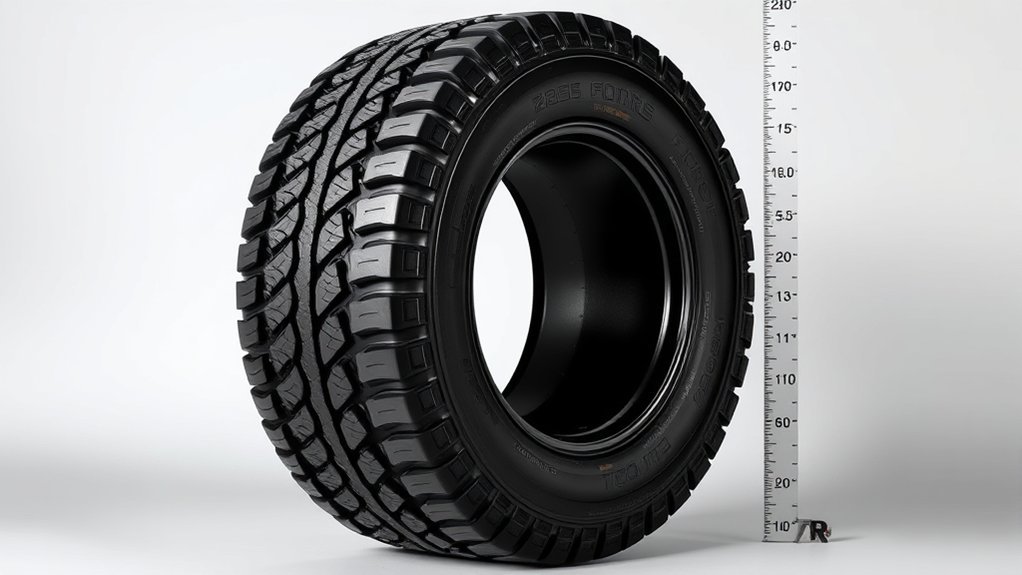
A 285/60R20 tire is a wide, near-33.5-inch tire for 20-inch wheels. The size code tells you its nominal section width, sidewall ratio, radial construction, and rim diameter. Use the measurements below to compare clearance, speedometer change, load rating, and tire pressure before you buy.
Quick Answer
A 285/60R20 tire is about 33.46 inches tall and 11.22 inches wide by size-code math. Its sidewall is about 6.73 inches, and it fits a 20-inch rim. Many 285/60R20 tires use 8.0- to 10.0-inch-wide wheels, but you should confirm the exact tire model and vehicle fitment.
Key Takeaways
- A 285/60R20 tire is about 33.46 inches tall by unloaded size-code calculation.
- The 285 means nominal section width, not tread width, and equals about 11.22 inches.
- The 60 aspect ratio gives a sidewall height of about 171 mm, or 6.73 inches.
- The nominal circumference is about 105.13 inches, but real loaded revolutions per mile can vary by tire model.
- Use your door placard or owner’s manual for tire pressure, not a size-only PSI guess.
What Does 285/60R20 Mean?
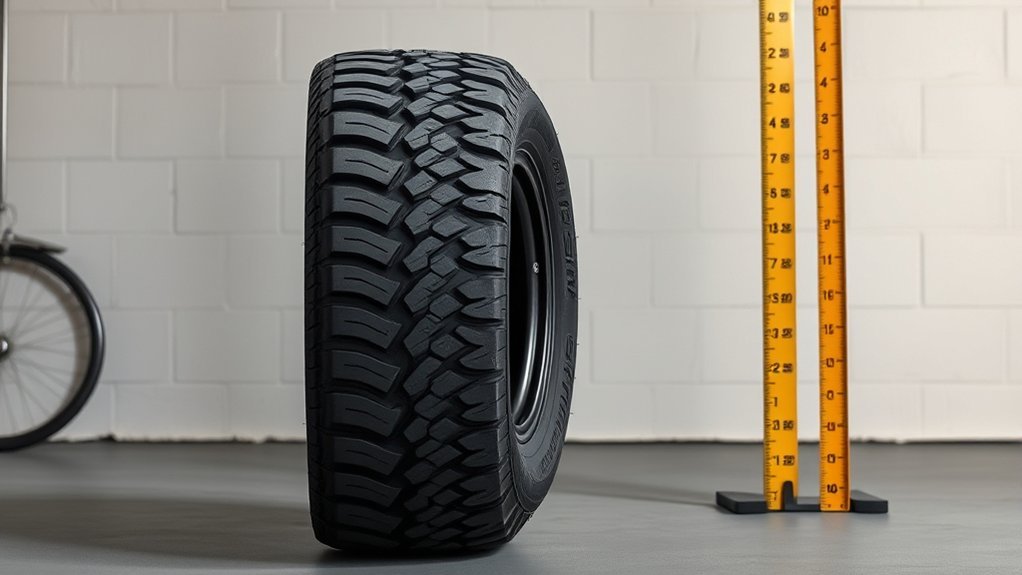
A 285/60R20 tire uses a standard tire-size code. The 285 is the nominal section width in millimeters, measured from sidewall to sidewall. The 60 is the aspect ratio, so the sidewall height equals 60% of the section width. The R means radial construction, and the 20 means the tire mounts on a 20-inch wheel.
This is the same basic sizing system explained in Michelin’s tire marking guide. The important detail is that 285 is not the exact tread width. Tread width varies by tire model and tread design, while section width is the size-code measurement.
285/60R20 Tire Size Chart
Here are the main 285/60R20 dimensions in both inches and millimeters. These are nominal measurements from the size code, so actual tire specs can vary slightly by brand, load range, inflation pressure, and measuring rim.
| Size Code | 285/60R20 |
| Nominal Section Width | 285 mm / 11.22 in |
| Aspect Ratio | 60% |
| Sidewall Height | 171 mm / 6.73 in |
| Wheel Diameter | 20 in |
| Overall Diameter | 850 mm / 33.46 in |
| Nominal Circumference | 2,670 mm / 105.13 in |
| Nominal Revs Per Mile | About 603 by unloaded circumference math |
| Common Approved Rim Width | Often 8.0 to 10.0 in, depending on tire model |
[Products Worth Considering]

Steelman white tire marking crayons provide high-contrast, semi-permanent marks for repairing and inspecting tires and equipment. They write on wet or dry, smooth or coarse surfaces including rubber, metal, glass, and wood, making them ideal for puncture location and damage outlining. The lead- and zinc-free crayons resist weather and fading yet wipe away when you no longer need the marks.

Protect your spare wheel with a waterproof, dustproof tire cover made to resist sun and harsh weather. The elastic band design makes it easy to install and remove without tools, while reinforced stitching helps it keep its shape. Available in multiple sizes, it fits common RV, trailer, Jeep, SUV, and truck spare tires.

ETENWOLF T300 is a calibrated digital tire pressure gauge for accurate readings from 3 to 200 PSI across light and heavy-duty vehicles. It includes thermal compensation for reliable performance in extreme cold or heat, with an auto shut-off to extend battery life and an LED for easier reading. The sturdy design supports rugged everyday use, making it ideal for pickups, RVs, and industrial applications.
How Tall Is a 285/60R20 Tire?
A 285/60R20 tire is about 33.46 inches tall, or about 850 mm, by standard size-code calculation. You get that number by calculating the sidewall height, doubling it, and adding the 20-inch rim diameter.
- Sidewall height: 285 mm × 0.60 = 171 mm
- Sidewall in inches: 171 mm ÷ 25.4 = 6.73 in
- Overall diameter: 20 in + 6.73 in + 6.73 in = 33.46 in
A 285/60R20 is commonly called a 33.5-inch tire, but it is not exactly the same as every tire labeled “33-inch.” Brand, tread depth, load range, and loaded radius can change the real mounted height.
How Wide Is a 285/60R20 Tire?
A 285/60R20 tire has a nominal section width of 285 mm, which converts to about 11.22 inches. Section width measures the tire’s widest sidewall-to-sidewall span, not the exact tread width touching the road.
Section Width In Millimeters
The 285 in 285/60R20 means the tire’s nominal section width is 285 millimeters. This number helps you estimate fender clearance, wheel-well space, and how much room you need around suspension parts.
Actual mounted section width can shift slightly. A wider measuring wheel can spread the sidewalls more, while a narrower wheel can pull them inward. Tire model, load range, and sidewall design also affect the final mounted measurement.
Width In Inches
In inches, 285 mm equals about 11.22 inches. That makes 285/60R20 wider than many factory truck and SUV sizes, so you should check inner clearance near the upper control arm, sway bar, fender liner, and mud flaps.
- Section width: about 11.22 inches by size code
- Tread width: usually narrower and varies by tire model
- Wheel width: often 8.0 to 10.0 inches for many 285/60R20 tires
Real-World Fitment Range
A 285/60R20 tire works on many light trucks and SUVs, but fitment depends on more than tire size. Wheel offset, wheel width, suspension design, alignment, fender liner shape, and ride height all affect rubbing risk.
Before you buy, confirm the tire’s approved rim-width range on the manufacturer spec sheet. For example, General Tire’s Grabber A/TX specifications list an LT285/60R20 version with an 8.0- to 10.0-inch approved rim width, but another tire model may measure differently.
Warning: Do not assume 285/60R20 will fit just because the wheel diameter is correct. Check turning clearance at full lock, suspension compression, brake clearance, spare tire storage, and load rating before installation.
What Is the Sidewall Height of 285/60R20?
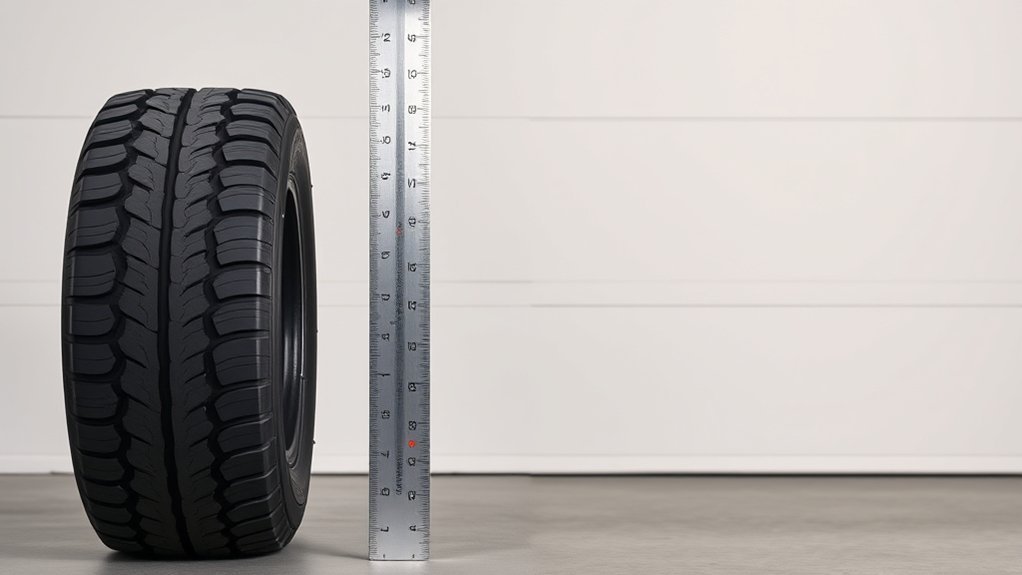
The sidewall height of a 285/60R20 tire is about 171 mm, or 6.73 inches. The 60 aspect ratio means the sidewall is 60% of the 285 mm section width.
- 285 mm × 0.60 = 171 mm
- 171 mm ÷ 25.4 = 6.73 inches
- Two sidewalls plus the 20-inch rim give the total tire diameter
This sidewall is tall enough to add cushion for trucks and SUVs, especially compared with lower-profile 20-inch tires. It can help with ride comfort and impact absorption, but it can also add more sidewall flex than a shorter tire.
285/60R20 in Inches and Millimeters
In simple terms, a 285/60R20 tire is about 11.22 inches wide, 33.46 inches tall, and has a 6.73-inch sidewall. In metric terms, that is 285 mm wide, about 850 mm tall, and a 171 mm sidewall.
Those numbers make the size useful for drivers who want a taller stance, more sidewall than a low-profile 20-inch tire, and a wider footprint than many factory sizes. Still, you should compare it with your original tire size before buying because height and width changes affect clearance, gearing feel, speedometer readings, and odometer readings.
How Does 285/60R20 Affect Speedometer Readings?
A 285/60R20 affects your speedometer only when it is taller or shorter than the tire size your vehicle was calibrated for. A taller tire travels farther per rotation, so the speedometer can read lower than your actual road speed. A shorter tire does the opposite.
Actual speed = indicated speed × new tire diameter ÷ original tire diameter.
Stock Speedometer Baseline
Your stock tire size is the baseline. If your original tire is close to 33.5 inches tall, the change may be small. If your original tire is much shorter, the speedometer and odometer can drift enough to matter.
Discount Tire recommends recalibrating when you change tire size so you can avoid unintended speeding and keep vehicle data more accurate.
Diameter Change Impact
By unloaded circumference math, a 285/60R20 has a circumference of about 105.13 inches and about 603 revolutions per mile. Real-world manufacturer revs-per-mile specs may differ because a loaded tire deflects while rolling. Tire Rack explains that revolutions per mile may be measured in a lab or based on manufacturer test experience, not just calculated from unloaded diameter.
That is why one LT285/60R20 tire can list around 621 revs per mile even though the nominal size-code circumference suggests about 603. Use the tire maker’s spec sheet if you need exact drivetrain, gear, or calibration data.
Actual Speed Difference
Here are simple examples using the 33.46-inch 285/60R20 as the new tire size. These examples use unloaded diameter math, so treat them as estimates.
| Original Size Example | Approx. Original Diameter | Actual Speed at Indicated 60 MPH |
| 275/60R20 | 33.0 in | About 60.8 MPH |
| 265/60R20 | 32.52 in | About 61.7 MPH |
| 275/55R20 | 31.91 in | About 62.9 MPH |
Note: If your new tire is taller than stock, your actual speed is usually higher than the speedometer shows. If your new tire is shorter than stock, your actual speed is usually lower than the speedometer shows.
What Are the Best Replacement Sizes for 285/60R20?
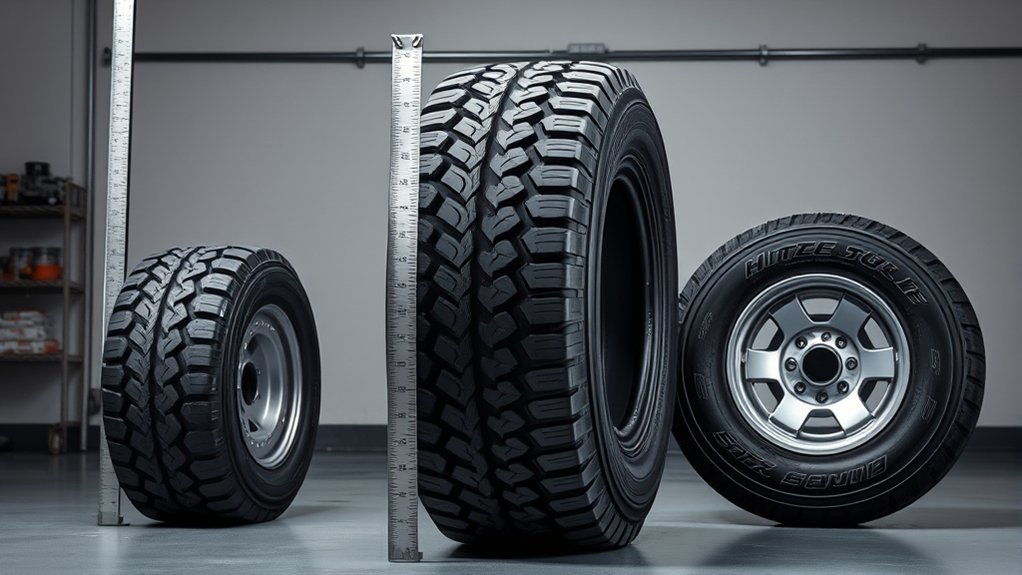
The best replacement size depends on whether you want to stay close to the 285/60R20 diameter or change width and stance. As a general sizing rule, staying within about 3% of the original diameter helps limit speedometer, odometer, ABS, and drivetrain changes. Tire Rack’s plus-sizing guidance focuses on keeping OE-equivalent diameter and load capacity when changing sizes.
| Replacement Size | Approx. Diameter | Change vs. 285/60R20 | Best For |
| 275/60R20 | 33.0 in | About -1.4% | Slightly narrower fitment with close height |
| 295/60R20 | 33.94 in | About +1.4% | More width and slightly more height |
| 295/55R20 | 32.78 in | About -2.0% | Wider stance with less height |
| 265/60R20 | 32.52 in | About -2.8% | Narrower option near the 3% limit |
| 33×12.50R20 | Nominal 33.0 in | About -1.4% by nominal height | Wide off-road stance, with clearance checks |
| 325/50R20 | 32.80 in | About -2.0% | Very wide setups with proper wheels and clearance |
Do not choose a replacement size by diameter alone. Match or exceed the original load capacity, keep the speed rating appropriate for your vehicle, and confirm the tire is approved for your wheel width.
[Products Worth Considering]

Upgrade your 2024-2026 Tesla Model 3 Highland with REEVAA all-weather mud flaps designed for seamless fit along the original body lines. The set of four delivers strong splash protection against mud, gravel, and road debris while using OEM-grade durable materials. Installation is non-destructive with original hole positions and snap-in clips, and the aerodynamic design helps minimize impact on efficiency.

These M14x1.5 closed-end chrome lug nuts are a one-piece replacement designed for secure fitment on compatible GM, Ford, and select Chrysler/Dodge models. Featuring a 60-degree conical seat and anti-rust chrome plating, they help resist corrosion and maintain a bright look for everyday driving. Built for long-term durability, they include OEM-style part references and are backed by 12 months of support.

This digital tire pressure gauge with built-in inflator helps you accurately check and adjust tire pressure for safer driving and better fuel efficiency. It supports multiple units (PSI, KPA, BAR, KG/CM²) and reads within 1% for reliable results. The 3-in-1 design inflates, deflates, and measures, with a quick-connect air chuck and compatible hose setup for cars, trucks, SUVs, RVs, and motorcycles.
What Should You Check Before Buying 285/60R20 Tires?
Before you buy 285/60R20 tires, confirm the size works with your vehicle, wheels, and driving needs. The same size can appear in different load ranges, tread patterns, max pressures, and speed ratings.
Verify 285/60R20 fitment by checking diameter, section width, wheel width, offset, load index, speed rating, and clearance before you buy.
- Original tire size: Compare 285/60R20 with the factory size listed on your door placard.
- Wheel width: Confirm the specific tire model’s approved rim-width range.
- Wheel offset: A more aggressive offset can push the tire outward and create fender clearance issues.
- Suspension clearance: Check upper control arms, struts, sway bars, and liners.
- Load index and load range: Match or exceed the vehicle’s required load capacity. Goodyear explains that load index connects to how much weight a tire can support when properly inflated.
- Speed rating: Use a rating that meets your vehicle’s requirements and driving conditions.
- Spare tire fit: Make sure a full-size spare can fit in the storage location if you plan to carry one.
Pro Tip: If you are changing from a smaller factory tire, test fit one front tire first and turn the steering from lock to lock before mounting the full set.
[Products Worth Considering]

AZUNO’s digital tire inflator delivers stable, accurate pressure readings with a bright LCD and a 0.1 resolution display for confident inflation. It supports one-handed operation for inflating and quick deflating, and it’s built with rugged steel and brass components for reliable shop or garage use. With multi-unit pressure display and compatibility across cars, SUVs, motorcycles, and trucks, it’s a convenient accessory for everyday tire maintenance.

This wheel brush kit delivers pro-level cleaning at home, lifting dirt, grime, and brake dust to help restore wheel appearance. It includes multiple brush styles and applicator pads for tackling different wheel surfaces, with gentle, metal-free bristles designed to reduce scratching risk. The flat and double-ended brushes are built for comfort and reach, making wheel care easier for cars, trucks, and RVs.

Monitor tire tread wear with a smart, color-coded depth gauge that shows clear condition ranges at a glance. The bar is range marked for fast, easy readings, helping you maintain safer traction and performance. Each gauge is portable with a pocket clip, and the set includes 20 units for daily use and sharing.
What Tire Pressure Works Best for 285/60R20?
The best tire pressure for 285/60R20 tires is the pressure your vehicle manufacturer specifies for your vehicle and load, not a universal number based only on tire size. NHTSA TireWise guidance says to use the Tire and Loading Information label on the driver’s door edge or door post, or the owner’s manual.
Check pressure when the tires are cold, including the spare if you carry one. If you tow, haul, or switch from a P-metric tire to an LT-metric tire, confirm the correct load-inflation requirement with the tire maker, vehicle maker, or a qualified tire professional.
Warning: Do not inflate a tire to the maximum PSI on the sidewall unless that pressure is required for your load and approved for your vehicle setup. The sidewall number is a maximum tire limit, not automatically the correct daily driving pressure.
Under-inflation can increase heat, sidewall flex, uneven wear, and failure risk. Over-inflation can reduce ride comfort, shrink the contact patch, and cause uneven center wear. A monthly cold-pressure check is a simple way to protect tread life and handling.
Frequently Asked Questions
Is 285/60R20 a 33-inch tire?
Yes, you can treat a 285/60R20 as a near-33-inch tire, but it is closer to 33.5 inches by size-code calculation. Actual mounted height can vary by manufacturer, tread depth, load range, and inflation.
How tall are 285/60R20 tires?
A 285/60R20 tire is about 33.46 inches tall, or about 850 mm, by unloaded size-code math. The sidewall is about 6.73 inches tall on each side of the 20-inch wheel.
Is a 285/60R20 taller than a 275/60R20?
Yes. A 285/60R20 is about 33.46 inches tall, while a 275/60R20 is about 32.99 inches tall. The 285 is also about 10 mm wider by nominal section width.
Is a 285 tire the same height as a 33-inch tire?
Not always. The 285 only tells you nominal section width. Height also depends on aspect ratio and wheel diameter. A 285/60R20 is close to 33.5 inches, but a 285/55R20 or 285/65R20 will be a different height.
What is the circumference of a 285/60R20 tire?
The nominal unloaded circumference is about 105.13 inches. Real rolling circumference can vary because a tire compresses under vehicle load, so use the tire manufacturer’s revs-per-mile spec for precise calibration work.
Can 285/60R20 tires fit without a lift?
Sometimes, but it depends on the vehicle, wheel width, offset, suspension design, and factory tire size. Check front turning clearance, fender liners, upper control arms, and mud flaps before mounting a full set.
Conclusion
A 285/60R20 tire gives you a useful mix of width, height, and sidewall for many trucks and SUVs. By the size code, it measures about 33.46 inches tall, 11.22 inches wide, and has a 6.73-inch sidewall.
The number alone does not guarantee a perfect fit. Compare it with your stock size, check wheel width and offset, match the correct load and speed ratings, and use your vehicle’s recommended cold tire pressure. That gives you a safer setup and helps avoid rubbing, speedometer error, and load-capacity mistakes.
Sources
- Michelin: Tire Markings Explained – backs up section width, aspect ratio, radial construction, and rim diameter definitions.
- NHTSA TireWise – backs up tire-pressure guidance based on the vehicle placard or owner’s manual.
- Goodyear: Load Index and Speed Rating – backs up load index and speed rating explanations.
- Discount Tire: Speedometer Accuracy – backs up recalibration guidance after tire-size changes.
- Tire Rack: Revolutions Per Mile – backs up why real revs per mile can differ from simple diameter math.
- General Tire: Grabber A/TX Specifications – backs up manufacturer-specific LT285/60R20 rim width, diameter, load, and revs-per-mile variation.

