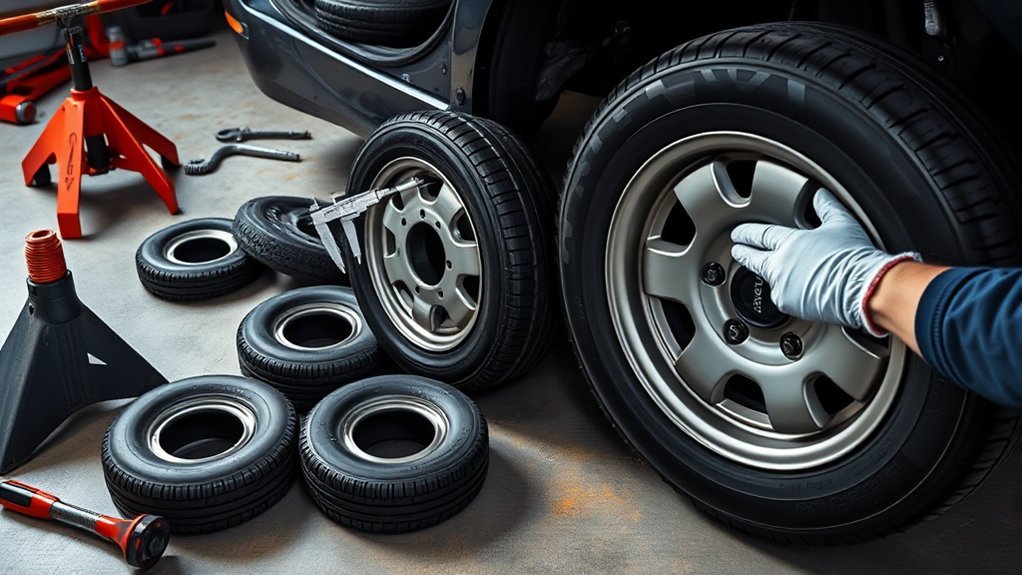
No, tire donuts are not universal. A compact spare must match your vehicle’s approved fitment, including wheel size, bolt pattern, center bore, offset, brake clearance, load rating, and overall rolling diameter. Most donut spares are only for temporary emergency use, so you should follow the speed and distance limits printed on the spare and listed in your owner’s manual.
Quick Answer
Tire donuts are not universal. Use only a compact spare approved for your vehicle, or one that matches the required bolt pattern, center bore, offset, brake clearance, load rating, and rolling diameter. Most temporary spares are limited to about 50 mph and short-distance emergency driving.
Key Takeaways
- A donut spare is vehicle-specific, not universal, even when it looks similar to another compact spare.
- Check the owner’s manual, door-jamb tire placard, spare tire label, and wheel fitment specs before buying or installing one.
- Match bolt pattern, center bore, offset, brake clearance, lug hardware, load rating, and overall rolling diameter.
- Most temporary spares are limited to short emergency use, often around 50 mph and about 50 miles, unless your vehicle manual says otherwise.
- Check spare tire pressure, DOT date code, cracks, and storage condition before you need the spare on the road.
At a Glance
| Time Required | 10 to 20 minutes to verify the spare before use or purchase |
| Difficulty | Easy for basic checks; moderate if you need to measure bolt pattern, hub bore, or brake clearance |
| Tools Needed | Owner’s manual, tire placard, tire pressure gauge, tape measure or caliper, and vehicle fitment data |
| Cost | Free to inspect; buying a spare varies by vehicle, tire type, and wheel type |
Are Tire Donuts Universal?
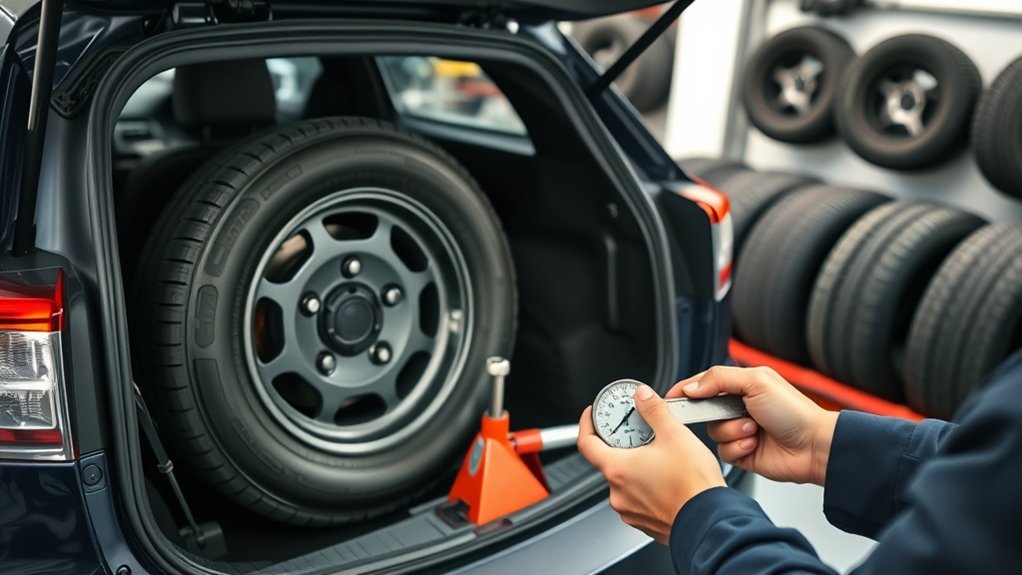
No, tire donuts are not universal. A temporary spare tire is designed around specific vehicle requirements, not just a general tire size. If the bolt pattern, center bore, wheel offset, or brake clearance is wrong, the spare may not mount correctly or may rub against the brakes, suspension, or bodywork.
You should start with your owner’s manual and the tire placard on the driver’s door area. The National Highway Traffic Safety Administration says the correct tire size and pressure come from the vehicle manufacturer’s label or owner’s manual, not from guesswork.
A spare from another car may fit over the studs but still be unsafe. The wheel may sit too far in or out, the lug nuts may not seat correctly, or the tire may have a different rolling diameter. That can affect steering, braking, stability control, anti-lock braking, and drivetrain stress.
Warning: Never force a donut spare onto a hub, use mismatched lug nuts, or drive on a spare that rubs the brake caliper or suspension. If the wheel does not seat flat against the hub, it is not safe to use.
What Is a Donut Spare Tire?
A donut spare tire is a compact, lightweight temporary tire made to help you reach a safe repair location after a flat. It saves trunk space and weight, but it does not offer the same tread width, traction, load capacity, heat resistance, or long-distance durability as a normal tire.
| Feature | Practical effect |
|---|---|
| Smaller size | Saves storage space but changes ground clearance and handling |
| Narrow tread | Reduces traction, especially during hard braking, rain, or quick turns |
| Higher pressure rating | Often needs more PSI than normal tires, so check the spare label |
| Temporary construction | Designed for emergency driving, not everyday use |
| Vehicle-specific fitment | Must match your vehicle’s approved spare tire and wheel requirements |
Many compact spares use a size code that starts with “T,” such as T125/70D17. The “T” means temporary, the first number shows width in millimeters, the second number shows aspect ratio, and the final number shows wheel diameter. That code alone does not confirm fit. You still need the correct wheel and vehicle compatibility.
How Do You Check Spare Tire Fit?
To check whether a spare tire fits, compare the spare against the vehicle’s approved specifications. Do not rely on tire diameter alone. A correct spare must mount securely, clear the brakes, support the vehicle load, and keep the vehicle stable at low emergency speeds.
- Check the owner’s manual first. Look for the approved temporary spare size, pressure, speed limit, placement warning, and distance limit.
- Check the tire placard. The door-jamb label may list tire size and pressure information. NHTSA recommends using the vehicle manufacturer’s pressure, not the maximum pressure printed on a regular tire.
- Match the bolt pattern. The lug count and bolt circle must match exactly. For example, 5×114.3 is not the same as 5×120.
- Check center bore and hub fit. The wheel center hole must fit over the hub and seat flat.
- Verify offset and brake clearance. The wheel must clear the caliper, rotor, suspension, and fender area.
- Confirm lug-seat type. Ball-seat, conical-seat, and flat-seat lug nuts are not interchangeable.
- Compare overall rolling diameter. A major mismatch can affect ABS, traction control, AWD systems, and speedometer behavior.
- Check load rating. The spare must support the vehicle load listed for that temporary application.
- Inspect condition. Look for cracks, bulges, exposed cords, dry rot, corrosion, or damage around the bead and valve stem.
Pro Tip: If you buy a used donut spare, test-fit it at home before an emergency. Mount it carefully while the car is safely parked, confirm it seats flat, then remove it and store it correctly.
[Products Worth Considering]

Upgrade your wheels with MIKKUPPA closed-end lug nuts designed for reliable fit and corrosion resistance. The one-piece, cold-forged and heat-treated steel construction helps resist rust and stripping, while the integrated finish delivers a durable black appearance. Built to OEM standards with a conical 60-degree seat, these nuts provide a secure solution for compatible Ford, Honda, Jeep, and Chevrolet models.

These M14x1.5 closed-end chrome lug nuts are a one-piece replacement designed for secure fitment on compatible GM, Ford, and select Chrysler/Dodge models. Featuring a 60-degree conical seat and anti-rust chrome plating, they help resist corrosion and maintain a bright look for everyday driving. Built for long-term durability, they include OEM-style part references and are backed by 12 months of support.

Secure a full-size spare on your trailer with this powder-coated steel spare tire mount bracket. It fits most 4-, 5-, and 6-lug wheel bolt patterns and mounts to trailer tongues up to 4 in wide and 5 in tall. Built for reliable carry with a max 150 lb load rating and includes zinc-plated hardware for straightforward installation.
What Spare Tire Size Fits Your Car?
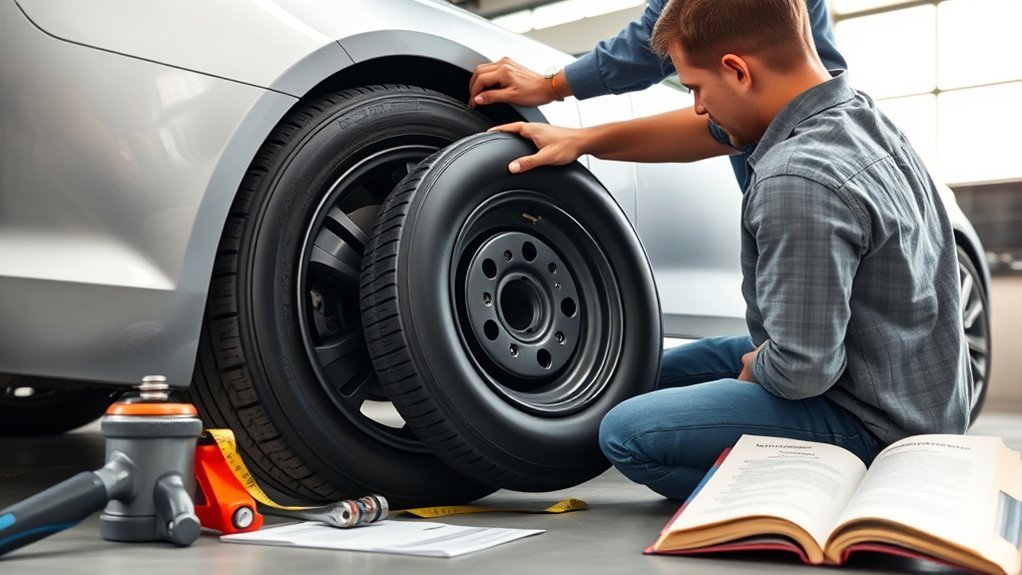
The spare tire size that fits your car is the size approved by your vehicle manufacturer. That may be a compact temporary size, a full-size matching spare, or no spare at all if your vehicle came with run-flat tires or an inflator kit. Check the manual before buying a replacement.
Wheel fitment matters as much as tire size. Discount Tire’s wheel fitment guide explains that bolt pattern must match the vehicle, and that offset affects brake, fender, and suspension clearance. Those same fitment points matter when you choose a compact spare wheel.
[Products Worth Considering]

ETENWOLF’s tire pressure gauge helps you quickly and accurately check tire PSI across cars, trucks, motorcycles, bikes, and more. It’s manually calibrated to ANSI B40.1 Grade A for reliable readings, includes a large glow dial for easy nighttime viewing, and features a 360-degree swivel chuck for use at any valve angle. The gauge also works consistently in extreme hot or cold weather.
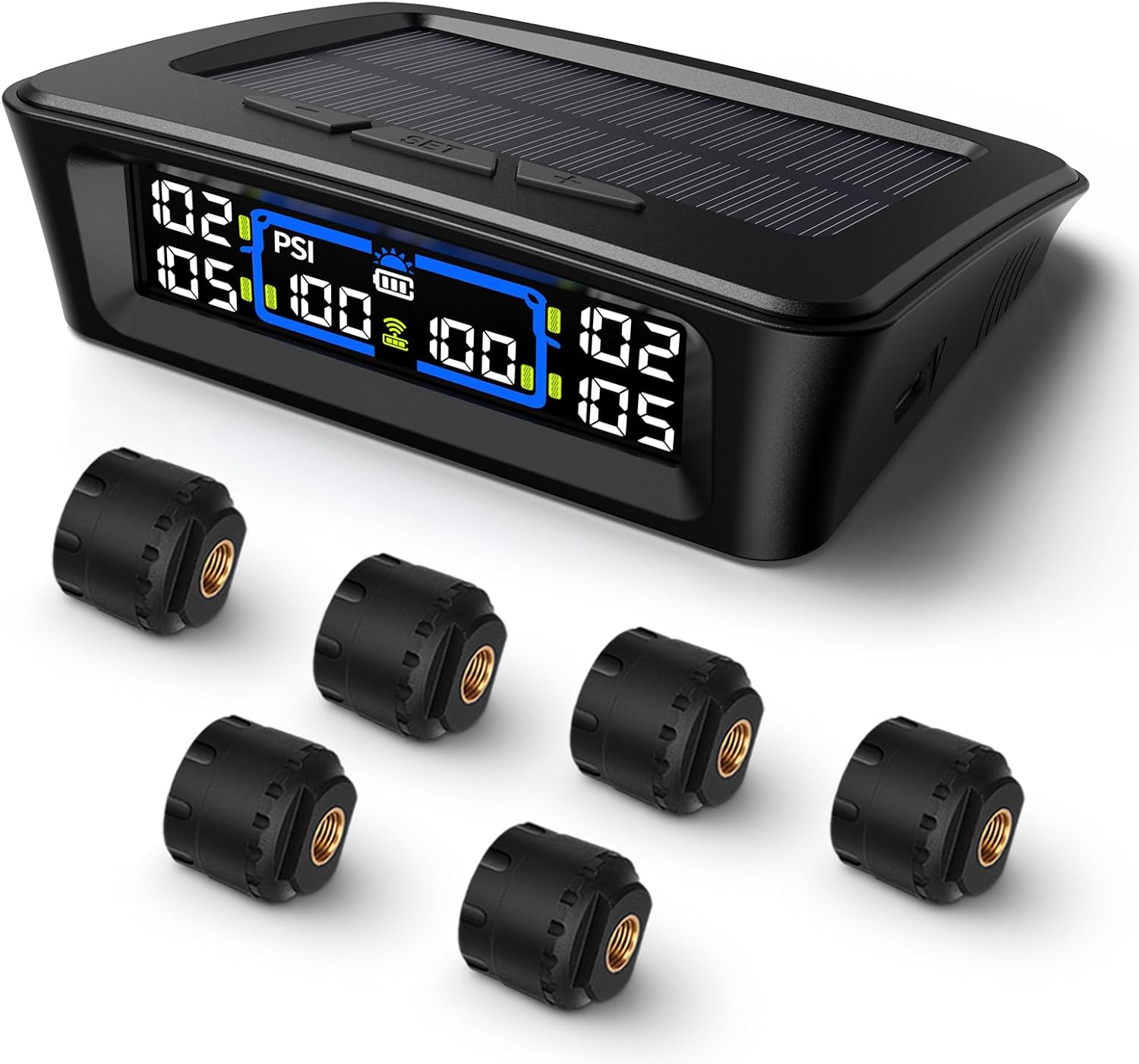
The Tymate TM12 RV TPMS delivers real-time tire pressure and temperature monitoring with a stable 433Hz display for safer long-distance driving. It supports simultaneous monitoring across vehicle and trailer zones, includes six alarm modes for pressure, temperature, leakage, battery, and signal loss, and features easy DIY installation with auto calibration. Power is supplied via USB-C charging or solar recharging, with a wide 0–144 PSI range and up to 50 ft signal coverage for RVs and towable trailers.

The Dr.Roc spare tire tool kit helps you release, lower, or raise your spare tire with reliable extension tools and a lug nut wrench. It is made from rustproof automotive-grade steel and includes an organized carry case for convenient storage. Designed for compatibility with select GM models from the late 1990s through 2019, it uses upgraded extension components to install and remove spare tires with less hassle.
Match Bolt Pattern
The bolt pattern is the number of lug holes and the diameter of the circle they form. Common examples include 4×100, 5×114.3, and 6×139.7. If the pattern is wrong, the wheel will not mount correctly.
Even if the holes appear close, “close enough” is not safe. A wrong pattern can keep the wheel from centering, damage studs, loosen lug nuts, or cause vibration. Use manufacturer data, a reliable fitment database, or a tire professional when you are unsure.
Check Tire Diameter
Compact spares often have a different width and rim design than your regular tires, but the rolling diameter must stay within the vehicle’s safe operating range. A large mismatch can confuse ABS and traction-control systems, reduce stability, and stress AWD or 4WD components.
Do not measure only from the ground to the top of a tire and assume the spare is correct. That rough measurement can help spot an obvious mismatch, but the approved size in the owner’s manual is the better source.
Confirm Hub Clearance
Hub clearance means the wheel can slide over the hub and sit flat against the mounting surface. Brake clearance means the inner wheel shape does not touch the caliper, rotor, or dust shield. Both checks matter before you trust the spare on the road.
After mounting the spare by hand, tighten the lug nuts in a star pattern to the vehicle’s torque specification. Lower the car, recheck that the wheel sits flat, and drive slowly at first. If you feel vibration, hear scraping, or see warning lights that suggest a serious fault, stop in a safe place.
Can You Drive Safely on a Spare Tire?
Yes, you can drive on a donut spare tire, but only as a temporary emergency fix. Many compact spares are limited to 50 mph, and many tire retailers use about 50 miles as a common distance guideline. Still, your owner’s manual and the label on the spare are the final rules for your vehicle.
The Mazda CX-5 owner’s manual, for example, says its temporary spare is lighter and smaller than a conventional tire, should be used only for very short periods, and should not exceed 80 km/h or 50 mph. It also warns not to use that temporary spare on another vehicle.
A donut spare is meant to get you to a safe repair location. It is not a normal tire, and it should not be used for routine driving.
Drive gently after installing a compact spare. Avoid hard braking, sharp turns, potholes, heavy loads, towing, and highway speeds when possible. Handling, braking, and traction can feel different because the spare is narrower and may have a different tread design.
Warning: On some front-wheel-drive, AWD, or 4WD vehicles, the manual may tell you not to place the temporary spare on a drive axle. Follow that instruction exactly, even if it means moving a good tire to another position before installing the spare.
When Should You Not Use a Donut Spare?
Do not use a donut spare if it is not approved for your vehicle, does not mount flat, rubs any component, has visible damage, or cannot hold the correct pressure. You should also avoid using it if the tire is very old, badly cracked, or missing its readable DOT date code.
Skip the compact spare and call roadside assistance if the road shoulder is unsafe, the vehicle is unstable on the jack, more than one tire is flat, the lug nuts are damaged, or the spare itself is flat. A tire that looks unused can still be unsafe if the rubber has aged or the valve stem leaks.
How Do You Maintain a Donut Spare?
Check your spare tire at least monthly and before long trips. The U.S. Tire Manufacturers Association recommends checking tire pressure at least once a month and says not to forget the spare. Use a tire gauge when the tire is cold, meaning the vehicle has been parked for at least three hours.
Read the spare’s pressure label carefully. Compact spares often require a higher PSI than your normal tires. Do not use the maximum pressure printed on a regular tire as your guide. Use the spare label, owner’s manual, or vehicle placard.
Check the DOT date code on the tire sidewall. Michelin explains that the first two digits of the date code show the week of manufacture and the last two digits show the year. For example, a code ending in 2422 means the tire was made in the 24th week of 2022.
Note: A tire pressure monitoring system may not warn you about a stored spare. Check the spare with a gauge instead of relying only on a dashboard light.
Full-Size Spare vs. Donut Spare
A full-size spare is usually easier to drive on than a compact donut, but it still needs the correct tire size, wheel fitment, load rating, and pressure. Some full-size spares match the four road tires exactly. Others are full-size but have a different tread pattern or age, so you should still drive carefully.
| Spare type | Best use | Main limitation |
|---|---|---|
| Compact donut spare | Short emergency drive to a repair shop | Speed, distance, traction, and load limits |
| Full-size matching spare | Best backup when it matches the road tires | Takes more storage space and still needs maintenance |
| Full-size non-matching spare | Temporary use when size and load rating are approved | Different tread or wear can affect handling |
| Inflator kit or sealant kit | Small punctures in the tread area | Will not fix sidewall damage, blowouts, or large cuts |
Where Can You Buy a Spare Tire?
You can buy a spare tire from a dealership parts department, tire retailer, local repair shop, or online tire seller. The safest route is to match the spare by VIN, trim, wheel size, brake package, and manufacturer-approved fitment.
Discount Tire notes that compact spares are temporary, vehicle-specific replacements, while full-size spares can offer fewer restrictions when matched correctly. That makes professional fitment help useful, especially if your vehicle did not originally include a spare.
[Products Worth Considering]

This spare tire tool kit is designed for the 2004 to 2018 Ford F-150 to help you loosen and tighten wheel lug nuts and manage the spare tire and provided jack functions from underneath the vehicle. It includes the lug nut wrench and extension pieces plus a convenient storage carrying case for organized transport. The jack itself is not included.

Protect tire valves from water, dust, and sand to help prevent leaks and support safe driving. These universal stem caps install quickly by hand and feature durable aluminum alloy construction with an inner sealing ring for better air retention. Compatible with cars, SUVs, trucks, motorcycles, and bicycles for everyday convenience.

This professional wheel and rim cleaning brush set lifts brake dust, grime, and dirt with soft, scratch-free microfiber and synthetic wool fibers. The rim brush bends up to 360 degrees for easy access to hard-to-reach areas around spokes, lips, and faces. Ideal for thorough cleaning of car, truck, motorcycle, bicycle, RV, and more wheel and tire surfaces.
Dealership Parts Departments
A dealership parts department is often the most reliable source when your vehicle needs a specific compact spare. Bring your VIN, model year, trim, wheel size, and tire placard information. Ask for the correct spare tire, wheel, jack kit, lug wrench, hold-down hardware, and storage hardware if any parts are missing.
Before you buy, confirm the part number and ask whether the spare has any placement limits. Some vehicles require special steps if the flat tire is on the front axle or if the vehicle uses AWD.
Tire Retailers and Online Stores
Tire retailers and online stores can be good options when you need a compact spare, full-size spare, or replacement wheel. Use the vehicle selector, but do not stop there. Confirm the fitment against the owner’s manual or ask the seller to verify bolt pattern, center bore, offset, and brake clearance.
If you buy used, inspect the tire in person when possible. Check the DOT date code, sidewall condition, tread, bead area, wheel corrosion, valve stem, and whether the lug-seat style matches your vehicle.
What Should You Do After Installing a Donut Spare?
After installing a donut spare, drive directly to a safe tire repair location. Keep your speed below the limit printed on the spare, leave extra following distance, and avoid sudden steering or braking. If the car pulls, vibrates, scrapes, or feels unstable, stop safely and call for help.
Once the regular tire is repaired or replaced, remove the donut spare and store it correctly. Recheck its pressure, inspect it for damage, and make sure the jack and lug wrench are back in the vehicle.
Frequently Asked Questions
Will any donut tire fit on any car?
No. A donut tire must match your vehicle’s approved spare fitment. Check bolt pattern, center bore, offset, brake clearance, load rating, lug-seat type, and rolling diameter before using it.
Are car doughnuts universal?
No. Car doughnuts, or donut spare tires, are not universal. They are temporary spares designed for specific vehicle fitment and emergency limits. Use the owner’s manual and spare tire label as your main guides.
How do I know what size donut tire I need?
Look in your owner’s manual, check the tire placard, and confirm the spare tire size approved for your exact year, make, model, and trim. Then verify the wheel specs, including bolt pattern, center bore, offset, brake clearance, and lug hardware.
Can you only drive 50 miles on a donut tire?
Many compact spares use about 50 miles as a common emergency-distance guideline, but the correct limit is the one listed in your owner’s manual or printed on the spare. Do not exceed the spare’s speed limit, which is often 50 mph.
Can I use a donut spare from the same brand of car?
Not automatically. Even vehicles from the same brand can use different bolt patterns, brake packages, offsets, tire diameters, and load ratings. Match by exact vehicle fitment, not just brand.
Should a donut spare go on the front or rear?
Follow your owner’s manual. Some vehicles warn against placing a temporary spare on the front driving wheels because handling can be affected. If your manual gives a placement rule, use that rule instead of guessing.
Conclusion
Tire donuts are not universal. A safe compact spare must match your vehicle’s approved fitment, including bolt pattern, center bore, offset, brake clearance, lug hardware, load rating, and rolling diameter. It also needs the correct pressure and good condition before you use it.
Treat a donut spare as an emergency tool, not a normal tire. Check the manual, obey the label on the spare, drive slowly, avoid long distances, and replace or repair the regular tire as soon as possible.
Sources
- NHTSA TireWise — tire size, placard, owner’s manual, and spare-tire pressure guidance.
- Mazda CX-5 Owner’s Manual: Spare Tire — temporary spare limits, 50 mph warning, and vehicle-specific spare use.
- Discount Tire Wheel Size Basics — bolt pattern, offset, hub, and clearance fitment basics.
- Discount Tire Spare Tires Guide — compact spare and full-size spare differences.
- U.S. Tire Manufacturers Association Tire Care Essentials — monthly pressure checks, cold pressure checks, and spare-tire maintenance.
- Michelin Tire Markings Explained — DOT date code and sidewall marking guidance.