Your Toyota Tundra does not have one universal tire pressure for every payload. Start with the cold PSI on the Tire and Loading Information label on the driver-side door jamb, then check your tire size, load rating, sidewall maximum, and actual cargo or trailer tongue weight. A loaded Tundra may need more rear-tire pressure than an empty truck, but a blanket “40 psi” rule can be wrong for some tires and unsafe for others.
Quick Answer
For a Toyota Tundra under payload, use the cold PSI on the door-jamb label as your baseline. If cargo or trailer tongue weight puts the rear axle near its limit, adjust only within the tire sidewall maximum and a valid load-inflation table. Do not rely on one fixed 40 psi rule.
Key Takeaways
- Use your Tundra’s door-jamb tire label first because pressure varies by year, trim, tire size, and configuration.
- Check tire pressure cold, before driving or after the truck has been parked for at least three hours.
- Heavy cargo and trailer tongue weight usually affect the rear axle most, so axle load matters more than total cargo weight alone.
- Never exceed the tire’s maximum cold pressure, tire load rating, GVWR, or GAWR.
- TPMS is only a backup warning system. Use a quality gauge before loading, towing, or taking a long trip.
At a Glance
| Time Required | 10 to 15 minutes before loading or towing |
| Difficulty | Easy, but accuracy matters for safety |
| Tools Needed | Accurate tire pressure gauge, air compressor, valve caps, and a scale ticket if carrying a near-limit payload |
| Cost | Usually free to $20 for air; more if you buy a quality gauge or use a public scale |
Why You Should Care About Tire Pressure When Towing
When you tow or carry cargo in a Tundra, tire pressure affects heat buildup, tread wear, braking, steering response, and stability. NHTSA explains that proper tire pressure affects safety, tire durability, and fuel consumption, so this is not just a comfort setting.
Underinflated tires flex more than they should. That flex creates heat and can damage the tire, especially when the truck is loaded. Overinflated tires can reduce the tire’s contact patch, make the ride harsher, and cause center tread wear. The goal is not “as much pressure as possible.” The goal is enough cold pressure for the load without exceeding tire or vehicle limits.
Warning: Never inflate a tire beyond the maximum cold pressure printed on its sidewall. Also do not exceed your Tundra’s GVWR, front GAWR, rear GAWR, payload rating, or the tire load rating. If you are close to any limit, weigh the loaded truck instead of guessing.
Recommended Tire Pressure for Various Loads
Your best starting point is the Tire and Loading Information label on the driver-side door jamb. That label lists the original tire size and recommended cold inflation pressure for your truck. NHTSA also notes that the correct pressure is the vehicle manufacturer’s recommended cold pressure, not the maximum number molded into the tire sidewall.
Many Tundra owners see unloaded pressures near the mid-30 psi range on the placard, but your truck may differ. Tire size, model year, trim, wheel package, replacement tires, and load rating all matter. Toyota’s current Tundra information also shows that maximum payload and towing ratings vary by configuration, so you should not copy another owner’s PSI without checking your own label.
| Driving Situation | Safe Pressure Approach |
|---|---|
| Empty daily driving | Use the cold PSI on your Tundra’s door-jamb label. |
| Light bed cargo | Start with the placard PSI, then check for visible sidewall squat, heat, or uneven wear. |
| Heavy bed payload | Check rear axle load and use tire load-inflation data if you are near payload or axle limits. |
| Trailer towing | Include trailer tongue weight because it adds load to the truck, usually near the rear axle. |
| Aftermarket LT or different-size tires | Do not copy the original P-metric PSI. Use the tire maker’s load-inflation table or ask a qualified tire professional. |
Note: Load-inflation tables are most useful when you change tire size, switch from P-metric to LT tires, or carry near-limit loads. Toyo Tires explains that original equipment tire pressure should come from the vehicle placard or owner’s manual, while optional tire sizes may require load-inflation table guidance.
[Products Worth Considering]

These universal tire valve stem caps help protect valve cores from dust, debris, and moisture while helping maintain stable tire pressure. The corrosion-resistant metal construction and sealed design provide reliable protection in road grime, mud, and winter conditions. Twist-on installation makes them quick to fit on cars, SUVs, trucks, and motorcycles.

The SAFELIFE dial tire tread depth gauge measures tread depth in 1/32 inch increments with clear, easy-to-read 2-inch dial face. Color zones using a traffic light system help you quickly judge whether tread is low, marginal, or ample for safer driving. Built with a durable zinc cast body and a metal detect probe for precise, comfortable use across cars, motorcycles, trucks, and buses.

Keep your tires properly inflated with this analog VONDIOR tire pressure gauge, designed for fast, easy readings without batteries. The swiveling, two-axis hose and large glow dial help you measure at any tire angle with instant visibility. Built with a protective rubber shield, it supports durable, low-maintenance use for cars and trucks.
How to Set Tundra Tire Pressure Before a Heavy Load
- Find the door-jamb label. Look for the original tire size, front PSI, rear PSI, and combined occupant/cargo limit.
- Read the tire sidewall. Confirm the tire size, load index or load range, and maximum cold inflation pressure.
- Estimate the real load. Include passengers, cargo, tools, hitch equipment, and trailer tongue weight.
- Check axle limits. Heavy bed cargo and tongue weight can push the rear axle close to its GAWR even when total payload looks acceptable.
- Use a scale for heavy loads. A public CAT scale or similar scale gives front axle, rear axle, and total truck weight.
- Set pressure cold. Adjust before driving or after the truck has sat for at least three hours.
- Recheck after the trip starts. If handling feels loose, the truck squats heavily, or a tire looks hot or stressed, stop safely and inspect the setup.
Pro Tip: Keep a small log with empty PSI, loaded PSI, cargo weight, trailer tongue weight, and tire wear notes. After a few trips, you will know what works for your specific Tundra and tire setup.
[Products Worth Considering]

Monitor tire tread wear with a smart, color-coded depth gauge that shows clear condition ranges at a glance. The bar is range marked for fast, easy readings, helping you maintain safer traction and performance. Each gauge is portable with a pocket clip, and the set includes 20 units for daily use and sharing.

Check tire pressure with the Milton S-925 pencil gauge built for trucks, RVs, and bicycles. It features a single-head chuck with a built-in deflator valve, and it displays readings in both PSI and kPa for convenient use. The gauge is designed for accurate, repeatable pressure checks within its working range.

Measure tire tread depth quickly and accurately with this LUMITECO dial gauge that reads in 1/32" increments up to 14/32". The color-coded green/yellow/red zones make it easy to judge tire wear and know when replacement is needed. A rugged, compact design with a protective pouch helps keep the gauge ready for use on cars, trucks, motorcycles, and more.
How Payload Affects Tire Performance and Safety
Payload changes how much weight each tire must carry. A bed full of gravel, firewood, tools, or camping gear usually adds more load to the rear tires than the front tires. A trailer adds tongue weight to the truck too, so towing can create the same tire-stress problem as bed cargo.
Too little pressure under load allows more sidewall movement. Too much pressure can reduce grip and make the truck feel skittish. Proper inflation helps the tire keep its shape, controls heat, and supports predictable handling.
[Products Worth Considering]
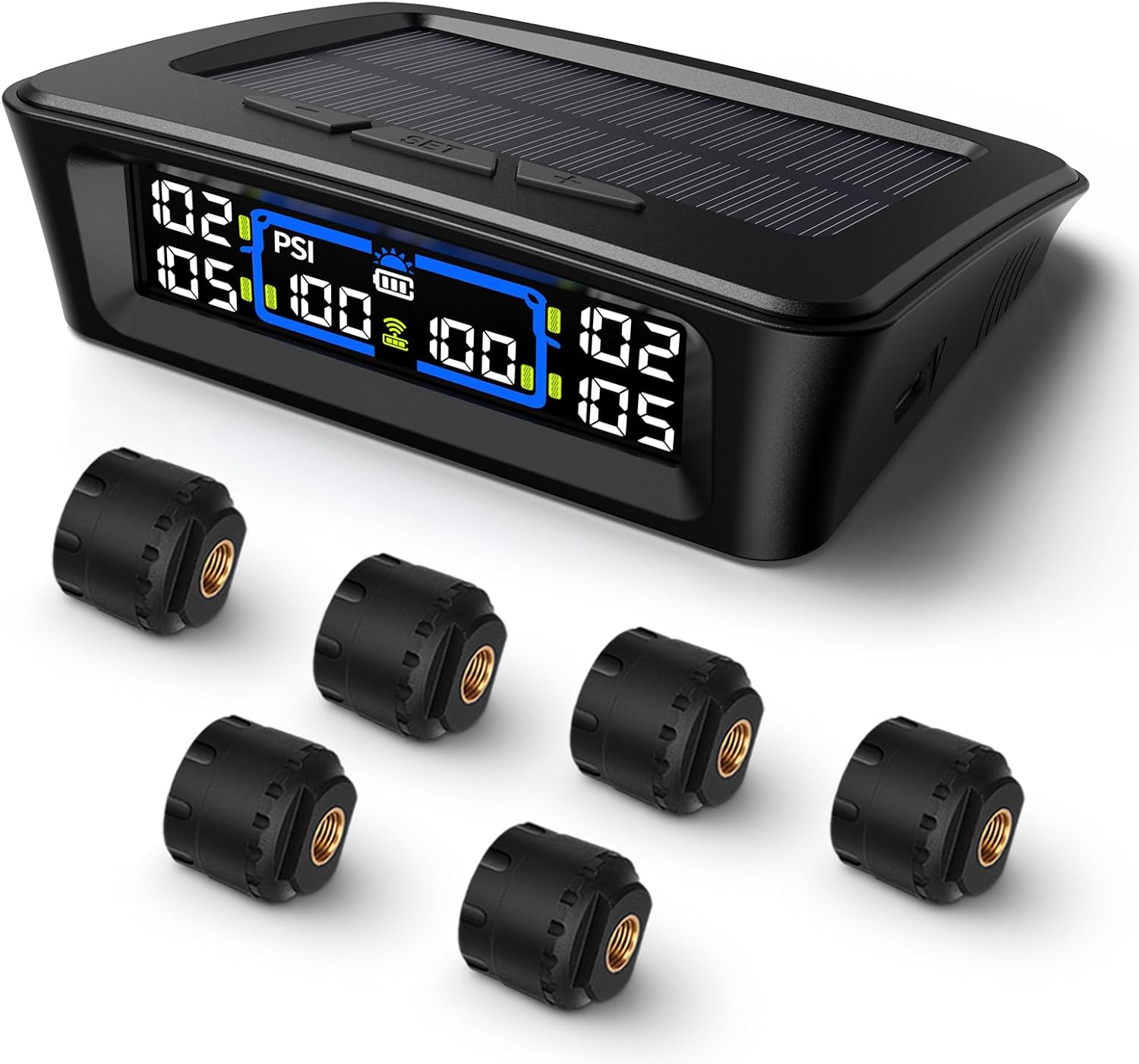
The Tymate TM12 RV TPMS delivers real-time tire pressure and temperature monitoring with a stable 433Hz display for safer long-distance driving. It supports simultaneous monitoring across vehicle and trailer zones, includes six alarm modes for pressure, temperature, leakage, battery, and signal loss, and features easy DIY installation with auto calibration. Power is supplied via USB-C charging or solar recharging, with a wide 0–144 PSI range and up to 50 ft signal coverage for RVs and towable trailers.
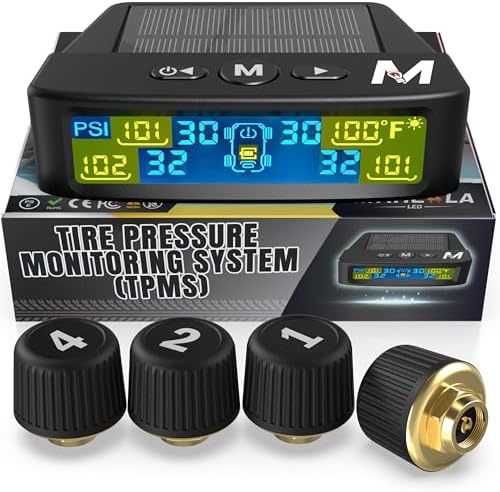
Marcala’s TPMS set of four sensors helps you monitor tire pressure and temperature in real time while driving, with updates every second. The bright color LCD uses auto-dimming for easy viewing, powered by dual solar and USB charging, and offers six alarm modes. Built for trailers, RVs, campers, trucks, and towing setups, the sensors support monitoring 1-4 wheels up to 98 PSI with IP67 waterproof protection.

The TYAMATE TM8 solar-powered wireless TPMS delivers real-time tire pressure and temperature monitoring with six alarm modes for safer driving. A vibrant color LCD display shows readings clearly while windshield mounting keeps it hands-free and easy to read. With a wide 0–87 PSI range, strong 433.92 MHz signal transmission, and quick sensor pairing, it’s ideal for RV, sedan, SUV, MPV, and truck use.
Effects on Tire Wear
Incorrect pressure often shows up in the tread. Underinflation usually increases outer-edge wear because the shoulders carry too much of the load. Overinflation often increases center wear because the middle of the tread carries more pressure. Cupping, feathering, or one-sided wear may also point to alignment, suspension, or balance problems.
| Condition | Likely Result | What to Do |
|---|---|---|
| Underinflated under load | More heat, sidewall flex, shoulder wear, and blowout risk | Set cold pressure to the correct load-supported PSI. |
| Overinflated | Harsh ride, center wear, and less contact patch | Reduce only when cold and stay within the recommended range. |
| Overloaded truck | Tire, brake, suspension, and handling stress | Remove weight or use a more suitable towing/hauling setup. |
| Properly inflated for load | Better stability, tread life, and temperature control | Keep checking pressure, tread, and sidewalls regularly. |
Adjusting Pressure for Safety
Do not adjust tire pressure by payload weight alone. Two trucks can carry the same cargo weight but place different loads on each axle. Cargo position, cab style, bed length, hitch weight, accessories, and trailer setup all change the real tire load.
If you are hauling close to the payload limit, weigh the loaded Tundra. Compare the front axle, rear axle, and total weight with the truck’s ratings. Then confirm that your tires can carry that load at the pressure you plan to use.
Adjusting Tire Pressure for Fuel Efficiency
Correct tire pressure can help fuel economy because underinflated tires create more rolling resistance. FuelEconomy.gov says proper inflation improves gas mileage by 0.6% on average and up to 3% in some cases. It also notes that underinflated tires can lower mileage by about 0.2% for every 1 psi drop in the average pressure of all four tires.
- Use the door-jamb cold PSI for normal driving.
- Do not overinflate just to chase fuel economy.
- Check pressure before towing, hauling, or taking a highway trip.
- Reinstall valve caps to keep dirt and moisture out of the valve stem.
- Watch tread wear because tire damage can erase any fuel-saving benefit.
Signs of Improper Tire Pressure and Their Implications
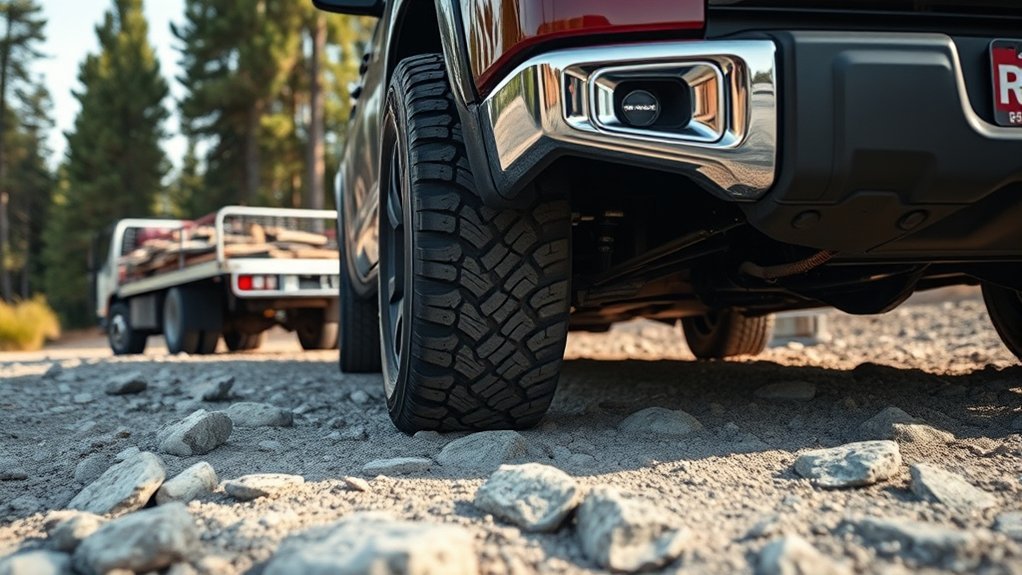
Tire pressure directly affects vehicle performance and safety, and the warning signs often appear before a tire fails. Underinflated tires may look flattened at the bottom, feel sluggish in corners, or show shoulder wear. Overinflated tires may ride harshly, lose grip on rough pavement, or wear faster in the center of the tread.
A tire pressure monitoring system can warn you when a tire is significantly underinflated, but it should not replace a gauge. NHTSA says newer vehicles have TPMS, but drivers should still check tire pressure monthly because the system may not alert you until pressure has dropped enough to trigger the warning threshold.
A TPMS light is a warning, not a tire-maintenance plan. Check pressure with a gauge before you load the truck, tow a trailer, or start a long drive.
Best Practices for Regular Tire Maintenance
Good tire maintenance starts before the truck is loaded. It also continues after the trip because heavy payloads can reveal weak tires, slow leaks, worn tread, or alignment problems.
- Check all tires, including the spare if equipped, at least once a month.
- Check pressure cold before loading, towing, or driving long distances.
- Inspect tread depth, sidewalls, valve stems, and bead areas for damage.
- Rotate tires at the interval in your Toyota maintenance schedule, or sooner if uneven wear appears.
- Balance and align tires when you notice vibration, pulling, cupping, or irregular wear.
- Replace tires that are damaged, aged, overloaded, or worn to unsafe tread depth.
Debunking Common Tire Pressure Myths for the Toyota Tundra
Myth: The sidewall PSI is the correct daily pressure. The sidewall number is the tire’s maximum cold inflation pressure, not the normal pressure for your truck. Use the Tundra’s label first.
Myth: More PSI always means safer towing. More pressure can help only when it is needed for the load and still within the tire’s safe range. Too much pressure can reduce grip and create uneven wear.
Myth: TPMS means you do not need a gauge. TPMS is helpful, but it may alert only after a tire is significantly low. Use a gauge for routine checks.
Myth: Winter tires need lower pressure. Do not lower tire pressure just because it is winter. Maintain the recommended cold PSI and check more often when temperatures change.
Myth: All Tundras should run the same loaded PSI. A CrewMax with different wheels, tires, accessories, or trailer tongue weight may need a different approach than another Tundra.
Frequently Asked Questions
How often should I check tire pressure when loaded?
Check tire pressure before every loaded trip, towing trip, or long highway drive. Also check it at least once a month when the tires are cold. If the truck sits overnight with a heavy load, recheck before driving again.
Can I use the same pressure for all tire brands?
Use the door-jamb PSI when your tires match the original size and load rating. If you install a different size, XL tire, LT tire, or higher-load tire, do not assume the same pressure applies. Use the tire manufacturer’s load-inflation data or ask a qualified tire shop.
What tools do I need to adjust tire pressure?
You need an accurate tire pressure gauge and an air source, such as a home compressor, portable inflator, or gas-station air pump. For heavy payloads or towing near the limit, a public scale ticket is also useful because it shows actual axle weight.
Is there a difference in tire pressure for winter vs. summer?
Use the recommended cold pressure in both seasons unless your tire manufacturer or Toyota guidance says otherwise. Cold weather can lower pressure, so check more often in winter. Do not intentionally run lower pressure for “flexibility.”
What happens if I overinflate my tires while loaded?
Overinflation can create a harsh ride, reduce grip, increase center tread wear, and make the truck feel less planted over rough pavement. It can also exceed the tire’s maximum cold pressure if you keep adding air without checking the sidewall limit.
Should front and rear tire pressure be different on a loaded Tundra?
It can be different if the door-jamb label, tire load table, or tire professional recommends it for your setup. Heavy cargo and tongue weight often load the rear axle more than the front, but you should base any change on actual load and tire limits, not guesswork.
Conclusion
Maintaining the right tire pressure for your Toyota Tundra under payload means using a safe method, not memorizing one PSI number. Start with the door-jamb label, check pressure cold, confirm tire and axle limits, and weigh the truck when the load is heavy. That process protects your tires, improves stability, and helps you tow or haul with more confidence.
Sources
- NHTSA TireWise — tire pressure, cold checks, TPMS limits, tire tread, and maintenance guidance
- NHTSA Tire Safety Month — monthly inspections, cold pressure checks, tire rotation, and tire safety practices
- NHTSA Safety and Savings Ride on Your Tires — fuel, tire life, and safety effects of proper inflation
- FuelEconomy.gov Vehicle Maintenance — fuel economy impact of proper tire inflation and underinflation
- Toyo Tires Load & Inflation Tables — why OE pressure should come from the vehicle placard and when load tables help
- Toyota Tundra Official Page — current Tundra payload and towing context by configuration