
How to Extend Tire Life on a Heavy Truck: 10 Proven Maintenance Tips
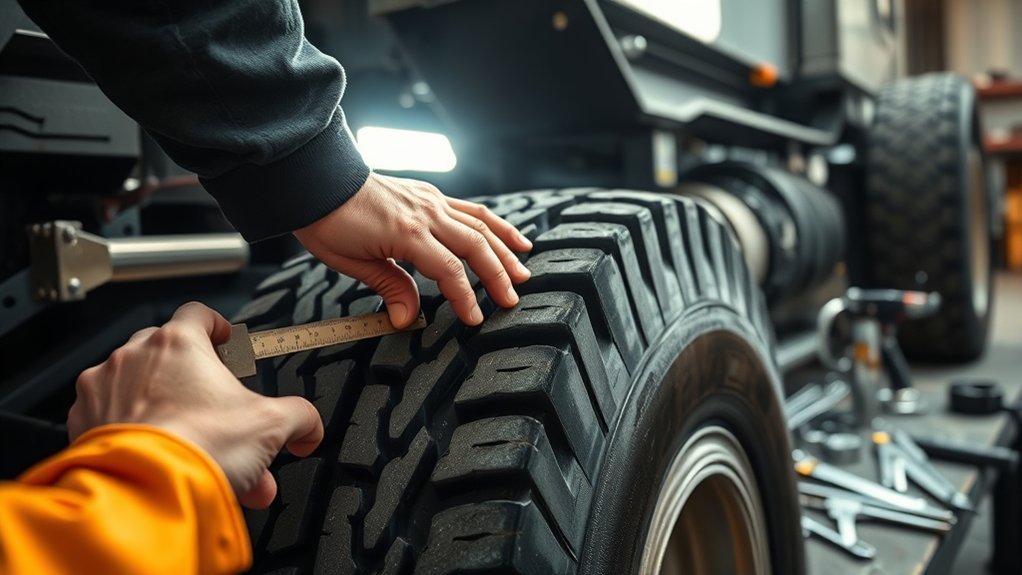
Heavy truck tires last longer when you treat them like safety equipment, not just wear parts. The biggest wins come from checking cold tire pressure, matching inflation to the load, inspecting tread and sidewalls, rotating tires on the right schedule, fixing vibration early, and training drivers to avoid habits that create heat and uneven wear.
Quick Answer
To extend heavy truck tire life, check cold tire pressure before trips and at least weekly, inspect tread and sidewalls, keep tires within legal tread and load limits, rotate according to your fleet or tire maker’s schedule, correct alignment or vibration problems fast, and record every inspection in a tire log.
Key Takeaways
- Check tire pressure when tires are cold, and match inflation to the load being carried.
- Inspect steer, drive, and trailer tires for tread depth, cuts, bulges, exposed ply, valve issues, and uneven wear.
- Balance, alignment, rotation, and suspension repairs help prevent vibration and irregular tread wear.
- Avoid overloading, sharp cornering, hard braking, curb strikes, and excess speed in wet or rough conditions.
- Use a tire maintenance log to track pressure, tread depth, repairs, rotations, and repeated wear patterns.
At a Glance
| Time Required | 5–10 minutes for a walkaround check; 20–30 minutes for a full pressure and tread-depth inspection. |
| Difficulty | Easy for basic checks; professional service needed for alignment, balancing, mounting, repairs, and casing evaluation. |
| Tools Needed | Calibrated tire pressure gauge, tread depth gauge, flashlight, valve caps, tire log, and access to the correct load/inflation table. |
| Cost | Low for inspections; service cost varies by fleet, tire size, balancing method, alignment needs, and tire condition. |
Why Heavy Truck Tire Maintenance Matters
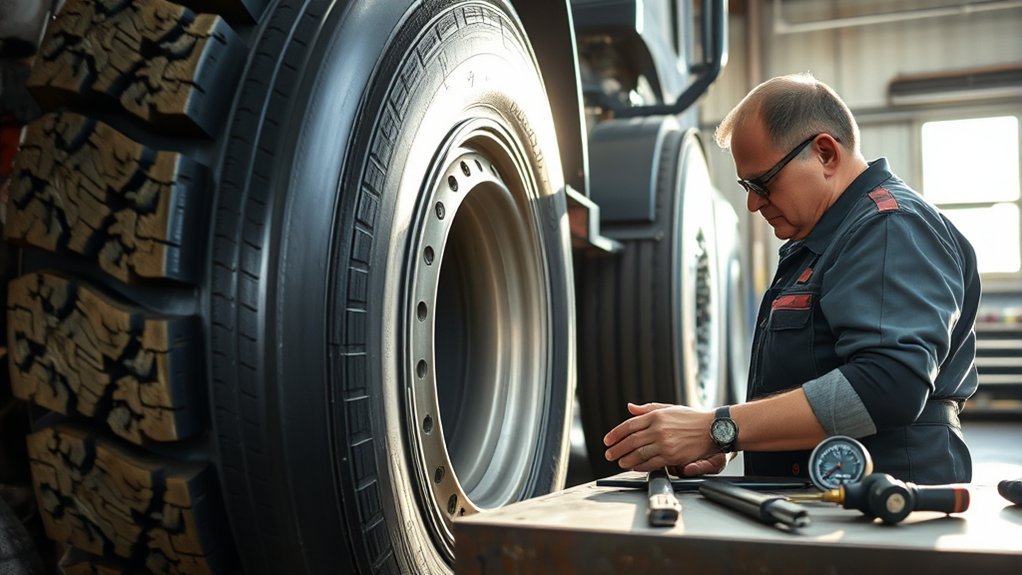
Tire maintenance affects safety, fuel use, downtime, casing value, and replacement cost. A tire that runs underinflated, overloaded, misaligned, or damaged builds heat faster and wears unevenly. That can shorten tread life and raise the chance of a roadside failure.
The National Highway Traffic Safety Administration reports that poor tire maintenance can lead to flats, blowouts, or tread separation. NHTSA also says proper inflation can extend the average life of a tire by 4,700 miles and that rotation, balance, and alignment help tires last longer.
In 2024, NHTSA reported 511 motor vehicle traffic fatalities in tire-related crashes. Tire maintenance is not just a cost-control habit; it is a safety habit.
For commercial motor vehicles, tire care also has a compliance side. 49 CFR 393.75 restricts operation on tires with exposed ply or belt material, tread or sidewall separation, flats, audible leaks, unsafe cuts, insufficient tread depth, improper inflation, or excess load.
[Products Worth Considering]

EVOULTES heavy duty tire inflator with an integrated gauge delivers accurate pressure readings from 10–120 PSI, helping you inflate, deflate, and check tires in one tool. The 16.5-inch extended dual-head air chuck with swivel base reaches hard-to-access dual wheel valves on trucks and RVs. A brass trigger core and side-mounted air release valve make operation smooth, with standard 1/4" NPT threading and quick-connect compatibility for easy setup.

The Tymate TM3 RV TPMS delivers real-time tire pressure monitoring from 0 to 144 PSI with accurate readings and dependable wireless communication. It includes four external sensors with pre-pairing, six alarm modes for rapid leak, pressure extremes, temperature, and signal loss, plus an easy-reference setup for alert thresholds. Solar and USB-C charging help keep the display powered, while the color LCD and adaptive backlight improve visibility for safer driving and towing.

The JACO FlowPro Tire Inflator measures, inflates, and airs down tires up to 100 PSI with battery-free operation and ±2% accuracy after calibration. It features a glowing pressure dial for night visibility, a heavy-duty steel build with a hybrid hose, and a precision push-to-inflate thumb trigger. The patented Lightning Air Chuck locks on for a secure seal, and the kit includes quick-connect hardware for easy inline use with your air compressor.
Check Cold Tire Pressure on a Fixed Schedule
Start with pressure because it affects heat, casing life, fuel use, tread wear, and load capacity. Check pressure when tires are cold, before the tire has warmed from road speed. NHTSA recommends cold checks for all tires, and the federal commercial-vehicle tire rule says a motor vehicle must not operate on a tire with cold inflation pressure below what is specified for the load being carried.
For a heavy truck, do not use the number molded on the tire sidewall as your normal target pressure. That number usually reflects a maximum cold pressure for a maximum load condition. Use your fleet policy, axle weights, tire size, tire position, and the tire maker’s current load/inflation table.
Warning: Do not bleed air from a hot tire just because the pressure reading looks high after driving. Heat raises tire pressure. Recheck and adjust the tire when you can get a proper cold reading.
Use this pressure routine:
- Check all tires before dispatch, including inner duals and trailer tires.
- Use a calibrated gauge that matches heavy-truck pressure ranges.
- Compare each tire to the fleet’s cold inflation target for that axle and load.
- Look for paired duals that differ in pressure, because mismatched duals can scrub and overload one tire.
- Replace missing valve caps and report leaking valve stems or extensions.
- Record the reading, date, unit number, tire position, and corrective action.
A tire pressure monitoring system or fleet tire-monitoring sensor can help catch pressure loss early, but it should not replace gauge checks. NHTSA notes that TPMS warnings activate when a tire is significantly underinflated, so routine manual checks still matter.
Inspect Tread Depth, Sidewalls, and Valves
Walkaround tire inspections should look beyond tread depth. Check the tread face, shoulder, sidewall, bead area, valve stem, valve cap, wheel, and rim. Look for cuts, punctures, bulges, cracking, exposed cords, tread separation, embedded objects, and uneven wear.
Use a tread depth gauge instead of relying only on the penny test. The penny test can help a driver spot severe tread wear quickly, but a gauge gives a precise reading and helps you track wear trends over time.
| Tire Position | Minimum Tread Depth | Action |
|---|---|---|
| Front wheels of a bus, truck, or truck tractor | At least 4/32 inch in a major tread groove | Remove from service if below the limit or if damage makes the tire unsafe. |
| Other tire positions | At least 2/32 inch in a major tread groove | Replace or repair according to tire condition, fleet policy, and legal requirements. |
| Any tire with exposed ply, separation, flat condition, audible leak, or unsafe cut | Not acceptable for operation | Park the truck or trailer until the issue is corrected. |
Note: Measure tread depth in a major tread groove, not on tie bars, humps, or fillets. Check several points across the tire because one edge can be illegal or unsafe while the center still looks acceptable.
Balance Tires to Prevent Vibration and Irregular Wear
Balancing helps the tire and wheel assembly rotate smoothly. When a tire is out of balance, the truck may shake at road speed, the driver may feel vibration through the wheel or seat, and the tread can develop irregular wear patterns.
Balance new tires during installation and rebalance when you notice vibration, uneven wear, a weight loss, or impact damage from potholes, curbs, or road debris. Heavy trucks can also develop vibration from wheel-end issues, bent wheels, mismatched duals, worn shocks, bad bushings, or driveline problems, so do not assume balancing is the only fix.
Address vibration early. A tire that bounces or scrubs for thousands of miles can damage tread, reduce casing value, and increase strain on suspension components. Drivers should report new vibration immediately, especially if it appears after a tire service, impact, or route change.
Schedule Routine Tire Rotations for Even Wear
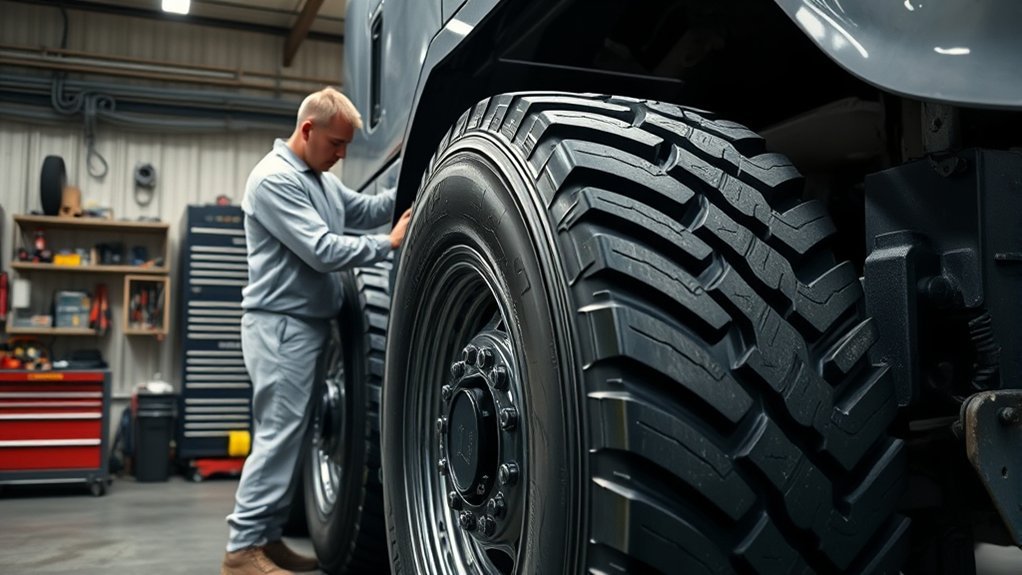
Rotation can help reduce irregular wear and keep tire performance more consistent. For cars and light trucks, NHTSA says to follow the owner’s manual and, if recommended by the vehicle manufacturer, rotate every 5,000 to 8,000 miles or sooner if uneven wear appears. Heavy truck schedules vary more because axle position, route type, load, tire design, and fleet maintenance targets all matter.
Use a rotation plan that fits the truck’s configuration. Steer, drive, trailer, regional, long-haul, mixed-service, and vocational tires may need different strategies. Your tire vendor or fleet maintenance manager can set a rotation pattern based on actual tread-depth data instead of mileage alone.
Pro Tip: Rotate based on wear data, not just the calendar. If one tire position loses tread faster every cycle, inspect alignment, suspension, axle load, and driver route conditions before you install another tire in the same position.
After each rotation, record the old position, new position, tread depth, pressure, mileage, and reason for the move. That record helps you decide whether a tire should stay in service, move to another axle, go to repair, or be saved as a casing for retreading evaluation.
Check Alignment, Suspension, and Wheel-End Problems
Uneven wear often points to a problem beyond the tire. Feathering, one-sided shoulder wear, cupping, diagonal wear, and rapid steer-tire wear can come from poor alignment, worn shocks, loose wheel bearings, bent components, mismatched duals, or suspension issues.
Schedule alignment checks when you see steering pull, off-center steering, rapid shoulder wear, uneven steer-tire wear, or unusual driver complaints. Also inspect alignment after suspension work, axle repairs, severe curb strikes, or repeated pothole impacts.
Do not ignore shocks and bushings. A tire needs stable contact with the road. Worn suspension parts let the tire bounce, scrub, and heat up, which can shorten tread life even when pressure and tread depth look acceptable during a parked inspection.
Choose the Right Tires for Your Load, Route, and Position
Choosing the right tire starts with the job the truck performs. A long-haul tractor, dump truck, delivery box truck, refuse truck, logging truck, and regional trailer do not need the same tread design. Match tire size, load range, speed rating, tread pattern, retread plan, and position to the route and payload.
Steer tires need stable handling and even wear. Drive tires need traction and torque transfer. Trailer tires need scrub resistance and casing durability. Mixed-service or off-road routes may require deeper tread, stronger casings, or cut-and-chip-resistant compounds. Highway routes may benefit from low rolling resistance and even-wear designs.
Always confirm that tire load capacity meets the axle load. Under 49 CFR 393.75, a motor vehicle generally must not operate with tires carrying weight above the tire’s marked or approved capacity, and the tire must have cold inflation pressure suitable for the load carried.
Avoid Overloading and Poor Weight Distribution
Overloading is one of the fastest ways to damage heavy truck tires. Excess load increases sidewall flex, heat, and stress. Uneven weight distribution can overload one axle, one side, or one tire in a dual pair even when the total vehicle weight looks acceptable.
Protect tire integrity with these habits:
- Know the axle weights: Use scale data when loads change, not guesses from paperwork alone.
- Match inflation to load: Use the correct load/inflation table for the tire size and axle position.
- Watch dual assemblies: Mismatched inflation, diameter, or tread depth can make one tire carry more load.
- Secure cargo: Shifting loads can increase tire stress during braking, cornering, and ramps.
- Respect speed ratings: Never operate speed-restricted tires above their rated limit.
Warning: If a tire is overloaded, underinflated for the load, visibly damaged, leaking, flat, or below the legal tread limit, do not keep driving to “finish the route.” Park it and correct the problem.
[Products Worth Considering]

This portable cordless tire inflator delivers up to 160 PSI with fast 17 L/min airflow to help you quickly top up tires and get back on the road. It features dual power mode, running on a 21V rechargeable battery or a 12V DC adapter for convenient roadside use. An automatic shut-off with digital pressure gauge helps prevent overinflation, and a built-in LED light improves visibility in low-light conditions.
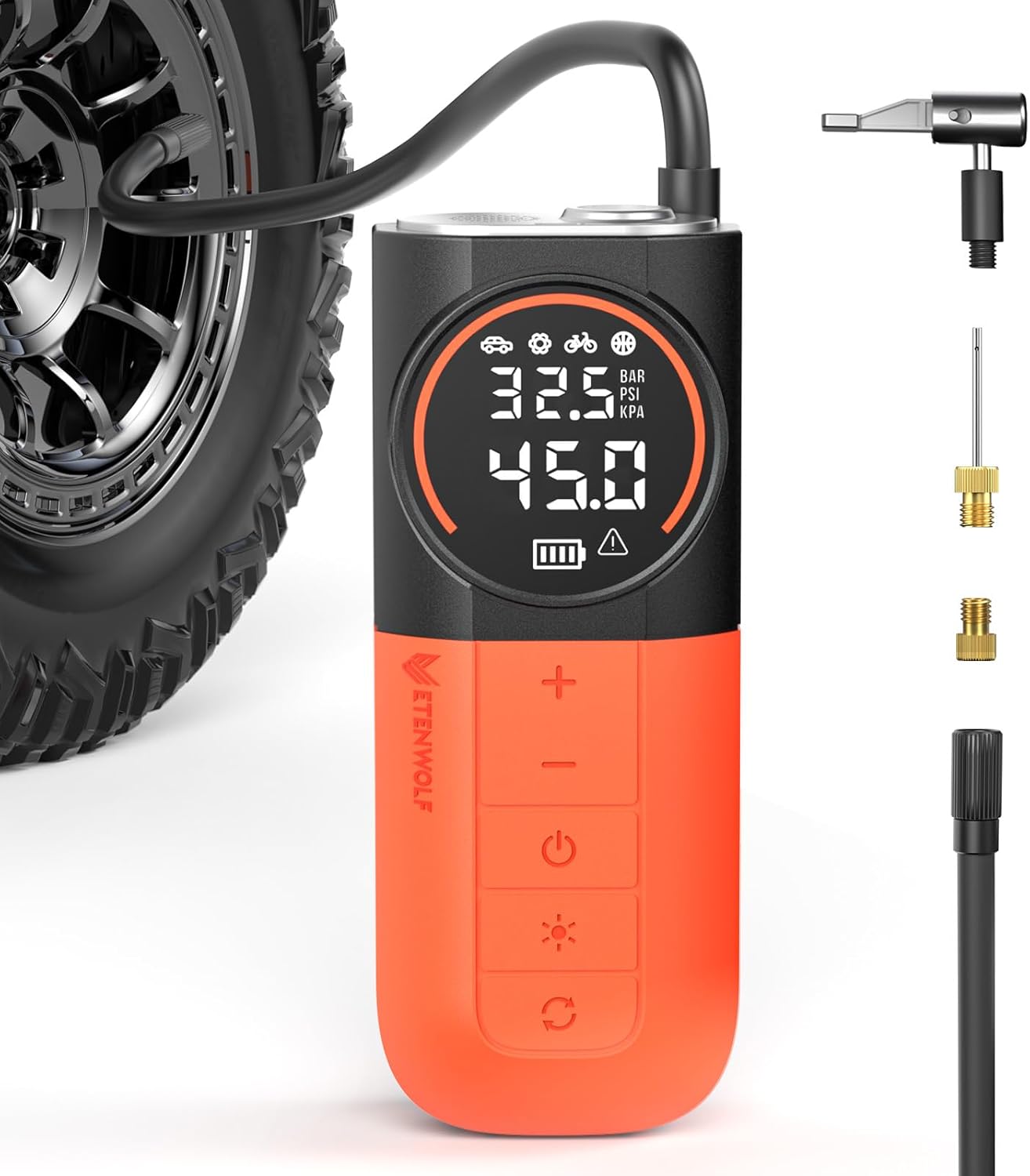
The ETENWOLF S1 cordless tire inflator delivers ultra-fast inflation with up to 160 PSI and a 20 L/min airflow for quicker tire top-offs. Its 5200mAh battery and cooling system support inflating many tires and sports balls on a single charge, while the digital pressure gauge and multi-unit display help you reach the right pressure accurately. With preset modes, pressure memory, an auto-stop feature, and an LED flashlight, it’s built for easy roadside and everyday use.
Teach Safe Driving Habits to Extend Tire Life
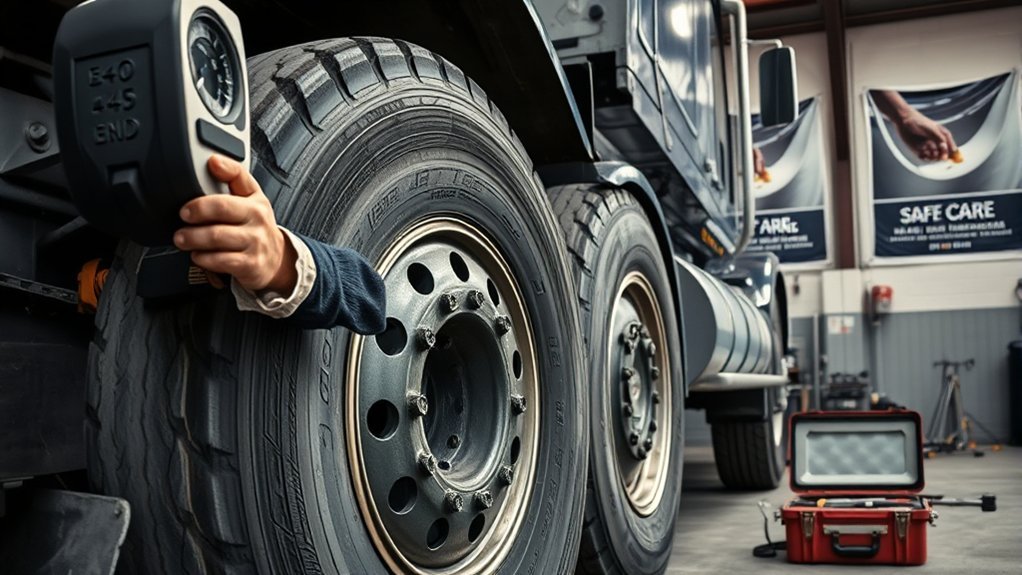
Driver habits have a direct effect on tire life. Smooth acceleration, controlled braking, slower corner entry, wider turns, and careful dock approaches reduce scrubbing, shoulder wear, sidewall impact, and heat buildup.
The Federal Motor Carrier Safety Administration advises commercial motor vehicle drivers to adjust speed for weather, road conditions, visibility, traffic, curves, ramps, work zones, and loaded trailers. These same habits also help protect tires because they reduce sudden braking, skidding, scrub, and impact loads.
Train drivers to report tire issues early. A note like “right steer vibration at 55 mph,” “inside dual looks low,” or “new shoulder wear after curb strike” gives maintenance staff a better chance to save the tire before it fails.
Clean Tires and Remove Debris Regularly
Tire cleaning is more than appearance. Mud, stones, salt, oil, and packed debris can hide cuts, punctures, sidewall damage, valve problems, and tread separation. Cleaning makes inspection easier and helps drivers spot small problems before they become roadside failures.
During cleaning, look between dual tires for trapped rocks or debris. Check the inner sidewalls, valve extensions, and wheels. A flashlight helps you see cuts and bulges that are easy to miss in poor light.
Avoid harsh chemicals that can dry out rubber or damage wheel finishes. Use fleet-approved cleaners and follow the tire maker’s guidance. After cleaning, inspect the tread and sidewall before the truck returns to service.
Keep a Tire Maintenance Log for Better Tracking
A tire log turns routine checks into useful maintenance data. Instead of guessing why a tire failed early, you can compare pressure history, tread depth, axle position, mileage, repairs, driver notes, and route conditions.
Commercial fleets should also treat tire defects as part of their inspection and repair process. 49 CFR 396.11 requires driver vehicle inspection reports for defects or deficiencies that affect safe operation or could cause mechanical breakdown, and the required report items include tires, wheels, and rims.
Consistent Record Keeping
Use the same format every time. Record unit number, trailer number, tire position, pressure, tread depth, mileage, date, inspector, damage found, repair made, and next action. Consistency makes trends easier to spot.
Track Maintenance Activities
Log rotations, balancing, alignments, repairs, tire replacements, valve replacements, retread decisions, and casing removals. Include the reason for service, not just the date. “Rotation due” is less useful than “left steer showing outer shoulder wear.”
Analyze Performance Trends
Review the log monthly or at each preventive maintenance interval. Repeated shoulder wear may point to alignment. Repeated low pressure may point to valve or bead leaks. Repeated failures on one route may point to loading, speed, road conditions, or driver behavior.
Know When to Replace, Repair, or Park a Tire
Some tire issues can wait for scheduled service. Others need immediate action. Park the truck or trailer when a tire has exposed ply or belt material, tread or sidewall separation, a flat condition, an audible leak, unsafe cuts, illegal tread depth, or inflation that is not suitable for the load.
Do not repair a heavy truck tire without a proper inspection. A puncture may look small from the outside while the casing has internal damage from running underinflated. Use trained tire technicians and follow tire manufacturer and fleet repair standards.
Also check tire age. Tread depth alone does not tell the full story. Look at the DOT tire identification number, service history, storage conditions, heat exposure, cracking, and casing condition when deciding whether a tire should stay in service, be retreaded, or be scrapped.
Frequently Asked Questions
How do you make truck tires last longer?
Check cold tire pressure regularly, match inflation to load, inspect tread and sidewalls, rotate tires according to your fleet or tire maker’s schedule, fix alignment and vibration problems early, avoid overloading, and train drivers to brake, turn, and accelerate smoothly.
How often should heavy truck tire pressure be checked?
Check pressure before trips, during scheduled inspections, and at least weekly in fleet use. Always check when the tires are cold and use the correct inflation target for the axle load, tire size, and tire position.
What tread depth is required for heavy truck tires?
Under 49 CFR 393.75, front tires on a bus, truck, or truck tractor need at least 4/32 inch in a major tread groove. Other tire positions generally need at least 2/32 inch. Do not measure on tie bars, humps, or fillets.
Is the penny test enough for a heavy truck tire inspection?
No. The penny test can flag badly worn tread, but heavy truck inspections should use a tread depth gauge. You should also check sidewalls, valve stems, wheels, rims, dual spacing, pressure, and signs of uneven wear.
Why do heavy truck tires wear unevenly?
Uneven wear can come from underinflation, overinflation, poor alignment, worn suspension parts, bad shocks, unbalanced tires, mismatched duals, overloading, hard braking, sharp turns, or repeated curb strikes.
Conclusion
You can extend heavy truck tire life by building a simple routine and following it every time. Check cold pressure, inspect tread and damage, respect load limits, rotate based on wear data, fix alignment or vibration issues early, clean tires during inspections, and keep a detailed log. These habits reduce avoidable wear, support safer operation, and help you get more value from every tire and casing.
Sources
- NHTSA TireWise — tire pressure, tread checks, rotation, balancing, alignment, TPMS, tire aging, and tire-related crash data.
- 49 CFR 393.75 — Tires — commercial motor vehicle tire condition, tread depth, inflation pressure, speed, and load restrictions.
- 49 CFR 396.11 — Driver Vehicle Inspection Reports — driver reporting requirements for defects involving tires, wheels, and rims.
- FMCSA CMV Driving Tips: Too Fast for Conditions — safe speed guidance for wet roads, curves, ramps, work zones, and loaded trailers.

Related Articles
Toyota Tundra Tire and Wheel Package: What to Consider Before Buying
Unlock the secrets to choosing the perfect tire and wheel package for your Toyota Tundra—essential tips await to enhance your ride.
Read More
Do Bigger Tires Void a Toyota Tundra Warranty? Magnuson-Moss Act Explained
Bigger tires might not void your Toyota Tundra warranty, but understanding the Magnuson-Moss Act is crucial—discover how to protect your investment effectively.
Read More
Toyota Tundra Tire Rack Setup: Garage Storage Ideas for Seasonal Sets
Better tire storage for your Toyota Tundra awaits—discover essential tips to maximize space and protect your seasonal sets in the garage!
Read More