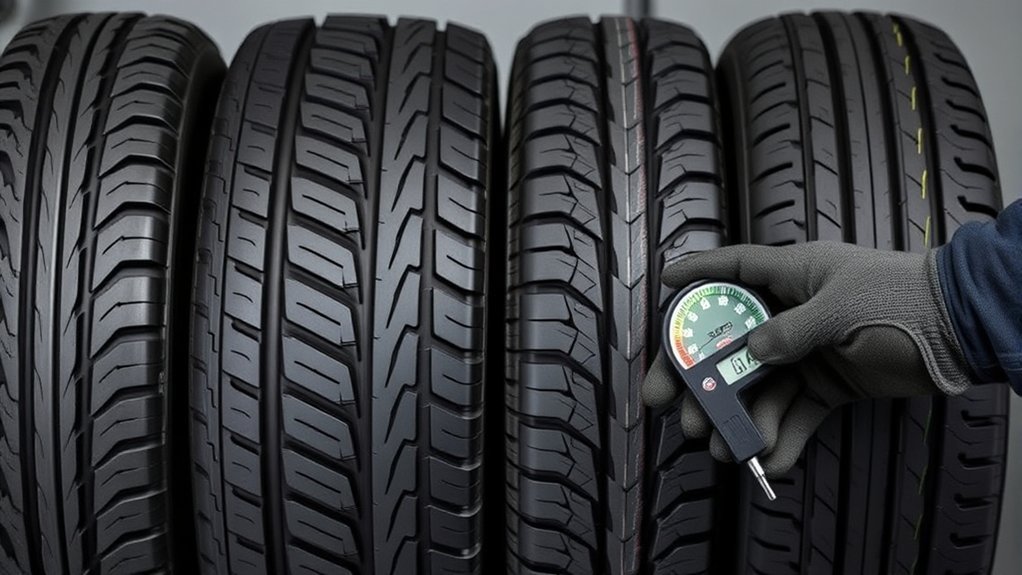
There is no single mileage number for how long tires last. In current Consumer Reports treadwear testing, high-scoring all-season tires were projected at about 55,000 to 95,000 miles, while performance-focused tires can wear much sooner. For any tire, the real replacement point comes from tread depth, age, damage, inflation history, alignment, rotation, load, climate, and driving style. Use mileage as a planning tool, not as a safety limit.
Last updated: August 18, 2026 — refreshed with current NHTSA safety data, current manufacturer warranty examples, and current tread-life testing.
Quick Answer
There is no universal tire lifespan. Current independent testing shows a wide spread even within all-season tires, so use your specific tire model’s treadwear warranty and measured tread depth as the planning baseline. Replace at 2/32″ tread depth, and consider earlier replacement around 4/32″ for frequent wet driving or 5/32″ for snow. Age, bulges, exposed cords, severe cracking, vibration, or repeated air loss can require replacement before any mileage target.
Key Takeaways
- Tire category matters: independent treadwear testing shows long-life all-season tires can outlast ultra-high-performance tires by tens of thousands of miles.
- The must-replace tread depth is 2/32″, but planning replacement at 4/32″ for wet roads and about 5/32″ for snow gives you a better safety margin.
- Underinflation, missed rotations, poor alignment, potholes, heat, heavy loads, and aggressive driving can shorten tire life fast.
- Tire age matters even when tread remains. NHTSA notes that some vehicle and tire makers recommend replacement at 6 to 10 years, while Michelin calls for annual professional inspection after 5 years of service and replacement by 10 years as a precaution.
- Mileage warranties and UTQG ratings are useful comparison tools, but they are not guarantees of real-world tire life.
At a Glance
| Time Required | 5 to 10 minutes for a basic tire check |
| Difficulty | Easy for tread, pressure, and visual checks; professional inspection for bulges, vibration, uneven wear, or air-loss problems |
| Tools Needed | Tire pressure gauge, tread depth gauge, penny or quarter, flashlight |
| Cost | A penny or quarter can be used for a quick tread check; dedicated gauge prices and professional inspection fees vary |
How Long Do Tires Last by Type?
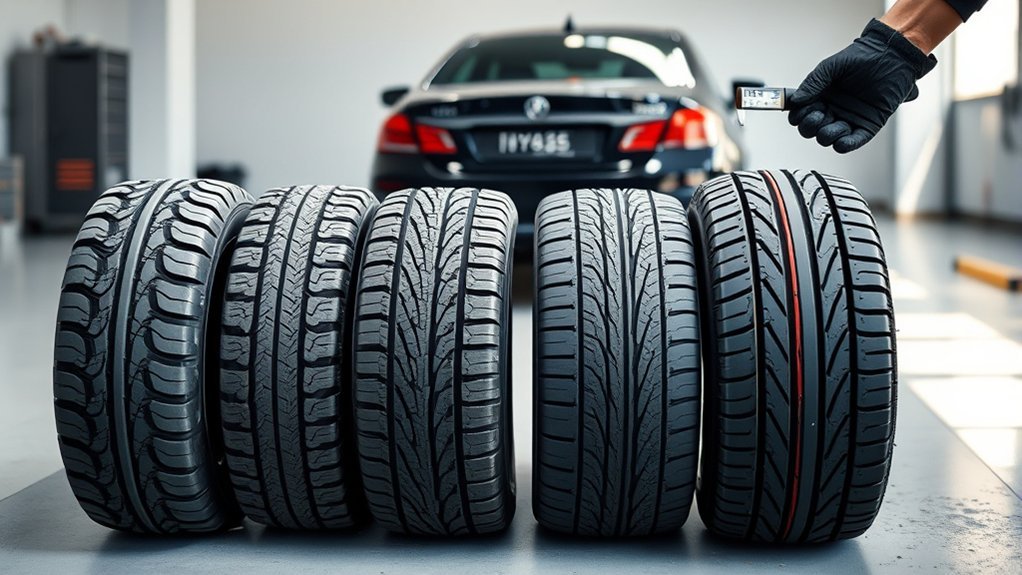
Tire lifespan varies widely by category and model. The table below uses independent treadwear testing where a broad category result is available, then uses current manufacturer warranties only as planning signals. A warranty is not a promise of real-world mileage, and tread depth, damage, age, vehicle setup, and maintenance can require earlier replacement.
| Tire Type | Evidence-Based Planning Signal | Best For |
| All-season tires | Current Consumer Reports testing: about 55,000 to 95,000 projected miles for high-scoring models | Daily driving, mixed weather, balanced tread life |
| Long-wear touring / commuter tires | Use the specific model warranty: Michelin Defender2 is listed at 80,000 miles; Goodyear Assurance MaxLife is listed at 85,000 miles | High annual mileage, commuting, highway use |
| Ultra-high-performance all-season tires | Independent testing has historically shown shorter tread life than regular all-season tires; check the exact model’s current warranty and measured wear | Sharper handling with broader seasonal use |
| Ultra-high-performance summer tires | Independent treadwear testing has shown substantially shorter life than regular all-season tires; mileage varies widely by model and driving style | Maximum dry and wet grip in warm conditions |
| Winter tires | No single useful mileage figure; track seasonal tread loss, age, storage, and cold-weather traction | Cold weather, snow, ice, and slush |
| All-terrain tires | No universal category mileage; use the exact model warranty plus your measured tread-loss rate | Gravel, light off-road use, trucks, and SUVs |
For broad daily use, all-season tires and long-wear touring tires usually offer the clearest path to high mileage because many models are designed and warranted for long tread life. Performance tires trade some longevity for grip and response. Winter and all-terrain tires are better judged by their intended conditions, remaining tread, and model-specific warranty than by a generic mileage number.
Current warranty examples show why model-level checking matters. The Michelin Defender2 is listed with an 80,000-mile treadwear warranty, Goodyear Assurance MaxLife is listed with an 85,000-mile warranty, and Continental says select replacement passenger and light truck tires are covered up to 80,000 miles. These are warranty terms, not guaranteed service life.
[Products Worth Considering]

Milton S-921 pencil tire pressure gauge helps you maintain optimal tire pressure for passenger cars with accurate readings in PSI and kPa. It features a built-in deflator valve for convenient pressure adjustments, plus a single chuck head and nylon indicator bar for easy use on the go. Built from durable plated brass and designed for reliable performance, it’s a practical road trip and cold-weather maintenance tool.

Monitor tire tread wear with a smart, color-coded depth gauge that shows clear condition ranges at a glance. The bar is range marked for fast, easy readings, helping you maintain safer traction and performance. Each gauge is portable with a pocket clip, and the set includes 20 units for daily use and sharing.

Measure tire tread depth quickly and accurately with this LUMITECO dial gauge that reads in 1/32" increments up to 14/32". The color-coded green/yellow/red zones make it easy to judge tire wear and know when replacement is needed. A rugged, compact design with a protective pouch helps keep the gauge ready for use on cars, trucks, motorcycles, and more.
What Shortens Tire Life?
Aggressive driving, poor maintenance, and harsh road conditions can all shorten tire life. Hard launches, sudden braking, and fast cornering increase friction and scrub rubber off the tread. High speeds add heat, and heat accelerates rubber wear. Potholes, gravel, broken pavement, curb strikes, and road debris can damage the casing, sidewall, belts, or tread.
Air pressure is just as important. Underinflation lets the sidewalls flex too much, which creates heat and shoulder wear. Overinflation can concentrate wear near the center of the tread and make the tire more vulnerable to impact damage. The National Highway Traffic Safety Administration recommends checking tire pressure at least once a month when tires are cold and using the pressure listed on the vehicle placard or owner’s manual, not the maximum pressure printed on the tire.
Warning: A tire can be unsafe even if it still holds air. Replace or have it inspected immediately if you see a bulge, exposed cord, deep cut, severe cracking, repeated pressure loss, vibration, thumping, or tread worn to 2/32″ or less.
Rotation and alignment also matter. If the vehicle maker gives no rotation interval, USTMA recommends rotating tires every 5,000 to 8,000 miles. Alignment should be checked after hard impacts or when the vehicle pulls, drifts, or shows rapid uneven wear. If you are replacing tires on a 2021 Toyota RAV4, use this 2021 Toyota RAV4 tire guide for model-specific options.
Does Tire Brand Affect How Long Tires Last?
Your tire brand can affect mileage because every manufacturer uses different tread compounds, internal construction, tread patterns, and warranty rules. Even two tires with similar treadwear ratings can wear differently in real use. Vehicle weight, road surface, climate, load, speed, pressure, and rotation schedule can change the final result.
[Products Worth Considering]

Accurately measure tire tread depth with a calibrated gauge marked from 0 to 1 inch in 1/32 inch increments. The color-coded bar helps you quickly identify tread condition ranges, supporting safe driving for trucks, motorcycles, automobiles, and passenger vehicles.

The SAFELIFE dial tire tread depth gauge measures tread depth in 1/32 inch increments with clear, easy-to-read 2-inch dial face. Color zones using a traffic light system help you quickly judge whether tread is low, marginal, or ample for safer driving. Built with a durable zinc cast body and a metal detect probe for precise, comfortable use across cars, motorcycles, trucks, and buses.

The 22800 wheel stud installer makes replacing wheel studs quick and secure, saving time and effort during tire service. It uses a ratchet or impact wrench to pull new studs firmly into place, helping when existing studs are too long. Compatible with most automotive wheels and light-duty truck wheel studs, it’s designed for easy, tool-assisted installation.
Brand Treadwear Warranties
Brand treadwear warranties are useful planning tools, but they are not guaranteed tire life. Current manufacturer examples range from the Michelin Defender2 at 80,000 miles to the Goodyear Assurance MaxLife at 85,000 miles, while Continental says select replacement passenger and light truck tires are covered up to 80,000 miles. Eligibility, even-wear requirements, maintenance records, vehicle fitment, and other warranty terms still apply.
That is why warranty paperwork matters. Keep your purchase receipt, rotate on schedule, maintain inflation, and save service records. Many mileage-warranty claims depend on documented maintenance and even wear. If you are comparing replacements for a 2023 RAV4, see this 2023 Toyota RAV4 tire guide.
Engineering Differences Between Brands
Engineering differences show up in tread life, wet grip, ride comfort, noise, rolling resistance, and heat control. A long-wearing touring tire may use a harder compound and a stable tread pattern to slow wear. A performance tire may use a softer compound that grips better but wears faster. Some tires are also designed for heavier EVs, SUVs, or trucks, where load and torque can affect wear.
The Uniform Tire Quality Grading system gives treadwear, traction, and temperature grades for many passenger tires. The treadwear number is a comparative rating, not a direct mileage prediction. Independent tread-life testing can also disagree with UTQG grades and warranty mileage, so use all three as clues rather than converting one number into an expected odometer reading.
Note: Use UTQG as a relative clue, not a mileage calculator. Compare tires with similar intended use, then check the exact model warranty and independent tread-life data when available.
When Tread Wear Matters More Than Tire Age
Tread wear becomes urgent once the tire reaches 2/32″ of remaining tread depth. NHTSA says tires are not safe and should be replaced when tread is worn down to 2/32″. The built-in treadwear indicators make this easier: when the wear bars are level with the tread surface, it is time for replacement.
For real-world driving, you may want more margin than the 2/32″ minimum. Tire Rack recommends considering replacement at about 4/32″ for wet-road use and about 5/32″ for snow-covered roads because reduced groove depth hurts water evacuation and snow mobility. If you are choosing replacement tires for a RAV4 Hybrid, this RAV4 Hybrid all-season tire guide is a more relevant next step than waiting for the tread to reach the legal minimum.
According to NHTSA, 511 people died in tire-related crashes in 2024, and proper inflation can extend the average life of a tire by 4,700 miles.
How Many Years Do Tires Last?
There is no universal number of years that makes every tire unsafe. NHTSA says some vehicle and tire manufacturers recommend replacing tires that are 6 to 10 years old regardless of treadwear. Michelin currently recommends a professional inspection at least annually after 5 years of use and replacement at 10 years from the date of manufacture as a precaution.
Tire age matters most on low-mileage vehicles, collector cars, RVs, trailers, seasonal vehicles, and spare tires. The U.S. Tire Manufacturers Association notes that service and storage conditions vary too widely to predict service life by calendar age alone. Follow the vehicle owner’s manual and tire maker’s age guidance, and use professional inspection as tires get older.
How to Read the DOT Date Code
Every tire sold in the United States has a Tire Identification Number that starts with “DOT.” For tires made in 2000 or later, the last four digits show the week and year of manufacture. For example, a code ending in 2519 means the tire was made in the 25th week of 2019. The full code may appear on only one side of the tire, so you may need to check the inner sidewall.
Pro Tip: Check the DOT date code on your spare tire too. Spares age even when they are not used, and a cracked or underinflated spare can fail when you need it most.
How to Check Tire Tread at Home
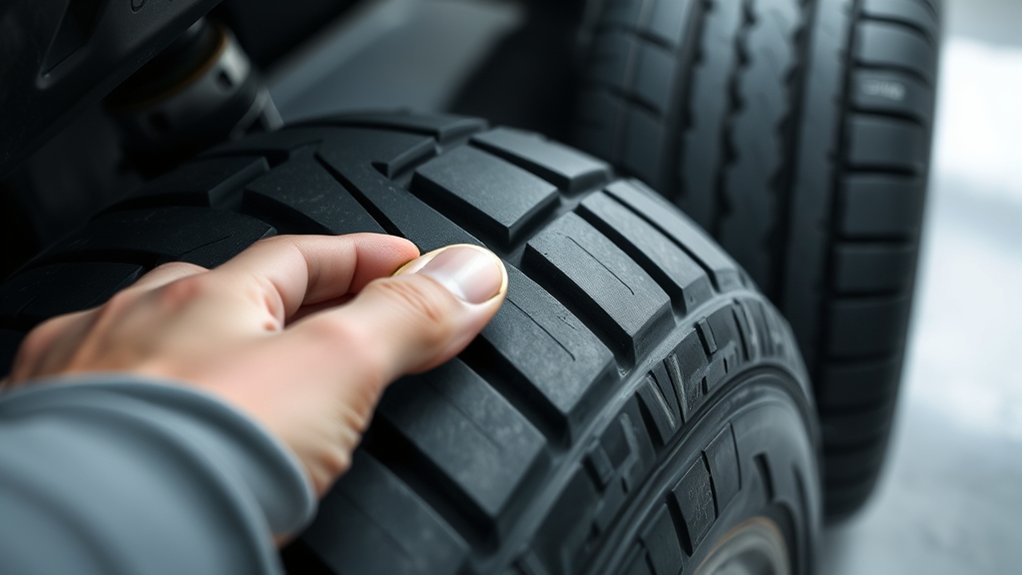
You can check tire tread at home with a tread depth gauge, a penny, or a quarter. A gauge is the most accurate option, but the coin tests are useful for quick monthly checks and before road trips.
Penny Tread Test
Insert a penny into a main tread groove with Lincoln’s head upside down and facing you. If you can see the top of Lincoln’s head, the tread is at or below 2/32″ and the tire should be replaced. Check several grooves across the tire: outer edge, center, and inner edge. One safe-looking spot does not mean the whole tire is safe.
Quarter Tread Test
The quarter test gives you an earlier warning. Insert a quarter with Washington’s head upside down. If the top of Washington’s head is visible, the tread is around 4/32″ or less, which is a good time to start shopping if you drive in rain. This is especially useful before a wet season or a long highway trip.
Check For Wear Signs
Beyond tread depth, inspect the tire for bald spots, cupping, feathering, one-sided wear, cracks, cuts, bulges, blisters, discoloration, nails, screws, or embedded debris. Edge, center, and cupped wear patterns can be associated with inflation, alignment, balance, suspension, or damping problems, but the pattern alone does not prove the cause. If wear is uneven, have the vehicle and tire inspected. If you are replacing worn tires on a RAV4, this best-selling RAV4 tire guide is a model-specific comparison.
How Can You Estimate Your Own Tire Life?
Your own tread-loss rate is often more useful than a generic mileage range. Measure the same grooves on the same tires, record the odometer, and compare the change after a meaningful driving interval. A rough planning formula is: miles per 1/32″ of tread = miles driven ÷ tread lost in 32nds. Then multiply that rate by the usable tread remaining above your chosen replacement threshold.
Example: suppose you recorded 10/32″ when a tire was new and 8/32″ after 12,000 miles. That is 2/32″ of observed wear, or roughly 6,000 miles per 1/32″. If you plan to replace at 4/32″ for frequent wet driving, 4/32″ of planned-use tread remains, giving a rough estimate of about 24,000 additional miles. This is a planning estimate only. Wear may speed up, alignment can change, and damage or age can force replacement sooner.
How to Spot Tire Damage and Dry Rot
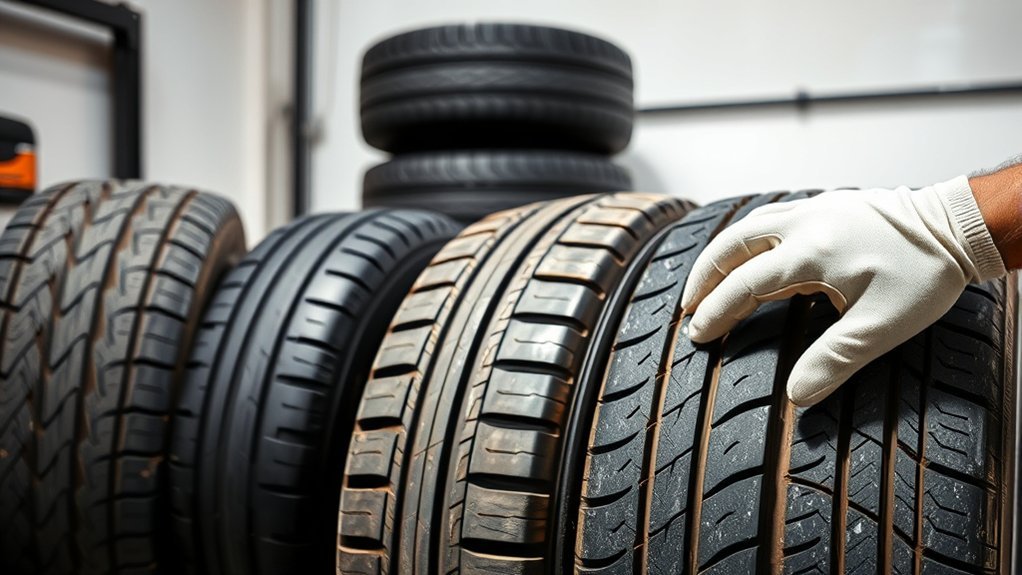
To spot tire damage and visible aging signs, inspect the sidewalls and tread blocks in good light for cracks, cuts, punctures, bubbles, sidewall bulges, exposed cords, or tread separation. Any sidewall bulge or exposed cord is a replace-now warning, not a wait-and-see issue. However, NHTSA warns that tire aging cannot be judged by appearance alone, so a tire that looks clean can still need age-based inspection or replacement.
Winter tires use compounds and tread designs intended for cold conditions, so warm-weather use can accelerate wear. Store off-season tires in a cool, dry, clean place away from sunlight, ozone sources, and petroleum products. If you need cold-weather options for that vehicle, see this Toyota RAV4 winter tire guide.
Which Driving Conditions Wear Tires Fastest?
Your driving style directly shapes tire wear. Sudden acceleration, hard braking, high-speed cornering, and sharp steering inputs put extra stress on the tread. Repeated stop-and-go driving can also wear tires faster than steady highway cruising. Heavy loads and towing add heat and pressure, especially when tires are underinflated.
Road choice matters too. Rough pavement, gravel, potholes, construction zones, curb impacts, and poorly maintained roads can damage the tire structure or knock alignment out of specification. Drivers who regularly use mixed surfaces may prefer an all-terrain design rather than a softer street-performance tire. For that specific vehicle use case, see this RAV4 TRD all-terrain tire guide.
Tire Care Tips to Make Tires Last Longer
A few routine habits can add thousands of miles to your tires. NHTSA and USTMA both emphasize pressure, tread, rotation, balance, and alignment as core tire-care steps. The goal is simple: keep the tread wearing evenly, keep the tire cool, and catch damage before it becomes a failure.
| Task | Interval | Why It Helps |
| Check tire pressure | Monthly and before long trips | Reduces heat, uneven wear, and fuel waste |
| Inspect tread and sidewalls | Monthly | Finds low tread, cracks, punctures, bulges, and uneven wear early |
| Rotate tires | Every 5,000 to 8,000 miles if recommended | Promotes even wear across all positions |
| Check alignment | When new tires are installed, after impacts, or when wear/pull appears | Prevents edge wear and handling problems |
| Balance tires | When new tires are installed or vibration appears | Reduces vibration and irregular wear |
Do not rely only on the Tire Pressure Monitoring System. USTMA notes that TPMS warnings typically trigger only after significant pressure loss, so a monthly gauge check is still important. Check pressure when tires are cold, meaning the vehicle has been parked for at least three hours.
Choosing the right tire type also affects longevity. Long-wear all-season models can suit drivers who prioritize tread life and comfort, while performance tires suit drivers who value grip and response more than maximum mileage. For a plug-in hybrid use case, see this RAV4 Prime all-season tire guide.
When It’s Time to Replace Tires
Replace tires based on the worst safety factor you find, not the best one. A tire with deep tread but a sidewall bulge is unsafe. A tire with no visible cracks but 2/32″ tread is unsafe. A tire with good tread but severe vibration or repeated air loss needs professional inspection.
| Condition | What To Do |
| 2/32″ tread depth or wear bars flush with tread | Replace immediately |
| 4/32″ tread and frequent rain driving | Start shopping and plan replacement soon |
| About 5/32″ tread and snow driving | Plan replacement before winter conditions |
| Bulges, exposed cords, deep cuts, or tread separation | Stop using the tire and replace it |
| Cracking, dry rot, vibration, thumping, or repeated air loss | Have the tire inspected by a professional |
| 6 to 10 years old | Follow the vehicle/tire manufacturer’s age guidance and get a professional inspection |
A tire’s UTQG rating, mileage warranty, and independent tread-life data can help you compare replacements, but the final decision should come from inspection, tread depth, age, and how the tire performs on your vehicle. For a RAV4-specific value comparison, see this affordable RAV4 tire guide.
If you replace only two tires, Michelin recommends fitting the new pair on the rear axle to improve wet stability. On AWD and 4WD vehicles, large differences in tire circumference can also affect the drivetrain, so follow the vehicle manufacturer’s matching requirements before replacing only one or two tires.
[Products Worth Considering]
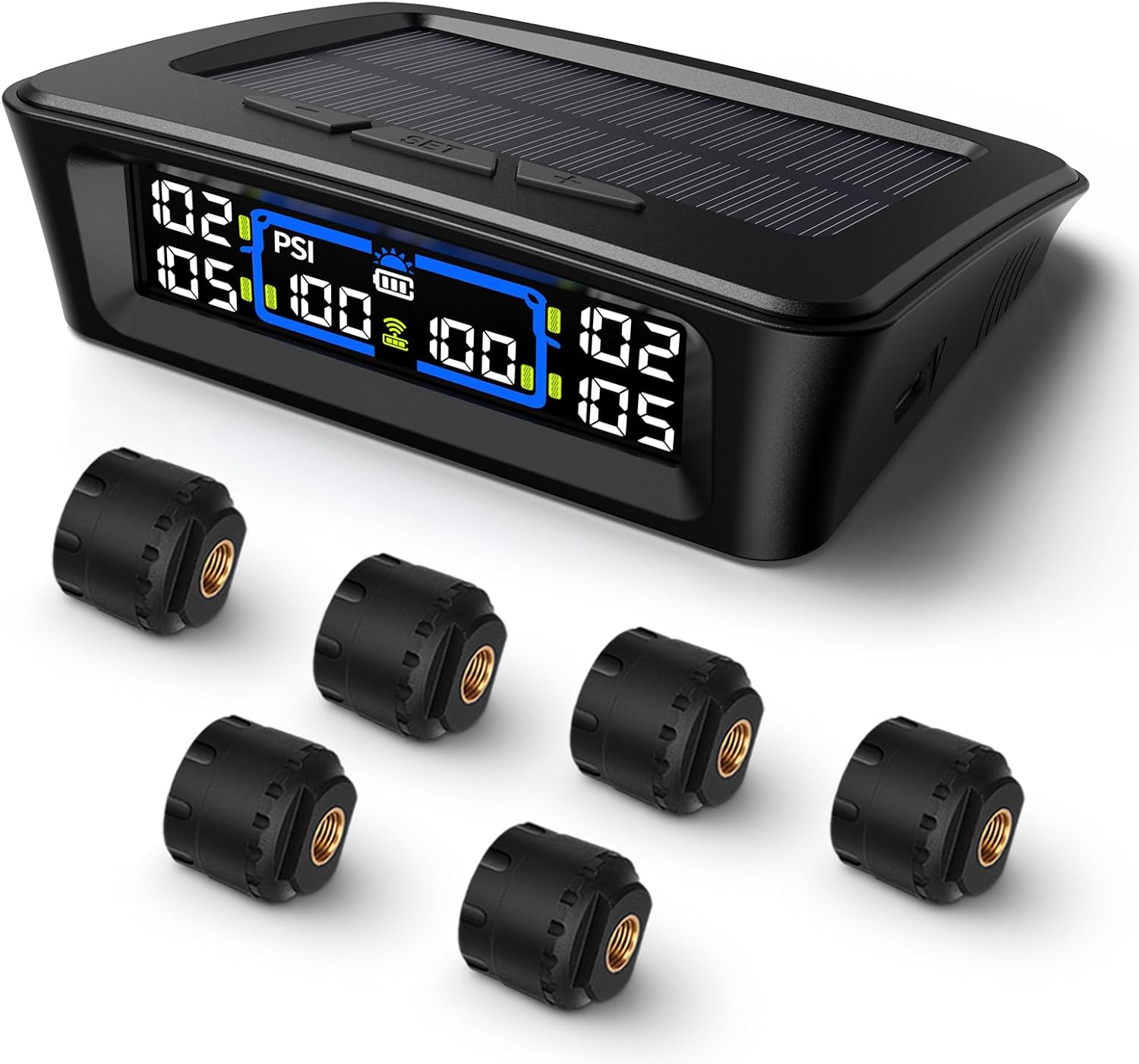
The Tymate TM12 RV TPMS delivers real-time tire pressure and temperature monitoring with a stable 433Hz display for safer long-distance driving. It supports simultaneous monitoring across vehicle and trailer zones, includes six alarm modes for pressure, temperature, leakage, battery, and signal loss, and features easy DIY installation with auto calibration. Power is supplied via USB-C charging or solar recharging, with a wide 0–144 PSI range and up to 50 ft signal coverage for RVs and towable trailers.

ETENWOLF’s tire pressure gauge helps you quickly and accurately check tire PSI across cars, trucks, motorcycles, bikes, and more. It’s manually calibrated to ANSI B40.1 Grade A for reliable readings, includes a large glow dial for easy nighttime viewing, and features a 360-degree swivel chuck for use at any valve angle. The gauge also works consistently in extreme hot or cold weather.

Replace your worn or missing TPMS sensors with pre-programmed, direct-fit sensors for compatible Ford, Lincoln, and select Mazda models. Each sensor comes ready to activate with a scan tool, helping restore accurate tire pressure monitoring and trouble-free installation. Built with a long-life CR2032 battery and tested before factory release, this set provides dependable performance with a one-year warranty.
Frequently Asked Questions
Is a 40,000-mile tire good?
Yes, depending on the category. A 40,000-mile result can be reasonable for a performance-focused tire, but it would be short for many long-wear all-season models. Judge the tire by its exact model warranty, measured tread depth, age, traction needs, and maintenance history rather than the mileage number alone.
Is 30,000 miles a lot on tires?
It depends on the tire type and the remaining tread. Thirty thousand miles can represent substantial wear on a performance tire but may be only part of the usable life of a long-wear all-season tire. Measure tread depth and check age, damage, pressure history, and wear pattern before deciding.
How long do tires last on average?
There is no single reliable average for every passenger tire. Current independent testing shows a wide range even within all-season tires. The most useful baseline is the exact tire model’s warranty plus your measured tread depth, age, maintenance history, and any damage or uneven wear.
Is a 70,000-mile tire good?
A 70,000-mile treadwear warranty is common territory for many long-life all-season and touring tires, but warranty mileage is not guaranteed service life. Replace earlier if tread depth, age, damage, air loss, vibration, or uneven wear makes the tire unsafe.
Should I replace all four tires at once?
Replacing all four is the simplest way to keep tread depth and handling consistent. If you replace only two, Michelin recommends installing the new pair on the rear axle for better wet stability. On AWD or 4WD vehicles, follow the owner’s manual because tire-circumference differences can affect the drivetrain.
How do I know how old my tires are?
Look for the DOT Tire Identification Number on the sidewall. The last four digits show the week and year the tire was made. For example, 2519 means the tire was manufactured in the 25th week of 2019. Check both sidewalls because the full code may appear on only one side.
How many years do tires last?
There is no single age limit for every tire. NHTSA says some vehicle and tire manufacturers recommend replacement at 6 to 10 years regardless of treadwear. Michelin recommends annual professional inspection after 5 years of use and replacement by 10 years from manufacture as a precaution.
Do tires expire if they are not used?
Unused and low-mileage tires still age. Heat, sunlight, storage conditions, ozone, and time can change tire materials even when tread remains. Check the DOT date code on spare, seasonal, RV, trailer, and collector-car tires, and follow the tire and vehicle manufacturer’s age guidance.
Conclusion
Tire life is a condition-based decision, not an odometer deadline. Use the exact tire model’s warranty for planning, then let tread depth, age, damage, pressure loss, vibration, and wear pattern decide when replacement is due. Replace at 2/32″ tread, consider earlier replacement around 4/32″ for frequent wet driving or 5/32″ for snow, and follow the maker’s age guidance. Your next step is simple: check cold tire pressure and measure tread depth on all four tires today.
Sources
- National Highway Traffic Safety Administration — TireWise — current tire pressure, tread depth, aging, DOT/TIN, crash, and maintenance guidance.
- U.S. Tire Manufacturers Association — Tire Care Essentials — monthly cold-pressure checks, TPMS limits, tread, rotation, and alignment guidance.
- U.S. Tire Manufacturers Association — Tire Facts — tire service-life and inspection guidance.
- Consumer Reports — How Long Do Tires Last? — current independent treadwear-test context for all-season tires.
- Tire Rack — How Much Tread Depth Is Enough? — wet and snow tread-depth replacement planning.
- eCFR 49 CFR § 575.104 — Uniform Tire Quality Grading Standards — UTQG scope and consumer-information purpose.
- Michelin Defender2, Goodyear Assurance MaxLife, and Continental Total Confidence Plan — current mileage-warranty examples.
- Michelin — When to Replace Tires — age inspection/replacement guidance and tire-replacement safety considerations.