
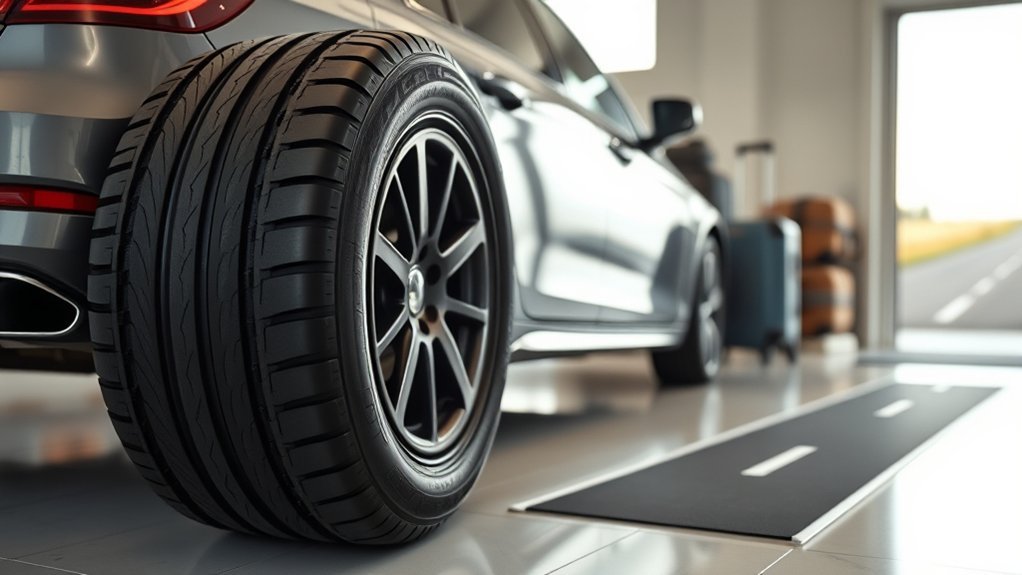
A touring tire is a comfort-focused passenger tire built for everyday driving, quiet road manners, stable handling, and long tread life. Most touring tires sold for sedans, minivans, and crossovers are all-season models, so they are designed for dry roads, rain, and light snow. They are not the same as winter tires, off-road tires, or performance tires. The right touring tire gives you a smoother commute, better cabin comfort, and dependable wear without chasing maximum cornering grip.
Quick Answer
A touring tire is a daily-driving tire type designed for comfort, low road noise, predictable handling, and long tread life. Most are all-season tires, which means they work well in dry, wet, and mild winter conditions, but they are not meant to replace dedicated winter tires in deep snow or ice.
Key Takeaways
- Touring tires are built for quiet, comfortable, durable everyday driving.
- Most passenger touring tires are all-season, but “touring” describes the tire category, not a weather rating by itself.
- They suit sedans, minivans, crossovers, and daily commuter vehicles.
- They usually trade sharp performance handling for smoother ride quality and longer tread life.
- Proper pressure checks, rotation, alignment, and tread inspection help you get the most value from them.
What Is a Touring Tire?
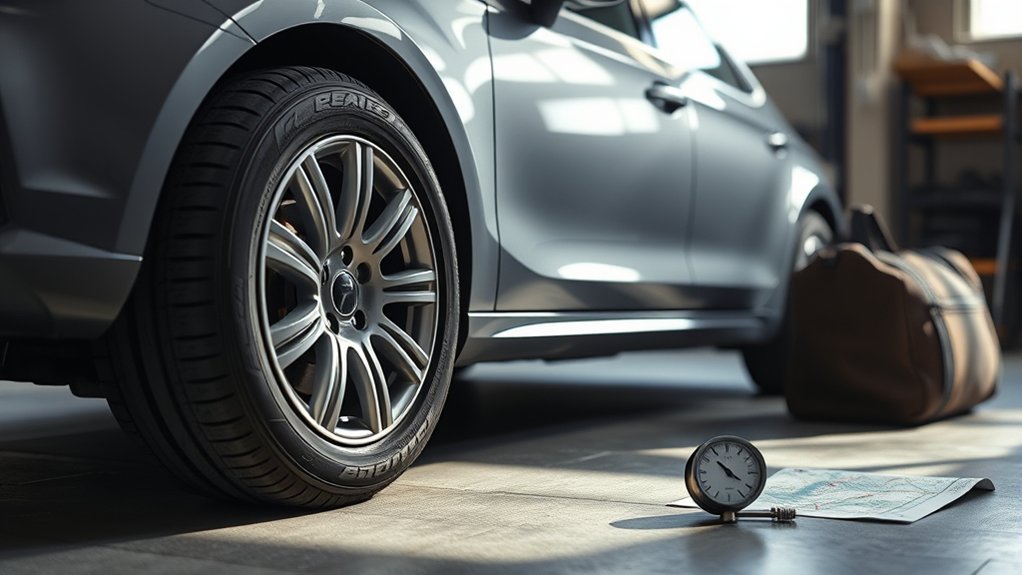
A touring tire is a tire built for regular road use, with a clear focus on ride comfort, low road noise, stable handling, and longer wear. You usually choose touring tires when your priority is a calm daily drive rather than aggressive cornering, off-road traction, or track-ready response.
Touring tires are common on sedans, coupes, minivans, and crossover SUVs. Grand Touring All-Season tires, for example, are described as daily-driver tires with year-round traction, comfort, road-noise reduction, and long tread life. That matches the reason many drivers choose them for commuting, family transport, and highway travel.
Most touring tires are all-season tires, but the two terms are not identical. “Touring” describes the tire’s driving personality. “All-season” describes the tire’s intended weather range. A tire can be touring and all-season, touring and summer-focused, or engineered for a specific use such as electric vehicles.
Note: Touring is not a tire brand. It is a tire type. Brands such as Bridgestone, Goodyear, Michelin, Continental, General, Pirelli, and others make touring tires.
Key Touring Tire Features
Touring tires use tread patterns, rubber compounds, and internal construction that support comfort and controlled everyday handling. The exact design varies by brand and model, but most touring tires share the same core features.
- Comfort-focused tread design: The tread pattern helps soften road feel and reduce vibration inside the cabin.
- Lower road noise: Many models use pitch sequencing, grooves, and tread-block spacing to reduce hum on highways.
- Longer tread life: Touring tires usually use wear-resistant compounds that support longer service life than softer performance tires.
- All-season capability: Many models are designed for dry roads, rain, and light snow.
- Predictable handling: They favor steady steering and highway stability over sharp, sporty response.
- Even wear potential: A stable contact patch can help the tire wear evenly when pressure, alignment, and rotation are maintained.
Many premium touring tires also use branded technologies for noise control, wear resistance, and rolling efficiency. For example, the Bridgestone Turanza EverDrive is listed as an all-season touring tire for sedans, CUVs, and minivans with an 80,000-mile limited mileage warranty, while the Bridgestone Turanza Prestige is a grand touring tire with a 70,000-mile limited mileage warranty and comfort-focused technologies.
Touring Tire Types
Touring tires are not all the same. Before you buy, match the subcategory to your vehicle and driving style.
| Touring Tire Type | Best For | What To Expect |
|---|---|---|
| Standard Touring | Compact cars, sedans, daily commuters | Good comfort, practical traction, and lower ownership cost |
| Grand Touring | Family sedans, crossovers, minivans, luxury cars | Smoother ride, quieter cabin, better highway refinement |
| Performance Touring | Drivers who want comfort with quicker steering response | Better handling than standard touring, often with some ride tradeoff |
| EV-Focused Touring | Electric and hybrid vehicles | Low noise, load support, and efficiency-focused rolling resistance |
Touring vs. Performance Tires
Touring tires and performance tires serve different drivers. Touring tires focus on comfort, long wear, lower road noise, and steady everyday traction. Performance tires focus on sharper steering response, stronger cornering grip, and higher-speed handling.
| Feature | Touring Tires | Performance Tires |
|---|---|---|
| Ride Comfort | High priority | Secondary priority |
| Road Noise | Usually quieter | Can be louder, depending on tread design |
| Steering Response | Stable and predictable | Sharper and quicker |
| Tread Life | Often longer | Often shorter, especially with softer compounds |
| Best Use | Commuting, family driving, highway travel | Sporty driving and sharper handling |
If you want a smooth and quiet tire for daily driving, choose touring. If you want fast steering reaction and stronger grip during aggressive driving, choose performance. Some performance touring tires sit between the two, but they still do not replace true ultra-high-performance tires.
[Products Worth Considering]
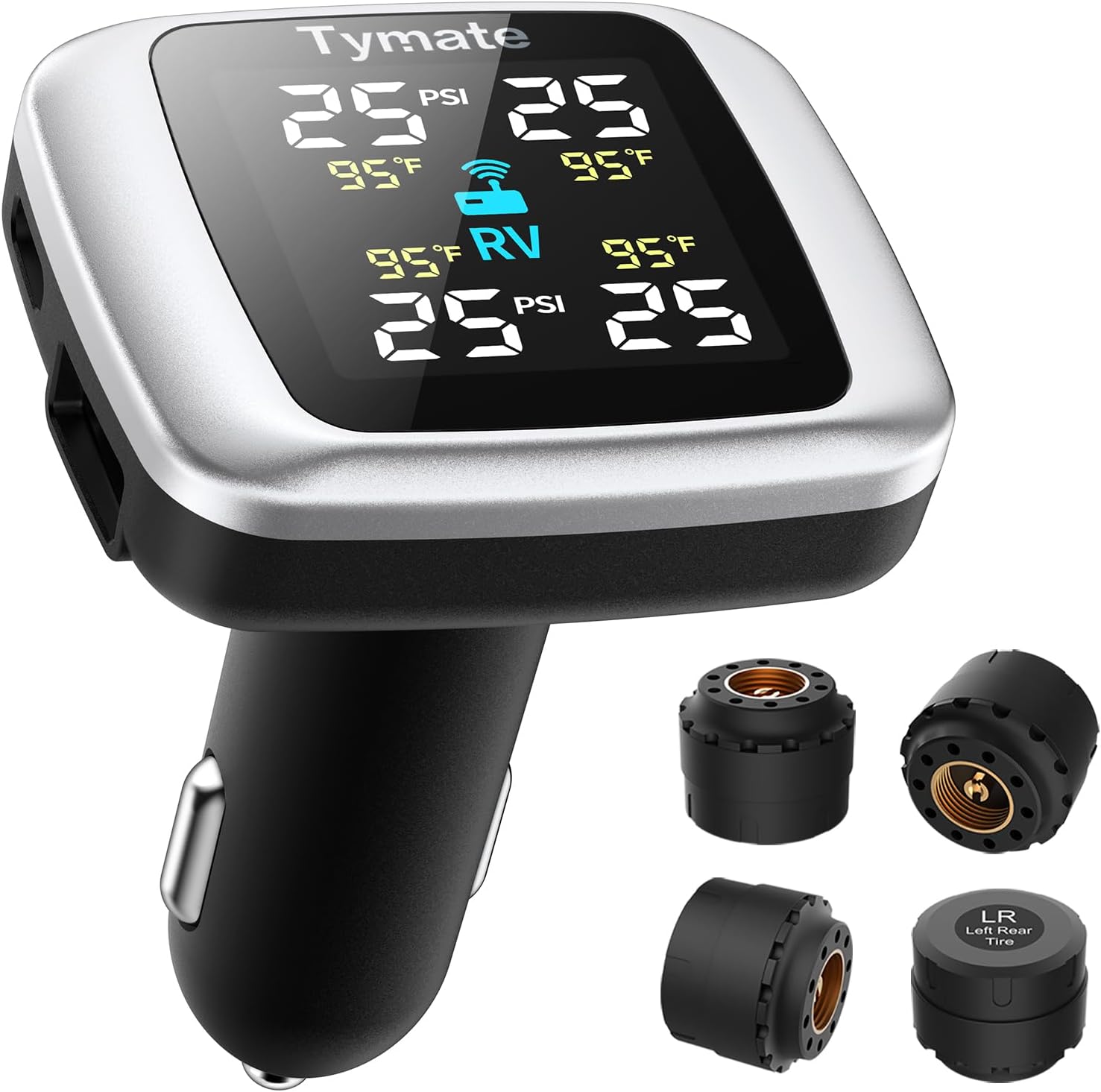
Tymate TM7 is a wireless tire pressure monitoring system that delivers real-time pressure and temperature readings for safer driving. It includes four external sensors, a bright color LCD display with adjustable backlight, and six alarm modes for high/low pressure, fast leakage, high temperature, and sensor signal or battery issues. The system covers a wide 0–144 PSI range and plugs into your vehicle’s cigarette lighter socket for quick DIY setup.

The Continental Grand Prix 5000 is an allround road bike tire engineered for faster rolling, improved ride comfort, and enhanced puncture protection. It features a Vectran Breaker cut-protection layer, Lazer Grip micro-profile tread for confident cornering control, and Active Comfort Technology to damp vibration for smoother rides. BlackChili compound optimizes grip and speed for everyday performance and long-lasting confidence.

Monitor tire tread wear with a smart, color-coded depth gauge that shows clear condition ranges at a glance. The bar is range marked for fast, easy readings, helping you maintain safer traction and performance. Each gauge is portable with a pocket clip, and the set includes 20 units for daily use and sharing.
Touring vs. Highway Tires
Touring tires and highway tires can overlap, especially on crossovers and SUVs, but they are not identical. A touring tire is usually comfort-focused and common on passenger vehicles. A highway tire is often built for long road miles, heavier vehicles, and steady straight-line stability.
Choose a touring tire if you drive a sedan, minivan, or crossover and care most about quiet comfort, wet traction, and long tread life. Choose a highway tire if you drive a truck or SUV that carries heavier loads, tows more often, or spends most of its life at sustained highway speeds.
Best Uses for Touring Tires

Touring tires are a strong fit for drivers who want dependable road manners without a harsh ride. They work best when your vehicle spends most of its time on paved roads, city streets, suburban routes, and highways.
- Daily commuting: They help reduce noise and vibration during repeated short and medium trips.
- Family transport: Their smoother ride suits minivans, sedans, and crossovers.
- Highway travel: They offer stable tracking and lower cabin fatigue on longer drives.
- Wet-weather driving: Many all-season touring tires use grooves and siping to move water away from the contact patch.
- Long-term value: Their wear-focused design can reduce how often you need replacements.
They are not ideal for mud, rocky trails, track driving, or frequent severe winter use. For those needs, you should compare all-terrain, winter, or performance tires instead.
Warning: All-season touring tires can handle light snow, but they are not a substitute for dedicated winter tires in deep snow, ice, or long periods of freezing weather. NHTSA notes that winter tires are more effective than all-season tires in deep snow.
Touring Tires and Ride Comfort
Ride comfort is one of the biggest reasons to buy touring tires. Their tread patterns are usually designed to reduce road noise before it reaches the cabin. Their compounds and internal structure also help soften small impacts from rough pavement, expansion joints, and patched roads.
Many touring tires use multi-pitch tread patterns, which vary the size and spacing of tread blocks to reduce repeating sound frequencies. Some also use stable center ribs to help the vehicle track straight on the highway. The result is not a luxury-car transformation, but it can make daily driving feel calmer and more controlled.
Comfort still depends on your vehicle, wheel size, tire pressure, and road surface. A low-profile touring tire on a large wheel may ride firmer than a taller sidewall touring tire on a smaller wheel. Always match the tire size and load rating recommended by your vehicle manufacturer.
How to Read Touring Tire Ratings Before You Buy
Before choosing touring tires, check the ratings and markings that affect fit, safety, and performance. The NHTSA TireWise guide explains that passenger tires sold in the United States use the Uniform Tire Quality Grading system, which covers treadwear, traction performance, and temperature resistance.
- Tire size: Match the size listed on the driver-side door placard or owner’s manual.
- Load index: Make sure the tire can support your vehicle’s weight and normal cargo.
- Speed rating: Use a rating that meets or exceeds your vehicle’s requirement.
- UTQG treadwear grade: A higher number suggests slower relative wear, but it is best used for comparison within similar tire categories.
- Traction grade: This reflects wet stopping performance under test conditions.
- Temperature grade: This reflects resistance to heat buildup at speed.
- Mileage warranty: Compare warranty length, but also read the conditions for rotation, alignment, proof of maintenance, and even wear.
- Weather markings: All-season and M+S markings do not mean the tire is a dedicated winter tire.
Pro Tip: Do not buy by warranty mileage alone. A quieter tire with the correct load rating, good wet braking, and proven fit for your vehicle is usually a better choice than the longest warranty on paper.
Top Touring Tire Picks
The best touring tire depends on your vehicle, size, climate, and priorities. Instead of treating one model as the universal winner, use these examples to understand what to compare.
A strong touring tire should match your vehicle first, then balance comfort, wet traction, tread life, noise control, and warranty coverage.
- Long tread life focus: The Bridgestone Turanza EverDrive is a verified example of an all-season touring tire with an 80,000-mile limited mileage warranty.
- Premium comfort focus: The Bridgestone Turanza Prestige is a grand touring option with QuietTrack Technology, ENLITEN Technology, and a 70,000-mile limited mileage warranty.
- Wet-weather focus: Look for wide circumferential grooves, strong wet traction ratings, and independent test results.
- Quiet ride focus: Compare tire tests and owner feedback for road noise on your specific vehicle.
- Value focus: Compare total installed price, warranty terms, expected life, and road-hazard coverage.
Additionally, opting for premium tires enhances safety and comfort, ensuring a better driving experience.
[Products Worth Considering]

Measure tire tread depth quickly and accurately with this LUMITECO dial gauge that reads in 1/32" increments up to 14/32". The color-coded green/yellow/red zones make it easy to judge tire wear and know when replacement is needed. A rugged, compact design with a protective pouch helps keep the gauge ready for use on cars, trucks, motorcycles, and more.

Accurately measure tire tread depth with a calibrated gauge marked from 0 to 1 inch in 1/32 inch increments. The color-coded bar helps you quickly identify tread condition ranges, supporting safe driving for trucks, motorcycles, automobiles, and passenger vehicles.

Protect tire valves from water, dust, and sand to help prevent leaks and support safe driving. These universal stem caps install quickly by hand and feature durable aluminum alloy construction with an inner sealing ring for better air retention. Compatible with cars, SUVs, trucks, motorcycles, and bicycles for everyday convenience.
How to Choose Touring Tires
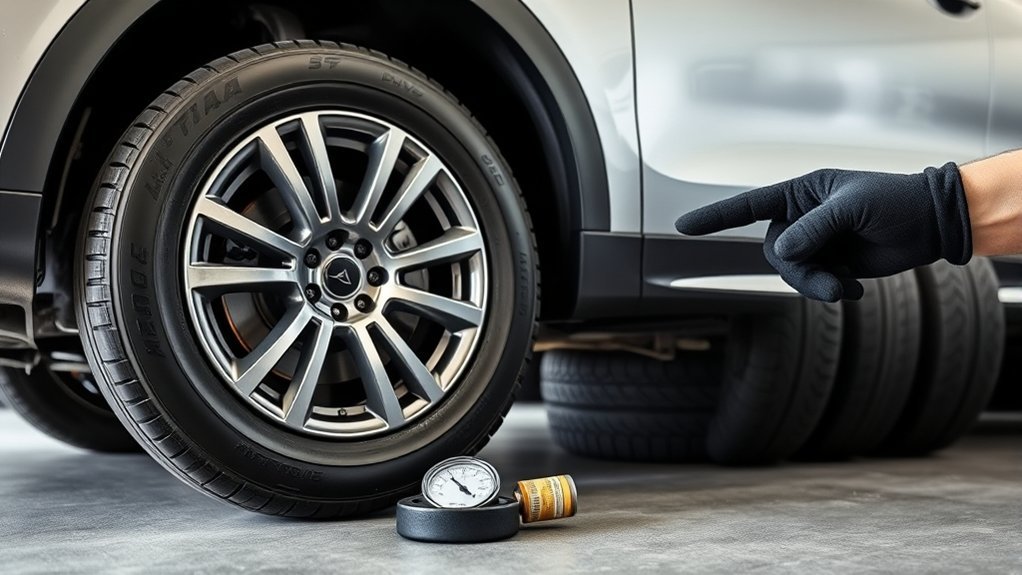
Choosing touring tires starts with your vehicle and driving conditions. A tire that works well on one sedan may not be the best choice for a heavier crossover, an EV, or a driver who sees frequent snow.
- Confirm your tire size: Use the driver-side door placard or owner’s manual, not only the size printed on old tires.
- Match load and speed ratings: The new tire should meet or exceed your vehicle’s required ratings.
- Decide your climate needs: If you drive in heavy snow or ice, compare winter tires instead of relying only on all-season touring tires.
- Compare comfort and noise scores: Look for professional tests and owner reviews from drivers with similar vehicles.
- Check wet braking and hydroplaning resistance: These matter more for safety than a slightly longer warranty.
- Review warranty terms: Long mileage warranties usually require proper inflation, rotation, alignment, and proof of maintenance.
- Compare total installed cost: Include mounting, balancing, valve stems or TPMS service, disposal fees, and alignment if needed.
Check independent test results and user ratings for real-world noise, braking, steering response, and wear. When you choose deliberately, you avoid paying for features you do not need and protect the comfort you expect from a touring tire. Additionally, consider options like the Goodyear Assurance Finesse, which emphasizes comfort and efficiency for everyday driving.
[Products Worth Considering]

TIRESHIELD PRO RV tire covers in a set of four deliver year-round protection against UV rays, cracking, fading, water, and snow. The StormLock-System helps keep the covers securely fastened through high wind, while heavy-duty, double-stitched construction supports long-lasting performance. Designed for universal fit, they’re intended for RV, camper, truck, car, and trailer tires within the 26–28.75 inch diameter range, with easy wipe-clean care and storage in the included bag.

Milton S-921 pencil tire pressure gauge helps you maintain optimal tire pressure for passenger cars with accurate readings in PSI and kPa. It features a built-in deflator valve for convenient pressure adjustments, plus a single chuck head and nylon indicator bar for easy use on the go. Built from durable plated brass and designed for reliable performance, it’s a practical road trip and cold-weather maintenance tool.

The Airmoto portable tire inflator quickly and accurately fills car, truck, SUV, motorcycle, and bicycle tires up to 120 PSI with auto shut-off when your target pressure is reached. Its large LCD, multi-unit pressure display, and digital gauge make it easy to dial in settings and verify readings, while the built-in LED flashlight helps in low light. The included polyurethane hard carrying case and storage mesh pocket keep the inflator and accessories protected and organized.
When Touring Tires Are Not the Best Choice
Touring tires are versatile, but they are not the answer for every vehicle or driving style. You may need another tire type if your driving demands are more specialized.
- Choose winter tires if you often drive in deep snow, packed snow, ice, or long freezing seasons.
- Choose all-terrain tires if you regularly drive on gravel, dirt, mud, job sites, or trails.
- Choose highway or light-truck tires if your truck or SUV tows heavy loads or carries heavy cargo often.
- Choose performance tires if sharp steering, cornering grip, and sporty handling matter more than quiet comfort.
- Choose EV-rated or EV-suitable tires if your electric vehicle needs extra load support, low rolling resistance, and low noise.
Touring Tire Care Tips
Keeping touring tires in top condition starts with simple maintenance. Proper care helps the tires wear evenly, stay quieter, and preserve wet-road traction.
- Check pressure monthly: Measure when the tires are cold, including the spare if your vehicle has one.
- Use the placard pressure: The correct pressure is on the driver-side door placard or in the owner’s manual, not the maximum pressure on the tire sidewall.
- Rotate on schedule: Follow the owner’s manual. If your vehicle manufacturer recommends rotation, NHTSA says 5,000 to 8,000 miles is a common range, or sooner if uneven wear appears.
- Inspect tread monthly: Look for low tread, cracks, cuts, bulges, embedded objects, or uneven wear.
- Check alignment: If the vehicle pulls, the steering wheel is off-center, or the tread wears on one edge, get the alignment inspected.
- Balance when needed: Vibration at highway speed can point to a balance issue, bent wheel, or tire damage.
- Store seasonal tires correctly: Keep them in a cool, dry, shaded space away from sunlight, oil, and ozone sources.
Additionally, maintaining proper tire pressure is crucial for maximizing performance and longevity. When you clean tires, use mild soap and water instead of harsh solvents that can dry the rubber.
How Touring Tires Wear Over Time
With regular care, touring tires can wear evenly because their tread design spreads load across the contact patch. Still, wear depends on pressure, alignment, rotation, road surface, vehicle weight, driving style, and climate.
As tread depth drops, wet traction usually declines before the tire looks completely worn out. NHTSA says tires are not safe and should be replaced when tread reaches 2/32 inch. Built-in treadwear indicators are raised bars inside the tread grooves. When the tread is level with those bars, replacement is due.
Warning: Do not wait for a tire to look bald before replacing it. Low tread depth increases wet-road risk, and cracks, bulges, exposed cords, repeated air loss, or vibration can require replacement even if tread depth looks acceptable.
You should also watch for uneven wear patterns:
- Center wear: Often linked to overinflation or vehicle-specific load conditions.
- Shoulder wear: Often linked to underinflation, hard cornering, or alignment issues.
- One-edge wear: Often points to alignment problems.
- Cupping or scalloping: Can point to worn suspension parts, imbalance, or rotation neglect.
- Feathering: Often suggests toe alignment issues.
A regular tire rotation helps distribute stress and supports even wear patterns. Additionally, regular tire rotation is essential for maximizing mileage and maintaining performance over time.
Frequently Asked Questions
Do touring tires make a difference?
Yes. Touring tires can make a noticeable difference if your current tires are noisy, worn, harsh, or too performance-focused for daily use. A good touring tire usually improves ride comfort, lowers road noise, supports even wear, and gives predictable handling for commuting and highway driving.
Is a touring tire an all-season tire?
Most passenger touring tires are all-season tires, but not every touring tire should be described that way without checking the model. Touring describes the comfort-focused tire category. All-season describes the tire’s intended use across dry, wet, and mild winter conditions.
What is the difference between a touring tire and a highway tire?
A touring tire usually prioritizes comfort, quietness, and balanced daily handling for passenger cars, minivans, and crossovers. A highway tire usually focuses on long-distance stability, durability, and load needs, especially for trucks and SUVs. Some crossover tires can overlap both categories.
Is touring a good tire brand?
Touring is not a brand. It is a tire type. A touring tire can be good or poor depending on the brand, model, size, ratings, test results, and how well it matches your vehicle. Compare wet traction, noise, warranty, comfort, load rating, and owner feedback before buying.
Are touring tires good in snow?
All-season touring tires can handle light snow, but they are not the best choice for deep snow, ice, or severe winter driving. If winter safety is a major concern, compare dedicated winter tires or all-weather tires with stronger snow credentials.
How long do touring tires last?
Many touring tires are designed for long tread life, and some models carry warranties in the 60,000- to 80,000-mile range. Real life depends on pressure, alignment, rotation, vehicle weight, road surface, climate, and driving habits. Always read the warranty terms for your exact tire model.
Conclusion
In short, a touring tire is a smart choice when you want balanced comfort, predictable handling, lower road noise, and long tread life for everyday driving. It works best for commuters, families, and highway drivers who value a smoother ride more than aggressive handling. Choose the correct size, load rating, speed rating, and weather capability for your vehicle. Then maintain proper pressure, rotate on schedule, and replace the tire when tread depth or damage makes it unsafe.
Sources
- NHTSA TireWise — tire types, tire ratings, tire pressure, tread depth, rotation, and safety guidance.
- Tire Rack Grand Touring All-Season Tires — category traits for comfort, noise reduction, year-round traction, and tread life.
- Bridgestone Turanza EverDrive — example of an all-season touring tire with an 80,000-mile limited mileage warranty.
- Bridgestone Turanza Prestige — example of a premium grand touring tire with comfort and wear-focused technologies.

