

If your TPMS is not reading one tire, start by checking that tire’s actual pressure with an accurate gauge. If the pressure is correct but one wheel still shows no data, a weak or failed sensor battery, damaged sensor, incorrect sensor registration, incompatible replacement sensor, or vehicle-side TPMS fault may be responsible. The exact reset or relearn procedure depends on your vehicle.
Quick Answer
When TPMS stops reading one tire, first confirm the tire is correctly inflated. Then test that wheel’s direct-TPMS sensor. A dead battery, sensor damage, wrong sensor ID or position, failed relearn, or incompatible replacement sensor can cause a missing reading. Follow your vehicle’s specific relearn procedure before replacing parts.
Key Takeaways
Key Takeaways
- Check the tire’s cold pressure first. A TPMS warning does not automatically mean the sensor itself has failed.
- This troubleshooting mainly applies to direct TPMS, which uses pressure sensors at the wheels. Indirect systems work differently.
- Internal TPMS sensor batteries are normally sealed. Typical sensor battery life is roughly five to ten years.
- A basic TPMS trigger tool is not the same as a full TPMS diagnostic or OBD-capable scan tool.
- Relearn procedures vary by vehicle. Some are stationary, some require an OBD tool, and others learn sensors automatically while driving.
- Use the correct sensor application, frequency, and protocol. A compatible aftermarket sensor can work correctly when it is properly programmed and relearned.
At a Glance
| Time Required | About 10–30 minutes for basic pressure, sensor, and relearn checks; longer if tire removal or professional diagnosis is required. |
| Difficulty | Easy for pressure and basic relearn checks; moderate to professional for electronic diagnosis and internal sensor replacement. |
| Tools Needed | Accurate tire-pressure gauge, vehicle owner’s manual, and possibly a vehicle-compatible TPMS activation or diagnostic tool. |
| Cost | Pressure checks may cost nothing if you own a gauge. Diagnostic, relearn, sensor, tire-service, and labor costs vary substantially by vehicle. |
Note: First determine what type of TPMS your vehicle uses. NHTSA explains that a direct TPMS uses tire-mounted pressure sensors, while an indirect system uses wheel-speed and other vehicle data. An indirect system does not have a conventional pressure sensor inside each wheel for you to replace.
Why One Tire Stops Reading
If a vehicle with direct TPMS stops displaying one wheel’s pressure while the others still report normally, start with that wheel rather than assuming the entire system has failed.
Common causes include a depleted sensor battery, physical damage during tire service, corrosion around the valve assembly, an incompatible replacement sensor, an ID that has not been learned correctly, or a vehicle-side receiver problem.
A sensor can also be transmitting while the vehicle has the wrong sensor ID or wheel-position information stored. That is different from the sensor being completely dead.
A missing tire reading does not automatically mean the sensor needs replacement. Confirm pressure, sensor transmission, compatibility, and the correct relearn procedure first.
Check the TPMS Warning Pattern First
The warning lamp itself gives you an important clue. According to the National Highway Traffic Safety Administration, a continuously illuminated TPMS warning normally means one or more tires are significantly underinflated.
If the warning flashes for roughly 60 to 90 seconds after startup and then stays illuminated, that generally indicates a TPMS malfunction rather than simply low pressure.
Warning: TPMS is not a substitute for checking tire pressure. If a tire looks low, is losing air, or handles abnormally, stop and check it with a gauge instead of assuming the problem is only electronic.
Check the TPMS Sensor Battery
A weak or depleted TPMS sensor battery is a common reason one direct-TPMS sensor stops communicating. The failure may begin intermittently before the sensor stops responding entirely.
Schrader, a major TPMS sensor manufacturer, states that sensor batteries commonly have an average life of roughly five to ten years. Actual life varies with the sensor design, driving pattern, temperature, transmission frequency, and operating conditions.
Most factory-style internal TPMS sensors have a sealed battery inside the sensor housing. Once that battery reaches the end of its life, the normal repair is to replace the sensor assembly rather than open it and replace the battery.
Accessory external TPMS sensors are different. Some screw onto the valve stem and use a replaceable coin-cell battery. If you have an aftermarket external monitoring system, follow its manufacturer’s battery and pairing instructions rather than assuming factory TPMS procedures apply.
Pro Tip: If the original sensors are all similar in age and one battery has failed, ask a shop to test the remaining sensors before replacing all four. Replacing a full set can make sense in some situations, but age alone does not prove every sensor has failed.
[Products Worth Considering]

This GM TPMS relearn and reset tool (EL-50448) helps you activate and reset OE/OEM compatible tire pressure sensors for many Chevrolet, GMC, Buick, and Cadillac vehicles. It includes a pre-installed 9V alkaline battery for ready-to-use performance and features a one-button design for quick DIY TPMS relearn. Use it to clear the TPMS warning light, set the correct dashboard tire pressure, and test sensor operation.

Replace your worn or missing TPMS sensors with pre-programmed, direct-fit sensors for compatible Ford, Lincoln, and select Mazda models. Each sensor comes ready to activate with a scan tool, helping restore accurate tire pressure monitoring and trouble-free installation. Built with a long-life CR2032 battery and tested before factory release, this set provides dependable performance with a one-year warranty.
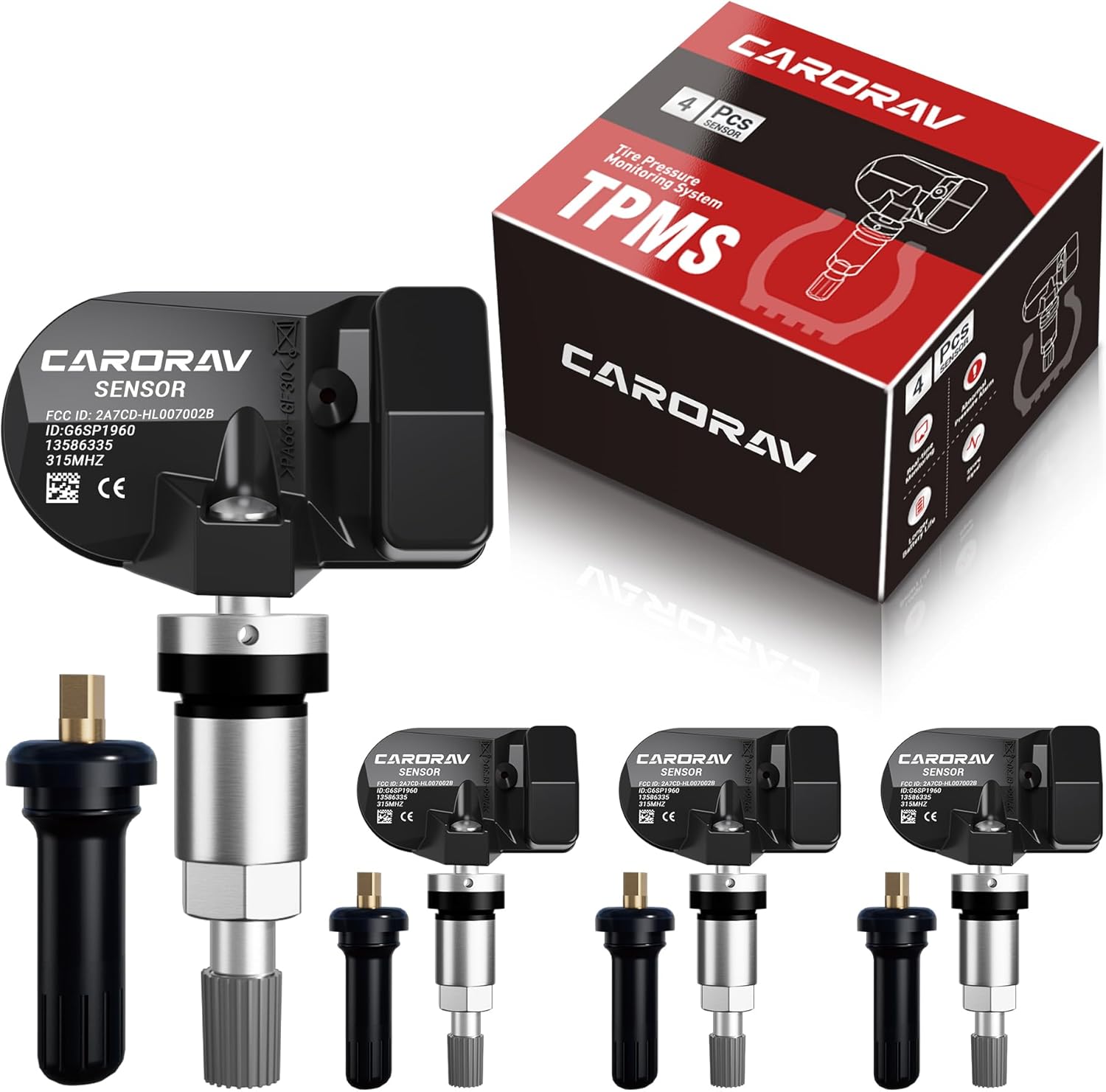
Replace worn or missing TPMS sensors with CARORAV pre-programmed GM-compatible sensors for a smoother installation experience. These 315MHz replacement sensors help monitor tire pressure in real time with long battery life, and they are designed to withstand harsh temperatures. Manual or OBDII relearn may be required to reset the system for proper recognition.
Confirm the TPMS Pairing
If the sensor responds to a TPMS activation or diagnostic tool but the vehicle still does not display it correctly, check the sensor registration and wheel-position information.
Sensor programming and vehicle relearning are two different jobs. A programmable replacement sensor may first need to be configured for the correct make, model, year, frequency, and protocol. The vehicle may then need to learn that sensor’s ID.
Do not assume every vehicle requires the same process after a tire rotation. Some systems automatically determine wheel positions, while others require a relearn after rotation or after one or more sensor IDs change.
Follow the procedure specified in the owner’s manual or a current vehicle-specific TPMS service database.
[Products Worth Considering]

Replace worn or missing TPMS sensors with a pre-programmed 4-pack designed for compatible GM vehicles. These 315MHz sensors provide real-time tire pressure monitoring and alert you if pressure is too high, too low, or if a rapid air leak occurs. Most installations are ready with minimal relearn effort after mounting, helping improve safety and driving confidence.

Replace worn or malfunctioning GM TPMS sensors with this 433MHz pre-programmed sensor set designed for compatibility with many Chevrolet, Buick, GMC, and Cadillac models. It includes guidance for proper OBDII relearning/pairing after installation and supports reliable long-term operation with a high-performance CR2032 battery. Quality tested for durability and performance to help restore accurate tire pressure monitoring.

This TPMS sensor training and relearn reset tool is customized for Ford, Lincoln, and Mercury vehicles to help activate tire pressure programming after sensor replacement or tire rotation. It can activate individual tire pressure sensors with one-button operation, helping prevent TPMS warning light illumination. It is not a sensor programming tool and cannot program replacement sensors—use it to trigger/activate sensors only.
Know the Three Common Relearn Methods
TPMS relearn procedures generally fall into three broad groups:
- Stationary relearn: The vehicle enters a learn mode and each sensor is activated in a specified sequence.
- OBD relearn: A TPMS-capable tool transfers sensor IDs to the appropriate vehicle control module through the diagnostic connector.
- Automatic relearn: The vehicle learns the sensor IDs after installation and a specified driving procedure.
Bartec’s TPMS relearn guidance documents all three approaches. Which one applies depends on the vehicle.
Fix Signal, Water, and Valve Issues
Next, inspect the affected wheel’s valve stem and TPMS hardware. Corrosion, impact damage, a damaged valve, or contamination inside the wheel can contribute to sensor or sealing problems.
Look for:
- Cracks or damage around the valve stem.
- A loose or damaged stem assembly.
- Visible corrosion around metal valve components.
- Evidence of a recent tire-service impact.
- A slow air leak around the valve.
- A replacement wheel or sensor that may not match the original TPMS application.
The electronic sensor body of an internal direct-TPMS unit sits inside the wheel, so a complete inspection usually requires tire-service equipment.
Do not remove or dismount a tire solely to inspect a TPMS sensor unless you have the proper tire equipment and experience. A tire shop can activate the sensor electronically first, which often identifies a dead sensor without unnecessary disassembly.
Check Sensor Compatibility
A replacement sensor must match the vehicle’s required protocol and application. Frequency alone is not enough; two sensors operating in the same frequency range are not automatically interchangeable.
You also are not limited to a dealer-branded sensor. Correctly programmed aftermarket sensors can be valid replacements. For example, Schrader’s programmable replacement sensors are designed to function as OEM-equivalent TPMS replacements when the correct application is programmed.
Reset or Scan the TPMS
If pressure and visible hardware look normal, electronically test the affected sensor. The important part is choosing the correct type of tool.
Reset Tool Basics
A basic TPMS activation or trigger tool sends a signal that wakes a compatible wheel sensor while the vehicle is in the appropriate mode. This can be enough for certain stationary relearn procedures.
However, an inexpensive trigger tool is not automatically a complete TPMS scanner. It may not display sensor IDs, battery condition, pressure, frequency, or vehicle diagnostic trouble codes.
ATEQ distinguishes between activation tools and more capable diagnostic/decoding tools. A full TPMS diagnostic tool may be able to activate a sensor and display information such as sensor ID, pressure, temperature, and battery status.
Before buying a tool, check that it supports the exact make, model, year, and relearn procedure you need.
Scan And Relearn
A logical diagnostic sequence is:
- Set all tires to the vehicle manufacturer’s specified cold pressure.
- Use a compatible TPMS tool to activate each direct sensor.
- Compare the suspect wheel with the sensors that respond normally.
- If the sensor responds, check its ID, application, and vehicle registration.
- Perform the exact relearn procedure specified for the vehicle if necessary.
- Verify that all expected tire-pressure readings return after the procedure.
A generic engine-code reader may not provide the TPMS information you need. Many vehicles store TPMS faults in a body, chassis, or dedicated control module that requires enhanced diagnostic access.
Note: Do not perform a relearn merely because a tire was low. First correct the pressure. Relearning is for sensor registration or position procedures when the vehicle’s service information calls for it.
Replace the Faulty TPMS Sensor
Replace the wheel sensor when testing confirms that it is not transmitting, its sealed battery has failed, it is physically damaged, or it cannot function correctly with the vehicle.
Internal TPMS sensor replacement generally requires separating the tire from the wheel, installing the new sensor and service hardware correctly, restoring tire pressure, and then completing any programming or relearn procedure required by the vehicle.
[Products Worth Considering]
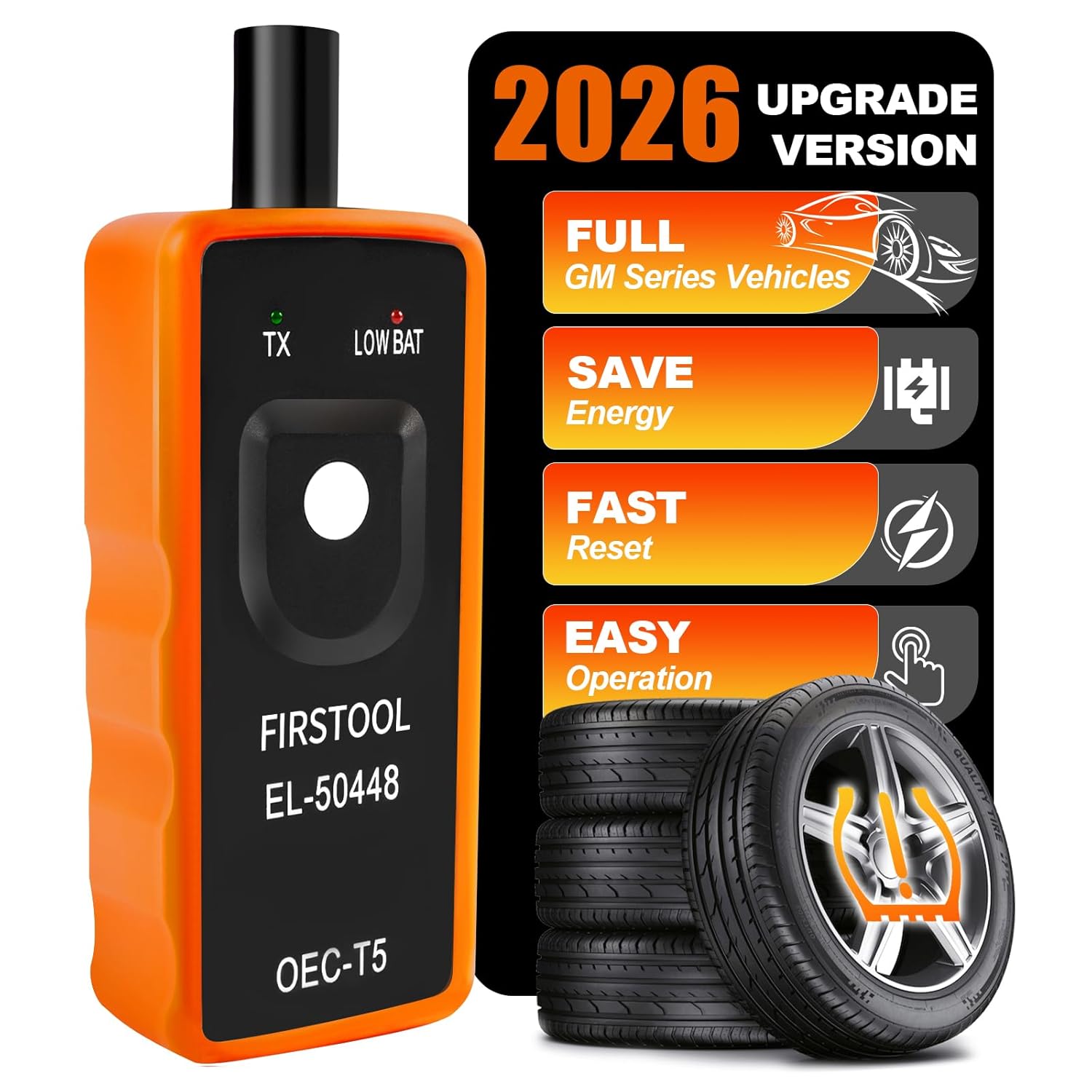
This TPMS relearn tool helps you quickly activate, match, and reset GM tire pressure sensors to keep the vehicle monitoring system working properly. It clears tire pressure alarms and dashboard warning lights after sensor replacement or tire rotation, and supports learning for common 315/433 MHz TPMS sensors. Designed for simple one-button operation, it can help you avoid unnecessary trips to repair shops.

The VEHLIVE SU-50448 II TPMS relearn tool provides a fast activation reset to restore accurate tire pressure monitoring after sensor replacement or tire rotation. It supports 315 MHz and 433 MHz GM series sensors and helps clear dashboard pressure warnings. With simple two-button operation and horn-confirmed relearning order, you can reprogram sensors conveniently at home.

Masoll Gen 2 external TPMS sensors are a DIY replacement set of 4 for select GM vehicles made after 2006, helping you shut off the TPMS warning light quickly. Simply screw the sensors onto the tire valves and sync to your car ECU using the included EL-50448 relearn tool. Dual-frequency 315/433 MHz design provides OEM-level performance with accurate readings and replaceable batteries for about two years.
Identify the Bad Sensor
Do not rely only on rotating the tires to see whether a warning “follows” one wheel. That method can produce confusing results because some vehicles store sensor IDs by wheel position while others locate them differently.
A better test is to activate each sensor individually with a compatible TPMS diagnostic tool.
Compare:
- Whether each sensor responds.
- The sensor ID.
- The reported pressure.
- Battery status when the tool and sensor support it.
- The IDs stored in the vehicle, when diagnostic access allows comparison.
If three sensors respond normally and the fourth produces no signal, the non-responsive sensor has either lost power, been damaged, or otherwise failed. If all four sensors respond correctly but the vehicle still cannot see one, move the diagnosis toward registration, compatibility, receiver, antenna, wiring, or control-module issues.
Replace With a Compatible Sensor
Once you have confirmed a failed sensor, install the correct replacement for the vehicle and wheel application.
An OEM sensor is one option, but a reputable direct-fit or programmable aftermarket sensor can also work when it is compatible with the vehicle and programmed correctly.
Do not choose a sensor based only on appearance. Confirm the:
- Vehicle make, model, and year application.
- Required TPMS protocol.
- Operating frequency where applicable.
- Valve-stem and wheel compatibility.
- Programming requirements.
- Vehicle relearn procedure.
Replacement prices vary considerably based on sensor type, vehicle design, tire-service labor, programming, and relearn requirements. Get a vehicle-specific quote rather than assuming every sensor replacement has the same price.
Check For Pairing Issues
A brand-new sensor can remain unreadable if it has not been programmed or learned correctly.
After installation:
- Set every tire to the pressure specified on the vehicle’s tire-information placard.
- Confirm the new sensor transmits with the TPMS tool.
- Perform the manufacturer’s required stationary, OBD, or automatic relearn.
- Confirm that each wheel’s pressure displays correctly if the vehicle provides individual pressure readings.
- Restart and drive the vehicle as required by its service procedure to make sure the malfunction does not return.
If the new sensor transmits correctly but cannot be learned, recheck its application and programming before replacing another component.
Frequently Asked Questions
Why Is My TPMS Not Working on One Wheel?
On a direct-TPMS vehicle, one missing wheel reading can result from a failed sensor battery, damaged sensor, incorrect sensor registration, incompatible replacement sensor, failed relearn, or less commonly a problem with the vehicle’s TPMS receiver or related electronics. Check actual tire pressure before diagnosing the sensor.
Will Resetting the TPMS Fix a Missing Tire Reading?
It can if the problem is incorrect sensor registration or wheel-position learning, but a reset will not repair a dead battery or damaged sensor. Use the vehicle-specific procedure instead of repeatedly resetting the system.
How Much Does It Cost to Fix a TPMS Sensor?
There is no reliable single price for every vehicle. The total depends on the sensor, tire-removal labor, valve hardware, programming, relearning, and local labor rates. A simple relearn may cost much less than replacing an internal sensor, so diagnose the problem before approving replacement.
Can I Replace Just One TPMS Sensor?
Yes. You can normally replace only the failed sensor. If the other original sensors are the same age, testing their remaining battery condition can help you decide whether replacing more than one is worthwhile.
Can I Replace the Battery Inside a TPMS Sensor?
Usually not on factory-style internal sensors because the electronics and battery are sealed inside the sensor body. When the internal battery fails, the sensor assembly is normally replaced. Some accessory external TPMS sensors use replaceable batteries.
Can I Use an Aftermarket TPMS Sensor?
Yes, if the sensor is designed for your vehicle and is programmed and relearned correctly. Check application, protocol, frequency, wheel fitment, and programming requirements rather than choosing a sensor only by price or appearance.
Is It Worth Fixing a TPMS Sensor?
Yes. A functioning TPMS provides an important warning when tire pressure becomes significantly low. However, it does not replace regular pressure checks with a gauge, so repair the TPMS fault and continue checking your tires manually.
Conclusion
If your TPMS still will not read one tire, diagnose it in order rather than immediately buying a sensor. Check the tire’s cold pressure, identify whether your vehicle uses direct TPMS, inspect the valve area, activate the sensor with a compatible tool, and verify its ID and relearn requirements.
If the sensor does not transmit and its sealed battery or electronics have failed, replace it with a correctly matched sensor and complete the vehicle-specific relearn. If the sensor tests normally but the vehicle still cannot receive it, a tire shop or qualified technician can continue diagnosis at the receiver, antenna, wiring, or control-module level.
Sources
- National Highway Traffic Safety Administration — TireWise — TPMS operation, warning-light behavior, tire-pressure safety, and direct versus indirect monitoring.
- 49 CFR § 571.138 — Tire Pressure Monitoring Systems — federal TPMS malfunction-warning requirements.
- Schrader TPMS Solutions — Sensor Battery Life — typical TPMS battery service life and replacement guidance.
- Schrader EZ-sensor Family — programmable OEM-equivalent replacement-sensor compatibility.
- ATEQ TPMS — TPMS Tool and Relearn Guidance — activation, diagnostic, and relearn-tool functions.
- Bartec USA — TPMS Relearns — stationary, OBD, and automatic relearn methods.

