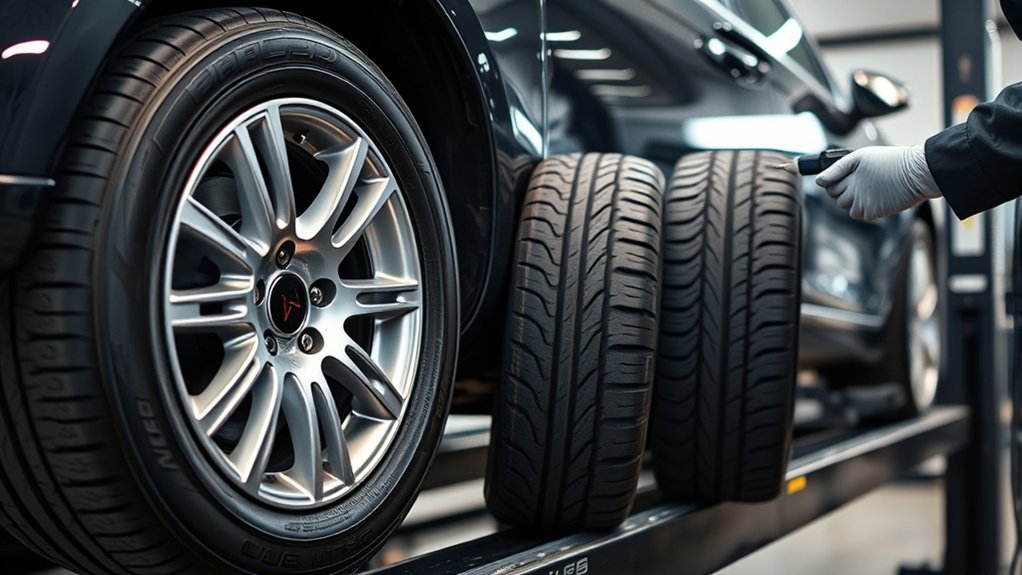
You can replace just one tire, but only when the replacement closely matches the tires that will stay on the vehicle and your vehicle manufacturer allows it. Size, tire type, construction, load capacity, speed rating, model, and remaining tread depth all matter. AWD and 4WD vehicles need extra care because differences in tire circumference can place added stress on drivetrain components. If the remaining tires are already heavily worn, replacing two or all four is often the better choice.
Quick Answer
You can replace one tire when it matches the others closely and stays within your vehicle manufacturer’s allowed tread-depth or circumference difference. If one new tire would create a large mismatch, replace two tires or all four instead. On AWD and 4WD vehicles, always check the owner’s manual before replacing only one.
Key Takeaways
- Replace one tire only when the new tire closely matches the others and the vehicle manufacturer permits the difference in tread depth or circumference.
- There is no universal tread-depth mismatch limit for every car. AWD and 4WD requirements can vary by manufacturer and model.
- If replacing one tire is unavoidable, a common manufacturer recommendation is to pair it with the existing tire that has the deepest tread and place that pair on the rear axle, unless your vehicle maker specifies otherwise.
- If replacing two tires, the newer or deeper-tread pair is generally installed on the rear to improve wet-road stability.
- Tires at 2/32 inch of remaining tread have reached the replacement point, so heavily worn companion tires should not be kept simply to avoid buying a pair or set.
Can You Replace Just One Tire?
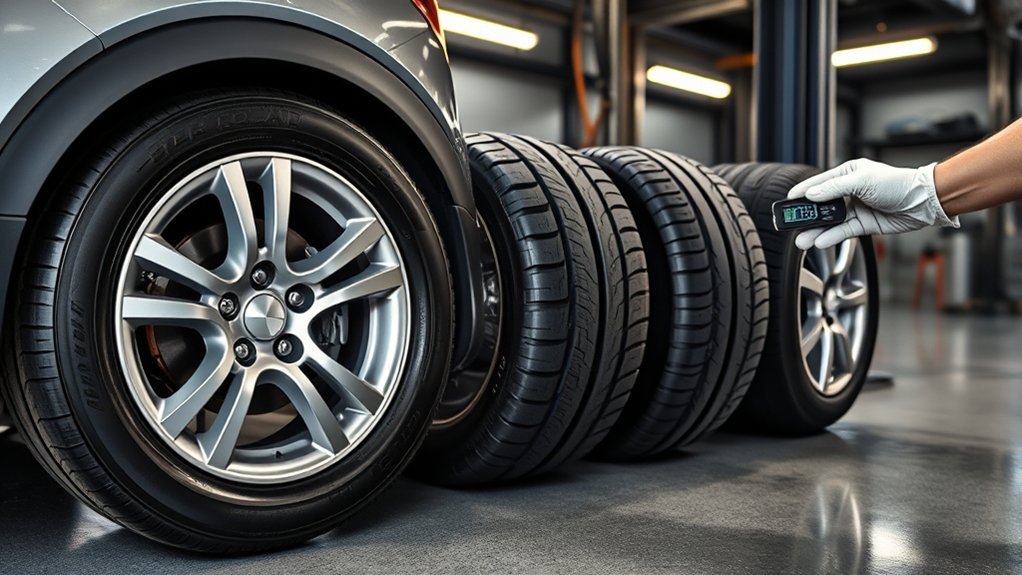
Yes, you can sometimes replace just one tire. The replacement should be as close as possible to the other tires in size, model, tire type, construction, load index, speed rating, and remaining tread depth.
Start by checking the tire information placard on the driver’s door jamb and your owner’s manual. Michelin recommends using the size specified by the vehicle manufacturer or another size the manufacturer has approved. The replacement must also provide adequate load-carrying capacity. See Michelin’s tire-size guidance.
You should also measure tread depth on all four tires. A new tire normally has much deeper tread than a partially worn tire, so installing one new tire can change rolling circumference, wet grip, and handling balance.
On AWD and 4WD vehicles, the difference can matter mechanically as well. Some drivetrains are sensitive to differences in rolling radius between the four wheels. Always use the manufacturer’s allowable tolerance rather than assuming that one general tread-depth number applies to every AWD or 4WD vehicle.
Warning: Do not install one new tire on an AWD or 4WD vehicle until you have checked the owner’s manual or manufacturer guidance. A tire that is the correct labeled size can still have a different rolling circumference because of tread wear or model-to-model construction differences.
When Is Replacing Just One Tire Safe?
Replacing one tire is most reasonable when the other tires are still in good condition and the new tire can be matched closely enough to satisfy the vehicle manufacturer’s requirements.
A single replacement becomes less attractive when the other tires are already heavily worn, damaged, old, or unevenly worn. If the remaining tires are near their wear indicators, they may already need replacement rather than being kept beside a brand-new tire.
Tread Depth Match
Tread depth matters because it affects both grip and rolling circumference. A new tire with substantially more tread can behave differently from a worn tire during braking, cornering, and wet-road driving.
Measure all four tires with a tread-depth gauge before ordering a replacement. Take measurements in several main grooves across each tire rather than relying on a single spot, especially if you see uneven shoulder or center wear.
NHTSA says tires should be replaced when tread reaches 2/32 inch. That is a wear-out threshold, not a universal rule for how much tread-depth difference your vehicle allows between tires.
The important distinction is that 2/32 inch is the minimum-tread replacement point, while acceptable mismatch between tires is vehicle-specific. Your owner’s manual may give a tread-depth, circumference, or rolling-radius requirement.
Pro Tip: Measure tread before buying the replacement tire. That lets the tire shop determine whether one tire can be matched safely or whether you need a pair or full set.
Same Axle Pair
If replacing a single tire is unavoidable, do not think only about the wheel where the damaged tire came from. Continental recommends pairing the single new tire with the tire on the vehicle that has the deepest remaining tread, then fitting that pair to the rear axle. Your vehicle manufacturer’s instructions take priority if they specify a different arrangement.
This approach places the stronger wet-grip pair at the rear, which helps reduce the risk of rear-axle traction loss and oversteer on slippery roads.
If the companion tire is damaged, badly worn, or a poor match in size or type, replace two tires rather than forcing a mismatched pair.
After installation, set tire pressure to the vehicle manufacturer’s specified pressure, not simply to the maximum number molded into the replacement tire’s sidewall.
If the damaged tire wore unevenly, inspect the alignment and suspension before the new tire develops the same pattern. New tires should also be properly balanced when installed.
Why Must Tire Tread Depth Match?
Tread-depth differences change how tires grip and how far they travel during each revolution. The deeper-tread tire can usually clear more water than a heavily worn tire, so the two tires may reach their traction limits at different times on wet pavement.
Large differences can also change steering feel and vehicle balance during emergency braking or quick lane changes. Keeping tread depths reasonably close helps the vehicle react more predictably.
On AWD and 4WD systems, matching becomes even more important because the drivetrain is designed around tires with closely related rolling dimensions. Constant differences in wheel speed can make differentials, couplings, or transfer-case components work harder than intended.
That does not mean every vehicle has the same allowable difference. Some manufacturers specify tread depth, some specify circumference, and others require closely matched tires without giving a simple universal number. Follow the specification for your exact vehicle.
How Do Tire Brand, Size, and Type Affect Fit?
A replacement tire must do more than physically fit the wheel. It needs to match the performance requirements of the vehicle and work predictably with the tires that remain in service.
Brand Matching Matters
When possible, use the same brand and tire model as the remaining tires. Two tires with the same labeled size can still use different tread patterns, compounds, casing designs, or actual rolling dimensions.
Michelin recommends keeping tires consistent in size, type, load capacity, construction, speed rating, and other key specifications. Its current guidance also recommends avoiding mixed tire brands and models where practical because different designs can respond differently during emergency maneuvers. See Michelin’s tire-mixing guidance.
- Match the vehicle-approved tire size.
- Use the same brand and model when possible.
- Match the tire category and construction.
- Meet or exceed the vehicle’s required load capacity.
- Follow the vehicle manufacturer’s speed-rating requirements.
- Compare actual remaining tread depth before installing only one tire.
Size and Tread
Use the exact tire size listed on the vehicle placard or another size specifically approved by the vehicle manufacturer. A tire that has a different overall diameter can rotate at a different rate, which may affect handling and vehicle systems.
Tread depth matters separately from labeled size. Even identical tires become smaller in rolling circumference as they wear, which is why a brand-new tire may not be an acceptable match for three heavily worn tires.
Check tire pressure after installation. Underinflation or overinflation can change handling, heat buildup, wear, and effective rolling behavior.
Do not mix seasonal categories casually. Summer, all-season, all-weather, winter, all-terrain, and other tire designs can have significantly different grip characteristics.
Type Compatibility Checks
Check the replacement tire’s sidewall and your vehicle placard before installation.
- Construction: Follow the vehicle manufacturer’s specified construction. Modern passenger vehicles normally use radial tires.
- Tire type: Avoid mixing summer, winter, all-season, all-terrain, or other categories unless the vehicle and tire manufacturers specifically permit it.
- Load index: Do not install a tire with less load-carrying capacity than the vehicle requires.
- Speed rating: Follow the vehicle manufacturer’s minimum or required speed rating.
- Run-flat systems: Do not assume a conventional tire is a direct substitute for a run-flat setup. Follow vehicle and tire-maker guidance.
If you cannot create a compatible match, replacing two tires or the full set is the safer way to restore predictable handling.
Do AWD and 4WD Need Matching Tires?
Yes. AWD and 4WD vehicles usually need all four tires to remain closely matched because differences in rolling circumference can make wheels rotate at slightly different speeds during normal straight-line driving.
Michelin advises matching tire size, brand, model, rolling radius, and tire type on 4WD vehicles when the owner’s manual does not provide different instructions. Its generic 4WD guidance can permit some tread-depth variation under specific conditions, but that is not a universal rule for every AWD or 4WD vehicle. See Michelin’s 4WD tire-matching FAQ.
Note: Ignore generic internet rules such as “every AWD vehicle allows 2/32 inch.” Your vehicle maker may specify a different tread-depth or circumference limit. The owner’s manual is the controlling source.
Keep all four tires properly inflated and follow the recommended rotation schedule so they wear at a similar rate. Even wear makes it easier to replace a single damaged tire later without exceeding the vehicle’s allowable difference.
[Products Worth Considering]

Cristal Products Untouchable Tire Shine Spray delivers a deep, wet-look gloss that enhances your vehicle’s tires. It’s quick-drying and spreads smoothly for consistent, streak-free coverage, while forming a protective coating against UV rays, road grime, and weather. Suitable for all tire types, it helps restore dull, faded tires to a showroom-quality finish.

Monitor tire tread wear with a smart, color-coded depth gauge that shows clear condition ranges at a glance. The bar is range marked for fast, easy readings, helping you maintain safer traction and performance. Each gauge is portable with a pocket clip, and the set includes 20 units for daily use and sharing.

Measure tire tread depth quickly and accurately with this LUMITECO dial gauge that reads in 1/32" increments up to 14/32". The color-coded green/yellow/red zones make it easy to judge tire wear and know when replacement is needed. A rugged, compact design with a protective pouch helps keep the gauge ready for use on cars, trucks, motorcycles, and more.
When Should You Replace Two or Four Tires Instead?
Replace more than one tire when a single new tire cannot be matched safely to the remaining set.
Replace two tires when one tire is damaged and its best matching companion is also substantially worn, damaged, or incompatible. When replacing two, Michelin and Continental generally recommend putting the newer or deeper-tread pair on the rear axle for wet-road stability, unless the vehicle manufacturer specifies otherwise. See Continental’s tire-mixing guidance.
Replace all four tires when the whole set is worn, aged, mismatched, or when your AWD/4WD system requires tighter matching than one new tire can provide.
- Replace one tire only when specifications and wear remain within the vehicle maker’s limits.
- Replace two when the damaged tire cannot be matched closely enough to a healthy tire already on the vehicle.
- Replace four when all tires are worn or aged, the set is already inconsistent, or the drivetrain requires a closely matched set.
- Never keep a tire that has reached the wear indicators simply to avoid buying another tire.
[Products Worth Considering]

Accurately measure tire tread depth with a calibrated gauge marked from 0 to 1 inch in 1/32 inch increments. The color-coded bar helps you quickly identify tread condition ranges, supporting safe driving for trucks, motorcycles, automobiles, and passenger vehicles.

The SAFELIFE dial tire tread depth gauge measures tread depth in 1/32 inch increments with clear, easy-to-read 2-inch dial face. Color zones using a traffic light system help you quickly judge whether tread is low, marginal, or ample for safer driving. Built with a durable zinc cast body and a metal detect probe for precise, comfortable use across cars, motorcycles, trucks, and buses.

The Continental Grand Prix 5000 is an allround road bike tire engineered for faster rolling, improved ride comfort, and enhanced puncture protection. It features a Vectran Breaker cut-protection layer, Lazer Grip micro-profile tread for confident cornering control, and Active Comfort Technology to damp vibration for smoother rides. BlackChili compound optimizes grip and speed for everyday performance and long-lasting confidence.
How to Decide Before Buying a Replacement Tire
- Read the door placard and owner’s manual. Confirm the approved size, load capacity, pressure, and any AWD/4WD matching requirements.
- Measure all four tread depths. Use a tread-depth gauge in several main grooves.
- Inspect the remaining tires. Look for cracks, bulges, cuts, puncture damage, irregular wear, or other signs that make them poor candidates to remain in service.
- Check age. Read the DOT Tire Identification Number and follow the tire and vehicle manufacturer’s age guidance.
- Match the replacement. Use the same model whenever possible and verify size, type, construction, load index, and speed rating.
- Choose one, two, or four. Base the decision on actual tread measurements and the vehicle manufacturer’s tolerance, not a universal internet rule.
[Products Worth Considering]

Measure tyre tread depth precisely with a digital gauge that reads in both MM and inches, helping you monitor safe driving conditions. The large LCD screen is easy to operate, and the compact tool fits for cars, trucks, and motorcycles. It provides high accuracy with a 0-25.4mm range and includes a 1-year warranty for added peace of mind.

The Big Rig Defense Tire Thumper is a truck tire pressure checker that lets you quickly check multiple tires by giving them a firm whack. Listen for a reassuring thump and feel the stick bounce when a tire is fully inflated, helping you get back on the road safely. It features a comfortable, glove-friendly handle and a secure wrist strap for confident use on busy routes.

Replace worn or malfunctioning GM TPMS sensors with this 433MHz pre-programmed sensor set designed for compatibility with many Chevrolet, Buick, GMC, and Cadillac models. It includes guidance for proper OBDII relearning/pairing after installation and supports reliable long-term operation with a high-performance CR2032 battery. Quality tested for durability and performance to help restore accurate tire pressure monitoring.
Frequently Asked Questions
How Do I Know When My Tire Is Too Old to Use?
There is no single age limit that applies to every tire. NHTSA says some vehicle and tire manufacturers recommend replacement between six and ten years regardless of tread depth. Michelin recommends professional annual inspection after five years of service and replacement by ten years from manufacture. Check the last four digits of the DOT code for the tire’s week and year of manufacture, then follow your vehicle and tire manufacturer’s instructions. See NHTSA TireWise and Michelin’s replacement guidance.
Can I Mix Different Tire Pressure Ratings on One Vehicle?
Do not use the maximum inflation pressure printed on a tire’s sidewall as the normal operating pressure. Set tire pressure according to the vehicle placard or owner’s manual unless the manufacturer specifies another value. When replacing a tire, also make sure its size and load capacity meet the vehicle’s requirements.
Should I Replace a Spare Tire With the Same Tread Pattern?
It depends on the spare. A compact temporary spare is intentionally different from the road tires and should be used only as the owner’s manual allows. A full-size matching spare should meet the vehicle’s size and load requirements, and a full-size spare that is part of a five-tire rotation should ideally stay matched with the road tires. Also inspect spare-tire age, condition, and pressure because spares can deteriorate even when rarely used.
Does Wheel Alignment Matter When Replacing Only One Tire?
Yes, especially if the old tire shows irregular wear, the car pulls to one side, the steering wheel is off-center, or the vehicle recently hit a pothole or curb. An alignment problem can quickly create uneven wear on the replacement tire. The new tire should also be balanced when installed.
How Often Should I Rotate Tires to Avoid Uneven Wear?
Follow your owner’s manual first. NHTSA says that when rotation is recommended by the vehicle manufacturer, a common interval is about 5,000 to 8,000 miles or sooner if uneven wear appears. Some staggered or directional tire setups have different rotation rules or may not allow normal front-to-rear rotation.
Conclusion
You can replace just one tire when the replacement matches the remaining tires closely and stays within the vehicle manufacturer’s limits. Check size, model, type, construction, load capacity, speed rating, tread depth, and actual tire condition before deciding.
If the remaining tires are heavily worn or the new tire would create too much difference in rolling circumference, replace two or four instead. AWD and 4WD vehicles deserve special attention because their allowable tire mismatch can be much tighter. When in doubt, use the owner’s manual and actual tread measurements rather than a universal rule.
Sources
- National Highway Traffic Safety Administration — TireWise — supports the 2/32-inch tread replacement point, tire aging guidance, tire sizing, alignment, and rotation recommendations.
- Michelin — Mixing Tires — supports matching tire specifications and placing two newer tires on the rear axle.
- Michelin — Tire FAQs — supports 4WD tire matching, rolling-radius guidance, tire size, speed rating, and tread-depth considerations.
- Michelin — When to Replace Tires — supports tire-age inspection and replacement guidance.
- Continental — Mixing Tires — supports rear-axle placement of newer or deeper-tread tires and vehicle-manufacturer exceptions.