

Before you buy tires, look past the mileage number printed in the advertisement and read the actual tire warranty. Check what it covers, how long the protection lasts, whether early tread wear qualifies for an adjustment, which maintenance records you must keep, and which types of damage are excluded. Also find out whether mounting, balancing, taxes, or other charges remain your responsibility. A strong warranty can add value, but only when its terms match the way you drive and maintain your tires.
Quick Answer
When comparing tire warranties, check the workmanship-and-materials coverage, mileage or treadwear terms, free versus prorated replacement rules, road-hazard protection, exclusions, maintenance requirements, owner eligibility, claim documentation, and any installation or service charges you must pay. Never assume a puncture, early wear, or second-owner claim is automatically covered.
Key Takeaways
- Check exactly what the warranty covers, including defects in materials or workmanship and any separate treadwear protection.
- Do not assume punctures, pothole impacts, curb damage, or other road hazards are included in a standard manufacturer warranty.
- Review mileage limits, time limits, rotation requirements, inflation rules, alignment requirements, and recordkeeping obligations.
- Find out whether an approved claim provides a free replacement, a prorated adjustment, or another remedy defined by the warranty.
- Check whether mounting, balancing, taxes, disposal fees, or other service costs remain your responsibility.
- Confirm whether coverage is limited to the original purchaser and whether original-equipment tires follow different warranty terms.
Types of Tire Warranties and Protection Plans
The phrase tire warranty can describe several different forms of protection. They are not interchangeable, so identify which benefits are actually included with the tire you are considering.
Workmanship and Materials Warranty
A standard manufacturer’s limited warranty generally addresses an eligible defect in the tire’s materials or manufacturing. The exact coverage period and remedy vary by manufacturer and tire line. For example, Michelin’s current replacement-tire warranty information distinguishes its workmanship-and-materials warranty from its mileage treadwear coverage and other benefits.
Treadwear or Mileage Warranty
A mileage warranty applies only to eligible tire lines and is normally conditional on proper use and maintenance. If the usable tread wears out before the specified mileage, the owner may qualify for an adjustment toward a replacement tire under the warranty’s formula.
The advertised mileage should not be treated as a guaranteed tire lifespan. Actual tread life can change with vehicle type, alignment, inflation, driving style, load, road surface, climate, and rotation practices.
Road-Hazard Protection
Road-hazard protection addresses problems such as eligible punctures or impact damage caused by hazards encountered while driving. This protection may be offered separately by a retailer, dealer, protection-plan administrator, or in some cases a tire manufacturer.
Warning: Do not assume a standard manufacturer warranty covers pothole damage, curb impacts, nails, cuts, or punctures. Some manufacturer warranties specifically exclude road hazards, so look for separate road-hazard terms before paying extra for protection.
Satisfaction or Trial Guarantees
Some tire brands offer a separate satisfaction period that lets an eligible buyer exchange certain tires within a stated number of days. That is different from a defect warranty or treadwear warranty. Conditions may include returning the tires to the original selling location, presenting the receipt, and returning them without excluded damage.
What Tire Warranties Usually Cover
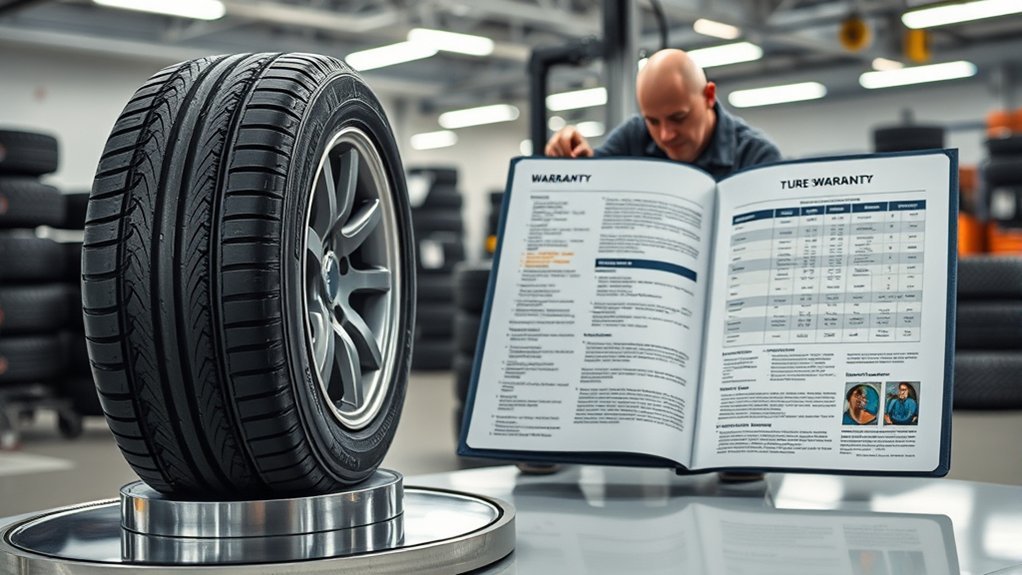
Tire warranties commonly provide protection against eligible defects in materials and workmanship. If the tire becomes unserviceable because of a covered condition, the warranty may provide a free replacement during an initial coverage period or a prorated adjustment later. The exact remedy depends on the written terms.
Some replacement tires also include a separate limited mileage or treadwear warranty. Mileage limits can differ not only by brand but also by tire model, size, speed rating, fitment, and intended use.
A warranty may also contain a short initial period during which an eligible tire receives more generous replacement treatment. After that period, the owner may have to pay a portion of the replacement tire’s cost based on the amount of usable tread already consumed.
The mileage number is only part of a tire warranty. The exclusions, maintenance rules, proration formula, owner eligibility, and out-of-pocket fees can matter just as much.
Free Replacement vs. Prorated Warranty Adjustment
One of the most important details is what happens after a claim is approved.
- Free replacement: An eligible tire may be replaced without charging for the replacement tire during an initial period defined by the warranty.
- Prorated replacement or adjustment: After the initial period, the warranty may credit only the unused portion of the tire toward a replacement.
- Other charges: Mounting, balancing, taxes, disposal, valve stems, or the difference in price for a more expensive tire may still be your responsibility.
Current Starfire warranty terms published by Goodyear, for example, distinguish an initial free-replacement period from later prorated adjustments and state that mounting, balancing, taxes, and certain additional charges remain the owner’s responsibility. Other brands may use different formulas and time limits.
Note: A 60,000-mile or 80,000-mile treadwear warranty does not necessarily mean the manufacturer promises that every tire will physically last that many miles. It defines possible warranty protection if the tire meets the program’s eligibility and maintenance requirements.
[Products Worth Considering]

Black Magic Tire Wet delivers a deep wet-look shine that makes tires appear dark, rich, and freshly detailed. Its long-lasting formula helps resist rain, dust, and road grime for weeks of glossy protection, not days. Apply by spraying onto clean, dry tires—no buffing or wiping required—with a low-sling design to reduce splatter on paint and wheels.

Measure tire tread depth quickly and accurately with this LUMITECO dial gauge that reads in 1/32" increments up to 14/32". The color-coded green/yellow/red zones make it easy to judge tire wear and know when replacement is needed. A rugged, compact design with a protective pouch helps keep the gauge ready for use on cars, trucks, motorcycles, and more.

The SAFELIFE dial tire tread depth gauge measures tread depth in 1/32 inch increments with clear, easy-to-read 2-inch dial face. Color zones using a traffic light system help you quickly judge whether tread is low, marginal, or ample for safer driving. Built with a durable zinc cast body and a metal detect probe for precise, comfortable use across cars, motorcycles, trucks, and buses.
What Tire Warranties Don’t Cover
Just as important as knowing what is covered, you should understand the tire warranty exclusions.
Manufacturer terms vary, but common exclusions can include damage or irregular wear caused by road hazards, incorrect inflation, overloading, improper mounting, wheel misalignment, imbalance, misuse, racing, accidents, chemical damage, vandalism, or failure to follow required rotation practices.
For example, current Starfire limited-warranty information specifically lists road hazards, improper maintenance, underinflation, overloading, wheel misalignment, improper mounting, and failure to follow recommended rotation practices among excluded conditions.
Tire warranties often exclude damage or irregular wear caused by poor maintenance, road hazards, overloading, misuse, or vehicle-related problems.
- Maintenance problems: Incorrect inflation, skipped rotations, or ignored alignment problems can cause irregular wear that may not qualify for treadwear coverage.
- Road hazards: Punctures, cuts, pothole impacts, curb strikes, and similar damage may require separate road-hazard protection.
- Incorrect fitment or installation: Improper rim size, mounting, tire size, load rating, or application can affect eligibility.
- Misuse: Racing, abuse, overloading, or using the tire outside its intended application can invalidate coverage.
- External damage: Accident damage, vandalism, fire, chemicals, or other outside causes may be excluded.
Always read the warranty for the exact tire model you are buying. A general brand warranty page may contain exceptions for specific tire lines, original-equipment tires, commercial use, staggered fitments, or specialty tires.
How Tire Treadwear Mileage Guarantees Work
A treadwear mileage warranty can help when an eligible tire reaches the end of its usable tread before the stated mileage, but only if the warranty’s conditions are satisfied.
| Step | What You Do | Why It Matters |
|---|---|---|
| 1 | Check the exact mileage warranty for your tire size and model. | Mileage coverage can vary within the same brand. |
| 2 | Record the vehicle mileage when the tires are installed. | It establishes the starting point for mileage calculations. |
| 3 | Rotate and maintain the tires as required. | Maintenance can be a condition of treadwear coverage. |
| 4 | Save invoices, rotation records, and service receipts. | The dealer or manufacturer may ask for proof of maintenance. |
| 5 | Watch for uneven wear and correct vehicle problems promptly. | Wear caused by alignment, inflation, or other mechanical problems may be excluded. |
| 6 | Have the tires inspected before they become ineligible. | The damaged or worn tire may need to be available for inspection. |
NHTSA’s TireWise guidance recommends regular pressure, tread, rotation, balance, and alignment attention and says tires should be replaced when tread is worn to 2/32 inch. Warranty eligibility, however, must still be determined from the manufacturer’s written terms.
Why Uneven Wear Can Hurt a Mileage Claim
A mileage warranty is intended to address eligible premature tread wear, not wear caused by a vehicle or maintenance problem. If one shoulder is badly worn because the alignment was incorrect, or a tire shows irregular wear associated with incorrect inflation, the warranty provider may determine that the tire did not fail because of a covered treadwear condition.
The U.S. Tire Manufacturers Association recommends following the vehicle manufacturer’s rotation guidance and notes that misalignment can cause rapid, uneven wear.
Pro Tip: When new tires are installed, keep a photo or digital copy of the receipt, record the odometer mileage, and save every rotation or alignment invoice in one folder. Good records are much easier to produce during a warranty claim than trying to reconstruct the maintenance history later.
Replacement Tires vs. Original-Equipment Tire Warranties
Do not assume tires supplied on a new vehicle have the same warranty as replacement tires purchased later.
Replacement tires are tires you purchase separately from a tire dealer, retailer, or manufacturer network. Their manufacturer warranty may include workmanship protection and, on eligible models, a mileage warranty.
Original-equipment (OE) tires are the tires supplied on the vehicle when it was new. They may follow a separate OE tire warranty, and mileage-warranty benefits can differ from replacement-tire coverage. Michelin, for example, publishes separate warranty information for replacement and original-equipment passenger and light-truck tires.
If you are making a claim on tires that came with a new vehicle, check both the vehicle paperwork and the tire manufacturer’s OE warranty instead of relying on replacement-tire terms.
How to Compare Coverage, Mileage, and Exclusions
To decide whether a tire warranty offers good value, compare more than the advertised mileage number. Put the actual written terms side by side.
| What to Compare | Question to Ask |
|---|---|
| Defect coverage | How long are materials and workmanship defects covered? |
| Mileage warranty | Does this exact tire size and model have treadwear mileage coverage? |
| Free replacement period | Is there an initial period when an eligible tire is replaced without a tire charge? |
| Proration | How is my share of a later replacement calculated? |
| Road hazards | Are punctures and impacts covered, excluded, or protected only by a separate plan? |
| Maintenance | What rotation, inflation, alignment, and recordkeeping rules apply? |
| Owner eligibility | Must I be the original purchaser or original owner? |
| Fees | Who pays mounting, balancing, taxes, disposal, or price differences? |
| Claim location | Must the tire be returned to the original dealer or an authorized retailer? |
| Replacement coverage | What warranty applies to the replacement tire after the claim? |
A warranty with a large mileage number can still be less useful to you if its exclusions are broad, maintenance rules are difficult to meet, or your expected damage is covered only by a separate road-hazard plan.
[Products Worth Considering]

Accurately measure tire tread depth with a calibrated gauge marked from 0 to 1 inch in 1/32 inch increments. The color-coded bar helps you quickly identify tread condition ranges, supporting safe driving for trucks, motorcycles, automobiles, and passenger vehicles.

Measure tyre tread depth precisely with a digital gauge that reads in both MM and inches, helping you monitor safe driving conditions. The large LCD screen is easy to operate, and the compact tool fits for cars, trucks, and motorcycles. It provides high accuracy with a 0-25.4mm range and includes a 1-year warranty for added peace of mind.

Monitor tire tread wear with a smart, color-coded depth gauge that shows clear condition ranges at a glance. The bar is range marked for fast, easy readings, helping you maintain safer traction and performance. Each gauge is portable with a pocket clip, and the set includes 20 units for daily use and sharing.
How to Choose the Best Tire Warranty Value
The best tire warranty value depends on your tires, vehicle, driving conditions, maintenance habits, and how much extra protection costs.
If you drive high annual mileage, a strong treadwear warranty may be valuable, especially if you reliably rotate the tires and keep maintenance records.
If potholes, nails, construction debris, or rough roads are your main concern, compare road-hazard protection instead of assuming a long treadwear warranty solves that problem.
If your vehicle uses different front and rear tire sizes, check the warranty carefully. Some mileage programs use special rules or reduced coverage when the normal rotation pattern cannot be followed.
Also consider the charges left outside the warranty. A “free” tire replacement may not mean every service associated with replacing the tire is free.
Before buying, ask the seller to show you the written warranty for the exact tire model and size. Save a copy with the receipt so you are not trying to locate an older version of the terms years later.
[Products Worth Considering]

Milton S-921 pencil tire pressure gauge helps you maintain optimal tire pressure for passenger cars with accurate readings in PSI and kPa. It features a built-in deflator valve for convenient pressure adjustments, plus a single chuck head and nylon indicator bar for easy use on the go. Built from durable plated brass and designed for reliable performance, it’s a practical road trip and cold-weather maintenance tool.

AstroAI’s heavy-duty digital tire pressure gauge delivers quick, accurate readings with 0.1 increments and a secure valve-stem seal. It features a green backlit LCD and built-in flashlight for easy use in low light, plus an ergonomic non-slip stainless-steel design. The wide 0–230 PSI range works across common vehicle tires, with unit selection and an auto shut-off to save battery.

Steelman white tire marking crayons provide high-contrast, semi-permanent marks for repairing and inspecting tires and equipment. They write on wet or dry, smooth or coarse surfaces including rubber, metal, glass, and wood, making them ideal for puncture location and damage outlining. The lead- and zinc-free crayons resist weather and fading yet wipe away when you no longer need the marks.
How to File a Tire Warranty Claim
The exact process differs by brand and retailer, but a practical claim usually follows these steps:
- Stop using a tire that may be unsafe. If you see a bulge, exposed cords, serious cut, rapid pressure loss, separation, or other significant damage, have it inspected before continuing to drive on it.
- Read the warranty. Confirm the tire, owner, vehicle, mileage, time period, and type of failure appear eligible.
- Gather your documents. Bring the purchase receipt, installation mileage, maintenance and rotation records, and any warranty registration information required by the program.
- Identify the tire. The dealer may need the tire’s DOT Tire Identification Number (TIN), size, model, remaining tread depth, and current vehicle mileage.
- Take the tire to the required location. Depending on the program, that may be the selling dealer or another authorized retailer.
- Allow an inspection. The dealer or manufacturer may inspect the tire to determine whether the condition resulted from a warrantable defect, ordinary wear, a road hazard, vehicle condition, or maintenance issue.
- Review the adjustment before approving replacement. Ask what portion of the new tire is covered and which mounting, balancing, tax, disposal, or other charges you must pay.
- Keep the claim paperwork. Save the replacement invoice and the warranty terms that apply to the replacement tire.
There is no universal warranty-approval time. A straightforward dealer inspection may be resolved quickly, while a claim that requires additional examination, manufacturer authorization, missing records, or special-order replacement tires can take longer.
Frequently Asked Questions
How Do I File a Tire Warranty Claim?
Start with the retailer or authorized dealer specified by the warranty. Bring your proof of purchase, current mileage, tire information, and any required rotation or maintenance records. The tire usually needs to be inspected before the warranty provider decides whether the condition is covered.
Do Tire Warranties Transfer to a New Owner?
Do not assume they transfer. Many replacement-tire warranties require the claimant to be the original purchaser or original owner. If you bought a vehicle with recently installed tires, check the exact manufacturer’s or retailer’s terms before assuming the remaining warranty follows the tires.
What Proof Is Required for Warranty Service?
Requirements vary, but proof of purchase is commonly important. A treadwear claim may also require installation mileage, current mileage, rotation records, maintenance history, and identification of the tire. Keeping receipts from rotations, alignments, and inspections can make the process easier.
Can I Buy Extra Tire Warranty Coverage?
Often, yes. Tire retailers and other providers may offer optional road-hazard or tire-protection plans. Compare the covered hazards, repair rules, replacement limits, coverage period, proration, fees, participating locations, and exclusions before paying extra.
How Long Does Tire Warranty Approval Take?
There is no standard approval time across tire brands and retailers. Timing depends on how quickly the tire can be inspected, whether your documentation is complete, whether manufacturer authorization is needed, and whether the replacement tire is available.
Does a Treadwear Warranty Pay for a Full New Tire?
Not always. Some warranties provide a free replacement only during an initial period. Later claims may receive a prorated credit based on tread already used, and you may still have to pay installation-related charges. Read the exact adjustment formula before buying.
Are Original-Equipment Tires Covered the Same as Replacement Tires?
Not necessarily. Tires installed on a new vehicle can have separate original-equipment warranty terms, and mileage coverage may differ from the coverage offered on replacement tires. Check the tire manufacturer’s OE warranty and your vehicle paperwork.
Conclusion
A tire warranty can add real value, but the headline mileage number tells only part of the story. Before buying, compare defect coverage, treadwear terms, road-hazard protection, free and prorated replacement rules, maintenance requirements, exclusions, owner restrictions, claim procedures, and the fees you may still have to pay.
Keep the purchase receipt and maintenance records from the day the tires are installed. If a claim becomes necessary, those records can help show that the tires were used and maintained according to the warranty terms. Most importantly, read the warranty for the exact tire model and size rather than assuming one brand-wide promise applies to every tire.
Sources
- National Highway Traffic Safety Administration — TireWise — tire pressure, tread, rotation, alignment, tire sizing, and general tire-safety guidance.
- U.S. Tire Manufacturers Association — Tire Care Essentials — rotation, tread inspection, alignment, and maintenance guidance.
- Michelin USA — Warranty Information — examples of manufacturer limited warranties, mileage warranties, satisfaction coverage, and separate replacement/OE terms.
- Goodyear — Starfire Standard Limited Warranty — current examples of free and prorated replacement rules, owner requirements, fees, and exclusions.
- Goodyear — Cooper Standard Limited Warranty — current examples of original-owner requirements and prorated replacement terms.


1 thought on “Tire Warranties: What to Look For Before You Buy”