Hyundai Sonata TPMS Sensor Malfunction: How to Diagnose & Fix
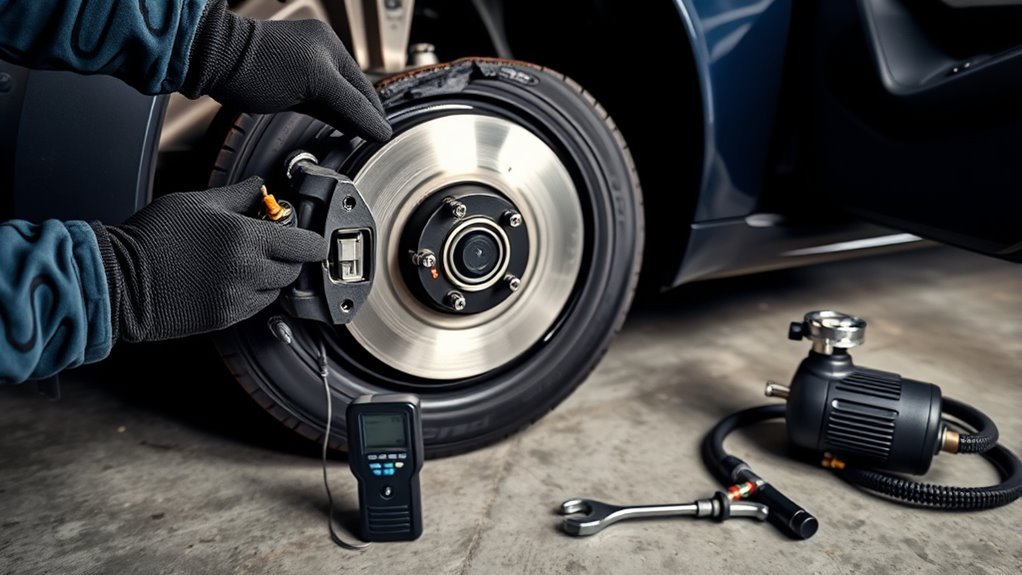
Hyundai Sonata TPMS Sensor Malfunction: Quick Diagnosis
Last updated: July 7, 2026
If your Hyundai Sonata’s TPMS warning light is on, do not reset the system first. Start by checking all four tires for visible damage, then set the tires to the cold pressure listed on the driver-door tire placard or in your owner’s manual. A steady light usually means low tire pressure. A light that flashes for about one minute and then stays on usually points to a TPMS sensor or system malfunction that needs scan-tool diagnosis.
Quick Answer
To fix a Hyundai Sonata TPMS sensor malfunction, check cold tire pressure first, inspect the tires and valve stems, then use a TPMS-capable scan tool to read sensor IDs, pressure, temperature, status flags, and fault codes. If the light flashes for about one minute, the issue is usually a TPMS fault, not simply low air.
Key Takeaways
- A steady TPMS light usually means one or more tires are significantly underinflated.
- A TPMS light that flashes for about a minute and then stays on usually means a sensor, signal, or system fault.
- Use the cold PSI on the door placard, not the maximum PSI printed on the tire sidewall.
- After tire rotation, tire repair, wheel replacement, or sensor replacement, some Sonata models need a menu reset while others need a TPMS relearn tool.
- If the pressure display is missing, readings are wrong, or the light returns after reset, get the system scanned before replacing parts.
At a Glance
| Time Required | 10–30 minutes for pressure checks and reset; longer if a sensor must be diagnosed or replaced |
| Difficulty | Easy for pressure checks; moderate to professional for sensor relearn or replacement |
| Tools Needed | Tire pressure gauge, air compressor, owner’s manual, TPMS-capable scan/relearn tool if the fault remains |
| Cost | Usually free for pressure correction; varies for tire repair, sensor replacement, programming, or shop diagnosis |
Common Symptoms of TPMS Sensor Malfunctions

A Hyundai Sonata TPMS problem usually shows up in one of three ways: a steady warning light, a flashing warning light, or missing/incorrect tire pressure readings. The light pattern matters because the fix is different.
| Symptom | Likely Meaning | What to Do First |
|---|---|---|
| TPMS light stays solid | One or more tires may be significantly underinflated | Check all four tires with a gauge and inflate to the placard PSI |
| TPMS light flashes for about one minute, then stays on | TPMS sensor, signal, receiver, or system malfunction | Scan the TPMS system and check for sensor communication faults |
| Pressure values are blank or unavailable | The vehicle may not be receiving valid sensor data | Check sensor IDs, status flags, and possible radio-frequency interference |
| Readings do not match a tire gauge | Sensor, tire-location, temperature, or calibration issue | Compare cold gauge readings to the cluster display and perform the correct reset/relearn |
Warning: If the low tire pressure warning appears while driving, reduce speed, avoid hard cornering and sudden braking, and stop in a safe place to inspect the tires. Do not keep driving on a tire that looks flat, damaged, or unstable.
Other signs of a Sonata TPMS sensor malfunction include a warning that returns soon after inflation, a light that appears after tire rotation, a missing pressure reading for one wheel, or a warning that started after installing new tires, wheels, or sensors. A weak or non-communicating sensor battery can also cause intermittent faults, but the battery is usually sealed inside the sensor, so the sensor is normally replaced as an assembly.
Overview of the Hyundai Sonata TPMS System
The Hyundai Sonata Tire Pressure Monitoring System is designed to warn you when tire pressure is significantly low or when the monitoring system itself has a fault. In the United States, Federal Motor Vehicle Safety Standard No. 138 requires covered light vehicles manufactured on or after September 1, 2007 to have TPMS that warns of significant underinflation. The exact reset and relearn process can vary by Sonata model year, trim, market, wheel type, and sensor type.
Some Sonata models show individual tire pressure readings on the cluster display. If the TPMS has a malfunction, those individual pressure readings may be unavailable until the fault is fixed. Hyundai also notes that TPMS operation can be affected by conditions such as nearby radio transmitters, power supply cables, certain electronic devices, snow chains, non-original tire sizes, rough roads, incorrect reset procedures, or vehicle overload.
For model-specific instructions, use the Hyundai manuals and warranties resource page or the owner’s manual for your exact Sonata year and trim.
TPMS is a warning system, not a replacement for tire maintenance. You still need to check tire pressure with a quality gauge and inspect tires regularly.
Before You Diagnose: Find the Correct Tire Pressure
Before using a scanner or replacing sensors, confirm that the tires are set to the correct cold pressure. Hyundai defines a cold tire as one that has been parked for at least three hours or driven less than 1 mile. The correct pressure is printed on the Tire and Loading Information label on the driver’s door edge or door pillar. It may also be listed in your owner’s manual. Do not use the maximum PSI printed on the tire sidewall as your target pressure.
- Check pressure when the tires are cold, ideally before driving or after the car has been parked for at least three hours.
- Check all four tires, not just the tire shown on the display.
- Inflate each tire to the placard PSI unless your manual lists different front and rear pressures.
- Recheck pressure after adding air, then perform the correct reset or drive cycle if your Sonata requires it.
- If one tire is repeatedly low, inspect for a nail, bead leak, cracked valve stem, damaged wheel, or slow puncture.
Pro Tip: If the TPMS light comes on during a cold morning and turns off later, the tires may be near the warning threshold. Set the pressure when the tires are cold instead of assuming the system fixed itself.
How to Diagnose TPMS Issues in Your Hyundai Sonata
Use a step-by-step approach so you do not replace good sensors or ignore a tire problem. A generic OBD-II scanner may read engine codes, but TPMS diagnosis usually requires a TPMS-capable scan tool that can trigger wheel sensors and communicate with the vehicle’s TPMS module.
| Diagnostic Step | Action Required | What It Tells You |
|---|---|---|
| 1. Inspect the tires | Look for punctures, sidewall bulges, cracks, flat tires, bent wheels, and leaking valve stems | Confirms whether this is a tire safety issue before it is a sensor issue |
| 2. Check cold pressure | Use a quality gauge and inflate all tires to the placard PSI | Rules out the most common cause of a steady TPMS warning |
| 3. Watch the light pattern | Note whether the warning stays solid or flashes for about one minute first | Separates low pressure from a likely system malfunction |
| 4. Scan the TPMS module | Read fault codes, sensor IDs, pressure, temperature, status flags, and wheel position | Identifies a dead sensor, unregistered sensor, receiver issue, or position mismatch |
| 5. Trigger each sensor | Use the TPMS tool at each wheel near the valve stem | Shows whether each wheel sensor is transmitting |
| 6. Reset or relearn | Follow the owner’s manual menu reset or perform an OBD relearn with the correct tool | Stores the correct pressure baseline or registers new sensor IDs |
If the scan tool shows one sensor missing, dead, or reporting a very weak battery, that sensor likely needs replacement. If all sensors respond but the cluster still shows a warning, the issue may be incorrect sensor registration, a receiver/module issue, interference, incorrect tire/wheel size, or a reset that was performed before the tires were correctly inflated.
[Products Worth Considering]

EVOULTES heavy duty tire inflator with an integrated gauge delivers accurate pressure readings from 10–120 PSI, helping you inflate, deflate, and check tires in one tool. The 16.5-inch extended dual-head air chuck with swivel base reaches hard-to-access dual wheel valves on trucks and RVs. A brass trigger core and side-mounted air release valve make operation smooth, with standard 1/4" NPT threading and quick-connect compatibility for easy setup.
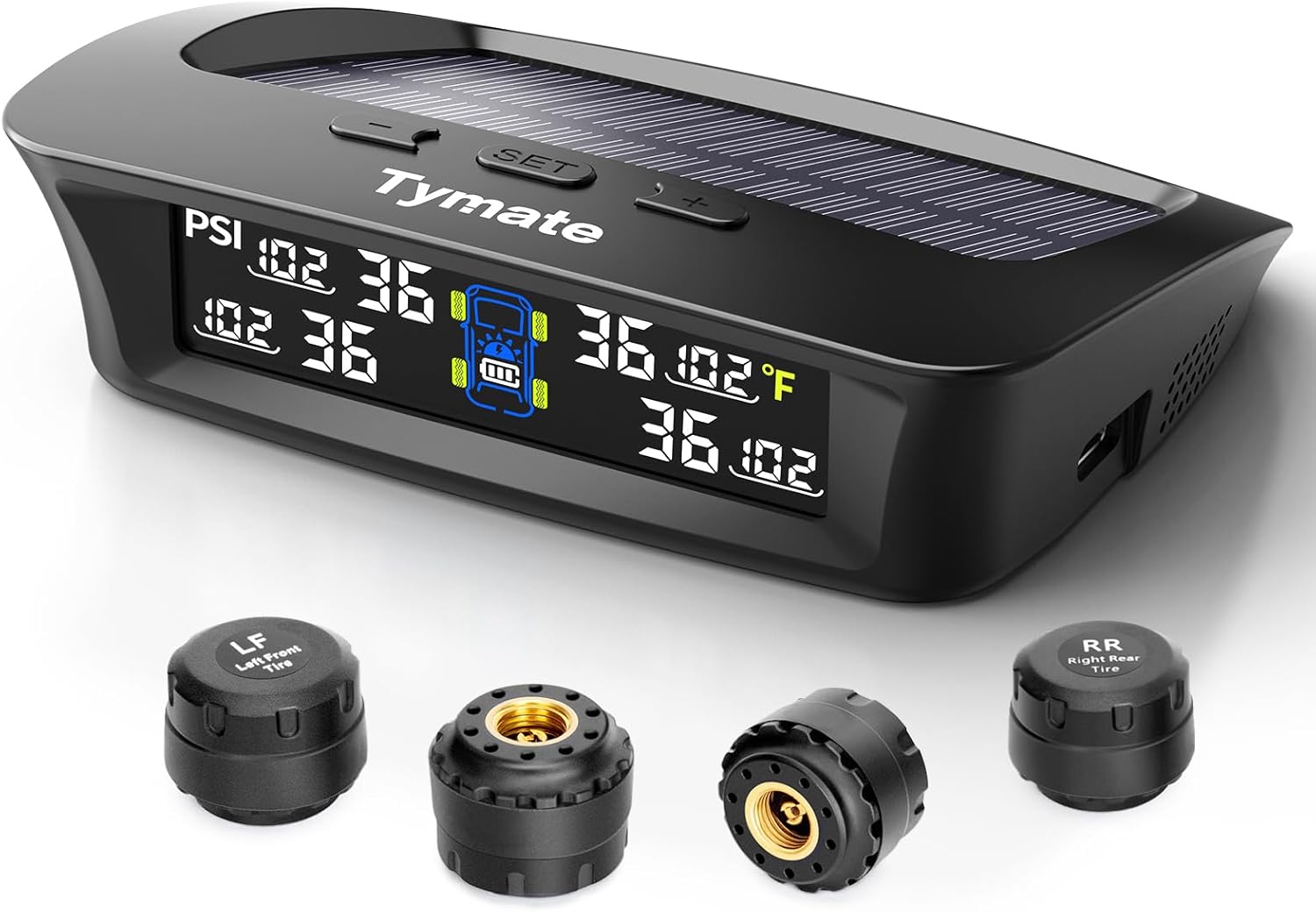
The Tymate TM3 RV TPMS delivers real-time tire pressure monitoring from 0 to 144 PSI with accurate readings and dependable wireless communication. It includes four external sensors with pre-pairing, six alarm modes for rapid leak, pressure extremes, temperature, and signal loss, plus an easy-reference setup for alert thresholds. Solar and USB-C charging help keep the display powered, while the color LCD and adaptive backlight improve visibility for safer driving and towing.

This solid brass tire inflation hose adapter screws into your inflator and uses a locking press clip to securely clamp onto the tire valve stem. It helps reduce air leakage for fast, efficient pumping and is designed for reliable performance with a wide range of vehicles and inflator setups.
How to Reset the TPMS After Sensor Replacement
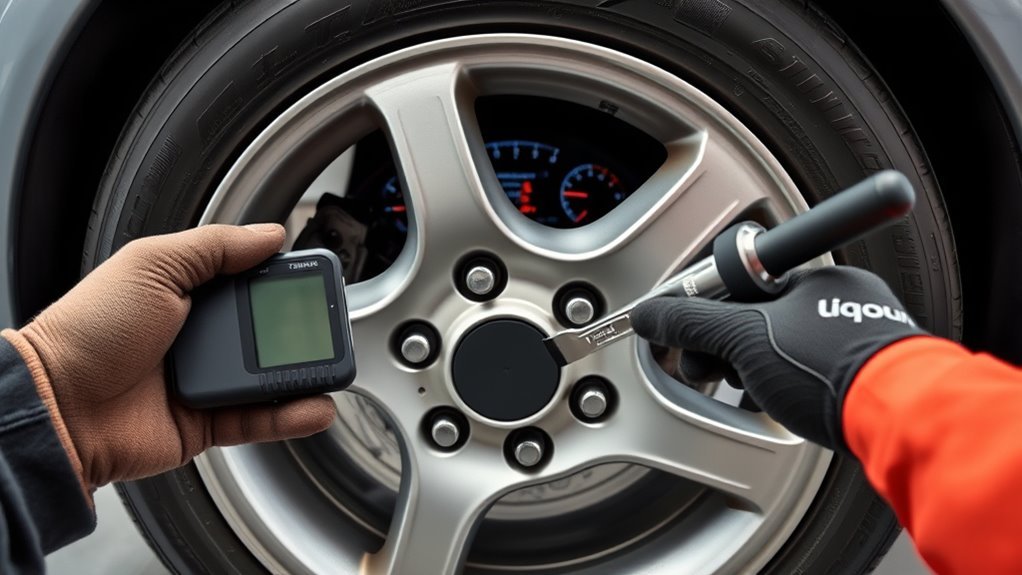
After replacing a TPMS sensor, repairing a tire, rotating wheels, changing tire pressure, or replacing a wheel, your Hyundai Sonata may need a reset or sensor relearn. These are not always the same thing. A reset stores the current tire-pressure baseline on supported systems. A relearn registers sensor IDs and wheel positions so the vehicle knows which sensor belongs to each tire.
| Procedure | When It Applies | What It Does |
|---|---|---|
| Pressure reset | After correcting tire pressure on Sonata models with a Tire Pressure reset menu | Stores the current correct cold pressures as the baseline |
| Sensor relearn | After sensor replacement, wheel replacement, or sensor-position mismatch | Registers sensor IDs and wheel positions with the vehicle |
| Fault diagnosis | When the light flashes for about one minute, readings are missing, or the light returns after reset | Finds a dead sensor, incompatible sensor, receiver issue, interference, or wiring/module fault |
Required Tools and Equipment
- Tire pressure gauge: Needed to confirm cold pressure before any reset.
- Air compressor: Needed to correct low pressure at all four tires.
- Owner’s manual: Needed because reset procedures vary by Sonata year and market.
- TPMS-capable scan/relearn tool: Needed when replacing sensors, reading sensor data, registering sensor IDs, or diagnosing a flashing TPMS malfunction light.
- Correct replacement sensor: Match the sensor to the Sonata’s model year, wheel type, frequency, and part requirements.
Menu Reset Process When Supported
On Hyundai models with a cluster Tire Pressure reset menu, the owner-manual procedure is generally:
- Park safely and set all four tires to the recommended cold tire pressure.
- Turn the vehicle on with the vehicle parked.
- Use the steering-wheel controls to open the cluster menu.
- Select Tire Pressure.
- Press and hold OK, then select Set.
- Confirm that the warning light blinks for about four seconds or that the cluster confirms the tire pressures were stored.
Note: The four-second blink can be a reset confirmation on supported Hyundai procedures. It should not be confused with a malfunction pattern, which is typically flashing for about one minute before staying on.
When a Relearn Tool Is Required
If a new sensor was installed and the vehicle does not recognize it, a menu reset alone may not be enough. The sensor may need to be activated, programmed if it is a programmable aftermarket sensor, and relearned to the vehicle through an OBD-capable TPMS tool. This is common after installing new sensors, replacing wheels, using a second wheel set, or correcting sensor location after rotation.
If your Sonata has no Tire Pressure reset menu, the menu does not store the pressure, or the light continues to flash after the tires are correctly inflated, have the system scanned by a Hyundai dealer, tire shop, or repair shop with TPMS equipment.
Importance of Using Genuine OEM Sensors
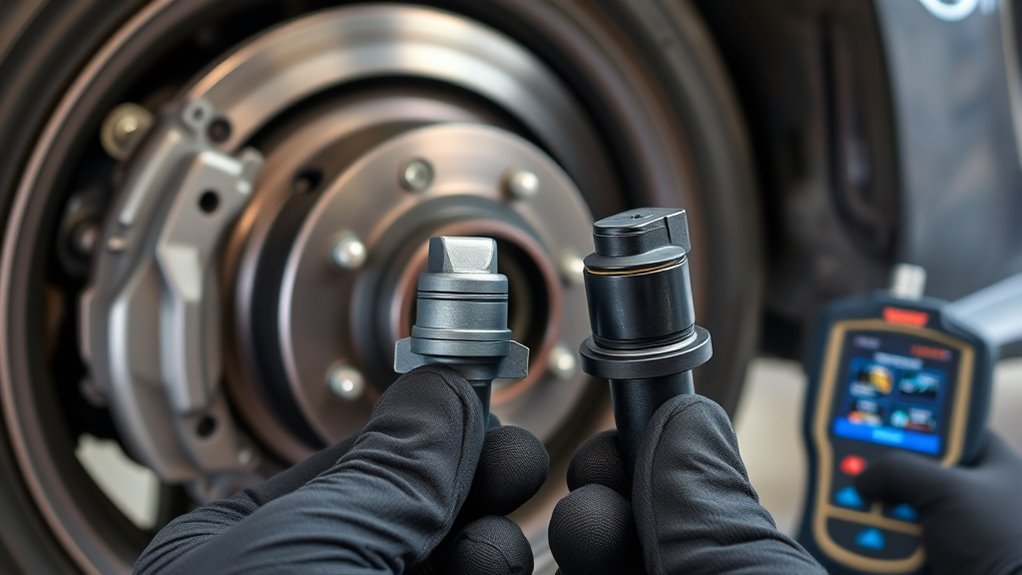
Using the right TPMS sensor is critical. A genuine Hyundai/OEM sensor is usually the safest compatibility choice because it is built for the vehicle’s system requirements. A high-quality aftermarket sensor can also work, but only if it matches the correct frequency, protocol, valve-stem type, and programming requirements for your Sonata.
Be careful with universal sensors that are not programmed, used sensors with unknown battery life, or sensors listed only by appearance. A sensor can fit the wheel and still fail to communicate with the vehicle. If you are not sure which sensor matches your Sonata, use the VIN, owner’s manual, parts catalog, or a qualified Hyundai parts/service department before buying.
[Products Worth Considering]

This multi-function tire valve stem removal tool set makes it fast to remove, install, bleed, and clean valve cores for easier tire maintenance. It includes valve core removers, a 4-way spool tool, replacement valve caps, and spare cores to handle replacements and repairs with confidence. Universal compatibility suits cars, trucks, motorcycles, bicycles, and more for roadside convenience.

This tire valve adapter kit lets you connect a 3/4-inch garden hose to tire valves to fill tires with air or liquid. It includes two adapters for standard bore and large bore valves plus a convenient bleeder valve to release trapped air. Designed for tractor tire tubes and compatible air/water valves and extensions, it’s a practical repair tool for getting back on the road or field quickly.
Effective Solutions for Persistent TPMS Warning Lights
If the TPMS warning light keeps coming back, use the symptom to guide the fix instead of resetting the system repeatedly.
- Light returns after inflation: Recheck all four tires cold. One tire may still be low, or it may have a slow leak.
- One tire keeps losing air: Inspect for a puncture, bead leak, cracked rim, loose valve core, or damaged valve stem.
- Light came on after tire rotation: Perform the owner-manual reset if your Sonata supports it, or have sensor positions relearned.
- Light flashes, then stays on: Scan the TPMS system. Adding air alone will not fix a sensor communication fault.
- Pressure values are missing: Check for a dead sensor, unregistered sensor ID, receiver fault, interference, or incompatible sensor.
- Warning appeared after installing wheels or snow chains: Confirm that the wheels use compatible sensors and that the setup is allowed by your owner’s manual.
- Spare tire was installed: Some vehicles may keep the warning on until the original tire/wheel with the correct TPMS sensor is repaired and reinstalled.
Do not clear TPMS codes without correcting the cause. If the system cannot detect or report low tire pressure correctly, it may not warn you before a tire becomes unsafe.
Maintaining Optimal Tire Pressure for TPMS Functionality
Good tire maintenance prevents many TPMS warnings. Follow the NHTSA tire-pressure guidance: check tire pressure at least monthly, use the vehicle manufacturer’s recommended pressure, and measure pressure when tires are cold. NHTSA reported 511 tire-related crash fatalities in 2024, so treating a TPMS warning as a safety alert is smarter than treating it as a dashboard nuisance.
- Check tire pressure at least once a month and before long trips.
- Use the driver-door placard or owner’s manual for the correct PSI.
- Check all four tires, even if the display identifies only one tire.
- Inspect tread, sidewalls, and valve stems during each pressure check.
- Rotate tires at the interval recommended in your owner’s manual.
- Reset or relearn TPMS only after the tire pressures are correct.
Temperature changes can also trigger warnings. Cold weather lowers tire pressure, so a light that appears in the morning may mean the tire pressure is marginally low. Add air to the correct cold pressure instead of waiting for the light to turn off after the tires warm up.
When to Get Professional Help for TPMS Issues?
Get professional help if the warning light flashes for about a minute and then stays on, if the pressure display is unavailable, or if the light returns after you have set all tires to the correct cold pressure. These signs often require TPMS scan data, sensor activation, sensor ID relearn, or module diagnosis.
| Situation | Best Action |
|---|---|
| Light remains on after cold pressure correction and proper reset | Have the TPMS scanned for faults |
| Light flashes for about one minute, then stays on | Get sensor and module diagnostics |
| New sensor is not recognized | Perform sensor programming/relearn with a TPMS tool |
| Pressure readings are missing or assigned to the wrong wheel | Relearn wheel positions and verify sensor IDs |
| Valve stem is leaking or sensor is physically damaged | Repair the tire/wheel assembly and replace the sensor or service kit if needed |
Replacing a TPMS sensor usually requires tire dismounting, a compatible replacement sensor, and a relearn procedure. If you do not have the right equipment, a tire shop or Hyundai service department can usually diagnose the system faster and more safely than repeated DIY resets.
What to Tell the Shop Before Replacing TPMS Parts
Before approving a sensor replacement, ask the shop to confirm which wheel failed and what scan data proves it. A clear diagnosis should identify the sensor ID, whether the sensor transmits, the displayed pressure and temperature, battery or status flags when available, and whether the vehicle accepted the relearn. This prevents replacing a good sensor when the real issue is low pressure, a slow leak, sensor-position mismatch, interference, or an incompatible wheel setup.
- Ask whether the warning was solid or flashed for about one minute before staying on.
- Ask for the failed wheel position and sensor ID before authorizing replacement.
- Confirm the replacement sensor is compatible with your exact Sonata year, market, and wheel type.
- Ask whether a new valve service kit is included when the tire is dismounted.
- After repair, confirm all four cold pressures match the door placard and the TPMS display reads normally.
Frequently Asked Questions
Where is the TPMS reset button on a Hyundai Sonata?
Not every Hyundai Sonata has a physical TPMS reset button under the steering wheel. Some model years use a Tire Pressure menu in the instrument cluster with steering-wheel controls, while others may need a TPMS relearn tool after sensor replacement. Check the owner’s manual for your exact Sonata year and trim before searching for a button.
Why is my Hyundai Sonata TPMS light flashing and then staying on?
A TPMS light that flashes for about one minute and then remains on usually means the Tire Pressure Monitoring System has a malfunction. Common causes include a dead sensor battery, an unregistered replacement sensor, signal interference, incompatible wheels or sensors, or a receiver/module issue.
Can I drive with the TPMS light on?
You can usually drive a short distance to a safe place or service station if the car feels stable, but you should slow down, avoid hard braking and sharp cornering, and check the tires as soon as possible. Do not keep driving on a tire that looks flat, damaged, or unstable.
Why does my TPMS light stay on after I added air?
The pressure may still be low in one tire, the tires may have been checked while hot, the system may need a reset, or there may be a TPMS malfunction. Recheck all four tires when cold using the door-placard PSI. If the light flashes first or pressure readings are missing, scan the TPMS system.
Do I need genuine OEM TPMS sensors for a Hyundai Sonata?
OEM sensors are the safest compatibility choice, but a quality aftermarket sensor can work if it matches the correct frequency, protocol, valve stem, and programming requirements. The important part is that the sensor is compatible with your Sonata and is properly relearned to the vehicle.
Can a TPMS sensor battery be replaced?
In most wheel-mounted TPMS sensors, the battery is sealed inside the sensor. When the battery becomes weak or the sensor stops transmitting, the usual repair is to replace the sensor and perform the correct relearn procedure.
Will a TPMS reset fix a bad Hyundai Sonata sensor?
No. A reset can store the correct pressure baseline on supported systems, but it cannot revive a dead sensor, fix a weak sensor battery, or register an incompatible replacement sensor. If the light flashes for about one minute before staying on, scan the TPMS system before resetting again.
How long does it take a Hyundai Sonata TPMS light to turn off?
After you set all tires to the correct cold pressure and perform the required reset, the light may turn off after the confirmation step or after a short drive cycle, depending on the model. If it stays on, flashes first, or pressure values remain missing, the system needs TPMS diagnosis.
Conclusion
A Hyundai Sonata TPMS warning is easiest to fix when you read the light pattern correctly. A steady light usually starts with tire pressure: inspect the tires, check all four pressures cold, and inflate to the door-placard PSI. A light that flashes for about a minute and then stays on points to a TPMS malfunction that needs scan-tool diagnosis. Use the correct reset or relearn procedure for your Sonata, choose compatible sensors, and get professional help when the system cannot read sensor data or the warning keeps returning.
Sources
- Hyundai Manuals & Warranties — model-specific owner’s manual lookup for Hyundai vehicles.
- Hyundai TPMS Malfunction Indicator — blinking-then-solid malfunction pattern, missing pressure display, and interference notes.
- Hyundai Resetting TPMS — official pressure-adjustment and cluster-menu reset guidance where supported.
- Hyundai Low Tire Pressure Light — safety cautions, cold-pressure checks, and TPMS limitations.
- NHTSA TireWise Tire Safety — tire-pressure checking, cold inflation pressure, TPMS basics, and monthly tire maintenance.
- 49 CFR § 571.138 Tire Pressure Monitoring Systems — federal TPMS performance standard for covered light vehicles.

Related Articles

7 Winter Tires to Keep Your Hyundai Sonata Safe This Season
You rely on your Hyundai Sonata every day, and winter roads can turn routine drives into risky trips. Choosing the right tires improves safety,…
Read More
7 Snow Tires That Will Transform Your Hyundai Sonata This Season
You rely on your Hyundai Sonata for daily drives, and winter changes everything about traction and stopping distance. Choosing the right tire is one…
Read More
10 Must-Have Summer Tires for Your Hyundai Sonata This Spring
You want a safe, quiet and predictable ride when the temperatures rise, and choosing the right set of summer or touring tires makes a…
Read More