If your Hyundai Sonata’s TPMS light came on after installing new tires, do not assume the tires are bad. In most cases, the warning means one tire is not set to the correct cold pressure, the system needs a reset or relearn, or a wheel sensor was damaged, missing, incompatible, or not programmed during installation.
Quick Answer
A Hyundai Sonata TPMS light after new tires usually means the tire pressure is not set to the driver-door placard PSI, the TPMS was not reset or relearned, or a sensor is damaged, incompatible, missing, or not programmed. Check all four tires cold first, then follow the reset method for your Sonata model year.
Key Takeaways
- A steady TPMS light usually points to low tire pressure; a light that flashes for about a minute and then stays on usually points to a TPMS system or sensor fault.
- Always set pressure when the tires are cold and use the Sonata’s driver-door placard, not the max PSI printed on the tire sidewall.
- Some Sonata models use a cluster-menu reset, while others may need a relearn drive cycle or a TPMS scan tool after sensor replacement.
- If the light appeared right after tire installation, ask the tire shop to scan each TPMS sensor, confirm sensor IDs, inspect valve stems, and verify sensor compatibility.
At a Glance
| Time Required | 10–30 minutes for pressure check and reset; longer if a sensor must be programmed or replaced. |
| Difficulty | Easy for pressure checks; moderate if sensor scanning or programming is needed. |
| Tools Needed | Tire pressure gauge, air compressor, owner’s manual, and a TPMS scan tool if the light stays on. |
| Cost | Usually free if only air pressure and reset are needed; sensor diagnosis, programming, or replacement adds shop charges. |
How to Identify the TPMS Light Activation in Your Hyundai Sonata
Your Hyundai Sonata’s TPMS light is a tire-pressure safety warning, but the pattern matters. A steady low tire pressure light usually means one or more tires are significantly under-inflated. A light that flashes for about one minute and then remains on usually points to a TPMS malfunction, such as a sensor, wheel, tire, or communication problem.
Hyundai owner guidance explains that TPMS is not a replacement for checking tire pressure manually. It is a warning system that helps alert you when tire pressure is low or when the system cannot monitor pressure correctly. The safest first step is to check all four tires with a reliable gauge and compare the readings with the recommended cold tire pressure on the driver-side placard.
Warning: Do not ignore a flashing TPMS light. If it flashes for about a minute and then stays on, the system may not be able to detect or warn you about low tire pressure correctly.
Why Is Your TPMS Light On After New Tires?
If the TPMS light came on right after installing new tires, the cause is usually connected to the tire service. Here are the most common reasons:
- Incorrect cold tire pressure: The tires may look fine but still be below the recommended pressure. Check them cold, ideally before driving or after the vehicle has been parked for several hours.
- No reset or relearn was completed: Some Sonata models need the current tire pressure saved through the cluster menu after tires are replaced, repaired, rotated, or adjusted.
- Sensor damage during tire installation: TPMS sensors are mounted inside the wheel near the valve stem. They can be damaged if the tire is removed or mounted carelessly.
- Incompatible or unprogrammed sensors: New sensors must match the vehicle and may need to be registered with the car before the TPMS can read them.
- Wrong wheel, alternate tire, or missing sensor: Replacement wheels or a spare tire without a TPMS sensor can trigger a warning.
- Cold weather pressure drop: Tire pressure falls when temperature drops, so a tire set correctly in warm weather may trigger the TPMS in colder conditions.
The U.S. tire-pressure standard, FMVSS No. 138, requires TPMS to warn drivers about significant tire under-inflation. But the system does not remove the need for routine tire checks.
Check Tire Pressure Before Resetting the TPMS
Before you reset anything, confirm that tire pressure is correct. Resetting TPMS while the tires are under-inflated can store the wrong baseline and cause unreliable warnings.
- Find the correct PSI: Look at the tire and loading information placard on the driver-side door jamb or center pillar.
- Check the tires cold: Use a tire pressure gauge before driving or after the car has been parked long enough for the tires to cool.
- Adjust all four tires: Inflate each tire to the recommended cold pressure. Do not use the maximum PSI printed on the tire sidewall as your target.
- Inspect the valve stems: Look for cracked, loose, bent, or leaking stems, especially if the warning appeared immediately after tire service.
- Recheck after a few minutes: If one tire quickly loses pressure again, suspect a leak, bead-seal issue, puncture, or valve-stem problem.
NHTSA tire-safety guidance recommends checking tire pressure when tires are cold and using the vehicle placard or certification label for the correct pressure.
Pro Tip: If the TPMS light came on the morning after new tires were installed, check pressure before driving. A cold overnight temperature drop can be enough to expose a tire that was set slightly low.
Steps to Reset Your Hyundai Sonata TPMS
Hyundai Sonata TPMS reset steps vary by model year and equipment, so the exact method in your owner’s manual matters. Do not rely on a generic “button under the steering wheel” instruction unless your specific Sonata actually has that button or menu option.
For Hyundai systems that support a cluster-menu TPMS reset, the official-style process is:
- Set all tire pressures first: Adjust every tire to the recommended cold inflation pressure.
- Park the vehicle safely: Turn the vehicle on as instructed in your owner’s manual, but do not start driving during the reset step.
- Open the tire-pressure screen: Use the steering-wheel controls to select the Tire Pressure screen in the instrument cluster.
- Save the current pressure: Press and hold the OK button and select Set if your vehicle displays that option.
- Confirm the reset: The warning light may blink for a few seconds or the cluster may show a message such as “Tire pressures stored.”
- Drive if required: Some systems need a short drive before readings update or the warning turns off.
Hyundai’s TPMS reset instructions say to adjust tire pressure first, use the cluster Tire Pressure menu on supported systems, hold OK, and confirm the reset. If your Sonata does not show this menu, the vehicle may use a different relearn method or require a TPMS-capable scan tool.
Note: If new TPMS sensors were installed, a reset alone may not be enough. The sensor IDs may need to be programmed or relearned with a TPMS scan tool.
How to Troubleshoot a Persistent TPMS Light
If the TPMS light stays on after the tires are inflated and the reset procedure is completed, work through the problem in order. This avoids replacing sensors when the real issue is pressure, a leak, or a missed relearn.
- Check all four tires again cold: Do not trust visual inspection. A low tire can look normal.
- Watch the light pattern: A steady warning points first to pressure. A flash-then-solid pattern points to a TPMS malfunction.
- Check for leaks: Ask the installer to inspect bead seating, valve cores, valve stems, punctures, and wheel damage.
- Scan each sensor: A tire shop should use a TPMS scan tool to confirm every sensor transmits, has the correct frequency, and shows a valid pressure reading.
- Verify sensor IDs: If sensors were replaced, the vehicle may need the new sensor IDs relearned.
- Confirm wheel and tire compatibility: Replacement wheels, alternate tire sizes, or missing sensors can prevent normal TPMS operation.
- Check the spare situation: If a spare tire is installed and it does not have a TPMS sensor, the warning may remain on until the original wheel is repaired and reinstalled.
A basic OBD-II code reader may not be enough for this job. Ask for a TPMS scan, not just an engine-code scan.
Why Proper Sensor Installation Matters
Proper sensor installation is essential because the TPMS sensor sits inside the wheel near the valve stem. During tire mounting, a careless tool angle, wrong valve service kit, or incompatible replacement sensor can create a warning that did not exist before the tire change.
[Products Worth Considering]

The VEHLIVE SU-50448 II TPMS relearn tool provides a fast activation reset to restore accurate tire pressure monitoring after sensor replacement or tire rotation. It supports 315 MHz and 433 MHz GM series sensors and helps clear dashboard pressure warnings. With simple two-button operation and horn-confirmed relearning order, you can reprogram sensors conveniently at home.
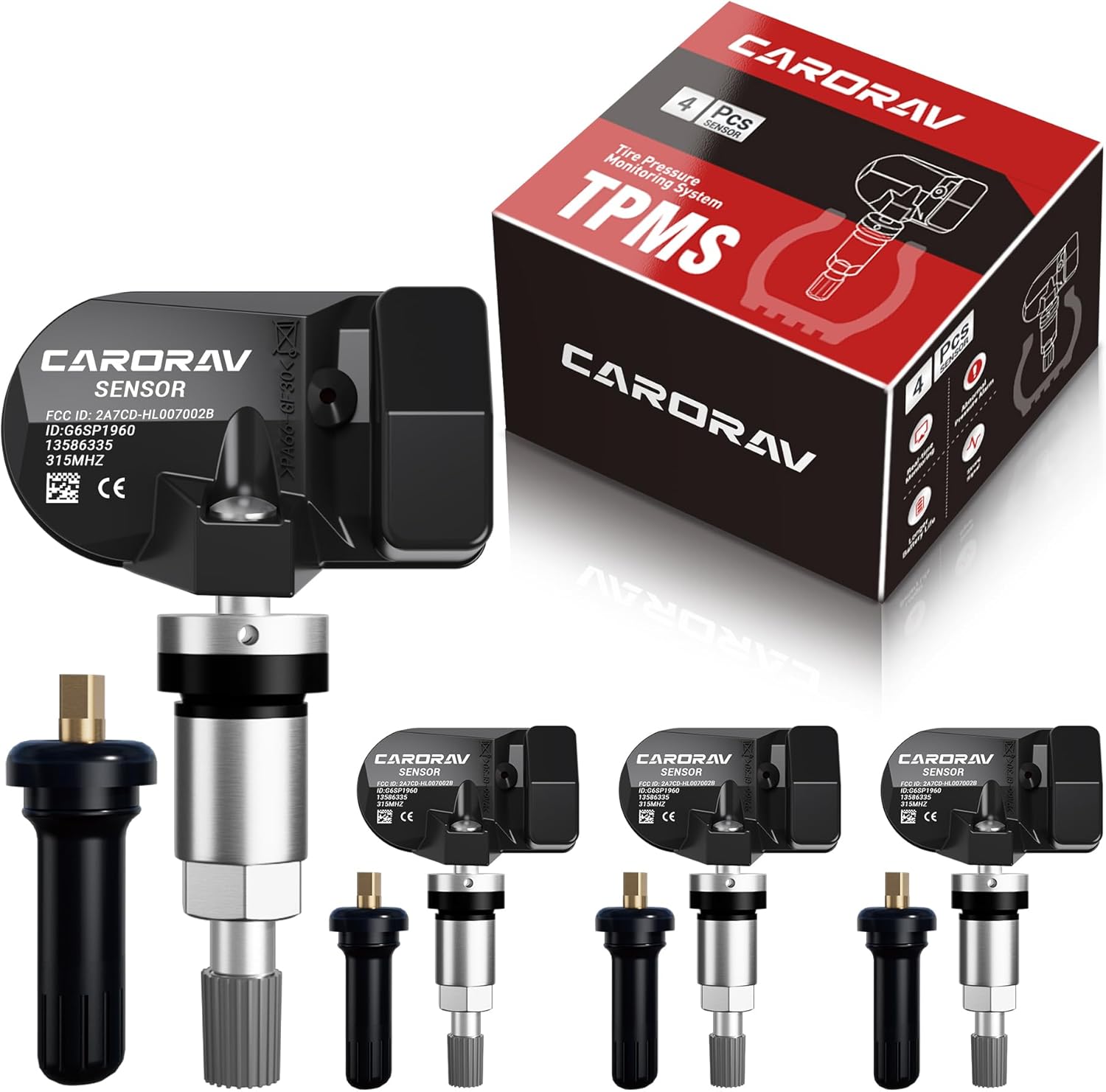
Replace worn or missing TPMS sensors with CARORAV pre-programmed GM-compatible sensors for a smoother installation experience. These 315MHz replacement sensors help monitor tire pressure in real time with long battery life, and they are designed to withstand harsh temperatures. Manual or OBDII relearn may be required to reset the system for proper recognition.
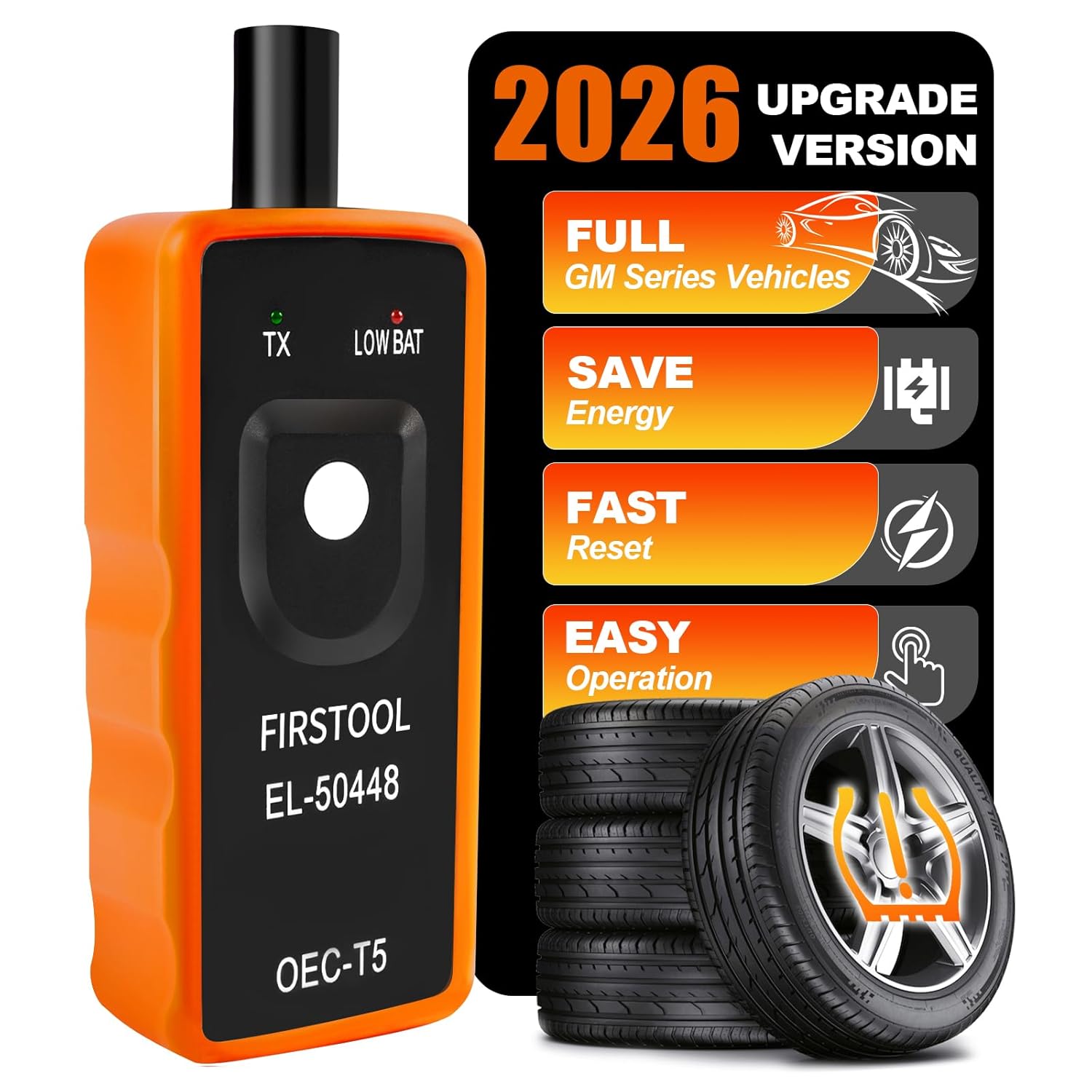
This TPMS relearn tool helps you quickly activate, match, and reset GM tire pressure sensors to keep the vehicle monitoring system working properly. It clears tire pressure alarms and dashboard warning lights after sensor replacement or tire rotation, and supports learning for common 315/433 MHz TPMS sensors. Designed for simple one-button operation, it can help you avoid unnecessary trips to repair shops.
Importance of Accurate Placement
Correct placement helps the sensor transmit reliable pressure data to the vehicle. A sensor that is loose, cracked, incorrectly seated, or damaged can cause missing readings, a flashing TPMS malfunction indicator, or a warning that returns after every reset.
During tire service, the shop should inspect the sensor body, valve stem, seal, washer, nut, and valve core. If the valve stem leaks or the sensor is physically damaged, resetting the system will not solve the problem.
Sensor Compatibility Considerations
Not every sensor sold online will work correctly with every Sonata. Sensor frequency, protocol, fitment, and programming requirements must match the vehicle. If the shop installed new sensors, ask whether they used OEM sensors, programmable aftermarket sensors, or universal sensors, and whether those sensors were programmed before installation.
Compatibility matters most when all four tires are new, the wheels were replaced, or the light started flashing immediately after installation. A TPMS scan tool can usually show whether each sensor is awake and transmitting.
Impact on System Functionality
When the system cannot read a sensor, the TPMS may not be able to warn you if a tire becomes dangerously under-inflated. That is why a flashing malfunction indicator deserves quick attention, especially before a long trip or highway drive.
A TPMS warning is not just a dashboard annoyance. It can mean either low tire pressure or that the system cannot monitor tire pressure correctly.
Understanding TPMS Sensor Replacement Costs
TPMS sensor replacement costs vary by model year, sensor type, location, and labor rate. Exact prices change often, so it is better to think in terms of what you are paying for: the sensor, valve-stem service parts, tire dismounting and mounting if needed, balancing, and programming or relearning.
[Products Worth Considering]

Replace your worn or missing TPMS sensors with pre-programmed, direct-fit sensors for compatible Ford, Lincoln, and select Mazda models. Each sensor comes ready to activate with a scan tool, helping restore accurate tire pressure monitoring and trouble-free installation. Built with a long-life CR2032 battery and tested before factory release, this set provides dependable performance with a one-year warranty.

This TPMS sensor training and relearn reset tool is customized for Ford, Lincoln, and Mercury vehicles to help activate tire pressure programming after sensor replacement or tire rotation. It can activate individual tire pressure sensors with one-button operation, helping prevent TPMS warning light illumination. It is not a sensor programming tool and cannot program replacement sensors—use it to trigger/activate sensors only.

The UYYE TPMS relearn tool helps activate and relearn tire pressure monitor sensors quickly, typically in minutes. It supports TPMS learn mode resetting using a simple three-step process: enter learn mode, position the tool near the valve stem, and press the learn button. Designed for specific GM models, it streamlines sensor programming and reduces trips to dealers or tire shops.
TPMS Sensor Pricing Overview
If a sensor is still original and the vehicle is several years old, battery age may be a factor because most TPMS sensor batteries are sealed inside the sensor. Once the battery fails, the sensor is normally replaced rather than recharged.
When comparing parts, confirm the sensor is compatible with your Sonata’s exact model year and wheel setup. The cheapest sensor is not a bargain if the vehicle cannot read it.
DIY vs. Professional Costs
Adding air and performing a menu reset are reasonable DIY steps. Replacing or programming sensors is different because the tire may need to be removed from the wheel, the sensor must be installed without damage, and the vehicle may need a relearn procedure.
Most drivers should return to the tire installer if the light appeared immediately after new tires were installed. A reputable shop can scan the sensors, confirm whether the problem is installation-related, and correct a missed relearn.
Warranty Considerations and Coverage
If your Sonata is still under warranty, check your warranty booklet and ask a Hyundai dealer whether the TPMS concern is covered. If the issue began directly after tire installation, also ask the tire shop whether they warranty sensor damage, valve-stem leaks, or programming errors from the service.
What to Do If the TPMS Light Stays On After Resetting?
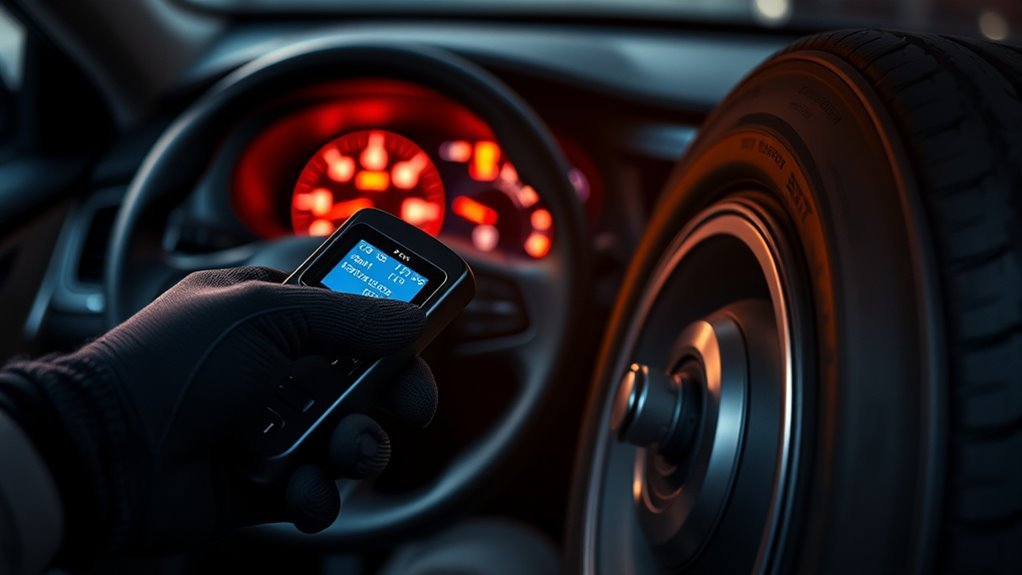
If the TPMS light stays on after resetting, do not keep repeating the reset without checking the cause. A persistent warning usually means pressure is still wrong, a tire is leaking, the reset did not save, or the system cannot read one or more sensors.
Use this decision path:
- Light is steady: Recheck all tires cold and inflate to the placard pressure. If one tire is low again, look for a leak.
- Light flashes for about a minute, then stays on: Treat it as a TPMS malfunction. Ask for a sensor scan and relearn check.
- Light started after sensor replacement: Confirm the new sensors were programmed and the vehicle learned the new IDs.
- Light started after a spare tire was installed: The spare may not have a TPMS sensor. Repair and reinstall the original sensor-equipped wheel as soon as possible.
- Car feels unstable: Slow down, avoid hard steering or braking, and pull over safely. Do not continue driving on a tire that may be severely under-inflated.
Hyundai’s TPMS tire-change guidance notes that each wheel has a tire pressure sensor behind the valve stem, except the spare tire where applicable. It also warns that unapproved tire sealant may damage the sensor.
What to Ask the Tire Shop
If your TPMS light came on right after new tires, go back with specific questions. This makes the visit faster and helps avoid vague answers.
- Did you scan all four TPMS sensors before and after installing the tires?
- Are all four sensors transmitting pressure readings?
- Were any valve stems, seals, or sensor service kits replaced?
- Were any sensors damaged during dismounting or mounting?
- If new sensors were installed, were they programmed for my Sonata?
- Did you complete the Hyundai TPMS relearn or reset procedure?
- Is any wheel leaking at the bead, valve core, or valve stem?
Note: Keep your tire receipt. If the TPMS problem began immediately after installation, the shop may correct a missed relearn, leaking valve stem, or damaged sensor under its service policy.
[Products Worth Considering]

Replace worn or missing TPMS sensors with a pre-programmed 4-pack designed for compatible GM vehicles. These 315MHz sensors provide real-time tire pressure monitoring and alert you if pressure is too high, too low, or if a rapid air leak occurs. Most installations are ready with minimal relearn effort after mounting, helping improve safety and driving confidence.

Replace worn or malfunctioning GM TPMS sensors with this 433MHz pre-programmed sensor set designed for compatibility with many Chevrolet, Buick, GMC, and Cadillac models. It includes guidance for proper OBDII relearning/pairing after installation and supports reliable long-term operation with a high-performance CR2032 battery. Quality tested for durability and performance to help restore accurate tire pressure monitoring.

Masoll Gen 2 external TPMS sensors are a DIY replacement set of 4 for select GM vehicles made after 2006, helping you shut off the TPMS warning light quickly. Simply screw the sensors onto the tire valves and sync to your car ECU using the included EL-50448 relearn tool. Dual-frequency 315/433 MHz design provides OEM-level performance with accurate readings and replaceable batteries for about two years.
Frequently Asked Questions
Can I drive with the TPMS light on?
You can usually drive carefully to a safe place or service station, but you should not ignore the warning. Reduce speed, avoid hard cornering and sudden braking, and check tire pressure as soon as possible. If the vehicle feels unstable, pull over safely.
Does tire brand affect TPMS functionality?
Tire brand alone usually does not cause a TPMS warning. Problems are more often related to incorrect pressure, incompatible tire or wheel size, missing sensors, damaged sensors, or replacement sensors that were not programmed correctly.
How often should I check my tire pressure?
Check tire pressure at least once a month, before long trips, after major temperature swings, and whenever the TPMS light comes on. Always check pressure when the tires are cold and use the vehicle placard pressure.
What if my TPMS light blinks instead of staying on?
A TPMS light that flashes for about one minute and then stays on usually means the system has a malfunction. After new tires, this often points to a damaged sensor, incompatible sensor, missing sensor, or sensor relearn problem.
Are there specific tires compatible with my Sonata’s TPMS?
The TPMS sensors must be compatible with your Sonata, and the tires and wheels must match the vehicle’s approved specifications. If you changed wheel size, used alternate wheels, or installed new sensors, ask the shop to verify compatibility and sensor programming.
Why did the TPMS light come on after tire rotation?
After rotation, some systems need the current tire positions or pressures relearned. First set all tires to the correct cold pressure, then follow the reset or relearn procedure in your owner’s manual.
Can tire sealant damage a TPMS sensor?
Yes. Hyundai warns that tire sealant not approved for the vehicle may damage the tire pressure sensor. If sealant was used, tell the tire shop before they diagnose or replace the sensor.
Conclusion
If your Hyundai Sonata’s TPMS light stays on after new tires, start with the basics: check all four tires cold, inflate them to the driver-door placard pressure, and follow the reset or relearn method for your exact model year. If the light flashes or returns after reset, have the tire shop scan the sensors and confirm compatibility, programming, valve-stem condition, and leaks. A working TPMS helps protect tire life, handling, braking, and safety, so treat a persistent warning as something to fix, not something to ignore.
Sources
- Hyundai Owner’s Manual — Resetting TPMS — supports the pressure-first reset process and cluster-menu reset guidance.
- Hyundai Owner’s Manual — Tire Pressure Monitoring System — supports low-pressure warnings, malfunction indicator behavior, and TPMS limitations.
- Hyundai Owner’s Manual — Changing a Tire with TPMS — supports sensor location, spare-tire behavior, and tire-sealant warning.
- NHTSA TireWise — supports checking tires cold and using the vehicle placard pressure.
- eCFR — 49 CFR § 571.138, Tire Pressure Monitoring Systems — supports the federal TPMS purpose and warning requirements.