
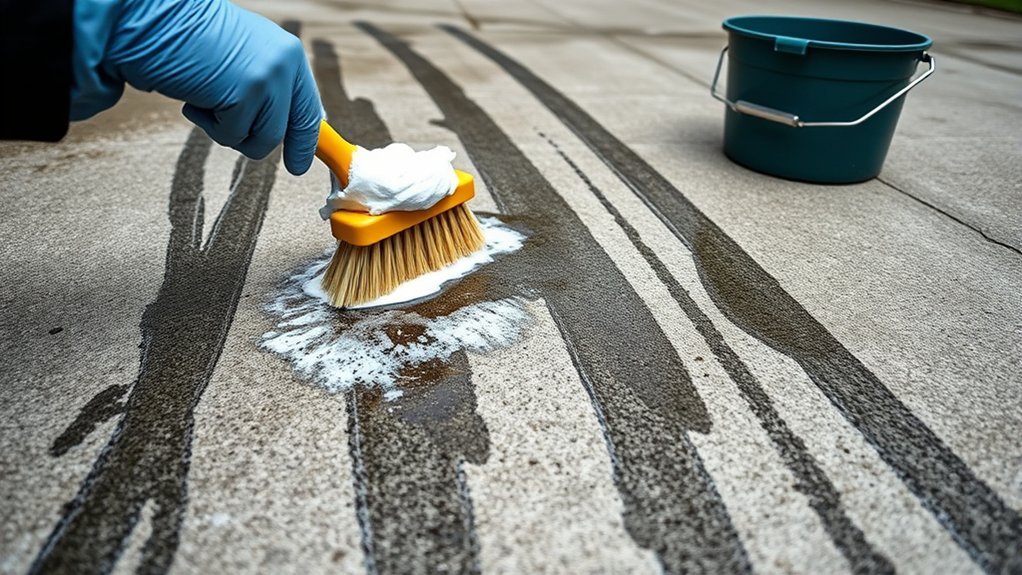
Tire marks on concrete usually come from hot rubber, vehicle weight, and repeated turning or parking in the same spot. The good news is that most marks can be lifted with a concrete-safe degreaser, firm scrubbing, and a thorough rinse. People often call the slab “cement,” but cement is only one ingredient in concrete, so this guide focuses on cleaning concrete driveways, garage floors, patios, and coated slabs without damaging the surface.
Quick Answer
To remove tire marks from concrete, sweep the area, rinse it, apply a concrete-safe degreaser, let it dwell without drying, scrub with a stiff-bristled brush, and rinse thoroughly with a hose or pressure washer. For stubborn stains, repeat the process before trying stronger spot treatments.
Key Takeaways
- Start with the least aggressive cleaner: dish soap for fresh marks, then a concrete-safe degreaser for darker rubber transfer.
- Let the cleaner dwell long enough to loosen residue, but do not let it dry on the concrete.
- Use a stiff nylon brush on bare concrete and a softer brush on epoxy, sealed, or painted floors.
- Rinse until the runoff is clear so loosened rubber and cleaner residue do not settle back into the pores.
- Use solvents only as a last resort, and test first because they can damage sealers and coatings.
At a Glance
| Time Required | 30 to 75 minutes, depending on dwell time and how dark the marks are |
| Difficulty | Easy to moderate |
| Tools Needed | Broom, hose or pressure washer, stiff nylon brush, bucket, gloves, eye protection, and optional floor scrubber |
| Cost | Usually $10 to $40 for cleaner and basic supplies if you already own a brush and hose |
How to Remove Tire Marks From Concrete
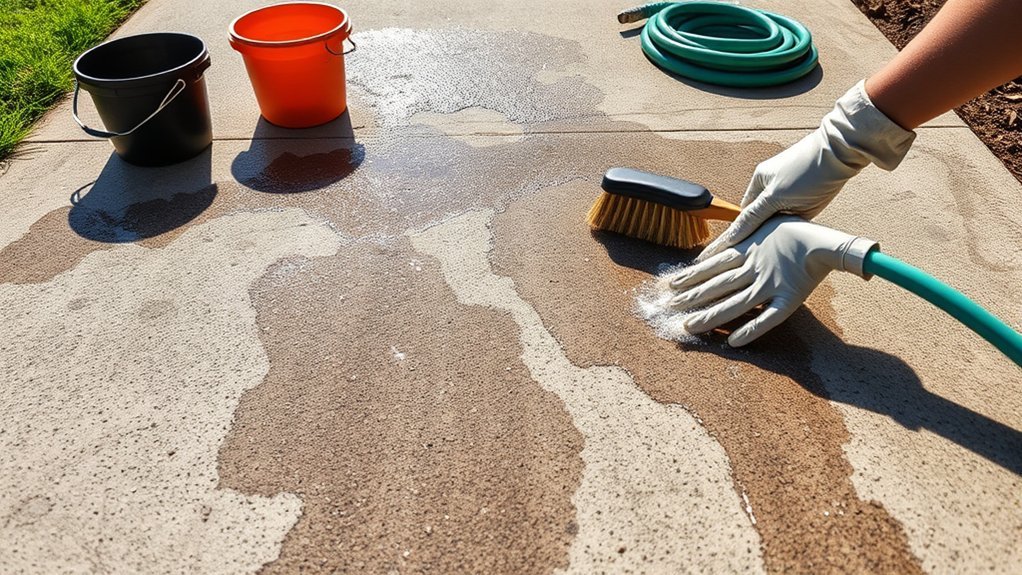
The best method is simple: loosen the rubber residue, scrub it while wet, and rinse it away before it settles back into the slab. Tire marks can sit on the surface, soak into porous concrete, or cling to a sealer. That is why one quick rinse often is not enough.
- Clear the area. Move vehicles, mats, tools, furniture, and anything that blocks the stain.
- Sweep first. Remove sand and grit so you do not grind debris into the concrete while scrubbing.
- Pre-rinse the slab. Wetting the concrete helps prevent the cleaner from soaking in too fast.
- Apply a concrete-safe degreaser. Use a product labeled for concrete, masonry, driveways, or garage floors. Follow the label dilution instructions.
- Let it dwell. Give the cleaner several minutes to work. For heavy marks, 20 to 30 minutes may help, but keep the area wet the whole time.
- Scrub with a stiff nylon brush. Work in overlapping passes until the dark mark starts to fade.
- Rinse thoroughly. Use a strong hose nozzle or pressure washer, then inspect the slab while it is still damp.
- Repeat if needed. Old, hot-tire marks often need two cleaning cycles.
Pro Tip: Do not let degreaser dry on the concrete. If the surface starts drying during the dwell time, mist it with water or add a little more cleaner so the loosened rubber stays suspended until you rinse.
Choose the Right Concrete Cleaner
Choose the cleaner based on the surface, not just the darkness of the tire mark. Bare concrete can handle more scrubbing than a coated garage floor, while sealed, painted, epoxy, or polyaspartic floors need gentler treatment.
| Surface or Stain Type | Best First Cleaner | Important Caution |
|---|---|---|
| Fresh, light tire marks | Warm water and dish soap | Works best before rubber residue bakes in. |
| Bare concrete driveway or garage slab | Concrete-safe degreaser | Spot test if the slab is colored, decorative, or previously sealed. |
| Epoxy, painted, or coated garage floor | Non-filming detergent or coating-safe cleaner | Use a softer brush and avoid harsh solvents unless the coating maker allows them. |
| Old or stubborn black marks | Repeat degreaser treatment | Repeat before escalating to solvents. |
| Small spot that will not lift | Carefully tested solvent spot treatment | Solvents can strip sealers, soften coatings, and create fire or health risks. |
A cleaner such as Simple Green Pro HD is marketed as a concentrated cleaner and degreaser, and its instructions emphasize spot testing, allowing contact time, not letting the cleaner dry, and rinsing or wiping the surface. For lower-impact options, you can also check the EPA Safer Choice product search and look for cleaners appropriate for concrete, masonry, driveways, or degreasing.
[Products Worth Considering]
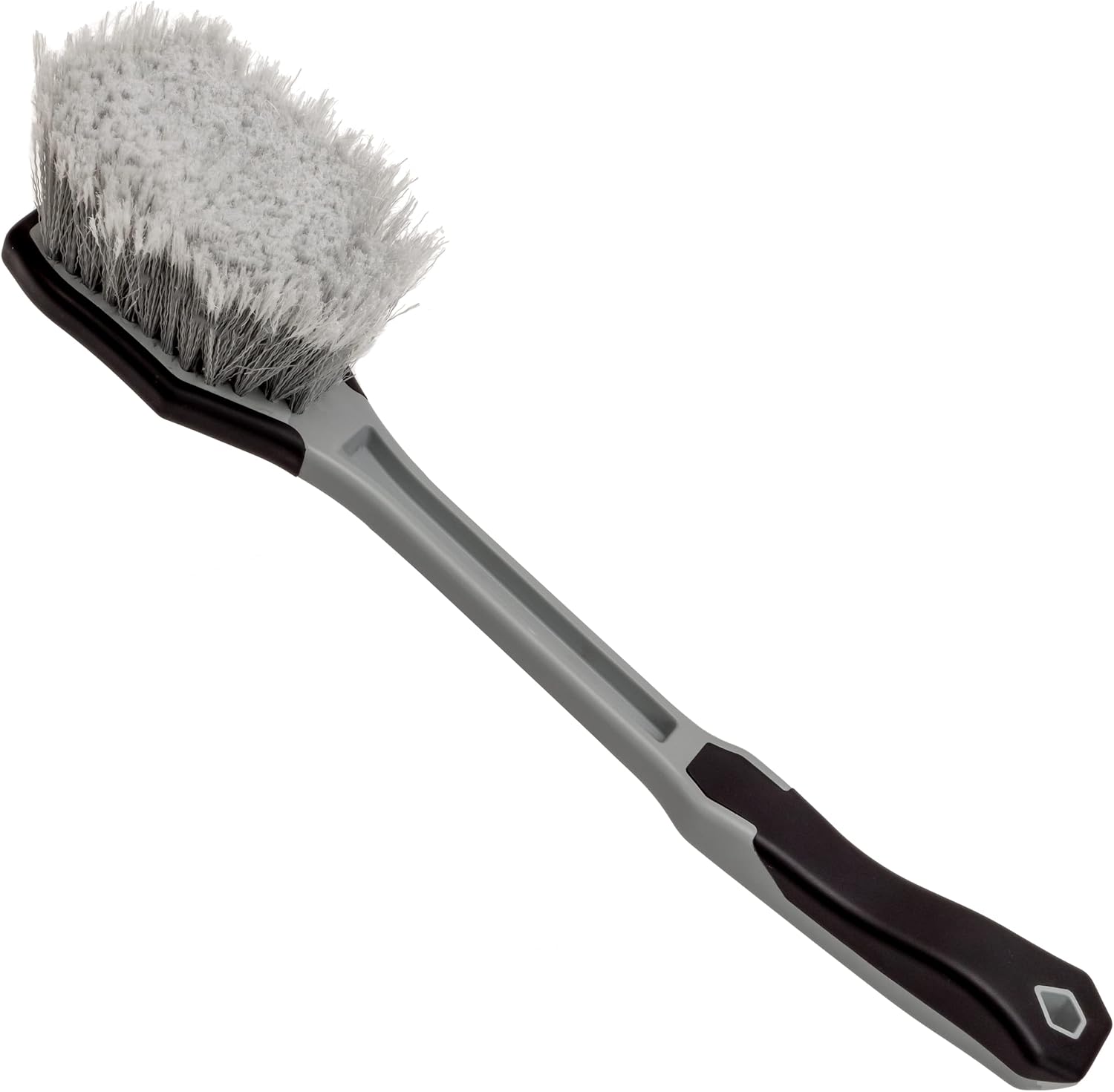
Clean grills, fenders, fender flares, bumpers, and wheel wells with a long-handled brush built for detailed car washing. The soft, triple-flagged bristles and dense scrub coverage help lift dirt gently while making coverage fast and easy. Use it with your favorite car wash soap for tires and exterior surfaces, and it also works for bike, motorcycle, boat, or RV cleaning.

RecDec pressure washer shower nozzle tips deliver a quick-connect misting spray for car washing, outdoor cleaning, and gentle watering tasks. The stainless steel adapter features instant plug-and-play installation with a 1/4 inch quick connect for compatibility with most high-pressure washers. Choose from multiple screen hole sizes for different spray intensities and easily attach or remove as needed.

Clean wheels and rims with soft feathered bristles that safely remove dirt and road grime while helping restore original luster. The short non-slip handle makes it easy to scrub in tight wheel wells, and the brush is suitable for vehicles and hard-to-reach areas. It can also be soaked and rubbed to help restore bristles to their shape after use.
Degreaser Selection
The right degreaser should break down rubber residue without damaging the slab. Look for wording such as “concrete,” “masonry,” “driveway,” “garage floor,” “rubber marks,” or “oil and grease removal.” Avoid cleaners that leave a waxy or oily film, because residue can attract more dirt and make the next set of tire marks harder to remove.
- For bare concrete: use a concrete degreaser and a stiff nylon brush.
- For sealed concrete: use the mildest cleaner that works, then rinse quickly and completely.
- For epoxy or polyaspartic floors: use a non-filming detergent recommended for coated floors and avoid abrasive pads.
- For decorative concrete: test first in a hidden area because cleaners can dull color or affect the sealer.
Safe Surface Use
Always spot test before treating the full stain. Apply a small amount of diluted cleaner in a hidden corner, wait a few minutes, scrub lightly, rinse, and let it dry. If the test area turns dull, sticky, cloudy, or discolored, switch to a milder cleaner.
Warning: Do not mix cleaners. Avoid combining degreasers, bleach, ammonia, acids, or solvents. Mixing chemicals can create dangerous fumes or damage the concrete finish.
Prep the Concrete Before Cleaning
Good prep makes the cleaner work better and protects the area around the stain. Start by clearing the concrete of loose dirt, leaves, sand, and small stones. Move vehicles and furniture out of the way so you can scrub without dragging grit across the surface.
Cover nearby plants, painted trim, metal doors, and delicate finishes with plastic sheeting if you plan to use a stronger degreaser. Block cleaner runoff from flowing into storm drains, lawns, or garden beds when possible. If you are cleaning inside a garage, open the door for ventilation and keep children and pets away until the floor is fully rinsed and dry.
Choose a cooler part of the day. Direct sun and hot concrete can make cleaner flash-dry before it has time to loosen rubber residue. A shaded slab gives you more dwell time and better control.
[Products Worth Considering]

The SPTA wheel and tire brush kit makes it easy to remove dirt from wheels, rims, and hard-to-reach areas without needing a high pressure washer. Ergonomic handles and soft, chemical-resistant bristles help you clean faster while reducing the risk of scratching. The set is versatile for cars, trucks, motorcycles, bicycles, RVs, boats, and more.

Restore faded, dull tires to a rich black satin finish in minutes with a spray-on, wipe-off formula. Graphene and acrylic polymers create a durable, sling-free coating that resists water and dirt while helping prevent UV-related fading and cracking. Build your preferred look by applying additional layers for sleek satin to showroom gloss.

Rubber Care delivers a beautiful dark black satin/matte finish on tires and other rubber or plastic surfaces, drying to the touch without oily shine. Its ceramic aircraft-grade formula helps repel dirt and brake dust residue, keeping surfaces cleaner longer. Triple nano ceramic polymer technology provides best-in-industry UV protection, restoring and protecting rubber while also working on weather stripping and de-ice boot care.
Scrub Tire Marks Off the Surface
Apply the degreaser generously enough to cover the full tire mark, not just the darkest line. Rubber residue often spreads wider than it first appears. Let the cleaner dwell according to the label. For many degreasers, several minutes is enough; for heavier marks, a longer dwell time can help as long as the surface stays wet.
[Products Worth Considering]

This chemical vulcanizing cement promotes rubber vulcanization at room temperature, helping create durable tire repairs without heat. The included brush makes application easy, and the quick-drying formula with accelerators helps the repair cure faster for reliable patch or plug sealing. It’s suitable for cars, motorcycles, and bikes, supporting repairs for both inner tubes and outer tires.

This 4-pack wheel brush kit is designed for thorough cleaning of rims, tire tread, and hard-to-reach areas. It includes ultra-soft plush brushes for wheel faces and cracks, a soft brush for lug nut cavities, and a stiff brush for tire cleaning. The scratch-free, metal-free brush heads minimize rim damage, while bendable bristles reach into tight spots for faster grime removal.

This 62-inch extra-long car wash brush kit makes it easy to clean hard-to-reach areas on cars, trucks, SUVs, and RV roofs with lightweight, sturdy poles. It includes soft, non-scratch microfiber and bristles with protective bumpers to help prevent scratches while cleaning effectively. A rubber squeegee helps remove water stains quickly, plus a wheel/tire brush and absorbent towels for complete exterior detailing.
Brush and Dwell Time
Use a stiff nylon brush on bare concrete and scrub with firm, even pressure. Work across the tire mark in short passes, then change direction and scrub again. This helps the bristles reach into the concrete texture.
For large garage floors or repeated parking marks, a floor scrubber can save time. Use a brush or pad that is safe for your floor finish. Do not use wire brushes on decorative, painted, sealed, epoxy, or polyaspartic surfaces because they can scratch or dull the finish.
Rinse and Repeat
After scrubbing, rinse the cleaner and lifted residue away before the area dries. If you still see shadowing, repeat the same process instead of jumping immediately to harsher chemicals. A second degreaser cycle is often safer than one aggressive solvent treatment.
Rinse Away Cleaner and Residue
Rinse until the runoff looks clear and the surface no longer feels slippery. A strong hose nozzle is enough for many garage floors and small marks. For outdoor concrete, a pressure washer can help, but technique matters.
Warning: A pressure washer can cause serious wounds, throw debris, create electrical hazards, and expose people to carbon monoxide if a gas-powered unit is used in or near an enclosed space. Follow the owner’s manual and the CDC pressure washer safety guidance.
When pressure washing concrete, keep the nozzle moving, use a fan tip rather than a pinpoint stream, and start with more distance from the surface. Move closer only if needed. Do not aim the spray at people, pets, electrical outlets, door gaps, or loose concrete edges.
For indoor garage floors, rinse with clean water and push the water out with a squeegee or wet/dry vacuum. Avoid leaving puddles behind because residue can dry into a dull film.
Repeat for Stubborn Tire Marks
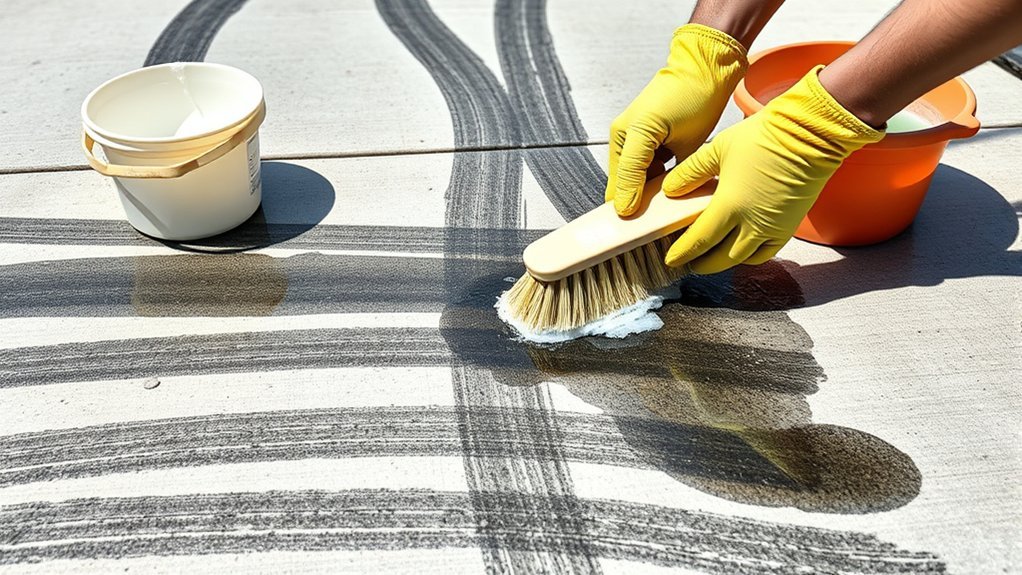
If the tire marks are still visible after the first rinse, repeat the cleaner, dwell, scrub, and rinse cycle. Old hot-tire marks may need two or three passes because the rubber residue can settle into pores or stick to an older sealer.
| What You See | Likely Cause | Best Fix |
|---|---|---|
| The mark fades but returns after drying | Residue remains in the pores | Repeat degreaser treatment and rinse longer. |
| The floor looks cloudy or patchy | Cleaner residue or affected sealer | Rinse again; if still patchy, inspect the sealer. |
| The mark is glossy, sticky, or smeared | Oily cleaner or tire residue spread around | Wash with a non-filming detergent and rinse thoroughly. |
| The coating is peeling where tires sit | Possible hot-tire pickup or failed coating bond | Cleaning will not fix peeling; the area may need coating repair. |
If you decide to spot-treat with a stronger solvent such as xylene or paint thinner, test first and treat only the stain. These products can be flammable, give off strong vapors, irritate skin and eyes, and damage coatings. NIOSH lists xylene exposure routes that include inhalation, skin absorption, ingestion, and skin or eye contact, so use proper gloves, eye protection, ventilation, and ignition control if you use it at all.
Prevent Tire Marks on Concrete
You may not stop every tire mark, but you can reduce buildup and make future cleanup easier. The best prevention is regular rinsing, quick cleanup, and the right protection for the type of slab.
- Rinse parking areas regularly. Removing light residue early keeps it from turning into dark, baked-in tracks.
- Use garage mats or tire pads. Mats help where tires rest in the same place every day.
- Avoid sharp tire turns on coated floors. Pivoting tires can heat and smear rubber across the surface.
- Let new coatings cure fully. Parking too early on fresh coatings can lead to marking or pickup.
- Choose the right sealer or coating. A penetrating sealer can help protect exterior concrete, while quality epoxy, urethane, or polyaspartic systems may make garage-floor marks easier to clean when installed and cured correctly.
Concrete coating and sealer performance depends on the surface prep, product type, cure time, tire temperature, vehicle weight, and age of the coating. If hot-tire pickup is a recurring issue, review the sealer or coating manufacturer’s recommendations before resealing.
What to Do When Marks Stay Behind
If repeated washing does not remove the mark, pause and inspect the surface. The problem may not be simple rubber residue. On old concrete, the mark may be deep in the pores. On coated concrete, the tires may have dulled, softened, or lifted the coating. On decorative concrete, a harsh cleaner may have affected the sealer.
Try these next steps:
- Rewash with clean water. Leftover cleaner can mimic a stain.
- Use a stronger concrete degreaser. Stay within the product label and test first.
- Spot-treat only the stain. Do not flood the whole slab with solvent.
- Check the sealer. If water no longer beads or the surface looks uneven, resealing may be needed after cleaning.
- Call a concrete-cleaning professional. Get help if the slab is decorative, coated, badly stained, or valuable enough that damage would be costly.
Note: A faint shadow after cleaning is not always failure. Some old tire marks become cosmetic discoloration, especially on porous, unsealed, or weathered concrete.
Frequently Asked Questions
Does WD-40 remove tire marks from concrete?
WD-40 may loosen a fresh rubber scuff on sealed concrete, but it is not the best first choice for bare concrete because it can leave an oily residue. If you use it, apply a small amount only to the mark, scrub, then wash the area with detergent and rinse well.
Will Dawn remove tire marks from concrete?
Dish soap can help with fresh, light tire marks because it cuts oily grime. Mix it with warm water, scrub with a brush, and rinse thoroughly. For old, dark, or hot-tire marks, move up to a concrete-safe degreaser.
What dissolves rubber tire marks?
Concrete degreasers, citrus-based cleaners, alcohol, acetone, xylene, and some paint thinners can soften rubber residue, but stronger solvents can also damage sealers or coatings. Start with degreaser, scrub while wet, rinse fully, and use solvents only as tested spot treatments.
Will Simple Green remove tire marks from concrete?
A Simple Green degreaser can help remove tire marks when used according to the product label. Spot test first, dilute as directed, allow contact time, keep the surface from drying, scrub, and rinse or wipe the surface clean.
Can I pressure wash tire marks off concrete?
Yes, pressure washing can help rinse away loosened rubber and cleaner residue, especially outdoors. Use it carefully: keep the nozzle moving, avoid a pinpoint stream, wear eye protection and closed-toe shoes, and never use a gas-powered washer inside a garage or enclosed space.
Why do hot tires leave black marks on concrete?
Hot tires can transfer rubber residue, carbon black, oils, and plasticizer compounds onto concrete. Vehicle weight and turning pressure push that residue into the surface texture, which is why marks are common where tires park, pivot, or stop repeatedly.
Conclusion
You can remove most tire marks from concrete with a simple process: sweep, pre-rinse, apply a concrete-safe degreaser, let it dwell without drying, scrub, and rinse thoroughly. Repeat the process for stubborn marks before reaching for stronger chemicals. Once the slab is clean, reduce future marks with regular rinsing, garage mats, and the right sealer or coating for your concrete surface.
Sources
- SUNDEK — How to Remove Tire Marks from Concrete — supports the clean, dwell, scrub, rinse, repeat method and prevention tips.
- Simple Green Pro HD Heavy-Duty Cleaner — supports spot testing, contact time, avoiding dry-down, and rinsing instructions for a degreaser.
- U.S. EPA Safer Choice Product Search — supports choosing cleaning products that meet Safer Choice criteria.
- CDC — Pressure Washer Safety — supports pressure-washer injury, electrical, and carbon-monoxide precautions.
- CDC/NIOSH Pocket Guide — o-Xylene — supports xylene exposure-route, symptom, flammability, and PPE cautions.
- Foundation Armor — Which Concrete Sealers Stop Hot Tire Pickup — supports the role of sealers, coatings, tire heat, coating cure, and surface prep in hot-tire marking.

