
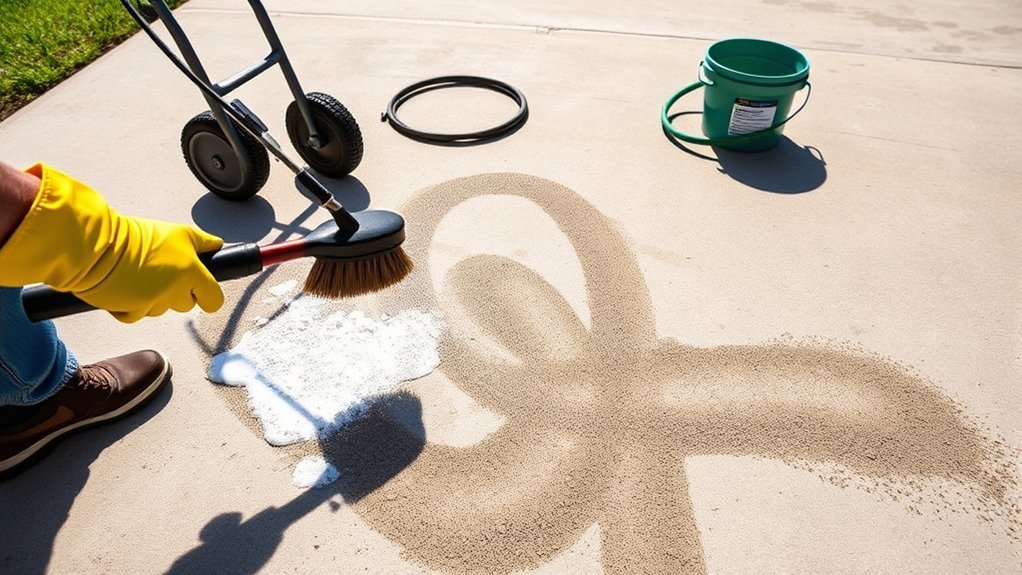
Tire marks on concrete usually come from rubber residue, road grime, heat, and plasticizers transferring from hot tires onto a porous or sealed surface. The good news is that most marks can be improved with the right cleaner, enough dwell time, firm scrubbing, and a thorough rinse. Start mild, test first, and only move to stronger cleaners if the mark remains.
Quick Answer
To remove tire marks from concrete, sweep the area, test a small spot, apply dish soap or a concrete-safe degreaser, let it dwell for the label-recommended time, scrub with a stiff nylon brush, and rinse well. For stubborn marks, use a rubber-mark remover or carefully pressure wash with a fan tip.
Key Takeaways
- Start with warm water and dish soap for fresh, light tire marks.
- Use a concrete degreaser or rubber tire mark remover for darker, older stains.
- Let the cleaner dwell only as long as the label allows; do not let it dry on the concrete.
- Scrub with a stiff nylon brush, not a wire brush that can scratch or rust-stain the surface.
- Pressure washing can help, but use a fan tip, keep distance from the slab, and follow safety rules.
- Prevent new marks with regular cleaning, smooth parking habits, mats, and the right sealer or coating.
At a Glance
| Time Required | 15–45 minutes for most spots; longer if repeating treatments |
| Difficulty | Easy to moderate |
| Tools Needed | Broom, bucket, gloves, eye protection, stiff nylon brush, concrete cleaner or degreaser, hose or pressure washer |
| Cost | Usually $5–$30 if you already own basic tools |
How Tire Marks Form on Concrete
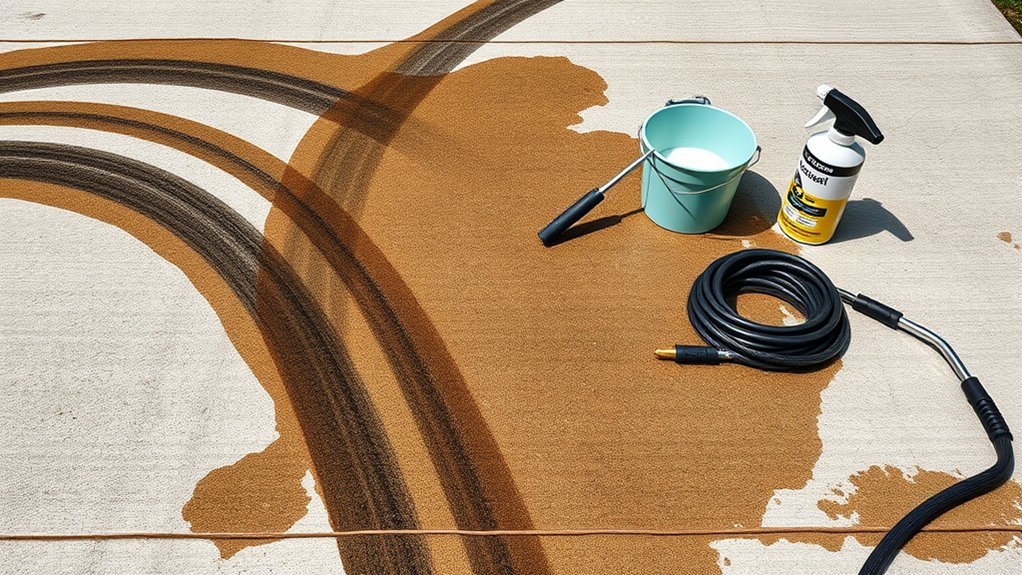
Tire marks form when rubber residue, road film, and tire additives transfer onto concrete. On sealed or coated concrete, the issue is often called hot tire pickup or tire marking. Euclid Chemical explains that tire marking on concrete sealers and coatings can be caused by plasticizer migration, where compounds in hot tires soften and discolor the sealer or coating.
Sharp turns, hard braking, heavy vehicles, hot weather, and parking immediately after driving can make the marks darker. Plain concrete may hold rubber in its pores, while sealed or coated concrete may show staining, softening, or coating damage where the tire sits.
Check the Surface Before You Clean
Before using any cleaner, identify the surface. Plain broom-finished concrete can usually handle more scrubbing than decorative, painted, polished, epoxy-coated, or acrylic-sealed concrete.
Note: Always test the cleaner and scrubbing method in a small hidden area first. Let the spot dry before deciding whether to clean the full stain.
| Surface Type | Best Starting Method | Be Careful With |
|---|---|---|
| Plain exterior concrete | Dish soap, concrete degreaser, nylon brush, hose rinse | High pressure too close to the slab |
| Sealed concrete | Mild cleaner first, then a sealer-safe degreaser | Solvents that soften or dull the sealer |
| Painted or coated garage floor | Cleaner approved for that coating | Aggressive scrubbing, citrus solvent, and pressure washing |
| Stamped, stained, or decorative concrete | Gentle cleaner and soft-to-medium nylon brush | Harsh chemicals, acids, and abrasive tools |
What Removes Tire Marks Best?
The best cleaner depends on how fresh the mark is and whether the concrete is bare, sealed, or coated. A concrete degreaser is usually the best first serious cleaner because rubber marks often include oils, plasticizers, and road film. PROSOCO Cleaner/Degreaser, for example, lists rubber tire marks and scuffs from concrete floors as one of its intended cleaning uses.
For tough rubber transfer, a citrus or D-limonene tire mark remover can work well. PowerBoss Mastery Tire Mark & Adhesive Remover is made with citrus solvent and is marketed for dissolving tire marks. Use products like this carefully and only after confirming they are safe for your floor finish.
| Cleaner | Best For | Important Caution |
|---|---|---|
| Warm water and dish soap | Fresh, light tire scuffs | May not lift older embedded marks |
| Concrete degreaser | Most driveway and garage tire marks | Follow dilution and dwell-time directions |
| D-limonene rubber mark remover | Stubborn rubber transfer | Can affect some coatings or floor finishes |
| Concrete-specific peroxide cleaner | Driveways, patios, masonry, and lighter buildup | Do not let it dry before rinsing |
| Pressure washer | Rinsing and lifting loosened residue | Use safely; pressure can injure skin and damage concrete |
[Products Worth Considering]

This tire valve adapter kit lets you connect a 3/4-inch garden hose to tire valves to fill tires with air or liquid. It includes two adapters for standard bore and large bore valves plus a convenient bleeder valve to release trapped air. Designed for tractor tire tubes and compatible air/water valves and extensions, it’s a practical repair tool for getting back on the road or field quickly.

RecDec pressure washer shower nozzle tips deliver a quick-connect misting spray for car washing, outdoor cleaning, and gentle watering tasks. The stainless steel adapter features instant plug-and-play installation with a 1/4 inch quick connect for compatibility with most high-pressure washers. Choose from multiple screen hole sizes for different spray intensities and easily attach or remove as needed.

The Chemical Guys Big Blue Stiffy Heavy Duty Cleaning Brush is designed for deep scrubbing of tires, upholstery, and carpets. Stiff synthetic bristles help lift tough dirt, grime, and tar while the ergonomic grip makes scrubbing comfortable and controlled. Use it with wheel and tire cleaners followed by dressings and protectants to help enhance and extend a lasting shine.
Tools and Supplies You’ll Need
- Broom or leaf blower
- Bucket of warm water
- Dish soap for light marks
- Concrete-safe degreaser or rubber tire mark remover
- Stiff nylon scrub brush or deck brush
- Garden hose with strong nozzle
- Pressure washer with a fan tip, if needed
- Chemical-resistant gloves and eye protection
- Absorbent towels or wet/dry vacuum for garage floors
Warning: Do not mix cleaners, bleach, acids, ammonia, degreasers, or solvents. Read the product label and safety data sheet, wear eye protection and gloves, and keep children and pets away from the work area.
[Products Worth Considering]
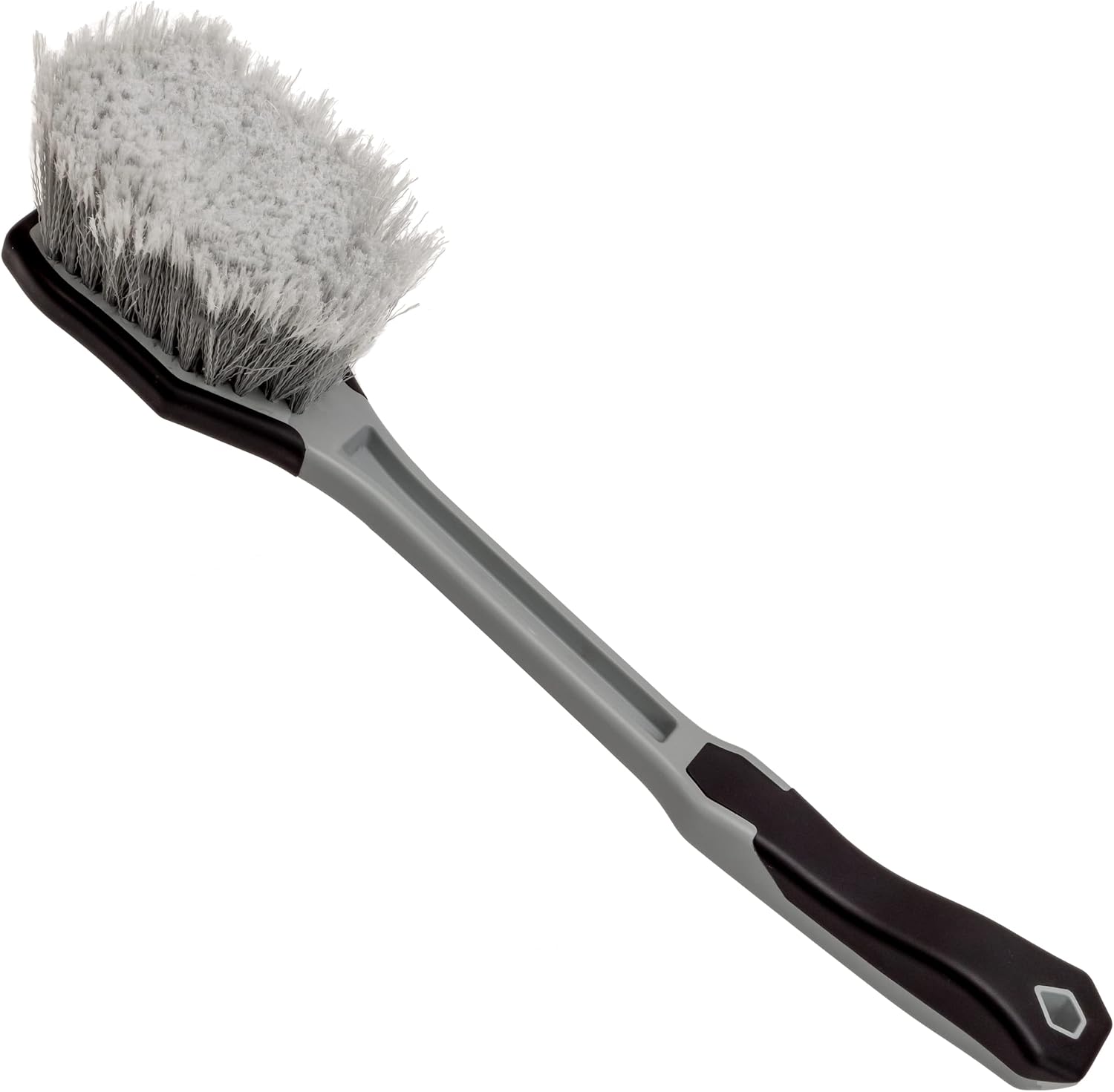
Clean grills, fenders, fender flares, bumpers, and wheel wells with a long-handled brush built for detailed car washing. The soft, triple-flagged bristles and dense scrub coverage help lift dirt gently while making coverage fast and easy. Use it with your favorite car wash soap for tires and exterior surfaces, and it also works for bike, motorcycle, boat, or RV cleaning.

This 4-pack wheel brush kit is designed for thorough cleaning of rims, tire tread, and hard-to-reach areas. It includes ultra-soft plush brushes for wheel faces and cracks, a soft brush for lug nut cavities, and a stiff brush for tire cleaning. The scratch-free, metal-free brush heads minimize rim damage, while bendable bristles reach into tight spots for faster grime removal.

Wontolf’s 62-inch car wash brush kit combines a microfiber chenille mitt, long-handle foam scraping windshield squeegee, and multiple detailing tools for fast, streak-free cleaning. The set helps you wash, dry, dust, and clean wheels with scratch-free microfiber towels and a multipurpose duster for both car and home use. Easily assemble or disassemble the handle system for convenient reach in tight areas.
Step-by-Step Tire Mark Removal
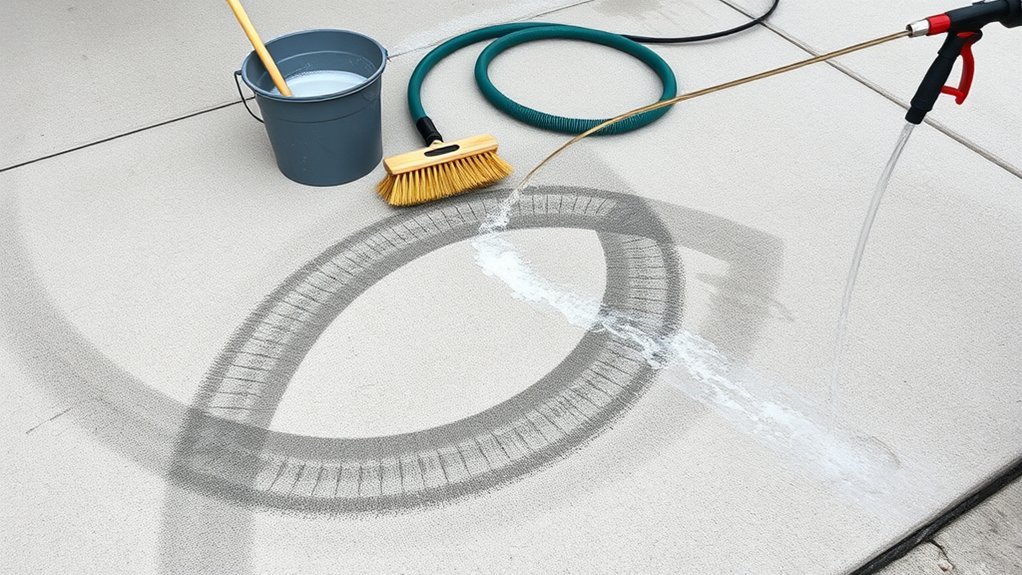
1. Sweep the Concrete First
Remove loose dirt, sand, leaves, and grit. If you scrub before sweeping, the grit can act like sandpaper and scratch sealed or decorative concrete.
2. Test a Small Area
Apply your cleaner in a hidden spot using the same brush and rinse method you plan to use on the stain. Let it dry. If the surface turns dull, sticky, lightened, softened, or discolored, stop and choose a milder cleaner.
3. Try Soap and Warm Water for Fresh Marks
Mix warm water with a few drops of dish soap. Pour it over the tire mark, let it sit for a few minutes, then scrub with a stiff nylon brush. Rinse well. This is the safest first step for fresh marks and delicate surfaces.
4. Apply a Concrete Degreaser for Darker Marks
If soap does not work, apply a concrete-safe degreaser according to the label. Some products need only a few minutes of dwell time. Do not let the cleaner dry on the concrete because dried cleaner can leave residue or streaks.
5. Scrub With Firm, Even Pressure
Work in small sections. Scrub across the tire mark, then scrub with the direction of the mark. Add more cleaner if the area starts drying before you finish.
6. Rinse Thoroughly
Rinse with clean water until the surface no longer feels slippery. On a garage floor, collect dirty rinse water with towels or a wet/dry vacuum instead of pushing it into landscaping or drains.
7. Use a Pressure Washer Only if Needed
A pressure washer can help remove loosened residue from plain exterior concrete. Use a wide fan tip, keep the nozzle moving, and avoid holding the spray too close to the slab. The CDC warns that pressure washer spray can cause serious wounds, so never point the wand at yourself, another person, or a pet.
8. Let the Concrete Dry Before Judging the Result
Concrete often looks clean while wet and shows remaining shadows after drying. If a shadow remains, repeat the cleaner-and-scrub process once more before moving to a stronger product.
Pro Tip: Clean tire marks in shade or during cooler weather. Cleaners dry too quickly on hot concrete, and fast drying can reduce cleaning performance or leave streaks.
What Not to Use on Tire Marks
Some cleaners and tools can create a bigger problem than the original tire mark.
- Wire brushes: They can scratch concrete and leave metal particles that later rust.
- Muriatic acid: Tire marks are rubber and oily residue, not mineral scale. Acid can etch concrete and damage nearby surfaces.
- Bleach as a main cleaner: Bleach does not break down rubber residue well and should never be mixed with other cleaners.
- WD-40 as a first choice: It may loosen light scuffs on some surfaces, but it can leave oily residue on porous concrete.
- Paint strippers or strong solvents: These can soften coatings, create fumes, and require strict safety controls.
How to Keep Tire Marks Off Concrete
Prevention is easier than repeated deep cleaning. Once the surface is clean and dry, reduce rubber transfer with regular maintenance and better parking habits.
| Prevention Method | Why It Helps |
|---|---|
| Wash the area regularly | Removes road film, grit, and early rubber buildup before it bonds deeper |
| Park with straight, smooth tire movement | Reduces twisting friction that grinds rubber into the surface |
| Let hot tires cool before parking on decorative concrete | Reduces heat-related transfer and sealer discoloration |
| Use garage mats or parking pads | Creates a washable barrier between tires and concrete |
| Choose the right sealer or coating | A properly selected sealer or coating can improve stain resistance |
For exterior concrete, penetrating silane or siloxane sealers are often preferred when hot tire marking is a concern because they do not form the same surface film as many decorative coatings. For indoor garage floors, a professional-grade coating system may be more resistant than a basic acrylic sealer, but preparation and product choice matter.
Stubborn Tire Marks: What to Try Next
If a tire mark is still visible after two cleaning attempts, the stain may be deep in the pores or embedded in a sealer or coating. At that point, the next step depends on the surface.
[Products Worth Considering]
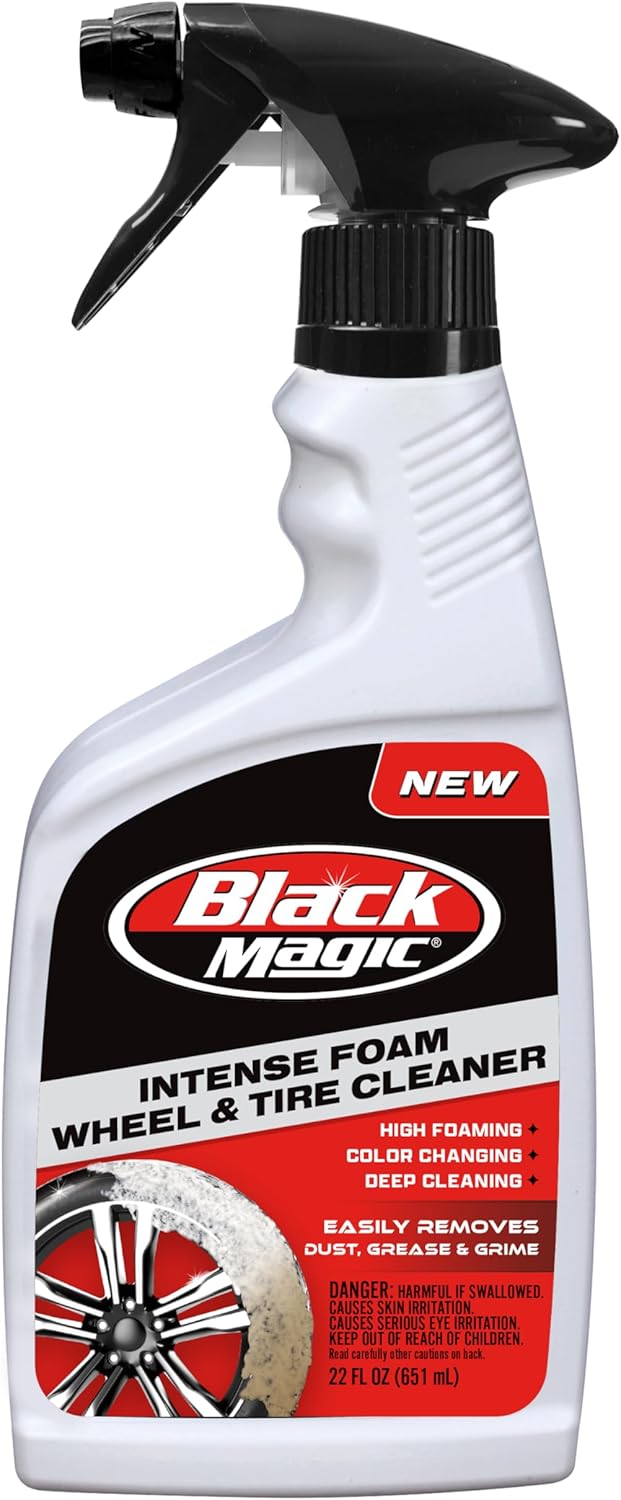
Black Magic Intense Foam Wheel & Tire Cleaner uses a high-foaming action to lift away dirt, grime, and brake dust without scrubbing. The color-changing formula helps show contaminants being dissolved as foam turns from white to brown. Safe for all wheel types and even wheel wells, it leaves a like-new, slick finish with a fresh cherry scent.

This 3-piece wheel and tire brush set makes it easy to clean light, medium, and heavy dirt from wheels, rims, tires, and exterior surfaces. It includes both soft and stiff bristle options for gentle scrubbing and tough grime removal, helping lift brake dust and road buildup. The long-handle design supports comfortable cleaning across cars, trucks, SUVs, RVs, motorcycles, and more, with simple care instructions to restore brush shape.

Restore faded, dull tires to a rich black satin finish in minutes with a spray-on, wipe-off formula. Graphene and acrylic polymers create a durable, sling-free coating that resists water and dirt while helping prevent UV-related fading and cracking. Build your preferred look by applying additional layers for sleek satin to showroom gloss.
Stronger Cleaning Options
For bare concrete, try a rubber tire mark remover or stronger concrete degreaser that is labeled for rubber marks. Apply it only to a workable area, let it dwell for the recommended time, scrub thoroughly, and rinse before it dries. Repeat if the mark is fading but not gone.
For coated or sealed floors, avoid jumping straight to solvents. Strong cleaners can dull, soften, or lift the coating. If the cleaner affects the finish during the test spot, stop and contact the coating manufacturer or a concrete floor professional.
Reseal or Resurface
If the tire mark is trapped in a sealer, cleaning may not fully remove it. The fix may be to strip the failed sealer and reseal the concrete after the surface is clean and dry. If tire heat has damaged a garage coating, the affected area may need sanding, recoating, or full resurfacing.
Call a professional if the concrete is decorative, polished, epoxy-coated, badly discolored, peeling, or located where rinse water could enter a storm drain or sensitive landscaping.
Frequently Asked Questions
What takes rubber tire marks off concrete?
A concrete-safe degreaser, rubber tire mark remover, warm water, and a stiff nylon brush work best for most tire marks. Start with soap and water for light scuffs, then move to a labeled concrete degreaser or citrus-based tire mark remover for stubborn rubber transfer.
Does WD-40 remove tire marks from concrete?
WD-40 may loosen a very light surface scuff on sealed concrete, but it is not the best first choice for porous concrete because it can leave an oily residue. If you try it, test a hidden spot first, use a small amount, scrub, and wash the area afterward with dish soap or degreaser.
Will Dawn remove tire marks from concrete?
Dish soap such as Dawn can help with fresh, light tire scuffs because it breaks down oily road film. Mix it with warm water, let it sit briefly, scrub with a nylon brush, and rinse well. Older marks usually need a concrete degreaser or rubber mark remover.
Will Simple Green remove tire marks from concrete?
A concrete-specific Simple Green product can help. Simple Green Oxy Solve Concrete and Driveway Cleaner is labeled for oil stains, grease, tire marks, exhaust buildup, driveways, walkways, patios, and masonry. Follow the label, test first, and do not let the cleaner dry before rinsing.
Can a pressure washer remove tire marks from concrete?
Yes, a pressure washer can help after the cleaner has loosened the rubber residue. Use a wide fan spray, keep the wand moving, and avoid getting too close. Pressure washers can injure skin and damage weak or decorative concrete, so follow the machine manual and safety guidance.
Why do tire marks keep coming back?
Tire marks return when hot tires park on the same spot, when drivers turn sharply on the slab, or when a sealer or coating reacts with tire plasticizers. Regular washing, smoother parking, garage mats, and the right sealer or coating can reduce repeat marks.
Conclusion
Tire marks on concrete look stubborn, but most are manageable if you clean in the right order. Start with the mildest method, test the surface, scrub with a nylon brush, and rinse thoroughly. Use stronger degreasers or rubber mark removers only when needed, and treat pressure washers and solvents with respect. Once the concrete is clean, regular washing, mats, smooth parking, and the right sealer will help keep new marks from settling in.
Sources
- Euclid Chemical Technical Bulletin CP-22 — supports plasticizer migration and hot tire pickup guidance.
- PROSOCO Cleaner/Degreaser Product Data Sheet — supports use of concrete cleaner/degreaser on rubber tire marks and scuffs.
- CDC Pressure Washer Safety — supports pressure washer injury warnings and safety precautions.
- Simple Green Oxy Solve Concrete and Driveway Cleaner — supports concrete cleaner use, dwell guidance, and test/rinse precautions.
- PowerBoss Mastery Tire Mark & Adhesive Remover — supports citrus-solvent tire mark remover guidance.
- U.S. EPA: Paint Removers, Methylene Chloride and NMP — supports caution around stronger paint-removal solvents.

