
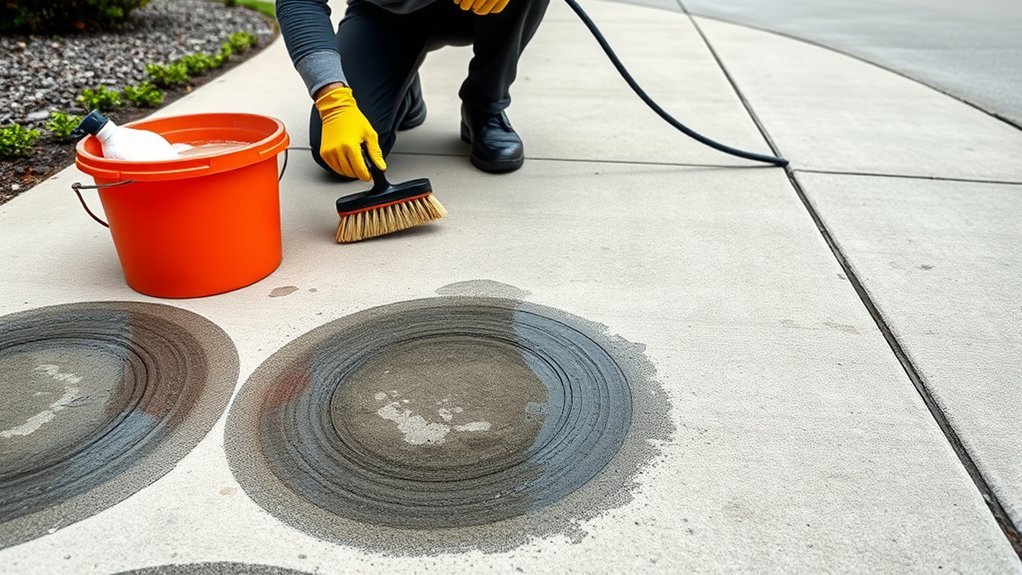
To remove tire marks from a concrete driveway, start with a concrete-safe degreaser or driveway cleaner, let it dwell without drying, scrub the wet mark with a stiff nylon brush, and rinse thoroughly. Repeat before moving to stronger chemicals. If the driveway is sealed, stained, painted, epoxy-coated, or otherwise decorative, test a hidden spot first because the discoloration may be in the finish rather than sitting on bare concrete.
Last updated: August 18, 2026
Quick Answer
For most bare-concrete driveways, sweep first, apply a concrete-safe degreaser or driveway cleaner, keep it wet for the label’s dwell time, scrub with a stiff nylon brush, and rinse until no cleaner remains. Let the concrete dry before judging the result, then repeat if needed. On sealed or coated concrete, use a cleaner approved for that finish and stop if the surface dulls, softens, changes color, or begins to peel.
Key Takeaways
- Clean tire marks before repeated parking and turning build up more rubber residue in the same area.
- A concrete-safe degreaser, peroxide driveway cleaner, or rubber-mark remover is the best first choice for most driveway tire marks.
- Scrubbing matters. Let the cleaner dwell, keep it wet, then work it into the mark with a stiff nylon brush or floor scrubber.
- Pressure washers can help rinse loosened residue, but use a surface-safe fan pattern, start farther from the concrete, and never point the spray at people or pets.
- If the stain is inside a sealer or coating, cleaning may not fully remove it. The sealer may need stripping, repair, or recoating.
At a Glance
| Time Required | 30 to 90 minutes for normal marks; longer if repeated cleaning is needed |
| Difficulty | Easy to moderate |
| Tools Needed | Concrete-safe cleaner, stiff nylon brush, bucket, hose or pressure washer, gloves, eye protection |
| Cost | Varies by cleaner and whether you already own or rent the brush, pressure washer, or floor scrubber |
Why Tire Marks Stick to Concrete
Tire marks are not always simple dirt. Hot tires can transfer rubber compounds and plasticizers onto concrete, especially after a long drive, a sharp turn, hard braking, or parking in direct sun. On sealed or coated concrete, this is often called plasticizer migration. The residue can cling to bare concrete pores or discolor a sealer film.
| Cause | What It Does |
|---|---|
| Hot tires | Soften and transfer residue more easily |
| Sharp turns or braking | Push rubber residue into the surface texture |
| Sealed or coated concrete | May stain if tire plasticizers react with or migrate into the coating |
| Porous or rough concrete | Holds residue in small pits and grooves |
Note: Tire marks on bare concrete are usually surface residue. Tire marks on sealed, painted, epoxy-coated, or decorative concrete may be discoloration in the coating itself, which is harder to remove without damaging the finish.
Before You Start
Check the driveway surface before applying any cleaner. Plain broom-finished concrete can usually handle stronger scrubbing than stamped, stained, painted, sealed, or coated concrete. If you are unsure, test the cleaner in a small hidden spot and let it dry before cleaning the full area.
| Driveway Surface | Safest First Move | Stop If You See |
|---|---|---|
| Bare broom-finished concrete | Concrete-safe degreaser, nylon scrubbing, thorough rinse | Etching, exposed aggregate, or surface flaking |
| Stamped, stained, or decorative concrete | Finish-compatible cleaner after a hidden test spot | Color change, dulling, or loss of sealer |
| Sealed or coated concrete | Cleaner approved by the sealer or coating manufacturer | Softening, peeling, whitening, or tackiness |
- Sweep first: Remove loose grit, leaves, and sand so you do not grind debris into the concrete while scrubbing.
- Wear protection: Use gloves, eye protection, long sleeves, and closed-toe shoes.
- Protect nearby areas: Wet nearby grass and plants before cleaning, cover delicate landscaping if needed, and rinse plants afterward if cleaner contacts them.
- Control runoff: Do not let dirty cleaner flow into storm drains, ponds, or waterways. Follow local rules for outdoor cleaning runoff.
- Read the label: Follow the cleaner’s dilution, dwell time, rinsing, and surface-compatibility instructions.
Warning: Do not mix cleaners. Never mix bleach, ammonia, acids, degreasers, or solvents unless the product label specifically says it is safe. Mixing chemicals can create dangerous fumes or damage the concrete.
Choose the Right Cleaner for the Tire Marks
The right cleaner depends on how fresh the marks are and whether the concrete is sealed. Start with the mildest option that fits the stain. You can always repeat the process, but you cannot easily undo etched concrete or stripped sealer.
| Type of Mark | Best First Cleaner | Notes |
|---|---|---|
| Fresh, light marks | Warm water plus dish soap or mild driveway cleaner | Scrub quickly before the mark sets. |
| Normal black tire marks | Concrete-safe degreaser or rubber-mark remover | A product such as a commercial concrete cleaner/degreaser is made for rubber tire marks and scuffs. |
| General driveway grime plus tire marks | Concrete driveway cleaner | Some peroxide-based cleaners, including driveway cleaners made for tire marks, are designed for concrete and masonry. |
| Severe marks on sealed concrete | Sealer-safe cleaner first; professional help if it fails | The stain may be inside the sealer, not just on the surface. |
| Deep solvent-sensitive stains | Last-resort solvent only if label-approved | Solvents can strip sealer, create fumes, and pose fire risks. |
[Products Worth Considering]

RecDec pressure washer shower nozzle tips deliver a quick-connect misting spray for car washing, outdoor cleaning, and gentle watering tasks. The stainless steel adapter features instant plug-and-play installation with a 1/4 inch quick connect for compatibility with most high-pressure washers. Choose from multiple screen hole sizes for different spray intensities and easily attach or remove as needed.

Steelman white tire marking crayons provide high-contrast, semi-permanent marks for repairing and inspecting tires and equipment. They write on wet or dry, smooth or coarse surfaces including rubber, metal, glass, and wood, making them ideal for puncture location and damage outlining. The lead- and zinc-free crayons resist weather and fading yet wipe away when you no longer need the marks.

The Ptwola eye wash cup kit uses a soft silicone edge and gentle rinse action to help soothe tired, dry, or irritated eyes. It’s designed for convenient rinsing with saline solution or eye drops, offering comfort for contact lens wearers and those using eye ointments. A portable design with a storage container helps make quick eye cleansing easier at home or on the go.
How to Remove Tire Marks From a Driveway
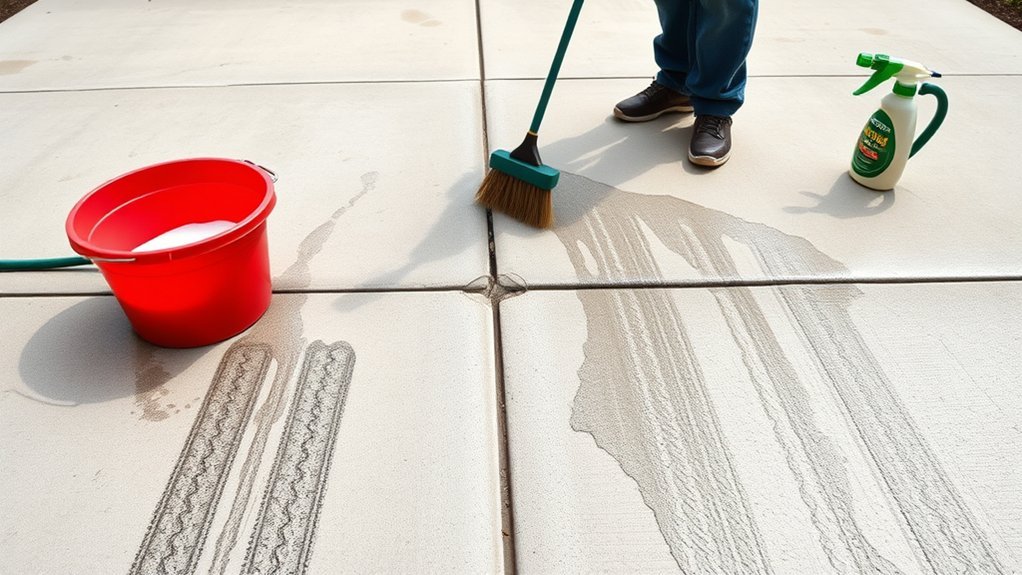
Use this process for most tire marks on plain concrete driveways. For decorative, sealed, coated, or painted concrete, test first and use only products approved for that finish.
1. Wet and Prep the Area
Lightly wet the marked section with water. This helps cool the surface and slows cleaner evaporation. Do not flood the area; you want the cleaner to stay concentrated on the tire marks. If the driveway is hot from direct sun, work in the morning, evening, or shade.
2. Apply the Cleaner and Let It Dwell
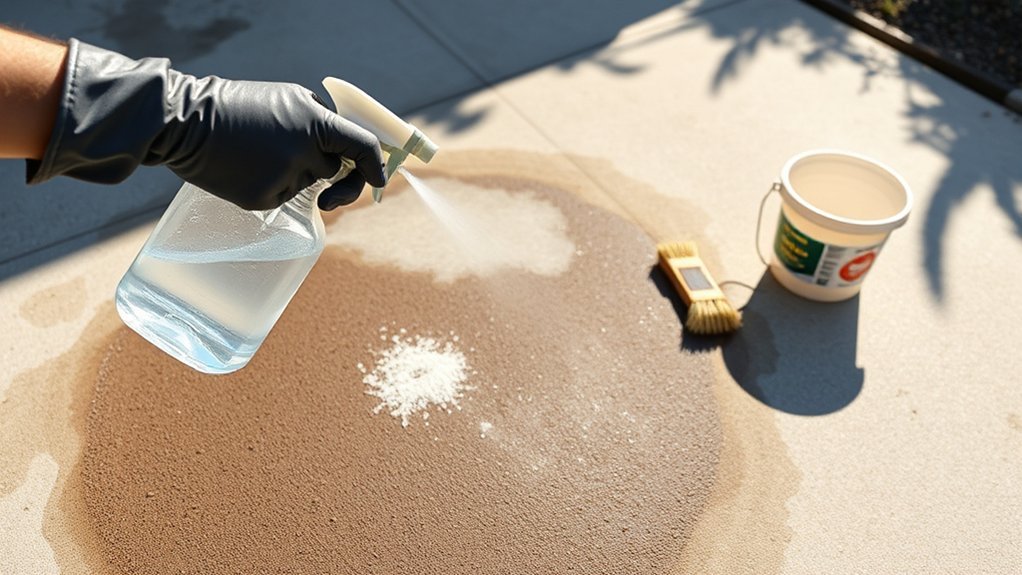
Apply the concrete-safe degreaser or driveway cleaner directly to the tire marks. Use enough product to cover the dark streaks completely, then follow that product’s dilution and dwell-time directions. For example, Simple Green’s published driveway directions for Oxy Solve use a 5 to 7 minute dwell and specifically say not to let the cleaner dry before rinsing. Other products can differ, so the label for the cleaner in your hand controls.
Keep the cleaner wet while it works. If it starts to dry, mist the area lightly with water or add a little more cleaner. Dried cleaner is harder to rinse and can leave residue.
3. Scrub the Tire Marks
Scrub the wet marks with a stiff nylon brush. Use firm back-and-forth strokes, then scrub across the mark from a different direction. Nylon is safer than a wire brush because wire can leave metal particles behind that may rust on concrete.
For a large driveway or heavy marks, a rented floor scrubber can save time. Use a pad or brush suitable for concrete and avoid aggressive pads on decorative surfaces.
Pro Tip: Scrubbing while the cleaner is still wet is the key. If the surface dries before you scrub, reapply cleaner and wait again instead of dry-scrubbing the stain.
4. Rinse Thoroughly
Rinse the area with a garden hose at high pressure or a pressure washer on a safe setting. Work from the highest part of the driveway toward the lowest so dirty water moves away from the clean section. Keep rinsing until the water runs clear and no cleaner residue remains.
Warning: A pressure washer is powerful enough to injure skin, throw debris, and damage surfaces. Follow the owner’s manual, wear eye protection and closed-toe shoes, keep children and pets away, and never use a gasoline-powered washer inside a garage or enclosed area. The CDC’s pressure washer safety guidance also warns against pointing the spray at yourself or others.
5. Let the Concrete Dry and Inspect
Let the driveway dry before judging the result. Wet concrete can hide faint marks or make cleaned areas look darker than they are. If you still see tire marks after the surface dries, repeat the cleaner, dwell, scrub, and rinse steps.
Pressure Washer Tips for Tire Marks
A pressure washer can help rinse loosened residue, but it should not replace cleaner and scrubbing. Tire marks often need a chemical cleaner to break the bond before water pressure can carry the residue away.
- Use the approved nozzle and pressure: Start with the pressure-washer manufacturer’s concrete-cleaning guidance and any limits from the concrete sealer or coating manufacturer.
- Keep distance: Start farther away and move closer only if needed. Holding the nozzle too close can etch the surface.
- Use steady passes: Sweep evenly so you do not leave stripes or wand marks.
- Test first: Try a small corner before cleaning the visible driveway area.
- Avoid weak or damaged concrete: Flaking, spalling, old decorative finishes, and loose sealer can be damaged by high pressure.
[Products Worth Considering]
Chemical Guys ShineLogic Tire Shine delivers a deep wet black, high-shine finish for rubber tires with a sleek look. It’s designed for durable, one-step application with minimal drips, streaks, or runs, and it helps produce effortless, long-lasting shine. Choose aerosol or trigger spray for easy use on cars, trucks, motorcycles, RVs, and more.

Black Magic Tire Wet delivers a wet, black, glossy finish with just one quick spray. Its weather and rinse-resistant formula helps maintain shine for weeks, not days, and dries quickly to reduce sling. A self-healing formula fills small scuffs to defend the look, leaving no white, powdery residue.
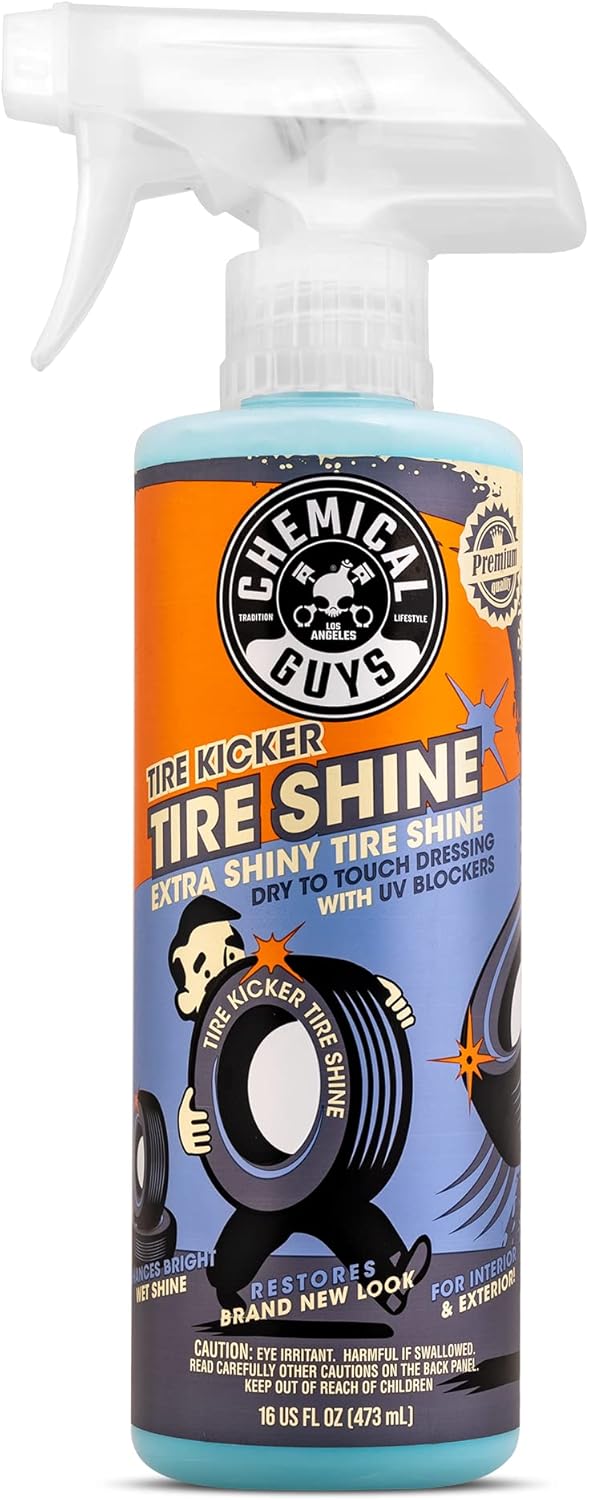
Chemical Guys Tire Kicker Sprayable Extra Glossy Tire Shine restores a deep, wet look on tires, rubber, vinyl, and plastic trim. It delivers a rich showroom shine that enhances color and luster while helping protect against fading, cracking, and discoloration. The spray application dries to the touch with a streak-free finish and no greasy sling, for fast results on cars, trucks, motorcycles, RVs, and boats.
How to Remove Stubborn Tire Marks With Stronger Cleaners
If normal cleaning does not work, the mark may be older, deeper, or trapped in a sealer. Try a second round with a concrete-safe degreaser first. Increase dwell time only within the label’s instructions, then scrub and rinse again.
Solvents such as xylene are sometimes used when discoloration has migrated deeply into a compatible sealer or coating, but they are not a routine driveway cleaner. NIOSH lists o-xylene as a flammable liquid with skin and inhalation exposure routes and symptoms that can include eye, skin, nose, and throat irritation, dizziness, drowsiness, and incoordination. Follow the exact product label and safety data sheet, keep ignition sources away, use the required protective equipment and ventilation, and test a hidden area first. See the CDC/NIOSH o-xylene chemical hazard guide for hazard details.
Warning: Do not use xylene, acetone, lacquer thinner, or other strong solvents on sealed, painted, or decorative concrete unless the coating manufacturer allows it. These products can soften, dull, strip, or discolor the finish.
[Products Worth Considering]
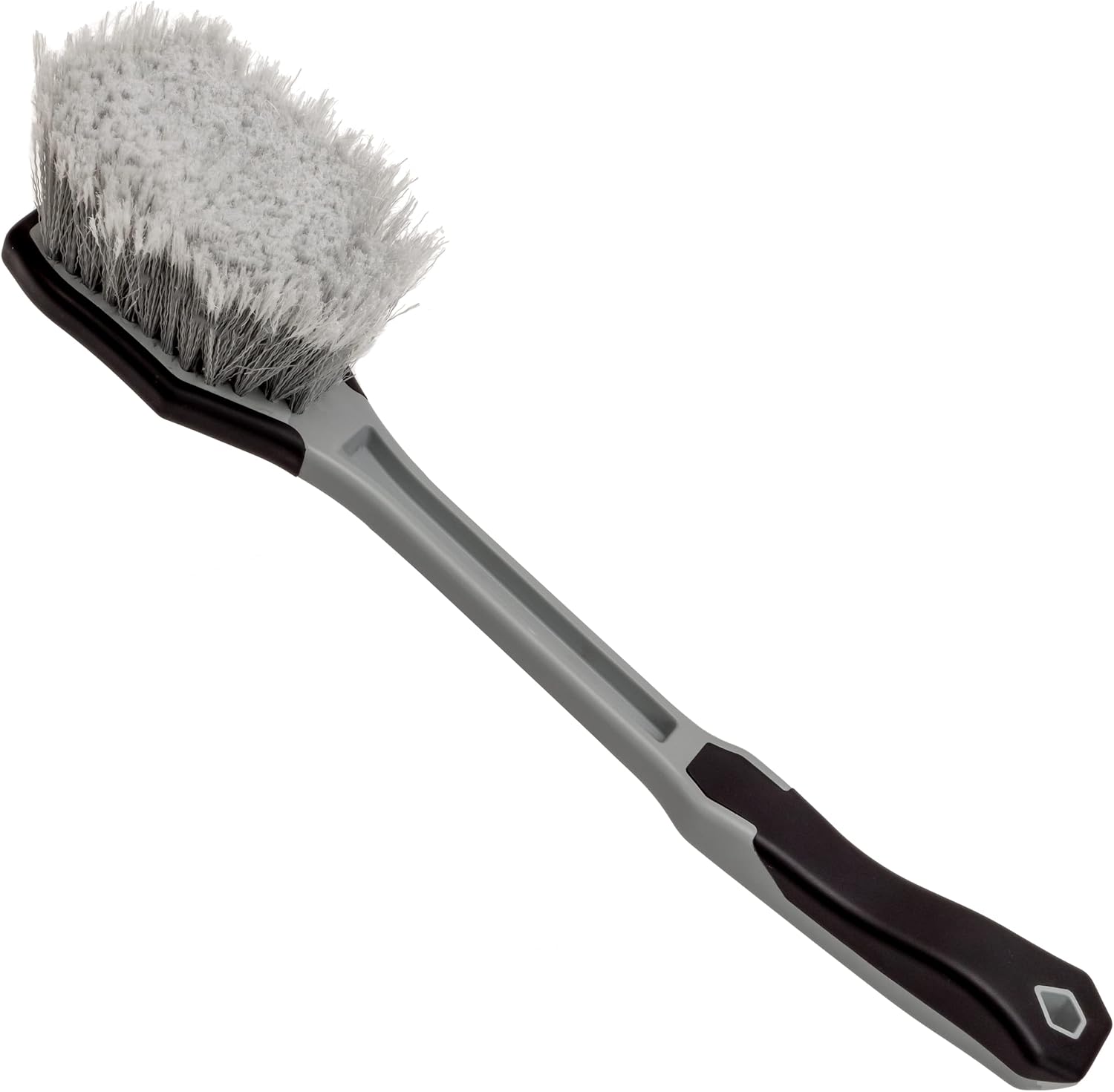
Clean grills, fenders, fender flares, bumpers, and wheel wells with a long-handled brush built for detailed car washing. The soft, triple-flagged bristles and dense scrub coverage help lift dirt gently while making coverage fast and easy. Use it with your favorite car wash soap for tires and exterior surfaces, and it also works for bike, motorcycle, boat, or RV cleaning.

Restore faded, dull tires to a rich black satin finish in minutes with a spray-on, wipe-off formula. Graphene and acrylic polymers create a durable, sling-free coating that resists water and dirt while helping prevent UV-related fading and cracking. Build your preferred look by applying additional layers for sleek satin to showroom gloss.

These aluminum alloy tire valve stem caps protect the valve core from corrosion and help prevent air leakage for more stable tire pressure. The rubber ring design helps support a secure, safe seal while adding a stylish look to your Honda wheels. Easy to install by hand, these caps are ideal for everyday driving and weather exposure.
What If the Marks Still Won’t Come Off?
If tire marks remain after two cleaning attempts, stop and diagnose the surface before using harsher products.
- Faint gray shadow remains: Repeat with a longer label-approved dwell time, then scrub again.
- Marks are under a glossy sealer: The plasticizer may have migrated into the sealer. Cleaning may lighten it, but stripping and recoating may be the real fix.
- Concrete looks etched or rough: Avoid stronger pressure. Etched concrete holds stains more easily and may need professional cleaning or resurfacing.
- Decorative concrete changes color: Stop immediately. Contact the sealer or coating manufacturer before continuing.
- Marks keep returning in the same parking spot: Focus on prevention, parking habits, and sealer compatibility.
How to Prevent Tire Marks on Concrete
Prevention is easier than scrubbing old marks. Hot tires, repeated parking in the same spot, and direct sun can all make tire marks more likely.
- Avoid parking immediately after a long, hot drive when practical: Hot tires are more likely to transfer plasticizers to some film-forming sealers and coatings.
- Avoid sharp turns on the driveway: Turning the wheels while stopped can grind rubber into the concrete.
- Clean small marks quickly: Fresh residue lifts faster than old, heat-set marks.
- Wash regularly: Hose and sweep the driveway to remove grit, oils, and buildup.
- Use compatible parking mats: Choose mats approved for sealed or coated concrete. Some rubber-backed mats can also cause plasticizer migration on certain coatings.
- Choose the right sealer: For exterior concrete where tire marks are a problem, non-film-forming penetrating silane or siloxane sealers may be a better choice than some acrylic film-forming sealers.
When You Should Reseal or Recoat Concrete
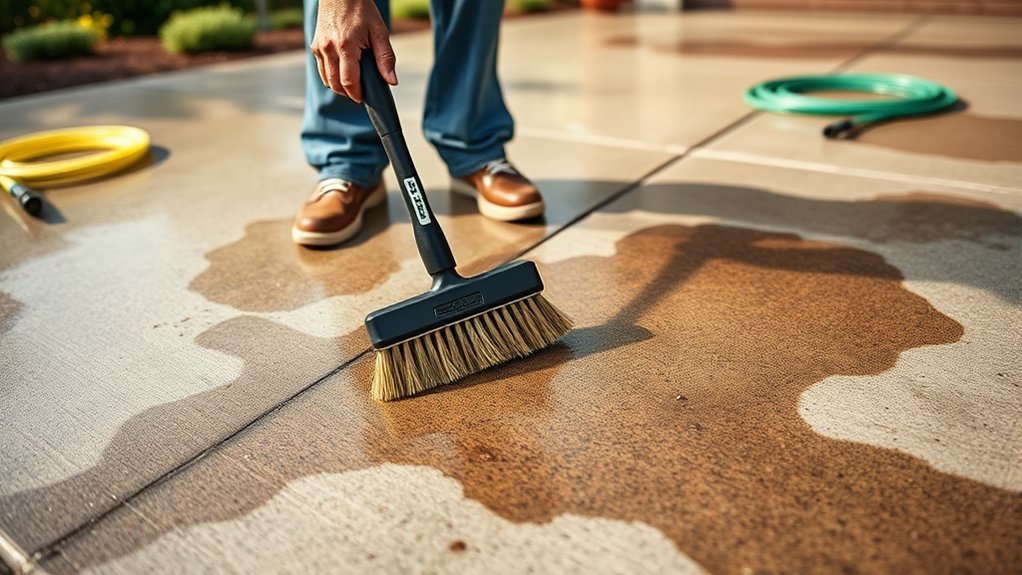
Resealing can help protect concrete from water, oil, grease, deicing salts, and staining, but timing depends on the sealer, traffic, climate, and surface condition. Concrete Network reports that many contractors recommend resealing about every 2 to 5 years, with shorter intervals in harsh climates or under heavy vehicle traffic. Its resealing guidance also lists warning signs such as fading, water soaking in instead of beading, visible wear, and stains becoming harder to remove.
If the driveway was just cleaned, let it dry fully before sealing. The wait may be a day or several days depending on weather, concrete porosity, and the sealer label. If the concrete is newly poured, follow the concrete and sealer manufacturer’s cure-time instructions; many standard sealers require the slab to cure first, while some cure-and-seal products are designed for fresh concrete.
Note: More sealer is not always better. Thick sealer buildup can trap moisture, turn cloudy, peel, or make tire marking worse. Apply thin coats at the coverage rate listed by the manufacturer.
Frequently Asked Questions
How do you get tire marks off a driveway?
Apply a concrete-safe cleaner or degreaser to the tire marks, let it dwell while keeping it wet, scrub with a stiff nylon brush, and rinse thoroughly. Let the concrete dry, then repeat if faint marks remain.
What dissolves rubber tire marks on concrete?
Concrete degreasers, rubber-mark removers, and some driveway cleaners can loosen rubber and plasticizer residue. For most homes, a concrete-safe cleaner plus scrubbing is the best first step. Solvents should be treated as a last resort because they can damage sealers and create safety risks.
Does WD-40 remove tire marks from concrete?
WD-40 may loosen some light rubber marks, but it is not the best first choice for a driveway. It can leave oily residue that needs more cleaning. Start with a concrete-safe degreaser or driveway cleaner, then rinse well.
Do tire marks on a driveway go away by themselves?
Some light marks may fade with weather and traffic, but set-in tire marks usually do not disappear completely on their own. Hot tire residue can cling to concrete pores or discolor a sealer, so targeted cleaning is usually needed.
Can a pressure washer alone remove tire marks?
Sometimes, but it often works better after a cleaner has loosened the residue. Using only high pressure can tempt you to hold the nozzle too close, which may etch or damage concrete. Clean first, scrub, then rinse with controlled pressure.
Why do tire marks come back after cleaning?
They usually come back because the same hot tires are parked in the same spot, the concrete is porous, or the sealer is reacting with tire plasticizers. Clean fresh marks quickly, avoid sharp turns, let hot tires cool when possible, and consider a compatible penetrating sealer for exterior concrete.
How do you get old skid marks out of concrete?
Use a concrete-safe degreaser, keep it wet for the label-approved dwell time, scrub with a stiff nylon brush, and rinse thoroughly. Let the concrete dry before deciding whether another round is needed. If an old shadow remains on sealed or coated concrete, the discoloration may be inside the finish rather than on top of the slab.
Can tire marks be removed from sealed concrete?
Sometimes. Start with a cleaner approved by the sealer manufacturer and test a hidden spot. Hot-tire discoloration can involve plasticizer migration into the sealer itself, so cleaning may only lighten the mark. If the stain has migrated deeply or the coating has been damaged, stripping and recoating may be required.
Can I use bleach to remove tire marks from concrete?
Bleach is not the best first choice for rubber or plasticizer residue. Use a cleaner labeled for concrete tire marks instead. Never mix bleach with degreasers, ammonia, acids, or other cleaners, and follow the product label for surface compatibility, protective equipment, and runoff precautions.
Conclusion
To remove tire marks from a driveway, start with a concrete-safe cleaner, give it time to work, scrub while it is wet, and rinse completely. Repeat the process before jumping to harsh chemicals. If the marks are in a sealer or coating, cleaning may only lighten them, and the surface may need professional stripping or recoating. With quick cleanup, safer cleaning habits, and the right sealer, you can keep tire marks from taking over your driveway again.
Sources
- Euclid Chemical Technical Bulletin CP-22 — supports hot tire pickup, plasticizer migration, and sealer considerations.
- PROSOCO Cleaner/Degreaser — supports the use of commercial concrete degreasers for rubber tire marks and scuffs.
- Simple Green Oxy Solve Concrete and Driveway Cleaner — supports concrete driveway cleaner use, dwell/rinse guidance, and surface testing.
- CDC Pressure Washer Safety — supports pressure washer injury, electrical, carbon-monoxide, and safe-use warnings.
- CDC/NIOSH Pocket Guide: o-Xylene — supports solvent hazard, exposure-route, symptom, and flammability cautions.
- Concrete Network Resealing Guide — supports resealing benefits, timing factors, and signs concrete needs resealing.
- Simple Green Driveway Cleaning Directions — supports the 5 to 7 minute Oxy Solve dwell example and the instruction not to let the cleaner dry before rinsing.

