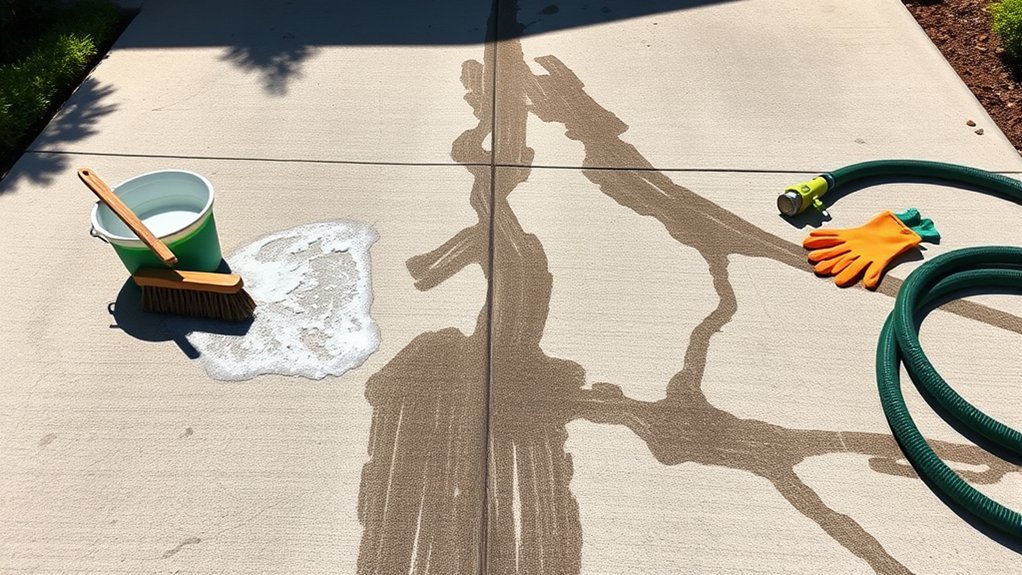
You can remove most tire marks from cement with a concrete-safe degreaser, a stiff nylon brush, and a thorough rinse. The key is to let the cleaner dwell long enough to soften the rubber residue, then scrub and rinse instead of trying to blast the stain away with water alone.
Quick Answer
To get tire marks off cement, sweep the area, apply a concrete-safe degreaser, keep it wet for 10 to 30 minutes, scrub with a stiff nylon brush, and rinse thoroughly with a hose or pressure washer. Repeat stubborn spots, but test cleaners and high-pressure rinsing on a hidden area first.
Key Takeaways
- Use a concrete-safe degreaser first; plain water usually is not enough for rubber residue.
- Let the cleaner dwell while staying wet, then scrub with a stiff nylon brush or floor scrubber.
- Rinse with a strong hose spray or pressure washer, but test first and avoid damaging sealed or decorative concrete.
- Repeat the degrease-scrub-rinse cycle for dark marks instead of using harsher chemicals right away.
- Prevent new tire marks by keeping concrete clean, reducing hot-tire contact, and choosing the right sealer or floor protection.
At a Glance
| Time Required | 30 to 60 minutes for most marks; longer for old or sealed-in stains |
| Difficulty | Easy to moderate |
| Tools Needed | Broom, concrete-safe degreaser, stiff nylon brush, bucket or pump sprayer, hose or pressure washer, gloves, and eye protection |
| Cost | Low if you already own a brush and hose; higher if you rent a pressure washer |
How to Get Tire Marks Off Cement
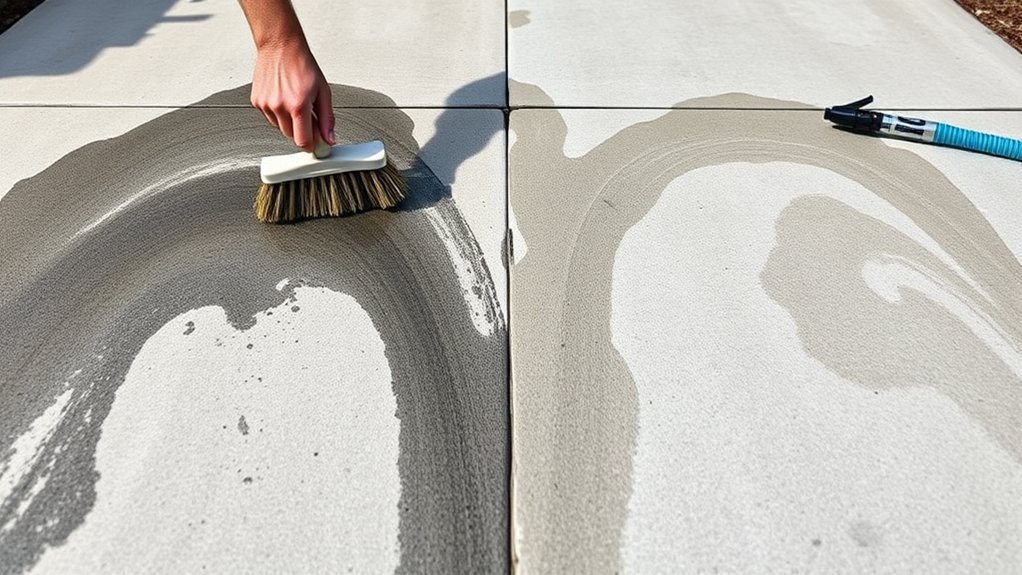
To get tire marks off cement, start by sweeping away loose dirt so the cleaner can reach the rubber residue. Apply a concrete-safe degreaser generously over the tire marks, then let it sit for 10 to 30 minutes. Keep the surface damp during this dwell time because dried cleaner will not work as well.
Scrub the area with a stiff nylon brush in small sections. Use firm, overlapping strokes and add more degreaser if the stain starts to dry. Once the residue loosens, rinse the concrete thoroughly with a hose, sprayer nozzle, or pressure washer. If a shadow remains, repeat the same cycle instead of immediately reaching for stronger chemicals.
Warning: Do not let degreaser, rubber residue, or solvent rinse water run into a storm drain. Block nearby drains when needed, collect dirty rinse water where local rules require it, and always follow the cleaner label for disposal and safety.
Before You Start: Check the Surface
Concrete is tough, but not every slab should be cleaned the same way. Before applying cleaner to the whole area, test a small hidden spot and wait for it to dry. This helps you check for discoloration, sealer damage, or surface etching.
- Bare driveway concrete: Usually handles a concrete-safe degreaser, stiff nylon brush, and careful rinsing well.
- Sealed concrete: Test first. Strong cleaners and solvents can dull, soften, or strip some sealers.
- Decorative, stamped, stained, or colored concrete: Use the mildest method first and avoid aggressive pressure washing.
- Epoxy or coated garage floors: Start with a pH-neutral or non-filming cleaner and a soft to medium brush. Do not use harsh solvents unless the coating manufacturer allows it.
- Cracked, flaking, or weak concrete: Avoid high pressure. Scrub gently and consider professional help if the surface is already deteriorating.
What Cleaner Works Best for Tire Marks?
The best cleaner for tire marks on cement is usually a concrete-safe degreaser. Tire marks often contain rubber residue, plasticizers, oils, and grime, so a cleaner that can break down oily residue works better than water alone.
| Type of Tire Mark | Best First Cleaner | Notes |
| Fresh, light marks | Warm water and dish soap | Good for quick cleanup, but may not lift dark rubber stains. |
| Typical driveway tire marks | Concrete-safe degreaser | Let it dwell, scrub, rinse, and repeat if needed. |
| Sealed or coated floors | pH-neutral or coating-safe cleaner | Avoid solvents unless the sealer or coating manufacturer approves them. |
| Old, dark, stubborn marks | Stronger concrete cleaner or professional treatment | Repeated cleaning may be safer than jumping to harsh solvents. |
[Products Worth Considering]

RecDec pressure washer shower nozzle tips deliver a quick-connect misting spray for car washing, outdoor cleaning, and gentle watering tasks. The stainless steel adapter features instant plug-and-play installation with a 1/4 inch quick connect for compatibility with most high-pressure washers. Choose from multiple screen hole sizes for different spray intensities and easily attach or remove as needed.

Clean wheels and rims with soft feathered bristles that safely remove dirt and road grime while helping restore original luster. The short non-slip handle makes it easy to scrub in tight wheel wells, and the brush is suitable for vehicles and hard-to-reach areas. It can also be soaked and rubbed to help restore bristles to their shape after use.

The SPTA wheel and tire brush kit makes it easy to remove dirt from wheels, rims, and hard-to-reach areas without needing a high pressure washer. Ergonomic handles and soft, chemical-resistant bristles help you clean faster while reducing the risk of scratching. The set is versatile for cars, trucks, motorcycles, bicycles, RVs, boats, and more.
Best Cleaner Options
For most cement driveways, use a concrete degreaser labeled for outdoor concrete. Apply it according to the label, keep it wet during dwell time, and scrub before rinsing. For fresh marks, warm water and dish soap may be enough. For epoxy or coated garage floors, use a non-filming, pH-neutral cleaner unless the coating manufacturer recommends something stronger.
Note: Avoid paint strippers and heavy solvents as a normal DIY cleaner for tire marks. Some solvents can damage sealers, create fire or inhalation hazards, or require special disposal.
Application and Scrubbing
Apply cleaner evenly over the tire marks with a pump sprayer, sponge, or pour-and-spread method. Let it dwell for 10 to 30 minutes, depending on the label and stain severity. Do not let the cleaner dry on the surface.
- Sweep the cement first so grit does not interfere with scrubbing.
- Apply enough cleaner to fully wet the tire marks.
- Let the product dwell while staying damp.
- Scrub with a stiff nylon brush or floor scrubber.
- Rinse until the water runs clear.
Pro Tip: Work in small sections. A cleaner that stays wet for the full dwell time will usually lift more residue than one spread too thin across a large area.
How to Scrub Tire Marks Off Concrete
Scrubbing does the real work. The cleaner softens the residue, but the brush helps pull it out of the concrete pores and surface texture.
[Products Worth Considering]

This 3-piece wheel and tire brush set makes it easy to clean light, medium, and heavy dirt from wheels, rims, tires, and exterior surfaces. It includes both soft and stiff bristle options for gentle scrubbing and tough grime removal, helping lift brake dust and road buildup. The long-handle design supports comfortable cleaning across cars, trucks, SUVs, RVs, motorcycles, and more, with simple care instructions to restore brush shape.
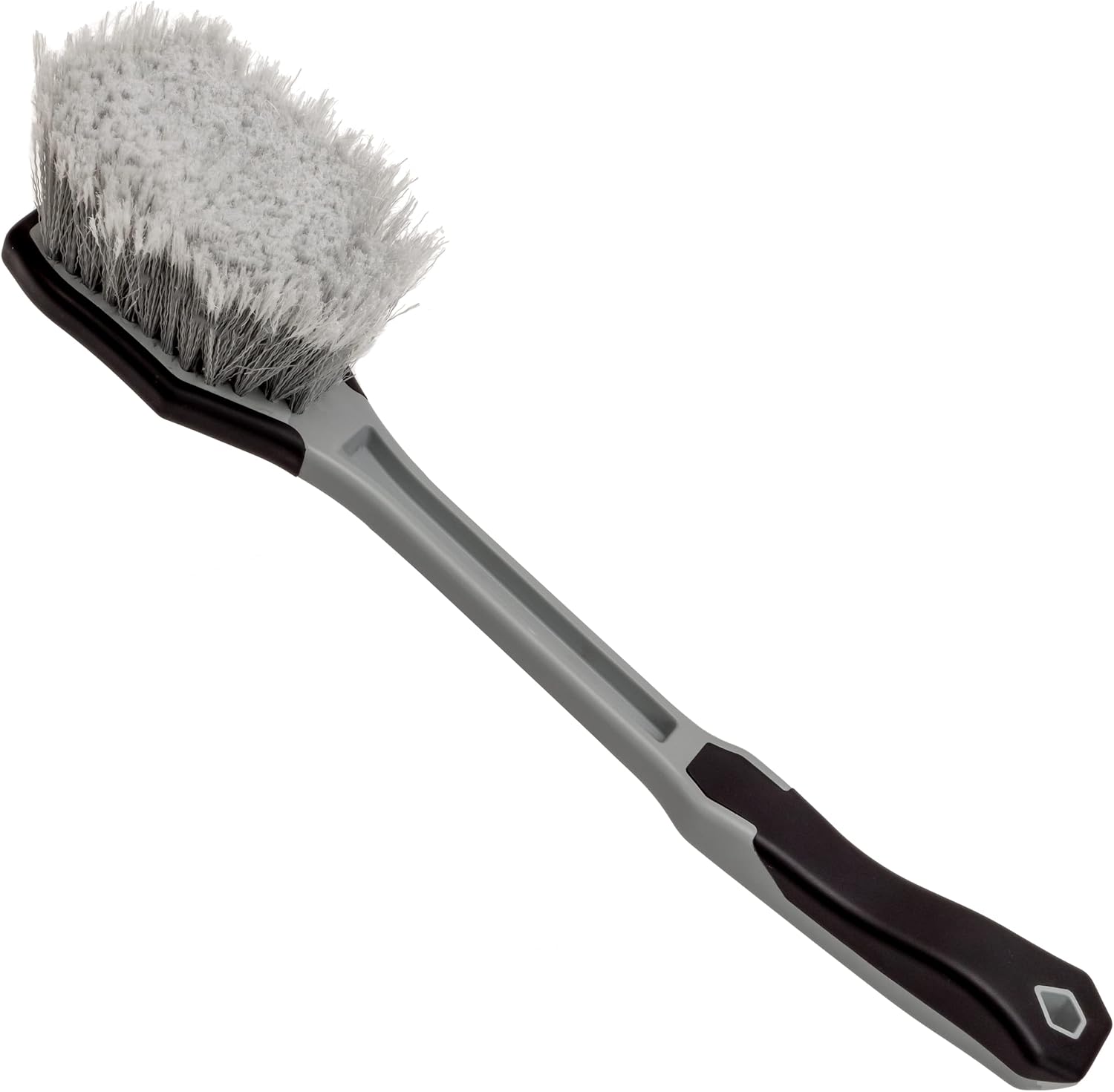
Clean grills, fenders, fender flares, bumpers, and wheel wells with a long-handled brush built for detailed car washing. The soft, triple-flagged bristles and dense scrub coverage help lift dirt gently while making coverage fast and easy. Use it with your favorite car wash soap for tires and exterior surfaces, and it also works for bike, motorcycle, boat, or RV cleaning.

This oesee 8-piece wheel care kit helps you clean, scrub, and dry wheels safely with purpose-built brushes and towels. The scratch-free microfiber wheel brush lifts brake dust and grime, while the stiff pro-grip tire brush removes tire browning and embedded dirt. A twist loop microfiber drying towel and an applicator help achieve a streak-free finish and cleaner, more even product application.
Choose the Right Brush
Use a stiff nylon or polypropylene brush for bare concrete. Avoid wire brushes on decorative, sealed, or coated surfaces because metal bristles can scratch, discolor, or leave rust-prone fragments behind. For a large garage or driveway, a deck brush, floor scrubber, or rotary floor machine can make the job easier.
- Use stiff nylon bristles for raw concrete.
- Use softer bristles for epoxy, painted, stained, or sealed floors.
- Replace worn brushes that no longer hold firm pressure.
Scrub and Rinse
Scrub in overlapping strokes while the cleaner is still wet. Push the brush across the tire mark from several directions instead of scrubbing only in one line. When the dark residue starts to loosen, rinse thoroughly. A hose with a strong spray nozzle works for small marks. A pressure washer can help on larger outdoor slabs, but use a fan tip or surface cleaner, keep the wand moving, and test first.
Warning: Do not concentrate a pressure washer in one spot. High pressure, the wrong nozzle, or holding the wand too close can etch concrete, strip sealer, or leave permanent wand marks.
How to Rinse and Repeat for Tough Marks
If the tire marks are still visible after the first rinse, do not panic. Old rubber residue, hot-tire pickup, and sealed-in discoloration often need more than one pass.
- Let the concrete drain so you can see what remains.
- Reapply degreaser only to the dark areas.
- Let it dwell again while staying wet.
- Scrub the stubborn spots with steady pressure.
- Rinse thoroughly and inspect after drying.
Repeat the process two or three times before escalating to stronger products. If the stain is inside a sealer or coating, cleaning may lighten it but not fully remove it. In that case, the fix may require stripping and recoating the affected area.
How to Prevent Tire Marks on Cement
Once the cement is clean, prevention is easier than repeated deep cleaning. Tire marks are more likely when hot tires sit on dusty, dirty, sealed, or porous concrete.
- Clean regularly: Sweep or rinse dust, grit, and oily film before tires press it into the surface.
- Let hot tires cool: After a long drive, avoid sharp turns or hard parking on a freshly cleaned or newly sealed slab.
- Use mats in garages: Parking mats or garage runners reduce direct tire contact, but avoid rubber-backed mats on fresh or sensitive sealers unless the product allows them.
- Choose exterior sealers carefully: For outdoor concrete, penetrating silane or siloxane sealers can be a better choice than film-forming sealers where hot-tire marking is a concern.
- Keep coatings compatible: If you want a coated garage floor, choose a hot-tire-resistant coating system installed according to the manufacturer’s surface-prep instructions.
A sealer can help reduce absorption and make cleaning easier, but it will not make cement completely tire-mark-proof. Maintenance still matters.
Why Tire Marks Stick to Concrete
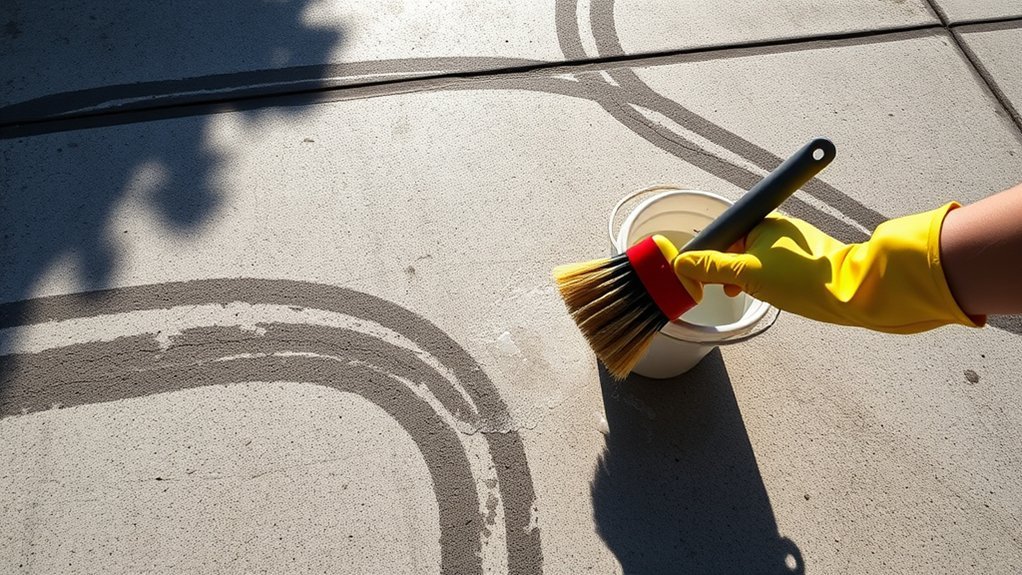
Tire marks stick because heat, pressure, and friction can transfer rubber residue and tire plasticizers onto the cement. Concrete is porous, so the residue can settle into tiny surface openings instead of sitting loosely on top. On sealed or coated concrete, hot-tire pickup can also discolor or soften the sealer itself.
Heat and friction make tire residue more likely to transfer, while porous or coated concrete gives that residue a place to cling.
This is why a targeted cleaner works better than water alone. Water rinses loose dirt, but it does not always break the oily bond between rubber residue and cement.
Troubleshooting Stubborn Tire Marks
[Products Worth Considering]

This chemical vulcanizing cement promotes rubber vulcanization at room temperature, helping create durable tire repairs without heat. The included brush makes application easy, and the quick-drying formula with accelerators helps the repair cure faster for reliable patch or plug sealing. It’s suitable for cars, motorcycles, and bikes, supporting repairs for both inner tubes and outer tires.

This wheel brush kit delivers pro-level cleaning at home, lifting dirt, grime, and brake dust to help restore wheel appearance. It includes multiple brush styles and applicator pads for tackling different wheel surfaces, with gentle, metal-free bristles designed to reduce scratching risk. The flat and double-ended brushes are built for comfort and reach, making wheel care easier for cars, trucks, and RVs.
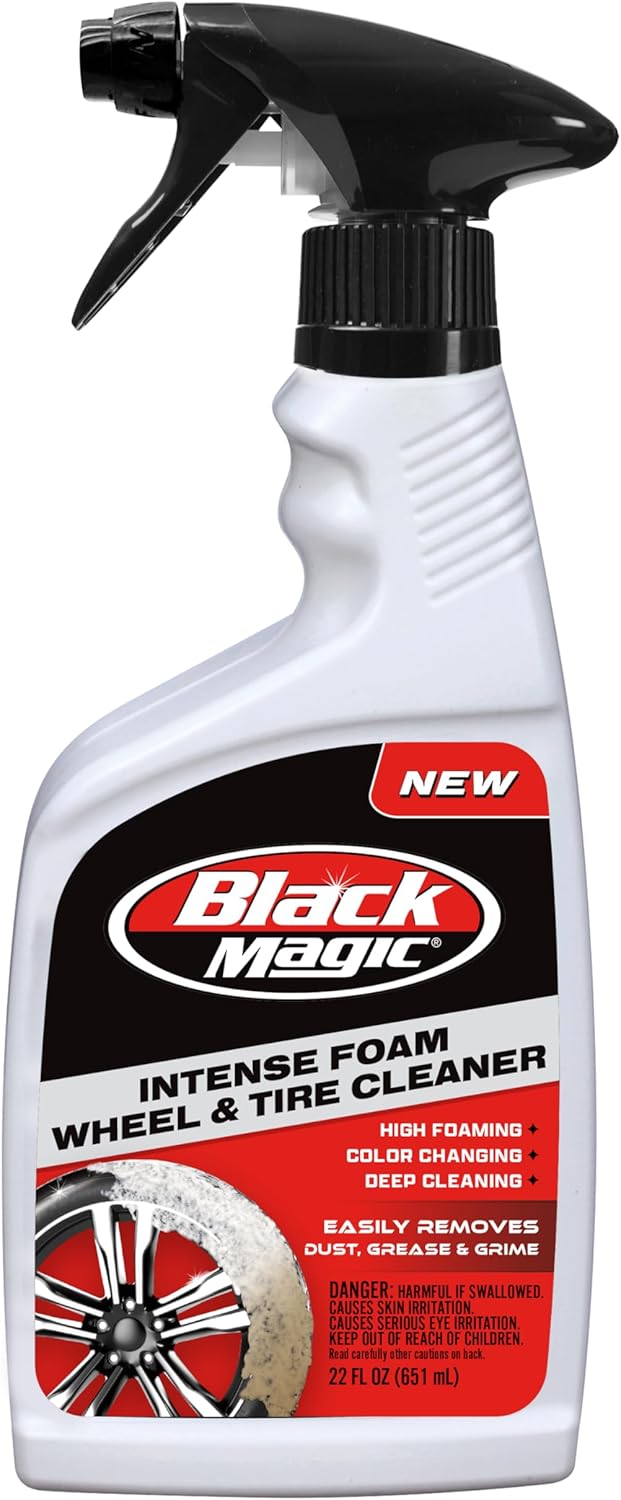
Black Magic Intense Foam Wheel & Tire Cleaner uses a high-foaming action to lift away dirt, grime, and brake dust without scrubbing. The color-changing formula helps show contaminants being dissolved as foam turns from white to brown. Safe for all wheel types and even wheel wells, it leaves a like-new, slick finish with a fresh cherry scent.
The Mark Looks Lighter but Is Still Visible
Repeat the degreaser, dwell, scrub, and rinse cycle. Let the area dry before deciding whether another pass is needed because wet concrete can make stains look darker.
The Mark Is on Sealed Concrete
Use a cleaner approved for the sealer. If the mark has migrated into the sealer, cleaning may not remove it fully. The affected section may need to be stripped and resealed.
WD-40 Left an Oily Spot
Wash the area with a concrete-safe degreaser and warm water, then rinse thoroughly. WD-40 may help loosen some residue, but it is oily and should not be your first choice for porous cement.
Pressure Washing Left Lines
Lines usually mean the spray was too concentrated or the wand was moved unevenly. Clean the whole area with overlapping passes using a wider fan tip or surface cleaner. Avoid trying to erase lines by blasting one narrow strip.
The Mark Will Not Come Out
If the mark remains after several careful cleanings, it may be deep residue, sealer discoloration, or coating damage. At that point, a professional concrete cleaner or coating contractor may be safer than stronger DIY chemicals.
Frequently Asked Questions
What gets tire marks off of concrete?
A concrete-safe degreaser, stiff nylon brush, and thorough rinse remove most tire marks from concrete. Let the degreaser dwell for 10 to 30 minutes, keep it wet, scrub the mark, and rinse well. Repeat stubborn areas after the concrete dries enough to inspect.
Does WD-40 remove tire marks from concrete?
WD-40 may loosen some small rubber or oily marks, but it can leave its own oily residue on porous concrete. Use it only as a small test-spot backup, then wash the area with a concrete-safe degreaser and rinse thoroughly.
Will Dawn remove tire marks from concrete?
Dish soap can help with fresh, light tire marks because it cuts oily grime. Mix it with warm water, scrub with a stiff nylon brush, and rinse well. For dark or older marks, a concrete-safe degreaser usually works better.
What dissolves rubber tire marks?
Concrete degreasers and rubber-mark removers are the safest first choice for most homeowners. Strong solvents can soften sealers, create fumes, damage coatings, or require special disposal, so use them only if the product label and surface manufacturer allow it.
Can I pressure wash tire marks off cement?
Yes, but pretreat the mark first. Degreaser and scrubbing loosen the residue so the pressure washer can rinse it away. Use a fan tip or surface cleaner, keep the wand moving, and test a hidden area before cleaning the full slab.
How do I remove tire marks from an epoxy garage floor?
Start with a pH-neutral, non-filming cleaner and a soft or medium brush. Avoid abrasive pads and strong solvents unless the epoxy manufacturer approves them. If the mark is hot-tire pickup inside the coating, cleaning may not fully restore it.
Conclusion
Getting tire marks off cement is mostly about patience and the right sequence: degreaser, dwell time, scrubbing, and a complete rinse. Start with the safest cleaner that fits your surface, test first, and repeat the process before moving to stronger products. Once the marks are gone, regular cleaning, mats, careful parking, and the right sealer can make future cleanup much easier.
Sources
- Euclid Chemical Technical Bulletin CP-22 — plasticizer migration, hot-tire pickup, degreaser cleaning, and silane/siloxane sealer guidance.
- U.S. EPA Stormwater BMP: Vehicle Maintenance and Washing — why detergent and vehicle-related runoff should be kept out of storm drains.
- CDC/NIOSH Pocket Guide: o-Xylene — solvent exposure routes, symptoms, and safety concerns.
- U.S. EPA Risk Management for n-Methylpyrrolidone (NMP) — current risk-management context for NMP solvents.
- Simpson Pressure Washer Manual — nozzle selection and testing surfaces before high-pressure spraying.