
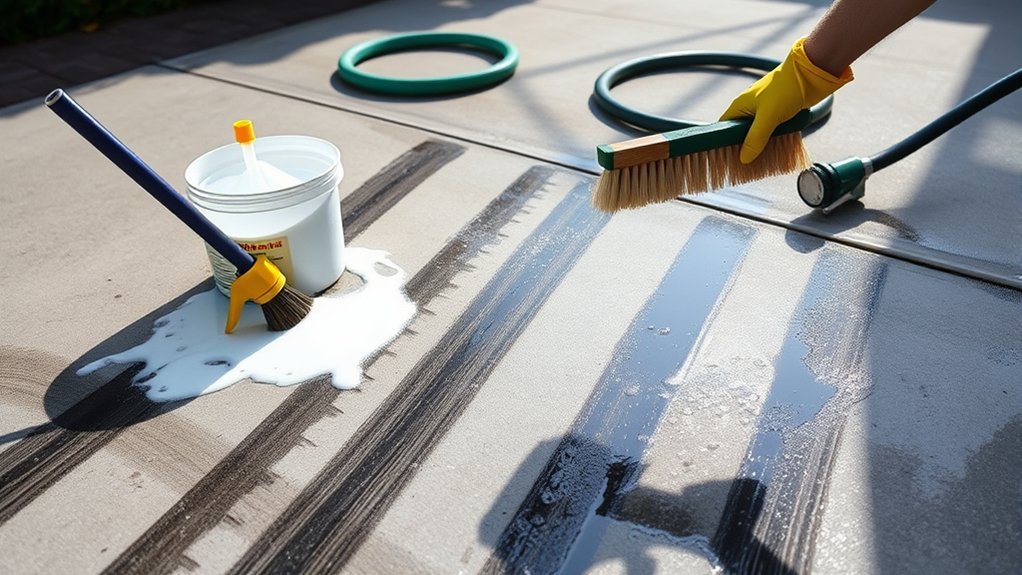
Tire skid marks on concrete look stubborn, but most of them are rubber residue sitting on or slightly bonded to the surface. The safest starting point is simple: use a concrete-safe cleaner, give it time to work, scrub with the right brush, and rinse before the cleaner dries. Stronger chemicals should only come after a test spot and basic safety checks.
Quick Answer
To remove tire skid marks from concrete, sweep the area, apply a concrete-safe degreaser or driveway cleaner, let it dwell for 5 to 15 minutes, scrub with a stiff nylon brush, then rinse thoroughly. Repeat for old marks, but never mix bleach with degreasers or other cleaners.
Key Takeaways
- Start with a concrete-safe degreaser, citrus cleaner, or peroxide-based driveway cleaner before trying harsher products.
- Let the cleaner dwell, but do not let it dry on the concrete.
- Use a stiff nylon brush, not a wire brush that can scratch or leave metal marks.
- Rinse with a hose or pressure washer, but keep pressure-washer safety in mind.
- For sealed or coated concrete, test first because hot-tire marks may involve plasticizer migration into the sealer.
At a Glance
| Time Required | 15 to 45 minutes for fresh marks; longer for older stains |
| Difficulty | Easy to moderate |
| Tools Needed | Broom, concrete-safe cleaner, stiff nylon brush, gloves, eye protection, hose or pressure washer |
| Cost | Usually low if you already own a brush and hose; cleaner cost varies by product |
Remove Tire Skid Marks From Concrete
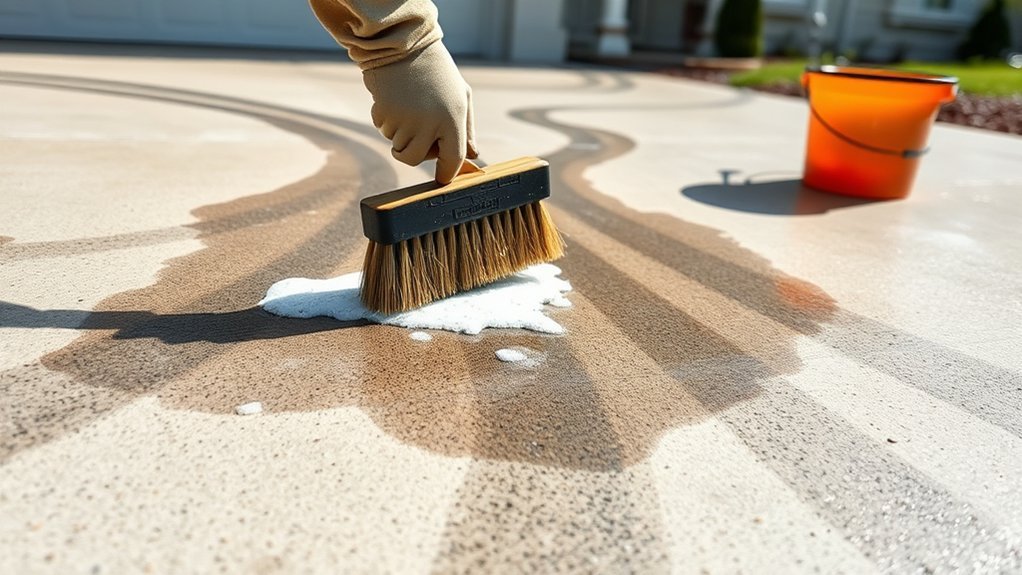
The best way to remove tire marks is to work from mild to stronger methods. Fresh rubber residue often lifts with a driveway cleaner and scrubbing. Older marks may need a longer dwell time, a second round, or a cleaner made for oil, grease, and rubber residue.
Use a product labeled for concrete or masonry. For example, some concrete and driveway cleaners are made to lift oil, grease, tire marks, and exhaust buildup from driveways, patios, walkways, and masonry. Always follow the product label, especially dilution, dwell time, protective gear, and rinsing instructions.
Warning: Do not mix bleach with degreasers, ammonia, acids, vinegar, or other cleaners. Use one product at a time, rinse thoroughly, and let the area clear before switching products.
Why Tire Skid Marks Form
Tire marks happen when heat, friction, rubber compounds, and concrete texture work together. On bare concrete, the mark may be surface rubber scuffing. On sealed or coated concrete, the mark may also involve plasticizer migration, where softening compounds from hot tires transfer into the sealer or coating.
Heat and Friction
Hard braking, sharp turning, tight steering, and parking after a long drive can all make tire marks worse. Tires heat up as they roll, and that heat can make rubber residue easier to transfer. Rough concrete also gives the residue more tiny pores and texture to grab.
| Cause | Why It Matters |
| Hard braking | Creates friction and rubber transfer |
| Sharp turns | Smears warm rubber across the surface |
| Hot tires | Increase the chance of rubber or plasticizer transfer |
| Porous concrete | Traps residue in surface texture |
Plasticizer Migration
Plasticizer migration is especially important on sealed or coated concrete. Euclid Chemical’s technical bulletin on tire marking and concrete sealers explains that plasticizers in tire rubber can soften when tires heat up, then migrate into some concrete sealers or coatings and cause discoloration.
This does not mean every tire mark is permanent. It does mean coated or sealed concrete needs a gentler approach. Scrubbing bare concrete aggressively is one thing; damaging a coating is another.
Surface Susceptibility
Unsealed, rough, or older concrete can hold rubber residue in pores. Sealed concrete, acrylic cure-and-seal products, epoxy floors, and decorative coatings can react differently. Before cleaning a large area, test your cleaner in a hidden spot and check for color change, softening, gloss loss, or coating lift.
Note: Rubber-backed mats, rubber rugs, and other rubber items can also discolor some sealed or coated concrete surfaces. If you use parking mats, choose ones that are compatible with your floor coating.
Tools and Materials You Need
- Broom or leaf blower
- Concrete-safe degreaser, citrus cleaner, or peroxide-based driveway cleaner
- Bucket of clean water
- Stiff nylon brush or deck brush
- Garden hose with nozzle
- Pressure washer, optional
- Nitrile or chemical-resistant gloves
- Safety glasses or splash goggles
- Plastic scraper, optional for thick residue
- Absorbent towels or wet/dry vacuum for indoor garages
Avoid wire brushes on decorative, sealed, or coated concrete. Wire can scratch the surface and may leave metal particles that later rust.
[Products Worth Considering]

This 3-piece wheel and tire brush set makes it easy to clean light, medium, and heavy dirt from wheels, rims, tires, and exterior surfaces. It includes both soft and stiff bristle options for gentle scrubbing and tough grime removal, helping lift brake dust and road buildup. The long-handle design supports comfortable cleaning across cars, trucks, SUVs, RVs, motorcycles, and more, with simple care instructions to restore brush shape.

RecDec pressure washer shower nozzle tips deliver a quick-connect misting spray for car washing, outdoor cleaning, and gentle watering tasks. The stainless steel adapter features instant plug-and-play installation with a 1/4 inch quick connect for compatibility with most high-pressure washers. Choose from multiple screen hole sizes for different spray intensities and easily attach or remove as needed.

This oesee 8-piece wheel care kit helps you clean, scrub, and dry wheels safely with purpose-built brushes and towels. The scratch-free microfiber wheel brush lifts brake dust and grime, while the stiff pro-grip tire brush removes tire browning and embedded dirt. A twist loop microfiber drying towel and an applicator help achieve a streak-free finish and cleaner, more even product application.
Choose the Right Cleaner for the Mark
Match the cleaner to the surface and stain age. A fresh tire scuff on a driveway usually does not need harsh solvent. An old mark on a sealed garage floor may need repeat cleaning and a coating-safe product.
| Situation | Best First Choice |
| Fresh marks on bare concrete | Concrete driveway cleaner or mild degreaser |
| Old marks on bare concrete | Stronger concrete degreaser, longer dwell time, repeat scrubbing |
| Sealed or coated floor | pH-neutral or coating-safe cleaner recommended by the coating maker |
| Decorative/stamped concrete | Gentle cleaner and soft-to-medium brush after a hidden test spot |
[Products Worth Considering]

Cristal Products Untouchable Tire Shine Spray delivers a deep, wet-look gloss that enhances your vehicle’s tires. It’s quick-drying and spreads smoothly for consistent, streak-free coverage, while forming a protective coating against UV rays, road grime, and weather. Suitable for all tire types, it helps restore dull, faded tires to a showroom-quality finish.
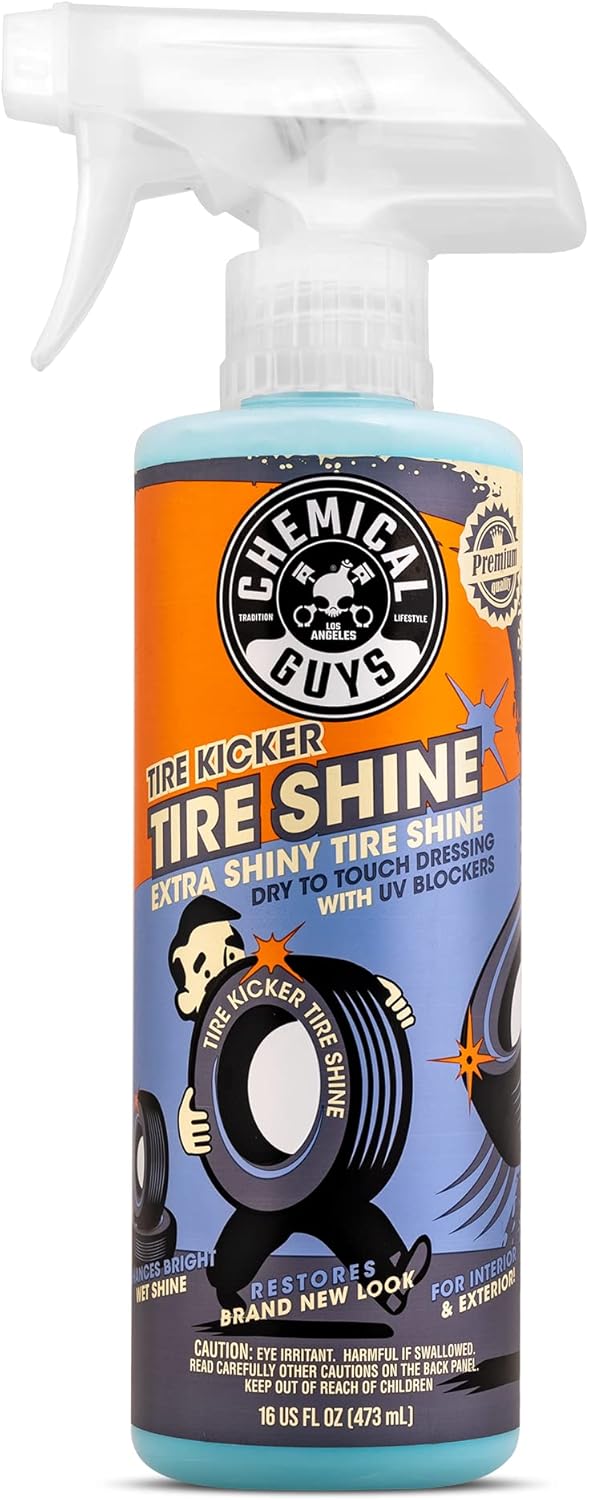
Chemical Guys Tire Kicker Sprayable Extra Glossy Tire Shine restores a deep, wet look on tires, rubber, vinyl, and plastic trim. It delivers a rich showroom shine that enhances color and luster while helping protect against fading, cracking, and discoloration. The spray application dries to the touch with a streak-free finish and no greasy sling, for fast results on cars, trucks, motorcycles, RVs, and boats.

The SPTA wheel and tire brush kit makes it easy to remove dirt from wheels, rims, and hard-to-reach areas without needing a high pressure washer. Ergonomic handles and soft, chemical-resistant bristles help you clean faster while reducing the risk of scratching. The set is versatile for cars, trucks, motorcycles, bicycles, RVs, boats, and more.
Clean Fresh Tire Marks Fast
Fresh tire marks are the easiest to remove. Sweep first so grit does not scratch the surface. Wet the area lightly, apply cleaner, and let it dwell according to the label. Many cleaners need only a few minutes; tougher rubber residue may need 10 to 15 minutes.
- Sweep the concrete. Remove dust, sand, leaves, and loose grit.
- Test the cleaner. Apply it to a hidden spot and wait long enough to check for discoloration.
- Apply cleaner to the tire mark. Cover the rubber residue, not the whole driveway.
- Let it dwell. Keep the area wet and do not let the cleaner dry.
- Scrub with a stiff nylon brush. Use firm, even strokes with the direction of the mark and across it.
- Rinse thoroughly. Flush loosened rubber and cleaner away with clean water.
- Repeat if needed. A second round is safer than jumping straight to harsh chemicals.
Pro Tip: Work in small sections. Cleaner that dries on concrete can leave residue, streaks, or a light patch that is harder to blend.
Use Degreaser on Stubborn Marks
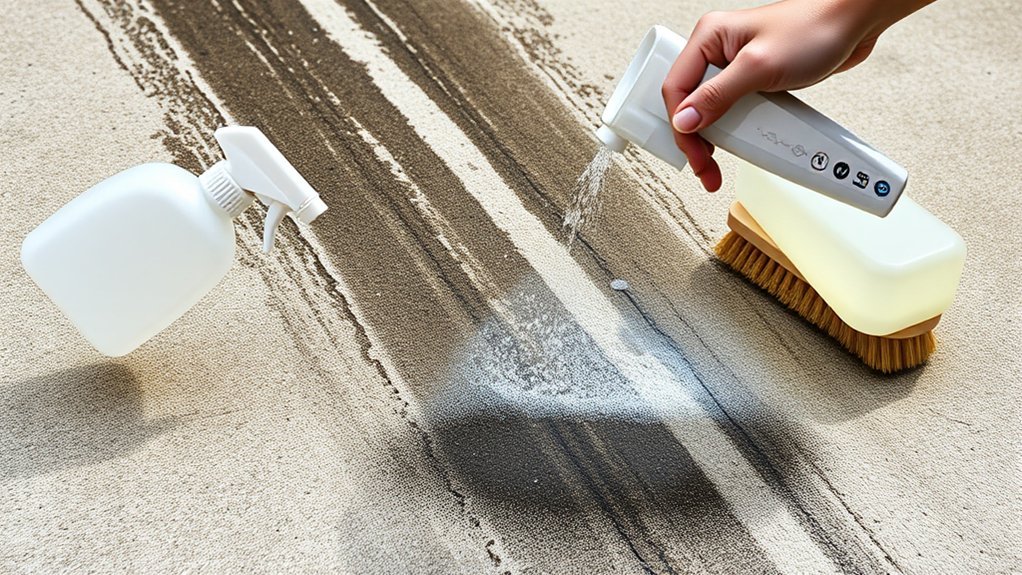
For stubborn tire skid marks, use a cleaner made for concrete, driveways, or garage floors. Products in this category are designed for oil, grease, automotive residue, and tire marks. Read the label before use because dwell times, dilution ratios, and pressure-washer instructions vary.
[Products Worth Considering]

Monitor tire tread wear with a smart, color-coded depth gauge that shows clear condition ranges at a glance. The bar is range marked for fast, easy readings, helping you maintain safer traction and performance. Each gauge is portable with a pocket clip, and the set includes 20 units for daily use and sharing.

This wheel brush kit delivers pro-level cleaning at home, lifting dirt, grime, and brake dust to help restore wheel appearance. It includes multiple brush styles and applicator pads for tackling different wheel surfaces, with gentle, metal-free bristles designed to reduce scratching risk. The flat and double-ended brushes are built for comfort and reach, making wheel care easier for cars, trucks, and RVs.

This professional wheel and rim cleaning brush set lifts brake dust, grime, and dirt with soft, scratch-free microfiber and synthetic wool fibers. The rim brush bends up to 360 degrees for easy access to hard-to-reach areas around spokes, lips, and faces. Ideal for thorough cleaning of car, truck, motorcycle, bicycle, RV, and more wheel and tire surfaces.
Degreaser Application Steps
- Remove loose debris. Sweep or blow the area clean.
- Pre-wet surrounding concrete. This helps reduce uneven cleaner absorption.
- Apply the degreaser. Saturate the mark without flooding nearby grass, drains, or coated areas.
- Wait 5 to 15 minutes. Follow the label and keep the cleaner from drying.
- Scrub firmly. Use a stiff nylon brush or deck brush.
- Rinse from clean to dirty. Push residue away from walls, garage interiors, and landscaping.
- Inspect after drying. Wet concrete hides shadows, so judge the result once the surface dries.
Tough Mark Removal
If a shadow remains after the first cleaning, repeat the same process with fresh cleaner. Warm water can help some degreasers work better, but only if the product label allows it. Do not use boiling water on coated floors, and do not use solvent products near ignition sources.
If the mark is on a garage floor coating and it will not lift, stop before you scrub through the finish. The problem may be discoloration in the sealer or coating rather than dirt on top of it.
Try Stronger Cleaners for Old Marks
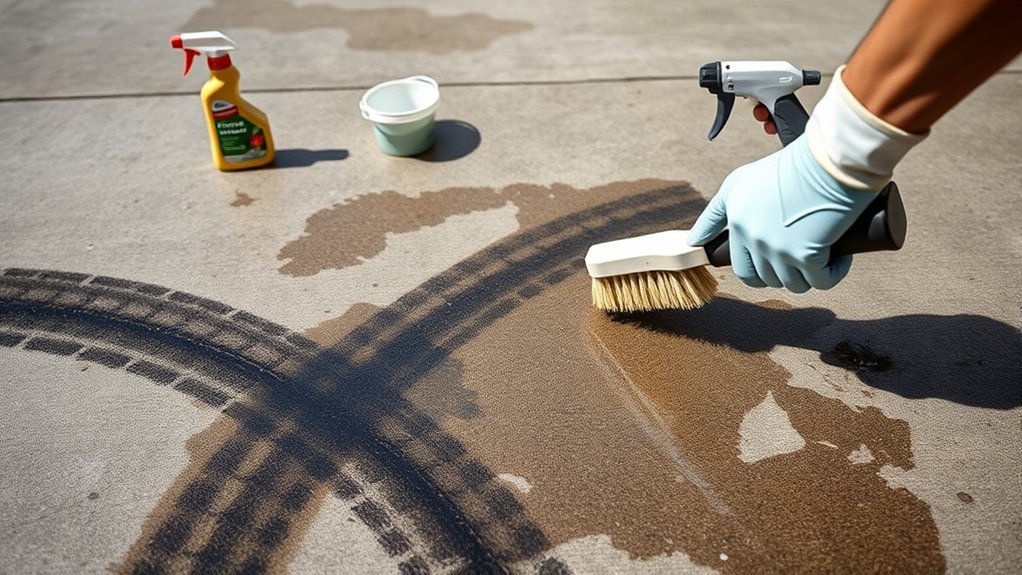
Old tire marks may need a stronger concrete-safe cleaner, but stronger does not mean mixing chemicals. Choose one product, use it as directed, rinse completely, and reassess after the concrete dries.
For bare outdoor concrete, you can move from a mild driveway cleaner to a heavier-duty concrete degreaser. For coated concrete, use the cleaner recommended by the coating manufacturer. If the label warns against use on painted, sealed, or coated surfaces, do not use it on a garage floor coating.
Warning: Avoid casual use of NMP paint strippers, brake cleaner, gasoline, lacquer thinner, or other aggressive solvents on concrete. They can create health, fire, coating-damage, and runoff risks. If a stain needs solvent stripping, it is usually time to call a concrete or coating professional.
Scrub and Rinse Concrete Properly
Scrubbing does the mechanical work that cleaner cannot do by itself. Use controlled pressure and overlap your strokes. If the mark follows a tire tread pattern, scrub both with the tread direction and across it.
| Action | Purpose |
| Apply cleaner | Loosen rubber residue and grime |
| Wait briefly | Give the cleaner time to work |
| Scrub with nylon brush | Break the bond between rubber and concrete |
| Rinse thoroughly | Remove cleaner and loosened residue |
If you use a pressure washer, follow the owner’s manual and safety guidance. The CDC warns that pressure washers can cause serious wounds, electric shock, flying debris, and carbon monoxide hazards from gasoline-powered units. Keep the spray away from people, pets, electrical outlets, and fragile coatings.
Special Care for Sealed, Painted, or Coated Concrete
Garage floor coatings, sealers, and decorative finishes need more caution than plain concrete. Tire marks on these surfaces may be surface grime, but they may also be hot-tire discoloration in the coating.
- Use a pH-neutral or coating-safe cleaner first.
- Avoid abrasive pads unless the coating maker approves them.
- Do not use strong solvents unless the product label says they are safe for that coating.
- Do not pressure wash close to the surface because you may cut or lift the coating.
- If the coating softens, turns tacky, loses gloss, or peels, stop cleaning and contact the coating manufacturer or installer.
Some coatings are designed to resist hot tire pickup, but no coating should be cleaned blindly with harsh chemicals. Product compatibility matters.
Troubleshooting Common Problems
| Problem | What to Do |
| The mark is lighter but still visible | Repeat the same cleaner, extend dwell time within label limits, and scrub again. |
| The cleaned area looks brighter than the rest | Clean a larger surrounding area to blend the appearance. |
| Cleaner dried on the surface | Re-wet, lightly scrub, and rinse thoroughly before it leaves residue. |
| Coating turns tacky or dull | Stop immediately. Rinse, dry, and contact the coating manufacturer or installer. |
| Marks keep returning | Reduce sharp turns, let tires cool, clean more often, and consider compatible tire pads or a suitable sealer. |
Prevent Tire Marks on Concrete
Prevention is easier than repeated cleaning. Tire marks are more likely when hot tires meet porous, dirty, sealed, or coated surfaces. Small habit changes can reduce the problem.
- Clean the concrete regularly so rubber residue does not build up.
- Avoid sharp turns, hard braking, and dry steering on the same spot.
- Let tires cool before parking on a garage coating after long drives when possible.
- Use floor mats or tire pads that are compatible with your coating.
- Keep decorative or sealed concrete maintained according to the sealer manufacturer’s directions.
- For exterior concrete, consider a penetrating silane or siloxane sealer when tire marking is a concern.
For indoor garage coatings, manufacturer claims vary. Some epoxy and coating systems are advertised for hot-tire pickup resistance, but surface preparation, cure time, moisture, product type, and tire heat all affect performance.
Call a Concrete Pro for Tough Stains
Call a concrete or coating professional if the tire marks will not lift after two or three careful cleaning cycles, if the surface is decorative or coated, or if the mark appears to be inside the sealer rather than on top of it. A pro can decide whether the surface needs stronger cleaning, sealer removal, recoating, or a different maintenance plan.
You should also call a pro if the concrete has deep oil contamination, flaking sealer, peeling coating, or severe discoloration. More scrubbing is not always better; sometimes it only damages the surface around the stain.
Frequently Asked Questions
Does WD-40 remove tire marks from concrete?
WD-40 may loosen some fresh rubber smears, but it can also leave oily residue on concrete. A concrete-safe degreaser or driveway cleaner is a better first choice. If you try WD-40 on a small spot, scrub it well and wash the area afterward with a cleaner that removes oil.
How do you get skid steer track marks off concrete?
Sweep the area, apply a concrete-safe degreaser or driveway cleaner, let it dwell without drying, scrub with a stiff nylon brush, and rinse thoroughly. Skid steer marks can be heavier than car tire marks, so you may need a second round or a professional surface cleaner for large areas.
How do you get old skid marks out of concrete?
Old marks need patience. Use a stronger concrete degreaser, extend the dwell time within the label directions, scrub thoroughly, and rinse. Let the concrete dry before judging the result. If the shadow remains on sealed or coated concrete, the discoloration may be in the coating.
What chemical removes tire marks from concrete?
Use a concrete-safe degreaser, citrus-based cleaner, peroxide-based driveway cleaner, or a product specifically labeled for tire marks on concrete. Avoid brake cleaner, gasoline, and harsh solvents as routine DIY options. Never mix bleach with degreasers or other cleaners.
Can a pressure washer remove tire marks from concrete?
A pressure washer can help rinse away loosened rubber residue, but water pressure alone may not remove bonded tire marks. Apply the right cleaner first, scrub, then rinse. Use safe distance, eye protection, and the pressure washer’s manual because high-pressure spray can cause serious injuries.
Will tire marks come back after cleaning?
They can come back if hot tires repeatedly park or turn on the same spot. Reduce sharp turns, clean the concrete regularly, let tires cool when possible, and use compatible mats or sealers for prevention.
Conclusion
You can remove most tire skid marks from concrete with a safe, steady process: sweep, apply a concrete-safe cleaner, let it dwell, scrub with a stiff nylon brush, and rinse before the cleaner dries. For old marks, repeat the process before moving to stronger products. Be extra careful on sealed, painted, or coated concrete, and avoid mixing chemicals. If the mark is deep in a sealer or coating, a concrete pro can help restore the surface without causing more damage.
Sources
- Euclid Chemical — Tire Marking / Pickup of Concrete Sealers — supports plasticizer migration, hot-tire marking, and sealer/coating cautions.
- CDC — Pressure Washer Safety — supports pressure-washer injury and safety warnings.
- CDC — Cleaning and Disinfecting with Bleach — supports the warning not to mix bleach with other cleaners or disinfectants.
- U.S. EPA — Risk Management for n-Methylpyrrolidone (NMP) — supports caution around NMP solvent products.
- Simple Green — Oxy Solve Concrete and Driveway Cleaner — example of a concrete/driveway cleaner labeled for tire marks and label-based use precautions.
- Rust-Oleum Krud Kutter — Concrete & Driveway Pressure Washer Concentrate — example of a concrete cleaner formulated for exterior stains such as oil and grease.

