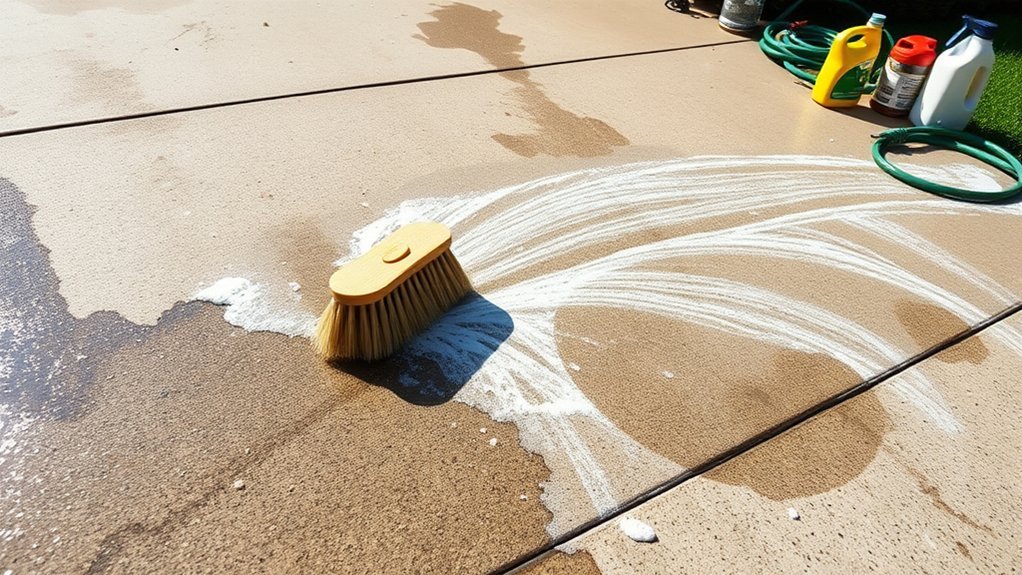
You can remove tire marks from a driveway safely when you start with the least aggressive cleaner that can break down rubber residue. Most marks on concrete respond to a concrete-safe degreaser, a short dwell time, steady scrubbing, and a thorough rinse. Stubborn marks may need a second pass or a commercial tire-mark remover, but harsh solvents and high pressure can damage sealed, fresh, or decorative surfaces.
Quick Answer
To remove tire marks from a driveway, wet the area, apply a concrete-safe degreaser, let it sit for a few minutes, scrub with a stiff nylon brush, and rinse well. Repeat for dark marks. Use gentle pressure, avoid zero-degree nozzles, and spot-test first on sealed or decorative concrete.
Key Takeaways
- Start with a concrete-safe degreaser or non-filming detergent before trying stronger products.
- Let the cleaner dwell briefly, then scrub with a nylon brush and rinse completely.
- Use extra care on sealed concrete, epoxy floors, asphalt, pavers, and new concrete.
- Avoid harsh solvents, wire brushes, and concentrated pressure-washer tips unless the surface manufacturer allows them.
- Prevent repeat marks by cleaning regularly, sealing concrete when appropriate, and avoiding hard turns while parking.
At a Glance
| Time Required | 15 to 45 minutes for most marks; longer if you need a second pass |
| Difficulty | Easy to moderate |
| Tools Needed | Concrete-safe degreaser, bucket, water, stiff nylon brush, hose, gloves, eye protection, optional pressure washer with a wide fan tip |
| Cost | Usually low if you already own a brush and hose; higher for commercial tire-mark removers or resealing |
How Do You Remove Tire Marks on Concrete?
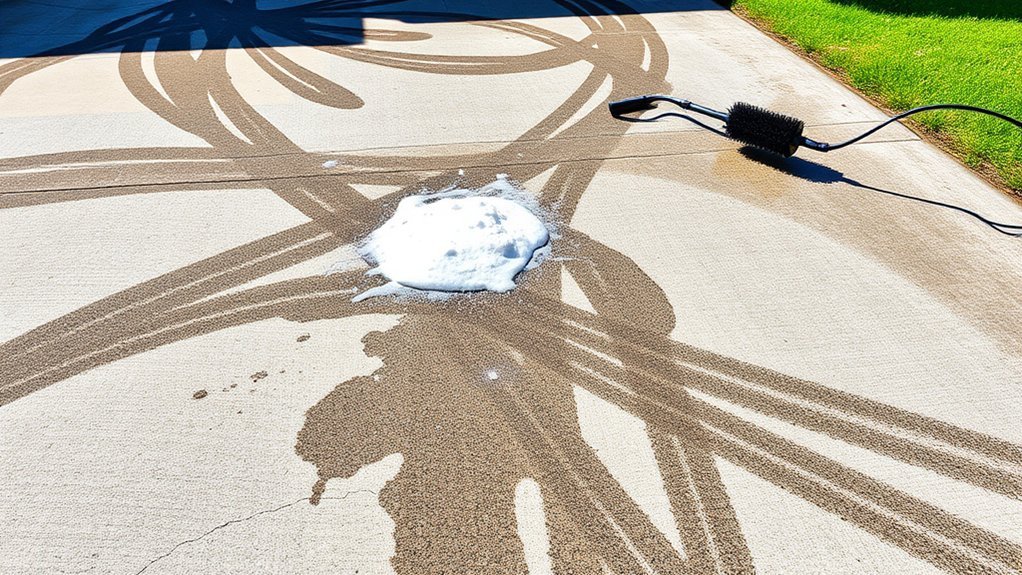
To remove tire marks from concrete, follow a simple cleaning sequence: pre-wet the area, apply a cleaner, let it work, scrub, rinse, and repeat if needed. A product such as Simple Green All-Purpose Cleaner is a common starting point because the manufacturer directs users to spot test, apply the solution, let it sit briefly on heavy soil, scrub if needed, and rinse with clean water.
- Clear the area. Sweep away grit, leaves, and loose dirt so you do not grind debris into the concrete.
- Protect nearby areas. Move planters, cover sensitive plants, and keep cleaner away from storm drains when possible.
- Pre-wet the mark. Damp concrete helps cleaner spread more evenly and reduces fast drying.
- Apply a concrete-safe degreaser. Use the label dilution for heavy soil. Avoid guessing with strong chemicals.
- Let it dwell. Give the cleaner a few minutes to loosen the rubber residue, but do not let it dry on the surface.
- Scrub with a nylon brush. Use firm, steady pressure. Save metal brushes for rough, unsealed concrete only, and use them carefully.
- Rinse thoroughly. Flush away loosened residue and cleaner with a hose or a pressure washer set to the lowest effective pressure.
- Repeat if needed. Dark marks often fade in layers, especially on porous or older concrete.
Warning: Do not mix cleaners, do not use solvents near open flames, and do not aim a pressure washer at skin, pets, windows, paint, old mortar, or a delicate sealer. Wear gloves and eye protection when you scrub or rinse chemical cleaners.
[Products Worth Considering]

The Mothers wheel and fender brush is designed for gentle, scratch-free scrubbing to remove road grime and brake dust. Its ergonomic shape and soft triple-flagged bristles deliver maximum coverage, including hard-to-reach wheel wells and undercarriage areas. With rubberized gripping and a protective rubber bumper, it helps clean safely while protecting delicate finishes on wheels, fenders, and bumpers.

RecDec pressure washer shower nozzle tips deliver a quick-connect misting spray for car washing, outdoor cleaning, and gentle watering tasks. The stainless steel adapter features instant plug-and-play installation with a 1/4 inch quick connect for compatibility with most high-pressure washers. Choose from multiple screen hole sizes for different spray intensities and easily attach or remove as needed.

This 3-piece wheel and tire brush set makes it easy to clean light, medium, and heavy dirt from wheels, rims, tires, and exterior surfaces. It includes both soft and stiff bristle options for gentle scrubbing and tough grime removal, helping lift brake dust and road buildup. The long-handle design supports comfortable cleaning across cars, trucks, SUVs, RVs, motorcycles, and more, with simple care instructions to restore brush shape.
What Causes Tire Marks on Concrete?
Tire marks on concrete usually happen when warm tires transfer rubber residue, carbon-rich particles, road grime, and oils onto the driveway surface. Heat, tight turns, hard braking, heavy vehicles, and repeated parking in the same spot can make those marks darker. Porous concrete holds residue more easily than dense, well-sealed concrete.
Hot Tire Transfer
Hot tire transfer is the dark scuffing you see after a vehicle parks or turns on a driveway. Tires heat up as you drive. When you stop, steer sharply, or brake hard, the warm tread can leave residue on the slab. These marks often resist rain because rubber residue and oily grime do not dissolve easily in water.
Some tire compounds leave more visible marks than others, but you usually cannot tell that from price or brand alone. Driving behavior, driveway texture, surface temperature, and the sealer type often matter more than the tire’s quality.
Concrete Surface Factors
The driveway surface affects how hard the marks are to remove. Rough broom-finished concrete gives residue more texture to grab. Older concrete may have open pores. Some acrylic sealers can soften or discolor under hot tires. Decorative finishes, tinted sealers, stamped concrete, and epoxy coatings need gentler testing before you scrub or rinse.
The faster you clean tire residue, the less time it has to settle into pores, sealer, or surface texture.
What Cleaners Work Best on Tire Marks?
The best cleaner depends on the surface. For most concrete driveways, start with a water-based degreaser or non-filming detergent. The EPA Safer Choice program is useful when you want cleaners reviewed for safer ingredients, product performance, pH, packaging, and VOC limits.
| Cleaner Type | Best For | Caution |
| Concrete-safe degreaser | Most fresh or moderate tire marks | Follow dilution and dwell-time directions |
| Non-filming detergent | Epoxy floors and sealed garage surfaces | Avoid waxy or oily residue |
| Baking soda paste | Light marks and gentle second passes | Less effective on old, dark residue |
| Commercial tire-mark remover | Stubborn marks on compatible bare concrete | Spot-test and protect plants, drains, and sealers |
| Solvent cleaner | Last-resort spot treatment on bare concrete | Can damage sealers, coatings, asphalt, and nearby finishes |
Vinegar, lemon juice, and plain baking soda may help with light dirt or faint scuffs, but they are not the most reliable choices for heavy rubber transfer. Use them only when you want a gentle test before moving to a stronger degreaser.
[Products Worth Considering]

The SPTA wheel and tire brush kit makes it easy to remove dirt from wheels, rims, and hard-to-reach areas without needing a high pressure washer. Ergonomic handles and soft, chemical-resistant bristles help you clean faster while reducing the risk of scratching. The set is versatile for cars, trucks, motorcycles, bicycles, RVs, boats, and more.

Cristal Products Untouchable Tire Shine Spray delivers a deep, wet-look gloss that enhances your vehicle’s tires. It’s quick-drying and spreads smoothly for consistent, streak-free coverage, while forming a protective coating against UV rays, road grime, and weather. Suitable for all tire types, it helps restore dull, faded tires to a showroom-quality finish.

The Chemical Guys Gerbil Wheel & Rim Brush is designed to safely clean wheels, rims, exhaust tips, tires, and engine bay components without scratching delicate finishes. Its soft natural bristles help lift brake dust, grime, and buildup while conforming to tight spaces and intricate contours. A comfort grip handle delivers control for extended detailing sessions.
How Do You Remove Stubborn Tire Marks?
For stubborn tire marks, repeat the same process with better dwell time before you reach for harsher chemicals. Apply a compatible degreaser, keep the surface damp, wait several minutes, scrub, and rinse. If the mark only fades, apply a second fresh coat instead of grinding harder.
[Products Worth Considering]

Clean wheels and rims with soft feathered bristles that safely remove dirt and road grime while helping restore original luster. The short non-slip handle makes it easy to scrub in tight wheel wells, and the brush is suitable for vehicles and hard-to-reach areas. It can also be soaked and rubbed to help restore bristles to their shape after use.

This wheel brush kit delivers pro-level cleaning at home, lifting dirt, grime, and brake dust to help restore wheel appearance. It includes multiple brush styles and applicator pads for tackling different wheel surfaces, with gentle, metal-free bristles designed to reduce scratching risk. The flat and double-ended brushes are built for comfort and reach, making wheel care easier for cars, trucks, and RVs.

This 4-pack wheel brush kit is designed for thorough cleaning of rims, tire tread, and hard-to-reach areas. It includes ultra-soft plush brushes for wheel faces and cracks, a soft brush for lug nut cavities, and a stiff brush for tire cleaning. The scratch-free, metal-free brush heads minimize rim damage, while bendable bristles reach into tight spots for faster grime removal.
Best Cleaning Products
Choose the cleaner based on the driveway finish, not just the stain. Bare concrete can usually handle a stronger degreaser than sealed concrete. Epoxy floors usually need non-filming cleaners. Asphalt can soften or discolor if you use solvents. Pavers may need joint-sand protection during rinsing.
- Use a concrete-safe degreaser for most driveway tire marks.
- Use a non-filming detergent on epoxy and coated garage floors.
- Use baking soda paste for light marks when you want a low-risk test.
- Use commercial tire-mark remover only after reading the surface compatibility label.
- Avoid paint thinner, acetone, brake cleaner, and mineral spirits on sealed, painted, asphalt, or epoxy surfaces unless the manufacturer allows it.
Scrubbing and Rinsing
Scrub concrete with a stiff nylon brush. Nylon gives you enough bite to lift residue without the gouging risk of wire bristles. On epoxy, sealed concrete, or decorative finishes, switch to a softer brush and test first.
Rinse until the water runs clear and no slick cleaner remains. If you use a pressure washer, use a wide fan tip and the lowest pressure that works. Keep the nozzle moving and hold it far enough from the surface to prevent streaking or etching.
Pro Tip: Clean a small test square first. If the test area lightens without changing texture or sheen, use the same method on the full mark.
When to Reclean
Reclean when the mark fades but does not disappear. A second application often works better than one aggressive pass. Let the surface dry between attempts so you can see what remains.
- Reapply cleaner if the mark looks lighter but still visible.
- Use a stronger surface-safe degreaser only after the first cleaner fails.
- Stop if the surface loses sheen, turns chalky, or starts to etch.
- Consider resealing if old concrete absorbs stains quickly after cleaning.
How Can You Clean Tire Marks Safely?
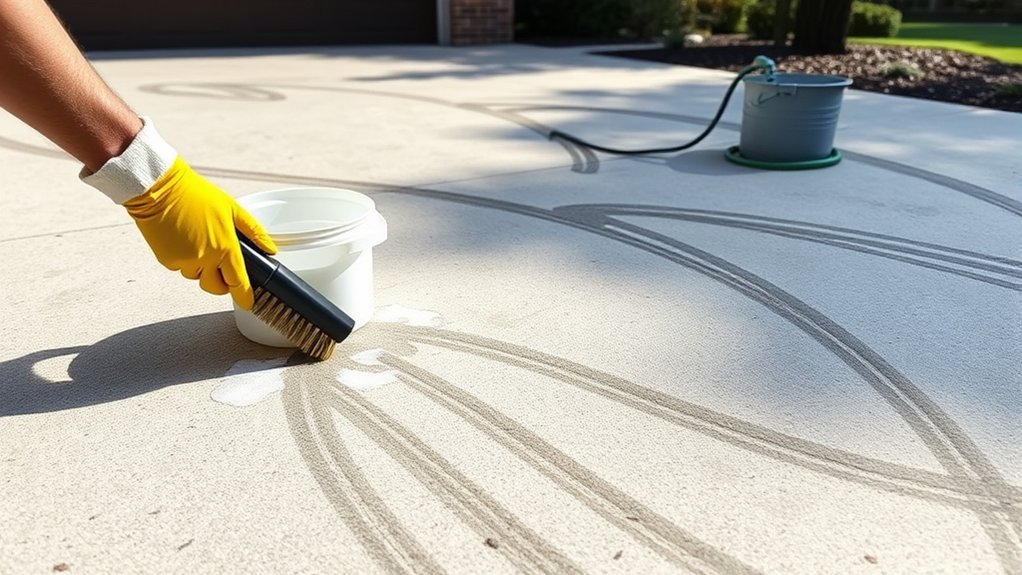
Clean tire marks safely by matching the method to the surface. Wear gloves and eye protection, especially when using degreasers or commercial tire-mark removers. QUIKRETE’s concrete repair guidance also emphasizes eye protection, waterproof gloves, removing dirt, oil, and grease, scrubbing, and rinsing before concrete work.
Safe Cleaning by Surface
- Bare concrete: Use a degreaser, stiff nylon brush, and thorough rinse. Use pressure washing carefully if the concrete is sound.
- Sealed concrete: Use a mild, non-abrasive cleaner first. Avoid solvents unless the sealer label allows them.
- Epoxy garage floor: Use a non-filming detergent and a soft or medium brush. Avoid abrasive pads that dull the finish.
- Asphalt driveway: Avoid strong solvents and high heat. Use a cleaner labeled safe for asphalt.
- Pavers: Scrub gently and rinse without blasting joint sand out of place.
What Not to Use
Do not start with the strongest chemical in your garage. Brake cleaner, acetone, paint thinner, mineral spirits, and aggressive caustic cleaners can damage sealers, soften asphalt, discolor surfaces, or create fumes. If you choose a strong product, use it only outdoors, only on a compatible surface, and only after a hidden spot test.
Do not mix cleaners. Do not combine bleach with ammonia-based products. Do not use a zero-degree pressure-washer nozzle on a driveway stain. It concentrates force into a narrow stream and can injure you or scar the surface.
Why Does Fresh Concrete Need Extra Care?
Fresh concrete needs extra care because the surface is still developing strength and durability. The American Concrete Institute maintains current curing guides and specifications because curing affects concrete performance. A new driveway can look solid before it is ready for aggressive cleaning, strong chemicals, or heavy pressure.
Note: If your driveway is new, follow your concrete contractor’s curing and sealing instructions. When you do not know the age or sealer type, use mild detergent, hand scrubbing, and gentle rinsing first.
- Avoid harsh solvents on new concrete.
- Avoid concentrated pressure-washer tips.
- Use a nylon brush instead of a wire brush.
- Test any cleaner in a low-visibility corner.
- Wait to reseal until the surface is ready according to the sealer or contractor directions.
How Do You Prevent Tire Marks From Returning?
Preventing tire marks starts with routine cleaning and gentler parking habits. Sweep and rinse the driveway before residue builds up. If your concrete is older or porous, a compatible penetrating sealer or high-quality concrete sealer can make future cleanup easier. Always choose a sealer rated for driveways and hot-tire exposure.
- Avoid sharp turns while the vehicle is stopped or moving slowly on the driveway.
- Do not brake hard in the same parking spot.
- Rotate parking positions when possible.
- Clean faint marks quickly before they darken.
- Use garage mats or tire pads only if they are safe for your floor finish and do not trap moisture.
What Driveway Maintenance Prevents Tire Marks?
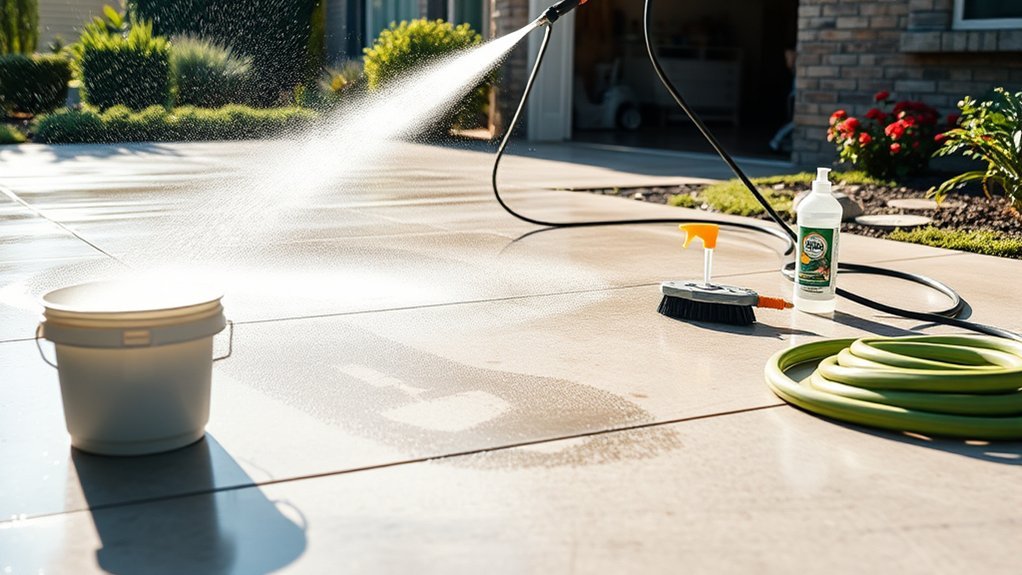
A steady maintenance routine reduces tire marks because it keeps rubber residue, oil, dust, and road film from bonding to the surface. You do not need harsh cleaning every week. You need consistent light cleaning and a finish that matches how you use the driveway.
- Rinse high-traffic parking areas every few weeks during hot weather.
- Use a mild cleaner when you notice fresh scuffs.
- Remove oil, grease, and dirt before they mix with tire residue.
- Repair cracks so dirty water and residue do not settle deeper.
- Reseal concrete when water no longer beads or stains soak in quickly.
If marks keep returning in the same spot, the issue may be the sealer, the driveway texture, or repeated hot-tire parking. In that case, cleaning alone may not solve the problem. You may need a driveway-rated sealer with better hot-tire resistance or a professional surface evaluation.
Frequently Asked Questions
How do you get heavy tire marks off a driveway?
Apply a concrete-safe degreaser, keep the surface damp, let the cleaner sit for several minutes, scrub with a stiff nylon brush, and rinse well. Repeat if the mark fades but remains visible. For sealed, decorative, or fresh concrete, use a milder cleaner and test first.
What dissolves rubber tire marks?
A good degreaser or commercial tire-mark remover can loosen rubber residue and oily grime. Strong solvents may soften some residue, but they can also damage sealers, epoxy, asphalt, paint, and nearby finishes. Use solvents only as a last-resort spot treatment on compatible bare concrete.
Does WD-40 remove tire marks?
WD-40 may loosen very light scuffs, but it can leave an oily film on porous concrete. If you use it, spot-test first and clean the area afterward with a degreaser. For most driveways, a concrete-safe degreaser is a better first choice.
How do you get tire marks off a freshly sealed driveway?
Use a mild non-filming cleaner, soft or medium nylon brush, and gentle rinse. Do not use paint thinner, brake cleaner, acetone, a wire brush, or high pressure unless the sealer manufacturer says the surface can handle it. If the sealer has softened, contact the installer or sealer maker.
Can a pressure washer remove tire marks from concrete?
Yes, but cleaner and brushing should do most of the work. Use a wide fan tip, keep the nozzle moving, and start with the lowest effective pressure. Avoid zero-degree nozzles and aggressive pressure on fresh, sealed, cracked, or decorative concrete.
Conclusion
Start with a safe cleaner, not the harshest chemical you own. Most driveway tire marks fade with a concrete-safe degreaser, short dwell time, steady scrubbing, and a complete rinse. If the surface is sealed, coated, decorative, asphalt, or new, test first and stay gentle. Once the driveway is clean, routine rinsing, careful parking, and the right sealer make future marks easier to control.
Sources
- Simple Green All-Purpose Cleaner — spot testing, dwell time, scrubbing, rinsing, dilution, and product-use directions.
- U.S. EPA Safer Choice — safer cleaner label criteria, ingredient review, performance, pH, and VOC considerations.
- American Concrete Institute: Curing Topic — current curing guides and concrete curing resources.
- QUIKRETE: Making Thin Repairs to Damaged Concrete — concrete surface preparation, PPE, scrubbing, and rinsing guidance.