
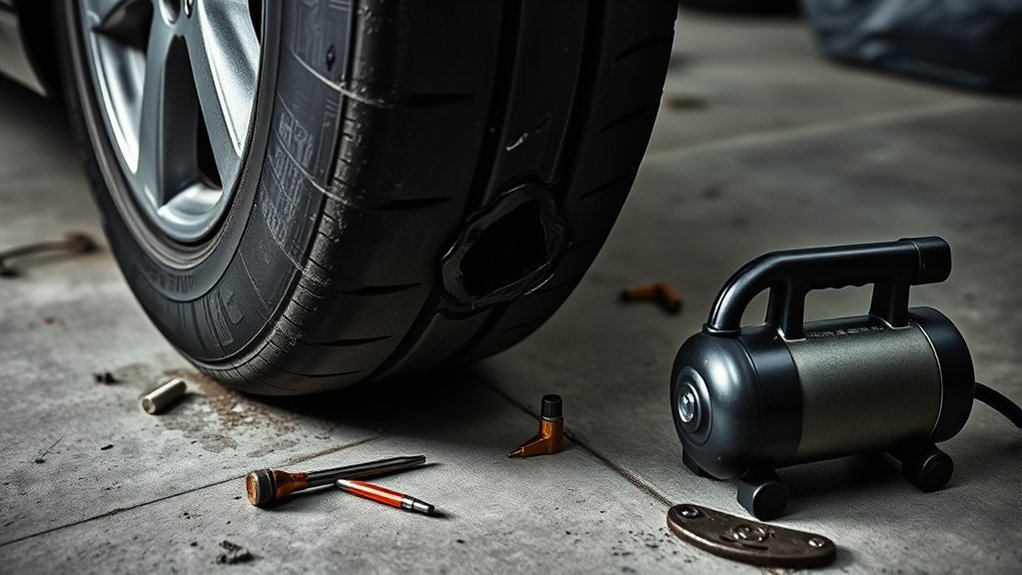
Flex Seal is not a safe or approved way to repair a flat car tire. The manufacturer says Flex Seal Spray is not made for applications involving extreme heat or pressure, including tires. If your tire has a small puncture in the repairable tread area, a trained technician may be able to repair it properly. Sidewall, shoulder, oversized, or structurally damaged punctures usually require tire replacement.
Quick Answer
No. Flex Seal Spray is not designed to repair a flat tire, and its manufacturer specifically warns against using it where extreme heat or pressure is involved. A repairable tread puncture normally needs the tire removed, inspected, and repaired with an approved combination patch-and-stem system.
Key Takeaways
- Flex Seal is not designed or recommended for repairing car tires.
- A permanent puncture repair normally requires the tire to be removed from the wheel and inspected internally.
- Industry guidance calls for both filling the puncture channel and sealing the inner liner; a plug alone or patch alone is not a complete permanent repair.
- Punctures larger than 1/4 inch (6 mm), damage in the shoulder or sidewall, overlapping repairs, or serious internal damage can make a tire non-repairable.
- Tire-specific emergency sealants and mobility kits are temporary ways to reach service, not substitutes for a professional repair.
Does Flex Seal Fix a Flat Tire?
No. You should not rely on Flex Seal to fix a flat tire, even as your normal emergency repair method.
According to the official Flex Seal FAQ, Flex Seal Spray forms a flexible rubberized coating, but the company says it is not made to withstand extreme heat or pressure and specifically says it should not be used to fix tires.
That is more important than whether the coating appears to stick to the outside of the rubber. A road tire must maintain inflation pressure while carrying vehicle weight, flexing continuously, heating during use, and dealing with impacts and cornering forces. Flex Seal was not designed or validated as a tire puncture repair system for those conditions.
Warning: Do not continue driving on a visibly flat tire just because an external coating appears to stop the leak. Driving while severely underinflated can damage the tire internally and may turn an otherwise repairable puncture into a tire that must be replaced.
Why Flex Seal Is Not a Proper Tire Repair
The problem is not simply that Flex Seal is “rubber-like.” Proper tire repair is designed to deal with both the puncture channel and the tire’s airtight inner liner.
The U.S. Tire Manufacturers Association says an eligible punctured tire should be removed from the wheel so the inside can be inspected. The puncture channel must then be filled with a rubber stem or plug, while a patch seals the inner liner. A common professional repair uses a one-piece combination patch-and-stem unit.
Spraying a general-purpose coating over the outside of the tire does not provide that inspection or repair process. It also cannot reveal hidden damage caused by driving while the tire was low or flat.
The Tire Industry Association similarly warns that plug-only and patch-only repairs are not complete permanent repairs. The tire must be inspected internally so damage that cannot be seen from the outside is not missed.
What Tire Repairs Actually Work?
A proper repair depends on where the puncture is, how large it is, the condition of the tire, and whether the tire was damaged while running without enough air.
| Tire condition | Typical action |
|---|---|
| Small puncture in the approved tread repair area, no more than 1/4 inch (6 mm) | May be repairable after the tire is removed and inspected by a trained technician |
| Sidewall or shoulder puncture | Replace the tire |
| Puncture larger than 1/4 inch (6 mm) | Replace the tire |
| Repairs would overlap | Tire should be taken out of service |
| Tread worn to 2/32 inch or less | Replace rather than repair |
| Tire driven while flat or showing internal/structural damage | Professional inspection is required; replacement may be necessary |
For an eligible puncture, the safest long-term approach is a professional repair that follows the tire manufacturer’s policy and accepted industry procedures. That generally means removing the tire, inspecting the interior, preparing the injury, filling the puncture channel, and sealing the inner liner.
Pro Tip: If you have already put any liquid or aerosol sealant into the tire, tell the technician before service. Some sealants can complicate inspection or repair and may affect the tire, wheel, TPMS sensor, or manufacturer’s warranty.
[Products Worth Considering]

This compact capsule-style tire repair kit helps you quickly fix punctures and plug flats with minimal effort. The rugged stainless steel shell protects the contents for reliable roadside use, while the simple plug assembly makes repairs fast and tool-free. Suitable for motorcycles, cars, ATVs, UTVs, and even mountain bikes.

This AUTOWN flat tire repair kit is designed for quick, reliable puncture repairs using a plug kit and spiral probe tool to simplify installation. Built for durability and safe handling, it offers strong adhesion and flexibility to help maintain tire air tightness. With a portable storage case and a multi-vehicle approach, it’s suitable for cars, motorcycles, ATVs, tractors, lawn mowers, RVs, jeeps, and trucks.

TireJect Off-Road Tire Sealant Kit provides 5-in-1 sealing to help fix tread punctures up to 3/8", sidewall punctures up to 3/8", bead leaks, slow leaks, and minor dry rot on low-speed tires. It permanently seals with liquid rubber, recycled tire particles, and Aramid fibers, making it ideal for flats caused by thorns, nails, and screws. The included dispensing cap attaches to the valve stem for a no-mess installation, along with a metal valve core remover tool and valve stem cap. This kit is for off-road use only.
What Should You Do Instead of Using Flex Seal?
If you discover a flat or rapidly leaking tire, focus first on getting yourself and the vehicle to a safe location.
- Pull over safely. Move away from traffic when possible, turn on your hazard lights, and stop on a stable surface.
- Avoid driving on the flat tire. Continuing to drive can damage the sidewall and internal structure.
- Use the spare tire if your vehicle has one and you can install it safely. Follow the vehicle owner’s manual, including any speed or distance restrictions for a temporary spare.
- If your vehicle has an OEM tire mobility kit, follow its instructions exactly. These kits may contain a compressor and tire-specific sealant intended only to help you reach a service facility.
- Call roadside assistance if changing or temporarily inflating the tire is unsafe or not possible.
- Have the tire professionally inspected. The technician can determine whether it qualifies for repair or needs replacement.
A vehicle-supplied mobility kit should not be confused with Flex Seal. The USTMA explains that an OEM mobility kit is a temporary solution, not a permanent tire repair. You should follow your vehicle manufacturer’s speed, distance, and service instructions after using one.
[Products Worth Considering]

Use this tire repair rubber screw kit for fast, self-service flat fixes on the road. Choose the matching short or long nail size and twist it into the puncture without removing the tire from the rim. Compact storage keeps the emergency set organized for cars, motorcycles, electric bikes, and bicycles, helping you seal tubeless leaks quickly and reliably.

Wykodra tire plugs provide quick vulcanizing repairs for tubeless tires, helping you seal punctures and get back on the road. The industrial-strength rubber creates a long-lasting, leak-resistant bond and is designed for emergency fixes without removing the tire. Choose between two standard plug sizes with color-matched options for small to larger damage across many vehicles and off-road uses.
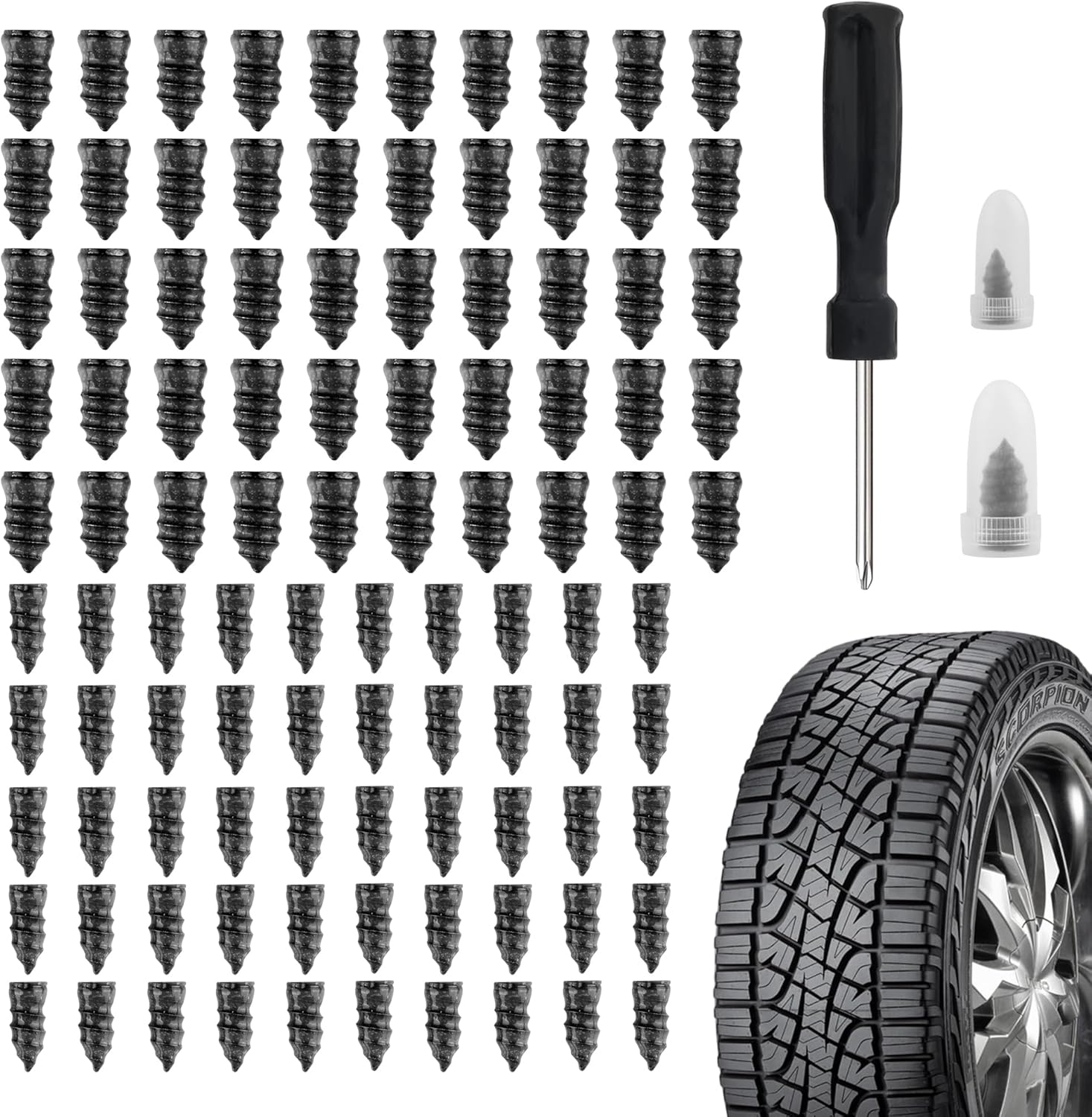
Salior’s tire plug kit provides a fast, reliable self-service fix for punctured or leaking tires without the need for flaring tools. Choose the correct plug size, then screw the nail into the puncture using the included screwdriver for an enhanced seal. The set is durable and convenient for on-the-go maintenance across multiple vehicle types.
When Can a Tire Be Patched Safely?
A punctured passenger-car tire may be repairable when the injury is confined to the approved tread area and is no larger than 1/4 inch (6 mm). The tire must also be in otherwise serviceable condition.
The tire should be removed from the wheel before the final repair so a technician can inspect the inner liner and look for hidden damage. USTMA guidance requires the puncture channel to be filled and the inner liner to be sealed. A combination patch-and-stem unit is commonly used for that purpose.
A simple string plug pushed through the tread from outside the mounted tire does not allow the inside of the tire to be inspected and is not considered a complete permanent repair by USTMA or TIA. Likewise, an inside patch by itself seals the liner but does not fill the puncture channel.
Do not repair punctures that extend into the shoulder or sidewall. These areas flex heavily, and industry repair procedures exclude them from the normal repairable zone.
For passenger and light-truck tires, the standard repair limit is generally a tread-area puncture no larger than 1/4 inch (6 mm), followed by internal inspection and a complete repair.
[Products Worth Considering]

ZEHXI’s 60 pack screw-in tire plug kit uses high-grade rubber plugs with sealing threads to help repair minor punctures quickly without removing the tire. The set includes two plug sizes, so you can match different puncture openings and keep repairs organized in a transparent case. A handy screwdriver is included for fast installation, helping drivers get more mileage from existing tires while being ready for flat-tire emergencies.

This screw-in tire plug kit seals punctures fast using the included screwdriver, letting you repair tread damage without removing the tire or using messy glue. It includes two plug sizes for different puncture types and uses high-density rubber for an airtight, heat-resistant temporary seal that helps you reach a tire shop safely. Compact and universal, it works on tubeless tires across cars, trucks, motorcycles, tractors, and more.

Mosconly tire repair glue and nail kit delivers an elastic, waterproof bond for quick sidewall puncture repairs. The adhesive cures securely to help prevent peeling, flaking, and tearing, while the included nails support a strong, seamless repair. Designed for easy roadside use, it works on car, motorcycle, bike, and other tire types, with full curing within 24 hours.
Are Tire Sealants a Permanent Fix?
No. Emergency tire sealants should be treated as temporary mobility aids unless the tire or vehicle manufacturer specifically says otherwise.
USTMA states that aftermarket aerosol, liquid, and gel sealants are not considered proper tire repairs. Depending on the product and tire, they may interfere with repair, affect a TPMS sensor, damage the tire, or affect warranty coverage.
Note: An OEM mobility kit supplied with your car is different from a household leak-sealing product. If your vehicle provides a kit instead of a spare, use only the procedure, sealant, speed limit, and driving-distance instructions specified in the owner’s manual.
When Should You Replace the Tire?
You should replace rather than repair a tire when the damage falls outside accepted repair limits or the tire itself is no longer serviceable.
Replacement is normally the safer choice when:
- The puncture is in the sidewall or shoulder.
- The puncture is larger than 1/4 inch (6 mm).
- Existing repairs would overlap with a new repair.
- The tire has a bulge, exposed cord, deep cut, separation, or other structural damage.
- The tire was driven flat and inspection shows internal damage.
- The tread is worn to 2/32 inch or less.
- The tire manufacturer says the particular tire or damage is not repairable.
The National Highway Traffic Safety Administration says tires should be replaced when tread is worn to 2/32 inch. NHTSA also notes that tire age matters, but there is no single universal six-year replacement rule: some vehicle and tire manufacturers recommend replacement within a six-to-10-year range regardless of remaining tread.
For example, Michelin recommends professional annual inspection after five years of service and replacement by 10 years from the manufacture date as a precaution. Follow the recommendations for your specific vehicle and tire brand.
Frequently Asked Questions
Will Flex Seal Stop a Tire Leak?
You should not rely on Flex Seal to stop a tire leak. Flex Seal’s own FAQ says the spray is not made for extreme heat or pressure and should not be used to fix tires. Have the tire inspected and repaired properly if the puncture is eligible.
What Works Better Than Flex Seal?
For an eligible tread puncture, a professional combination repair that fills the puncture channel and seals the inner liner is the proper long-term solution. If the tire cannot be repaired safely, replacement is the correct option.
What Is the Best Flat Tire Sealant?
There is no universal sealant that replaces a permanent tire repair. If your vehicle includes an OEM mobility kit, use the supplied sealant and compressor exactly as the owner’s manual directs. Treat it as a temporary way to reach professional service.
What Are the Drawbacks of Using Tire Sealant?
Sealants are generally temporary rather than permanent repairs. Some aftermarket products may complicate later inspection or repair, affect TPMS components, damage the tire, or affect warranty coverage. Always tell the tire technician what product was used.
Is a Tire Plug by Itself a Permanent Repair?
No. USTMA and TIA guidance does not consider a plug-only repair a complete permanent repair. The tire should be removed and inspected, the puncture channel filled, and the inner liner sealed.
Can You Repair a Puncture in the Sidewall?
No. Standard passenger-tire repair procedures do not allow repairs in the sidewall or shoulder. If the puncture is outside the approved tread repair area, the tire normally needs to be replaced.
Can a Tire Still Be Repaired After Using Sealant?
Possibly, but it depends on the tire, the sealant, the puncture, and the manufacturer’s repair policy. Do not assume the tire is repairable. Tell the technician exactly what sealant you used so the tire can be inspected correctly.
Sources
- Flex Seal Products FAQ — manufacturer guidance stating Flex Seal Spray is not designed for tires or applications involving extreme heat or pressure.
- U.S. Tire Manufacturers Association: Tire Repair Basics — tread-area repair limits, 1/4-inch puncture limit, tire removal, internal inspection, and combination repair requirements.
- Tire Industry Association: Tire Repair — proper repair procedures, sidewall and shoulder restrictions, plug-only and patch-only limitations, and sealant guidance.
- NHTSA TireWise — tread depth, tire inspection, inflation, TPMS, and tire-age guidance.
- Michelin: Tire Damage That Requires Repair — professional repair criteria for tread punctures and replacement guidance for sidewall damage and worn tires.
Conclusion
Flex Seal will not provide a proper permanent repair for a flat car tire, and the manufacturer specifically advises against using it for tire-level heat and pressure. If the puncture is small and confined to the repairable tread area, have the tire removed and inspected for a proper combination repair. If the damage is in the sidewall or shoulder, exceeds the repair limit, overlaps another repair, or has compromised the tire’s structure, replacement is the safer choice.

