
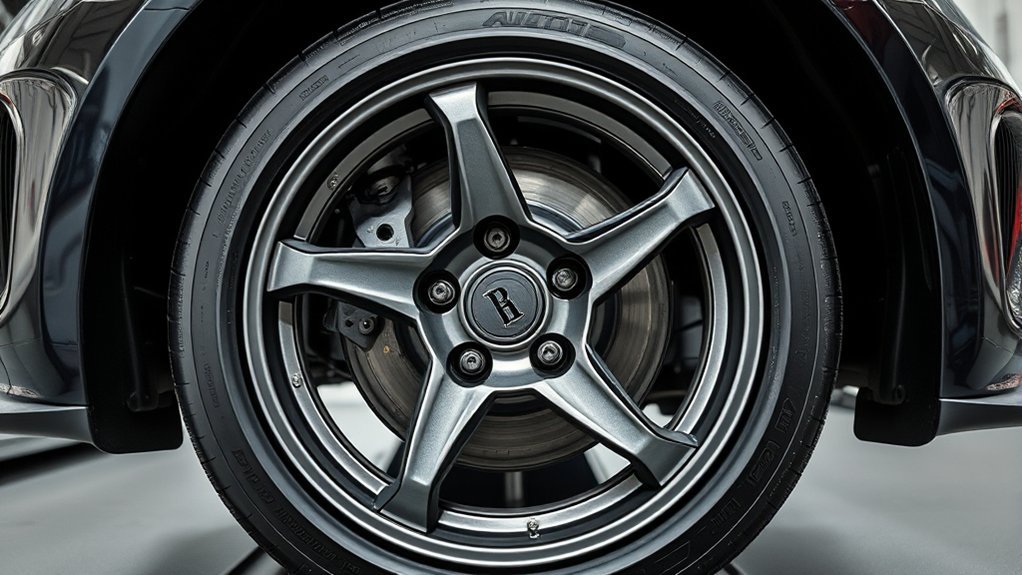
Camber, caster, and toe are the main wheel-alignment angles used to describe how your wheels sit and point relative to the road and vehicle. Camber mainly affects how the tire leans, caster influences steering stability and self-centering, and toe describes whether the wheels point slightly toward or away from each other. The correct setting is not automatically zero; each angle should be compared with the vehicle manufacturer’s specifications.
Quick Answer
Camber is the inward or outward tilt of a wheel when viewed from the front, caster is the steering-axis tilt viewed from the side, and toe describes the direction the wheels point when viewed from above. Correct alignment means keeping all three within the vehicle manufacturer’s specifications.
Key Takeaways
- Camber is the wheel’s inward or outward tilt and can affect cornering behavior and inner- or outer-shoulder tire wear.
- Caster is the steering-axis angle and mainly affects directional stability, steering return, and pull.
- Toe describes whether the wheels point toward or away from each other and has a strong effect on tire scrub and feathering.
- Zero is not automatically the correct target. Some vehicles specify a small amount of toe-in or toe-out and may also specify negative camber.
- The correct alignment is the set of camber, caster, and toe readings that falls within the OEM specifications for your exact vehicle and operating condition.
How Camber, Caster, and Toe Affect Driving
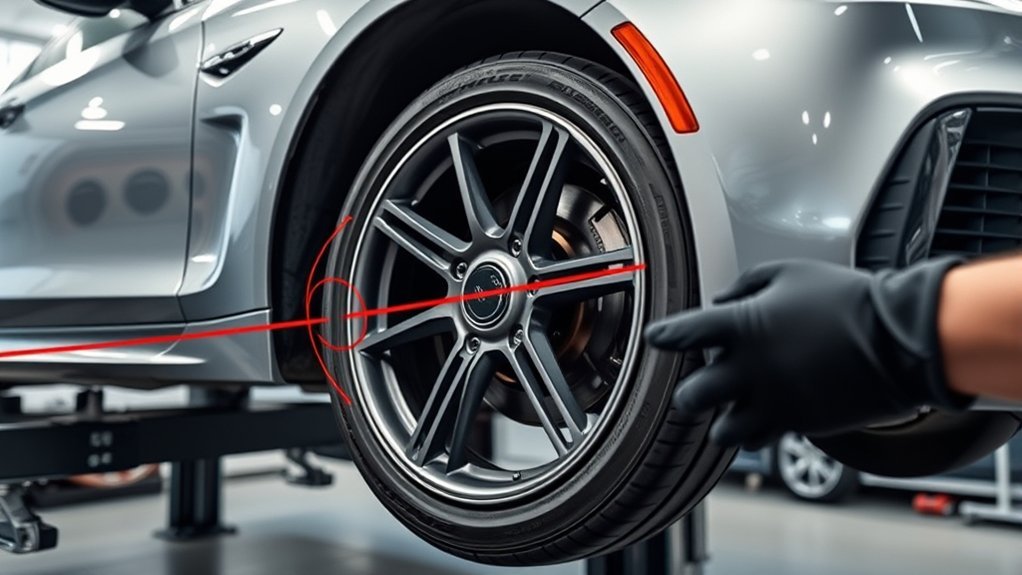
Camber, caster, and toe affect different parts of the way your vehicle steers, tracks, and wears its tires. Professional alignment equipment measures these angles and compares them with specifications supplied for the vehicle.
Hunter Engineering identifies toe, camber, and caster as the three main measurements used in a typical alignment and emphasizes that they should remain within OEM specifications.
| Angle | Viewed From | What It Describes | Main Effects |
| Camber | Front | Wheel tilt relative to vertical | Tire contact, cornering behavior, shoulder wear |
| Caster | Side | Tilt of the steering axis | Stability, steering return, directional pull |
| Toe | Above | Direction the wheels point relative to each other | Tracking, steering response, tire scrub and feathering |
Camber primarily changes the way the tire is angled against the road. A performance vehicle may intentionally use negative camber to help maintain tire contact during hard cornering, but excessive negative camber can accelerate inner-shoulder wear.
Caster affects the steering geometry rather than simply tilting the tire. Positive caster is common on modern vehicles because it supports directional stability and helps the steering return toward center after a turn.
Toe has a major effect on how cleanly a tire rolls. When toe is too far from specification, the tires can scrub slightly sideways as the vehicle moves, producing rapid wear or a feathered tread pattern.
Note: A green or “in spec” alignment reading is based on the manufacturer’s acceptable range for that vehicle. It does not necessarily mean the angle is exactly zero.
What Toe-In and Toe-Out Mean
Toe describes the direction the wheels point when viewed from above.
Toe-in means the front edges of a pair of wheels are closer together than their rear edges. Toe-out means the front edges are farther apart. Alignment machines may display toe in degrees, fractions of an inch, or millimeters, depending on the equipment and vehicle information.
Do not assume that zero toe is automatically best. Manufacturers choose toe specifications to suit the vehicle’s suspension geometry, tire behavior, steering response, and how the wheels move under load. For example, OEM specifications published by Ford include vehicles with nonzero total toe, while some performance setups intentionally specify toe-out.
The correct toe setting is the manufacturer’s specified range for your vehicle—not simply the number closest to zero.
What Is Total Toe?
Individual toe is the toe reading for one wheel. Total toe is the combined toe of the left and right wheels on an axle. An alignment printout may therefore show individual front toe readings as well as front total toe.
This distinction matters because two individual readings can combine into an acceptable total while still leaving the steering wheel off center. Technicians therefore evaluate individual toe, total toe, steering position, and other alignment measurements together.
Excessive toe-in or toe-out can create feathering, rapid tread wear, wandering, or an off-center steering wheel. Michelin identifies feathering—where a tread rib feels smoother in one direction and sharper in the other—as a common clue associated with toe alignment problems.
How Camber Affects Tire Wear
Camber is the inward or outward tilt of the wheel when viewed from the front of the vehicle.
With negative camber, the top of the wheel leans inward. Some negative camber may be intentionally specified by the manufacturer. Performance-oriented settings may use additional negative camber to improve tire behavior during hard cornering, but too much can increase loading and wear on the inner shoulder.
With positive camber, the top of the wheel leans outward. Excessive positive camber can contribute to outer-shoulder wear and handling problems.
Camber should therefore be judged against the manufacturer’s range rather than by appearance alone. A wheel that seems slightly tilted may still be exactly where the manufacturer wants it.
Ford’s performance guidance illustrates why context matters. Its official Mustang documentation specifies different camber settings for certain track and street conditions and warns that more aggressive alignment settings can increase tire wear. That is a useful reminder that a setting suitable for competition is not automatically appropriate for everyday driving.
Pro Tip: If one shoulder of a tire is wearing quickly, do not diagnose camber from the tread alone. Check tire pressure, toe, suspension condition, and the actual alignment measurements before replacing parts.
How Caster Changes Steering Feel
Caster is the fore-and-aft angle of the steering axis when viewed from the side of the vehicle. On many modern vehicles, positive caster means the steering axis tilts rearward at the top.
- Positive caster: Common on modern vehicles and associated with stronger directional stability and steering self-centering.
- Negative caster: The steering axis tilts in the opposite direction. It is uncommon as a target setting on modern passenger vehicles.
- Cross-caster: The difference between left and right caster can influence whether a vehicle tends to pull or drift.
Caster primarily affects steering behavior rather than producing the obvious one-edge tread wear normally associated with excessive camber or toe. A caster problem may show up as poor steering return, directional instability, or a persistent pull.
The correct value again depends on the vehicle. Some designs provide normal caster adjustment, while others require worn, bent, or damaged components to be repaired before the reading can be corrected.
How Camber, Caster, and Toe Work Together
Camber, caster, and toe are separate measurements, but technicians evaluate them as one alignment system. On some suspension designs, adjusting one angle can alter another reading, so measurements are checked again after adjustments.
| Angle or Reading | What an Out-of-Spec Reading May Affect |
| Camber | Tire contact, cornering behavior, inner- or outer-shoulder wear |
| Caster | Directional stability, steering return and pull |
| Toe | Tracking, steering-wheel position, tire scrub and feathering |
| Left/right differences | Pull or unequal steering behavior, depending on vehicle design |
| All readings | Overall tracking, steering behavior and tire wear |
A good alignment therefore means more than making one number look correct. The technician compares all applicable measurements with the OEM specifications, checks the steering wheel position, and confirms that the steering and suspension are mechanically sound.
What Causes Wheel Alignment to Change?
Alignment can move away from specification suddenly or gradually. Common triggers include:
- Hitting a pothole, curb, or road debris.
- Collision damage.
- Worn ball joints, bushings, tie rods, wheel bearings, or other suspension and steering components.
- Bent suspension or steering parts.
- Changes in ride height caused by worn springs or suspension modifications.
- Installing lift or lowering components.
- Repairing or replacing suspension and steering parts.
Michelin recommends checking alignment after significant impacts such as pothole or curb strikes and when symptoms such as pulling, an off-center steering wheel, or abnormal tread wear appear.
Warning: Alignment adjustment cannot repair a bent, loose, or badly worn suspension component. Those faults should be inspected and corrected before the final alignment is set.
[Products Worth Considering]

This universal wheel alignment tool helps you accurately restore tire tilt angles after tire or suspension repairs using an adjustable camber gauge. It features a powerful magnetic base that firmly attaches to brake rotors for stationary, slip-free readings, improving consistency during measurement. Built from durable PC plastic, it resists wear and corrosion and is compact enough for car, truck, RV, and motorcycle alignment tasks.

The Ziopetru adjustable magnetic wheel alignment tool helps you check and restore camber and caster positioning after removing and reinstalling undercarriage components. With a clear leveling/bubble measurement system and an easy zeroing adjustment knob, it supports precise horizontal angle checking. The strong magnetic base mounts to metal surfaces for convenient use at home on cars, motorcycles, trucks, vans, and SUVs.

Replace or upgrade your zero-turn lawn mower tires with a universal fit flat-free tire and wheel assembly in a convenient 2-pack. Smooth tread front-caster style helps turning with reduced turf damage, while flat-free design eliminates the maintenance and downtime of air-filled flats. The included adapter kit supports 5/8-inch axles and hub lengths from 3.4 to 5 inches for compatibility across most ZTR mowers.
Wheel Alignment vs. Wheel Balancing
Alignment and balancing solve different problems.
Wheel alignment deals with the direction and angles of the wheels relative to the vehicle and road. Wheel balancing corrects uneven weight distribution in a tire-and-wheel assembly so it can rotate smoothly.
This distinction is important when diagnosing vibration. A vehicle that pulls, has an off-center steering wheel, or wears one edge of a tire may need an alignment check. A vibration that appears mainly at certain road speeds more commonly points toward wheel balance, tire, wheel, or suspension issues.
Michelin notes that a vehicle can be correctly aligned and still vibrate because of imbalance, just as a perfectly balanced wheel can still wear poorly when alignment is wrong.
[Products Worth Considering]

Steelman white tire marking crayons provide high-contrast, semi-permanent marks for repairing and inspecting tires and equipment. They write on wet or dry, smooth or coarse surfaces including rubber, metal, glass, and wood, making them ideal for puncture location and damage outlining. The lead- and zinc-free crayons resist weather and fading yet wipe away when you no longer need the marks.

Monitor tire tread wear with a smart, color-coded depth gauge that shows clear condition ranges at a glance. The bar is range marked for fast, easy readings, helping you maintain safer traction and performance. Each gauge is portable with a pocket clip, and the set includes 20 units for daily use and sharing.

Measure tire tread depth quickly and accurately with this LUMITECO dial gauge that reads in 1/32" increments up to 14/32". The color-coded green/yellow/red zones make it easy to judge tire wear and know when replacement is needed. A rugged, compact design with a protective pouch helps keep the gauge ready for use on cars, trucks, motorcycles, and more.
What Happens During a Professional Wheel Alignment?
A technician normally begins by confirming tire condition and inspecting relevant steering and suspension components. Alignment equipment is then attached to or referenced from the wheels so the current angles can be measured.
The process generally includes:
- Checking tires, steering, suspension, and obvious mechanical damage.
- Measuring the applicable camber, caster, toe, and related alignment angles.
- Comparing the readings with the correct OEM specifications.
- Adjusting the angles that the vehicle design allows to be adjusted.
- Rechecking measurements after adjustment.
- Confirming steering-wheel position and vehicle-specific procedures.
Some vehicles do not provide a factory adjustment for every angle. If a nonadjustable measurement is substantially out of specification, the cause may be worn components, collision damage, altered ride height, or another mechanical problem that needs diagnosis.
[Products Worth Considering]
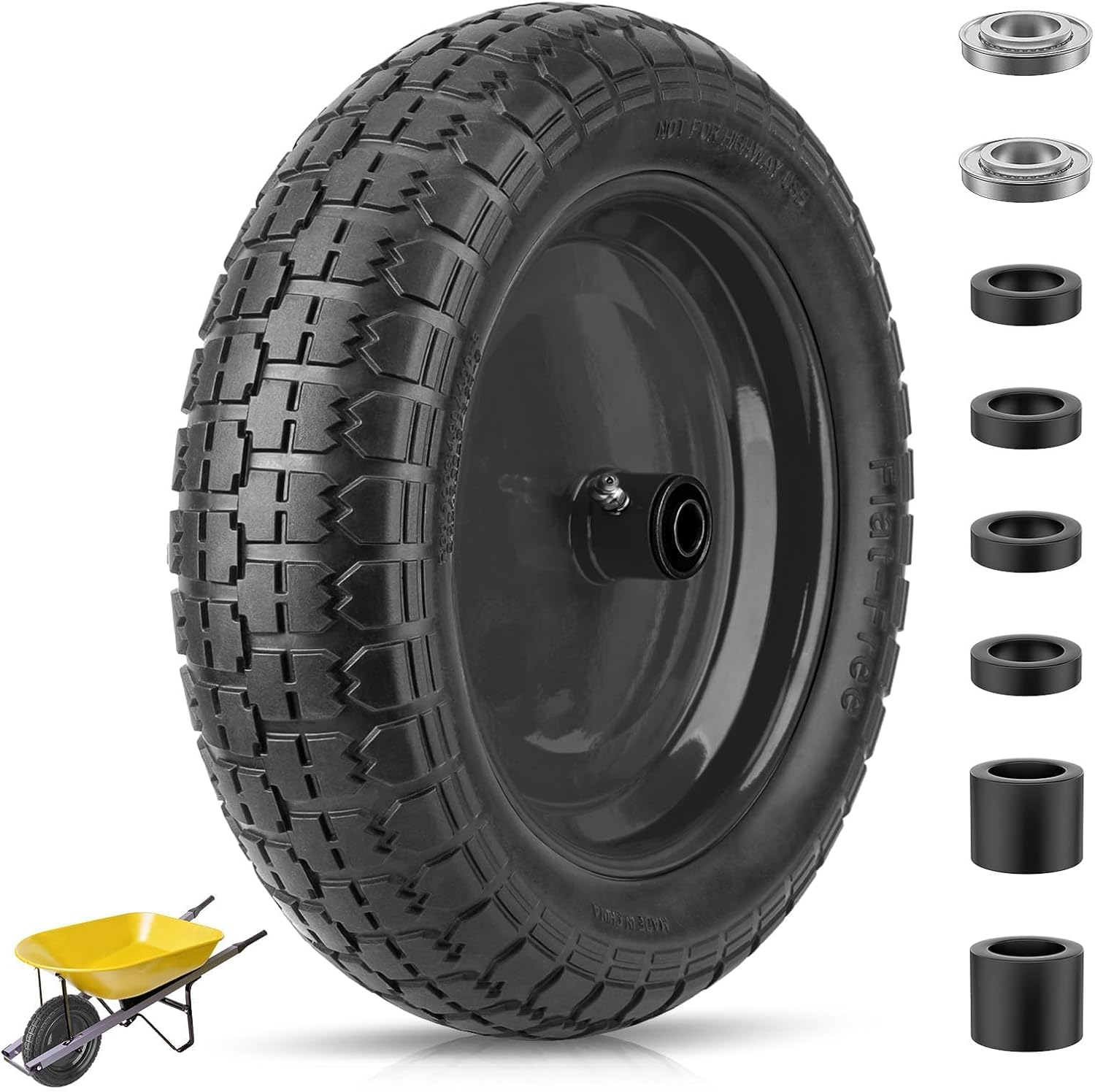
This flat-free TICONN wheelbarrow tire features durable polyurethane foam construction that never needs inflation, helping prevent punctures and reducing maintenance on rough outdoor terrain. With a 300 lb max load capacity and stable steel rim design, it supports safer transport for yard work and hauling tasks. An adapter kit with ball bearings and nylon spacers is included for easier fit and customization across common wheelbarrow and cart axle setups.

The UYYE TPMS relearn tool helps activate and relearn tire pressure monitor sensors quickly, typically in minutes. It supports TPMS learn mode resetting using a simple three-step process: enter learn mode, position the tool near the valve stem, and press the learn button. Designed for specific GM models, it streamlines sensor programming and reduces trips to dealers or tire shops.

This TPMS relearn tool helps you quickly activate, match, and reset GM tire pressure sensors to keep the vehicle monitoring system working properly. It clears tire pressure alarms and dashboard warning lights after sensor replacement or tire rotation, and supports learning for common 315/433 MHz TPMS sensors. Designed for simple one-button operation, it can help you avoid unnecessary trips to repair shops.
What About ADAS and Steering-Angle Sensors?
Modern vehicles can require additional procedures after certain alignment, steering, suspension, or collision repairs. Depending on the vehicle, this may include a steering-angle sensor reset or calibration of an advanced driver-assistance system.
Hunter Engineering’s collision-alignment guidance specifically includes OEM-dependent steering-system resets and ADAS procedures. This does not mean every alignment requires an ADAS calibration; technicians should follow the service information for the exact vehicle.
Frequently Asked Questions
How often should wheel alignment be checked?
There is no single mileage interval that fits every vehicle and driver. Follow your owner’s manual and have the alignment checked when you notice abnormal tire wear, pulling, an off-center steering wheel, or after a hard pothole or curb impact. Checking it when new tires are installed is also sensible. Continental notes that driving conditions and road quality affect how often checks may be needed.
Can alignment angles be adjusted at home?
Basic string, level, or tape-measure methods can provide rough checks on some vehicles, but an accurate final alignment requires reliable measurements and the correct OEM specifications. Some angles are not factory-adjustable, and worn or bent components can make adjustment ineffective. Vehicles that require steering-angle or ADAS procedures add another reason to use properly equipped service facilities.
What symptoms indicate a bad alignment?
Common clues include rapid or uneven tread wear, a steering wheel that sits off center while the vehicle travels straight, persistent pulling or drifting, feathered tread, and vague or unstable tracking. These symptoms are not exclusive to alignment, so tire pressure, tires, brakes, and steering or suspension components may also need inspection.
Does suspension lift or lowering change alignment settings?
It can. Changing ride height alters suspension geometry on many vehicles, which can move camber, caster, or toe away from their intended ranges. Have the alignment measured after installing a lift, lowering springs, adjustable control arms, or other parts that change suspension position, then use specifications appropriate for the vehicle and modification.
How much does a professional alignment cost?
There is no reliable nationwide price that applies to every vehicle. Cost depends on location, vehicle design, whether a two-wheel or four-wheel procedure is appropriate, the amount of adjustment required, and whether worn or damaged suspension parts must be repaired first. Ask the shop for a vehicle-specific estimate before authorizing work.
Does a steering-wheel vibration mean the alignment is bad?
Not necessarily. Vibration at a particular road speed is commonly associated with wheel imbalance, tire or wheel problems, or worn suspension components. Misalignment is more strongly associated with pulling, off-center steering, abnormal tracking, and uneven tread wear. A technician can check both alignment and balance when the cause is unclear.
Should camber, caster, and toe all be set to zero?
No. Zero is only correct when the manufacturer’s specification calls for it. Many vehicles intentionally use positive caster, some negative camber, and a small amount of toe-in or toe-out. Always compare the actual readings with the specifications for your exact model and configuration.
Conclusion
Camber, caster, and toe describe different parts of wheel alignment, but none should be judged in isolation. Camber controls wheel tilt, caster influences steering-axis behavior, and toe determines how the wheels point relative to one another. The goal is not to make every reading zero; it is to keep the applicable readings within the manufacturer’s specifications.
If your vehicle starts pulling, the steering wheel no longer sits straight, or the tires develop unusual shoulder wear or feathering, an alignment inspection can show whether the angles are actually out of range. Repair any worn or damaged steering and suspension parts first, then set the alignment to the specifications intended for the vehicle.
Sources
- Hunter Engineering — Things to Consider: Wheel Aligners — OEM specifications and the primary camber, caster, and toe measurements.
- Michelin — Wheel Alignment and Balancing — alignment symptoms, balancing differences, tire wear, and situations that justify an alignment check.
- Michelin — Tire Wear Problems — one-sided wear, feathering, cupping, and other diagnostic tread patterns.
- Continental Tires — Wheel Alignment — alignment-check timing, pothole impacts, new-tire guidance, and typical service considerations.
- Ford Mustang Owner’s Manual — OEM examples of camber, caster, and toe specifications and warnings about aggressive track alignment and tire wear.
- Hunter Engineering — Collision Alignment — OEM alignment procedures, steering-system resets, and ADAS-related alignment considerations.
