
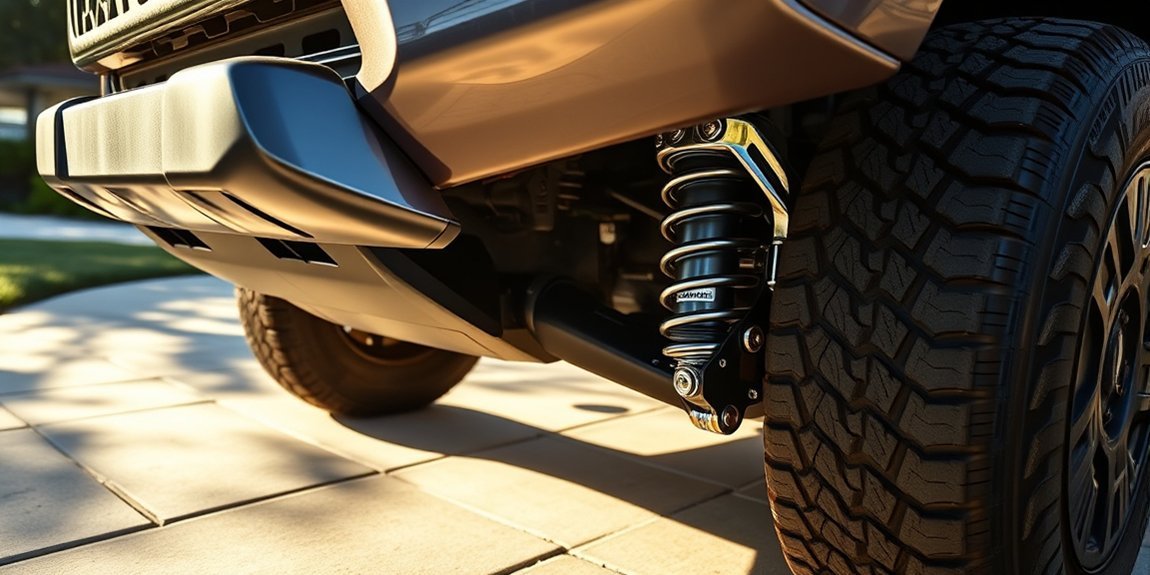
Caster angle is one of the front-end alignment settings that affects how your Toyota Tacoma tracks straight, returns to center after a turn, clears larger tires, and wears its front tires. The right caster setting is not one universal number for every Tacoma. It depends on your model year, ride height, suspension parts, wheel offset, tire size, and whether the truck is stock, lifted, or built for off-road use.
Quick Answer
Caster angle is the forward or rearward tilt of the steering axis when viewed from the side of your Tacoma. More positive caster usually improves straight-line stability and steering return-to-center, but the correct number should come from the Toyota specification or alignment rack for your exact model and setup.
Key Takeaways
- Caster is different from camber and toe: caster affects steering feel and stability, while toe and camber strongly affect tire wear.
- Positive caster helps a Tacoma track straight and return to center, but too much can make steering heavier or limit adjustment room.
- Lift kits, larger tires, wheel offset, and aftermarket upper control arms can change the caster range your truck can safely achieve.
- Use the alignment printout for your exact Tacoma, not a generic number from the internet.
- After suspension work, new tires, hard off-road use, or a curb hit, a professional alignment is the safest fix.
At a Glance
| Time Required | 10–15 minutes for basic tire and suspension checks; a professional alignment appointment usually takes much longer. |
| Difficulty | Basic checks are easy; final caster adjustment should be handled by a qualified alignment shop. |
| Tools Needed | Tire pressure gauge, tread-depth gauge, flashlight, alignment printout, and a professional alignment rack for final settings. |
| Cost | Varies by shop, region, seized hardware, and aftermarket suspension parts; expect more than a basic check if cam bolts or control arms need extra work. |
What Is Caster Angle and Why It Matters for Your Tacoma
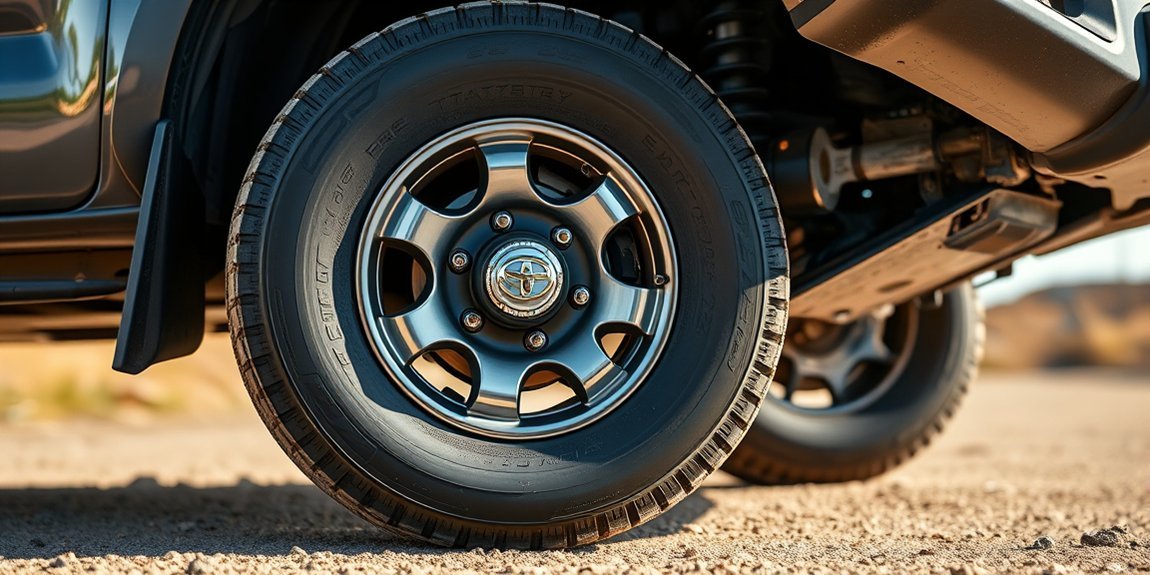
Caster angle is the tilt of the steering axis when you look at the truck from the side. That steering axis is an imaginary line running through the front suspension’s steering pivot points. On a Tacoma, caster affects how stable the truck feels at speed, how strongly the steering wheel returns to center, and how the tire sits in the wheel opening.
Continental explains caster as the steering-axis angle that affects steering stability, self-centering, and cornering. That is why caster becomes especially important on Tacomas with lift kits, larger tires, aftermarket wheels, or off-road suspension parts.
The goal is not simply “more caster.” The goal is balanced caster from left to right, correct toe, acceptable camber, and tire clearance through the full steering range. A Tacoma can be technically within a broad range and still drive poorly if the left and right sides are uneven or if toe is wrong.
Note: Always use the specification for your exact Tacoma model year, drivetrain, trim, tire size, and suspension setup. A caster target that works well on one lifted Tacoma may not be right for a stock truck or a newer-generation Tacoma.
Caster vs. Camber vs. Toe
Before adjusting caster, it helps to understand how it differs from camber and toe. All three are alignment angles, but they do different jobs.
| Alignment Angle | What It Means | What It Affects Most |
|---|---|---|
| Caster | Steering-axis tilt from the side view | Straight-line stability, steering feel, return-to-center, tire position in the wheel well |
| Camber | Inward or outward tire tilt from the front view | Tire contact patch, cornering grip, inside/outside tire wear |
| Toe | Whether the tires point inward or outward from the top view | Tracking, steering wheel center, rapid tread wear, wandering |
Michelin notes that alignment angles affect how tires interact with the road and how the vehicle reacts during straight driving, cornering, and braking. This is why a proper Tacoma alignment should not focus on caster alone.
Understanding Positive and Negative Caster Angles
Positive caster means the upper steering pivot leans toward the rear of the truck compared with the lower pivot. Negative caster means it leans forward. Most modern trucks use positive caster because it improves straight-line stability and steering return-to-center.
Positive Caster Benefits
A healthy amount of positive caster helps your Tacoma feel planted on the highway. It can reduce wandering, improve steering wheel return-to-center after a turn, and make the truck feel more predictable on rutted roads or uneven trails.
Positive caster also matters when the truck has larger tires. Alignment changes can affect where the tire sits in the wheel opening, which can change clearance near the mud flap, body mount, cab mount area, and front bumper area. Tire clearance still depends on wheel offset, tire width, lift height, suspension travel, and body trimming.
Negative Caster Consequences
Too little caster or negative caster can make a Tacoma feel nervous, loose, or unwilling to track straight. The steering may not return to center well, and the truck may wander more at highway speeds.
Negative caster is not a common target for a Tacoma street or trail setup. If one side has noticeably less caster than the other, the truck may pull or drift. A professional alignment printout will show whether cross-caster is part of the problem.
Too Much Positive Caster
More positive caster is not always better. Too much can make steering feel heavier, reduce adjustment room for camber, increase stress on worn front-end parts, or create clearance issues depending on the wheel and tire setup. This is why the safest target is usually the upper usable portion of the correct specification, not a random maximum number.
Warning: Do not chase a caster number if the truck has worn ball joints, damaged bushings, bent tie rods, seized cam bolts, loose wheel bearings, or unsafe tires. Fix mechanical problems first, then align the truck.
How Caster Affects Vehicle Stability and Handling
Caster affects the way the Tacoma follows the road. With enough positive caster and balanced left-to-right settings, the front tires naturally want to track straight. That makes the truck feel calmer on the highway and more predictable on washboard roads, gravel, and mild trails.
If caster is uneven, the Tacoma may pull toward one side. If caster is too low, the truck may wander. If caster is too high for the setup, steering can feel heavy or tight. These problems can feel similar to bad toe, low tire pressure, tire pull, or worn steering parts, so diagnosis matters.
A good Tacoma alignment is a balance: enough positive caster for stability, camber close to spec, toe set correctly, and left-to-right numbers close enough that the truck tracks straight.
What Caster Angle Is Best for a Toyota Tacoma?
The best caster angle for a Toyota Tacoma is the one that fits your exact truck and alignment specification. Stock trucks should be aligned to the Toyota specification shown in the alignment system or service data for that year. Lifted trucks often drive better with caster toward the higher usable side of the safe range, but only if camber, toe, tire clearance, and steering feel remain correct.
For many Tacoma and 4Runner off-road builds, specialty alignment shops often aim for a stable, positive caster setting rather than the lowest possible number. However, the exact target can change with lift height, aftermarket upper control arms, wheel offset, tire size, and whether the truck still has factory control arms.
Pro Tip: Ask for the before-and-after alignment printout. A shop that understands Tacomas should be able to explain the final caster, camber, toe, and cross-caster numbers in plain language.
Why Caster Matters for Off-Roading
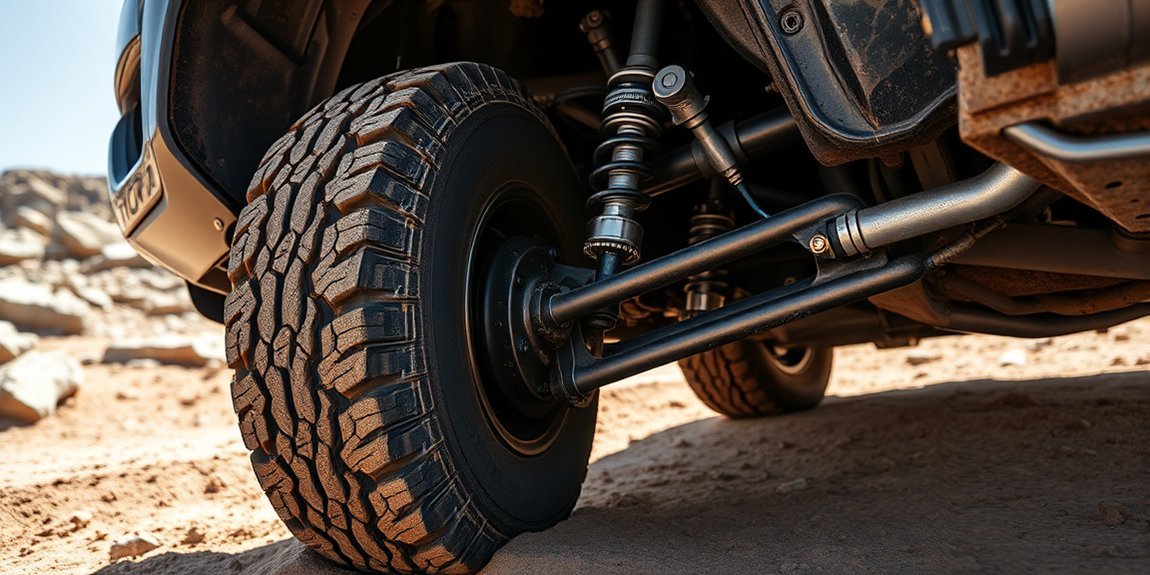
Off-road driving makes alignment more important, not less. Rocks, ruts, washboard roads, and trail impacts can shift alignment or wear front-end parts faster than normal street use. A Tacoma with poor caster can feel twitchy on loose surfaces and may not return to center smoothly after steering through obstacles.
Positive caster helps the truck feel more stable, but it cannot fix every off-road handling issue. Tire pressure, shock condition, control-arm bushings, steering rack health, wheel offset, and toe settings all matter. After a hard trail weekend, check for uneven tire wear, loose hardware, fresh rubbing marks, and a steering wheel that no longer sits straight.
NHTSA TireWise emphasizes that tire maintenance is safety-related. That matters here because caster problems often show up as tire wear, steering instability, or rubbing after suspension and tire changes.
How Lift Kits and Bigger Tires Affect Caster
When you lift a Tacoma, the front suspension geometry changes. Depending on the lift height and parts used, the truck may lose caster or run out of adjustment with factory upper control arms. Larger tires add another challenge because they need more clearance during turns and suspension compression.
Aftermarket upper control arms can help some lifted Tacomas regain caster and improve clearance, but they are not all designed the same way. Some add caster, some improve coil clearance, and some mainly improve ball-joint angle. The right choice depends on your lift height, tire size, wheel offset, and how you use the truck.
Warning: Toyota warns owners to use tires of the specified size, brand, tread pattern, and load capacity, and to consult a Toyota dealer when replacing tires or wheels because ABS, TRAC, Trailer Sway Control, and VSC may not function correctly with improper tire changes.
For tire fitment, caster is only one part of the puzzle. Rubbing can also come from wheel offset, tire width, mud flaps, inner fender liners, cab mount clearance, bumper shape, body trimming, and suspension travel. Do a full lock-to-lock check on level ground and inspect again after trail use.
[Products Worth Considering]

Monitor tire tread wear with a smart, color-coded depth gauge that shows clear condition ranges at a glance. The bar is range marked for fast, easy readings, helping you maintain safer traction and performance. Each gauge is portable with a pocket clip, and the set includes 20 units for daily use and sharing.

The Ziopetru adjustable magnetic wheel alignment tool helps you check and restore camber and caster positioning after removing and reinstalling undercarriage components. With a clear leveling/bubble measurement system and an easy zeroing adjustment knob, it supports precise horizontal angle checking. The strong magnetic base mounts to metal surfaces for convenient use at home on cars, motorcycles, trucks, vans, and SUVs.

These aluminum alloy tire valve stem caps with an O-ring seal help protect valve stems from corrosion while adding a clean, stylish look to your vehicle. The universal fit works across cars, trucks, motorcycles, bicycles, and more, making them an easy upgrade for everyday driving and off-road use. Installation is quick, and the included four-pack keeps all your tires dressed and protected.
How to Troubleshoot Common Caster Angle Issues in Your Tacoma
Caster problems can feel like other front-end problems, so start with simple checks before assuming the alignment is wrong. Look at tire pressure, tread wear, wheel damage, suspension bushings, ball joints, tie rods, and steering wheel position.
[Products Worth Considering]

This universal wheel alignment tool helps you accurately restore tire tilt angles after tire or suspension repairs using an adjustable camber gauge. It features a powerful magnetic base that firmly attaches to brake rotors for stationary, slip-free readings, improving consistency during measurement. Built from durable PC plastic, it resists wear and corrosion and is compact enough for car, truck, RV, and motorcycle alignment tasks.

Measure tire tread depth quickly and accurately with this LUMITECO dial gauge that reads in 1/32" increments up to 14/32". The color-coded green/yellow/red zones make it easy to judge tire wear and know when replacement is needed. A rugged, compact design with a protective pouch helps keep the gauge ready for use on cars, trucks, motorcycles, and more.

The SAFELIFE dial tire tread depth gauge measures tread depth in 1/32 inch increments with clear, easy-to-read 2-inch dial face. Color zones using a traffic light system help you quickly judge whether tread is low, marginal, or ample for safer driving. Built with a durable zinc cast body and a metal detect probe for precise, comfortable use across cars, motorcycles, trucks, and buses.
Symptoms of Caster Issues
| Symptom | Possible Cause | Next Step |
|---|---|---|
| Truck pulls to one side | Uneven caster, uneven tire pressure, tire pull, brake drag, or road crown | Check tire pressure, rotate tires side-to-side if safe, then get an alignment printout. |
| Wanders at highway speed | Low caster, bad toe, worn steering parts, or soft tire pressure | Inspect front-end parts and verify caster and toe on an alignment rack. |
| Steering wheel does not return to center | Too little caster, binding suspension part, or steering issue | Check for worn or binding parts before adjusting alignment. |
| Uneven tire wear | Often toe or camber, but caster imbalance can contribute to poor tracking | Inspect tread depth across each tire and schedule an alignment. |
| Tire rubs at full lock | Large tire size, wheel offset, liner/mud flap contact, or caster-related tire position | Mark the rub point, check both directions, and have the alignment shop balance clearance with safe specs. |
Toyota Support recommends having a Toyota dealer inspect abnormal tire wear to determine the cause. The Toyota Tacoma tire section also tells owners to check for uneven wear, including excessive wear on one side of the tread.
Before You Adjust Caster
- Set tire pressure first. Uneven pressure can mimic pull or wander.
- Inspect tire wear. Feathering, edge wear, or cupping can point to toe, camber, worn parts, or poor rotation habits.
- Check for loose or worn parts. Bad bushings, ball joints, tie rods, and wheel bearings can make alignment numbers meaningless.
- Confirm ride height. A sagging spring or uneven lift can change alignment from side to side.
- Identify tire rub points. Mark exactly where the tire contacts the liner, flap, bumper, or cab mount area.
Adjusting Caster Angle
On many Toyota Tacoma front suspensions, caster and camber are adjusted with lower control arm cam/eccentric adjusters. Toe is adjusted separately with the tie rods. Aftermarket upper control arms may also change available caster, depending on their design.
This is why caster should be adjusted as part of a complete alignment, not as a single isolated number. Moving caster can affect camber, and changing camber/caster usually means toe must be reset afterward.
Note: A caster/camber gauge can help hobbyists understand changes, but a final road-safe alignment should be done on a calibrated alignment rack using the correct vehicle data.
Choosing Alignment Shops
For a stock Tacoma, a reputable general alignment shop may be enough. For a lifted Tacoma, larger tires, aftermarket control arms, or off-road use, choose a shop that regularly aligns modified Toyota trucks.
Ask these questions before booking:
- Do you align lifted Tacomas and 4Runners often?
- Will you provide before-and-after alignment numbers?
- Can you explain the final caster, camber, toe, and cross-caster settings?
- Will you check tire clearance at full steering lock?
- Can you work with aftermarket upper control arms if the truck has them?
- Will you stop and tell me if cam bolts are seized or suspension parts are worn?
Measuring Caster Angle: A Step-by-Step Guide
Measuring caster accurately at home is difficult because caster is calculated through a steering sweep, not simply read from the tire by eye. A professional alignment rack is the best method. Still, you can do a basic pre-check before visiting a shop.
- Park on level ground. Uneven ground can hide tire and ride-height problems.
- Set tire pressure to the door-label recommendation. Do this when the tires are cold.
- Inspect tire wear across the tread. Compare the inner edge, center, and outer edge.
- Check steering wheel position. Note whether it sits straight on a flat road.
- Look for visible rub marks. Check the liner, mud flap, body mount area, bumper, and upper control arm clearance.
- Get a professional printout. Ask for before-and-after numbers for caster, camber, toe, and thrust angle.
If you use a caster/camber gauge, follow the tool instructions carefully and understand that the result is only as good as the surface, turn plates, steering angle, and setup. Use it as a learning tool, not a replacement for a proper alignment.
How to Read a Tacoma Alignment Printout
An alignment printout is your best proof that the work was done correctly. Do not only look for green boxes. Look at the actual numbers.
| Printout Item | What to Look For |
|---|---|
| Caster left/right | Both sides should be within the correct spec and close enough that the truck tracks straight. |
| Cross-caster | Large side-to-side differences can contribute to pull or drift. |
| Camber | Should be in spec and reasonably balanced from side to side. |
| Total toe | Very important for tire life. Bad toe can wear tires quickly even when caster looks good. |
| Before/after values | Shows whether the shop actually corrected the issue or only adjusted one setting. |
Practical Tips for Adjusting Caster Angle on Your Tacoma
Use these practical tips when you talk with the alignment shop:
- Do not ask for a random internet number. Ask for the correct spec for your Tacoma, then discuss whether a higher positive caster target makes sense for your tire and suspension setup.
- Tell the shop your real use case. Daily driving, towing, overlanding, rock crawling, and high-speed desert roads may require different priorities.
- Bring tire and wheel details. Tire size, wheel width, offset/backspacing, lift height, and upper control arm brand all matter.
- Ask for tire-clearance checks. The truck should be checked at full lock in both directions.
- Reset toe last. Caster and camber changes can affect toe, so toe should be finalized after the other front-end angles are set.
- Road-test the truck. A short drive can reveal steering wheel offset, pull, wander, or new rubbing.
If the shop cannot get the caster you want while keeping camber and toe correct, do not force it. The truck may need different upper control arms, fresh cam bolts, bushing repair, or a different tire/wheel setup.
[Products Worth Considering]

Steelman white tire marking crayons provide high-contrast, semi-permanent marks for repairing and inspecting tires and equipment. They write on wet or dry, smooth or coarse surfaces including rubber, metal, glass, and wood, making them ideal for puncture location and damage outlining. The lead- and zinc-free crayons resist weather and fading yet wipe away when you no longer need the marks.

The Milton S-693 straight foot dual head air chuck is designed for accurate tire pressure checks and quick, secure valve-core engagement with lock-on threads on both ends. With a 1/4" FNPT connection and a maximum 150 PSI rating, it’s built for use on inner duals and common vehicle tires, including trucks and RVs.

ETENWOLF T300 is a calibrated digital tire pressure gauge for accurate readings from 3 to 200 PSI across light and heavy-duty vehicles. It includes thermal compensation for reliable performance in extreme cold or heat, with an auto shut-off to extend battery life and an LED for easier reading. The sturdy design supports rugged everyday use, making it ideal for pickups, RVs, and industrial applications.
When to Seek Professional Help for Caster Adjustments
Seek professional help if your Tacoma pulls, wanders, rubs tires, wears tires unevenly, has a crooked steering wheel, or has recently received suspension work. You should also get an alignment after installing a lift kit, replacing control arms, changing steering parts, mounting larger tires, or hitting a curb or trail obstacle hard.
Do not ignore abnormal tire wear. Tires are the only contact patch between your Tacoma and the road, and poor alignment can reduce tire life, steering control, and stability. A qualified shop can separate caster problems from toe problems, tire pull, brake drag, bent parts, and worn bushings.
Community Insights: Real Experiences With Caster Adjustments
Tacoma owners commonly notice the biggest caster-related improvements after lifts and larger tires. A truck that felt vague or wandered before alignment often feels more stable after the shop restores positive caster, centers toe, and balances the left and right sides.
Owners also report that not every alignment shop understands modified Toyota trucks. Some shops only aim for green boxes on the screen, while better shops look at drivability, tire clearance, and the whole setup. If your Tacoma has aftermarket upper control arms, make sure the shop understands how they are designed to be adjusted.
The best real-world result is not the highest caster number. It is a truck that tracks straight, returns to center naturally, does not rub through normal steering and suspension movement, and wears tires evenly.
Frequently Asked Questions
What happens if the caster angle is too high?
Too much positive caster can make steering feel heavier, reduce adjustment room for camber, add stress to worn suspension parts, or create tire-clearance issues on some setups. The fix is not to remove all positive caster, but to set caster within the correct range for your Tacoma while keeping camber, toe, and tire clearance right.
What caster angle is best for a Toyota Tacoma?
The best caster angle is the correct specification for your Tacoma’s model year and setup. Stock trucks should follow Toyota/alignment-rack specs. Lifted trucks with larger tires often benefit from more positive caster within the safe usable range, but the final number depends on suspension parts, wheel offset, tire size, and clearance.
Does more positive caster help bigger tires clear?
It can help on some Tacoma setups because caster changes tire position in the wheel opening, but it is not a guaranteed cure. Tire clearance also depends on tire width, wheel offset, backspacing, lift height, mud flaps, liners, body mount clearance, bumper shape, and suspension travel.
Can I adjust Tacoma caster at home?
You can inspect tire wear, check pressure, look for rub marks, and use a caster/camber gauge for rough reference. Final caster adjustment should be done on a proper alignment rack because caster, camber, and toe interact, and the truck needs to be safe at road speed.
Why does my Tacoma still pull after an alignment?
A pull can come from uneven caster, bad toe, tire pressure, tire conicity, brake drag, road crown, worn bushings, or bent parts. Ask for the alignment printout and compare left/right caster, camber, and toe. If the numbers look good, rotate or inspect the tires and check the brakes and steering components.
Conclusion
Caster angle has a major effect on how your Toyota Tacoma steers, tracks, clears tires, and feels at speed. Positive caster usually improves stability and steering return-to-center, but there is no single perfect number for every Tacoma. The right setup uses the correct vehicle specification, balanced left and right caster, proper camber, correct toe, and enough clearance for your tires.
If your Tacoma is lifted, running larger tires, rubbing at full lock, wandering, or wearing tires unevenly, schedule an alignment with a shop that understands Toyota trucks. Bring your tire and suspension details, ask for the printout, and make sure the final setup drives straight, feels stable, and protects your tires.
Sources
- Continental Tires: Wheel Alignment — supports caster, camber, toe definitions and alignment symptoms.
- Michelin: Wheel Alignment and Balancing — supports alignment effects on tire wear, handling, and when to check alignment.
- Toyota Owners: 2024 Tacoma Tires — supports tire inspection and uneven wear checks.
- Toyota Support: Abnormal Tire Wear — supports inspection guidance for abnormal tire wear.
- Toyota Owners: Tacoma Driving Assist Systems — supports the caution about tire/wheel replacement and vehicle stability systems.
- NHTSA TireWise — supports tire maintenance and tire-safety guidance.
