
Tire rubbing on your Toyota Tacoma usually means the tire is touching the upper control arm, fender liner, mud flap, cab mount, frame, or another part of the wheel well during steering or suspension travel. The right fix depends on where the contact happens. Start with a simple inspection, then move from low-cost trimming and alignment changes to wheel offset, upper control arms, or cab mount work only when needed.
Quick Answer
To fix Tacoma tire rubbing, first find the exact contact point at full lock and during compression. Plastic liner or mud-flap rub may only need trimming. Upper-control-arm rub usually needs different wheel offset, quality hub-centric spacers, or aftermarket UCAs. Cab-mount rub may require a professional cab mount chop or relocation.
Key Takeaways
- Do not guess. Mark the rub spot first, then choose the fix that matches the contact point.
- More negative wheel offset can move the tire away from the upper control arm, but it may increase fender, mud-flap, or bumper rub.
- Alignment can help by positioning the tire safely in the wheel well, but toe, camber, caster, and steering behavior still need to stay within a safe range.
- A cab mount chop or relocation is a major cutting and welding job, so it should be handled by a qualified fabricator.
- After any fix, road-test slowly, recheck clearance, inspect the tire sidewall, and keep up with tire pressure, rotation, balance, and alignment.
At a Glance
| Time Required | 15 minutes for inspection; 1–2 hours for trimming or alignment checks; longer for wheels, UCAs, or cab mount work. |
| Difficulty | Easy for inspection and minor liner trimming; moderate to advanced for wheel fitment; professional for cutting, welding, and suspension alignment. |
| Tools Needed | Flashlight, chalk or painter’s tape, jack stands, torque wrench, trim tools, alignment printout, and professional fabrication tools if a cab mount chop is required. |
| Cost | Varies by fix: inspection and minor trimming are low-cost; alignment, wheels, spacers, UCAs, and cab mount fabrication add parts and shop labor. |
How to Fix Tire Rubbing on Your Tacoma
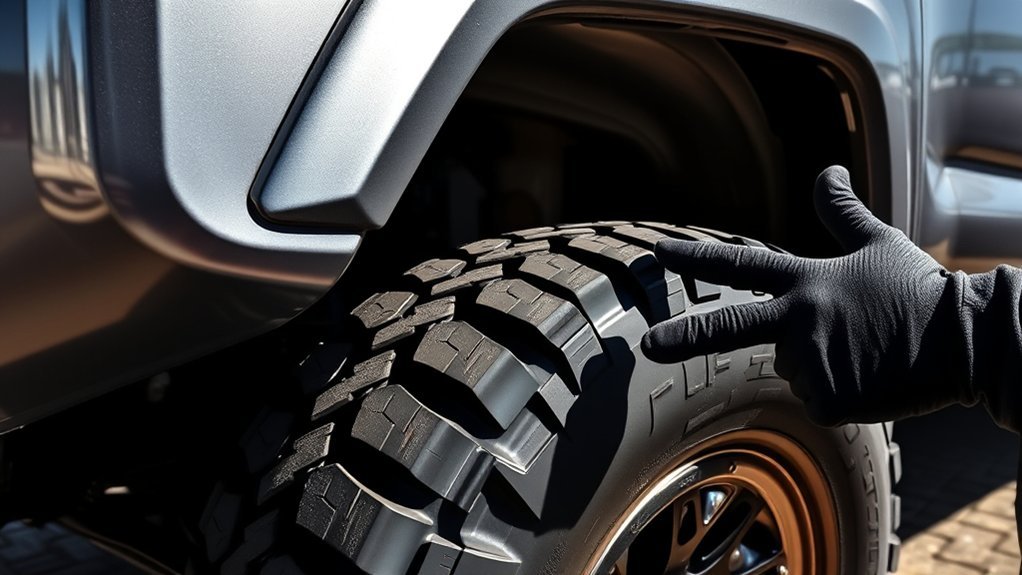
Start by finding the exact spot where the tire rubs. Turn the steering wheel fully left and right while the truck is parked on level ground. Look for shiny plastic, fresh rubber marks, scuffed paint, polished metal, or a worn tire sidewall. If the rub only happens off-road, check again after the suspension compresses because the tire can move farther back and up under load.
Warning: Do not keep driving if the tire sidewall is being cut, cords are showing, the steering binds, you smell burning rubber, or the tire contacts brake lines, wiring, or metal edges. Fix the clearance problem before normal driving.
Most Tacoma rubbing fixes fall into five groups: trimming plastic, correcting alignment, changing wheel offset or spacer setup, adding clearance-focused upper control arms, or modifying the cab mount. Use the smallest safe fix that solves the actual contact point instead of jumping straight to aggressive wheels or cutting.
Pro Tip: Mark suspected contact points with chalk or painter’s tape, then turn the wheel lock-to-lock and drive slowly over a small driveway dip. Fresh rub marks will show you where the tire is touching.
Diagnose the Rub Before You Buy Parts
Your first job is to separate inner rubbing from outer rubbing. Inner rub usually happens on the upper control arm, sway bar, frame, or coil bucket area. Outer rub usually happens on the fender liner, mud flap, bumper edge, pinch weld, or rear of the front wheel opening near the cab mount.
| Symptom | Likely Contact Point | Best First Fix |
|---|---|---|
| Rub at full steering lock on the inside of the tire | Upper control arm, sway bar, or frame | Check alignment, wheel width, offset, and UCA clearance. |
| Rub at the front or rear plastic liner | Fender liner, mud flap, bumper edge | Trim or reshape plastic before changing wheels. |
| Rub near the rear of the front wheel opening | Cab mount or pinch weld area | Try alignment and plastic trimming first; consider CMC or relocation if metal contact remains. |
| Rub only after installing larger tires or a lift | Changed tire diameter, width, caster, or wheel position | Get a proper alignment printout and verify wheel specs. |
Easy Fixes to Try First
If the tire only touches plastic, you may not need new wheels, spacers, or suspension parts. Remove or trim the mud flap, reshape the inner liner, and secure loose plastic with proper fasteners. Cut slowly and keep the edge smooth so it does not slice the tire during a hard turn.
Next, check tire pressure, wheel balance, and tire condition. The National Highway Traffic Safety Administration recommends checking cold tire pressure at least monthly and using the pressure listed on the tire and loading information label or owner’s manual, not the maximum number on the tire sidewall.
Good tire maintenance does not fix every rubbing issue, but pressure, tread condition, rotation, balance, and alignment all affect tire wear, steering feel, and safety.
Why Proper Alignment Is Key to Minimizing Rubbing
Proper alignment keeps the tire positioned correctly through turns. On a lifted Tacoma or a truck with larger tires, alignment can also help move the tire away from the rear of the front wheel opening while keeping the truck stable on the road.
Importance of Accurate Alignment
Ask your alignment technician for a Tacoma-specific alignment, not a generic quick toe adjustment. The goal is usually to maximize safe positive caster, keep camber and toe in spec, and center the tire in the wheel well as much as your parts allow. Do not chase clearance by using unsafe alignment numbers that make the truck wander, pull, or wear tires quickly.
SPC’s adjustable Tacoma upper control arms are designed to help restore caster and camber after a lift and help position oversized tires in the wheel well on 2005–2023 Tacoma applications. They can help, but they do not replace a proper alignment and clearance check.
Reducing Tire Wear
Rubbing is not the only tire-wear issue to watch. Uneven tread wear can come from incorrect pressure, poor alignment, worn suspension parts, or missed rotations. NHTSA says rotation can reduce irregular wear, and if your vehicle manufacturer recommends it, tires are commonly rotated every 5,000 to 8,000 miles or sooner if uneven wear appears.
Enhancing Overall Performance
A good alignment improves more than clearance. It helps steering return to center, reduces pulling, improves tire contact, and can make the truck feel more predictable on pavement and trails. After any lift, wheel change, UCA install, or cab-mount work, get a fresh alignment and keep the printout for future troubleshooting.
Note: A fixed rule like “move the tire forward 1/2 inch” is too simple. The safe amount depends on your Tacoma generation, lift height, tire size, wheel width, caster range, and suspension parts.
Understanding Wheel Offset and Its Impact
Wheel offset is the distance from the wheel’s hub mounting surface to the wheel centerline. Positive offset tucks the wheel inward. Zero offset places the mounting surface on the centerline. Negative offset moves the wheel outward, away from the suspension side of the wheel well.
Wheel Offset Explained
Many Tacoma owners run into inner tire rub when they install wider tires on wheels with too much positive offset. Moving from a +30mm wheel to a 0mm wheel moves the wheel centerline outward by about 30mm, or 1.18 inches. Moving from +30mm to -30mm changes that position by about 60mm, or 2.36 inches.
That math does not mean you automatically gain 2.36 inches of usable clearance everywhere. Wider wheels can place more tire toward both the inside and outside. Aggressive negative offset can clear the upper control arm but create new rubbing at the fender liner, bumper, mud flap, or cab mount.
Rubbing Mitigation Strategies
If your tire rubs the upper control arm, a lower positive offset, zero offset, mild negative offset, or properly selected hub-centric spacer may help. If your tire rubs the outer liner or cab mount, more negative offset may make that problem worse. That is why you should inspect the rub mark before choosing wheels.
Discount Tire explains that offset and backspacing determine how the wheel sits in the wheel well, and correct backspacing needs to leave room for steering, brakes, and suspension. For a Tacoma, that means checking clearance at full lock, under compression, and after the truck is aligned.
Solutions: Cab Mount Chop and Relocation Kits
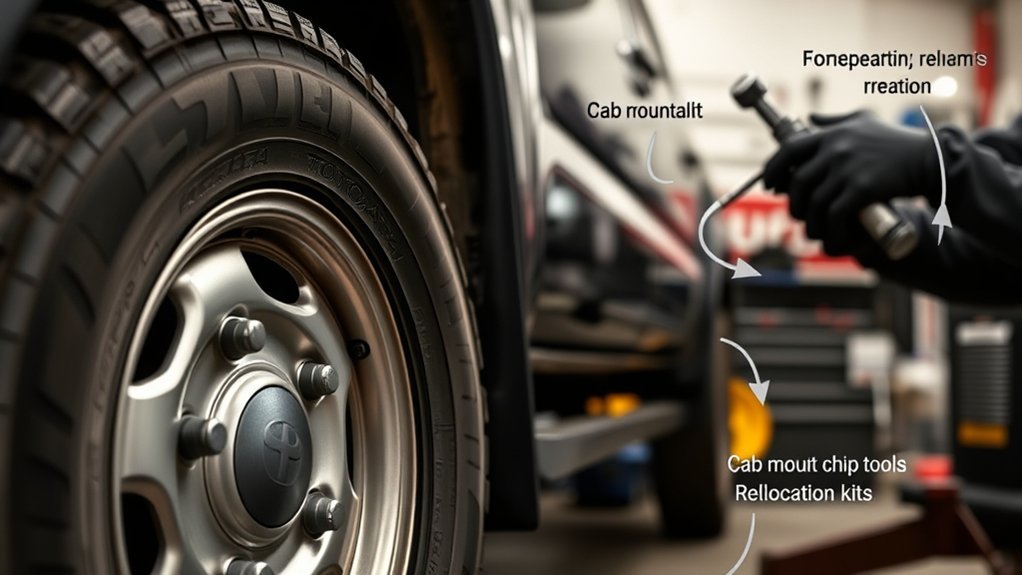
A cab mount chop, often called a CMC, removes part of the front cab mount area and replaces it with a shaped plate to create more tire clearance. A cab mount relocation goes further by moving the mount location for extra space. These fixes are common on Tacomas running larger tires, but they are not beginner jobs.
Warning: Cab mount work involves cutting, grinding, and welding near structural areas. Follow hot-work safety practices, protect nearby wiring and fuel or brake components, and use a qualified fabricator. OSHA hot-work rules require fire precautions when welding or cutting could create a fire risk.
- A CMC can help when the rear of the front tire touches the cab mount during turns or compression.
- A relocation kit can create more clearance than a basic chop, but it requires more fabrication skill.
- Both options should be sealed and painted afterward to reduce corrosion.
- Neither fix solves upper-control-arm rub by itself, so confirm the actual contact point first.
[Products Worth Considering]

These aluminum alloy tire valve stem caps with an O-ring seal help protect valve stems from corrosion while adding a clean, stylish look to your vehicle. The universal fit works across cars, trucks, motorcycles, bicycles, and more, making them an easy upgrade for everyday driving and off-road use. Installation is quick, and the included four-pack keeps all your tires dressed and protected.

The Ziopetru adjustable magnetic wheel alignment tool helps you check and restore camber and caster positioning after removing and reinstalling undercarriage components. With a clear leveling/bubble measurement system and an easy zeroing adjustment knob, it supports precise horizontal angle checking. The strong magnetic base mounts to metal surfaces for convenient use at home on cars, motorcycles, trucks, vans, and SUVs.

This universal wheel alignment tool helps you accurately restore tire tilt angles after tire or suspension repairs using an adjustable camber gauge. It features a powerful magnetic base that firmly attaches to brake rotors for stationary, slip-free readings, improving consistency during measurement. Built from durable PC plastic, it resists wear and corrosion and is compact enough for car, truck, RV, and motorcycle alignment tasks.
Wheel Spacers vs. New Wheels: What’s Best for You?
Wheel spacers and new wheels both move the tire outward, but they do it differently. Spacers sit between the hub and wheel. New wheels use a different offset and backspacing to change the tire position without adding a separate spacer layer.
| Option | Pros | Cons |
|---|---|---|
| Hub-centric wheel spacers | Can add inner clearance while keeping your current wheels; useful for mild fitment correction. | Must be vehicle-specific, correctly torqued, inspected, and matched to safe stud engagement. |
| New wheels with better offset | Cleaner long-term fitment solution when you need a new width, offset, or load rating. | Costs more and can still rub if the offset is too aggressive. |
| No wheel change | Best when rub is only on plastic trim or a loose liner. | Will not fix serious UCA, frame, or cab-mount contact. |
For a daily-driven Tacoma, new wheels with the correct offset are often the cleaner solution. If you use spacers, choose quality hub-centric spacers made for your truck, follow the spacer and wheel manufacturer’s torque instructions, and have a shop recheck them after installation.
[Products Worth Considering]

This 1/2-inch drive breaker bar delivers powerful leverage for loosening and tightening stubborn lug nuts and automotive fasteners. The 180-degree flex head helps you reach tight spaces at the angle you need, making tire and brake jobs easier. A spring-loaded ball detent design holds 1/2-inch sockets securely while the chrome-moly head provides durable strength for everyday use.

Monitor tire tread wear with a smart, color-coded depth gauge that shows clear condition ranges at a glance. The bar is range marked for fast, easy readings, helping you maintain safer traction and performance. Each gauge is portable with a pocket clip, and the set includes 20 units for daily use and sharing.

Universal magnetic jack pad with aluminum grooved design to protect vehicle pinch welds during lifting. Durable nylon pad inserts are upgraded and secured with screws to resist damage and keep in place. Designed to fit most single vehicle pinpoint welds for safer, stable jacking when changing tires, repairs, or performing oil changes.
Comparing Wheel Options: Safety and Performance
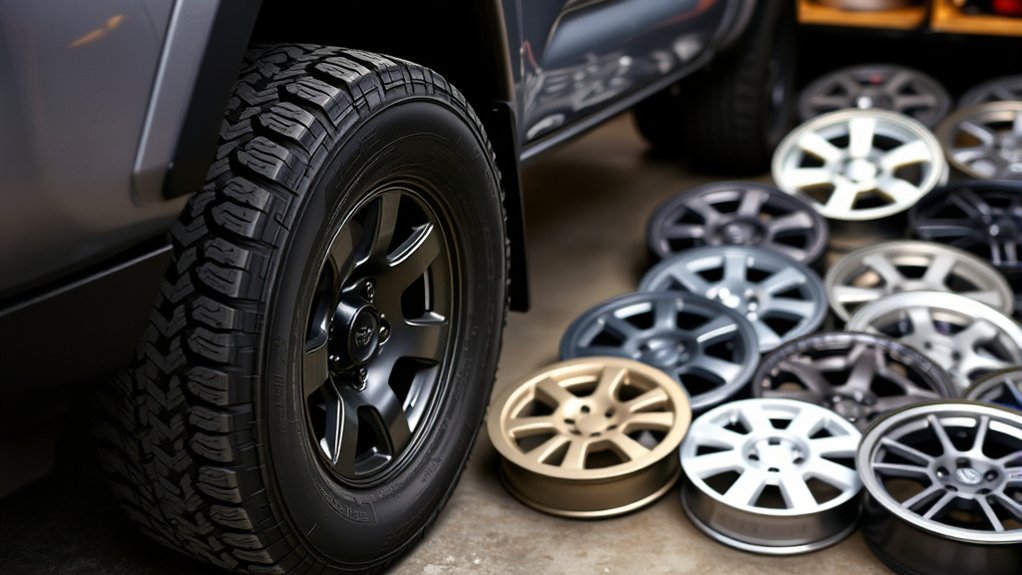
Wheel choice affects more than rubbing. It changes track width, steering feel, scrub radius, bearing load, fender coverage, and how much debris the tire throws onto the body. A mild offset change may solve your inner rub without making the truck hard to drive. A very aggressive offset may look good but can create heavier steering and more outer clearance problems.
- Choose a wheel width and offset based on your tire size, lift height, and real rub point.
- Check brake caliper clearance before mounting aftermarket wheels.
- Use wheels with the correct bolt pattern, center bore, load rating, and lug-seat type.
- Keep fender coverage and local road rules in mind if the tires stick out past the body.
- Always road-test slowly and listen for rubbing before normal-speed driving.
[Products Worth Considering]

Vigorder rubber cement glue delivers superior adhesion and cures quickly within about 30 seconds for seamless rubber bonding. Once cured, it helps provide a strong, durable, waterproof seal that holds up to vehicle weight, pressure, and heat. Suitable for cars, motorcycles, trucks, bicycles, and off-road tires, it’s designed for emergency patch and maintenance repairs.

The Trivd Frol 1/2" air impact wrench delivers high performance torque up to 1500 ft-lbs with a twin hammer impact mechanism for strong, balanced blows. It features an ergonomic grip, compact lightweight design, and quick-stop control with 3 forward speeds up to 8000 RPM plus a reverse speed. Built for demanding automotive repair and tire shop work, the rear exhaust helps keep debris away from the surface.

ETENWOLF T300 is a calibrated digital tire pressure gauge for accurate readings from 3 to 200 PSI across light and heavy-duty vehicles. It includes thermal compensation for reliable performance in extreme cold or heat, with an auto shut-off to extend battery life and an LED for easier reading. The sturdy design supports rugged everyday use, making it ideal for pickups, RVs, and industrial applications.
Upper Control Arms and Suspension Clearance
Aftermarket upper control arms can help when your lift changes caster and camber or when the tire is too close to the factory UCA. Some designs also provide more clearance around the spring bucket and inner tire area. They are most useful when paired with a proper alignment.
Do not install UCAs only because another Tacoma owner used them. Confirm that your tire is actually contacting the UCA or that your alignment cannot reach safe numbers with factory parts. After installation, torque everything to the manufacturer’s instructions, align the truck, and recheck clearance with the steering turned both directions.
Road-Test and Recheck After the Fix
Once you make a change, test it carefully before daily driving. Start in a parking lot. Turn full left and full right at slow speed. Then drive over a small dip or driveway angle to compress the suspension. Stop and inspect the tire, liner, mud flap, cab mount, and UCA again.
- Look for new shiny spots, rubber dust, sliced plastic, or tire sidewall scuffs.
- Check that the steering returns to center and does not bind.
- Confirm that brake lines, ABS wiring, and fender liners are secured.
- Recheck lug torque using the correct spec from your owner’s manual or wheel manufacturer.
- Schedule an alignment after any suspension or UCA work.
Community Tips for Tacoma Modifications
Tacoma owners often solve rubbing with a mix of small changes instead of one extreme fix. A common path is liner trimming, mud-flap removal, alignment adjustment, and then a more careful wheel or UCA choice if the tire still touches. For larger tires, cab mount clearance may become the limiting factor.
Forum advice can help you compare real-world setups, but copycat fitment can still fail. Two Tacomas with the same tire size can rub differently because of tire brand, tread width, wheel width, offset, lift height, spring preload, alignment, bumper position, and worn suspension parts.
Note: If you are planning 33-inch or larger tires, choose the full package together: tire size, wheel width, offset, lift height, alignment range, UCA clearance, and cab mount clearance.
Frequently Asked Questions
Why does my Tacoma tire feel like it is rubbing when I turn?
Your tire may be touching the fender liner, mud flap, cab mount, frame, sway bar, or upper control arm during full steering lock. Larger tires, wider wheels, aggressive offset, lift kits, worn suspension parts, and poor alignment can all reduce clearance.
Can alignment fix Tacoma tire rubbing?
Alignment can help if the tire is sitting too far back in the wheel well or if a lift changed caster and camber. It will not fix every rub, especially if the tire is too large or the wheel offset pushes the tire into the fender or cab mount.
Are wheel spacers safe on a Tacoma?
Wheel spacers can be used safely only when they are vehicle-specific, hub-centric, properly torqued, and inspected. Poor-quality spacers, wrong hardware, poor stud engagement, or missed torque checks can create vibration, looseness, or safety issues.
Is a cab mount chop always needed for 33-inch tires?
No. Some Tacoma setups clear with trimming, alignment, and the right wheel specs. Others need a cab mount chop or relocation because tire brand, tread width, wheel offset, lift height, and caster all change the available space.
How can I tell if a wheel bearing is bad instead of tire rubbing?
Tire rubbing usually leaves visible marks and often happens at full lock or during compression. A bad wheel bearing often makes a humming, grinding, or growling noise that changes with speed or load. If you feel vibration, hear grinding, or see uneven tire wear, have the hub, tire, and suspension inspected.
Conclusion
Fixing Tacoma tire rubbing starts with diagnosis, not guessing. Find the rub mark first, then match the fix to the contact point. Plastic liner rub may only need trimming. UCA rub may need offset changes, spacers, or aftermarket upper control arms. Cab mount rub may need professional cutting or relocation.
Keep safety at the center of every change. Use proper alignment, quality parts, correct torque procedures, and careful road testing. When a tire is contacting metal, cutting the sidewall, or interfering with steering, stop driving and repair the clearance problem before it becomes a bigger safety issue.
Sources
- NHTSA TireWise — supports tire pressure, tread, balance, alignment, rotation, and tire-size safety guidance.
- Tire Rack: What Is Wheel Offset? — supports wheel offset definitions and handling-clearance cautions.
- Discount Tire: Understanding Wheel Offset and Backspacing — supports offset/backspacing relationship and clearance considerations.
- Specialty Products Company: Tacoma Adjustable Upper Control Arms — supports Tacoma UCA caster/camber adjustment and tire-positioning claims.
- OSHA 29 CFR 1910.252 — supports hot-work fire-safety precautions for cutting and welding.

