
Toyota Tacoma Fender Clearance for Bigger Tires
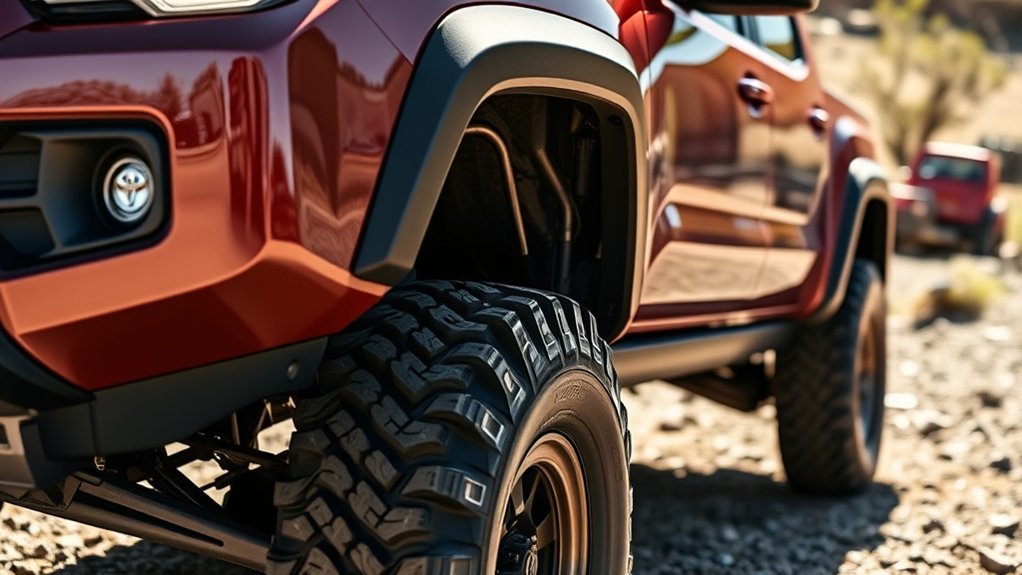
Maximizing fender clearance for bigger tires on a Toyota Tacoma is less about one magic lift kit and more about the whole fitment package: tire size, wheel offset, alignment, lift height, liner position, cab mount clearance, and how much trimming you are willing to do. Most daily-driven Tacomas can move up one or two tire sizes with careful planning, but true 35-inch tires on many 2016–2023 trucks usually need more than a simple spacer lift.
Quick Answer
To maximize Tacoma fender clearance for bigger tires, start by checking your generation, tire size, wheel offset, and lift height. Then test for rubbing at full steering lock, trim the liner or bumper only where needed, align for proper caster, and use a cab mount chop or body mount relocation for many 35-inch setups.
Key Takeaways
- A lift helps, but it does not automatically prevent rubbing; wheel offset, tire width, caster, and body mount clearance matter just as much.
- Many 33-inch tire setups need only light liner or mud-flap trimming, while many 35-inch setups on 2016–2023 Tacomas require fender trimming and cab mount work.
- Use the cold tire pressure on your Tacoma’s door-jamb placard as the starting point, not a universal PSI number.
- Any cutting, welding, body mount relocation, or suspension change should be followed by an alignment, retorque check, and slow test drive.
At a Glance
| Time Required | 30–60 minutes to inspect and mark rub points; several hours for trimming; a full shop appointment for welding, body mount relocation, or alignment. |
| Difficulty | Easy for inspection and minor liner movement; moderate for trimming; advanced for cab mount chop, body mount relocation, welding, or firewall work. |
| Tools Needed | Tape measure, painter’s tape, marker, jack and stands, torque wrench, trim tools, socket set, heat gun, cutting tool, file or deburring tool, rust-inhibiting paint, safety glasses, gloves, and hearing protection. |
| Cost | Low for inspection and minor trimming; moderate for high-clearance liners or fender trim kits; higher for professional body mount relocation, welding, alignment, regearing, or suspension upgrades. |
Warning: Larger tires and non-factory wheels can affect steering, braking, ABS, traction control, Trailer Sway Control, VSC, tire pressure monitoring, and warranty-related repairs. Toyota notes that stability systems may not function correctly if different tires are installed, so confirm tire and wheel changes with a qualified shop or Toyota dealer before major modifications.
Tackle Common Rubbing Issues in Tacoma Tire Fitment
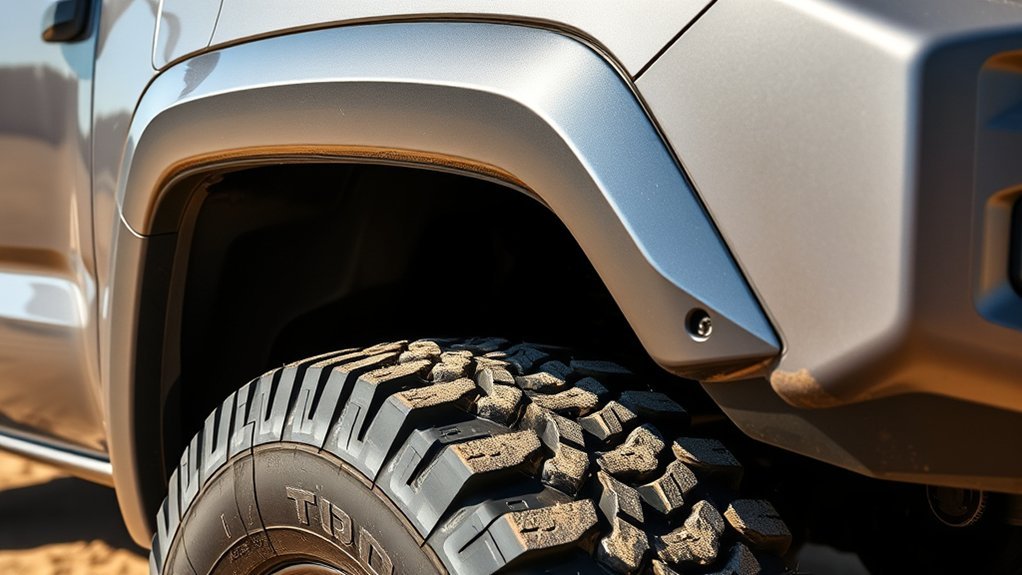
When you upgrade your Tacoma’s tires, the first job is to find exactly where the tire contacts the truck. Rubbing usually happens at full steering lock, while backing up, when the suspension compresses, or when the tire grabs the liner during off-road articulation.
The most common Tacoma rub points are:
- Front bumper edge or lower valance: Often the first contact point with wider 33-inch or 35-inch tires.
- Mud flaps: Easy to overlook and often removed or trimmed on off-road builds.
- Front fender liner: Can usually be pushed forward, heated, reshaped, trimmed, or replaced with a high-clearance liner.
- Cab mount or body mount: A major contact point on many 2016–2023 Tacoma builds running larger tires.
- Pinch weld and firewall area: More likely to matter with aggressive 35-inch setups or wide tires.
- Upper control arm: Can become a rub point depending on wheel width, offset, tire width, and aftermarket UCA design.
A product such as the C4 Fabrication Tacoma Oversized Tire Fitment Kit is designed for 2016–2023 Tacomas and is marketed for fitting 35-inch tires with a 3-inch lift, but it is not a simple cosmetic part. The kit requires cutting factory fenders, and the related body mount relocation work requires cutting and welding. That makes it best suited for committed builds, not casual tire upgrades.
Note: This guide is most useful for 2016–2023 third-generation Tacomas because the original article’s parts and examples focus on that generation. If you own a 2024+ Tacoma, verify fourth-generation fitment separately before buying tires, wheels, or lift parts.
Check Your Baseline Before Buying Bigger Tires
Before you trim anything, write down your current setup. This prevents you from blaming the lift kit when the real problem is wheel offset, tire width, or alignment.
- Confirm your Tacoma generation and trim. Third-gen 2016–2023 trucks and fourth-gen 2024+ trucks do not share the same clearance rules.
- Record your current tire size. Look at the sidewall, such as 265/70R16, 265/65R17, 285/70R17, or 315/70R17.
- Measure actual tire height and width. A “35-inch” tire may measure less or more depending on brand, load range, wheel width, and inflation.
- Check wheel width and offset. More negative offset pushes the tire outward, which may clear the upper control arm but can increase fender and bumper rubbing.
- Measure lift height. Do not rely only on advertised lift numbers; measure hub-to-fender before and after suspension changes.
- Check alignment specs. More positive caster can help pull the tire away from the rear of the fender opening, but it must stay within a safe, alignable range.
- Decide how much cutting is acceptable. Liner trimming is reversible compared with body mount cutting, welding, or firewall work.
Pro Tip: Test-fit one front tire before mounting a full set if you are moving to an aggressive size. Turn the wheel lock-to-lock, roll forward and backward, and mark every contact point with painter’s tape.
Tacoma Tire Size Clearance Guide
The table below is a practical planning guide, not a guarantee. Tire brand, tread pattern, load range, wheel width, wheel offset, suspension lift, caster, and bumper choice can change the result.
| Tire Goal | Typical Tacoma Clearance Notes | Likely Modifications |
| Stock-size to mild 31–32 inch | Usually the easiest daily-driver upgrade when wheel offset stays close to factory. | Often none, or minor mud-flap/liner adjustment. |
| 33 inch, such as many 285/70R17 setups | A common Tacoma upgrade, but rubbing depends heavily on offset, width, caster, and lift. | Leveling kit or lift, alignment, mud-flap removal, liner push-forward, light bumper or liner trimming. |
| 35 inch | Possible on many 2016–2023 builds, but rarely “bolt-on” if you want clean steering and articulation. | 3-inch-class suspension setup, careful offset choice, fender trimming, high-clearance liners, cab mount chop or body mount relocation, alignment, and possible gearing considerations. |
| 37 inch | Advanced custom fitment. Practical for dedicated off-road builds, not most daily drivers. | Major cutting, bumper changes, body clearance work, bump-stop tuning, possible tubbing, gearing, and professional fabrication. |
Essential Modifications for Tacoma Tire Fitment
Upgrading your Tacoma’s tires can improve ground clearance and trail capability, but the cleanest setups use the smallest modification that solves the actual rub point. Work in this order before jumping to major cutting.
- Remove or trim mud flaps: This is often the easiest first step when the tire catches the rear of the front wheel opening.
- Push the liner forward: Loosen the liner fasteners, move the liner forward, and secure it so it does not sag into the tire.
- Trim the bumper or lower valance: Mark a clean line with tape, cut conservatively, then smooth the edge.
- Trim or replace the inner fender liner: High-clearance liners can create more room while helping shield the air intake and door-jamb area.
- Address the cab mount: If the tire hits the cab mount at full lock, a cab mount chop or body mount relocation kit may be needed.
- Protect bare metal: Any exposed cut metal should be deburred, cleaned, primed, and painted to reduce rust risk.
- Finish with alignment: A proper alignment can reduce rubbing and improve steering feel, tire wear, and stability.
A suspension lift creates vertical room, but fender clearance is usually won at the front and rear edges of the wheel opening, the liner, and the cab mount.
[Products Worth Considering]

The SAFELIFE dial tire tread depth gauge measures tread depth in 1/32 inch increments with clear, easy-to-read 2-inch dial face. Color zones using a traffic light system help you quickly judge whether tread is low, marginal, or ample for safer driving. Built with a durable zinc cast body and a metal detect probe for precise, comfortable use across cars, motorcycles, trucks, and buses.

Slip the Powerbuilt tire step over your vehicle’s tire to reach roof racks, engine bays, truck boxes, and more without overreaching. Its adjustable, universal design fits tires with a cross tread width up to 13 inches, including car, truck, RV, and semi tires. The non-slip cheesegrater surface and anti-slip tape provide secure grip while the open design lets mud and debris pass through. Fold-flat storage with rubber bumpers helps keep your tire and the step protected between uses.

Universal magnetic jack pad with aluminum grooved design to protect vehicle pinch welds during lifting. Durable nylon pad inserts are upgraded and secured with screws to resist damage and keep in place. Designed to fit most single vehicle pinpoint welds for safer, stable jacking when changing tires, repairs, or performing oil changes.
Choosing the Right Lift Kit for Your Tacoma
A lift kit can help fit bigger tires, but it should match your Tacoma generation, trim, shock package, driving style, and tire goal. A spacer or preload collar lift may be fine for a mild daily-driver tire upgrade, while a heavy overland or off-road build may need upgraded coilovers, rear leaf support, upper control arms, and a full alignment plan.
For example, Westcott Designs lists a 2016–2023 Tacoma TRD Sport preload collar lift kit with 3 inches of front lift and 1 inch of rear lift, and describes it as suitable for the popular 33-inch 285/70R17 tire. That is different from some 2024–2026 listings that advertise 2.5 inches front and 0.75 inch rear. Always match the part number to your exact model year and trim before buying.
For 35-inch tires, a 3-inch-class lift may be only one piece of the setup. You may still need fender trimming, high-clearance liners, a body mount relocation or cab mount chop, careful wheel offset, and enough caster to pull the tire away from the rear of the wheel opening.
Note: Avoid choosing a lift only because it says “fits 35s.” Ask what wheel width, offset, tire model, trimming, alignment, and body mount work were used to make that claim.
[Products Worth Considering]

The Ziopetru adjustable magnetic wheel alignment tool helps you check and restore camber and caster positioning after removing and reinstalling undercarriage components. With a clear leveling/bubble measurement system and an easy zeroing adjustment knob, it supports precise horizontal angle checking. The strong magnetic base mounts to metal surfaces for convenient use at home on cars, motorcycles, trucks, vans, and SUVs.

AZUNO’s digital tire inflator delivers stable, accurate pressure readings with a bright LCD and a 0.1 resolution display for confident inflation. It supports one-handed operation for inflating and quick deflating, and it’s built with rugged steel and brass components for reliable shop or garage use. With multi-unit pressure display and compatibility across cars, SUVs, motorcycles, and trucks, it’s a convenient accessory for everyday tire maintenance.

Level Up Your Stance & Clearance: Eliminate factory rake and add extra height to confidently clear obstacles - giving your Tacoma a tougher, trail-ready look without overdoing it.
Understanding Fender Clearance for Bigger Tires on Your Tacoma
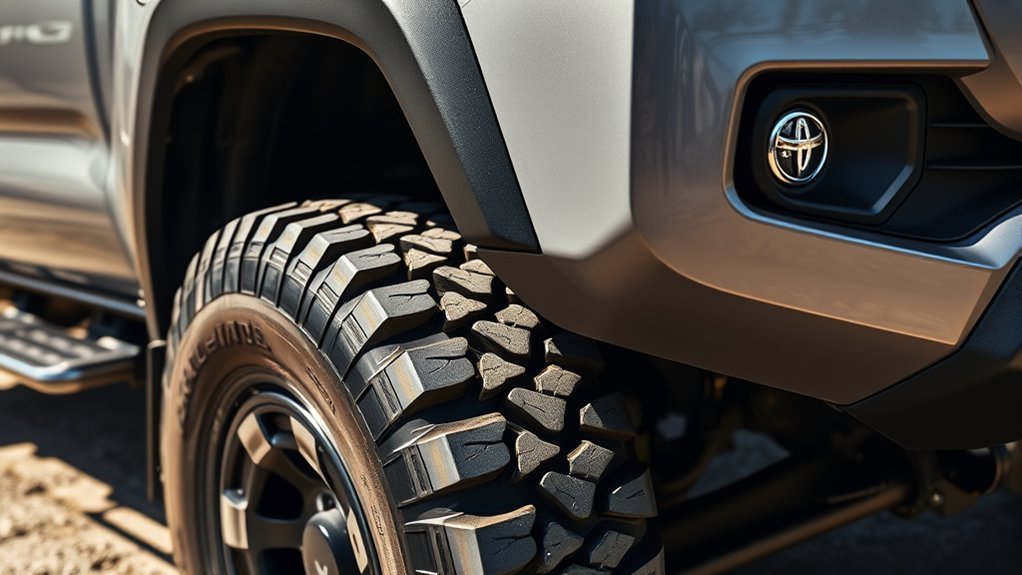
Fender clearance is the space your tire needs while turning, braking, compressing, and flexing off road. Static clearance while parked is only part of the story. A tire that clears in the driveway may still rub when the truck backs up, hits a dip, or turns with the suspension compressed.
Use this clearance test before and after modifications:
- Park on level ground. Set the parking brake and use wheel chocks if needed.
- Measure static clearance. Check the gap from the tire to the front bumper, rear liner, cab mount area, and upper control arm.
- Turn full left and full right. Look for contact at the bumper, liner, mud flap, cab mount, and pinch weld.
- Roll forward and backward slowly. Some rubbing appears only when the tire rotates and the suspension loads.
- Compress the suspension safely. A shop can test this more accurately on a lift or ramp; do not crawl under an unsupported vehicle.
- Mark contact points. Use tape or chalk so you trim only what is needed.
- Retest after every change. Small cuts are safer and cleaner than one aggressive cut.
Wheel offset plays a major role. More positive offset keeps the tire tucked in, which can help the outer fender but may bring the tire closer to the upper control arm. More negative offset pushes the tire outward, which can clear the UCA but often increases bumper, flare, and fender-edge rubbing. That is why one wheel model or offset cannot guarantee perfect fitment on its own.
Cab Mount Chop vs. Body Mount Relocation
On many 2016–2023 Tacoma builds, the cab mount is the hard limit when moving toward 35-inch tires. A cab mount chop trims the factory mount for more clearance and usually adds a welded plate. A body mount relocation moves the mount farther back and replaces the factory structure with a fabricated part.
Body mount relocation can create more room, but it is a structural modification. It involves cutting the factory body mount and welding in a replacement, so it should be handled by a qualified fabricator. After the work, inspect welds, paint exposed metal, verify bushing alignment, and test at full steering lock before driving aggressively.
Warning: Do not grind, cut, or weld near fuel lines, wiring, brake lines, or suspension components unless you know exactly what you are doing. For cab mount chops or body mount relocations, professional fabrication is the safer choice.
Tire Pressure, TPMS, and Road Safety
Do not use a blanket tire pressure number just because the tire is bigger. Toyota’s owner guidance says the recommended cold tire inflation pressure and tire size are shown on the tire and loading information label, and NHTSA TireWise also recommends checking tire pressure cold and using the vehicle placard or certification label as the reference.
For larger all-terrain or mud-terrain tires, start with the Tacoma’s door-jamb placard, then work with the tire manufacturer’s load data or a qualified tire shop if your new tire has a different load range or construction. Underinflation can create heat and poor handling; overinflation can reduce ride quality and cause uneven wear. After a wheel or tire change, confirm that the TPMS sensors are reading correctly and that no warning light remains.
How Bigger Tires Affect Driving
Bigger tires can improve ground clearance, approach feel, and off-road traction, but they also add tradeoffs. Heavier tires can make the truck feel slower, increase braking distance, add steering effort, and reduce fuel economy. Tire rolling resistance is one of the ways tires affect vehicle fuel use, as explained by the National Academies research on tires and fuel economy.
Large tire changes can also affect speedometer accuracy and effective gearing. A move from stock-size tires to true 35s may make the truck feel sluggish, especially with added armor, racks, camping gear, or towing weight. If the truck hunts for gears, struggles on hills, or feels weak off road, regearing may become part of the long-term build plan.
Community Insights on Successful Tire Upgrades
Successful Tacoma tire upgrades usually come from matching the full setup instead of copying one spec from another build. Two trucks can both run 35-inch tires and a 3-inch lift, but one may rub badly because it uses a wider tire, different offset, less caster, a sagging front end, or no cab mount clearance work.
Community-proven lessons are consistent:
- 33s are the practical sweet spot for many daily-driven Tacomas because they can often be made to work with lighter trimming and a good alignment.
- 35s need commitment on many 2016–2023 builds because fender trimming, high-clearance liners, and cab mount work are commonly involved.
- 37s are custom territory and should be planned around suspension travel, bump stops, gearing, braking, and body clearance.
- Offset is not a guarantee. A wheel such as a Method 703 in one offset may work on one truck and rub on another because the tire, alignment, lift, and trimming are different.
- Alignment matters. A poor alignment can create rubbing even when the tire size looks reasonable on paper.
Post-Install Clearance Checklist
After installing bigger tires or trimming for clearance, do not head straight for the trail. Run through this checklist first:
- Torque lug nuts to the wheel manufacturer or Toyota specification for your setup.
- Check cold tire pressure using the door placard as your starting reference.
- Turn the steering wheel fully left and right while parked and inspect every rub point.
- Drive slowly forward and backward while turning to check for hidden contact.
- Schedule an alignment after lift, UCA, or major tire changes.
- Recheck clearance after the first drive because liners and trim edges can shift.
- Inspect brake lines, ABS wires, fender liners, and bumper edges for contact.
- Recheck lug torque after a short break-in drive.
- Watch for uneven tire wear during the first few hundred miles.
Frequently Asked Questions
What tire pressure is recommended for larger tires on a Tacoma?
Start with the cold tire pressure listed on your Tacoma’s driver-side door placard, then confirm the right pressure for your new tire’s load range with the tire manufacturer or a qualified tire shop. Do not inflate based only on the maximum PSI printed on the tire sidewall.
How do I measure fender clearance accurately before upgrading tires?
Park on level ground, measure the gap from the current tire to the bumper, liner, cab mount, fender edge, and upper control arm, then turn the wheel fully left and right and measure again. For the best result, test with the suspension loaded because many rubbing problems appear only while turning or compressing.
Will larger tires affect my Tacoma’s fuel efficiency?
Usually, yes. Larger and heavier tires can increase rolling resistance, add rotating weight, change effective gearing, and make the truck work harder. The exact fuel-economy change depends on tire weight, tread design, driving speed, gearing, load, and how aggressively you drive.
Can wheel spacers help with fender clearance for bigger tires?
Wheel spacers can move the tire away from the upper control arm, but they can also push the tire into the bumper, fender flare, or rear of the wheel opening. Use only quality hub-centric spacers installed with proper torque, and recheck torque after driving. Spacers are not a cure-all for poor tire fitment.
What are the signs of rubbing during normal driving?
Common signs include scraping while turning, a plastic grinding sound while backing up, shiny rub marks on the liner or cab mount, sliced tire lugs, loose liner clips, uneven tire wear, or a burning plastic smell after a tight turn. Stop and inspect the contact point before it damages the tire.
Can I fit 35-inch tires on a Tacoma with only a 3-inch lift?
Sometimes, but the lift alone is usually not enough on many 2016–2023 Tacomas. A clean 35-inch setup often needs the right wheel offset, alignment, fender trimming, high-clearance liners, and cab mount chop or body mount relocation.
Do I need an alignment after installing bigger tires?
Yes, you should get an alignment after a lift, upper control arm change, or major tire-size change. Proper caster, camber, and toe help reduce rubbing, improve steering feel, and prevent uneven tire wear.
Are fender flares required for wider Tacoma tires?
That depends on your local laws and how far the tire sticks out past the body. Fender flares can help cover wider tires, reduce spray, and protect paint, but they do not automatically solve inner liner, cab mount, or bumper rubbing.
Conclusion
Upgrading your Tacoma’s tires can make the truck look tougher and perform better off road, but clean fitment comes from planning, not guessing. Start with your generation, wheel specs, tire size, lift height, and alignment. Then test for rubbing, trim conservatively, protect every cut edge, and use professional help for body mount relocation or welding. With the right combination of clearance work, tire pressure, alignment, and safety checks, your Tacoma can run bigger tires with fewer rubbing problems and better road manners.
Sources
- Toyota Owners: Tacoma Tire Inflation Pressure — supports using the recommended cold tire pressure and tire/loading label.
- Toyota Owners: Tacoma Driving Assist Systems — supports the warning that different tires can affect ABS, TRAC, Trailer Sway Control, and VSC.
- NHTSA TireWise — supports checking tire pressure cold and using the vehicle placard/certification label.
- C4 Fabrication Tacoma Oversized Tire Fitment Kit — supports 2016–2023 Tacoma 35-inch tire fitment claims and required fender/body mount modifications.
- C4 Fabrication Tacoma Body Mount Relocation Kit — supports body mount relocation use, cutting, welding, and full-lock clearance context.
- National Academies: Tires and Passenger Vehicle Fuel Economy — supports the relationship between rolling resistance and fuel economy.

Related Articles
Best Toyota Tacoma Tire Set Deals
You rely on your Tacoma for daily driving, work runs, and weekend adventures, so picking the right tire set matters more than you might…
Read More
Best Winter Tire Deals for Toyota Tacoma
Choosing the right winter tires for your Toyota Tacoma matters because it directly affects your safety, traction, and confidence when roads turn icy or…
Read More
Best Highway Tire Deals for Toyota Tacoma
You rely on your Tacoma for long drives, towing, and everyday hauling, so picking the right highway tire matters more than you might think.…
Read More