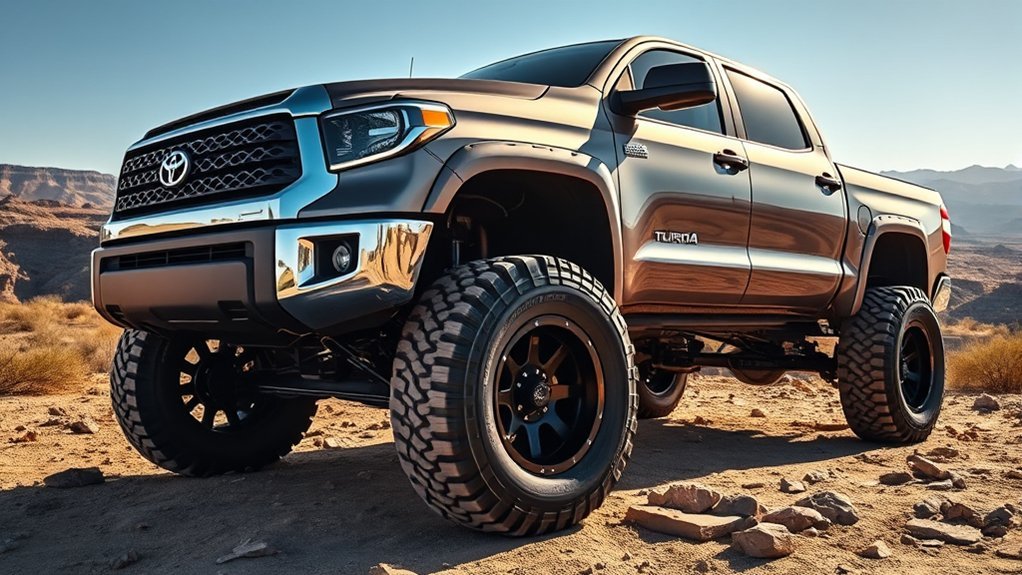
Yes, 37-inch tires can fit many Toyota Tundra builds, but they are not a simple bolt-on upgrade for every year, trim, wheel, or suspension setup. Plan on checking wheel offset, tire width, actual tire diameter, alignment, load rating, and rub points before you buy. On most serious 37-inch Tundra setups, some mix of lift, trimming, liner relocation, alignment work, and possibly cab/body mount clearance is required.
Quick Answer
A Toyota Tundra can run 37-inch tires with the right setup, but expect modifications. For many 2022+ Tundras, the main needs are proper wheel offset, liner and pinch-weld clearance, alignment, bumpstop checks, and sometimes a lift or clearance kit. Always confirm load rating, tire pressure, and rubbing before daily driving.
Key Takeaways
- 37s can fit, but rarely without work. Expect test-fitting, trimming, alignment tuning, and clearance checks.
- Wheel specs matter as much as tire size. Offset, backspacing, wheel width, and tire section width determine where the tire rubs.
- Actual tire size varies by brand. A “37-inch” tire may measure closer to 36.5 inches, so check the manufacturer’s spec sheet before buying.
- Safety comes first. Use a tire with the correct load index, set cold pressure correctly, and inspect steering, braking, and suspension clearance before road use.
At a Glance
| Time Required | 1 full day for test-fitting and minor trimming; 2–3 days if lift, welding, cab/body mount work, or alignment troubleshooting is needed. |
| Difficulty | Moderate to advanced. Basic trimming is manageable for experienced DIY owners; cutting, welding, and suspension setup should be handled by a qualified shop. |
| Tools Needed | Jack and stands, torque wrench, tire-pressure gauge, trim tools, marker, measuring tape, alignment access, cutting tools if trimming, rust-preventive paint, and safety gear. |
| Cost | Varies widely: minor DIY trimming may be low-cost, while tires, wheels, spacers, UCAs, lift parts, clearance kits, welding, and alignment can turn this into a multi-thousand-dollar upgrade. |
Foundational Insights on Tire Fitment for a Toyota Tundra
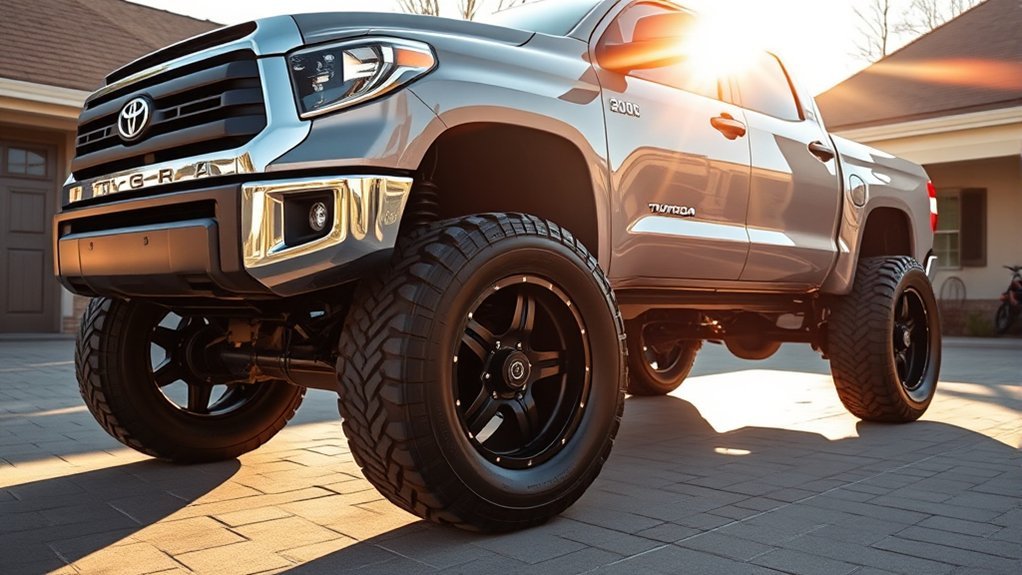
Before you order 37s, identify your Tundra generation and trim. A 2022+ third-generation Tundra has different suspension and wheel-well geometry than a 2007–2021 second-generation truck, so fitment advice does not transfer perfectly. Toyota’s current Tundra lineup also uses different factory wheel sizes by trim, including 18-inch, 20-inch, and 22-inch wheels, so avoid assuming every truck starts with the same wheel package. You can compare current factory equipment on the official Toyota Tundra model page.
The reason 37-inch tires are challenging is simple: they are taller, wider, heavier, and often have more aggressive shoulder lugs than stock tires. More diameter helps ground clearance, but it also pushes the tire closer to the front bumper area, fender liner, pinch weld, firewall, cab/body mount area, sway bar, and upper control arm during steering and suspension travel.
Warning: Cutting, welding, grinding, suspension changes, and wheel-spacer installation can affect crash structure, corrosion protection, steering, braking, warranty coverage, and inspection legality. If you are not experienced with vehicle fabrication, use a qualified off-road or alignment shop.
What to Check Before Buying 37-Inch Tires
The best 37-inch tire setup starts before the tire is mounted. Use this checklist to avoid buying parts that fight each other:
- Actual tire diameter: A “37-inch” tire is often a nominal size. Check the tire maker’s spec sheet for real overall diameter, section width, tread width, weight, and revolutions per mile.
- Tire width: A 37×12.50 tire creates different clearance problems than a narrower metric tire near 37 inches tall.
- Wheel width: Many 37×12.50R17 tires require an 8.5–11-inch approved rim-width range. Always confirm the exact tire’s approved wheel-width range.
- Offset and backspacing: Lower offset pushes the tire outward for inner clearance, but too much poke can create bumper, fender, and mud-flap rubbing.
- Load index and speed rating: Do not install a tire with a lower load rating than your original equipment requirement. The Tire Industry Association advises against using replacement tires with a lower load index than the OE tire listed on the placard or owner’s manual.
- Wheel load rating: The wheel must be rated for your truck’s axle loads, payload, and towing use.
- TPMS compatibility: Plan for TPMS sensors and recalibration if needed.
- Spare tire fitment: A 37-inch spare may not fit in the factory spare location without changes.
Note: Tire pressure should not be guessed from the sidewall maximum. Use the vehicle placard, the tire manufacturer’s load-inflation data, and professional tire guidance. NHTSA’s TireWise tire-safety guidance explains that pressure should be checked cold and tied to the vehicle’s placard or certification label.
[Products Worth Considering]

Upgrade your wheels with MIKKUPPA M12x1.5 mag seat lug nuts built for secure, corrosion-resistant performance. These closed-end chrome lug nuts are a direct replacement for select Toyota models, including Camry, Corolla, RAV4, Sienna, Avalon, Highlander, Matrix, Venza, and Prius. Triple-chromium plating and cold-forged, heat-treated steel help deliver strength for daily driving and replacement needs.

These aluminum alloy tire valve stem caps with an O-ring seal help protect valve stems from corrosion while adding a clean, stylish look to your vehicle. The universal fit works across cars, trucks, motorcycles, bicycles, and more, making them an easy upgrade for everyday driving and off-road use. Installation is quick, and the included four-pack keeps all your tires dressed and protected.

These universal tire valve stem caps help protect valve cores from dust, debris, and moisture while helping maintain stable tire pressure. The corrosion-resistant metal construction and sealed design provide reliable protection in road grime, mud, and winter conditions. Twist-on installation makes them quick to fit on cars, SUVs, trucks, and motorcycles.
Key Modifications for Successfully Installing 37-Inch Tires
To successfully install 37-inch tires on a Toyota Tundra, think in this order: lift, wheel position, alignment, clearance, and final safety checks. Cutting should not be the first step. First, create as much safe clearance as you can with the correct tire, wheel, and alignment setup. Then trim only the areas that still make contact.
[Products Worth Considering]

Monitor tire tread wear with a smart, color-coded depth gauge that shows clear condition ranges at a glance. The bar is range marked for fast, easy readings, helping you maintain safer traction and performance. Each gauge is portable with a pocket clip, and the set includes 20 units for daily use and sharing.

Replace or upgrade your zero-turn lawn mower tires with a universal fit flat-free tire and wheel assembly in a convenient 2-pack. Smooth tread front-caster style helps turning with reduced turf damage, while flat-free design eliminates the maintenance and downtime of air-filled flats. The included adapter kit supports 5/8-inch axles and hub lengths from 3.4 to 5 inches for compatibility across most ZTR mowers.
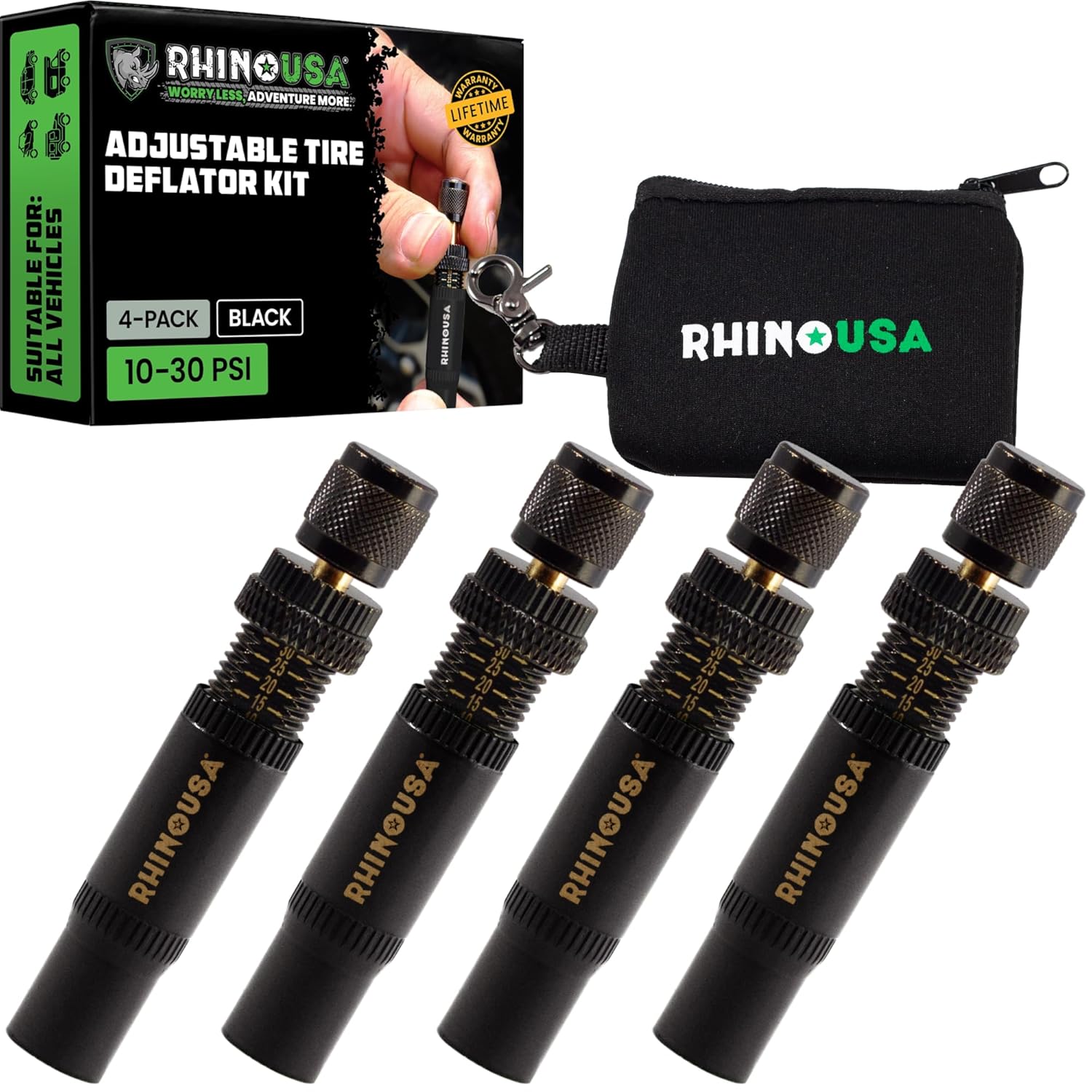
Use the Rhino USA adjustable tire deflators to air down all four tires at once by screwing one deflator onto each valve stem, letting you step away while the tires reach your preset pressure. Each deflator independently adjusts across a 10–30 PSI range with laser-etched indicators for quick setup and verification, making it ideal for beach, sand, and rocky off-road trails.
1. Lift and Suspension Clearance
Some Tundra owners clear 37s with a mild lift and careful trimming. Others need a full suspension lift, aftermarket upper control arms, or a dedicated clearance kit. A lift can help by moving the body and frame farther from the tire, but it does not automatically solve full-lock or full-compression rubbing. The tire still swings through an arc when steering and can still hit the rear of the front wheel well.
For current third-generation trucks, Toyota lists the TRD Pro with off-road suspension and a 1.1-inch front lift, but that factory lift alone should not be treated as a guarantee that 37s will clear. Dedicated aftermarket solutions, such as the Westcott Designs 2022–2026 Tundra front tire clearance kit, are built specifically to help clear up to a 37-inch tire by addressing front wheel-well clearance.
2. Pinch Weld and Body Mount Clearance
The pinch weld seam, firewall-side liner area, cab/body mount area, and rear wheel-well bracket are common trouble spots. Depending on your truck and tire, you may need to fold, trim, plate, or clearance these areas. Any exposed metal should be smoothed, sealed, and painted to reduce corrosion risk.
A cab mount chop or body mount modification should be treated as fabrication work, not a casual trim. If the cut is not plated, welded, sealed, and finished properly, it can create structural, rust, and inspection problems.
3. Bumpstop Tuning
Bumpstop spacers can prevent the tire from contacting the fender or liner during hard compression, but the correct thickness depends on your tire, wheel, lift, shock travel, and how you use the truck. Do not copy a spacer thickness blindly. Cycle the suspension, check full-lock steering, and add only enough bumpstop to prevent contact without unnecessarily limiting travel.
4. Inner Fender Liner and Air Dam Trimming
The plastic or felt liner is usually the first thing to rub. You may be able to pull it forward, re-secure it, heat-form it carefully, or trim it. Keep cuts clean and avoid leaving sharp edges that can catch the tire shoulder. The front air dam, mud flaps, and lower bumper caps may also need trimming or removal depending on the wheel offset and tire width.
Pro Tip: Mark rub points with painter’s tape or a paint pen, trim a small amount, then test again. Removing too much at once can leave an ugly gap and may expose areas that need sealing.
Wheel and Tire Setup: What You Need to Know
Installing 37-inch tires on your Toyota Tundra is not just about tire height. The wheel setup decides where the tire sits inside the wheel well.
Many factory Tundra wheels use a high-positive offset that keeps the tire tucked inward. That works well for stock tires, but with 37s it can create inner rubbing near the upper control arm, sway bar, frame, or liner. Moving to a lower positive offset or using high-quality hub-centric spacers can move the tire outward, but there is a tradeoff: too far outward can increase fender, bumper, mud-flap, and liner contact.
As a practical starting point, many Tundra 37-inch builds end up with a moderate positive offset rather than the factory high-positive position. However, there is no single magic number. A +25 wheel can behave differently from another +25 wheel if the wheel widths differ. Always compare both offset and backspacing.
[Products Worth Considering]

Upgrade your wheels with MIKKUPPA closed-end lug nuts designed for reliable fit and corrosion resistance. The one-piece, cold-forged and heat-treated steel construction helps resist rust and stripping, while the integrated finish delivers a durable black appearance. Built to OEM standards with a conical 60-degree seat, these nuts provide a secure solution for compatible Ford, Honda, Jeep, and Chevrolet models.
This flat-free TICONN wheelbarrow tire features durable polyurethane foam construction that never needs inflation, helping prevent punctures and reducing maintenance on rough outdoor terrain. With a 300 lb max load capacity and stable steel rim design, it supports safer transport for yard work and hauling tasks. An adapter kit with ball bearings and nylon spacers is included for easier fit and customization across common wheelbarrow and cart axle setups.

Marsflex brand TPMS replacement sensors help restore tire pressure monitoring for compatible Toyota, Lexus, Scion, and Pontiac models. Each sensor is pre-programmed for the vehicle application and includes a long-life battery for up to 8 years of normal use. Designed to replace common OE numbers and requires relearning using a TPMS scan tool after installation.
Should You Use Wheel Spacers?
Wheel spacers can help when you want to keep factory wheels, but they add another safety-critical component. Use only quality hub-centric spacers from a reputable manufacturer, torque them correctly, re-torque after driving, and inspect them regularly. Avoid stacking spacers or using cheap universal spacers.
17-, 18-, 20-, or 22-Inch Wheels?
For off-road use, smaller wheel diameters usually leave more tire sidewall, which helps ride comfort and aired-down traction. A 17- or 18-inch wheel is common for trail-focused builds, while 20-inch wheels can work well for mixed street use. A 22-inch wheel leaves less sidewall and is usually not the first choice for serious off-road 37-inch setups.
If you are considering a popular 37×12.50R17 tire, confirm the rim-width range and the tire’s real size. For example, BFGoodrich’s Mud-Terrain T/A KM3 is available in 37-inch sizes, but the exact diameter, load rating, weight, and approved wheel-width range vary by size. Always use the specific tire’s spec sheet, not just the sidewall size.
Step-by-Step Process to Test-Fit 37-Inch Tires
- Record your baseline: Note your current tire size, wheel size, offset, suspension height, and alignment specs.
- Choose the exact tire: Check actual diameter, section width, tread width, weight, load index, speed rating, and rim-width range.
- Choose the wheel or spacer setup: Confirm bolt pattern, hub bore, lug-nut style, offset, backspacing, and wheel load rating.
- Mount one front tire first: Test-fit before mounting the full set if your shop allows it.
- Check static clearance: Inspect UCA, sway bar, frame, liner, bumper, mud flap, and brake-line clearance.
- Turn lock-to-lock: Check clearance at full left and full right steering.
- Compress the suspension: A shop can cycle suspension more accurately. At minimum, check clearance under real driving angles before hard off-road use.
- Trim in small steps: Start with liner and plastic contact points before considering metal work.
- Align the truck: Set caster, camber, and toe so the tire clears and the truck tracks correctly.
- Road-test carefully: Listen for rubbing during turns, braking, driveway entrances, reverse turns, and bumps.
- Recheck torque and pressure: Re-torque wheels or spacers as required and verify cold tire pressure.
Troubleshooting Common Fitment Issues With 37-Inch Tires
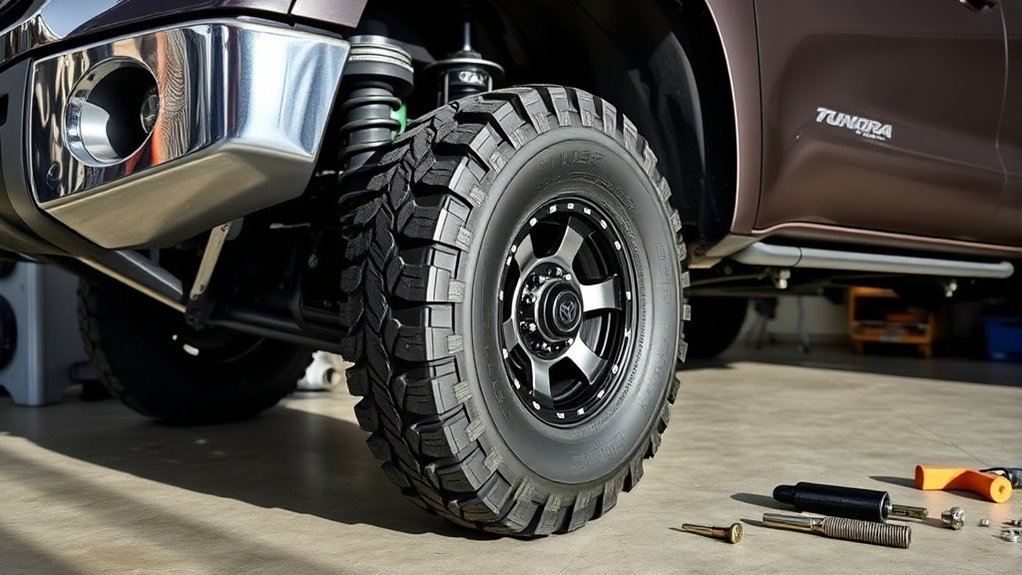
Fitment problems usually appear at full steering lock, in reverse, under braking, or when the suspension compresses. Use the table below to diagnose the most common issues.
| Problem | Likely Cause | Fix |
| Rubs front liner at full lock | Tire is too far forward/outward or liner is loose | Pull liner forward, trim carefully, adjust alignment, or revise wheel offset. |
| Rubs rear of front wheel well | Cab/body mount, crash bracket, pinch weld, or firewall-side liner contact | Increase caster if possible, trim liner, use a clearance kit, or have metal work done professionally. |
| Rubs sway bar or UCA | Wheel is tucked too far inward or tire is too wide | Use a different offset/backspacing, narrower tire, or compatible aftermarket UCA. |
| Rubs only on big bumps | Insufficient bumpstop or compression clearance | Cycle suspension, tune bumpstops, trim contact points, and check shock travel. |
| Steering feels heavy or truck wanders | Large tire weight, offset change, poor alignment, or worn parts | Get a professional alignment, inspect steering parts, and verify tire pressure. |
How to Adjust Alignment and Suspension for Better Performance
Alignment is one of the most important parts of making 37-inch tires work on a Toyota Tundra. A small change in caster can move the tire away from the rear of the wheel well. Toe and camber also affect drivability, tire wear, and steering feel.
Many owners try to push the front tires forward within the available alignment range to gain clearance near the cab/body mount area. That can help, but factory adjustment may not be enough. Aftermarket adjustable upper control arms can provide more usable caster and camber adjustment on lifted trucks, but they must be selected for your lift height and installed correctly.
Do not ignore the sway bar. At full lock, a wide 37-inch tire can get close to the sway bar, especially with high-positive-offset wheels. Some lift kits include sway bar relocation brackets. Removing the sway bar may increase articulation off-road, but it can reduce on-road stability and is not recommended for daily-driven trucks unless you understand the tradeoff.
Safety, Load Rating, and Daily Driving Checks
Large tires change more than appearance. They can affect braking distance, acceleration, fuel economy, steering effort, speedometer accuracy, towing performance, and driver-assistance behavior. Before daily driving, confirm these safety points:
- Load index: The tire must meet or exceed the load requirement for your truck.
- Cold tire pressure: Use the placard, tire manufacturer data, and professional guidance; do not inflate based only on the tire’s sidewall maximum.
- Wheel torque: Torque lug nuts to spec and recheck after the first drive if recommended by your wheel or spacer maker.
- Brake clearance: Confirm the wheel clears brake calipers and does not contact balance weights.
- Full-lock clearance: Check forward, reverse, and driveway-angle turns.
- Suspension compression: Check for rubbing when loaded, towing, or off-road.
- Speedometer correction: A taller tire can make the speedometer read lower than actual speed unless corrected.
- Spare and jack plan: Make sure your spare, jack, and tools still work with the taller tire.
The safest 37-inch Tundra setup is not the one with the least trimming. It is the one that clears at full steering lock, full suspension compression, correct tire pressure, proper load rating, and real-world driving angles.
Frequently Asked Questions
What is the largest tire you can put on a Toyota Tundra?
For many Toyota Tundra builds, 35-inch tires are the easier large-tire upgrade, while 37-inch tires are possible with more planning and modification. On a 37-inch setup, expect to address wheel offset, liner clearance, alignment, possible lift, and cab/body mount or pinch-weld clearance. The true limit depends on year, trim, tire width, wheel specs, suspension, and how much trimming you accept.
Do 37s ride better than 35s?
Not always. A 37-inch tire can give more sidewall cushion off-road, especially when aired down properly, but it is usually heavier than a 35. That extra weight can hurt acceleration, braking, fuel economy, steering feel, and suspension response. Ride quality depends more on tire construction, load range, pressure, wheel size, and suspension tuning than diameter alone.
Can I fit 37-inch tires on stock Tundra wheels?
Sometimes, but it is not the easiest route. Many factory wheels have a high-positive offset that can create inner clearance issues with wide 37s. Spacers may help, but they must be high-quality, hub-centric, correctly torqued, and inspected regularly. Also confirm the stock wheel width is approved for the exact 37-inch tire you choose.
Do I need a 6-inch lift for 37s on a Tundra?
A 6-inch lift can make clearance easier, but it is not the only way to fit 37s. Some builds use a smaller lift plus trimming, alignment, upper control arms, and clearance work. Larger lifts can also require more supporting parts and may change steering, suspension geometry, and ride quality. Choose the lift based on your tire, wheel specs, and intended use.
Will 37-inch tires affect towing?
Yes, they can. Taller and heavier tires change effective gearing, add rotating mass, and can affect braking, transmission behavior, and engine load. If you tow often, pay extra attention to load index, tire pressure, wheel load rating, brake condition, and speedometer correction.
Do I need to re-gear a Tundra for 37-inch tires?
Not every Tundra needs re-gearing for 37s, especially if the truck is mostly used on-road and has enough power for your driving style. However, 37s do reduce effective gearing. Re-gearing may be worth considering if the truck feels sluggish, hunts gears while towing, struggles off-road, or runs heavy accessories.
Conclusion
Fitting 37-inch tires on a Toyota Tundra is achievable, but it should be treated as a full fitment project rather than a simple tire swap. The best results come from matching the tire’s actual size to the right wheel width and offset, checking every rub point, aligning the truck properly, and keeping safety items like load rating, cold tire pressure, wheel torque, braking, and suspension clearance at the center of the build.
If you want the cleanest setup, start with the exact tire and wheel specs, test-fit before committing, trim in small steps, and use a qualified alignment or fabrication shop for anything involving metal cutting or welding. Done correctly, 37s can give your Tundra a stronger stance and more trail clearance without turning every drive into a rubbing, steering, or safety problem.
Sources
- Toyota Tundra official model page — current trim equipment, factory wheel sizes by trim, TRD Pro suspension details, payload, and towing context.
- Toyota USA Newsroom: 2026 Tundra — current 2026 package and equipment updates.
- NHTSA TireWise — tire pressure, tire placard, cold-pressure, and tire-safety guidance.
- Tire Industry Association: Tire Replacement — replacement tire load index and professional tire-selection guidance.
- BFGoodrich Mud-Terrain T/A KM3 — example of manufacturer tire sizing and specification data to verify before buying.
- Westcott Designs 2022–2026 Tundra Front Tire Clearance Kit — example of an aftermarket clearance solution designed to help run up to a 37-inch tire.