
Can You Fit 35 Inch Tires on a Toyota Tacoma
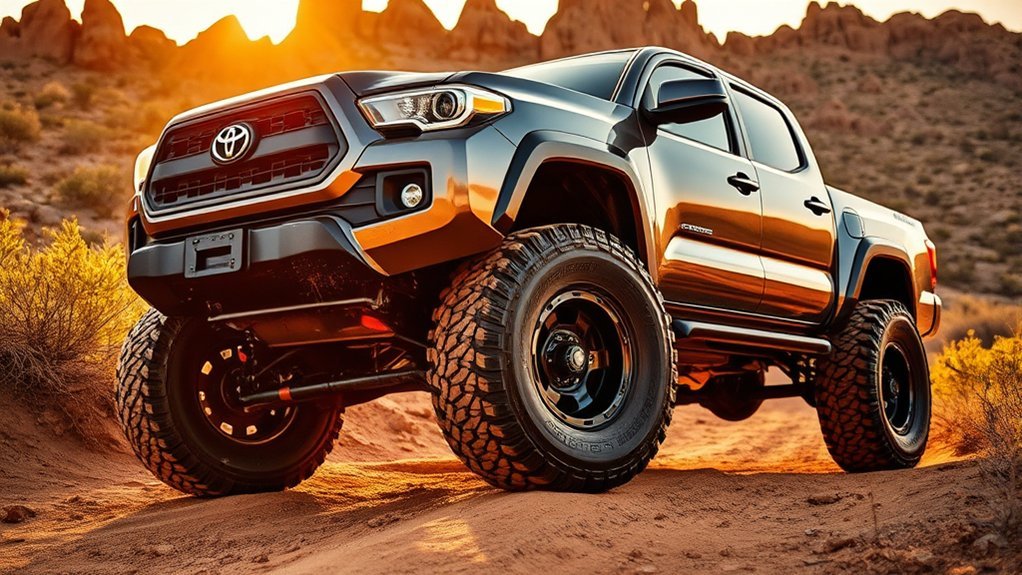
Yes, you can fit 35-inch tires on a Toyota Tacoma, but it is not a simple tire swap. The right setup depends on your Tacoma generation, tire width, wheel offset, suspension, trimming tolerance, and whether the truck is a daily driver, overland build, or trail rig. For most 2005–2023 Tacomas, true 35s require major clearance work. For 2024+ Tacomas, the path is often easier, but careful test fitting is still required.
Quick Answer
A Toyota Tacoma can run 35-inch tires, but most setups need a lift, proper wheel offset, trimming, alignment work, and careful clearance testing. On 2005–2023 Tacomas, cab mount chopping or relocation is often part of the job. On 2024+ Tacomas, 35s can be easier to fit, but they are still an aftermarket modification.
Key Takeaways
- A “35-inch” tire is not always exactly 35 inches tall; actual diameter and width vary by brand and tire model.
- Lift height alone does not guarantee fitment. Wheel offset, tire width, cab mount clearance, fender liners, pinch welds, and bumpers all matter.
- A 6-inch lift is not automatically required. Many builds use less lift plus more precise trimming and clearance work.
- Re-gearing to 5.29 can help some older Tacoma builds on heavy 35s, but it is not a universal requirement for every Tacoma.
- Use a tire with the correct load rating, verify safe tire pressure, and get a professional alignment after the work is complete.
At a Glance
| Time Required | 1 day for a light 2024+ test-fit setup; 2–5 days for a 2005–2023 build with welding, trimming, alignment, and re-checks |
| Difficulty | Advanced; some setups require cutting, welding, suspension setup, and professional alignment |
| Tools Needed | Jack, stands, torque wrench, alignment tools, cutting tools, heat gun, trimming tools, and welding equipment if doing a cab mount chop or relocation |
| Cost | Moderate to high; tires, wheels, suspension, trimming, fabrication, alignment, and possible gearing can add up quickly |
Essential Considerations for Fitting 35-Inch Tires on a Tacoma
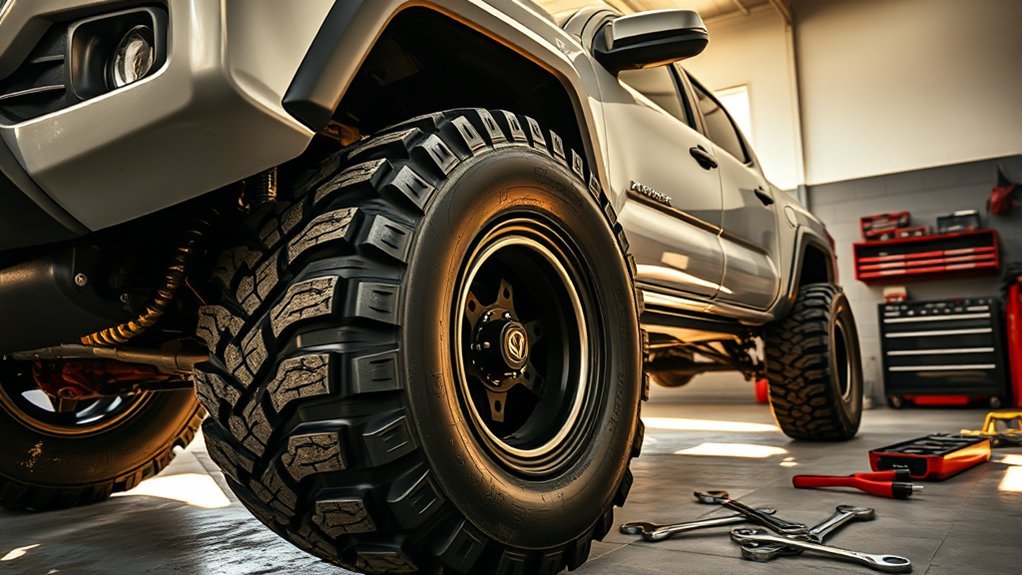
Before buying tires, confirm what you mean by “35s.” Common sizes include 35×12.50R17, 35×12.50R18, and metric sizes such as 315/70R17. A tire may be marketed as a 35-inch tire but measure closer to 34.4–34.8 inches depending on the brand, tread, wheel width, and inflation. For example, Tire Rack’s BFGoodrich All-Terrain T/A KO2 specifications list a LT315/70R17 KO2 at about 34.4 inches overall diameter, while a LT285/70R17 is about 32.8 inches, not a true 35-inch tire.
Toyota does not sell a Tacoma from the factory on 35-inch tires. Toyota lists the 2026 Tacoma Trailhunter with 33-inch tires and 18-inch wheels, so 35s should be treated as an aftermarket modification rather than an original-equipment tire size.
Warning: Larger tires can change steering feel, braking distance, acceleration, fuel economy, suspension geometry, tire pressure requirements, and inspection or warranty outcomes. Any cutting or welding around body mounts should be handled by a qualified fabricator.
Tacoma 35-Inch Tire Fitment by Generation
The biggest mistake is treating every Tacoma the same. A 2008, 2021, and 2026 Tacoma do not have the same body clearances, suspension geometry, or electronics. Use the table below as a planning guide, then test fit your exact wheel and tire combination.
| Tacoma Generation | Typical 35-Inch Tire Path | Main Clearance Issues |
|---|---|---|
| 2005–2015 Tacoma | Lift, upper control arms, trimming, alignment, and often cab mount chop or cab mount relocation | Cab mount, pinch weld, fender liner, bumper corners, mud flaps, body mount area |
| 2016–2023 Tacoma | Similar to 2005–2015 trucks; true 35s usually need careful wheel specs and significant front-end clearance work | Cab mount, rear of front wheel opening, fender liner, pinch weld, bumper, body mount reinforcement |
| 2024+ Tacoma | Often easier than earlier trucks, but still requires the right wheel offset, lift or level, liner trimming, and full-compression testing | Fender liners, bumper area, mud flaps, crash brackets or brackets near the wheel opening, and suspension compression clearance |
Key Modifications for Clearance and Fitment
Fitting 35-inch tires is about the whole package, not just the lift kit. A tall lift with the wrong wheel offset can rub worse than a lower, better-planned setup. Focus on the tire’s real diameter, section width, wheel specs, suspension travel, and where the tire moves at full lock.
[Products Worth Considering]

MaxxHaul solid rubber wheel chocks provide dependable vehicle stabilization for cars, trucks, trailers, and RVs across driveways, slopes, garages, and campsites. The molded non-slip traction surface helps prevent tire movement on pavement, gravel, and smooth floors, while the solid rubber resists cracking, crushing, deformation, and weather wear. A built-in handle enables quick, tool-free placement and removal for convenient use in all seasons.

Slip the Powerbuilt tire step over your vehicle’s tire to reach roof racks, engine bays, truck boxes, and more without overreaching. Its adjustable, universal design fits tires with a cross tread width up to 13 inches, including car, truck, RV, and semi tires. The non-slip cheesegrater surface and anti-slip tape provide secure grip while the open design lets mud and debris pass through. Fold-flat storage with rubber bumpers helps keep your tire and the step protected between uses.

Make hard-to-reach areas easier to access with the MAXXHAUL truck tire service step featuring an adjustable width and height. The foldable design stores compactly, while the serrated non-slip platform provides secure footing for tire-related maintenance. It fits most stock tire sizes up to 31-inch diameter with a 300-lb capacity.
Suspension Upgrades Needed
A lift or leveling kit creates vertical room, but it does not automatically move the tire away from the cab mount or firewall. On 2005–2023 Tacomas, many 35-inch builds use a suspension lift, aftermarket upper control arms, careful caster adjustment, and front-end trimming. On 2024+ Tacomas, many owners can use less lift than earlier trucks, but the setup still needs to be checked at full steering lock and suspension compression.
Aftermarket upper control arms can help restore alignment range after lifting the truck. They are especially useful when you need more caster to move the tire forward in the wheel well. A professional alignment is not optional after changing suspension height, tire size, or control arms.
Wheel Offset and Tire Width Matter
Wheel offset can make or break a 35-inch tire setup. More negative offset pushes the tire outward, which may clear the upper control arm but can increase rubbing on the fender, bumper, and outer liner. More positive offset keeps the tire tucked in but may rub suspension parts. Tire width also matters: a narrow 35 may be easier to clear than a 35×12.50.
Pro Tip: Test fit one front wheel and tire before mounting the full set. Turn the steering from lock to lock, compress the suspension, and check the rear of the wheel opening, body mount, bumper corner, liner, brake line, and sway bar area.
Fender Modifications Required
Most 35-inch Tacoma setups need some combination of fender liner trimming, mud flap removal, bumper trimming, and pinch weld work. On 2005–2023 trucks, the cab mount area is one of the most common rubbing points. Depending on the build, a cab mount chop or relocation may be needed for true clearance.
Do not trim blindly. Mark rubbing points with painter’s tape, test the truck at ride height, and repeat the test after each change. The goal is enough clearance for street driving, turning into driveways, braking while turning, and off-road suspension articulation.
Safety Checks After Clearance Work
After the tires are mounted, inspect tire pressure, tire load rating, lug torque, brake hose routing, ABS wire routing, wheel bearing play, and suspension fasteners. The Tire Industry Association advises using replacement tires that meet or exceed the original equipment load index, and the NHTSA tire safety guide emphasizes proper pressure, load limits, and regular tire inspection.
How Much Lift Do You Need for 35s?
There is no single lift height that guarantees 35-inch tire fitment on every Tacoma. A 6-inch lift can create more vertical clearance, but it is not automatically the best or only route. Large bracket lifts can affect center of gravity, CV angles, steering geometry, ride quality, and long-term wear.
For many 2005–2023 Tacoma builds, 35s usually require a moderate lift, aftermarket upper control arms, aggressive trimming, and cab mount clearance work. Some owners choose a cab mount relocation kit instead of a basic chop because it moves the interference point farther away from the tire. For 2024+ Tacomas, the truck’s front-end design often makes 35-inch fitment easier, but wheel offset and trimming still decide the final result.
Note: Lift height helps with vertical clearance, but most 35-inch rubbing happens while turning or compressing the suspension. That is why caster, offset, liner trimming, bumper clearance, and cab mount clearance matter so much.
[Products Worth Considering]

This VEVOR tire bead breaker uses a slide-hammer impact and wedge tip to separate tire beads from rims quickly and efficiently without damaging hub surfaces. The long handle and sturdy steel construction help reduce user strain while providing reliable, portable tire changing for cars, trucks, and more. Ideal for home mechanics and repair shops handling multiple vehicle tire sizes.

Universal magnetic jack pad with aluminum grooved design to protect vehicle pinch welds during lifting. Durable nylon pad inserts are upgraded and secured with screws to resist damage and keep in place. Designed to fit most single vehicle pinpoint welds for safer, stable jacking when changing tires, repairs, or performing oil changes.
Drivetrain and Performance Considerations for 35-Inch Tires
Moving from factory-size tires to 35s changes the truck’s effective gearing. The tire is taller and usually heavier, so the engine and transmission have to work harder to turn it. You may notice slower acceleration, more frequent downshifts, lower fuel economy, longer stopping distances, and a speedometer that no longer reads accurately.
Re-gearing can help, especially on older Tacoma builds that run heavy 35-inch tires, armor, camping gear, and mountain or off-road routes. Ratios such as 4.88 or 5.29 are common discussion points for 2nd- and 3rd-gen Tacoma builds, but the right choice depends on engine, transmission, axle setup, tire weight, terrain, and driving style. A 5.29 ratio should be treated as an option to evaluate with a drivetrain shop, not a universal requirement.
Do not ignore tire weight. A 35-inch light-truck tire can weigh far more than the factory tire, and that extra rotating mass affects braking, steering, suspension response, and wheel bearing load. Check the tire manufacturer’s specs before buying. Tire Rack’s BFGoodrich All-Terrain T/A KO2 specification table is a useful example of how overall diameter, tire weight, rim width range, and load rating vary by size.
Choose Between Body Mount Relocation Kits and Traditional Chops
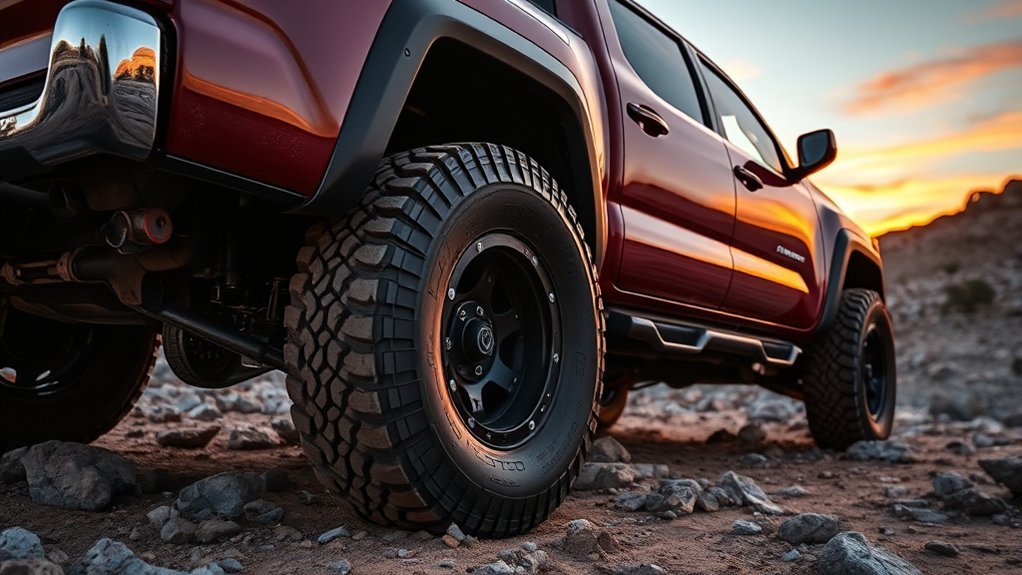
For 2005–2023 Tacomas, the cab mount is one of the biggest obstacles to true 35-inch tire clearance. A traditional cab mount chop removes and plates part of the mount area. A cab mount relocation moves the mount farther back, creating more usable clearance. Both methods are permanent modifications, and both require skill. Poor cutting or welding can create structural, corrosion, and alignment problems.
Cab mount relocation is often the cleaner solution for serious 35-inch builds on 2nd- and 3rd-gen Tacomas. DRT Fabrication, for example, lists its cab mount relocation kit for 2005–2023 Tacoma models and notes that additional trimming may still be required for 35-inch fitment.
| Method | Best For | Trade-Offs |
|---|---|---|
| Cab Mount Chop | Moderate builds where a small amount of extra clearance solves the rubbing | Permanent cutting and welding; may not create enough clearance for true 35s on every setup |
| Cab Mount Relocation | Serious 35-inch builds on 2005–2023 Tacomas | More involved fabrication; still may require liner, pinch weld, and bumper trimming |
| No Cab Mount Work | Some 2024+ Tacoma setups with the right wheel/tire/lift combination | Still requires test fitting; rubbing can still happen at liners, bumper, or brackets |
Steps to Fit 35-Inch Tires
- Identify your Tacoma generation and trim. A 2005–2023 truck usually needs a different plan than a 2024+ truck.
- Choose the exact tire size. Compare real overall diameter, section width, tread width, weight, load rating, and recommended rim width.
- Pick the wheel carefully. Wheel width and offset determine whether the tire hits the control arm, cab mount, fender, or bumper.
- Install the suspension correctly. Use quality components, avoid over-stacking spacers, and confirm brake line and ABS wire routing.
- Set alignment with enough caster. More positive caster can help move the front tire away from the rear of the wheel opening.
- Test fit before cutting. Check full steering lock in both directions and inspect under compression, not only at static ride height.
- Trim in stages. Start with liners, mud flaps, and bumper edges before moving into pinch weld or cab mount work.
- Address cab mount clearance when needed. On 2005–2023 Tacomas, a chop or relocation may be required for true 35s.
- Calibrate and inspect. Check speedometer error, TPMS behavior, lug torque, tire pressure, and spare tire fitment.
- Road test and re-check. Listen for rubbing, vibration, brake pull, wandering, or ABS/traction-control warnings, then re-torque and re-align as needed.
The cleanest 35-inch Tacoma builds are measured, test-fitted, trimmed in stages, aligned correctly, and re-checked after real driving—not guessed from lift height alone.
Common Challenges and Solutions When Fitting 35s
| Problem | Likely Cause | Best Fix |
|---|---|---|
| Rubbing at rear of front wheel opening | Low caster, wide tire, aggressive offset, cab mount interference | Alignment correction, upper control arms, trimming, cab mount chop or relocation on older trucks |
| Rubbing at bumper or front liner | Tire pushed outward or too wide for bumper clearance | Trim bumper edge, reposition liner, choose a better offset or narrower tire |
| Sluggish acceleration | Taller, heavier tires change effective gearing | Consider lighter tires, re-gearing, or a smaller tire if daily drivability matters most |
| Wandering or poor steering feel | Poor alignment, incorrect caster, worn steering parts, tire pressure mismatch | Professional alignment, steering inspection, and pressure adjustment based on load and tire specs |
| Speedometer reads low | Taller tire travels farther per revolution | Use a compatible calibration tool or have a shop correct the speed signal where possible |
| Spare tire does not fit | 35-inch spare may not fit the factory spare location cleanly | Test the spare location before a trip; consider a bed mount or rear carrier for full-size spare use |
Frequently Asked Questions
What is the largest tire you can put on a Toyota Tacoma?
The largest practical tire depends on the Tacoma generation and how much modification you accept. Many Tacoma owners can fit 32- to 33-inch tires with modest work. True 35-inch tires usually require more lift, trimming, wheel-offset planning, alignment work, and on 2005–2023 trucks, possible cab mount chop or relocation.
Is 285/70R17 a 35-inch tire?
No. A 285/70R17 is usually around 32.7 to 32.8 inches tall, depending on the tire model. It is closer to a 33-inch tire than a 35-inch tire. For a true 35, common sizes include 35×12.50R17, 35×12.50R18, or certain 315/70R17 tires.
Do I need a 6-inch lift to fit 35s on a Tacoma?
Not always. A 6-inch lift is one way to create more room, but it is not the only way and may not be ideal for every build. Many 35-inch setups depend more on tire width, wheel offset, caster, trimming, and cab mount clearance than on lift height alone.
Do 35s fit a 2024 or newer Tacoma without a cab mount chop?
Some 2024+ Tacoma setups can fit 35s with less cab mount work than older trucks, but the final answer depends on the exact tire, wheel offset, lift height, liner position, bumper clearance, and suspension travel. Always test fit before assuming it will clear.
Do I need to re-gear my Tacoma for 35-inch tires?
You may need to re-gear if the truck feels sluggish, hunts between gears, carries heavy payload, tows, or spends a lot of time off-road. Many older Tacoma owners consider 4.88 or 5.29 gears for heavy 35-inch setups, but the right ratio depends on your drivetrain and driving style.
Will 35-inch tires void my Tacoma warranty?
The tires themselves do not automatically erase your entire warranty, but modifications can affect coverage for related parts. For example, a dealer may question warranty claims involving steering, suspension, driveline, wheel bearings, body mounts, or calibration if those parts are affected by the larger tires or the installation work.
Can I keep the factory spare tire with 35s?
A smaller factory spare is not ideal when running 35s, especially on four-wheel-drive trucks. A full-size spare is safer for trail use, but a 35-inch spare may not fit cleanly in the factory spare location. Test fit it before relying on it.
Conclusion
Fitting 35-inch tires on a Toyota Tacoma is possible, but the cleanest setup is planned by generation, not by lift height alone. For 2005–2023 Tacomas, expect a serious combination of lift, wheel-offset planning, trimming, alignment work, and often cab mount clearance work. For 2024+ Tacomas, 35s may be easier, but they still need careful test fitting and safe setup. Choose tires with the right load rating, verify clearance under real steering and suspension movement, and involve a professional shop when cutting, welding, gearing, or alignment is part of the build.
Sources
- Toyota Trailhunter official page — confirms Toyota’s current Trailhunter factory tire reference and 33-inch tire setup.
- Toyota USA Newsroom: 2026 Tacoma — supports current Tacoma factory package context and tire-size freshness.
- Tire Industry Association: Tire Replacement — supports load index, tire placard, and replacement tire safety guidance.
- NHTSA Tire Safety Guide — supports tire pressure, load limits, and inspection safety guidance.
- Tire Rack BFGoodrich All-Terrain T/A KO2 specifications — supports real tire diameter, weight, rim width, and load-rating comparisons.
- DRT Fabrication Tacoma Cab Mount Relocation Kit — supports 2005–2023 Tacoma cab mount relocation fitment for 35-inch tire builds.

Related Articles
Best Toyota Tacoma Tire Set Deals
You rely on your Tacoma for daily driving, work runs, and weekend adventures, so picking the right tire set matters more than you might…
Read More
Best Winter Tire Deals for Toyota Tacoma
Choosing the right winter tires for your Toyota Tacoma matters because it directly affects your safety, traction, and confidence when roads turn icy or…
Read More
Best Highway Tire Deals for Toyota Tacoma
You rely on your Tacoma for long drives, towing, and everyday hauling, so picking the right highway tire matters more than you might think.…
Read More