
Toyota Tacoma Trailhunter Tire Size Guide
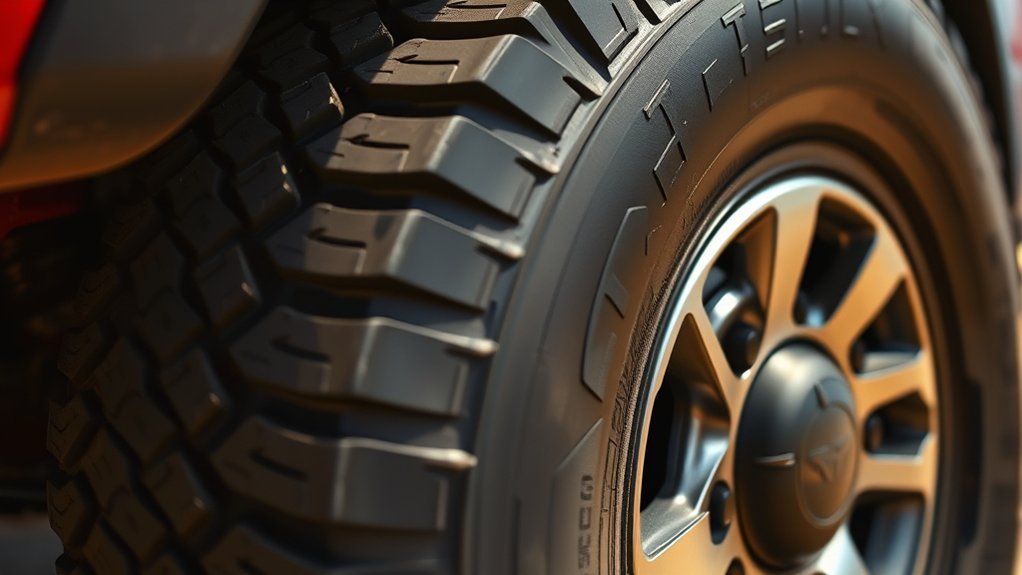
If you’re sizing tires for a Toyota Tacoma Trailhunter, start with the factory setup, then decide how much extra clearance, traction, and visual stance you actually need. The safest upgrade is not always the biggest tire; it is the tire that clears at full steering lock, keeps the right load rating, works with your wheel offset, and still drives well on-road.
Quick Answer
The Toyota Tacoma Trailhunter’s common factory tire size is 265/70R18, which measures about 32.6 inches tall. A 285/70R18 is a popular mild upgrade, while 295/70R18 is more aggressive and more likely to need trimming or clearance work. Always confirm your door-jamb placard before buying.
Key Takeaways
- Stock size: 265/70R18 is the key factory reference size for the Tacoma Trailhunter.
- Best easy upgrade: 285/70R18 is usually the most reasonable step up, but it still needs a clearance check.
- More aggressive fit: 295/70R18 adds height and width, but rubbing becomes more likely.
- Safety check: Match or exceed the proper load index, use placard-based cold tire pressure, and inspect for rubbing after installation.
At a Glance
| Time Required | 30–60 minutes to choose and measure; 1–2 hours for professional mounting, balancing, and inspection |
| Difficulty | Easy for stock replacement; moderate for upsizing; advanced for 34-inch-plus fitments |
| Tools Needed | Tire-pressure gauge, tread-depth gauge, flashlight, measuring tape, torque wrench, and a qualified tire installer for mounting |
| Cost | Varies by tire model, load range, mounting, balancing, alignment, TPMS service, and any trimming or calibration work |
Understanding Stock Tire Sizes for the Trailhunter
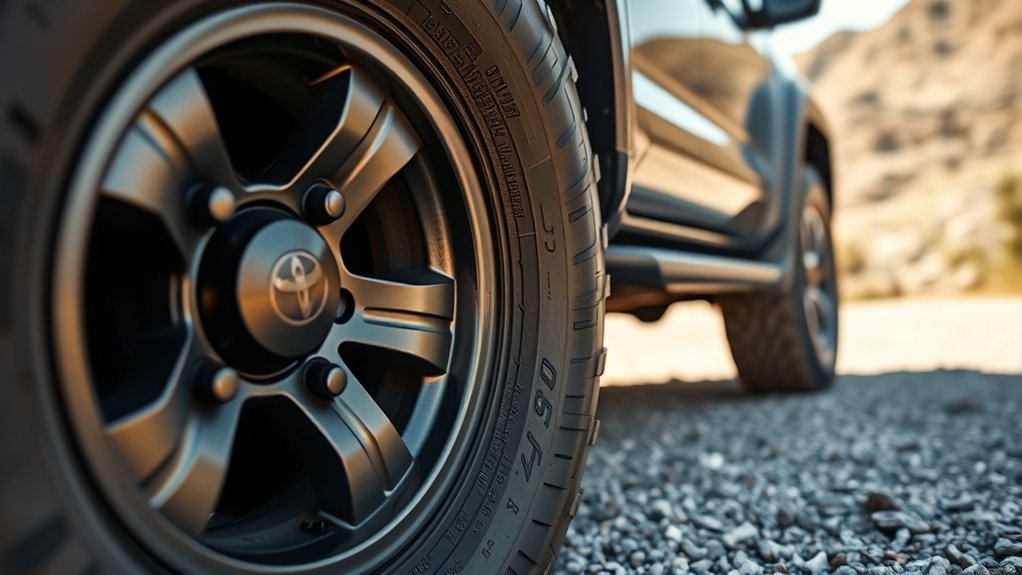
The factory reference size to know is 265/70R18. That size works out to about 32.6 inches tall and about 10.4 inches wide, which is why Toyota commonly describes the Trailhunter as riding on 33-inch tires with 18-inch wheels. Toyota’s Trailhunter page also highlights the model’s overlanding equipment, including Old Man Emu suspension and 33-inch tires on 18-inch wheels. Toyota Trailhunter official page
For 2026, Toyota Canada describes the Tacoma Trailhunter as using exclusive 18-inch Trailhunter alloy wheels with 33-inch Goodyear Territory RT tires, plus Old Man Emu shock absorbers and skid-plate protection. Equipment can vary by market and model year, so treat your driver-door tire placard and owner information as the final authority for your specific truck. Toyota Canada 2026 Tacoma release
Note: Tire sizes can be listed in several ways. “265/70R18” means 265 mm section width, 70% sidewall aspect ratio, radial construction, and an 18-inch wheel diameter.
Stock Tire Specs at a Glance
| Factory reference size | 265/70R18 |
| Approximate diameter | 32.6 inches |
| Approximate section width | 10.4 inches |
| Wheel diameter | 18 inches |
| Best first check | Driver-door placard for size, cold pressure, and load information |
Choosing the Right Tire Upgrade
The right Tacoma Trailhunter tire upgrade depends on how you use the truck. Daily drivers usually do best with a stock-size or mild-size all-terrain. Weekend trail drivers may want a stronger sidewall and a little extra height. Heavy overlanding builds need to pay close attention to payload, tire load index, spare fitment, and ride comfort.
Consider Stock Specifications First
Before upsizing, write down your current tire size, service description, wheel size, and door-placard pressure. The NHTSA TireWise guide says recommended cold tire pressure should come from the vehicle’s tire information placard or certification label, not the maximum PSI molded into the tire sidewall.
Also check the replacement tire’s load index and speed rating. USTMA’s replacement-tire guidance warns not to guess when replacing tires; size, load index, and speed rating all matter for safety, performance, comfort, and fuel efficiency. USTMA replacing tires guide
Warning: Oversized tires can rub brake lines, inner fender liners, mud flaps, crash-pad areas, body mounts, or suspension parts. Check clearance at full lock in both directions, in reverse, and with the suspension compressed before calling the fitment safe.
Explore Tire Options by Use Case
For a simple replacement, stay with 265/70R18. This keeps the truck closest to factory calibration and is the easiest path for ride quality, spare fitment, and tire-pressure management.
For a mild upgrade, 285/70R18 is the size many Trailhunter owners will consider first. It is about 33.7 inches tall, giving a little more ground clearance and sidewall presence. It may clear on factory-style wheels, but that is not a guarantee for every tire model or alignment.
For a more aggressive upgrade, 295/70R18 is about 34.3 inches tall. This size gives a stronger visual stance and more clearance under the differential, but it is much more likely to need trimming, careful wheel offset, or alignment adjustment.
Assess Performance Impact Before Buying
Bigger tires can help off-road by adding ground clearance and a larger contact patch, but they can also add weight and change how the truck accelerates, brakes, steers, and shifts. Taller tires also change speedometer and odometer readings unless the truck is recalibrated.
- 265/70R18 to 285/70R18: roughly 3.4% taller; when the speedometer shows 60 mph, actual speed may be about 62 mph.
- 265/70R18 to 295/70R18: roughly 5.1% taller; when the speedometer shows 60 mph, actual speed may be about 63 mph.
- Heavier LT tires: can improve toughness but may ride firmer and reduce fuel economy.
- Wider tires: can improve stance but may rub sooner depending on wheel offset and alignment.
Pro Tip: If you drive long highway miles, compare tire weights before buying. A heavy LT tire can feel tougher off-road, but a lighter standard-load or C-load option may ride better for daily driving if it still meets the correct load requirements.
How Larger Tires Affect Safety and Performance
Larger tires can improve traction and ground clearance, but the trade-offs are real. Steering may feel heavier, braking distances can change, fuel economy may drop, and the truck may feel less responsive. Wider tires may also throw more road spray and debris along the body.
The most important safety checks are load rating, cold tire pressure, clearance, and installer inspection. Do not assume a tire is safe just because it bolts on. After installation, a shop should check for rubbing at full steering lock, inspect inner-fender clearance, verify lug-torque procedure, and confirm that TPMS sensors are reading correctly.
The best Trailhunter tire upgrade is the largest tire that clears safely, carries the proper load, keeps the truck predictable, and matches how you actually drive.
Common Modifications and What to Expect
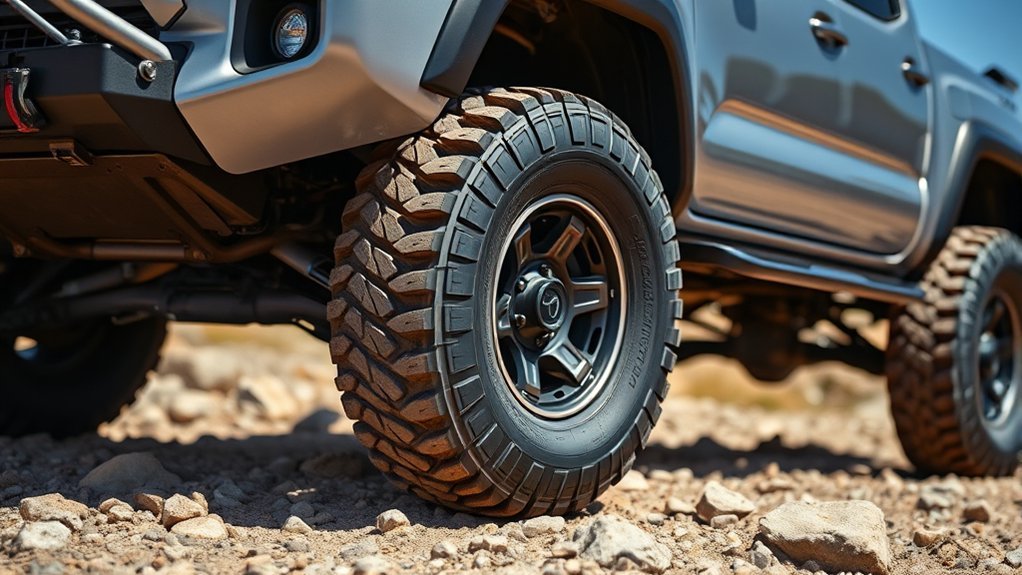
Most Tacoma Trailhunter tire upgrades fall into three groups: stock replacement, mild upsizing, and aggressive upsizing. The more height and width you add, the more important wheel offset, alignment, and trimming become.
Popular Tire Sizes
| Tire Size | Approx. Diameter | Best For | Fitment Notes |
|---|---|---|---|
| 265/70R18 | 32.6 in. | Factory ride, easiest replacement, spare compatibility | Safest baseline; confirm exact load/speed rating on placard |
| 285/70R18 | 33.7 in. | Mild lift in stance and clearance | Often considered a practical upgrade, but still test for rubbing |
| 295/70R18 | 34.3 in. | Aggressive overland look and more clearance | More likely to need trimming, alignment work, or offset changes |
| 35-inch class | Varies by size and brand | Advanced off-road builds | Expect trimming, careful wheel selection, speedometer change, and spare-fit challenges |
Essential Trim Modifications
With 285/70R18 tires, many owners aim for little or no trimming, but that depends on tire model, tread shoulder shape, wheel offset, and alignment. With 295/70R18 tires, plan for a closer inspection around the fender liner, mud flap, crash-pad area, body mount area, and front bumper edge.
True 35-inch-class tires should be treated as a build, not a simple tire swap. They may require trimming, different wheels, suspension changes, alignment adjustment, and a plan for where the spare tire will live.
Performance Impact Overview
- Clearance: Taller tires add ground clearance, but only if they clear the body and suspension.
- Traction: All-terrain and rugged-terrain tread patterns can improve dirt, gravel, mud, and snow performance.
- Ride quality: Load range, tire weight, and sidewall stiffness can change comfort more than size alone.
- Fuel economy: Larger, heavier tires usually require more energy to turn.
- Calibration: Taller tires can make the speedometer read lower than actual road speed.
Comparing Tire Size Options: 285/70R18 vs. 295/70R18
If you want the easiest upgrade path, choose 285/70R18. It is taller and wider than stock, but it stays closer to the factory setup than 295/70R18. This makes it a better fit for drivers who want extra presence without turning the truck into a trimming project.
Choose 295/70R18 only if you are comfortable checking clearance carefully and accepting possible modifications. It gives a bolder stance, but it also has a larger impact on steering feel, speedometer accuracy, and rubbing risk.
Note: Tire dimensions vary slightly by brand and model. Two tires with the same printed size can have different real-world section widths, tread widths, weights, and shoulder shapes.
User Experiences With Tire Fitment
Owner reports are helpful, but they should not be treated as universal proof. One Tacoma may clear a tire because it has a certain wheel offset, alignment setting, tire model, or suspension height. Another truck with the same printed tire size may rub.
When reading forum or social-media fitment reports, look for these details:
- Exact tire model and size: For example, 285/70R18 Falken Wildpeak A/T4W or 265/70R18 Goodyear Wrangler Territory RT.
- Wheel width and offset: Offset can make or break clearance.
- Suspension setup: Stock, leveled, lifted, loaded with gear, or aftermarket suspension.
- Alignment specs: Caster and camber settings can affect front clearance.
- Where it rubs: Mud flap, fender liner, body mount, crash pad, sway bar, or bumper edge.
Visual Impact of Upgrading Tire Sizes
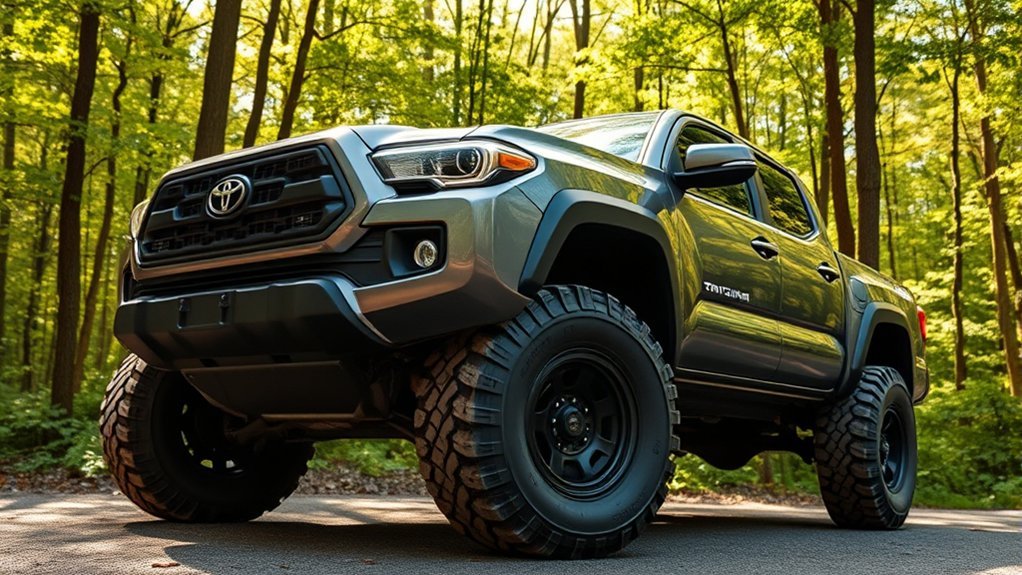
A larger tire can make the Trailhunter look more planted and trail-ready. Moving from 265/70R18 to 285/70R18 gives a noticeable change without going extreme. Moving to 295/70R18 gives a stronger overland stance, but it is also where the fitment compromises become harder to ignore.
Think about the whole setup, not just the tire. Wheel offset, tread width, tire weight, roof or bed gear, and suspension load all affect the final look and feel.
Popular Tire Brands for the Trailhunter
The best tire brand depends on your driving mix. A Trailhunter that spends 80% of its time on pavement needs a different tire than one that regularly runs rocky trails or carries heavy camping gear.
- Goodyear Wrangler Territory RT: A factory-style rugged-terrain direction for drivers who want to stay close to Toyota’s current Trailhunter tire concept. Goodyear Tacoma Trailhunter tire fitment
- Falken Wildpeak A/T4W: A strong all-terrain/all-weather option for mixed pavement, gravel, dirt, and trail use. Falken Wildpeak A/T4W
- BFGoodrich All-Terrain T/A KO3: A rugged all-terrain choice for drivers who prioritize durability and off-road traction. BFGoodrich All-Terrain T/A KO3
- Michelin Defender LTX M/S2: A highway-focused truck/SUV tire to consider if your Trailhunter spends most of its time commuting, towing lightly, or road-tripping. Michelin Defender LTX M/S2
Tips for Maintaining Tire Performance Off-Road
Good tires only work well if they are maintained. Check pressure when the tires are cold, inspect the tread after trail runs, and rotate the tires on schedule. If you air down off-road, air back up before highway driving.
- Check cold pressure: Use the driver-door placard as the starting point for normal road use.
- Inspect after trails: Look for cuts, punctures, missing tread chunks, bent wheels, and sidewall damage.
- Rotate regularly: A consistent rotation schedule helps control uneven wear.
- Watch tread depth: Off-road traction drops as tread depth wears down.
- Recheck torque: After wheel installation, follow your installer’s lug-nut retorque guidance.
- Get an alignment: Upsizing tires or changing wheels can reveal alignment problems quickly through uneven wear.
What to Check Before Installing Bigger Tires
Before ordering larger tires, run through this checklist:
- Confirm your factory tire size and cold PSI on the door placard.
- Confirm the replacement tire’s load index and speed rating.
- Check wheel width and offset compatibility.
- Ask the installer to test fit and inspect clearance at full steering lock.
- Check clearance in reverse, because some rubbing appears only when backing up.
- Inspect with the suspension compressed or the bed loaded if you carry gear.
- Confirm whether the spare tire will fit in the factory spare location.
- Confirm TPMS sensors are working after installation.
- Plan for alignment and possible speedometer recalibration.
Frequently Asked Questions
What is the stock Toyota Tacoma Trailhunter tire size?
The key factory reference size is 265/70R18. It measures about 32.6 inches tall, which lines up with Toyota’s general 33-inch tire description for Trailhunter models. Always confirm the exact size and pressure on your truck’s driver-door placard.
Can I put 285/70R18 tires on a Tacoma Trailhunter?
A 285/70R18 is a common mild upgrade target because it is about 33.7 inches tall. It may clear on factory-style setups, but you still need to test for rubbing at full lock, in reverse, and with the suspension compressed.
Will 295/70R18 tires fit the Tacoma Trailhunter?
A 295/70R18 is about 34.3 inches tall, so it is more aggressive than 285/70R18. It is more likely to need trimming, careful wheel offset, alignment adjustment, or other clearance work.
Do bigger tires affect the speedometer?
Yes. Taller tires travel farther per rotation, so the truck can be moving faster than the speedometer shows. A 285/70R18 is about 3.4% taller than stock 265/70R18, while a 295/70R18 is about 5.1% taller.
Should I choose SL, C-load, or E-load tires?
Choose a tire that meets or exceeds the proper load requirement for your truck and use. SL tires can ride better for daily driving, while LT C-load or E-load tires may add toughness for heavy loads and rough trails. E-load tires are often heavier and firmer, so they are not automatically better for every Trailhunter.
What is the best oil to use for a Toyota Tacoma?
Oil choice is separate from tire sizing. For the correct engine oil grade and capacity, follow the owner’s manual for your specific Tacoma model year and powertrain. Do not rely on a tire-size guide for oil specifications.
Conclusion
The Toyota Tacoma Trailhunter’s stock tire reference size is 265/70R18, and that is still the cleanest choice for factory-like ride, calibration, and fitment. If you want a practical upgrade, 285/70R18 is usually the first size to consider. If you want a bolder look, 295/70R18 can work on some builds, but it deserves a serious clearance check.
For the best result, choose tires by use case, not just size. Match the load rating, use the correct cold pressure, inspect for rubbing, and work with a qualified installer. That way your Trailhunter gains traction and presence without giving up safety or drivability.
Sources
- Toyota Trailhunter official page — factory Trailhunter equipment, 33-inch tires, 18-inch wheels, and Old Man Emu suspension context
- Toyota Canada 2026 Tacoma release — 2026 Tacoma Trailhunter wheel, tire, and suspension details
- Goodyear 2026 Tacoma Trailhunter tire fitment — 265/70R18 Trailhunter tire fitment reference
- NHTSA TireWise — tire pressure and tire safety guidance
- USTMA Replacing Tires — replacement tire size, load index, and speed rating guidance
- Falken Wildpeak A/T4W — all-terrain/all-weather tire example for mixed-use driving

Related Articles
Best Toyota Tacoma Tire Set Deals
You rely on your Tacoma for daily driving, work runs, and weekend adventures, so picking the right tire set matters more than you might…
Read More
Best Winter Tire Deals for Toyota Tacoma
Choosing the right winter tires for your Toyota Tacoma matters because it directly affects your safety, traction, and confidence when roads turn icy or…
Read More
Best Highway Tire Deals for Toyota Tacoma
You rely on your Tacoma for long drives, towing, and everyday hauling, so picking the right highway tire matters more than you might think.…
Read More